Act I
At the twilight of the Jazz Age in Berlin, the incipient Nazi Party is growing stronger. The Kit Kat Klub is a seedy cabaret—a place of decadent celebration. The club's Master of Ceremonies, or Emcee, together with the cabaret girls and waiters, warm up the audience ("Willkommen"). Meanwhile, a young American writer named Clifford Bradshaw arrives via a railway train in Berlin. He has journeyed to the city to work on a new novel. Cliff encounters Ernst Ludwig, a German smuggler who offers him black market work and recommends a boarding house. At the boarding house, the proprietress Fräulein Schneider offers Cliff a room for one hundred reichsmarks, but he can only pay fifty. After a brief debate, she relents and allows Cliff to live there for fifty marks. Fräulein Schneider observes that she has learned to take whatever life offers ("So What?").
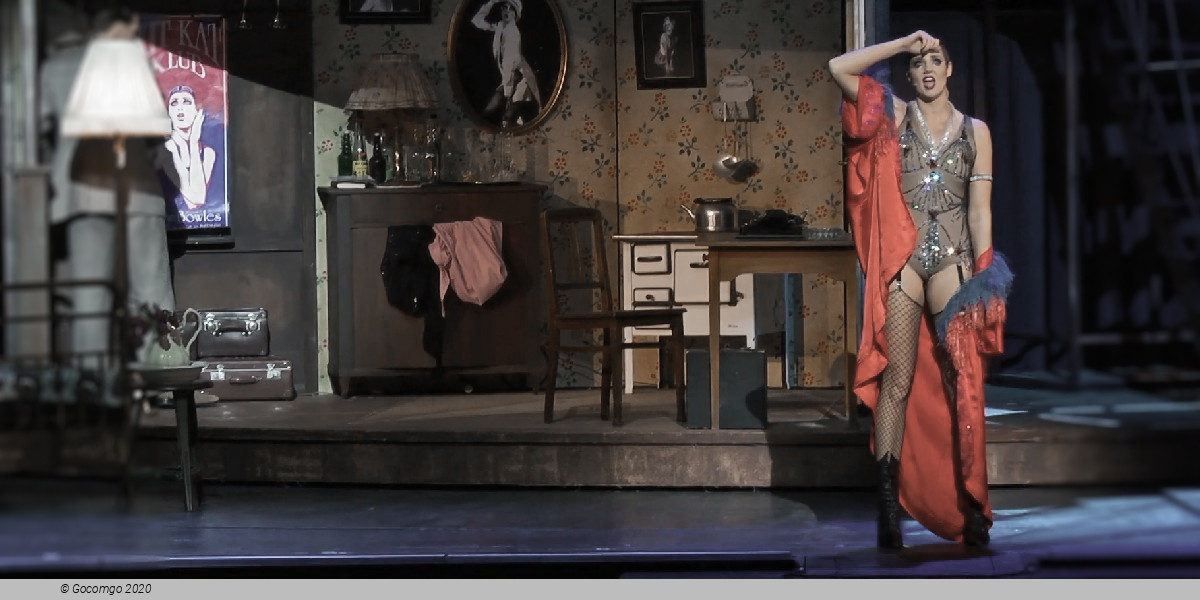
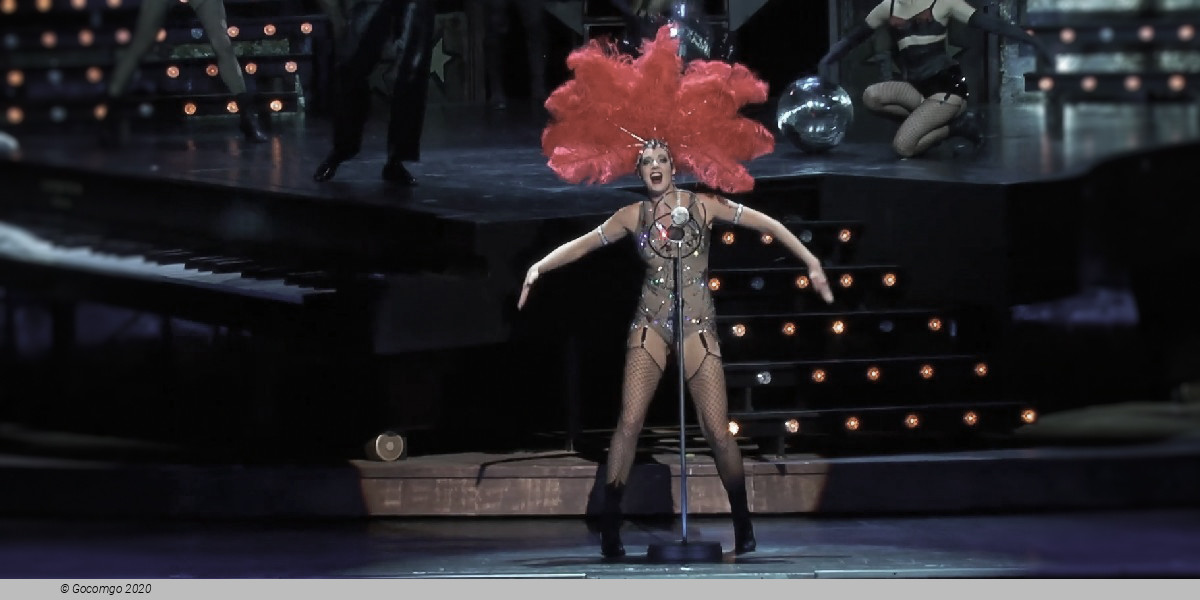
When Cliff visits the Kit Kat Klub, the Emcee introduces an English chanteuse, Sally Bowles, who performs a flirtatious number ("Don't Tell Mama"). Afterward, she asks Cliff to recite poetry for her, and he recites "Casey at the Bat". Cliff offers to escort Sally home, but she says that her boyfriend Max, the club's owner, is too jealous. Sally performs her final number at the Kit Kat Klub aided by a female ensemble of jazz babies ("Mein Herr"). The cabaret ensemble performs a song and dance, calling each other on inter-table phones and inviting each other for dances and drinks ("The Telephone Song").
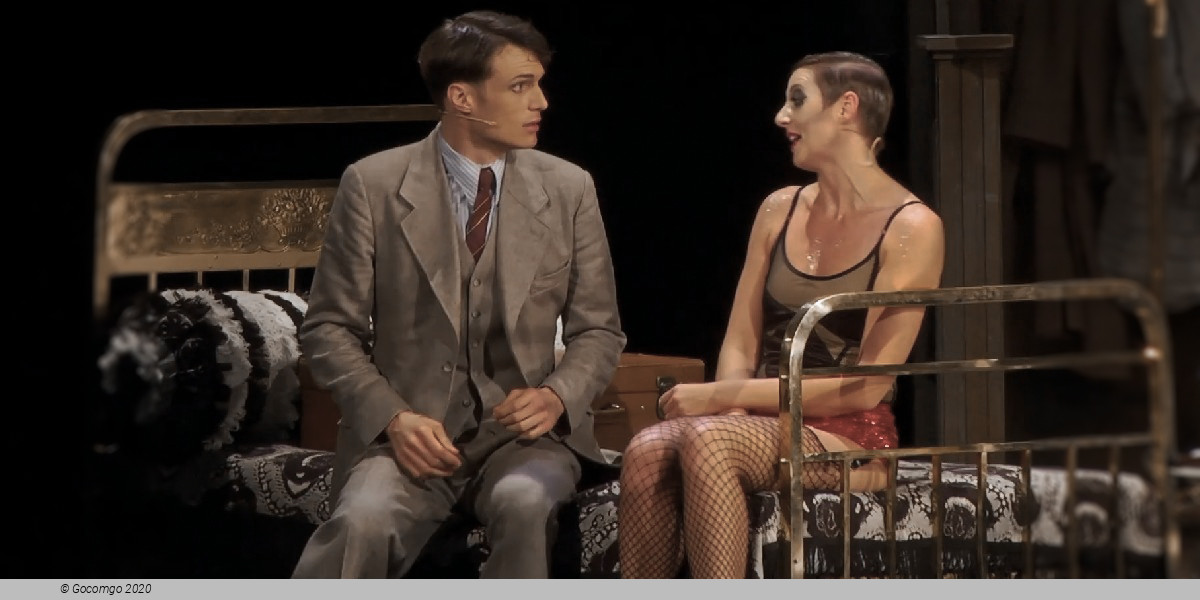
The next day at the boarding house, Cliff has just finished giving an English lesson to Ernst when Sally arrives. Max has fired her and thrown her out, and now she has no place to live. Sally asks Cliff if she can live in his room. At first he resists, but she convinces him to take her in ("Perfectly Marvelous"). The Emcee and two female companions sing a song ("Two Ladies") that comments on Cliff and Sally's new living arrangement. Herr Schultz, an elderly Jewish fruit-shop owner who lives in the boarding house, gives a pineapple to Fräulein Schneider as a romantic gesture ("It Couldn't Please Me More"). In the Kit Kat Klub, a young waiter starts to sing a song—a patriotic anthem to the Fatherland that slowly descends into a darker, Nazi-inspired marching song—becoming the strident "Tomorrow Belongs to Me". He initially sings a cappella, before the customers and the band join in.
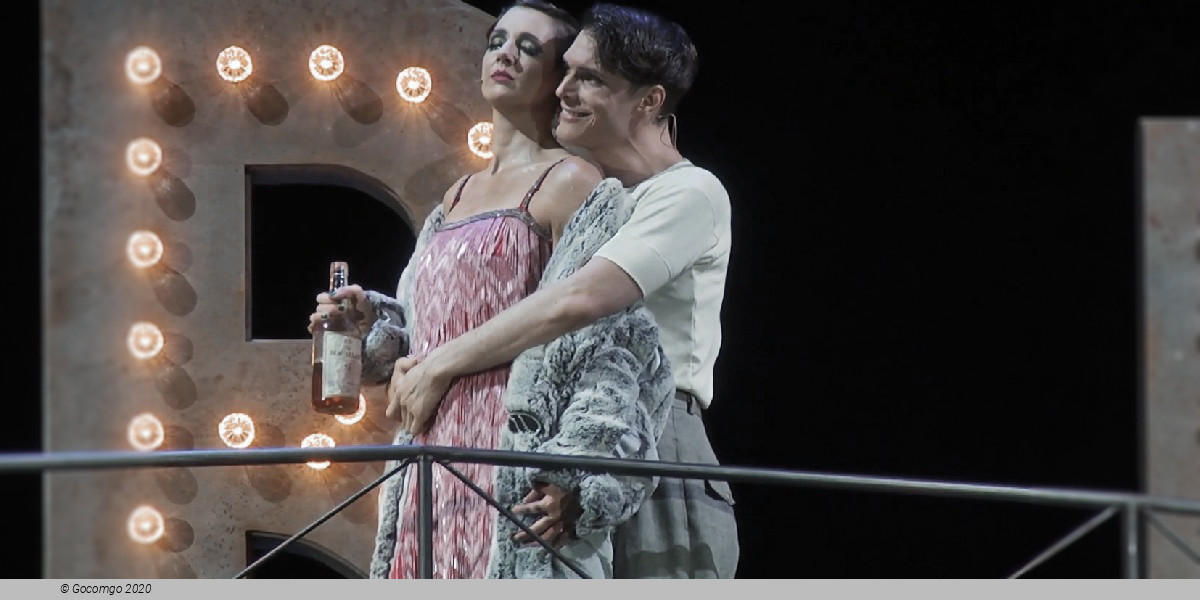
Months later, Cliff and Sally are still living together and have grown intimate. Cliff knows that he is in a "dream", but he enjoys living with Sally too much to come to his senses ("Why Should I Wake Up?"). Sally reveals that she is pregnant, but she does not know who is the father and reluctantly decides to obtain an abortion. Cliff reminds her that it could be his child and tries to convince her to have the baby ("Maybe This Time"). Ernst enters and offers Cliff a chance to earn easy money—picking up a suitcase in Paris and delivering it to his "client" in Berlin. The Emcee comments on this with the song "Sitting Pretty" (or, in later versions, "Money").
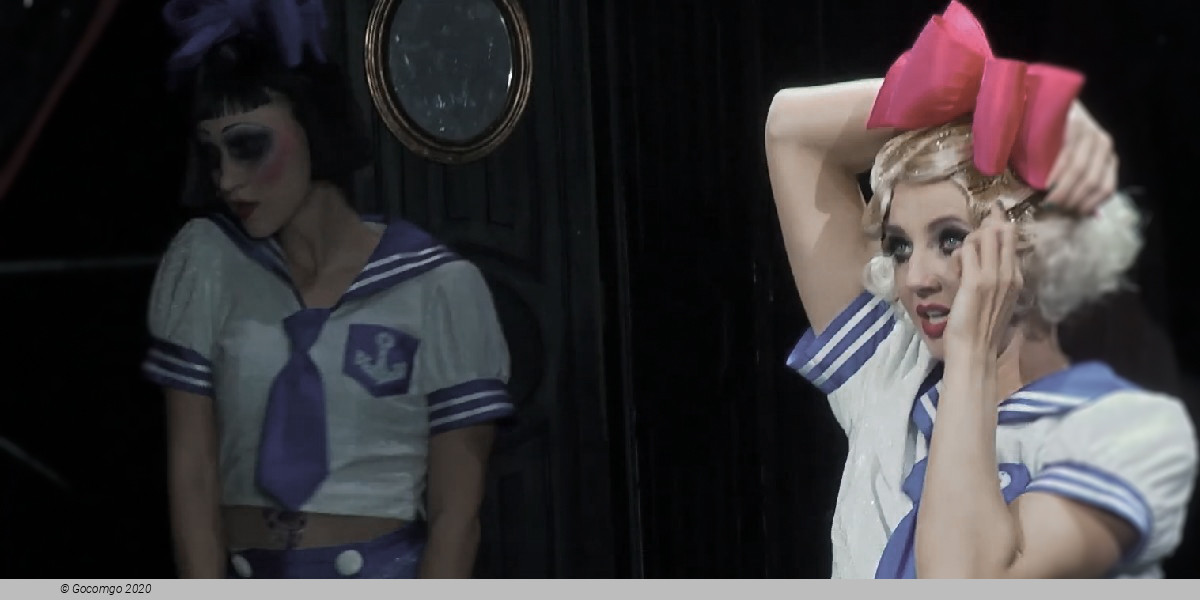
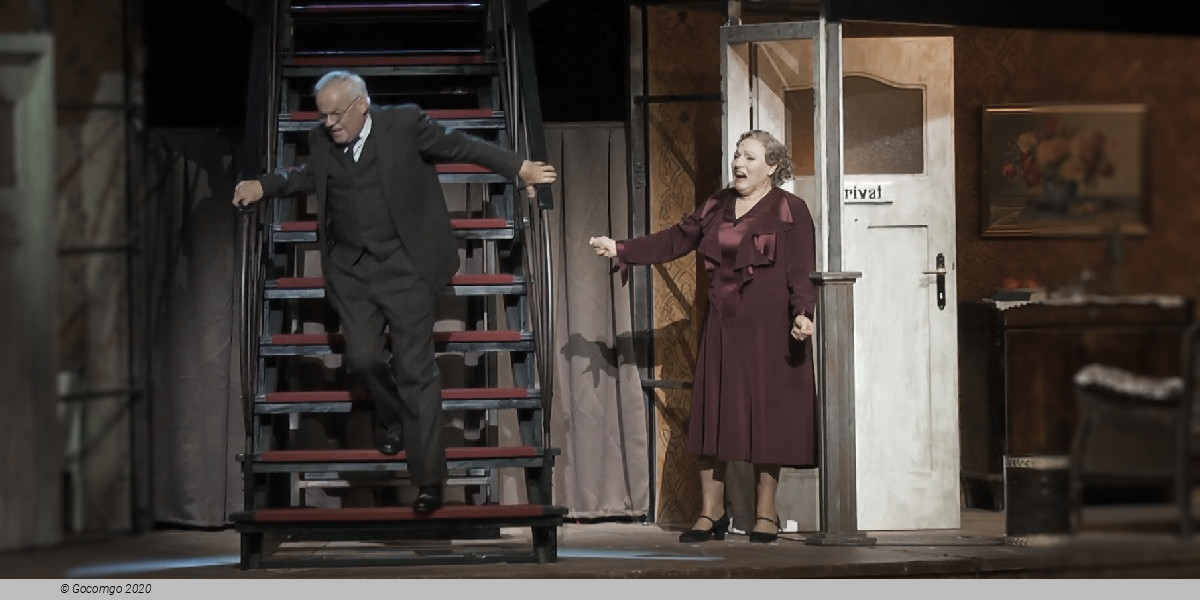
Meanwhile, Fräulein Schneider has caught one of her boarders, the prostitute Fräulein Kost, bringing sailors into her room. Fräulein Schneider forbids her from doing so again, but Kost threatens to leave. Kost reveals that she has seen Fräulein Schneider with Herr Schultz in her room. Herr Schultz saves Fräulein Schneider's reputation by telling Fräulein Kost that he and Fräulein Schneider are to be married in three weeks. After Fräulein Kost departs, Fräulein Schneider thanks Herr Schultz for lying to Fräulein Kost. Herr Schultz says that he was serious and proposes to Fräulein Schneider ("Married").
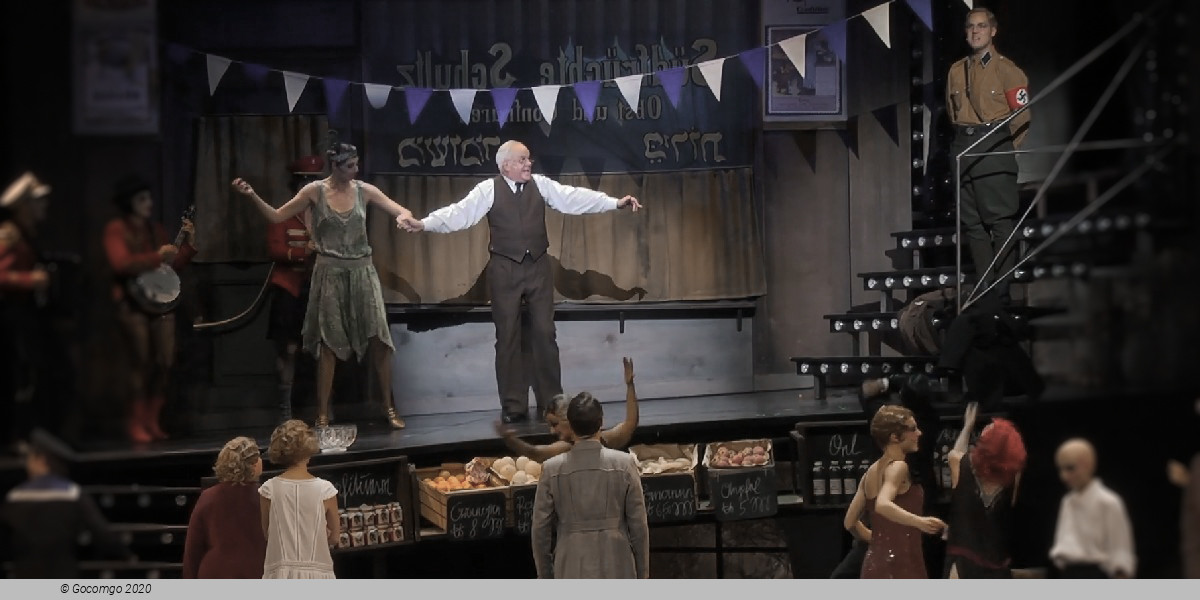
At Fräulein Schneider and Herr Schultz's engagement party, Cliff arrives and delivers the suitcase of contraband to Ernst. A tipsy Schultz sings "Meeskite" ("meeskite", he explains, is Yiddish for ugly or funny-looking), a song with a moral ("Anyone responsible for loveliness, large or small/Is not a meeskite at all"). Afterward, seeking revenge on Fräulein Schneider, Kost tells Ernst, who now sports a Nazi armband, that Schultz is a Jew. Ernst warns Fräulein Schneider that marrying a Jew is unwise. Fräulein Kost and company reprise "Tomorrow Belongs to Me", with more overtly Nazi overtones, as Cliff, Sally, Fräulein Schneider, Herr Schultz, and the Emcee look on.
Act II
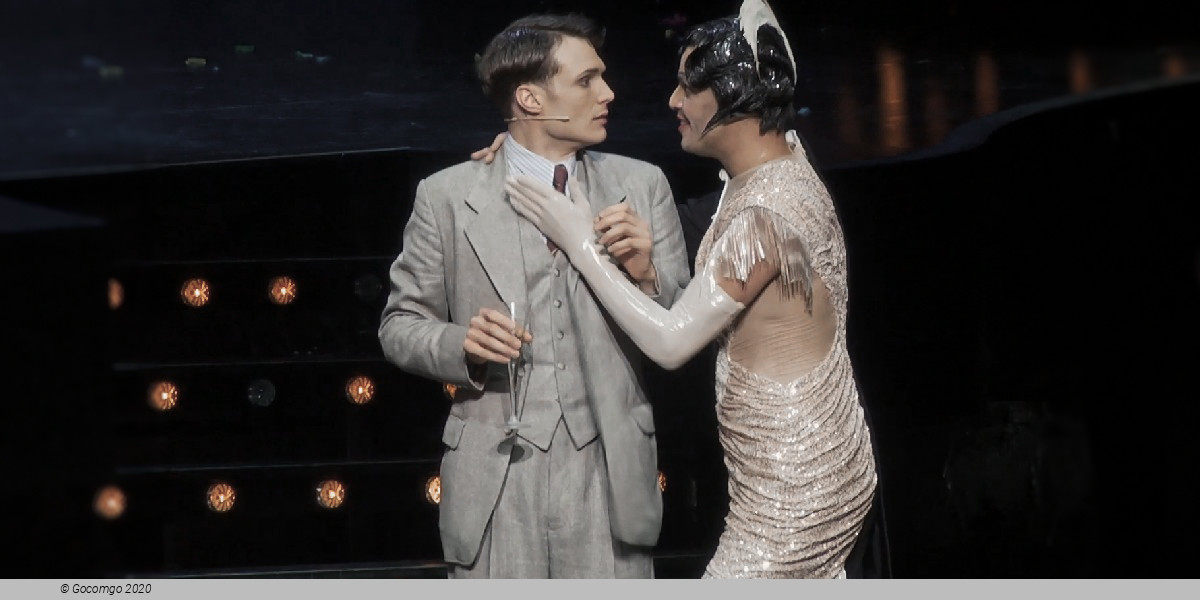
The cabaret girls—along with the Emcee in drag—perform a kick line routine which eventually becomes a goose-step. Fräulein Schneider expresses her concerns about her impending nuptials to Herr Schultz, who assures her that everything will be all right ("Married" Reprise). They are interrupted by the crash of a brick being thrown through the glass window of Herr Schultz's fruit shop. Schultz tries to reassure her that it is merely rowdy children making trouble, but Fräulein Schneider is now afraid.
Back at the Kit Kat Klub, the Emcee performs a song-and-dance routine with a woman in a gorilla suit, singing that their love has been met with universal disapproval ("If You Could See Her"). Encouraging the audience to be more open-minded, he defends his ape-woman, concluding with, "if you could see her through my eyes... she wouldn't look Jewish at all." Fräulein Schneider goes to Cliff and Sally's room and returns their engagement present, explaining that her marriage has been called off. When Cliff protests and states that she can't just give up this way, she asks him what other choice she has ("What Would You Do?").
Cliff begs Sally to leave Germany with him so that they can raise their child together in America. Sally protests and claims their sybaritic life in Berlin is wonderful. Cliff urges her to "wake up" and to notice the growing social upheaval around them. Sally retorts that politics have nothing to do with them and returns to the Kit Kat Klub ("I Don't Care Much"). At the club, after another heated argument with Sally, Cliff is accosted by Ernst, who has another delivery job for him. Cliff tries to brush him off, but when Ernst inquires if Cliff's attitude towards him is because of "that Jew at the party", Cliff attacks him—only to be beaten by Ernst's Nazi bodyguards and expelled from the club. On stage, the Emcee introduces Sally, who enters to perform again, singing that "life is a cabaret, old chum," cementing her decision to live in carefree ignorance and freedom ("Cabaret").
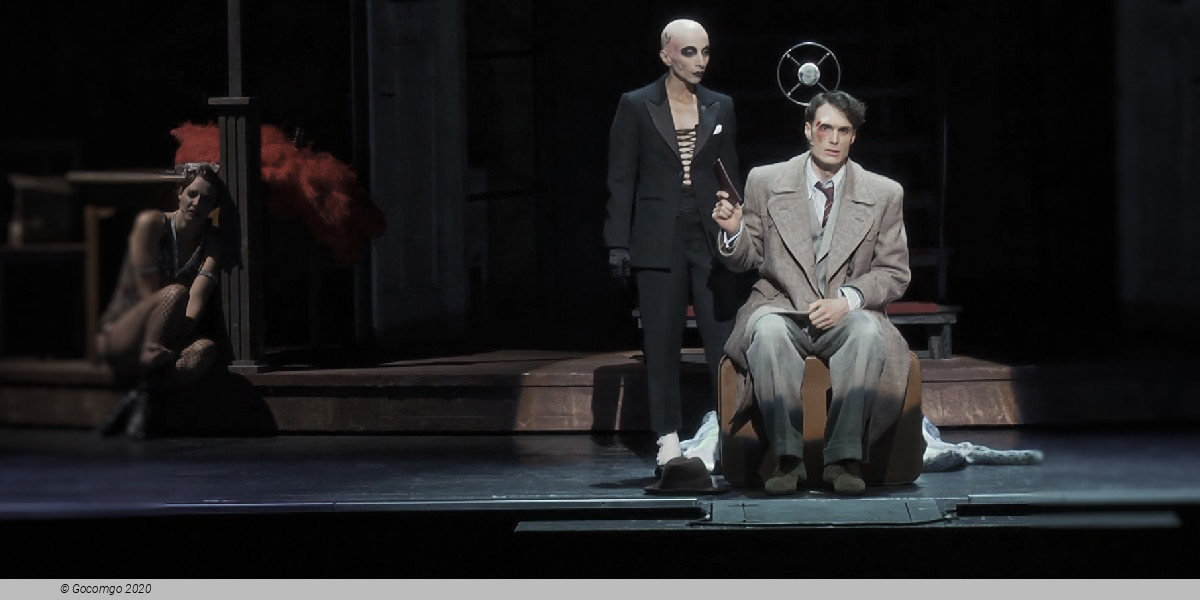
The next morning, a bruised Cliff is packing his clothes in his room when Herr Schultz visits. He informs Cliff that he is moving to another boarding house, but he is confident that these difficult times will soon pass. He understands the German people, he declares, because he is a German too. When Sally returns, she announces that she has had an abortion, and Cliff slaps her. He still hopes that she will join him in France, but Sally retorts that she has "always hated Paris." She hopes that, when Cliff finally writes his novel, he will dedicate the work to her. Cliff leaves, heartbroken.
On the railway train to Paris, Cliff begins to compose his novel, reflecting on his experiences: "There was a cabaret, and there was a master of ceremonies ... and there was a city called Berlin, in a country called Germany—and it was the end of the world and I was dancing with Sally Bowles—and we were both fast asleep" ("Willkommen" Reprise). In the Kit Kat Klub, the Emcee welcomes the audience, and the backdrop raises to reveal a white space with the ensemble standing within. The cabaret ensemble reprises "Willkommen", but the song is now harsh and discordant as the Emcee sings, "Auf Wiedersehen... à bientôt..." followed by a crescendo-ing drum roll and a cymbal crash.











 Schwarzstrasse 22