Haydn’s late masterpiece performed by Václav Luks conducting the Orchestra & Choir of the Age of Enlightenment, one of the world’s most celebrated period instrument ensembles
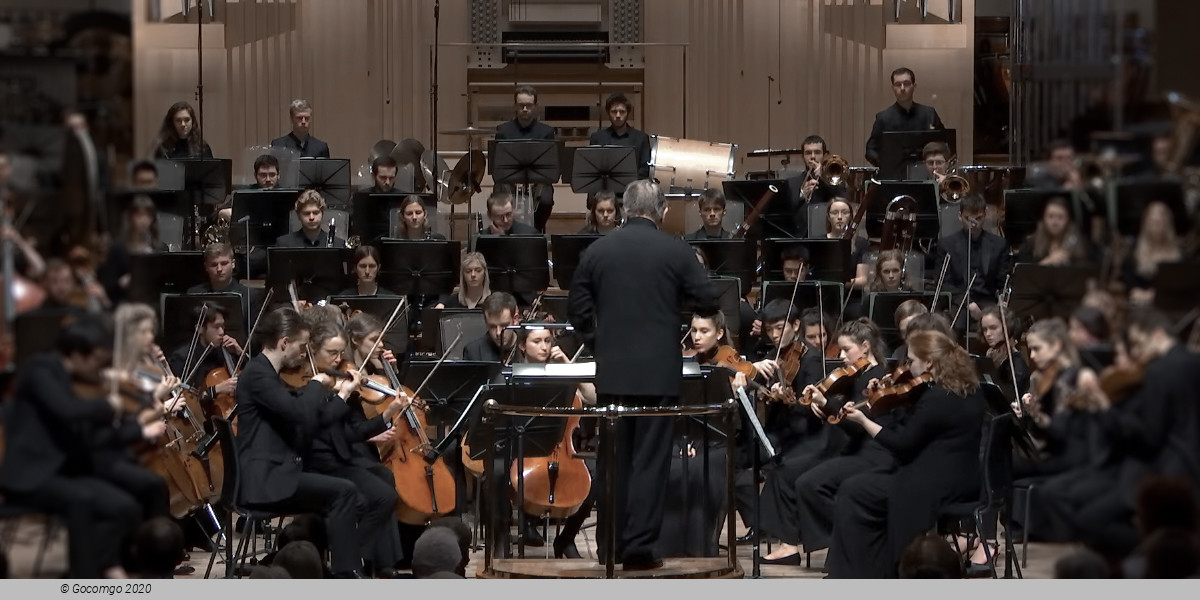
“The Creation is a work that combines the old with the new in a fascinating manner, in a way the culmination of Haydn’s musical dramatic language. We find here many beautiful, dramatic moments that directly call for visual representation. It would be difficult to find a more avant-garde musical structure at the end of the 18th century than the depiction of chaos at the beginning of the world in the Introduction. On the other hand, The Creation is to a large extent a traditionally religious work, having strong support in the Old Testament model. After all, Haydn himself admits that, while composing The Creation, ʽhe was more pious than ever beforeʼ,” conductor Václav Luks describing one of the most remarkable works from the end of the 18th century, which will be performed in the Rudolfinum’s Dvořák Hall on 28 May. Luks will present Joseph Haydn’s late tour de force, inspired by the oratorio by Georg Friedrich Händel, at the Prague Spring in collaboration with the period instrument ensemble Orchestra of the Age of Enlightenment, the Choir of the Age of Enlightenment and three first-rate soloists.
The libretto by Robert Lindley, based on the Book of Genesis, the Psalms and John Milton’s Paradise Lost, skilfully translated into German by Gottfried van Swieten, gave the composer the opportunity to create a work of spiritual depth, operatic dramatism and unprecedented imitative effects. The Creation begins with a symphonic “depiction of chaos”, a rather terrifying representation of “nothingness”, which is then swept up into a monumental rendering of the word “light”, sung by the choir. The oratorio is structured in three parts; the first part depicts the first four days of the creation of the world, the genesis of the earth and its flora; the second part deals with the creation of the animal world and of man. The third part treats the theme of the life of the first people, Adam and Eve, while the oratorio culminates in two grand closing paeans, hymns of praise and thanksgiving. The premiere was held on 29 April 1798 before a private audience in the Schwarzenberg Palace on Mehlmarkt (today Neuer Markt square) in Vienna. It was a phenomenal success, confirmation of which even exists in a document penned by Swedish diplomat Frederik Samuel Silverstolpe, a friend of Haydn, who described his impressions in the following words: “I was then among the audience, after having attended the first rehearsal a few days earlier. On this occasion Haydn was surprised by a gift. Prince Schwarzenberg, in whose large hall the work was rehearsed and later performed, was so utterly enchanted by its many beauties that he presented the composer with a roll of one hundred ducats, over and above the five hundred that were part of the agreement. No one, not even Baron van Swieten, had seen the page of the score wherein the birth of light is described. That was the only passage of the work which Haydn had kept hidden. I think I see his face even now, as this section was heard in the orchestra. Haydn had the expression of someone who is thinking of biting his lips, either to hide his embarrassment or to conceal a secret. And in that moment when light broke out for the first time, one would have said that rays darted from the composer’s burning eyes. The enchantment of the electrified Viennese was so general that the orchestra could not proceed for some minutes”.


 Náměstí Jana Palacha 1