Zurich Opera House: Speak for Yourself Tickets | Event Dates & Schedule | GoComGo.com

Speak for Yourself Tickets

Zurich Opera House, Zurich, Switzerland
Important Info
Type: Ballet
City: Zurich, Switzerland

E-tickets: Print at home or at the box office of the event if so specified. You will find more information in your booking confirmation email.

You can only select the category, and not the exact seats.
If you order 2 or 3 tickets: your seats will be next to each other.
If you order 4 or more tickets: your seats will be next to each other, or, if this is not possible, we will provide a combination of groups of seats (at least in pairs, for example 2+2 or 2+3).

Cast
Performers
Choose the date to see the peformers
Overview

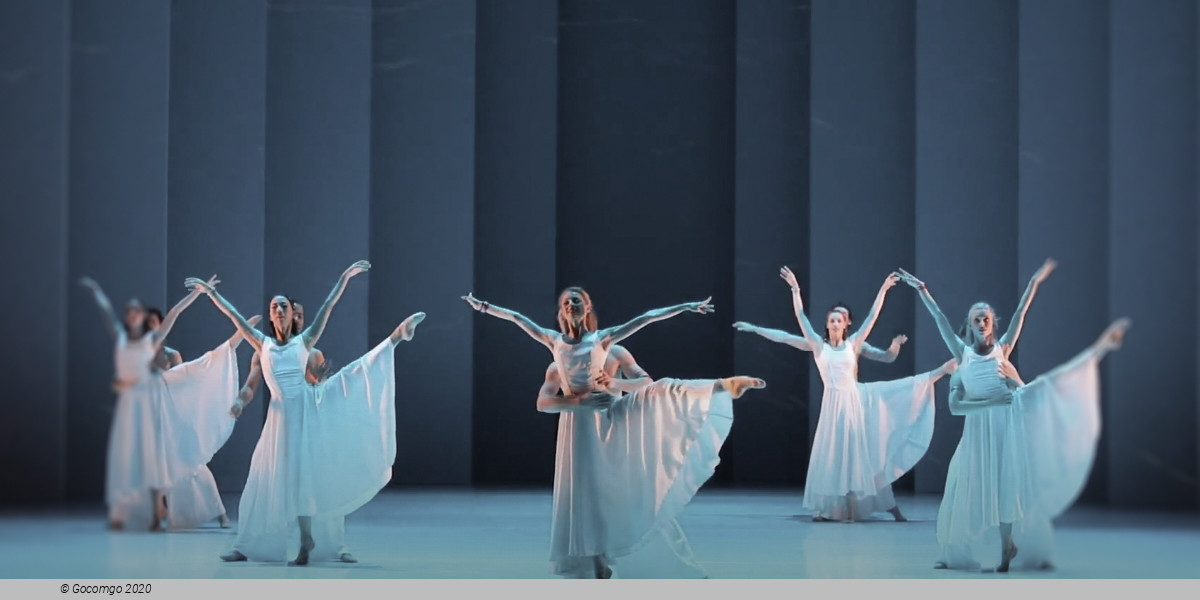
Sol León from Spain and Paul Lightfoot from the United Kingdom have directed the Nederlands Dans Theater in Den Haag since 2001. Their characteristically flowing, soft choreographic style is infused with a dark, mysterious theatricality. In Speak for Yourself, two elements collide. Fire – as the masculine, destructive element – and water – associated with femininity and creativity – are dialectically dependent and enter into a conflict on stage during which the choreography unfurls to music from Johann Sebastian Bach’s Art of the Fugue and superimposed quotations from Steve Reich’s Come out.

History

The Art of Fugue (or The Art of the Fugue; German: Die Kunst der Fuge), BWV 1080, is an incomplete musical work of unspecified instrumentation by Johann Sebastian Bach (1685–1750). Written in the last decade of his life, The Art of Fugue is the culmination of Bach's experimentation with monothematic instrumental works.

Come Out is a 1966 piece by American composer Steve Reich. Reich was asked to edit down tape footage into a form of collage for a benefit for the Harlem Six and Come Out was a byproduct of the collage's production. The Harlem Six were six black youths arrested for a murder of Margit Sugar, a Hungarian refugee, in Harlem in the weeks following the Little Fruit Stand Riot of 1964. Only one of the six was responsible while the lead witness is generally considered the actual perpetrator. Truman Nelson, a civil rights activist and New Yorker who had asked Reich to compose a sound collage that was separate from Come Out, gave him a collection of tapes with recorded voices to use as source material. Nelson agreed to give Reich creative freedom with the tapes that he presented him for the sound collage. Come Out was a loop of four seconds of the more than 70 hours of tapes Nelson presented to Reich.

Venue Info

Zurich Opera House - Zurich
Location   Sechseläutenplatz 1

Zürich Opera House is a main opera house in Zürich and Switzerland. Located at the Sechseläutenplatz, it has been the home of the Zürich Opera since 1891, and also houses the Bernhard-Theater Zürich. It is also home to the Zürich Ballet. The Opera House also holds concerts by its Philharmonia orchestra, matinees, Lieder evenings and events for children. The Zürich Opera Ball is organised every year in March, and is usually attended by prominent names.

The first permanent theatre, the Aktientheater, was built in 1834 and it became the focus of Richard Wagner’s activities during his period of exile from Germany.

The Aktientheater burnt down in 1890. The new Stadttheater Zürich (municipal theatre) was built by the Viennese architects Fellner & Helmer, who changed their previous design for the theatre in Wiesbaden only slightly. It was opened in 1891. It was the city's main performance space for drama, opera, and musical events until 1925, when it was renamed Opernhaus Zürich and a separate theatre for plays was built: The Bernhard Theater opened in 1941, in May 1981 the Esplanada building was demolished, and the present adjoint building opened on 27/28 December 1984 after three years of transition in the Kaufhaus building nearby Schanzengraben.

By the 1970s, the opera house was badly in need of major renovations; when some considered it not worth restoring, a new theatre was proposed for the site. However, between 1982 and 1984, rebuilding took place but not without huge local opposition which was expressed in street riots. The rebuilt theatre was inaugurated with Wagner’s Die Meistersinger von Nürnberg and the world première of Rudolf Kelterborn’s Chekhov opera Der Kirschgarten.

As restored, the theatre is an ornate building with a neo-classical façade of white and grey stone adorned with busts of Weber, Wagner, and Mozart. Additionally, busts of Schiller, Shakespeare, and Goethe are to be found. The auditorium is built in the neo-rococo style and seats approximately 1200 people. During the refurbishment, the issue of sightlines was not adequately addressed. As a result, the theatre has a high number of seats with a limited view, or no view, of the stage. This is unusual in international comparison, where sightlines in historic opera houses have been typically enhanced over time.

Corporate archives and historical library collections are held at the music department of the Predigerkirche Zürich.

The Zürich Opera House is also home of the International Opera Studio (in German: Internationales Opernstudio IOS) which is a educational program for young singers and pianists. The studio was created in 1961 and has renowned artists currently teaching such as Brigitte Fassbaender, Hedwig Fassbender, Andreas Homocki, Rosemary Joshua, Adrian Kelly, Fabio Luisi, Jetske Mijnssen, Ann Murray, Eytan Pessen or Edith Wiens.

Important Info
Type: Ballet
City: Zurich, Switzerland

E-tickets: Print at home or at the box office of the event if so specified. You will find more information in your booking confirmation email.

You can only select the category, and not the exact seats.
If you order 2 or 3 tickets: your seats will be next to each other.
If you order 4 or more tickets: your seats will be next to each other, or, if this is not possible, we will provide a combination of groups of seats (at least in pairs, for example 2+2 or 2+3).

Top of page