









Royal Danish Theatre 22 November 2019 - Queen of Spades | GoComGo.com

Queen of Spades

Royal Danish Theatre, The Old Stage, Copenhagen, Denmark
All photos (9)
Select date and time
8 PM
Request for Tickets
Important Info
Type: Ballet
City: Copenhagen, Denmark
Starts at: 20:00
Intervals: 2
Duration: 2h 20min

E-tickets: Print at home or at the box office of the event if so specified. You will find more information in your booking confirmation email.

You can only select the category, and not the exact seats.
If you order 2 or 3 tickets: your seats will be next to each other.
If you order 4 or more tickets: your seats will be next to each other, or, if this is not possible, we will provide a combination of groups of seats (at least in pairs, for example 2+2 or 2+3).

Overview

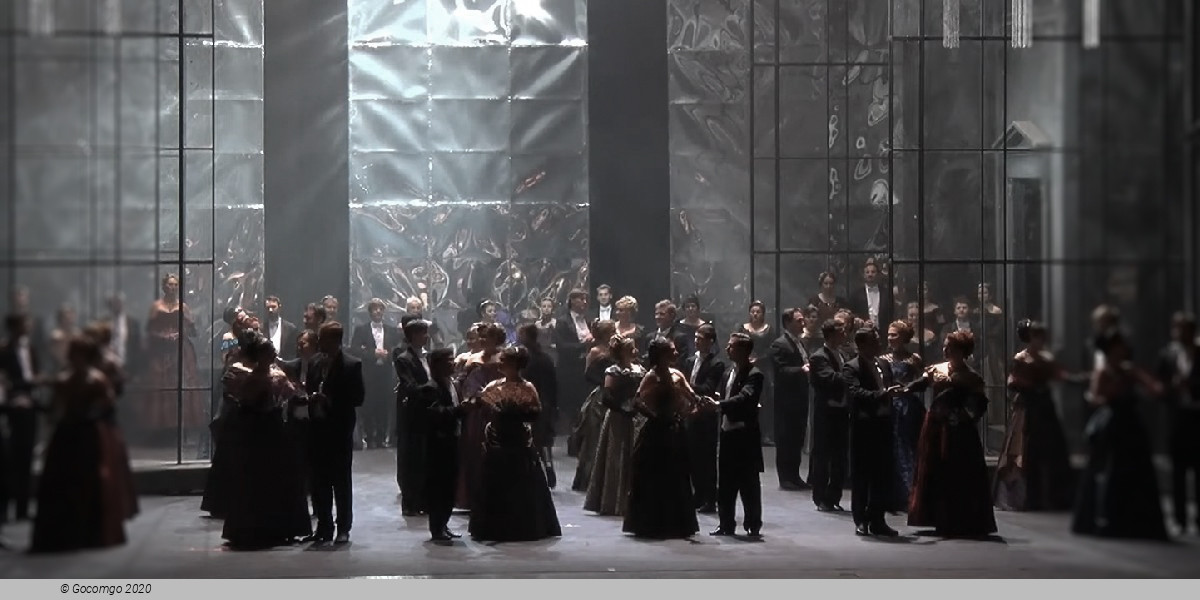
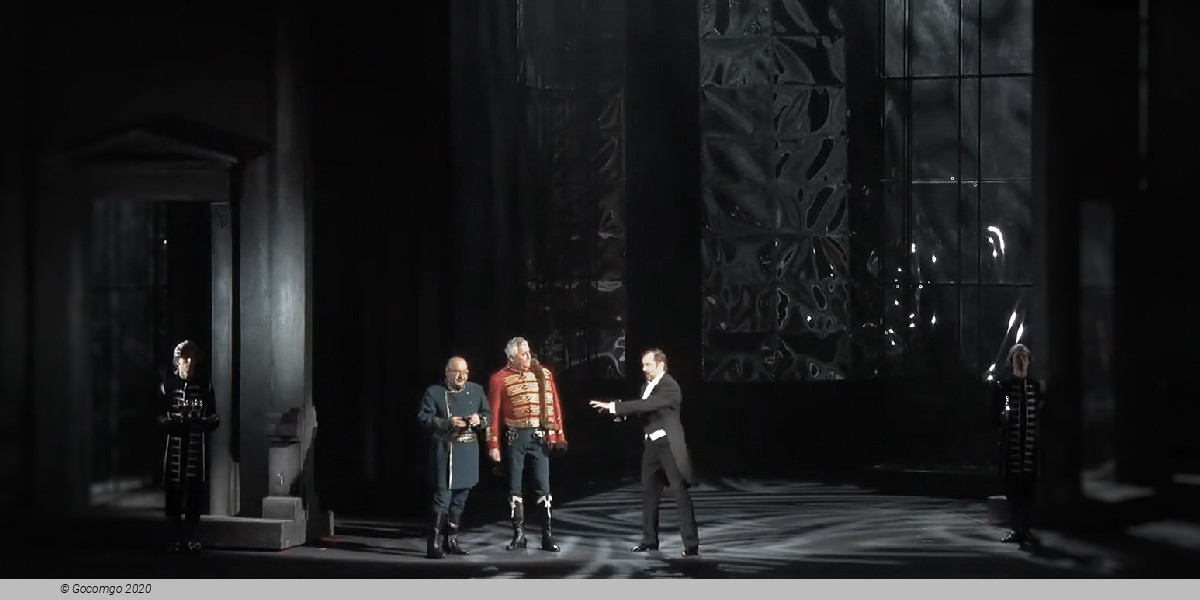
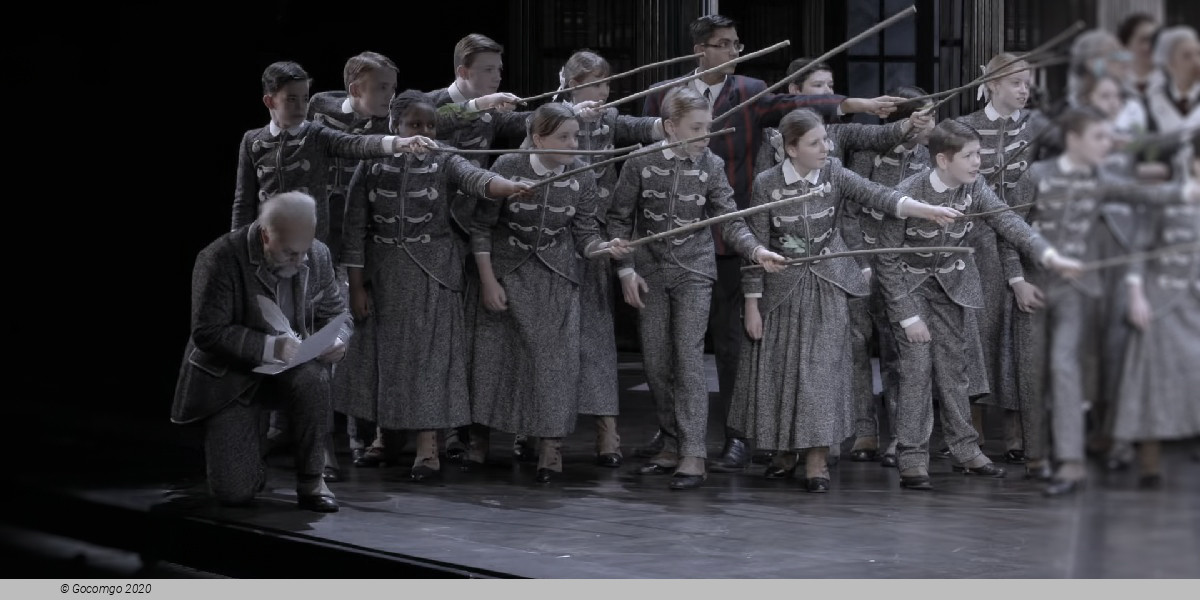
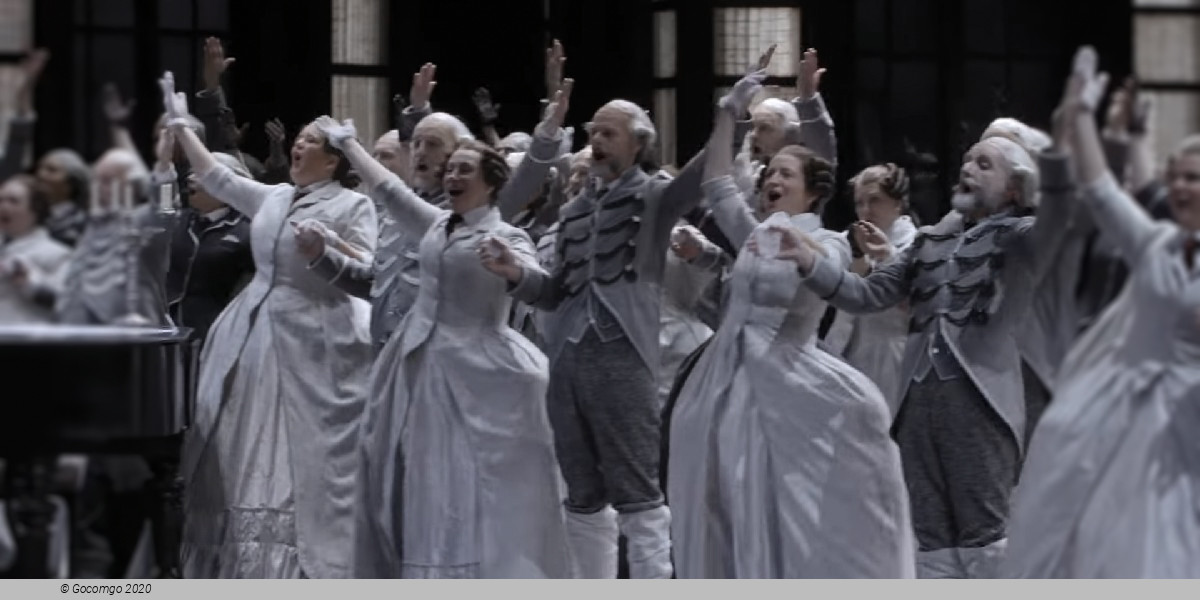
Last season, young English choreograph Liam Scarlett, one of the fastest rising stars in the current world of dance, created a new major ballet based on the old tale of Queen of Spades exclusively for the Royal Danish Ballet. Critics and audiences were so enthusiastic that we are repeating the success.

Not many new ballets hit the limelight and become an instant classic, but that is precisely what happened when Queen of Spades had its world premiere last season at the Royal Danish Theatre. Not only were audiences won over on the spot, critics also kept singing its praises: “Ballet has gained a new trump card”, “Dizzying ferocity” and “A complete emotionally charged drama” are just an exclusive selection. 

Queen of Spades is based on Russian Alexander Pushkin’s riveting short story about a poverty-stricken officer named Hermann, who meets an elderly countess called Queen of Spades, who has more than a couple of card tricks hidden up her sleeve. He seduces her young chambermaid Liza and attempts through her to entice the countess to reveal her secret card skills. Three magic playing cards will grant him access to eternal happiness, he believes, but nothing goes as planned.

With the captivating music of Tchaikovsky as his musical backdrop, phenomenal English choreograph Liam Scarlett has converted this drama into masterful, breathtakingly beautiful dance with a magnificently grand-scale set design. He takes us on a thrilling journey to the darkest corners of the mind, where few dare to venture.

History
Premiere of this production: 29 March 1890, Mariinsky Theatre, St. Petersburg

The Queen of Spades is an opera in three acts (seven scenes) by Pyotr Ilyich Tchaikovsky to a Russian libretto by the composer's brother Modest Tchaikovsky, based on a short story of the same name by Alexander Pushkin, but with a dramatically altered plot. The premiere took place in 1890 in St. Petersburg (at the Mariinsky Theatre), Russia.

Synopsis

Time: The close of the 18th century

Place: St. Petersburg, Russia

Act 1

Scene 1

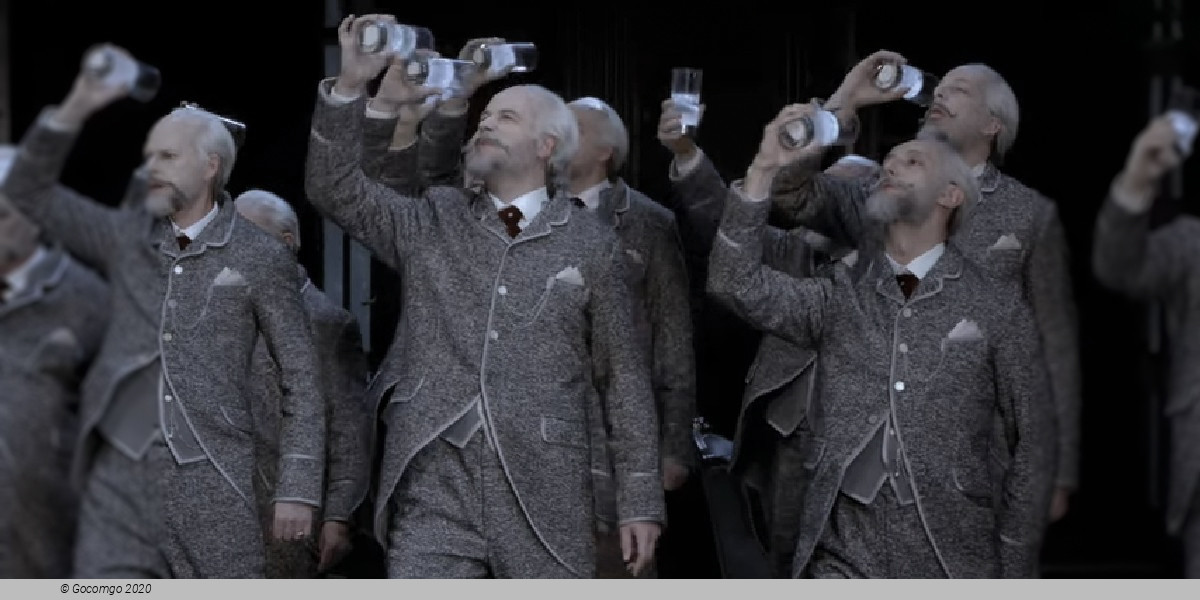
During the reign of Catherine the Great (1762–96), children are at play in St. Petersburg's Summer Garden pretending to be soldiers. Two officers — Tsurin and Chekalinsky — enter, the former complaining about his bad luck at gambling. They remark that another officer, Herman, seems obsessed with the gaming table but never bets, being frugal and methodical. Herman appears with Tomsky, who remarks that his friend hardly seems like his old self: is anything bothering him? Herman admits he is in love with a girl above his station whose name he does not even know. When Prince Yeletsky, an officer, strolls into the park, Chekalinsky congratulates him on his recent engagement. Yeletsky declares his happiness while Herman, aside, curses him enviously. Yeletsky points out his fiancée, Liza, who has just appeared with her grandmother, the old Countess. Catching sight of Herman, the two women note they have seen him before, staring at them with frightening intensity. Herman realizes that Liza is his unknown beloved. When Yeletsky and the women leave, Herman is lost in thought as the other officers discuss the Countess: known as the Queen of Spades and formerly as the Muscovite Venus, due to her beauty, she succeeded at gambling in her youth by trading amorous favors for the winning formula of Count St. Germain in Paris. Tomsky says only two men, her husband and, later on, her young lover, ever learned the secret of playing three special cards, because she was warned by an apparition to beware a "third suitor" who would kill her trying to force it from her. Musing on the winning sequence of three cards, the others lightly suggest that this might be the way for Herman to win without risking any money. Threatened by approaching thunder, all leave except Herman, who vows to learn the Countess's secret.

Scene 2

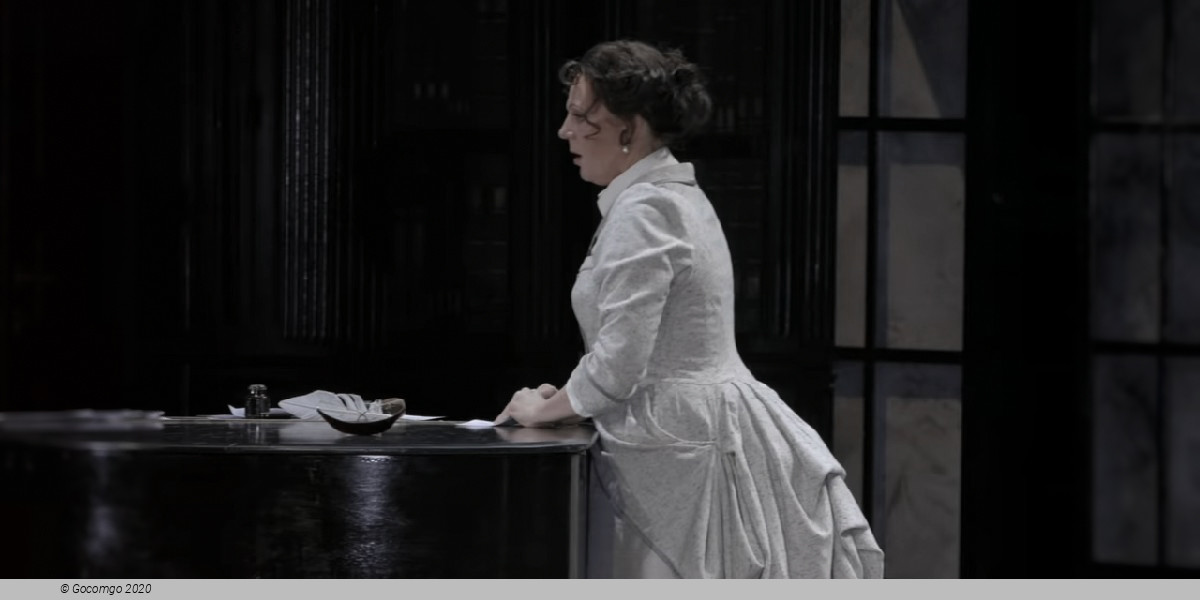
At home, Liza plays the spinet as she and her friend Pauline sing a duet about evening in the countryside. Their girlfriends ask to hear more, so Pauline launches into a sad ballad, followed by a dancelike song. As the merriment increases, Liza remains pensively apart. A Governess chides the girls for indulging in unbecoming folk dancing and asks the visitors to leave. Pauline, the last to go, urges Liza to cheer up; Liza replies that after a storm there is a beautiful night and asks the maid, Masha, not to close the French windows to the balcony. Alone, Liza voices her unhappiness with her engagement; she has been stirred by the romantic look of the young man in the park. To her shock, Herman appears on the balcony. Claiming he is about to shoot himself over her betrothal to another, he begs her to take pity on him. When the Countess is heard knocking, Liza hides Herman and opens the door to the old woman, who tells her to shut the windows and go to bed. After the Countess retires, Liza asks Herman to leave but is betrayed by her feelings and falls into his embrace.

Act 2

Scene 1

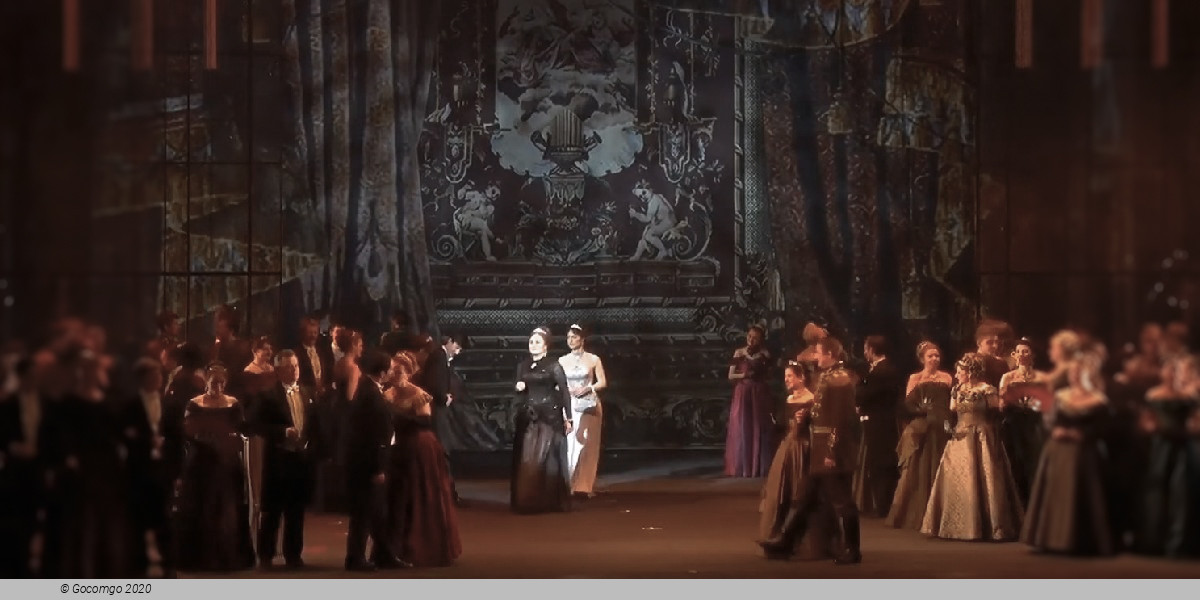
Not long afterward, at a masked ball, Herman's comrades comment on his obsession with the secret of the winning cards. Yeletsky passes with Liza, noting her sadness and reassuring her of his love ("Ya vas lyublyu" "I love you"). Herman receives a note from Liza, asking him to meet her later. Tsurin and Chekalinsky sneak up behind him with the intent of playing a joke on him, muttering he is the "third suitor" who will learn the Countess's secret, then melt into the crowd as Herman wonders whether he is hearing things. The master of ceremonies announces a tableau of shepherdesses. Liza slips Herman the key to her grandmother's room, saying the old woman will not be there the next day, but Herman insists on coming that very night. Thinking fate is handing him the Countess's secret, he leaves. The guests' attention turns to the imminent arrival of Catherine the Great, for which a polonaise by Osip Kozlovsky is played and sung in greeting.

Scene 2

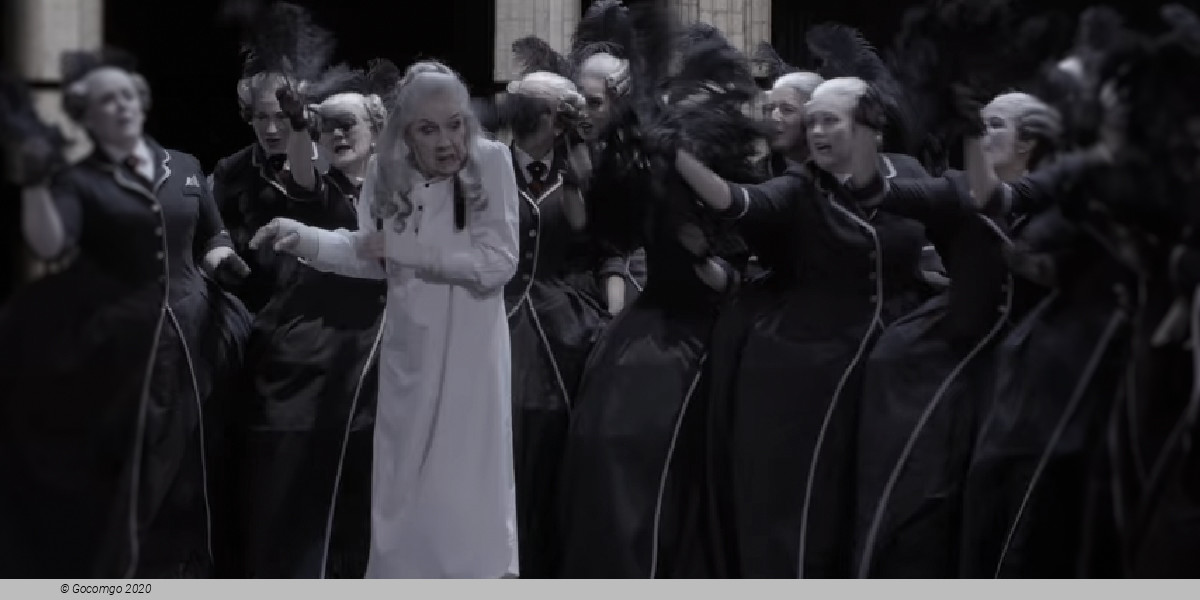
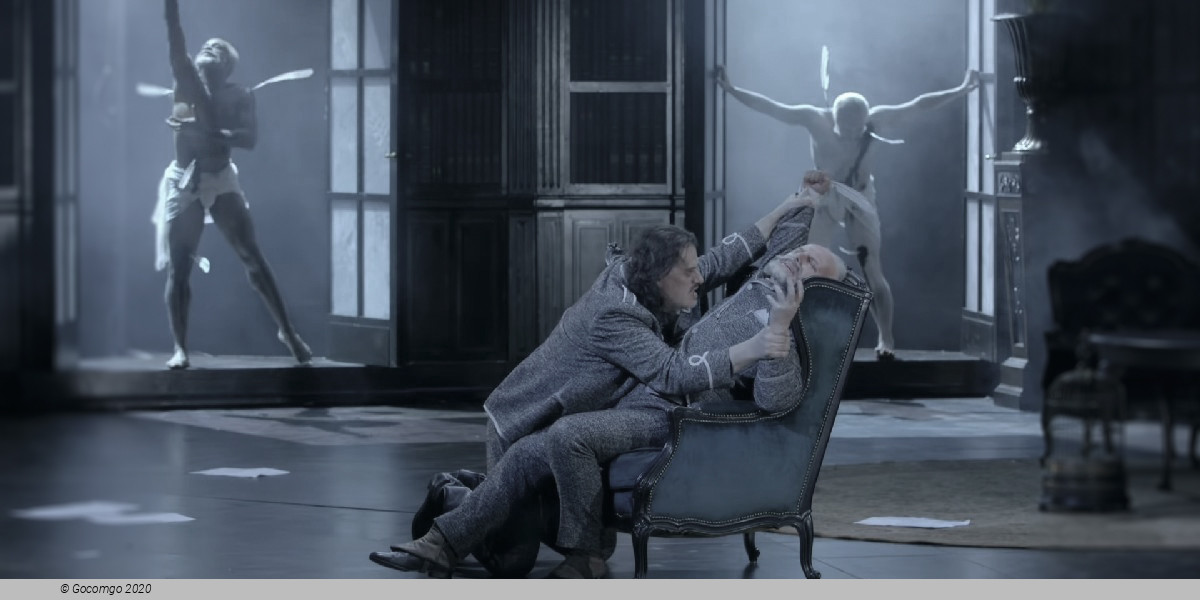
Herman slips into the Countess's room and looks in fascination at her portrait as the "Muscovite Venus"; musing how their fates, he feels, are linked: one of them will die because of the other. He lingers too long before he can go to Liza's room and hears the Countess's retinue coming, so he conceals himself as the old lady approaches. The Countess deplores the manners of the day and reminisces about the better times of her youth, when she sang in Versailles "Je crains de lui parler la nuit" (Laurette's Aria) from André Grétry's opera Richard Cœur-de-Lion before the Pompadour herself. As she dozes off, Herman stands before her. She awakens in horror as he pleads with her to tell him her secret. When she remains speechless, he grows desperate and threatens her with a pistol — at which she dies of fright. Liza rushes in, only to learn that the lover to whom she gave her heart was more interested in the Countess's secret. She orders him out and falls sobbing.

Act 3

Scene 1

In his room at the barracks, as the winter wind howls, Herman reads a letter from Liza, who wants him to meet her at midnight by the river bank. He imagines he hears the chorus chanting at the old Countess's funeral, then is startled by a knock at the window. The old woman's ghost appears, announcing that against her will she must tell him the secret so that he can marry and save Liza. Dazed, Herman repeats the three cards she tells him — three, seven, ace.

Scene 2

By the Winter Canal, Liza waits for Herman: it is already near midnight, and though she clings to a forlorn hope that he still loves her, she sees her youth and happiness swallowed in darkness. At last he appears, but after uttering words of reassurance, he starts to babble wildly about the Countess and her secret. No longer even recognizing Liza, he rushes away. Realizing that all is lost, she commits suicide.

Scene 3

At a gambling house, Herman's fellow officers are finishing supper and getting ready to play faro. Yeletsky, who has not gambled before, joins the group because his engagement has been broken: "unlucky in love, lucky at cards". Tomsky entertains the others with a song. Then Chekalinsky leads a traditional gamblers' song. Settling down to play, they are surprised when Herman arrives, wild and distracted. Yeletsky senses a confrontation and asks Tomsky to be his second if a duel should result. Herman, intent only on betting, starts with a huge bet of 40,000 rubles. He bets the three and wins, upsetting the others with his maniacal expression. Next he bets the seven and wins again. At this he takes a wine glass and declares that life is but a game. Yeletsky accepts his challenge to bet on the next round. Herman bets everything he has on the ace but when he shows his card he is told he is holding the queen of spades. Seeing the Countess's ghost laughing at her vengeance, Herman takes his own life and asks Yeletsky's and Liza's forgiveness. The others pray for his tormented soul.

Venue Info

Royal Danish Theatre - Copenhagen
Location   August Bournonvilles Passage 2-8

The Royal Danish Theatre is the major opera house in Denmark. It has been located at Kongens Nytorv in Copenhagen since 1748, originally designated as the king's theatre but with public access. The theatre presents opera, the Royal Danish Ballet, classical music concerts (by the Royal Danish Orchestra, which dates back to 1448), and drama in several locations.

The Royal Danish Theatre organization is under the control of the Danish Ministry of Culture, and its objectives are to ensure the staging of outstanding performances that do justice to the various stages that it controls.

The first edifice on the site was designed by court architect Nicolai Eigtved, who also masterminded Amalienborg Palace. In 1774, the old theatre seating 800 theatergoers were reconstructed by architect C.F. Harsdorff to accommodate a larger audience.

During the theatre's first seasons the staffing was modest. Originally, the ensemble consisted of eight actors, four actresses, two male dancers, and one female dancer. Gradually over the following decades, the Royal Danish Theatre established itself as the kind of multi-theatre we know today, home to drama, opera, ballet, and concerts – all under the same roof and management.

An important prerequisite for the theatre's artistic development is its schools. The oldest is the ballet school, established at the theatre in 1771. Two years later, a vocal academy was established as a forerunner for the opera academy. A number of initiatives were considered regarding a drama school, which was established much later.

King Frederik VI, who ascended the throne in 1808, is probably the monarch who most actively took part in the management of the Royal Danish Theatre, not as an arbiter of taste but as its supreme executive chef.

The theatre's bookkeeping accounts of these years show numerous endorsements where the king took personal decisions on everything from wage increases and bonuses to the purchase of shoelaces for the ballerinas. Indeed, the Royal Danish Theatre became the preoccupation of an introverted nation, following the English Wars had suffered a state bankruptcy. "In Denmark, there is only one city and one theatre," as philosopher Søren Kierkegaard put it.

This was the theatre to which the 14-year-old fairytale storyteller Hans Christian Andersen devoted his early ambition. This was also the theatre that became the social and artistic focal point of the many brilliant artists of Denmark's Golden Age.

After the abolition of absolute monarchy in 1849, the Royal Danish Theatre's status as "the city's theatre" fell into decline. No longer enjoying a monopoly within the performing arts, the Royal Danish Theatre was now required by its new owner, the state, to serve the entire nation. The dilapidated building at Kongens Nytorv also found it hard to compete with the splendor of the new popular stage that was rapidly emerging across town. The solution was to construct a brand new theatre building. It was designed in the Historicist style of the times by architects William Dahlerup and Ove Pedersen and situated alongside the old theatre, which was subsequently demolished.

The inauguration of what we today call the Old Stage took place on 15 October 1874. Here opera and ballet were given ample scope. But due to the scale of the building, the auditorium was less suited for spoken drama, which is why a new playhouse was required.

The Royal Danish Theatre has over the past decade undergone the most extensive transformation ever in its over 250-year history. The Opera House in Copenhagen was inaugurated in January 2005, donated by the AP Møller and Chastine Mc-Kinney Møller Foundation, and designed by architect Henning Larsen. And the Royal Danish Playhouse was completed in 2008. Located by Nyhavn Canal across from the Opera House, the playhouse is designed by architects Boje Lundgaard and Lene Tranberg.

Today, the Royal Danish Theatre comprises the Old Stage, located by Kongens Nytorv, the Opera House, and the Royal Danish Playhouse. 

Important Info
Type: Ballet
City: Copenhagen, Denmark
Starts at: 20:00
Intervals: 2
Duration: 2h 20min
Top of page