
Royal Danish Theatre tickets 20 November 2026 - Evita | GoComGo.com

Evita

Royal Danish Theatre, The Opera House - Main Stage, Copenhagen, Denmark
All photos (9)
Select date and time
7 PM
From
US$ 94

E-tickets: Print at home or at the box office of the event if so specified. You will find more information in your booking confirmation email.

You can only select the category, and not the exact seats.
If you order 2 or 3 tickets: your seats will be next to each other.
If you order 4 or more tickets: your seats will be next to each other, or, if this is not possible, we will provide a combination of groups of seats (at least in pairs, for example 2+2 or 2+3).

Important Info
Type: Musical
City: Copenhagen, Denmark
Starts at: 19:00
Intervals: 1
Duration: 2h 30min

E-tickets: Print at home or at the box office of the event if so specified. You will find more information in your booking confirmation email.

You can only select the category, and not the exact seats.
If you order 2 or 3 tickets: your seats will be next to each other.
If you order 4 or more tickets: your seats will be next to each other, or, if this is not possible, we will provide a combination of groups of seats (at least in pairs, for example 2+2 or 2+3).

Overview

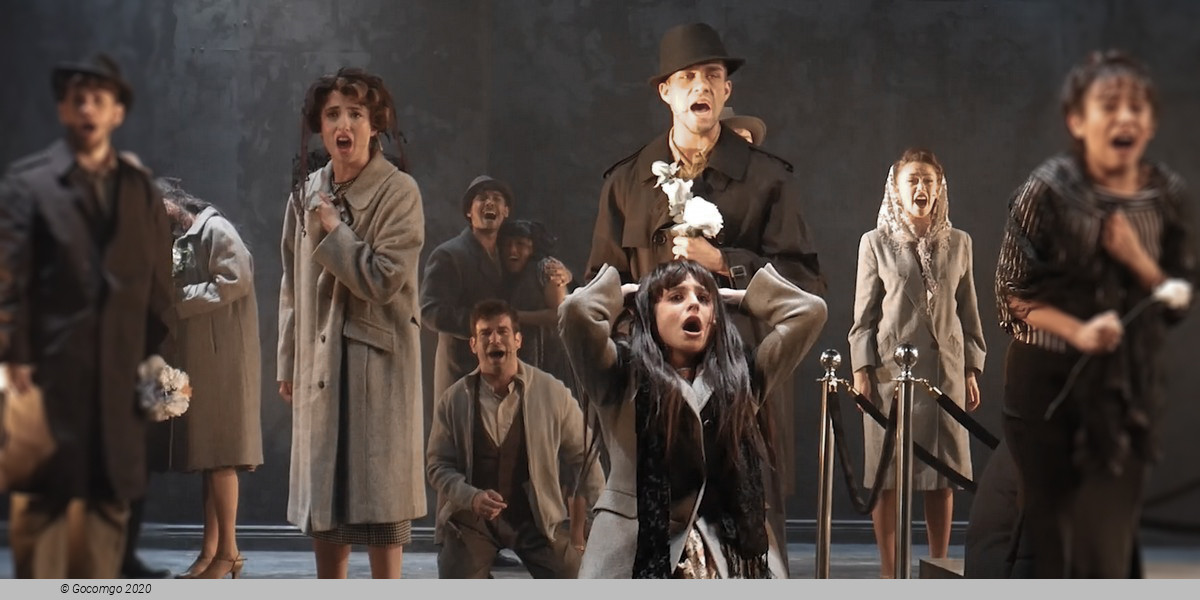
Experience one of the most popular titles in musical history. Andrew Lloyd Webber and Tim Rice's EVITA is the story of the rise and fall of Argentine First Lady Eva Perón, in a magnificent new production with Danish lyrics.

Eva Perón's life was a fairy tale. She used her youth and beauty to rise socially, gained political influence as first lady, but died far too young – and became an icon for large parts of the population. She was a symbol of the working class, while at the same time becoming known as a cynical and power-hungry seducer.

Lloyd Webber and Rice, who reinvented the musical genre in the late 1900s, are behind the catchy songs and grand orchestral score for the story of poor peasant girl Eva who becomes Argentina's first lady. The pair have also created immortal musicals such as Phantom of the Opera, Cats and Jesus Christ Superstar.

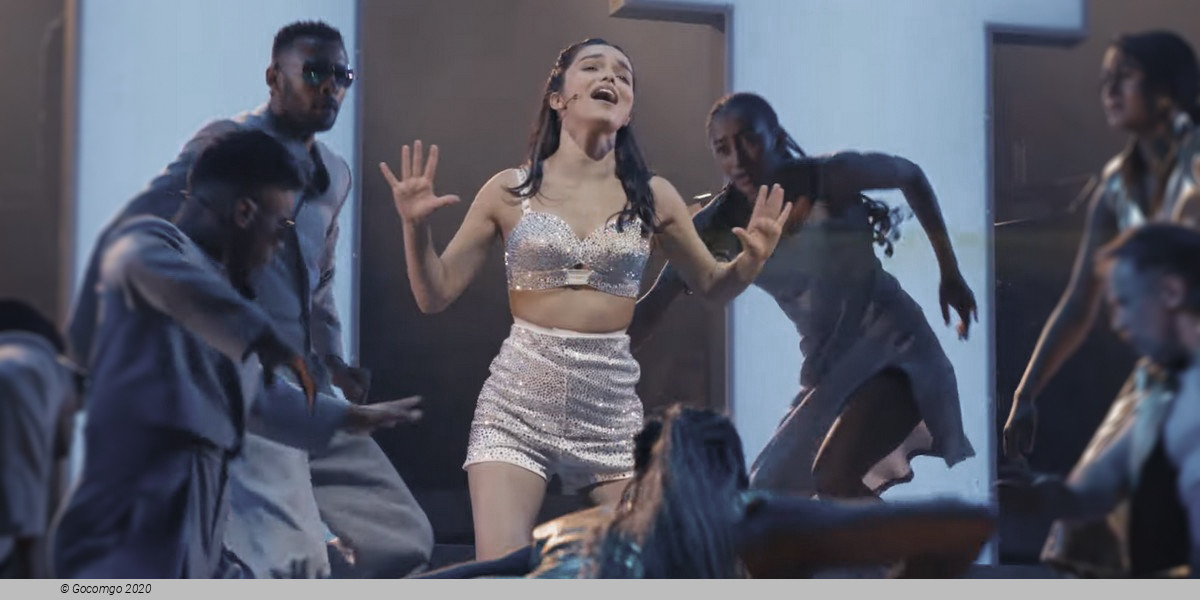
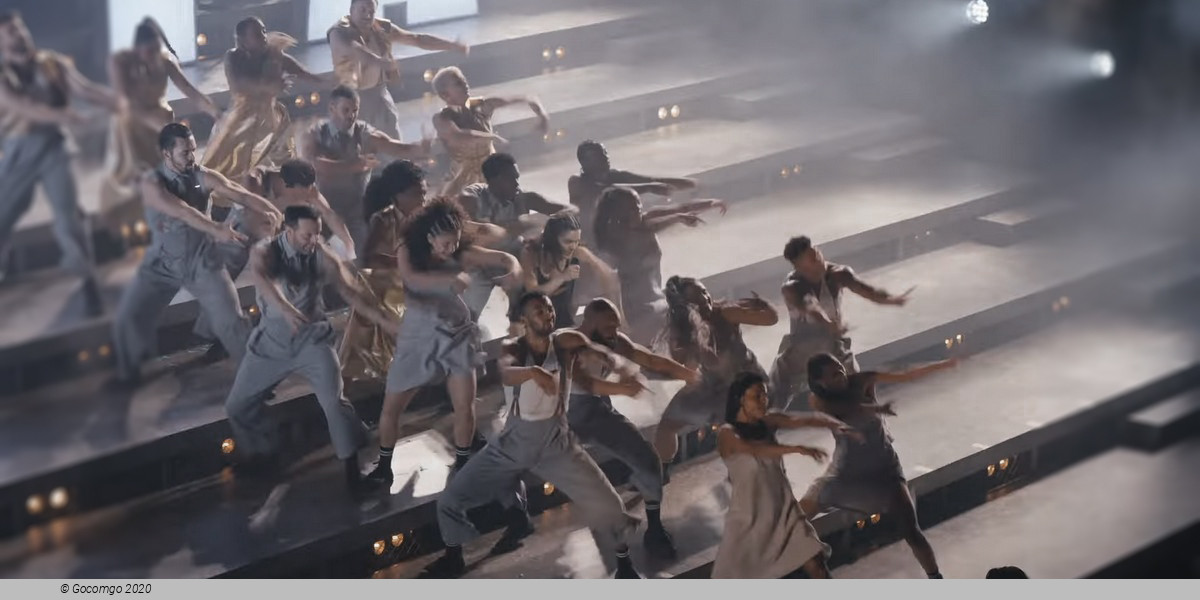
The Royal Danish Theatre and the Danish Opera utilize the impressive setting of the Main Stage with a large ensemble of outstanding musical performers and the Royal Danish Orchestra. The title role of Evita, with the famous Don't cry for me Argentina, is sung by Sara Victoria Bjerregaard, known from TV2's Badehotellet and several musicals, most recently as Satine in last year's Moulin Rouge , which was performed at the Opera.

A strong Danish artistic team creates the framework for this large-scale musical experience: Niclas Bendixen, known from the TV series Ditte og Louise and Ulven kommer on DR, is in charge of the staging, Benjamin la Cour and Ulrik Gad create the scenography and lighting design, Signe Fabricius choreographs, and Anja Vang Kragh designs the fantastic costume creations from peasant clothes to Dior-inspired gala dresses.

History
Premiere of this production: 21 June 1978, Prince Edward Theatre, London

Evita is a sung-through musical with music by Andrew Lloyd Webber and lyrics by Tim Rice. It concentrates on the life of Argentine political leader Eva Perón, the second wife of Argentine president Juan Perón. The story follows Evita's early life, rise to power, charity work, controversies, and death. The musical began as a rock opera concept album released in 1976. Its success led to productions in London's West End in 1978, winning the Laurence Olivier Award for Best Musical, and on Broadway a year later, where it was the first British musical to receive the Tony Award for Best Musical.

Synopsis

Act I

On 26 July 1952, a crowd in a Buenos Aires, Argentina theatre is watching a movie ("A Cinema in Buenos Aires, 26 July 1952") that is interrupted when news breaks of the death of First Lady Eva Perón. Both the crowd and the nation go into a period of public mourning ("Requiem for Evita") as Che, a member of the public, marvels at the spectacle and promises to show how Eva did "nothing for years" ("Oh What a Circus").

In 1934, 15-year-old Eva Duarte lives in the city of Junín, and longs to seek a better life in Buenos Aires. Eva takes up with a tango singer-songwriter, Agustín Magaldi, after she meets him at one of his shows ("On This Night of a Thousand Stars"). Eva persuades an initially resistant Magaldi to take her with him to Buenos Aires ("Eva, Beware of the City"). Upon her arrival in the city, Eva sings about her hopes and ambitions of glory ("Buenos Aires").

After her arrival, Eva is quick to leave Magaldi and pursue other romantic connections to climb up the social ladder ("Goodnight and Thank You"). Che tells of both a left-wing coup in 1943 and Eva's success, implying that Argentine politics and Eva's career may soon coincide. Che also makes a point to introduce the figure of Colonel Juan Domingo Perón, an ambitious army colonel making his way up the Argentine political ladder ("The Lady's Got Potential"). Perón and other military figures compete for power and exhibit their political strategy, with Perón rising above the pack ("The Art of the Possible").

After a massive earthquake hits the town of San Juan, Perón organizes a charity concert at Luna Park to provide aid to the earthquake's victims, which Eva attends. Perón's rousing speech is well-received by the crowd ("Charity Concert"). Eva introduces herself to Perón and they share a secret rendezvous following the charity concert, where Eva hints that she could help Perón rise to power ("I'd Be Surprisingly Good For You"). Eva dismisses Perón's unnamed mistress, who ponders the rejection and her fate ("Another Suitcase in Another Hall").

Upon moving in with Perón, Eva is introduced to high society only to be met with disdain from the upper classes and the Argentine Army ("Perón's Latest Flame"). In 1946, after launching his presidential bid, Perón discusses his chances of winning the election with Eva. After reassuring him of their chances of winning, Eva organizes rallies for the descamisados (shirtless ones) and gives them hope for a better future while Perón and his allies plot to dispose of anyone who stands in their way ("A New Argentina").

Act II

Perón is elected President in a sweeping victory in 1946. He stands "On The Balcony of the Casa Rosada" addressing his descamisados. Eva speaks from the balcony of the Presidential Palace to her adoring supporters, where she proclaims that despite her elevated status, her heart remains with the people of her country ("Don't Cry for Me Argentina"). Che analyses the price of fame as Eva dances at the Inaugural Ball with Perón, now the president-elect ("High Flying, Adored").

Eva insists on a glamorous image to impress the people of Argentina and promote Peronism. She prepares to tour Europe as she is dressed for success by her fashion consultants ("Rainbow High"). Her famous 1947 tour meets with mixed results ("Rainbow Tour"); Spaniards adore her, but the Italians liken her husband to Benito Mussolini. France is impressed, and the British snub her by inviting her to a country estate, rather than Buckingham Palace. Eva affirms her disdain for the upper class, while Che asks her to start helping those in need as she made a promise ("The Actress Hasn't Learned the Lines (You'd Like to Hear)"). Eva begins the Eva Perón Foundation to direct her charity work. Che describes Eva's controversial charitable work and possible money laundering ("And the Money Kept Rolling In (And Out)").

Eva appears at a church to take the sacrament in front of her adoring supporters ("Santa Evita"), but passes out suddenly, and while unconscious, appears to have a dream that reflects upon the conflicting views of her life. In her dream, she and Che heatedly debate her actions; Che accuses Eva of using the Argentine people for her own ends, while Eva cynically replies that there is no glory in trying to solve the world's problems from the sidelines ("Waltz for Eva and Che"). At the end of the argument, Eva finally admits to herself and Che that she is dying and can't go on for much longer. Che points out the disastrous results of Perón's policies on Argentina: its treasury is bankrupt, its once-thriving beef industry is under rationing, and the press and other critics of the regime are muzzled.

Perón's generals finally get sick of Eva's meddling and demand that Perón force her to leave politics. However, Perón objects and claims that if it weren't for her, they would never have achieved as much as they have ("She Is a Diamond"). But he also concedes that she won't be able to keep working for long as she will soon succumb to her cancer. Even so, Eva is determined to run for Vice President, and Perón fears that the military will stage a coup if she runs and that Eva's health is too delicate for any stressful work, but Eva insists that she can continue, despite her failing health ("Dice Are Rolling/Eva's Sonnet").

Realizing she is about to die, Eva renounces her pursuit of the vice presidency and swears her eternal love to the people of Argentina ("Eva's Final Broadcast"). Eva's numerous achievements flash before her eyes before she dies ("Montage"), and she asks for forgiveness, contemplating her choice of fame instead of long reign ("Lament"). Evita dies, and embalmers preserve her body forever. Che notes a monument was set to be built for Evita but says "only the pedestal was completed, and Evita's body disappeared for 17 years."

Venue Info

Royal Danish Theatre - Copenhagen
Location   August Bournonvilles Passage 2-8

The Royal Danish Theatre is the major opera house in Denmark. It has been located at Kongens Nytorv in Copenhagen since 1748, originally designated as the king's theatre but with public access. The theatre presents opera, the Royal Danish Ballet, classical music concerts (by the Royal Danish Orchestra, which dates back to 1448), and drama in several locations.

The Royal Danish Theatre organization is under the control of the Danish Ministry of Culture, and its objectives are to ensure the staging of outstanding performances that do justice to the various stages that it controls.

The first edifice on the site was designed by court architect Nicolai Eigtved, who also masterminded Amalienborg Palace. In 1774, the old theatre seating 800 theatergoers were reconstructed by architect C.F. Harsdorff to accommodate a larger audience.

During the theatre's first seasons the staffing was modest. Originally, the ensemble consisted of eight actors, four actresses, two male dancers, and one female dancer. Gradually over the following decades, the Royal Danish Theatre established itself as the kind of multi-theatre we know today, home to drama, opera, ballet, and concerts – all under the same roof and management.

An important prerequisite for the theatre's artistic development is its schools. The oldest is the ballet school, established at the theatre in 1771. Two years later, a vocal academy was established as a forerunner for the opera academy. A number of initiatives were considered regarding a drama school, which was established much later.

King Frederik VI, who ascended the throne in 1808, is probably the monarch who most actively took part in the management of the Royal Danish Theatre, not as an arbiter of taste but as its supreme executive chef.

The theatre's bookkeeping accounts of these years show numerous endorsements where the king took personal decisions on everything from wage increases and bonuses to the purchase of shoelaces for the ballerinas. Indeed, the Royal Danish Theatre became the preoccupation of an introverted nation, following the English Wars had suffered a state bankruptcy. "In Denmark, there is only one city and one theatre," as philosopher Søren Kierkegaard put it.

This was the theatre to which the 14-year-old fairytale storyteller Hans Christian Andersen devoted his early ambition. This was also the theatre that became the social and artistic focal point of the many brilliant artists of Denmark's Golden Age.

After the abolition of absolute monarchy in 1849, the Royal Danish Theatre's status as "the city's theatre" fell into decline. No longer enjoying a monopoly within the performing arts, the Royal Danish Theatre was now required by its new owner, the state, to serve the entire nation. The dilapidated building at Kongens Nytorv also found it hard to compete with the splendor of the new popular stage that was rapidly emerging across town. The solution was to construct a brand new theatre building. It was designed in the Historicist style of the times by architects William Dahlerup and Ove Pedersen and situated alongside the old theatre, which was subsequently demolished.

The inauguration of what we today call the Old Stage took place on 15 October 1874. Here opera and ballet were given ample scope. But due to the scale of the building, the auditorium was less suited for spoken drama, which is why a new playhouse was required.

The Royal Danish Theatre has over the past decade undergone the most extensive transformation ever in its over 250-year history. The Opera House in Copenhagen was inaugurated in January 2005, donated by the AP Møller and Chastine Mc-Kinney Møller Foundation, and designed by architect Henning Larsen. And the Royal Danish Playhouse was completed in 2008. Located by Nyhavn Canal across from the Opera House, the playhouse is designed by architects Boje Lundgaard and Lene Tranberg.

Today, the Royal Danish Theatre comprises the Old Stage, located by Kongens Nytorv, the Opera House, and the Royal Danish Playhouse. 

Important Info
Type: Musical
City: Copenhagen, Denmark
Starts at: 19:00
Intervals: 1
Duration: 2h 30min
Top of page