
Prague National Theatre 3 April 2022 - The Distant Sound | GoComGo.com

The Distant Sound

Prague National Theatre, The State Opera, Prague, Czech Republic
All photos (7)
Select date and time
7 PM

E-tickets: Print at home or at the box office of the event if so specified. You will find more information in your booking confirmation email.

You can only select the category, and not the exact seats.
If you order 2 or 3 tickets: your seats will be next to each other.
If you order 4 or more tickets: your seats will be next to each other, or, if this is not possible, we will provide a combination of groups of seats (at least in pairs, for example 2+2 or 2+3).

Important Info
Type: Opera
City: Prague, Czech Republic
Starts at: 19:00
Sung in: German
Titles in: Czech,English

E-tickets: Print at home or at the box office of the event if so specified. You will find more information in your booking confirmation email.

You can only select the category, and not the exact seats.
If you order 2 or 3 tickets: your seats will be next to each other.
If you order 4 or more tickets: your seats will be next to each other, or, if this is not possible, we will provide a combination of groups of seats (at least in pairs, for example 2+2 or 2+3).

Overview

The mysterious story about love falls victim to creative obsession.

Love that falls victim to creative obsession and the tragic fate of a girl who, owing to her family’s poverty, becomes a prostitute are the key themes of the late-Romantic opera Der ferne Klang (The Distant Sound), an almost Freudian study of the chimeric artistic ideal and the degradation of women in a heartless and indifferent world.

The work’s premiere, on 18 August 1912 in Frankfurt, catapulted the author of the score and the libretto, the Austrian composer Franz Schreker, the son of a Czech Jewish photographer and an Austrian Catholic aristocrat, among the top music avant-gardists. He maintained his position until the 1930s when the Nazis added him to the list of “degenerate artists” and his music was withdrawn from public performances.

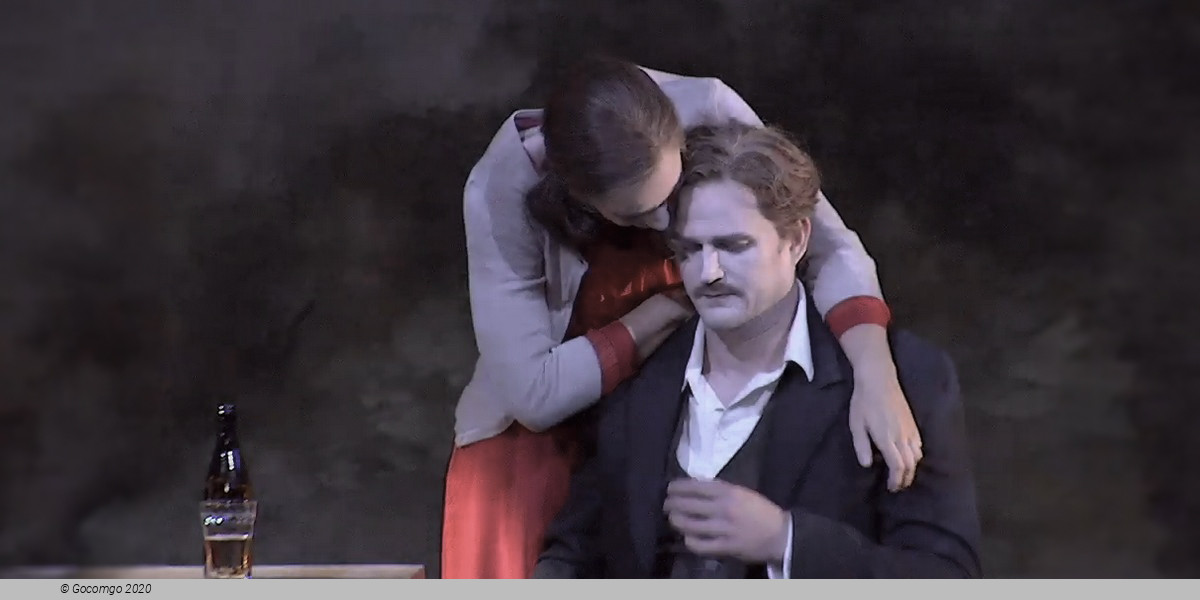
At the beginning of the opera, Fritz, a composer driven by the ambition to write a great piece of music and discover the mysterious perfect “distant sound”, which will bring him fame, abandons his beloved Grete. She wants to kill herself, yet the mystic beauty of nature saves her life. Ten years later, Grete is a celebrated courtesan in Venice. Fritz is among the guests at her party, and proceeds to spurn her love again. Another five years later, Grete attends the premiere of Fritz’s first opera, which goes down badly with the audience – she perceives that he is still seeking his “distant sound”. Fritz and Grete ultimately reunite, whereupon he finally hears the desired sound. Yet it is too late – before he can finish a new ending to his opera, Fritz dies in Grete’s arms.
After a long time in obscurity, over the past two decades, Schreker’s music has attracted renewed attention – due to the scores whose structure is akin to the film cut technique, due to the fascinating oscillation between traditional harmony and atonality, due to the original dimensions of expression, the traits that today put Schreker on a par with Gustav Mahler.
Schreker discussed the possibility of Der ferne Klang receiving its Czech premiere at the National Theatre with its then director, Karel Kovařovic, who – for unknown reasons – changed his mind and backed out of signing the respective contract. The opera was ultimately undertaken by Alexander Zemlinsky, a friend of Schreker’s, who conducted its first night at the New German Theatre on 20 May 1920 to great acclaim.
The mysterious story about that which is within our reach yet beyond us is thus returning to Prague 102 years later.

History
Premiere of this production: 18 August 1912, Oper Frankfurt

Der ferne Klang (The Distant Sound) is an opera by Franz Schreker, set to his own libretto. Begun in 1903, it was first performed by the Oper Frankfurt on 18 August 1912. It was the composer's breakthrough to fame, and was frequently performed up until 1931, shortly after which the composer's music was proscribed by the Nazi regime. Largely forgotten after World War II, it has been revived by several opera companies in the 21st century.

Synopsis

Act 1
Fritz, a composer, and Grete Graumann, the daughter of a poor retired officer, are in love. Fritz wants to marry Grete, but he tells her that before that happens, he has to write a great piece of music and discover the mysterious distant sound ("der ferne Klang") which he hears within him. Grete tries in vain to convince him to stay with her. Fritz leaves his childhood sweetheart and goes in search of the distant sound.

As Grete is returning to her house, she meets a strange old woman, who asks the surprised girl about Fritz and promises to help Grete if she needs it. Grete continues on her way home.

Back at home, Grete's mother, Frau Graumann, speaks to Grete about the debts the family has accrued. Frau Graumann has decided that instead of borrowing money, Grete should get a job to help improve the money situation. Grete complains that her father drinks too much.

Just as she is saying this, Grete's father, Graumann, arrives with his drinking companions, an actor and Dr. Vigelius. Graumann has just gambled his daughter away to his landlord in a dice game and they have come to collect the debt. When Grete refuses, her father becomes furious. Before he can do violence to his daughter, his comrades drag Graumann back to the pub.

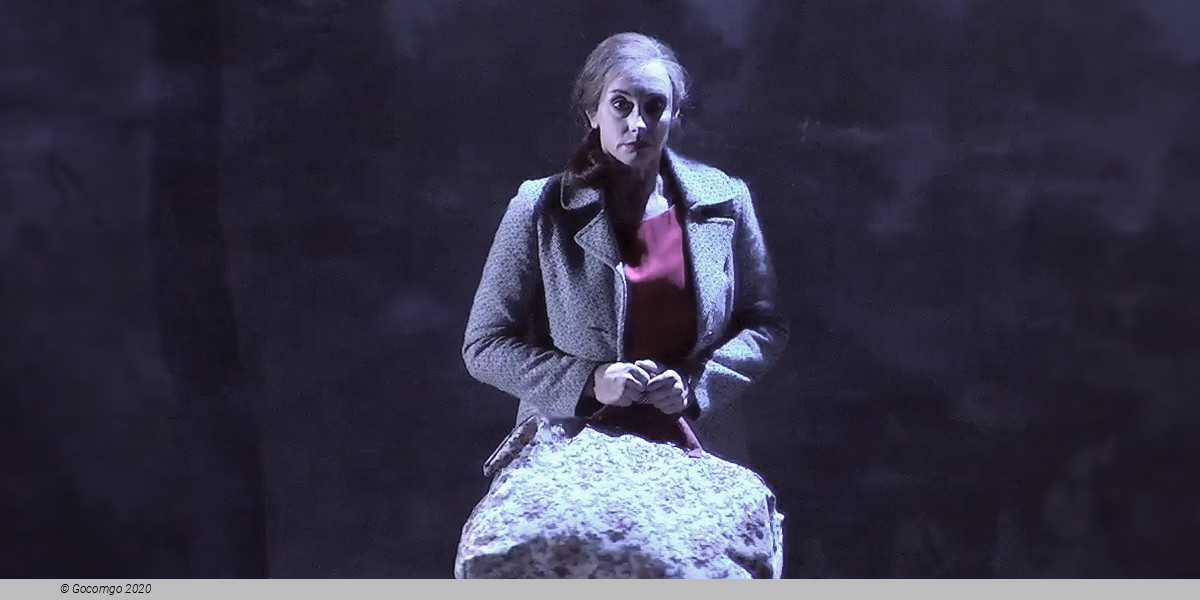
To calm her mother down, Grete pretends to be happy to marry the landlord. But when her mother leaves her alone in the room, she jumps out of the window and hurries away to find Fritz.

Grete cannot catch up with Fritz, and falls exhausted on the bank of a lake. She thinks of drowning herself, but then becomes conscious of the beauty of nature at night. She falls asleep, dreaming of their loving. The old woman, in reality a prostitute, appears again and promises to bring Grete a shining future if she will only follow her.

Act 2
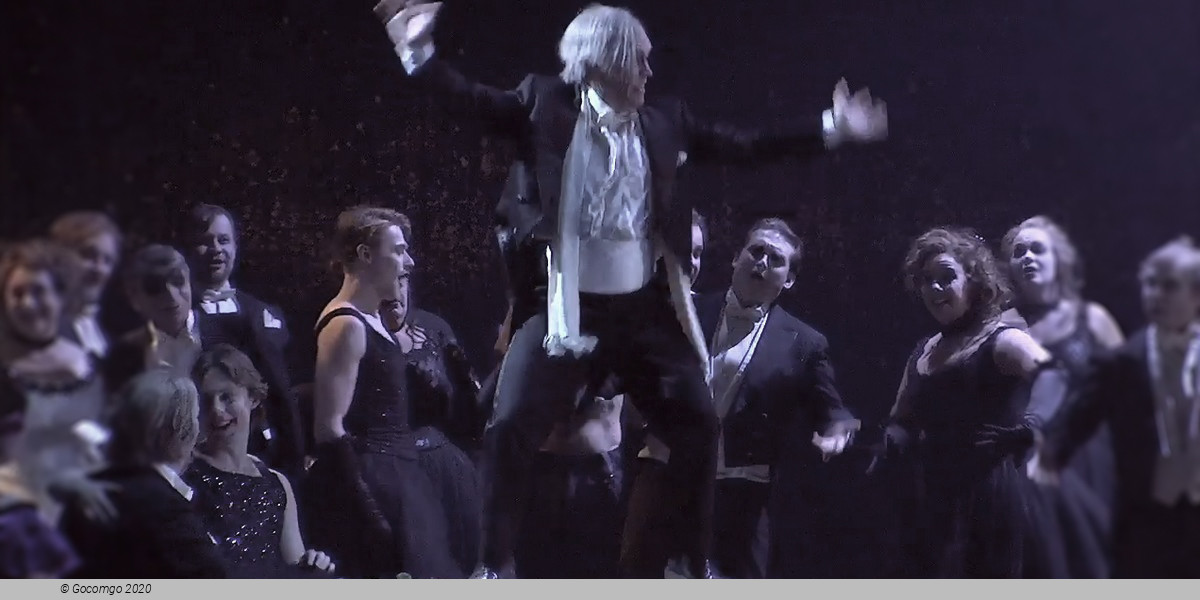
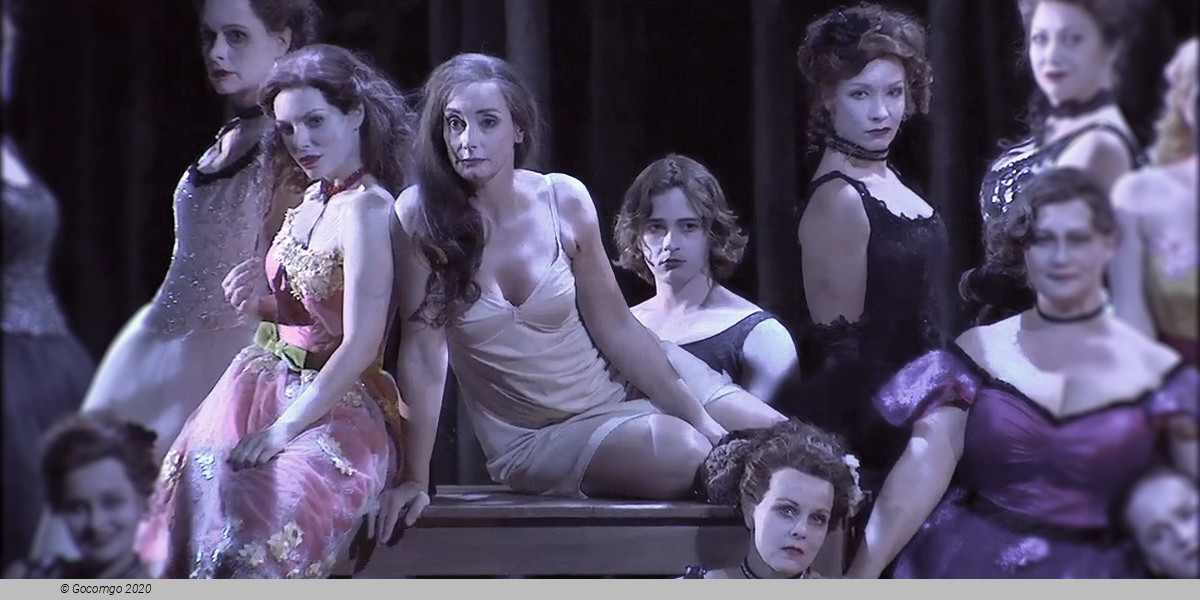
Ten years later, Grete is the celebrated queen of the demimonde on an island in the gulf of Venice, where we find her in the famous dance salon "La Casa di Maschere". But even with her fame and success, she still thinks of Fritz.

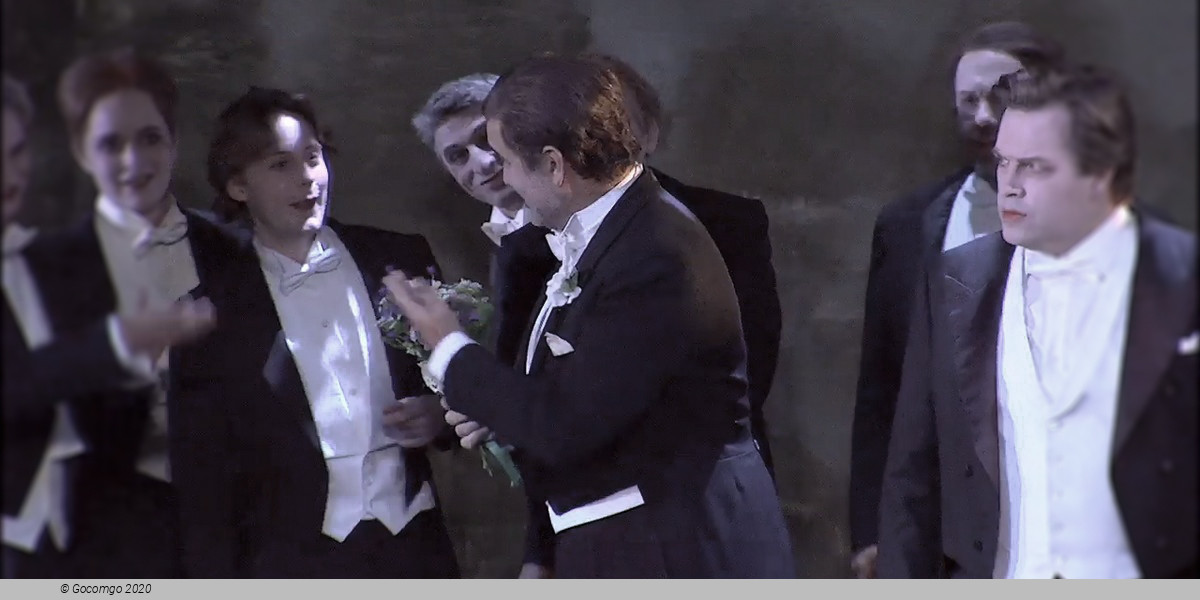
This particular day, she promises that she will end the suffering of her suitors and decide on her next lover, announcing that whoever can touch her heart the most deeply with a song will win her. The Count sings "In einem Lande ein bleicher König", a sad but beautiful song, which the crowd applauds. The Chevalier counters with "Das Blumenmädchen von Sorrent", a bawdy song that the crowd enjoys as they noisily join in the singing.

As Grete is making up her mind, a stranger appears in the midst. It is Fritz, who recognizes Grete immediately and goes straight to her. He tells her that he has not found the distant sound that has been eluding him these past ten years, so he has gone in search of her instead and now wants to make her his wife.

While Grete is still in love with Fritz and would like to be with him, she decides she must reveal to him that she is a courtesan, and then asks if he still wants to marry her. At first he does not believe it, but when the Count challenges him to a duel, Fritz, shaken and disappointed, refuses to duel and departs. Grete, in her despair, falls into the arms of the Count.

Act 3
Five more years have passed, and Fritz has completed his opera, Die Harfe. During the premiere, the first act goes well, but the second act ends with an audience riot because nobody likes the music.

Grete, meanwhile, has lost the protection of the Count and is now a common streetwalker. She hears of the riot and is concerned for Fritz. On the way home, she is accosted by someone on the street, and Dr. Vigelius and the actors, who are staying in a hotel close by, appear and save her from being molested. Dr. Vigelius escorts Grete to his house, telling her that he very much regrets allowing Graumann to gamble away his daughter.

Fritz sits at home, old and depressed. He recognizes too late that he has destroyed not only his life, but also his love. In vain, his friend Rudolf tries to cheer him up and reminds him that there is still time to rewrite the opera. Fritz tells him that he is near the end of his life and only wants to see Grete, whom he foolishly pushed away twice. Rudolf goes to look for her, but Dr. Vigelius arrives instead, bringing Grete.

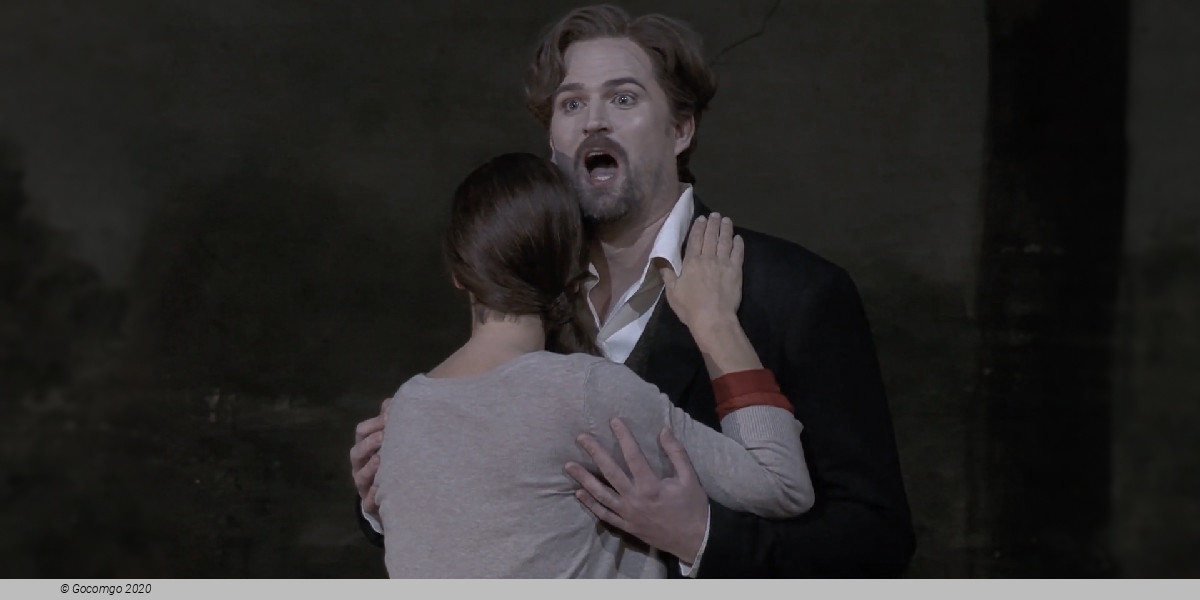
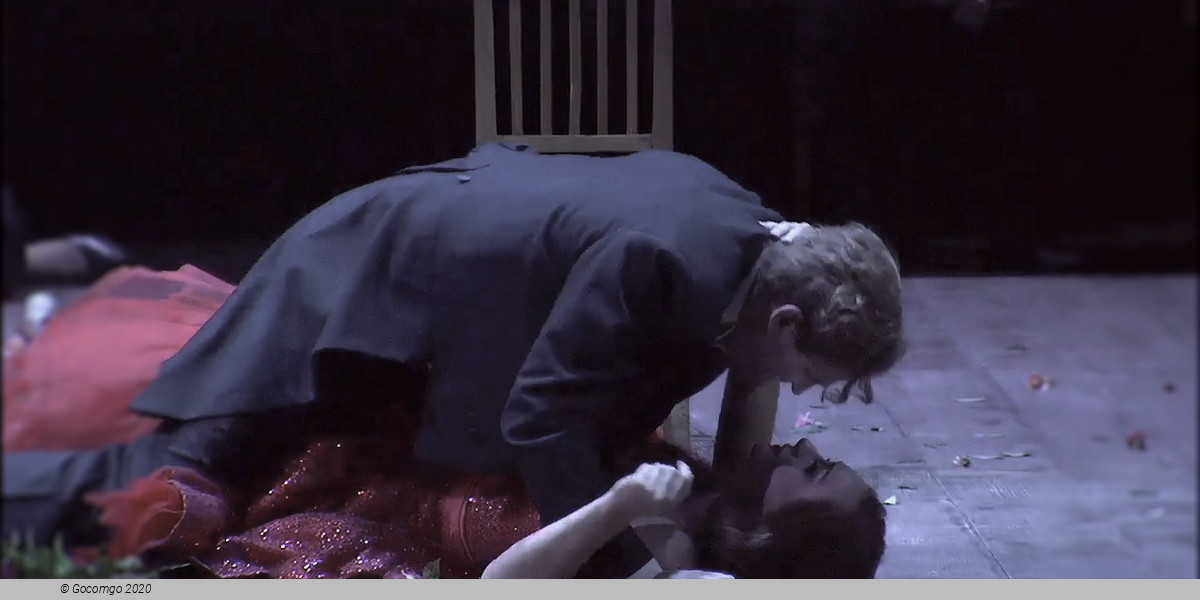
Grete and Fritz gratefully sink into each other's arms. Finally the composer hears the distant sound, which, it seems, was always within reach. He joyfully begins to write a new ending to his opera, but before he can finish, he dies in the arms of his beloved.

Venue Info

Prague National Theatre - Prague
Location   Národní 2

The National Theatre is the prime stage of the Czech Republic. It is also one of the symbols of national identity and a part of the European cultural space, with a tradition spanning more than 130 years. It is the bearer of the national cultural heritage, as well as a space for free artistic creation.

The National Theatre (Czech: Národní divadlo) in Prague is known as the alma mater of Czech opera, and as the national monument of Czech history and art.

The National Theatre belongs to the most important Czech cultural institutions, with a rich artistic tradition, which helped to preserve and develop the most important features of the nation–the Czech language and a sense for a Czech musical and dramatic way of thinking.

Today, the National Theatre is made up of four artistic companies – the Opera, Drama, Ballet and Laterna magika. It artistically manages four stages – the three historical buildings: the National Theatre (1883), the State Opera (1888), and the Estates Theatre (1783), and the more recently opened New Stage (1983). The Opera, Drama and Ballet companies perform not only titles from the ample classical legacy, in addition to Czech works, they also focus on contemporary international creation.

Grand opening

The National Theatre was opened for the first time on 11 June 1881, to honour the visit of Crown Prince Rudolf of Austria. Bedřich Smetana's opera Libuše was given its world premiere, conducted by Adolf Čech. Another 11 performances were presented after that. Then the theatre was closed down to enable the completion of the finishing touches. While this work was under way a fire broke out on 12 August 1881, which destroyed the copper dome, the auditorium, and the stage of the theatre.

The fire was seen as a national catastrophe and was met with a mighty wave of determination to take up a new collection: Within 47 days a million guldens were collected. This national enthusiasm, however, did not correspond to the behind-the-scenes battles that flared up following the catastrophe. Architect Josef Zítek was no longer in the running, and his pupil architect Josef Schulz was summoned to work on the reconstruction. He was the one to assert the expansion of the edifice to include the block of flats belonging to Dr. Polák that was situated behind the building of the Provisional Theatre. He made this building a part of the National Theatre and simultaneously changed somewhat the area of the auditorium to improve visibility. He did, however, take into account with utmost sensitivity the style of Zítek's design, and so he managed to merge three buildings by various architects to form an absolute unity of style.

Important Info
Type: Opera
City: Prague, Czech Republic
Starts at: 19:00
Sung in: German
Titles in: Czech,English
Top of page