








Prague National Theatre 23 April 2022 - Symphony No. 21, “Kaddish” - Mieczysław Weinberg | GoComGo.com

Symphony No. 21, “Kaddish” - Mieczysław Weinberg

Prague National Theatre, The National Theatre, Prague, Czech Republic
All photos (1)
Select date and time
7 PM

E-tickets: Print at home or at the box office of the event if so specified. You will find more information in your booking confirmation email.

You can only select the category, and not the exact seats.
If you order 2 or 3 tickets: your seats will be next to each other.
If you order 4 or more tickets: your seats will be next to each other, or, if this is not possible, we will provide a combination of groups of seats (at least in pairs, for example 2+2 or 2+3).

Important Info
Type: Classical Concert
City: Prague, Czech Republic
Starts at: 19:00
Duration: 1h

E-tickets: Print at home or at the box office of the event if so specified. You will find more information in your booking confirmation email.

You can only select the category, and not the exact seats.
If you order 2 or 3 tickets: your seats will be next to each other.
If you order 4 or more tickets: your seats will be next to each other, or, if this is not possible, we will provide a combination of groups of seats (at least in pairs, for example 2+2 or 2+3).

Programme
Mieczysław Weinberg: Symphony no. 21 "Kaddish", Op.152
Overview

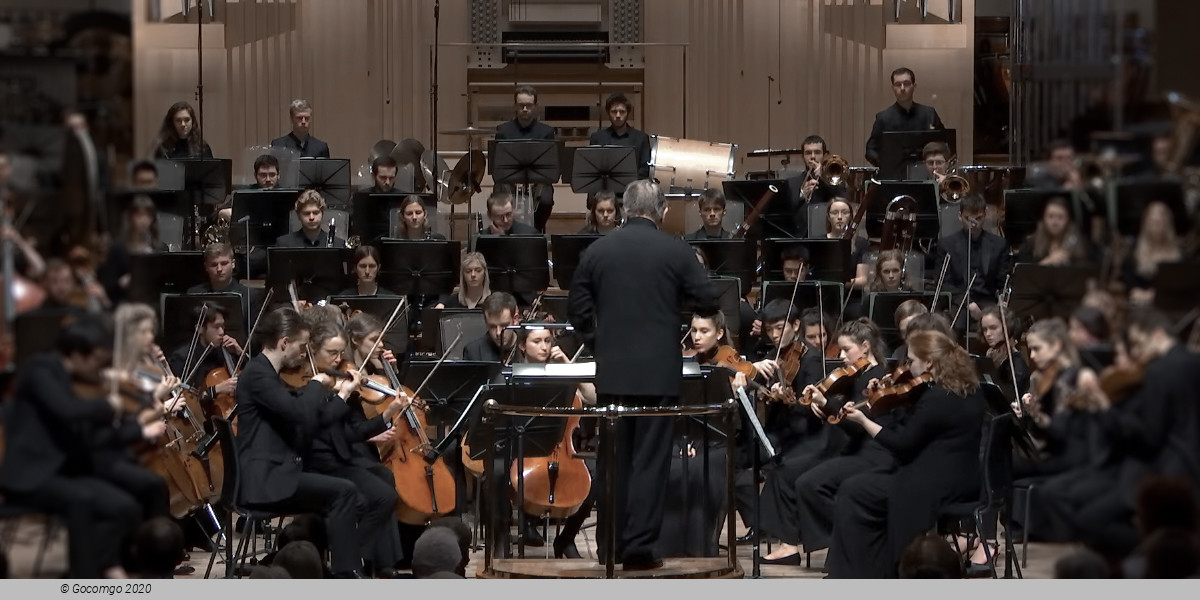
Concert from Musica non grata project, dedicated to the music of composers persecuted by 20th-century totalitarian regimes.

The concert, which is part of the Musica non grata cycle, presenting music by composers persecuted by 20th-century totalitarian regimes, is dedicated to an artist whose life was afflicted by both the Nazis and the Communists. 

The Polish-Russian composer and pianist Mieczysław Weinberg (1919–1996) fled from Poland to Belarus from the Nazis when he was 20 years of age. Later on, he moved to Moscow, yet owing to his Jewish descent and the nature of his music he faced harsh oppression from the Soviet establishment. In 1953, he was arrested on charges of “Jewish bourgeois nationalism”.

Today, Weinberg is primarily known for his 1968 opera The Passenger, which only received its first fully staged performance in 2010, in a production directed by David Pountney. The piece manifests the vital role played in Weinberg’s music – clearly influenced by that of Dmitry Shostakovich – by his experience and memories of the horrors of World War II, the Holocaust in particular. Weinberg treated the subject in many of his works, protesting against war and expressing compassion for those who experienced unbearable suffering. “I did not choose the theme. It was dictated to me by Fate, the tragedy of my beloveds. I feel morally obliged to write about the war, about the horrific fate our century brought to people.”

The same applies to Weinberg’s final completed orchestral piece, the 1991 Symphony No. 21, subtitled “Kaddish”. The extensive work, made up of six sections, reveals the composer’s human and artistic affinity to Shostakovich and may be defined as an elegy teeming with desire for life, and expressing unfathomable agony and everlasting hope. Weinberg dedicated Symphony No. 21, “Kaddish”, to the victims of the Warsaw Ghetto Uprising against the Nazis in 1943. The performance at the National Theatre marks the Czech premiere of this extraordinary work.

Venue Info

Prague National Theatre - Prague
Location   Národní 2

The National Theatre is the prime stage of the Czech Republic. It is also one of the symbols of national identity and a part of the European cultural space, with a tradition spanning more than 130 years. It is the bearer of the national cultural heritage, as well as a space for free artistic creation.

The National Theatre (Czech: Národní divadlo) in Prague is known as the alma mater of Czech opera, and as the national monument of Czech history and art.

The National Theatre belongs to the most important Czech cultural institutions, with a rich artistic tradition, which helped to preserve and develop the most important features of the nation–the Czech language and a sense for a Czech musical and dramatic way of thinking.

Today, the National Theatre is made up of four artistic companies – the Opera, Drama, Ballet and Laterna magika. It artistically manages four stages – the three historical buildings: the National Theatre (1883), the State Opera (1888), and the Estates Theatre (1783), and the more recently opened New Stage (1983). The Opera, Drama and Ballet companies perform not only titles from the ample classical legacy, in addition to Czech works, they also focus on contemporary international creation.

Grand opening

The National Theatre was opened for the first time on 11 June 1881, to honour the visit of Crown Prince Rudolf of Austria. Bedřich Smetana's opera Libuše was given its world premiere, conducted by Adolf Čech. Another 11 performances were presented after that. Then the theatre was closed down to enable the completion of the finishing touches. While this work was under way a fire broke out on 12 August 1881, which destroyed the copper dome, the auditorium, and the stage of the theatre.

The fire was seen as a national catastrophe and was met with a mighty wave of determination to take up a new collection: Within 47 days a million guldens were collected. This national enthusiasm, however, did not correspond to the behind-the-scenes battles that flared up following the catastrophe. Architect Josef Zítek was no longer in the running, and his pupil architect Josef Schulz was summoned to work on the reconstruction. He was the one to assert the expansion of the edifice to include the block of flats belonging to Dr. Polák that was situated behind the building of the Provisional Theatre. He made this building a part of the National Theatre and simultaneously changed somewhat the area of the auditorium to improve visibility. He did, however, take into account with utmost sensitivity the style of Zítek's design, and so he managed to merge three buildings by various architects to form an absolute unity of style.

Important Info
Type: Classical Concert
City: Prague, Czech Republic
Starts at: 19:00
Duration: 1h
Top of page