
Prague National Theatre 16 January 2021 - Sternenhoch | GoComGo.com

Sternenhoch

Prague National Theatre, The New Stage, Prague, Czech Republic
All photos (5)
Select date and time
8 PM
Important Info
Type: Opera
City: Prague, Czech Republic
Starts at: 20:00
Duration: 1h 25min
Sung in: Esperanto
Titles in: Czech,English

E-tickets: Print at home or at the box office of the event if so specified. You will find more information in your booking confirmation email.

You can only select the category, and not the exact seats.
If you order 2 or 3 tickets: your seats will be next to each other.
If you order 4 or more tickets: your seats will be next to each other, or, if this is not possible, we will provide a combination of groups of seats (at least in pairs, for example 2+2 or 2+3).

Overview

“Beauty is a kiss between love and monstrosity”.

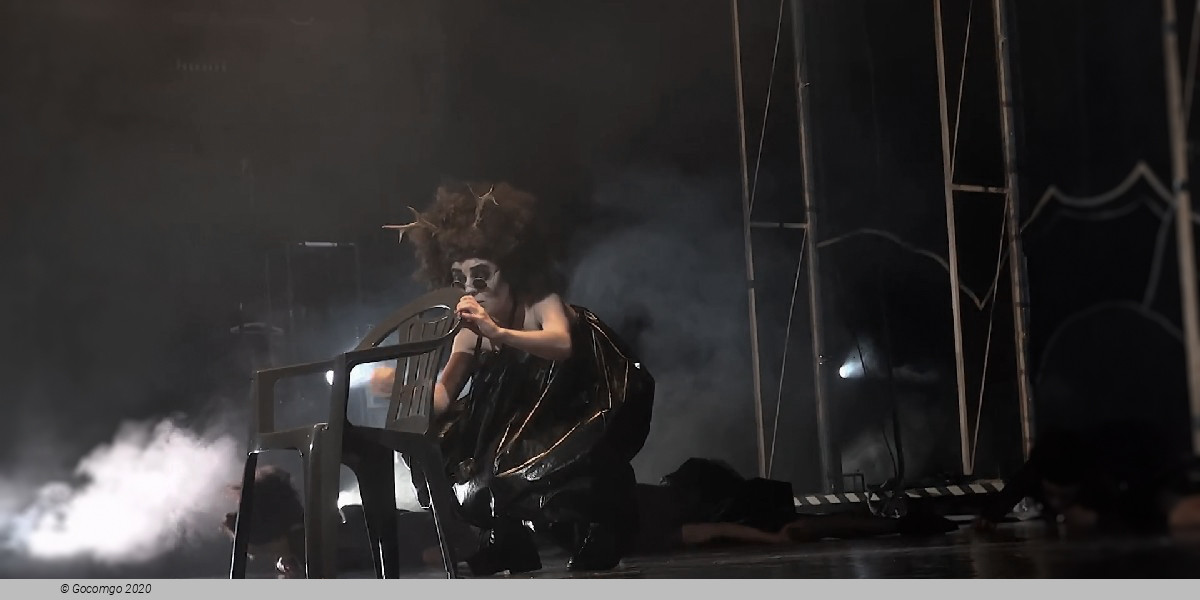
Ladislav Klíma’s grotesque expressionistic novel The Sufferings of Prince Sternenhoch has now like an inextinguishable fire stricken the fifth generation of seekers of earthly and cosmic forces. Stricken, inspired, burnt and ignited.

The prose’s unique combination of the low and the high, the grotesque and horror-like atmosphere, philosophy of the uppermost spheres and everyday lewdness has served as a sufficient breeding ground for a music creator with a penchant for morphing genres, a creator who likes to alternate darkness with the grotesque, and feels a close affinity to the author of the novel in terms of making use of the time entrusted to us on earth. Ivan Acher thought about setting Klíma’s work to music back in 1993, after he had read it at a hermitage in the mountains. Yet the dream of a young man, who had just abandoned his studies, ran across reality, and a sober view left the idea among unattainable visions.

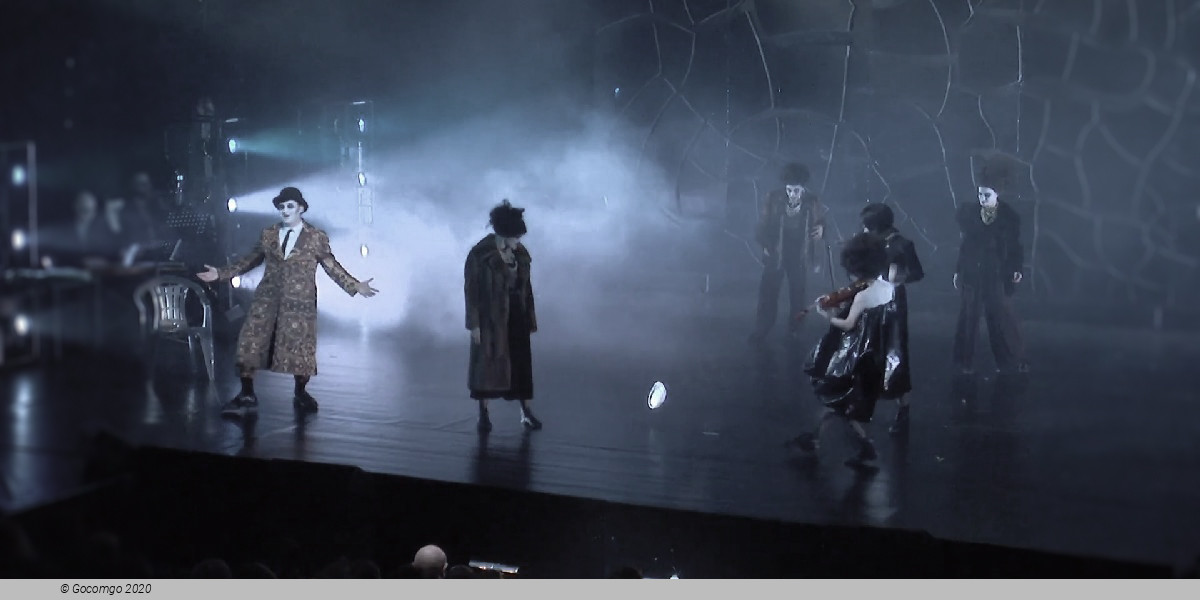
The expressionistic nature of Ladislav Klíma’s piece and the subject of a fictitious story abounding in murders, dreams about murders, tattle and high philosophising of the five main characters directly urges the application of trained voices within the new context of the sonic potential of electronic composition. Composition that, notwithstanding an experimental approach, has not altogether deserted the domain of historical music yet utilises it in novel acoustic options, blending sampling, electronics and live instruments.

What is more, the typical Klímaesque metaphysical penetration of reality into dream and dream into reality has motivated Acher to set the story beyond time sequence, thus giving rise to a space of infinite possibilities, whereby “Beauty is a kiss between love and monstrosity”.

History
Premiere of this production: 07 April 2018, New stage of the Prague National Theater

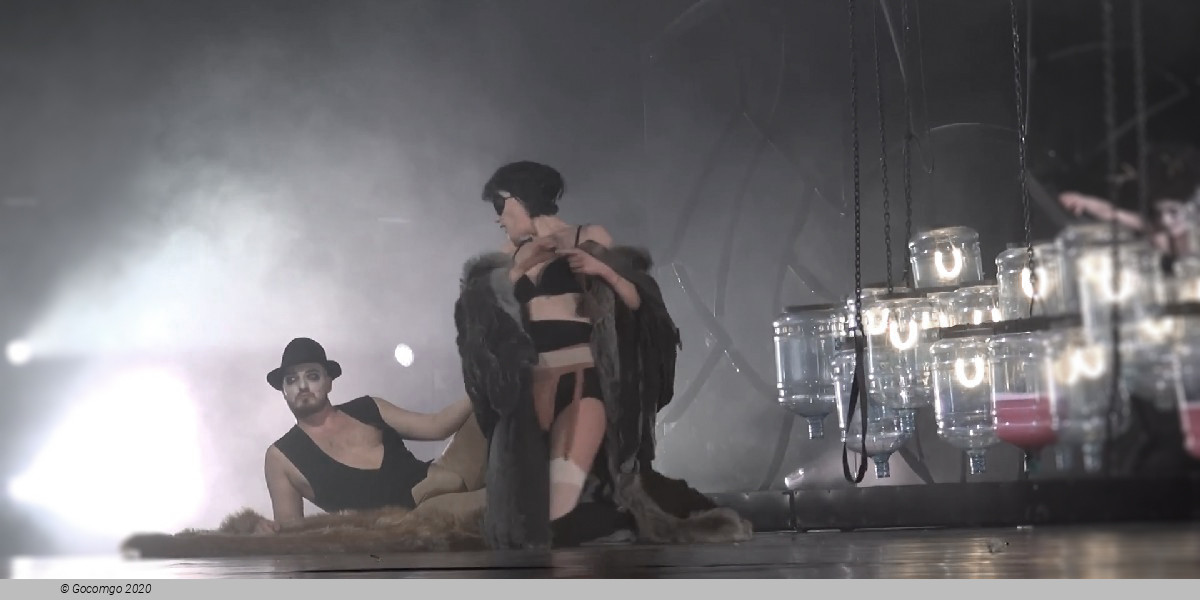
Sternenhoch is an opera by the Czech composer Ivan Acher , it is his feature opera debut. The libretto based on Ladislav Klíma's novel The Suffering of Prince Sternenhoch was also written by Acher and he had it translated into Esperanto . The author of the translation is the Brno Esperantist Miroslav Malovec. The opera had its world premiere on April 7, 2018 on the New Stage of the National Theater in Prague.

Synopsis

First scene: "The Dream" 

The drunken Sternenhoch fell asleep after a ball. In a dream, his dead wife Helga appears to him. She speaks lovingly to him and finally pulls him into her arms.

Second scene: "The Ball" 

Prince Sternenhoch, the leading nobleman of Germany and a personal friend of Emperor Wilhelm, wakes up at a ball. He is invited to finally choose a bride. He chooses the ugly waitress Helga out of trouble. He feels that Helga should be grateful for his choice, but she remains completely cold. So Sternenhoch seeks help from the witch Kuhmist, who mocks him, but eventually sells him a magical amulet to help him.

Third scene: "To hand" 

Sternenhoch goes to ask for Helž's hand from her father, a poor retired officer. He treats him contemptuously and talks contemptuously about his daughter. Only when Sternenhoch threatens to leave does he change his tone and flatly agree to marry.

Fourth scene: "The Wedding" 

At the wedding reception, everyone looks mainly at the food. Sternenhoch seizes his apathetic wife and, despite her opposition, conceives a child. Later, their son Helmutek was born.

Fifth scene: "Helmutek" 

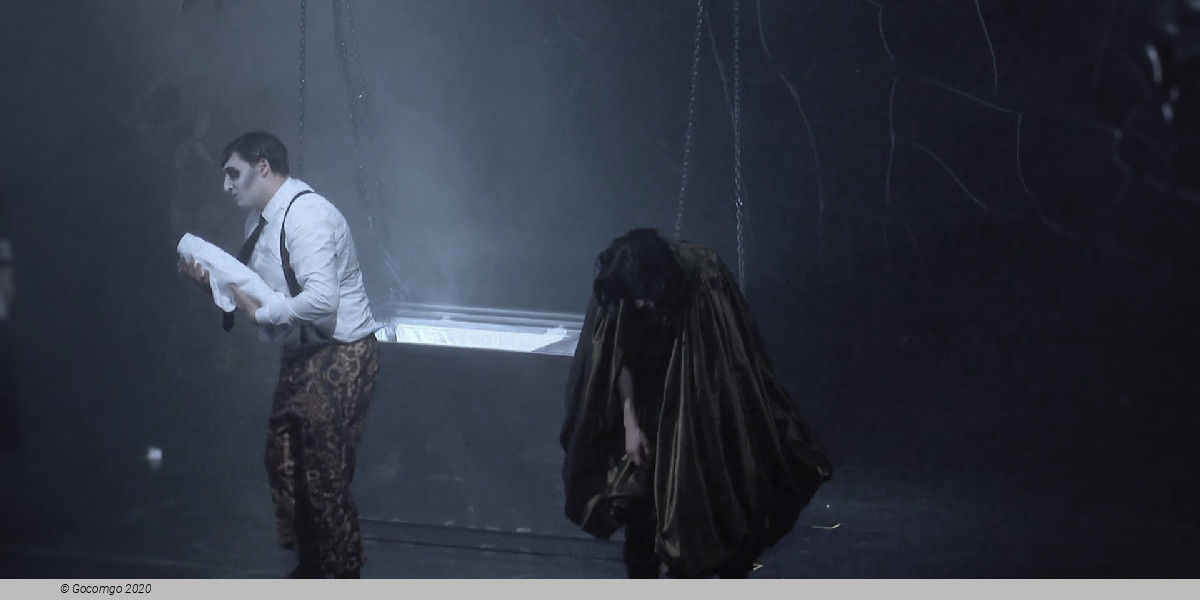
Sternenhoch caresses her son. But Helga sees it as a symbol of her disgrace. He snatches Sternenhoch's son from his arms and kills him with a blow to Sternenhoch's head.

Sixth scene: "Das Stelldichein" 

Helga adjusts and goes to a meeting with her lover (poet, hisser). He humiliates himself in front of him in a meeting, but he treats her rudely. She asks Helga to reconcile with her husband, then they run away together. Sternenhoch watches his lover from hiding. He shoots a poet and stuns his wife and takes him to a famine in his castle.

Seventh scene: "In the cell" 

Helga first tries to save her life and at the same time obey the orders of her lover. But he can't overcome his dislike of her husband, hug him and kiss him. Sternenhoch, enraged, brutally beats Helga, leaves, and lets her die starving.

Eighth scene: "cow dung" 

To forget his crime and to reject the terrible hallucinations, Sternenhoch searches for the witch Kuhmist again. She sells him a new magical amulet to protect him from visions and feelings of guilt.

Ninth scene: "Delirium"

Sternenhoch tries to banish remorse by drinking. But in delirium, Helga and her lover appear to him again and again.

Tenth scene: "Grande Finale" 

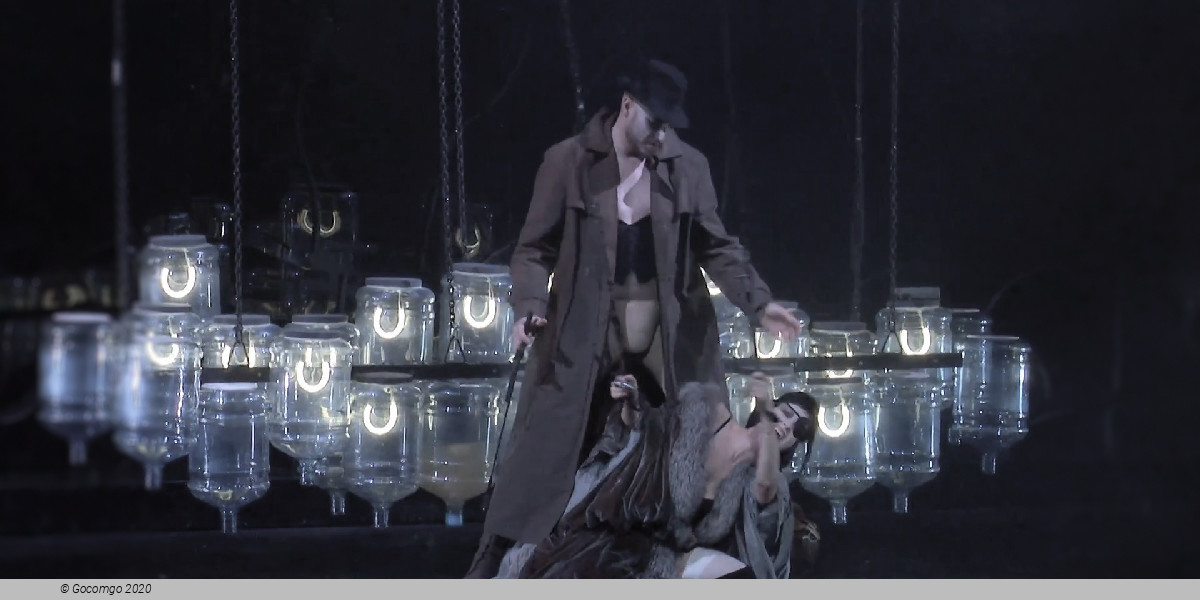
After a year, Sternenhoch returns to the famine. It seems to him that his wife is alive, reconciled with her by love affair. In reality, however, he makes love to a corpse and dies of blood poisoning after two days.

Venue Info

Prague National Theatre - Prague
Location   Národní 2

The National Theatre is the prime stage of the Czech Republic. It is also one of the symbols of national identity and a part of the European cultural space, with a tradition spanning more than 130 years. It is the bearer of the national cultural heritage, as well as a space for free artistic creation.

The National Theatre (Czech: Národní divadlo) in Prague is known as the alma mater of Czech opera, and as the national monument of Czech history and art.

The National Theatre belongs to the most important Czech cultural institutions, with a rich artistic tradition, which helped to preserve and develop the most important features of the nation–the Czech language and a sense for a Czech musical and dramatic way of thinking.

Today, the National Theatre is made up of four artistic companies – the Opera, Drama, Ballet and Laterna magika. It artistically manages four stages – the three historical buildings: the National Theatre (1883), the State Opera (1888), and the Estates Theatre (1783), and the more recently opened New Stage (1983). The Opera, Drama and Ballet companies perform not only titles from the ample classical legacy, in addition to Czech works, they also focus on contemporary international creation.

Grand opening

The National Theatre was opened for the first time on 11 June 1881, to honour the visit of Crown Prince Rudolf of Austria. Bedřich Smetana's opera Libuše was given its world premiere, conducted by Adolf Čech. Another 11 performances were presented after that. Then the theatre was closed down to enable the completion of the finishing touches. While this work was under way a fire broke out on 12 August 1881, which destroyed the copper dome, the auditorium, and the stage of the theatre.

The fire was seen as a national catastrophe and was met with a mighty wave of determination to take up a new collection: Within 47 days a million guldens were collected. This national enthusiasm, however, did not correspond to the behind-the-scenes battles that flared up following the catastrophe. Architect Josef Zítek was no longer in the running, and his pupil architect Josef Schulz was summoned to work on the reconstruction. He was the one to assert the expansion of the edifice to include the block of flats belonging to Dr. Polák that was situated behind the building of the Provisional Theatre. He made this building a part of the National Theatre and simultaneously changed somewhat the area of the auditorium to improve visibility. He did, however, take into account with utmost sensitivity the style of Zítek's design, and so he managed to merge three buildings by various architects to form an absolute unity of style.

Important Info
Type: Opera
City: Prague, Czech Republic
Starts at: 20:00
Duration: 1h 25min
Sung in: Esperanto
Titles in: Czech,English
Top of page