
Prague National Theatre tickets 27 May 2026 - Marie-Magdeleine (concert performance) | GoComGo.com

Marie-Magdeleine (concert performance)

Prague National Theatre, The National Theatre, Prague, Czech Republic
All photos (1)
Select date and time
8 PM
From
US$ 73

E-tickets: Print at home or at the box office of the event if so specified. You will find more information in your booking confirmation email.

You can only select the category, and not the exact seats.
If you order 2 or 3 tickets: your seats will be next to each other.
If you order 4 or more tickets: your seats will be next to each other, or, if this is not possible, we will provide a combination of groups of seats (at least in pairs, for example 2+2 or 2+3).

Important Info
Type: Opera in Concert
City: Prague, Czech Republic
Starts at: 20:00
Duration: 1h 30min

E-tickets: Print at home or at the box office of the event if so specified. You will find more information in your booking confirmation email.

You can only select the category, and not the exact seats.
If you order 2 or 3 tickets: your seats will be next to each other.
If you order 4 or more tickets: your seats will be next to each other, or, if this is not possible, we will provide a combination of groups of seats (at least in pairs, for example 2+2 or 2+3).

Cast
Performers
Conductor: Robert Jindra
Mezzo-Soprano: Arnheiður Eiríksdóttir
Bass: František Zahradníček
Tenor: Kang Wang
Choir: Prague Philharmonic Children's Choir
Choir: The National Theatre Chorus
Orchestra: The National Theatre Orchestra
Creators
Composer: Jules Massenet
Overview

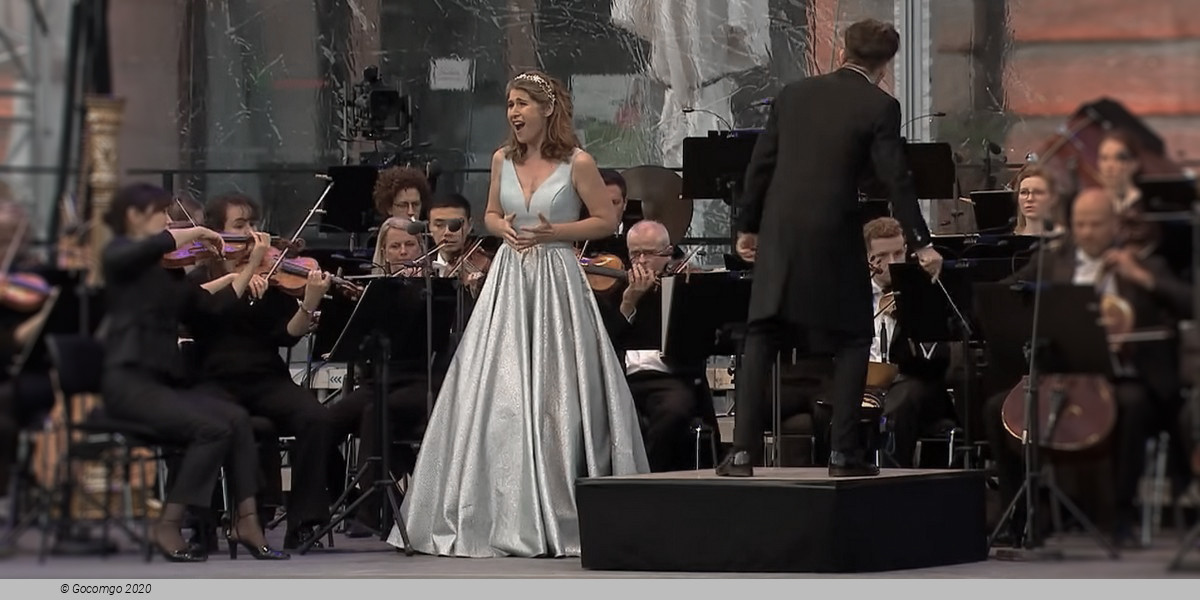
Sacred drama in three acts. An oratorio by Jules Massenet on the last days of Jesus Christ from the perspective of Mary Magdalene. The concert takes place as part of the Prague Spring International Music Festival.

Jules Massenet (1842–1912), one of the greatest operatic composers, author of ManonWerther and Thaïs, wrote his oratorio Marie-Magdeleine before he had reached the age of thirty. It was his first major triumph as a composer, meriting the admiration of Peter Ilyich Tchaikovsky, Charles Gounod and George Bizet. The latter, awestruck after the premiere at the Théâtre de l’Odéon in Paris, wrote to him, saying: “Never has our modern school produced anything of that kind: you’ll give me a fever, you brigand!” This “drame sacré”, as Massenet described his work, written to a libretto by Louis Gallet, traces the last days of Jesus’s life from the perspective of Mary Magdalene. While the oratorio adheres to the biblical story, it reflects profound human empathy, with emphasis on the spiritual transformation of a “fallen woman” and on the feelings she had for Christ. The premiere on Good Friday, 11 April 1873, thus also prompted slight controversy, when certain critics interpreted the relationship between the heroine and the Son of God as being more than purely spiritual. In this composition of almost ninety minutes, Massenet’s music offers everything we love about his operas – wonderful arias and choruses which, in this case, are afforded unprecedented scope, lyricism and drama, along with the flawlessly poignant depiction of female characters. This masterpiece will be staged at the Prague Spring after an absence of thirty years. The title role of Mary Magdalene (Méryem, la Magdaléenne) will be assumed by star of New York’s Metropolitan Opera and the Royal Opera House in London, soprano Aleksandra Kurzak. Jesus will be sung by one of the most sought-after lyric tenors on the current scene, Kang Wang, while Martha (Marthe) and Judas will be performed by leading soloists at the National Theatre Opera and State Opera: Icelandic mezzo-soprano Arnheiður Eiríksdóttir and bass František Zahradníček. The Chorus and Orchestra of the National Theatre Opera will be conducted by Robert Jindra, who describes Massenet’s work in the following words: “Massenet’s music is something of a transition from the legacy of Richard Wagner to French sound colour and elegance, and from there to the colours of Impressionism. The themes in his compositions often relate to the Orient, to myths, legends, fairy tales and also to biblical stories. He had an unprecedented theatrical and dramaturgical instinct, thus Marie-Magdeleine oscillates between sacral and stage piece. This is not merely a spiritual work; it is also exceptionally dramatic.”

Venue Info

Prague National Theatre - Prague
Location   Národní 2

The National Theatre is the prime stage of the Czech Republic. It is also one of the symbols of national identity and a part of the European cultural space, with a tradition spanning more than 130 years. It is the bearer of the national cultural heritage, as well as a space for free artistic creation.

The National Theatre (Czech: Národní divadlo) in Prague is known as the alma mater of Czech opera, and as the national monument of Czech history and art.

The National Theatre belongs to the most important Czech cultural institutions, with a rich artistic tradition, which helped to preserve and develop the most important features of the nation–the Czech language and a sense for a Czech musical and dramatic way of thinking.

Today, the National Theatre is made up of four artistic companies – the Opera, Drama, Ballet and Laterna magika. It artistically manages four stages – the three historical buildings: the National Theatre (1883), the State Opera (1888), and the Estates Theatre (1783), and the more recently opened New Stage (1983). The Opera, Drama and Ballet companies perform not only titles from the ample classical legacy, in addition to Czech works, they also focus on contemporary international creation.

Grand opening

The National Theatre was opened for the first time on 11 June 1881, to honour the visit of Crown Prince Rudolf of Austria. Bedřich Smetana's opera Libuše was given its world premiere, conducted by Adolf Čech. Another 11 performances were presented after that. Then the theatre was closed down to enable the completion of the finishing touches. While this work was under way a fire broke out on 12 August 1881, which destroyed the copper dome, the auditorium, and the stage of the theatre.

The fire was seen as a national catastrophe and was met with a mighty wave of determination to take up a new collection: Within 47 days a million guldens were collected. This national enthusiasm, however, did not correspond to the behind-the-scenes battles that flared up following the catastrophe. Architect Josef Zítek was no longer in the running, and his pupil architect Josef Schulz was summoned to work on the reconstruction. He was the one to assert the expansion of the edifice to include the block of flats belonging to Dr. Polák that was situated behind the building of the Provisional Theatre. He made this building a part of the National Theatre and simultaneously changed somewhat the area of the auditorium to improve visibility. He did, however, take into account with utmost sensitivity the style of Zítek's design, and so he managed to merge three buildings by various architects to form an absolute unity of style.

Important Info
Type: Opera in Concert
City: Prague, Czech Republic
Starts at: 20:00
Duration: 1h 30min
Top of page