








Deutsche Oper Berlin: Gianni Schicchi Tickets | Event Dates & Schedule | GoComGo.com

Gianni Schicchi Tickets

Deutsche Oper Berlin, Berlin, Germany
Important Info
Type: Opera
City: Berlin, Germany

E-tickets: Print at home or at the box office of the event if so specified. You will find more information in your booking confirmation email.

You can only select the category, and not the exact seats.
If you order 2 or 3 tickets: your seats will be next to each other.
If you order 4 or more tickets: your seats will be next to each other, or, if this is not possible, we will provide a combination of groups of seats (at least in pairs, for example 2+2 or 2+3).

Cast
Performers
Choose the date to see the peformers
History
Premiere of this production: 14 December 1918, Metropolitan Opera

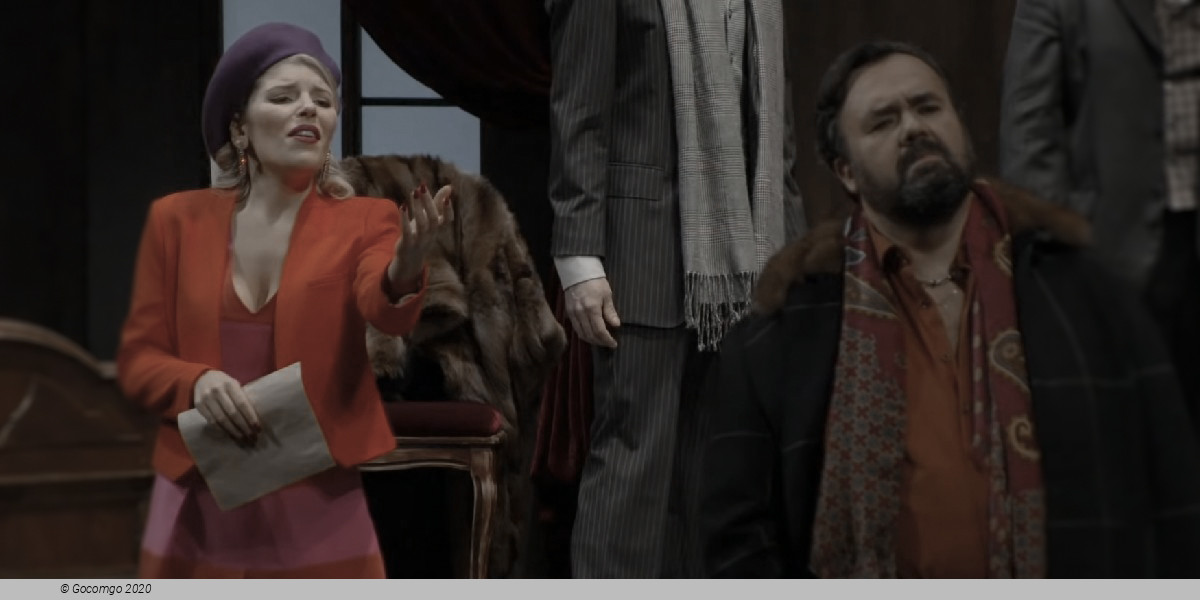
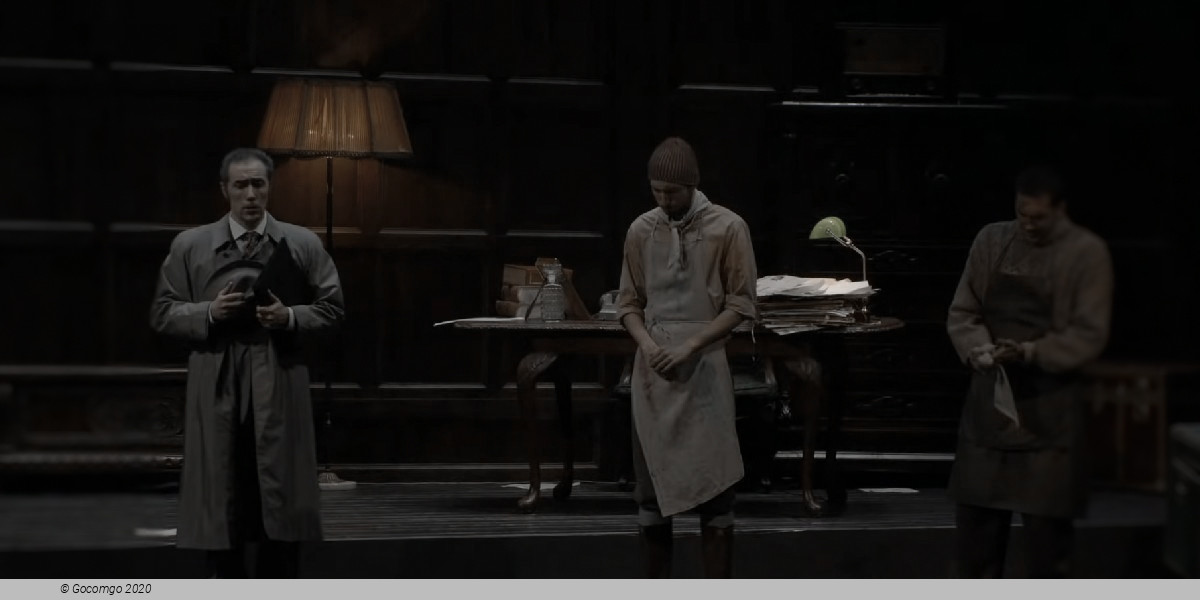
Gianni Schicchi is a comic opera in one act by Giacomo Puccini to an Italian libretto by Giovacchino Forzano, composed in 1917–18. The libretto is based on an incident mentioned in Dante's Divine Comedy. The work is the third and final part of Puccini's Il trittico (The Triptych)—three one-act operas with contrasting themes, originally written to be presented together. Although it continues to be performed with one or both of the other trittico operas, Gianni Schicchi is now more frequently staged either alone or with short operas by other composers. The aria "O mio babbino caro" is one of Puccini's best known, and one of the most popular arias in opera.

Synopsis

Place: Florence
Time: 1299

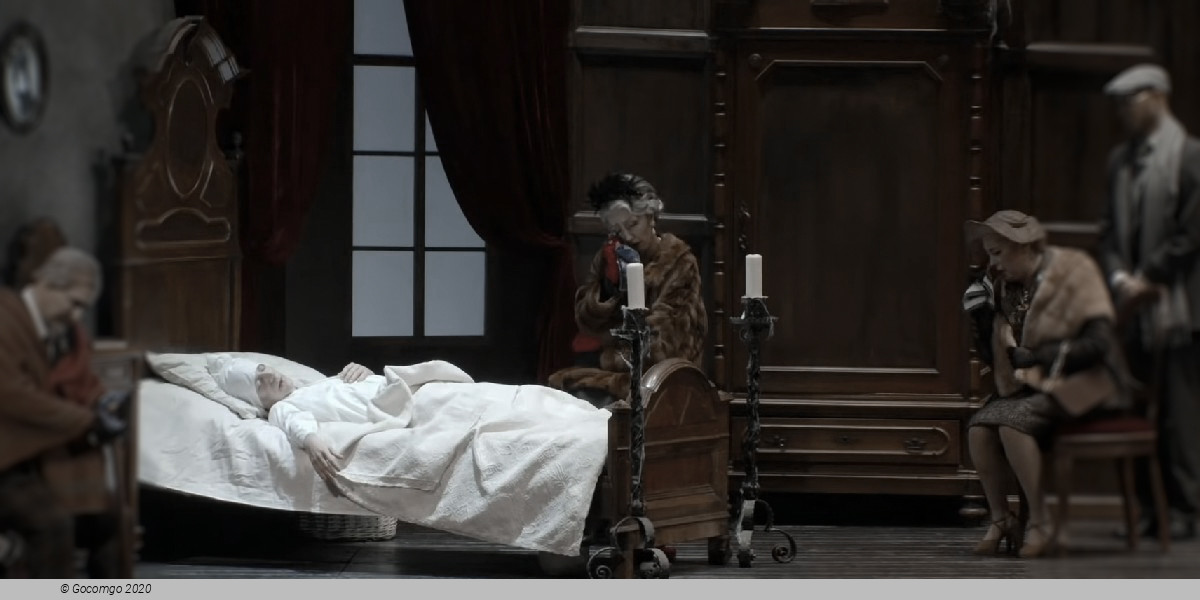
As Buoso Donati lies dead in his curtained four-poster bed, his relatives gather round to mourn his passing, but are really more interested in learning the contents of his will. Among those present are his cousins Zita and Simone, his poor-relation brother-in-law Betto, and Zita's nephew Rinuccio. Betto mentions a rumour he has heard that Buoso has left everything to a monastery; this disturbs the others and precipitates a frantic search for the will. The document is found by Rinuccio, who is confident that his uncle has left him plenty of money. He withholds the will momentarily and asks Zita to allow him to marry Lauretta, daughter of Gianni Schicchi, a newcomer to Florence. Zita replies that if Buoso has left them rich, he can marry whom he pleases; she and the other relatives are anxious to begin reading the will. A happy Rinuccio sends little Gherardino to fetch Schicchi and Lauretta.

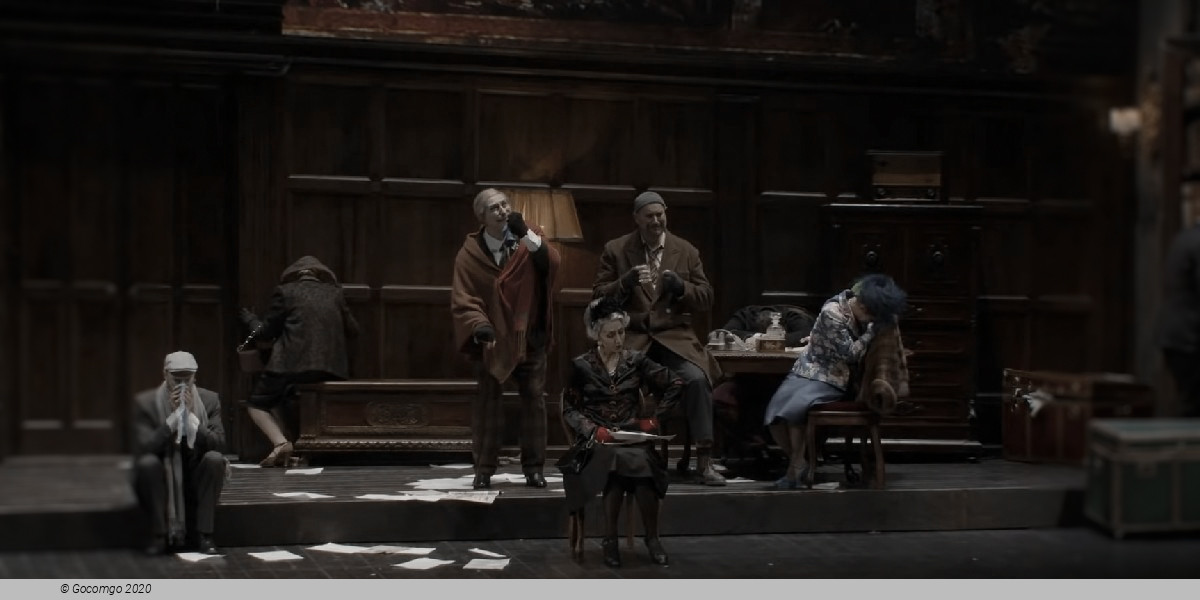
As they read, the relatives' worst fears are soon realised; Buoso has indeed bequeathed his fortune to the monastery. They break out in woe and indignation and turn to Simone, the oldest present and a former mayor of Fucecchio, but he can offer no help. Rinuccio suggests that only Gianni Schicchi can advise them what to do, but this is scorned by Zita and the rest, who sneer at Schicchi's humble origins and now say that marriage to the daughter of such a peasant is out of the question. Rinuccio defends Schicchi in an aria "Avete torto" (You're mistaken), after which Schicchi and Lauretta arrive. Schicchi quickly grasps the situation, and Rinuccio begs him for help, but Schicchi is rudely told by Zita to "be off" and take his daughter with him. Rinuccio and Lauretta listen in despair as Schicchi announces that he will have nothing to do with such people. Lauretta makes a final plea to him with "O mio babbino caro" (Oh, my dear papa), and he agrees to look at the will. After twice scrutinizing it and concluding that nothing can be done, an idea occurs to him. He sends his daughter outside so that she will be innocent of what is to follow.

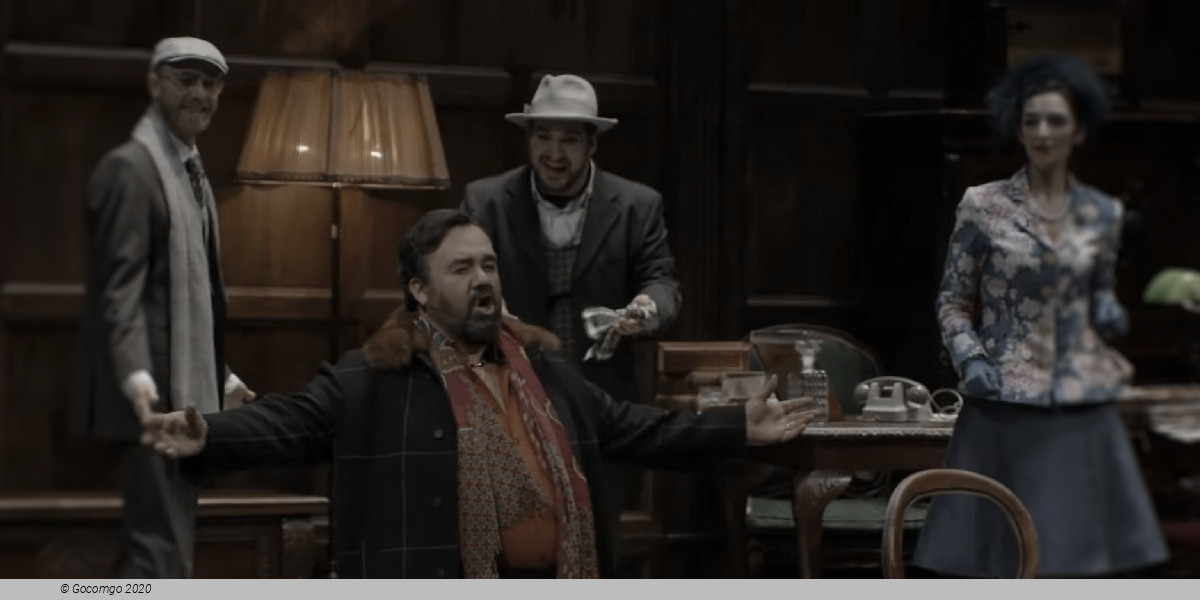
First, Schicchi establishes that no one other than those present knows that Buoso is dead. He then orders the body removed to another room. A knock announces the arrival of the doctor, Spinelloccio. Schicchi conceals himself behind the bed curtains, mimics Buoso's voice and declares that he's feeling better; he asks the doctor to return that evening. Boasting that he has never lost a patient, Spinelloccio departs. Schicchi then unveils his plan in the aria "Si corre dal notaio" (Run to the notary); having established in the doctor's mind that Buoso is still alive, Schicchi will disguise himself as Buoso and dictate a new will. All are delighted with the scheme, and importune Schicchi with personal requests for Buoso's various possessions, the most treasured of which are "the mule, the house and the mills at Signa". A funeral bell rings, and everyone fears that the news of Buoso's death has emerged, but it turns out that the bell is tolling for the death of a neighbour's Moorish servant. The relatives agree to leave the disposition of the mule, the house and the mills to Schicchi, though each in turn offers him a bribe. The women help him to change into Buoso's clothes as they sing the lyrical trio "Spogliati, bambolino" (Undress, little boy). Before taking his place in the bed, Schicchi warns the company of the grave punishment for those found to have falsified a will: exile from Florence together with the loss of a hand.

The notary arrives, and Schicchi starts to dictate the new will, declaring any prior will null and void. To general satisfaction he allocates the minor bequests, but when it comes to the mule, the house and the mills, he orders that these be left to "my devoted friend Gianni Schicchi". Incredulous, the family can do nothing while the lawyer is present, especially when Schicchi slyly reminds them of the penalties that discovery of the ruse will bring. Their outrage when the notary leaves is accompanied by a frenzy of looting as Schicchi chases them out of what is now his house.

Meanwhile, Lauretta and Rinuccio are rapt in a love duet, "Lauretta mia" - there is no bar to their marriage since Schicchi can provide a respectable dowry. Schicchi, returning, stands moved at the sight of the two lovers. He turns to the audience and asks them to agree that no better use could be found for Buoso's wealth: although the poet Dante has condemned him to hell for this trick, Schicchi asks the audience to forgive him in light of "extenuating circumstances."

Venue Info

Deutsche Oper Berlin - Berlin
Location   Bismarckstraße 35

The Deutsche Oper Berlin is an opera company located in the Charlottenburg district of Berlin, Germany. The resident building is the country's second-largest opera house and also home to the Berlin State Ballet. Since 2004 the Deutsche Oper Berlin, like the Staatsoper Unter den Linden (Berlin State Opera), the Komische Oper Berlin, the Berlin State Ballet, and the Bühnenservice Berlin (Stage and Costume Design), has been a member of the Berlin Opera Foundation.

The company's history goes back to the Deutsches Opernhaus built by the then independent city of Charlottenburg—the "richest town of Prussia"—according to plans designed by Heinrich Seeling from 1911. It opened on November 7, 1912 with a performance of Beethoven's Fidelio, conducted by Ignatz Waghalter. In 1925, after the incorporation of Charlottenburg by the 1920 Greater Berlin Act, the name of the resident building was changed to Städtische Oper (Municipal Opera).

With the Nazi seizure of power in 1933, the opera was under control of the Reich Ministry of Public Enlightenment and Propaganda. Minister Joseph Goebbels had the name changed back to Deutsches Opernhaus, competing with the Berlin State Opera in Mitte controlled by his rival, the Prussian minister-president Hermann Göring. In 1935, the building was remodeled by Paul Baumgarten and the seating reduced from 2300 to 2098. Carl Ebert, the pre-World War II general manager, chose to emigrate from Germany rather than endorse the Nazi view of music, and went on to co-found the Glyndebourne opera festival in England. He was replaced by Max von Schillings, who acceded to enact works of "unalloyed German character". Several artists, like the conductor Fritz Stiedry and the singer Alexander Kipnis, followed Ebert into emigration. The opera house was destroyed by a RAF air raid on 23 November 1943. Performances continued at the Admiralspalast in Mitte until 1945. Ebert returned as general manager after the war.

After the war, in what was now West Berlin, the company, again called Städtische Oper, used the nearby Theater des Westens; its opening production was Fidelio, on 4 September 1945. Its home was finally rebuilt in 1961 but to a much-changed, sober design by Fritz Bornemann. The opening production of the newly named Deutsche Oper, on 24 September, was Mozart's Don Giovanni.

Past Generalmusikdirektoren (GMD, general music directors) have included Bruno Walter, Kurt Adler, Ferenc Fricsay, Lorin Maazel, Gerd Albrecht, Jesús López-Cobos, and Christian Thielemann. In October 2005, the Italian conductor Renato Palumbo was appointed GMD as of the 2006/2007 season. In October 2007, the Deutsche Oper announced the appointment of Donald Runnicles as their next Generalmusikdirektor, effective August 2009, for an initial contract of five years. Simultaneously, Palumbo and the Deutsche Oper mutually agreed to terminate his contract, effective November 2007.

On the evening of 2 June 1967, Benno Ohnesorg, a student taking part in the German student movement, was shot in the streets around the opera house. He had been protesting against the visit to Germany by the Shah of Iran, who was attending a performance of Mozart's The Magic Flute.

In 1986 the American Berlin Opera Foundation was founded.

In April 2001, the Italian conductor Giuseppe Sinopoli died at the podium while conducting Verdi's Aida, at age 54.

In September 2006, the Deutsche Oper's Intendantin (general manager) Kirsten Harms drew criticism after she cancelled the production of Mozart's opera Idomeneo by Hans Neuenfels, because of fears that a scene in it featuring the severed heads of Jesus, Buddha and Muhammad would offend Muslims, and that the opera house's security might come under threat if violent protests took place. Critics of the decision include German Ministers and the German Chancellor Angela Merkel. The reaction from Muslims has been mixed — the leader of Germany's Islamic Council welcomed the decision, whilst a leader of Germany's Turkish community, criticising the decision, said:

This is about art, not about politics ... We should not make art dependent on religion — then we are back in the Middle Ages.

At the end of October 2006, the opera house announced that performances of Mozart's opera Idomeneo would then proceed. Kirsten Harms, after announcing in 2009 that she would not renew her contract beyond 2011, was bid farewell in July of that year.

Important Info
Type: Opera
City: Berlin, Germany

E-tickets: Print at home or at the box office of the event if so specified. You will find more information in your booking confirmation email.

You can only select the category, and not the exact seats.
If you order 2 or 3 tickets: your seats will be next to each other.
If you order 4 or more tickets: your seats will be next to each other, or, if this is not possible, we will provide a combination of groups of seats (at least in pairs, for example 2+2 or 2+3).

Top of page