
Warsaw Grand Theatre - Polish National Opera (Teatr Wielki): Beethoven and the Dutch School: Grosse Fuge. Eroica Variations. Symphony No. 7 Tickets | Event Dates & Schedule | GoComGo.com

Beethoven and the Dutch School: Grosse Fuge. Eroica Variations. Symphony No. 7 Tickets

Warsaw Grand Theatre - Polish National Opera (Teatr Wielki), Warsaw, Poland
Important Info
Type: Modern Ballet
City: Warsaw, Poland

E-tickets: Print at home or at the box office of the event if so specified. You will find more information in your booking confirmation email.

You can only select the category, and not the exact seats.
If you order 2 or 3 tickets: your seats will be next to each other.
If you order 4 or more tickets: your seats will be next to each other, or, if this is not possible, we will provide a combination of groups of seats (at least in pairs, for example 2+2 or 2+3).

Cast
Performers
Choose the date to see the peformers
Overview

Choreographies by  Hans van Manen, Ted Brandsen, Toer van Schayk.

GROSSE FUGE
Choreography: Hans van Manen
Music: Ludwig van Beethoven (Grosse Fuge in B-flat major Op. 133 and Cavatina from String Quartet in B-flat major Op. 130)
World premiere: 8 April 1971, Nederlands Dans Theater, Scheveningen

EROICA VARIATIONS
Choreography: Ted Brandsen
Music: Ludwig van Beethoven (15 Piano Variations and Fugue in E flat, Op.35, „The Eroica Variations”)
World premiere: 18 May 2023, Polish National Ballet, Warsaw

SYMPHONY NO. 7
Choreography: Toer van Schayk
Music: Ludwig van Beethoven (Symphony No. 7 in A major Op. 92)
World premiere: 15 March 1986, Dutch National Ballet, Scheveningen 

The Dutch, or more precisely the Netherlandish, School was a style in 15th and 16th century painting represented by the van Eyck brothers, Rogier van der Weyden and Dieric Bouts, artists mainly based in Flandres. The term is also used to refer to a few generations of composers who perfected polyphonic vocal music composition (the Franco-Flemish polyphony) as well as a group of  20th-century choreographers primarily associated with the Dutch National Ballet in Amsterdam, the influential artistic centre established in 1961 by the mother of contemporary Dutch ballet, Sonia Gaskell.  

In paining, the Netherlandish School is generally associated with masterfully executed still lifes, landscapes, and portraits showcasing with the poetry of simple everyday activities and characterised by ascetic form and subject-matter underneath which lies a mystery, although this is more applicable to Dutch painting of the 17th century and its finest representative, the master of light and shadow, Rembrandt. This kind of simplicity and asceticism in costumes and staging and ambition to explore the essence of the universe also distinguishes the work of the choreographers of the Dutch National Ballet. They are, first and foremost, such brilliant Dutch artists as Rudi van Dantzig, Hans van Manen, Toer van Schayk, and Ted Brandsen, the current head of the company, as well as British choreographer David Dawson and Poland’s Krzysztof Pastor, director of the Polish National Ballet.  
 
Ludwig van Beethoven was also Flemish by origin and used a Netherlandish last name. Although he was born in Bonn to a German mother, he was also a grandson of an immigrant from a town near Antwerp (Austrian Netherlands), employed in Germany as the Kapellmeister of the orchestra of the Elector of Cologne. Regardless of his origin, Beethoven’s music resonates with artists the world over. It also fascinates the leading figures of the Dutch school of choreography, which is clearly evidenced by this triple bill made up of pieces that were inspired by and are danced to his music.  

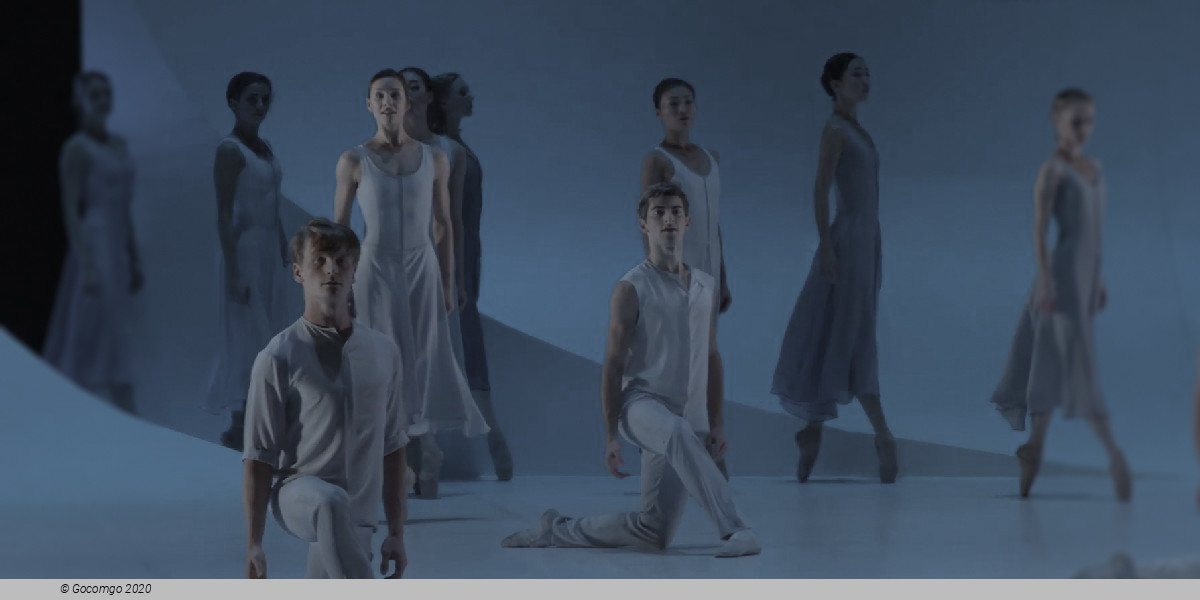
The programme opens with Grosse Fuge, one of the most famous choreographies by Hans van Manen, some of whose works (Adagio Hammerklavier, Twilight, Bits and Pieces) were danced by the Warsaw ballet company already in the 1980s. Grosse Fuge is a piece created in 1971 for the Nederlands Dans Theater to Beethoven’s Grosse Fuge Op. 133 and Cavatina from his B-flat major Quartet Op. 130. The main focus of the piece is on the bodies of dancers, both the male and female leads and the whole dancing group, as they are set in motion and sculptured by the music, material because of their corporeality and the male vs. female juxtaposition, while at the same time floating in the abstract, pristine performing space. Ted Brandsen will create a new choreography for the Polish National Ballet to a Beethoven piano piece of his choice, inspired by the artistic personalities of the company’s dancers. Based on their talents, he will devise a new ballet specifically for the Warsaw stage. The programme will end with another work by a representative of the Dutch school, a choreographer who doubles as a set designer, Toer van Schayk, and is well known to the Warsaw audience as the co-creator of The Nutcracker and the Mouse King which he choreographed with Wayne Eagling to Pyotr Tchaikovsky’s music. In 1986 van Schayk set for the Dutch National Ballet one of the greatest symphonic masterpieces of all time, Beethoven’s Dionysian Symphony No. 7 in A major Op. 92, fittingly dubbed ‘the apotheosis of the dance’ by Richard Wagner. Van Schayk’s ballet continues to fascinate with its original visual setting and beautifully composed movement sequences that tone in perfectly with the score against the crystal clear background of the preforming space.

Venue Info

Warsaw Grand Theatre - Polish National Opera (Teatr Wielki) - Warsaw
Location   plac Teatralny 1

The Grand Theatre in Warsaw is a theatre and opera complex situated on the historic Theatre Square in central Warsaw. The Warsaw Grand Theatre is home to the Polish National Ballet and is one of the largest theatrical venues in the world.

The Theatre was built on Theatre Square between 1825 and 1833, replacing the former building of Marywil, from Polish classicist designs by the Italian architect Antonio Corazzi of Livorno, to provide a new performance venue for existing opera, ballet and drama companies active in Warsaw. The building was remodeled several times and, in the period of Poland's political eclipse from 1795 to 1918, it performed an important cultural and political role in producing many works by Polish composers and choreographers.

It was in the new theatre that Stanisław Moniuszko's two best-known operas received their premieres: the complete version of Halka (1858), and The Haunted Manor (1865). After Frédéric Chopin, Moniuszko was the greatest figure in 19th-century Polish music, for in addition to producing his own works, he was director of the Warsaw Opera from 1858 until his death in 1872.

While director of the Grand Theatre, Moniuszko composed The Countess, Verbum Nobile, The Haunted Manor and Paria, and many songs that make up 12 Polish Songbooks.

Also, under Moniuszko's direction, the wooden Summer Theatre was built close by in the Saxon Garden. Summer performances were given annually, from the repertories of the Grand and Variety (Rozmaitości) theatres. Józef Szczublewski writes that during this time, even though the country had been partitioned out of political existence by its neighbors, the theatre flourished: "the ballet roused the admiration of foreign visitors; there was no equal troupe of comedians to be found between Warsaw and Paris, and Modrzejewska was an inspiration to drama."

The theatre presented operas by Władysław Żeleński, Ignacy Jan Paderewski, Karol Szymanowski and other Polish composers, as well as ballet productions designed by such choreographers as Roman Turczynowicz, Piotr Zajlich and Feliks Parnell. At the same time, the repertoire included major world opera and ballet classics, performed by the most prominent Polish and foreign singers and dancers. It was also here that the Italian choreographer Virgilius Calori produced Pan Twardowski (1874), which (in the musical arrangement first of Adolf Sonnenfeld and then of Ludomir Różycki) has for years been part of the ballet company's repertoire.

During the 1939 battle of Warsaw, the Grand Theatre was bombed and almost completely destroyed, with only the classical façade surviving. During the Warsaw Uprising of 1944 the Germans shot civilians in the burnt-out ruins. The plaque to the right of the main entrance commemorates the suffering and heroism of the victims of fascism.

Important Info
Type: Modern Ballet
City: Warsaw, Poland

E-tickets: Print at home or at the box office of the event if so specified. You will find more information in your booking confirmation email.

You can only select the category, and not the exact seats.
If you order 2 or 3 tickets: your seats will be next to each other.
If you order 4 or more tickets: your seats will be next to each other, or, if this is not possible, we will provide a combination of groups of seats (at least in pairs, for example 2+2 or 2+3).

Top of page