Place: Lima, Peru
Act 1
The Plaza
In the main square of Lima, outside The Three Cousins tavern, the crowd is celebrating the birthday of Don Andrès de Ribeira, the Viceroy of Peru. Don Pedro de Hinoyosa (Mayor of Lima), Count Miguel de Panatellas (First Gentleman of the Bedchamber), and Don Andrès enter in disguise. Everyone recognizes them but pretends not to. La Périchole and Piquillo, poor young street singers, arrive in the square, trying to raise money for their marriage license. They please the crowd with romantic duets, but some acrobats entice the crowd away before they can collect any money. Piquillo sets off, hoping for better luck elsewhere, while Périchole escapes hunger in sleep.
The Viceroy, enchanted with her beauty, offers her a position as Lady in Waiting at the court as soon as she awakes. Despite her suspicions about what he has in mind, she is persuaded by his offer of banquets and accepts, writing a loving farewell letter to Piquillo. Since all Ladies in Waiting must be married, Don Pedro and Panatellas leave to search for a husband for Périchole. They find Piquillo, who is about to hang himself after reading Périchole's farewell letter. After plenty to drink, Piquillo reluctantly agrees to marry the Viceroy's new favorite, although he does not know who it is. Périchole has also been plied with drink by the Viceroy ("Ah, quel diner"), but she agrees to the marriage when she recognizes Piquillo. He does not recognize his veiled bride, but he goes through with the marriage after warning her that he is in love with someone else. They are taken to the Viceroy's palace.
Act 2
The Palace
The next morning, four ladies of the court gossip with the Marquis de Tarapote, Chamberlain of the Viceroy, about the Viceroy's new favorite. Piquillo arrives and is astonished to find that he is married to an unknown woman, the new mistress of the Viceroy. He tells the Mayor and First Gentleman that he loves another woman. He demands his payment so that he can go in search of Périchole, but they tell him that he must present his new wife to the Viceroy first. When Périchole appears, resplendent in her new court finery, Piquillo is crushed and throws her to the floor in front of the Viceroy instead of formally presenting her. Don Andres orders him to the dungeon for recalcitrant husbands.
Act 3
Scene 1: The Dungeon
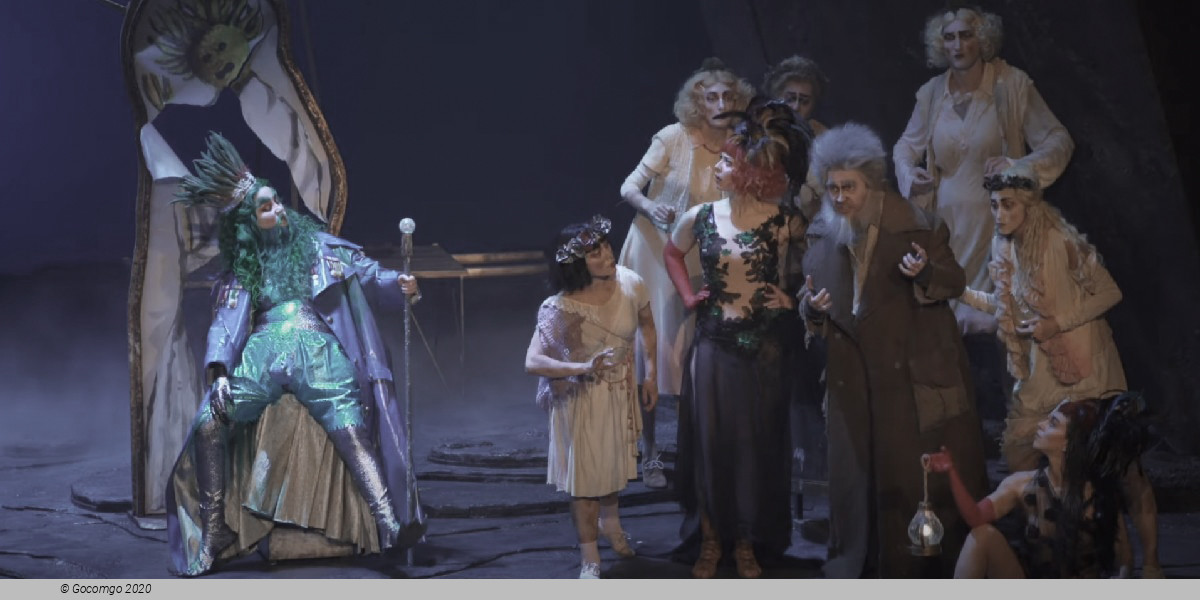
In the dark and gloomy dungeon, an old prisoner enters through a trap door. After digging through the wall of his cell for twelve years with his tiny pen knife, he has finally emerged, unfortunately into another cell. He retreats to his cell when Don Pedro and Panatellas bring Piquillo in. Piquillo mourns the loss of both his lover and his freedom and eventually falls asleep. Périchole enters, tells Piquillo that she has remained true to him, and they renew their vows. Périchole tries to bribe a jailor, with jewels the Viceroy has given her, to buy Piquillo's freedom, but the jailor is the Viceroy in disguise. He calls the guards, and the lovers are chained to the dungeon wall. But the Viceroy still hopes to win Périchole and tells her to sing if she changes her mind and decides to cooperate. The old prisoner enters through his passage and releases them from the chains. Périchole sings, and when the Viceroy enters, the three prisoners chain him to the wall and escape.
Scene 2: The Plaza
The three fugitives hide in The Three Cousins tavern as the Viceroy and his soldiers search for them in the plaza outside. Périchole and Piquillo, dressed as street performers, plead for their freedom with a ballad about clemency that flatters the Viceroy. He forgives the couple and allows Périchole to keep the jewels he has given her. Meanwhile, the old prisoner has turned out to be the long lost Marquis of Santarém. The Viceroy is happy to pardon him as well (and no one can remember what his original crime was supposed to be), rather than send him back to destroy more walls in prison.









 1 Place Boieldieu