









Opera National de Paris 28 May 2022 - Parsifal | GoComGo.com

Parsifal

Opera National de Paris, Opéra Bastille, Paris, France
All photos (6)
Select date and time
6 PM

E-tickets: Print at home or at the box office of the event if so specified. You will find more information in your booking confirmation email.

You can only select the category, and not the exact seats.
If you order 2 or 3 tickets: your seats will be next to each other.
If you order 4 or more tickets: your seats will be next to each other, or, if this is not possible, we will provide a combination of groups of seats (at least in pairs, for example 2+2 or 2+3).

Important Info
Type: Opera
City: Paris, France
Starts at: 18:00
Acts: 3
Intervals: 2
Duration: 5h 10min
Sung in: German
Titles in: French,English

E-tickets: Print at home or at the box office of the event if so specified. You will find more information in your booking confirmation email.

You can only select the category, and not the exact seats.
If you order 2 or 3 tickets: your seats will be next to each other.
If you order 4 or more tickets: your seats will be next to each other, or, if this is not possible, we will provide a combination of groups of seats (at least in pairs, for example 2+2 or 2+3).

Overview

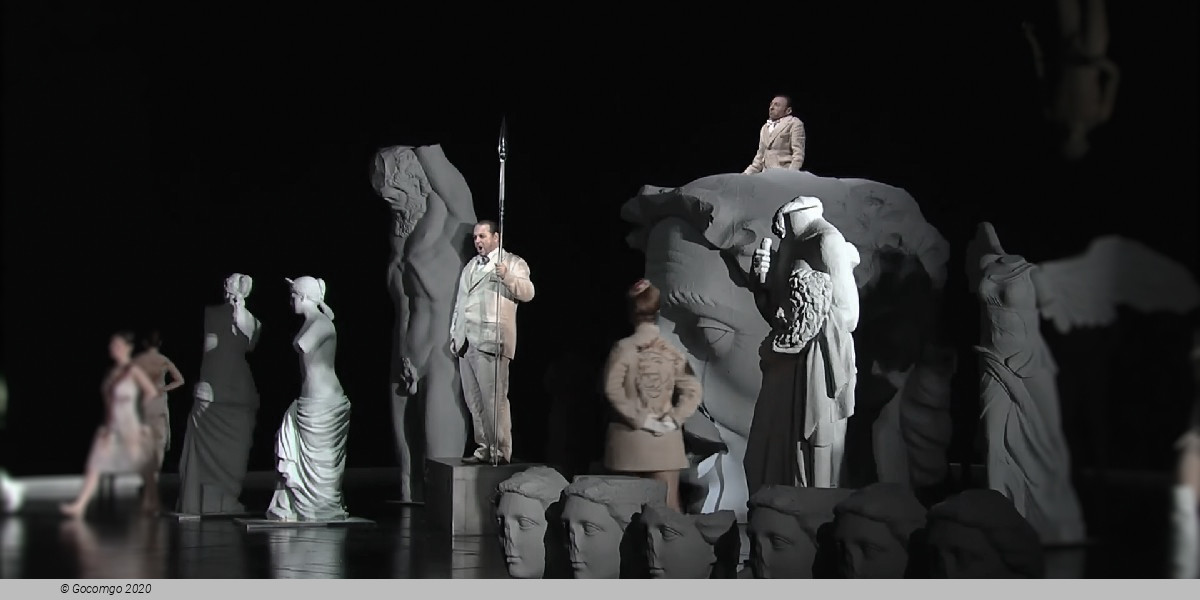
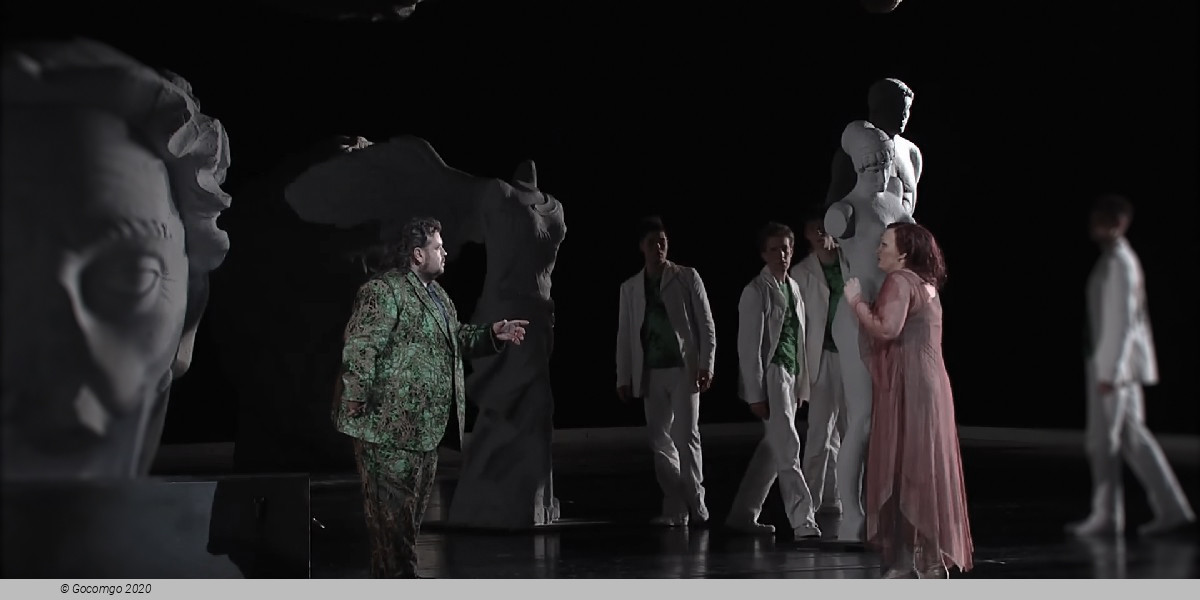
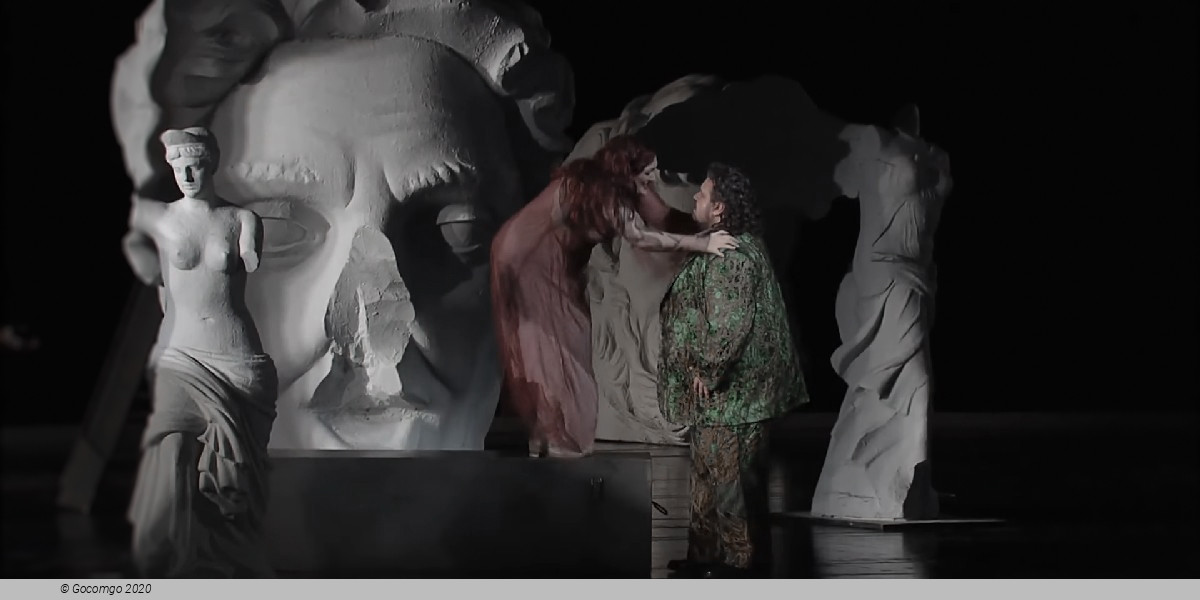
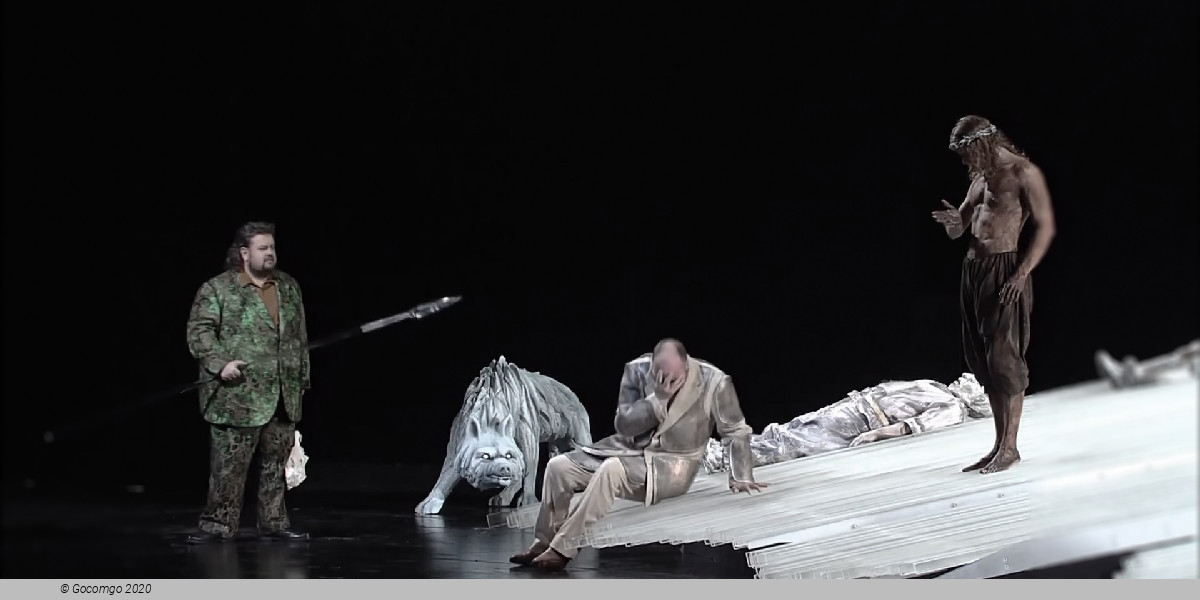
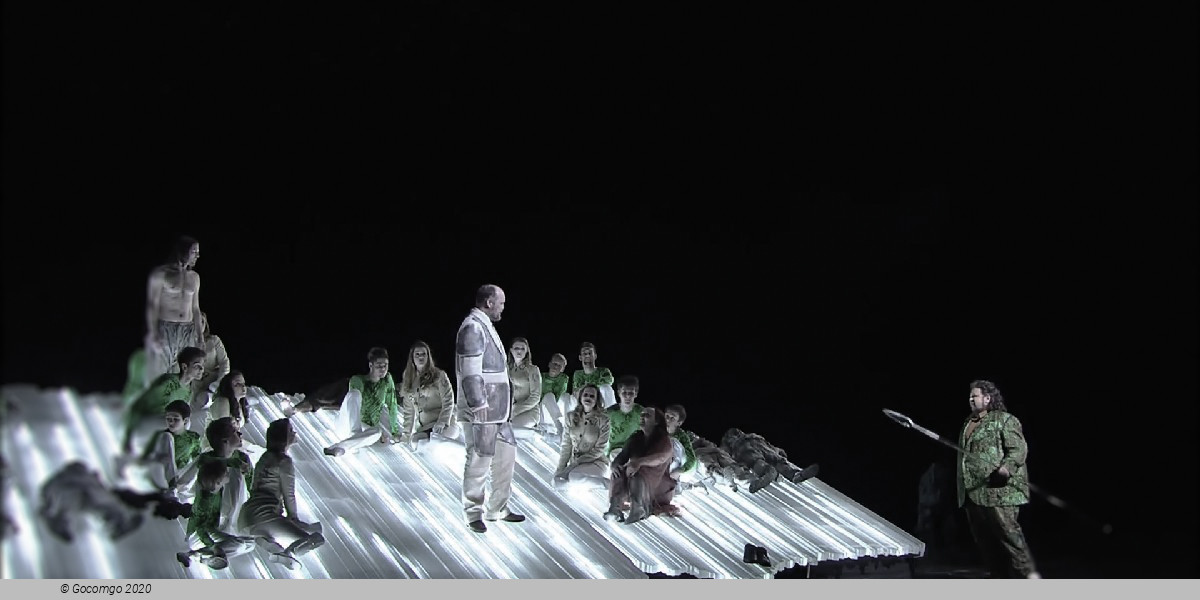
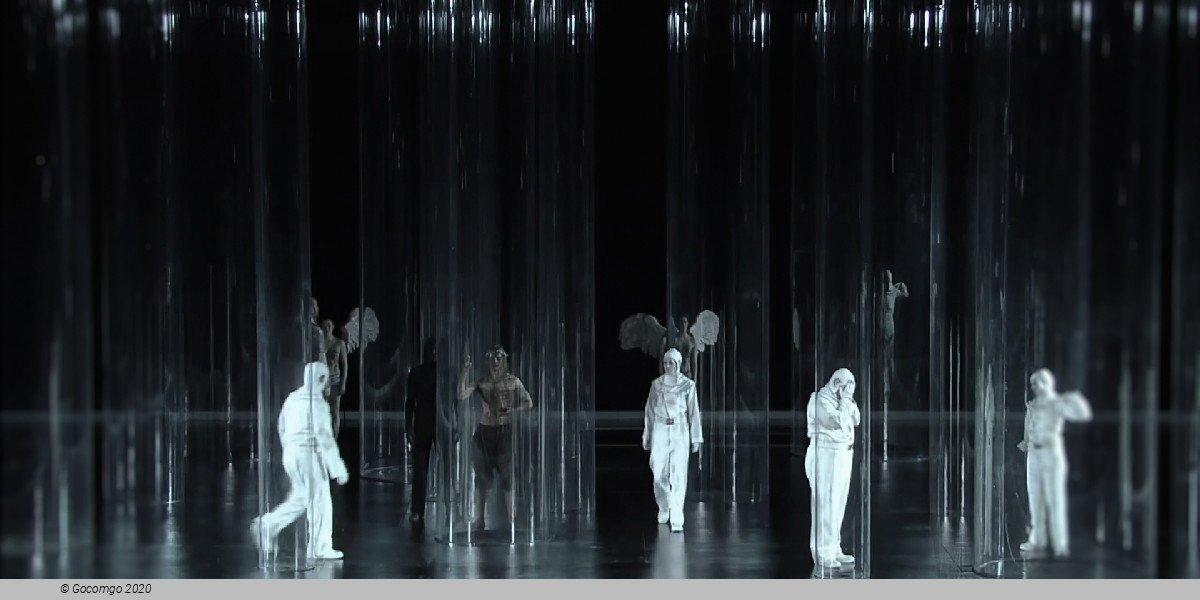
As of the prelude of Parsifal something magical takes place: a musical score with a sacred dimension, infused with esotericism and Buddhist and Christian references to convey a universal message, albeit a cryptic one. How are we to understand a work that we cross like a “forest of symbols”? Drawing on the legend of Percival and the Holy Grail as inspiration for his final opera, Wagner completes his reflexion on the struggle between good and evil and sows the seeds of the virtues of compassion and renunciation. Values which Richard Jones explores by confronting the moral rigour of a dogmatic community with the obscurantism of a deviant scientific ideology. Two worlds opposed to each other in every way other than an irrepressible attraction for illusions.

History
Premiere of this production: 26 July 1882, Bayreuth Festspielhaus

Parsifal is an opera in three acts by German composer Richard Wagner. It is loosely based on Parzival by Wolfram von Eschenbach, a 13th-century epic poem of the Arthurian knight Parzival (Percival) and his quest for the Holy Grail (12th century).

Synopsis

Place: Near the seat of the Grail

Act I

n a forest near the home of the Grail and its Knights, Gurnemanz, eldest Knight of the Grail, wakes his young squires and leads them in prayer. He sees Amfortas, King of the Grail Knights, and his entourage approaching. Amfortas has been injured by his own Holy Spear, and the wound will not heal.

Vorspiel

Musical introduction to the work with a duration of c. 9–13 minutes.

Scene 1

Gurnemanz asks the lead Knight for news of the King's health. The Knight says the King has suffered during the night and is going early to bathe in the holy lake. The squires ask Gurnemanz to explain how the King's injury can be healed, but he evades their question and a wild woman – Kundry – bursts in. She gives Gurnemanz a vial of balsam, brought from Arabia, to ease the King's pain and then collapses, exhausted.

Amfortas arrives, borne on a stretcher by Knights of the Grail. He calls out for Gawain, whose attempt at relieving the King's pain had failed. He is told that Gawain has left again, seeking a better remedy. Raising himself somewhat, the King says going off without leave ("Ohn' Urlaub?") is the sort of impulsiveness which led himself into Klingsor's realm and to his downfall. He accepts the potion from Gurnemanz and tries to thank Kundry, but she answers abruptly that thanks will not help and urges him onward to his bath.

The procession leaves. The squires eye Kundry with mistrust and question her. After a brief retort, she falls silent. Gurnemanz tells them Kundry has often helped the Grail Knights but that she comes and goes unpredictably. When he asks directly why she does not stay to help, she answers, "I never help! ("Ich helfe nie!"). The squires think she is a witch and sneer that if she does so much, why will she not find the Holy Spear for them? Gurnemanz reveals that this deed is destined for someone else. He says Amfortas was given guardianship of the Spear, but lost it as he was seduced by an irresistibly attractive woman in Klingsor's domain. Klingsor grabbed the Spear and stabbed Amfortas. The wound causes Amfortas both suffering and shame, and will never heal on its own.

Squires returning from the King's bath tell Gurnemanz that the balsam has eased the King's suffering. Gurnemanz's own squires ask how it is that he knew Klingsor. He solemnly tells them how both the Holy Spear, which pierced the side of the Redeemer on the Cross, and the Holy Grail, which caught the flowing blood, had come to Monsalvat to be guarded by the Knights of the Grail under the rule of Titurel, father of Amfortas. Klingsor had yearned to join the Knights but, unable to keep impure thoughts from his mind, resorted to self-castration, causing him to be expelled from the Order. Klingsor then set himself up in opposition to the realm of the Grail, learning dark arts, claiming the valley domain below and filling it with beautiful Flowermaidens to seduce and enthrall wayward Grail Knights. It was here that Amfortas lost the Holy Spear, kept by Klingsor as he schemes to get hold of the Grail as well. Gurnemanz tells how Amfortas later had a holy vision which told him to wait for a "pure fool, enlightened by compassion" ("Durch Mitleid wissend, der reine Tor") who will finally heal the wound.

At this moment, cries are heard from the Knights ("Weh! Weh!"): a flying swan has been shot, and a young man is brought forth, a bow in his hand and a quiver of matching arrows. Gurnemanz speaks sternly to the lad, saying this is a holy place. He asks him outright if he shot the swan, and the lad boasts that if it flies, he can hit it ("Im Fluge treff' ich was fliegt!") Gurnemanz tells him that the swan is a holy animal, and asks what harm the swan had done him, and shows the youth its lifeless body. Now remorseful, the young man breaks his bow and casts it aside. Gurnemanz asks him why he is here, who his father is, how he found this place and, lastly, his name. To each question the lad replies, "I don't know." The elder Knight sends his squires away to help the King and now asks the boy to tell what he does know. The young man says he has a mother, Herzeleide (Heart's Sorrow) and that he made the bow himself. Kundry has been listening and now tells them that this boy's father was Gamuret, a knight killed in battle, and also how the lad's mother had forbidden her son to use a sword, fearing that he would meet the same fate as his father. The youth now recalls that upon seeing knights pass through his forest, he had left his home and mother to follow them. Kundry laughs and tells the young man that, as she rode by, she saw Herzeleide die of grief. Hearing this, the lad first lunges at Kundry but then collapses in grief. Kundry herself is now weary for sleep, but cries out that she must not sleep and wishes that she might never again waken. She disappears into the undergrowth.

Gurnemanz knows that the Grail draws only the pious to Monsalvat and invites the boy to observe the Grail rite. The youth does not know what the Grail is, but remarks that as they walk he seems to scarcely move, yet feels as if he is traveling far. Gurnemanz says that in this realm time becomes space ("Zum Raum wird hier die Zeit").

Verwandlungsmusik (Transformation)

An orchestral interlude of about 4 minutes.

Scene 2

They arrive at the Hall of the Grail, where the Knights are assembling to receive Holy Communion ("Zum letzten Liebesmahle"). The voice of Titurel is heard, telling his son, Amfortas, to uncover the Grail. Amfortas is wracked with shame and suffering ("Wehvolles Erbe, dem ich verfallen"). He is the guardian of these holy relics yet has succumbed to temptation and lost the Spear. He declares himself unworthy of his office. He cries out for forgiveness ("Erbarmen!") but hears only the promise that he will one day be redeemed by the pure fool.

On hearing Amfortas' cry, the youth appears to suffer with him, clutching at his heart. The knights and Titurel urge Amfortas to reveal the Grail ("Enthüllet den Gral"), and he finally does. The dark hall is now bathed in the light of the Grail as the Knights eat. Gurnemanz motions to the youth to participate, but he seems entranced and does not. Amfortas does not share in taking communion and, as the ceremony ends, collapses in pain and is carried away. Slowly the hall empties leaving only the young man and Gurnemanz, who asks him if he has understood what he has seen. When the lad cannot answer, Gurnemanz dismisses him as just a fool and sends him out with a warning to hunt geese, if he must, but to leave the swans alone. A voice from high above repeats the promise: "The pure fool, enlightened by compassion".

Act II

Vorspiel

Musical introduction of c. 2–3 minutes.

Scene 1

Klingsor's magic castle. Klingsor conjures up Kundry, waking her from her sleep. He calls her by many names: First Sorceress (Urteufelin), Hell's Rose (Höllenrose), Herodias, Gundryggia and, lastly, Kundry. She is now transformed into an incredibly alluring woman, as when she once seduced Amfortas. She mocks Klingsor's mutilated condition by sarcastically inquiring if he is chaste ("Ha ha! Bist du keusch?"), but she cannot resist his power. Klingsor observes that Parsifal is approaching and summons his enchanted knights to fight the boy. Klingsor watches as Parsifal overcomes his knights, and they flee. Klingsor wishes destruction on their whole race.

Klingsor sees this young man stray into his Flowermaiden garden and calls to Kundry to seek the boy out and seduce him, but when he turns, he sees that Kundry has already left on her mission.

Scene 2

The triumphant youth finds himself in a wondrous garden, surrounded by beautiful and seductive Flowermaidens. They call to him and entwine themselves about him while chiding him for wounding their lovers ("Komm, komm, holder Knabe!"). They soon fight and bicker among themselves to win his devotion, to the point that he is about to flee, but then a voice calls out, "Parsifal!" He now recalls this name is what his mother called him when she appeared in his dreams. The Flowermaidens back away from him and call him a fool as they leave him and Kundry alone.

Parsifal wonders if the Garden is a dream and asks how it is that Kundry knows his name. Kundry tells him she learned it from his mother ("Ich sah das Kind an seiner Mutter Brust"), who had loved him and tried to shield him from his father's fate, the mother he had abandoned and who had finally died of grief. She reveals many parts of Parsifal's history to him and he is stricken with remorse, blaming himself for his mother's death. He thinks himself very stupid to have forgotten her. Kundry says this realization is a first sign of understanding and that, with a kiss, she can help him understand his mother's love. As they kiss Parsifal suddenly recoils in pain and cries out Amfortas' name: he feels the wounded king's pain burning in his own side and now understands Amfortas' passion during the Grail Ceremony ("Amfortas! Die Wunde! Die Wunde!"). Filled with this compassion, Parsifal rejects Kundry's advances.

Furious that her ploy has failed, Kundry tells Parsifal that if he can feel compassion for Amfortas, then he should be able to feel it for her as well. She has been cursed for centuries, unable to rest, because she saw Christ on the cross and laughed at His pains. Now she can never weep, only jeer, and she is enslaved to Klingsor as well. Parsifal rejects her again but then asks her to lead him to Amfortas. She begs him to stay with her for just one hour, and then she will take him to Amfortas. When he still refuses, she curses him to wander without ever finding the Kingdom of the Grail, and finally calls on her master Klingsor to help her.

Klingsor appears and throws the Spear at Parsifal, but it stops in midair, above his head. Parsifal takes it and makes the sign of the Cross with it. The castle crumbles and the enchanted garden withers. As Parsifal leaves, he tells Kundry that she knows where she can find him.

Act III

Vorspiel

Musical introduction of c. 4–6 minutes.

Scene 1

The scene is the same as that of the opening of the opera, in the domain of the Grail, but many years later. Gurnemanz is now aged and bent. It is Good Friday. He hears moaning near his hermit's hut and discovers Kundry unconscious in the brush, as he had many years before ("Sie! Wieder da!"). He revives her using water from the Holy Spring, but she will only speak the word "serve" ("Dienen"). Gurnemanz wonders if there is any significance to her reappearance on this special day. Looking into the forest, he sees a figure approaching, armed and in full armour. The stranger wears a helmet and the hermit cannot see who it is. Gurnemanz queries him and chides him for being armed on sanctified ground and on a holy day, but gets no response. Finally, the apparition removes the helmet and Gurnemanz recognizes the lad who shot the swan, and joyfully sees that he bears the Holy Spear.

Parsifal tells of his desire to return to Amfortas ("Zu ihm, des tiefe Klagen"). He relates his long journey, how he wandered for years, unable to find a path back to the Grail. He had often been forced to fight, but never wielded the Spear in battle. Gurnemanz tells him that the curse preventing Parsifal from finding his right path has now been lifted, but that in his absence Amfortas has never unveiled the Grail, and lack of its sustaining properties has caused the death of Titurel. Parsifal is overcome with remorse, blaming himself for this state of affairs. Gurnemanz tells him that today is the day of Titurel's funeral, and that Parsifal has a great duty to perform. Kundry washes Parsifal's feet and Gurnemanz anoints him with water from the Holy Spring, recognizing him as the pure fool, now enlightened by compassion, and as the new King of the Knights of the Grail.

Parsifal looks about and comments on the beauty of the meadow. Gurnemanz explains that today is Good Friday, when all the world is renewed. Parsifal baptizes the weeping Kundry. Tolling bells are heard in the distance. Gurnemanz says "Midday: the hour has come. My lord, permit your servant to guide you!" ("Mittag: – Die Stund ist da: gestatte Herr, dass dich dein Knecht geleite") – and all three set off for the castle of the Grail. A dark orchestral interlude ("Mittag") leads into the solemn gathering of the knights.

Scene 2

Within the castle of the Grail, Amfortas is brought before the Grail shrine and Titurel's coffin. He cries out, asking his dead father to grant him rest from his sufferings and expresses the desire to join him in death ("Mein Vater! Hochgesegneter der Helden!"). The Knights of the Grail passionately urge Amfortas to uncover the Grail again but Amfortas, in a frenzy, says he will never again show the Grail. He commands the Knights, instead, to kill him and end his suffering and the shame he has brought on the Knighthood. At this moment, Parsifal steps forth and says that only one weapon can heal the wound ("Nur eine Waffe taugt"). He touches Amfortas' side with the Spear and both heals and absolves him. Parsifal commands the unveiling of the Grail. As all present kneel, Kundry, released from her curse, sinks lifeless to the ground as a white dove descends and hovers above Parsifal.

Venue Info

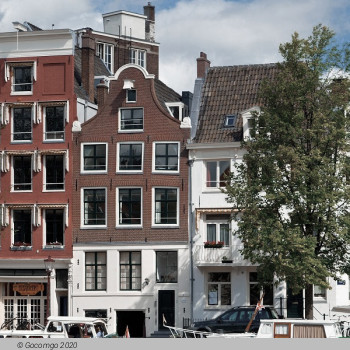
Opera National de Paris - Paris
Location   Palais Garnier: Place de l’Opéra, 75009 Paris; Opéra Bastille: Place de la Bastille, 75012 Paris

The Paris Opera is the primary opera and ballet company of France. It was founded in 1669 by Louis XIV as the Académie d'Opéra, and shortly thereafter was placed under the leadership of Jean-Baptiste Lully and officially renamed the Académie Royale de Musique, but continued to be known more simply as the Opéra. Classical ballet as it is known today arose within the Paris Opera as the Paris Opera Ballet and has remained an integral and important part of the company. Currently called the Opéra National de Paris, it mainly produces operas at its modern 2700-seat theatre Opéra Bastille which opened in 1989, and ballets and some classical operas at the older 1970-seat Palais Garnier which opened in 1875. Small scale and contemporary works are also staged in the 500-seat Amphitheatre under the Opéra Bastille.

The company's annual budget is in the order of 200 million euros, of which 100 million come from the French state and 70 million from box office receipts. With this money, the company runs the two houses and supports a large permanent staff, which includes the orchestra of 170, a chorus of 110 and the corps de ballet of 150.

Each year, the Opéra presents about 380 performances of opera, ballet and other concerts, to a total audience of about 800,000 people (of whom 17% come from abroad), which is a very good average seat occupancy rate of 94%. In the 2012/13 season, the Opéra presented 18 opera titles (two in a double bill), 13 ballets, 5 symphonic concerts and two vocal recitals, plus 15 other programmes. The company's training bodies are also active, with 7 concerts from the Atelier Lyrique and 4 programmes from the École de Danse.

The Opera under Louis XIV
Pierre Perrin

The poet Pierre Perrin began thinking and writing about the possibility of French opera in 1655, more than a decade before the official founding of the Paris Opera as an institution. He believed that the prevailing opinion of the time that the French language was fundamentally unmusical was completely incorrect. Seventeenth-century France offered Perrin essentially two types of organization for realizing his vision: a royal academy or a public theater. In 1666 he proposed to the minister Colbert that "the king decree 'the establishment of an Academy of Poetry and Music' whose goal would be to synthesize the French language and French music into an entirely new lyric form."

Even though Perrin's original concept was of an academy devoted to discussions of French opera, the king's intention was in fact a unique hybrid of royal academy and public theatre, with an emphasis on the latter as an institution for performance. On 28 June 1669, Louis XIV signed the Privilège accordé au Sieur Perrin pour l'établissement d'une Académie d'Opéra en musique, & Vers François (Privilege granted to Sir Perrin for the establishment of an Academy of Opera in music, & French Verse). The wording of the privilège, based in part on Perrin's own writings, gave him the exclusive right for 12 years to found anywhere in France academies of opera dedicated to the performance of opera in French. He was free to select business partners of his choice and to set the price of tickets. No one was to have the right of free entry including members of the royal court, and no one else could set up a similar institution. Although it was to be a public theatre, it retained its status as royal academy in which the authority of the king as the primary stakeholder was decisive. The monopoly, originally intended to protect the enterprise from competition during its formative phase, was renewed for subsequent recipients of the privilege up to the early French Revolution. As Victoria Johnson points out, "the Opera was an organization by nature so luxurious and expensive in its productions that its very survival depended on financial protection and privilege."

Perrin converted the Bouteille tennis court, located on the Rue des Fossés de Nesles (now 42 Rue Mazarine), into a rectangular facility with provisions for stage machinery and scenery changes and a capacity of about 1200 spectators. His first opera Pomone with music by Robert Cambert opened on 3 March 1671 and ran for 146 performances. A second work, Les peines et les plaisirs de l'amour, with a libretto by Gabriel Gilbert and music by Cambert, was performed in 1672.

Jean-Baptiste Lully

Despite this early success, Cambert and two other associates did not hesitate to swindle Perrin, who was imprisoned for debt and forced to concede his privilege on 13 March 1672 to the surintendant of the king's music Jean-Baptiste Lully. The institution was renamed the Académie Royale de Musique and came to be known in France simply as the Opéra. Within one month Lully had convinced the king to expand the privilege by restricting the French and Italian comedians to using two singers rather than six, and six instrumentalists, rather than twelve. Because of legal difficulties Lully could not use the Salle de la Bouteille, and a new theatre was built by Carlo Vigarani at the Bel-Air tennis court on the Rue de Vaugirard.[9] Later, Lully and his successors bitterly negotiated the concession of the privilege, in whole or in part, from the entrepreneurs in the provinces: in 1684 Pierre Gautier bought the authorisation to open a music academy in Marseille, then the towns of Lyon, Rouen, Lille and Bordeaux followed suit in the following years. During Lully's tenure, the only works performed were his own. The first productions were the pastorale Les fêtes de l'Amour et de Bacchus (November 1672) and his first tragedie lyrique called Cadmus et Hermione (27 April 1673).

After Molière's death in 1673, his troupe merged with the players at the Théâtre du Marais to form the Théâtre Guénégaud (at the same theatre that had been used by the Académie d'Opéra), and no longer needed the theatre built by Richelieu at his residence the Palais-Royal, near the Louvre. (In 1680 the troupe at the Guénégaud merged again with the players from the Hôtel de Bourgogne forming the Comédie-Française.) Richelieu's theatre had been designed by Jacques Le Mercier and had opened in 1641, and unlike the huge theatre at the Tuileries Palace, which could accommodate 6,000 to 8,000 spectators, was of a size consistent with good acoustics. Lully greatly desired a better theatre and persuaded the king to let him use the one at the Palais-Royal free of charge. The Théâtre du Palais-Royal had been altered in 1660 and 1671, but Lully, with 3,000 livres received from the king, had further changes made by Vigarani in 1674.

The first production in the new theatre was Alceste on 19 January 1674. The opera was bitterly attacked by those enraged at the restrictions that Lully had caused to be placed on the French and Italian comedians. To mitigate the damage, Louis XIV arranged for new works to be premiered at the court, usually at the Chateau Vieux of the Château de Saint-Germain-en-Laye. This had the further advantage of subsidizing the cost of rehearsals, as well as most of the machinery, sets, and costumes, which were donated to the Opéra for use in Paris. During Lully's time at the Opéra, performances were given all year, except for three weeks at Easter. Regular performances were on Tuesdays, Fridays, and Sundays. The premieres presented at court were usually during Carnival and were moved to the Palais-Royal after Easter, where the openings were on Thursdays. About two to three new works were mounted each year. In all, thirteen of Lully's tragédie en musique were performed there (see the list of compositions by Jean-Baptiste Lully).

After Lully

After Lully died (in 1687), the number of new works per year almost doubled, since his successors (Pascal Collasse, Henri Desmarets, André Campra, André Cardinal Destouches, and Marin Marais) had greater difficulty sustaining the interest of the public. Revivals of Lully's works were common. French composers at the Opéra generally wrote music to new librettos, which had to be approved by the directors of the company. The Italian practice of preparing new settings of existing librettos was considered controversial and did not become the norm in Paris until around 1760. One of the most important of the new works during this period was an opéra-ballet by Campra called L'Europe galante presented in 1697.

Ballet
In 1661 Louis XIV, who was a dancer himself and one of the great architects of baroque ballet (the art form which would one day evolve into classical ballet), established the Académie Royale de Danse, intended to codify court and character dances and to certify dance teachers by examination. From 1680 until Lully's death, it was under the direction of the great dancing master Pierre Beauchamp, the man who codified the five positions of the feet. When Lully took over the Opéra in 1672, he and Beauchamp made theatrical ballet an important part of the company's productions. The ballet of that time was merely an extension of the opera, having yet to evolve into an independent form of theatrical art. As it became more important, however, the dance component of the company began to be referred to as the Paris Opera Ballet. In 1713 an associated ballet school was opened, today known as the Paris Opera Ballet School. The Académie Royale de Danse remained separate, and with the fall of the monarchy in 1789 it disappeared.

The company's names after the Revolution

With the French Revolution and the founding of the Republic, the company changed names several times, dropping its association with the royal family (see the List of official company names for details), and in 1794, moved into the Théâtre National de la rue de la Loi (capacity 2800) where it took the name Théâtre des Arts. In 1797, it was renamed the Théâtre de la République et des Arts.

Napoleon took control of the company in 1802 and with the declaration of the French Empire in 1804, renamed the company the Académie Impériale de Musique. With the Restoration in 1814, the company was renamed the Académie Royale de Musique. It became part of the Académie des Beaux-Arts in 1816. In 1821, the company moved to the Salle Le Peletier, which had a capacity of 1900 spectators and where it remained until the building was destroyed by fire in 1873.

In the second half of the 19th century, with the ascension of Napoleon III in 1851, the name Académie Impériale de Musique was reinstated and after 1870 with the formation of the Third Republic, was changed to Théâtre National de l'Opéra.

In 1875, the institution occupied a new home, the Palais Garnier. Between 1908 and 1914 Henri Benjamin Rabaud conducted at Palais Garnier. Rabaud also composed several works which first premiered at Opéra-Comique, but were later also performed at Palais Garnier.

In 1939, the Opéra was merged with the Opéra-Comique and the company name became Réunion des Théâtres Lyriques Nationaux. The Opéra-Comique was closed in 1972 with the appointment of Rolf Liebermann as general administrator of the Théâtre National de l'Opéra de Paris (1973–1980), but in 1976, the Opéra-Comique was restored.

In 1990 the Opéra moved its primary venue to the new Opéra-Bastille, becoming the Opéra de Paris, although it continued to mount productions, primarily ballet, at the Palais Garnier; and the Opéra-Comique regained its autonomy. In 1994 the Opéra de Paris became the Opéra National de Paris. Regardless of all the changes in its "official" name, the company and its theatres were commonly referred to as the Opéra.

Important Info
Type: Opera
City: Paris, France
Starts at: 18:00
Acts: 3
Intervals: 2
Duration: 5h 10min
Sung in: German
Titles in: French,English
Top of page