

Opera National de Paris 27 September 2021 - Iphigénie en Tauride | GoComGo.com

Iphigénie en Tauride

Opera National de Paris, Palais Garnier, Paris, France
All photos (4)
Select date and time
7:30 PM

E-tickets: Print at home or at the box office of the event if so specified. You will find more information in your booking confirmation email.

You can only select the category, and not the exact seats.
If you order 2 or 3 tickets: your seats will be next to each other.
If you order 4 or more tickets: your seats will be next to each other, or, if this is not possible, we will provide a combination of groups of seats (at least in pairs, for example 2+2 or 2+3).

Important Info
Type: Opera
City: Paris, France
Starts at: 19:30
Acts: 4
Intervals: 1
Duration: 2h 20min
Sung in: French
Titles in: French,English

E-tickets: Print at home or at the box office of the event if so specified. You will find more information in your booking confirmation email.

You can only select the category, and not the exact seats.
If you order 2 or 3 tickets: your seats will be next to each other.
If you order 4 or more tickets: your seats will be next to each other, or, if this is not possible, we will provide a combination of groups of seats (at least in pairs, for example 2+2 or 2+3).

Overview

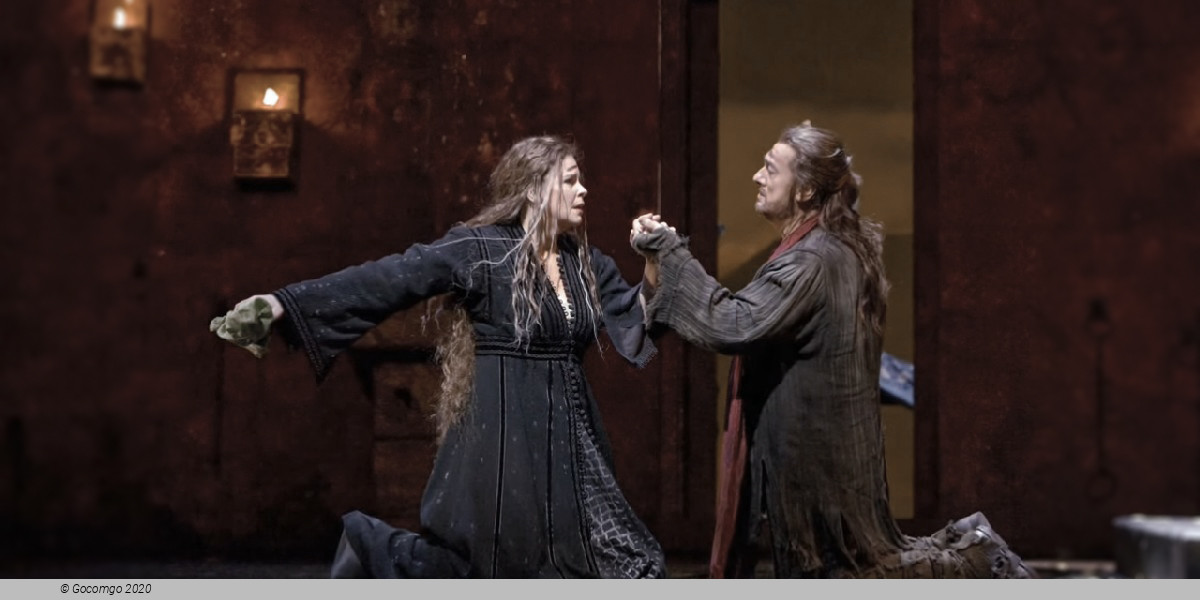
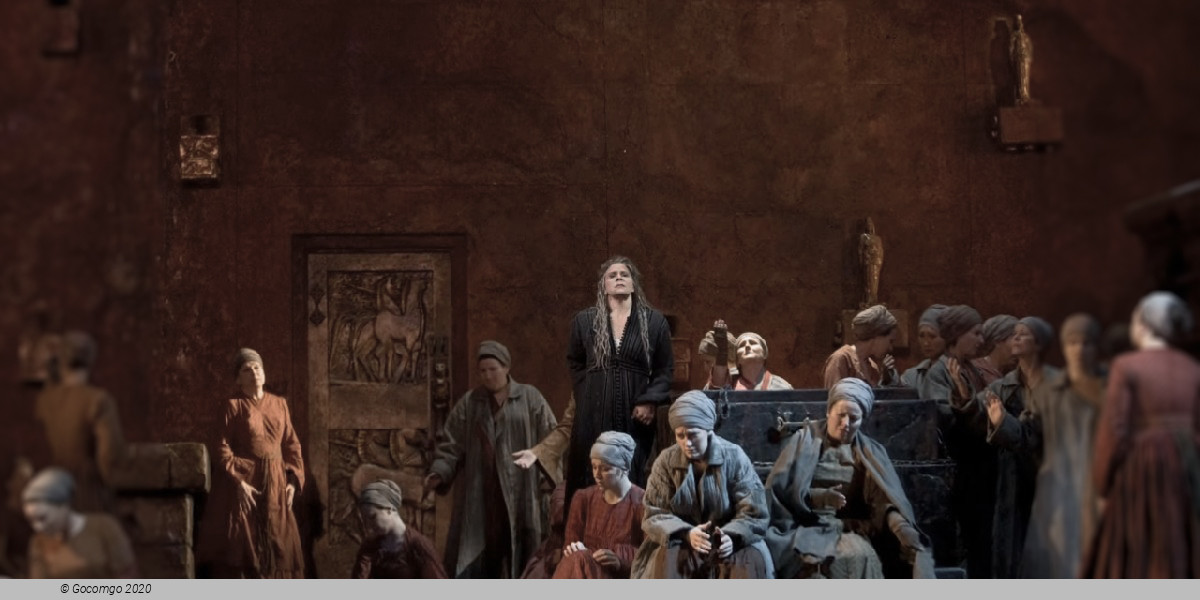
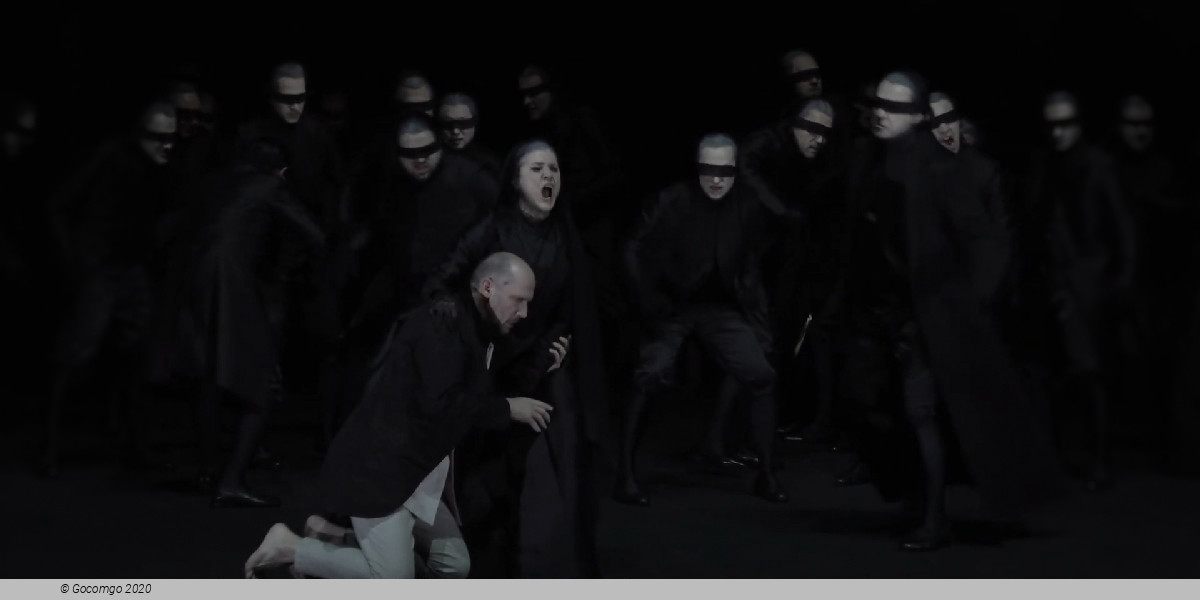
Gluck’s last opera tragedy features three characters tormented by what modern psychology would describe as post-traumatic reactions: Iphigenia, who escaped the sacrifice demanded by her compatriots in their warring madness; Orestes, gnawed by remorse for having murdered his mother; and King Thoas, obsessed by nightmarish visions of his own death. Director Krzysztof Warlikowski transposes the work into the realms of a retirement home, where the heroine, an ageing resident, is haunted by her past. In this closed, stifling environment, characters, as legendary as they are real, confront one another to bring an end to the perpetual cycle of violence.

History
Premiere of this production: 18 May 1779, Paris Opéra

Iphigénie en Tauride (Iphigenia in Tauris) is a 1779 opera by Christoph Willibald Gluck in four acts. It was his fifth opera for the French stage. The libretto was written by Nicolas-François Guillard. The drama is ultimately based on the play Iphigenia in Tauris by the ancient Greek dramatist Euripides which deals with stories concerning the family of Agamemnon in the aftermath of the Trojan War.

Synopsis

ACT I

A storm breaks out. The priestesses pray the gods not to punish them and to free them at last from their bloody mission. Iphigenia has a recurrent dream: a loving father who, laying his hand on her, finds himself covered in blood, her mother holding a knife and Iphigenia herself raising a knife against her brother Orestes. The storm abates and Iphigenia recounts her nightmares. Cursing her destiny she begs Diana to grant her freedom through death. Thoas, the king of Tauris, tyrannizes Iphigenia. He can no longer sleep and suffers from a persecution complex. He fears death at the hands of a stranger, as an oracle has predicted. To avoid this he demands new human sacrifices. A messenger brings news: two Greeks have been cast up on the shore during the storm. The guards have captured them. Thoas is taken to see them and orders that a sacrifice be prepared. The prospect of this new sacrifice puts Thoas’ court into a state of euphoria.

ACT II

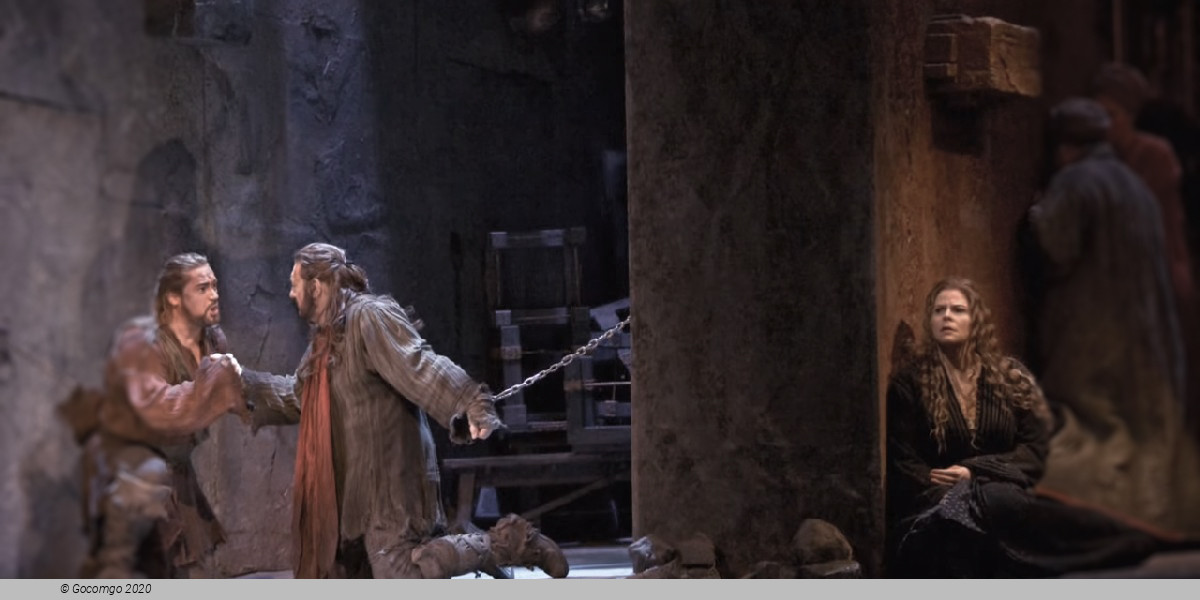
The two Greek prisoners are in chains. In fact they are none other than Iphigenia’s brother, Orestes, and his friend Pylades. Orestes has committed a serious crime: he has killed his mother. He immures himself in silence and curses his fate. Pylades seeks to comfort him. For him, dying alongside Orestes is an honour. The guards separate the two friends. Orestes remains alone and is assailed by the Furies. He is haunted by the memory of his crime. His murdered mother appears before him. The vision vanishes and he realises that it is not his mother but a priestess who has entered his cell. Striking up conversation, both reveal that they are from Mycenoe whilst concealing their respective identities. Iphigenia tortures the Greek prisoner with a multitude of questions about his homeland. She learns sad truths and a lie: Clytemnestra killed her husband Agamemnon upon his return from the war and her son Orestes in turn killed her to avenge his father. Orestes then found deliverance through death. These words confirm Iphigenia’s visions: her family no longer exists. Along with the other priestesses she prepares a funeral ceremony in honour of her dead brother.

ACT III

Iphigenia is anxious. She has grown fond of the prisoner who reminds her of her brother. She decides to save one of the prisoners from death and to entrust him with a letter to her sister Electra who has remained in Mycenæ. Iphigenia explains her plan to the two Greek prisoners. The two friends argue fiercely to decide who shall die to save the other. Iphigenia must choose between them. She hesitates a long time before deciding to free Orestes. Orestes reproaches Pylades for not granting his deepest desire and preventing from him being freed from his crime through death. He threatens to commit suicide thus obliging Iphigenia to modify her decision. In the end, Pylades is freed.

ACT IV

Iphigenia prepares for the sacrificial ritual. She seeks to hide any feelings of compassion or suffering. The priestesses prepare the victim. In the face of death, Orestes thinks once more of his sister Iphigenia sacrificed in Aulis. Iphigenia recognises her brother at the very moment of sacrifice. She does not kill him. Although he killed her mother, she continues to love him. Thoas discovers Pylades’ escape. He feels betrayed by Iphigenia and orders that she and Orestes be slaughtered on the spot. Pylades arrives at the head of a troop of Greek soldiers and kills Thoas. The Greeks have the upper hand in the fighting and intend to kill every last Scythian. The goddess Diana stops the massacre. Orestes begs the gods to forgive him for murdering his mother and prepares to return to Mycenæ with his sister. The Greeks and Scythians joyfully celebrate peace and human dignity.

Act 1
Scene: The entrance hall of the temple of Diana in Tauris.

There is no overture; the opera begins with a short passage evoking calm before turning into a depiction of a great storm at sea. Iphigenia, sister of Orestes, is the high priestess of Diana in the temple of Tauris, having been transported there magically by the goddess when her father Agamemnon attempted to offer her as a sacrifice. Iphigenia and her priestesses beg the gods to protect them from the storm (Grands dieux! soyez nous secourables).

Although the storm dies down, Iphigenia remains troubled by a dream she has had, in which she envisioned her mother Clytaemnestra murdering her father, then her brother Orestes killing her mother, and finally her own hand stabbing her brother. She prays to Diana to reunite her with Orestes (Ô toi qui prolongeas mes jours). Thoas, King of Tauris, enters. He too is obsessed with dark thoughts (De noirs pressentiments): the oracles, he tells her, predict doom for him if a single stranger escapes with his life. (The custom of the Scythians, who inhabit Tauris, is to ritually sacrifice any who are shipwrecked on their shores).

A chorus of Scythians comes bringing news of two young Greeks who have just been found shipwrecked, demanding their blood (Il nous fallait du sang). After Iphigenia and the priestesses depart, Thoas brings in the Greeks, who turn out to be Orestes and his friend Pylades. After asking them for what purpose they came (they have come to retrieve Diana's statue and return it to Greece, though they do not divulge this), Thoas promises them death and has them taken away.

Act 2
Scene: An inner chamber of the temple

Orestes and Pylades languish in chains. Orestes berates himself for causing the death of his dear friend (Dieux qui me poursuivez), but Pylades assures him that he does not feel dispirited because they will die united (Unis dès la plus tendre enfance). A minister of the sanctuary comes to remove Pylades. Orestes half falls asleep (Le calme rentre dans mon coeur), but he is tormented by visions of the Furies, who wish to avenge his slaying of his mother (whom Orestes killed for murdering his father Agamemnon).

Iphigenia enters and, although the two do not recognize each other, Orestes sees an astonishing likeness between her and the slain Clytaemnestra seen in his dream. She questions him further, asking him the fate of Agamemnon and all Greece, and he tells her of Agamemnon's murder by his wife, and the wife's murder by her son. In agitation, she asks of the fate of the son, and Orestes says that the son found the death he had long sought, and that only their sister Electra remains alive. Iphigenia sends Orestes away and with her priestesses laments the destruction of her country and the supposed death of her brother (Ô malheureuse Iphigénie). She and the priestesses perform a funeral ceremony for Orestes (Contemplez ces tristes apprêts).

Act 3
Scene: Iphigenia's chamber

Iphigenia is drawn to the stranger who reminds her of her brother Orestes (D'une image, hélas! trop chérie). She tells Orestes and Pylades she can persuade Thoas to save one of them from the sacrifice (Je pourrais du tyran tromper la barbarie) and asks the one who is spared to carry word of her fate to her sister Electra in Argos. Both men readily agree, and Iphigenia chooses Orestes to survive.

But on her exit, Orestes insists that Pylades agree to switch places with him as Orestes cannot bear the thought of his friend's death and sees dying as an escape from his own madness; Pylades, on the contrary, is glad at the thought of dying so Orestes can live (Duet: Et tu prétends encore que tu m'aimes and aria for Pylades: Ah! mon ami, j'implore ta pitié!). When Iphigenia returns, Orestes insists that she reverse her decision, threatening to kill himself before her eyes if she does not. Reluctantly, she agrees to spare Pylades instead and sends him to carry her message to Electra. Everyone but Pylades departs, and he closes the act by promising to do everything possible to save Orestes (Divinité des grandes âmes!).

Act 4
Scene: Inside the temple of Diana

Iphigenia wonders how she can ever carry out the killing of Orestes, since somehow her soul shrinks from the thought of it. She asks the goddess Diana to help her steel herself for the task (Je t'implore et je tremble). The priestesses bring in Orestes, who has been prepared for sacrifice (Chorus: Ô Diane, sois nous propice). He tells her not to lament him, but to strike, telling her it is the will of the gods. The priestesses sing a hymn to Diana as they lead Orestes to the altar (Chorus: Chaste fille de Latone). While she wields the knife, Orestes exclaims Iphigenia's name, leading her and the priestesses to recognize him and stop the ritual slaughter.

The happy reunion of sister and brother is cut short at news that Thoas is coming, having heard that one of the captives was released and intent on the blood of the other. The king enters wildly, ordering his guards to seize Orestes and promising to sacrifice both him and his sister. At that moment Pylades enters with a band of Greeks, cutting down Thoas where he stands.

The resulting rout of the Scythians by the Greeks is halted by a dea ex machina appearance of Diana, who commands the Scythians to restore her statue to Greece (Arrêtez! Écoutez mes décrets éternels). She also issues pardon to Orestes for murdering his mother, sending him to be king over Mycenae and bidding him restore Iphigenia to her country. As Diana is carried back into the clouds, everyone sings a concluding chorus of rejoicing at having the favor of earth and heaven restored to them (Les dieux, longtemps en courroux).

Venue Info

Opera National de Paris - Paris
Location   Palais Garnier: Place de l’Opéra, 75009 Paris; Opéra Bastille: Place de la Bastille, 75012 Paris

The Paris Opera is the primary opera and ballet company of France. It was founded in 1669 by Louis XIV as the Académie d'Opéra, and shortly thereafter was placed under the leadership of Jean-Baptiste Lully and officially renamed the Académie Royale de Musique, but continued to be known more simply as the Opéra. Classical ballet as it is known today arose within the Paris Opera as the Paris Opera Ballet and has remained an integral and important part of the company. Currently called the Opéra National de Paris, it mainly produces operas at its modern 2700-seat theatre Opéra Bastille which opened in 1989, and ballets and some classical operas at the older 1970-seat Palais Garnier which opened in 1875. Small scale and contemporary works are also staged in the 500-seat Amphitheatre under the Opéra Bastille.

The company's annual budget is in the order of 200 million euros, of which 100 million come from the French state and 70 million from box office receipts. With this money, the company runs the two houses and supports a large permanent staff, which includes the orchestra of 170, a chorus of 110 and the corps de ballet of 150.

Each year, the Opéra presents about 380 performances of opera, ballet and other concerts, to a total audience of about 800,000 people (of whom 17% come from abroad), which is a very good average seat occupancy rate of 94%. In the 2012/13 season, the Opéra presented 18 opera titles (two in a double bill), 13 ballets, 5 symphonic concerts and two vocal recitals, plus 15 other programmes. The company's training bodies are also active, with 7 concerts from the Atelier Lyrique and 4 programmes from the École de Danse.

The Opera under Louis XIV
Pierre Perrin

The poet Pierre Perrin began thinking and writing about the possibility of French opera in 1655, more than a decade before the official founding of the Paris Opera as an institution. He believed that the prevailing opinion of the time that the French language was fundamentally unmusical was completely incorrect. Seventeenth-century France offered Perrin essentially two types of organization for realizing his vision: a royal academy or a public theater. In 1666 he proposed to the minister Colbert that "the king decree 'the establishment of an Academy of Poetry and Music' whose goal would be to synthesize the French language and French music into an entirely new lyric form."

Even though Perrin's original concept was of an academy devoted to discussions of French opera, the king's intention was in fact a unique hybrid of royal academy and public theatre, with an emphasis on the latter as an institution for performance. On 28 June 1669, Louis XIV signed the Privilège accordé au Sieur Perrin pour l'établissement d'une Académie d'Opéra en musique, & Vers François (Privilege granted to Sir Perrin for the establishment of an Academy of Opera in music, & French Verse). The wording of the privilège, based in part on Perrin's own writings, gave him the exclusive right for 12 years to found anywhere in France academies of opera dedicated to the performance of opera in French. He was free to select business partners of his choice and to set the price of tickets. No one was to have the right of free entry including members of the royal court, and no one else could set up a similar institution. Although it was to be a public theatre, it retained its status as royal academy in which the authority of the king as the primary stakeholder was decisive. The monopoly, originally intended to protect the enterprise from competition during its formative phase, was renewed for subsequent recipients of the privilege up to the early French Revolution. As Victoria Johnson points out, "the Opera was an organization by nature so luxurious and expensive in its productions that its very survival depended on financial protection and privilege."

Perrin converted the Bouteille tennis court, located on the Rue des Fossés de Nesles (now 42 Rue Mazarine), into a rectangular facility with provisions for stage machinery and scenery changes and a capacity of about 1200 spectators. His first opera Pomone with music by Robert Cambert opened on 3 March 1671 and ran for 146 performances. A second work, Les peines et les plaisirs de l'amour, with a libretto by Gabriel Gilbert and music by Cambert, was performed in 1672.

Jean-Baptiste Lully

Despite this early success, Cambert and two other associates did not hesitate to swindle Perrin, who was imprisoned for debt and forced to concede his privilege on 13 March 1672 to the surintendant of the king's music Jean-Baptiste Lully. The institution was renamed the Académie Royale de Musique and came to be known in France simply as the Opéra. Within one month Lully had convinced the king to expand the privilege by restricting the French and Italian comedians to using two singers rather than six, and six instrumentalists, rather than twelve. Because of legal difficulties Lully could not use the Salle de la Bouteille, and a new theatre was built by Carlo Vigarani at the Bel-Air tennis court on the Rue de Vaugirard.[9] Later, Lully and his successors bitterly negotiated the concession of the privilege, in whole or in part, from the entrepreneurs in the provinces: in 1684 Pierre Gautier bought the authorisation to open a music academy in Marseille, then the towns of Lyon, Rouen, Lille and Bordeaux followed suit in the following years. During Lully's tenure, the only works performed were his own. The first productions were the pastorale Les fêtes de l'Amour et de Bacchus (November 1672) and his first tragedie lyrique called Cadmus et Hermione (27 April 1673).

After Molière's death in 1673, his troupe merged with the players at the Théâtre du Marais to form the Théâtre Guénégaud (at the same theatre that had been used by the Académie d'Opéra), and no longer needed the theatre built by Richelieu at his residence the Palais-Royal, near the Louvre. (In 1680 the troupe at the Guénégaud merged again with the players from the Hôtel de Bourgogne forming the Comédie-Française.) Richelieu's theatre had been designed by Jacques Le Mercier and had opened in 1641, and unlike the huge theatre at the Tuileries Palace, which could accommodate 6,000 to 8,000 spectators, was of a size consistent with good acoustics. Lully greatly desired a better theatre and persuaded the king to let him use the one at the Palais-Royal free of charge. The Théâtre du Palais-Royal had been altered in 1660 and 1671, but Lully, with 3,000 livres received from the king, had further changes made by Vigarani in 1674.

The first production in the new theatre was Alceste on 19 January 1674. The opera was bitterly attacked by those enraged at the restrictions that Lully had caused to be placed on the French and Italian comedians. To mitigate the damage, Louis XIV arranged for new works to be premiered at the court, usually at the Chateau Vieux of the Château de Saint-Germain-en-Laye. This had the further advantage of subsidizing the cost of rehearsals, as well as most of the machinery, sets, and costumes, which were donated to the Opéra for use in Paris. During Lully's time at the Opéra, performances were given all year, except for three weeks at Easter. Regular performances were on Tuesdays, Fridays, and Sundays. The premieres presented at court were usually during Carnival and were moved to the Palais-Royal after Easter, where the openings were on Thursdays. About two to three new works were mounted each year. In all, thirteen of Lully's tragédie en musique were performed there (see the list of compositions by Jean-Baptiste Lully).

After Lully

After Lully died (in 1687), the number of new works per year almost doubled, since his successors (Pascal Collasse, Henri Desmarets, André Campra, André Cardinal Destouches, and Marin Marais) had greater difficulty sustaining the interest of the public. Revivals of Lully's works were common. French composers at the Opéra generally wrote music to new librettos, which had to be approved by the directors of the company. The Italian practice of preparing new settings of existing librettos was considered controversial and did not become the norm in Paris until around 1760. One of the most important of the new works during this period was an opéra-ballet by Campra called L'Europe galante presented in 1697.

Ballet
In 1661 Louis XIV, who was a dancer himself and one of the great architects of baroque ballet (the art form which would one day evolve into classical ballet), established the Académie Royale de Danse, intended to codify court and character dances and to certify dance teachers by examination. From 1680 until Lully's death, it was under the direction of the great dancing master Pierre Beauchamp, the man who codified the five positions of the feet. When Lully took over the Opéra in 1672, he and Beauchamp made theatrical ballet an important part of the company's productions. The ballet of that time was merely an extension of the opera, having yet to evolve into an independent form of theatrical art. As it became more important, however, the dance component of the company began to be referred to as the Paris Opera Ballet. In 1713 an associated ballet school was opened, today known as the Paris Opera Ballet School. The Académie Royale de Danse remained separate, and with the fall of the monarchy in 1789 it disappeared.

The company's names after the Revolution

With the French Revolution and the founding of the Republic, the company changed names several times, dropping its association with the royal family (see the List of official company names for details), and in 1794, moved into the Théâtre National de la rue de la Loi (capacity 2800) where it took the name Théâtre des Arts. In 1797, it was renamed the Théâtre de la République et des Arts.

Napoleon took control of the company in 1802 and with the declaration of the French Empire in 1804, renamed the company the Académie Impériale de Musique. With the Restoration in 1814, the company was renamed the Académie Royale de Musique. It became part of the Académie des Beaux-Arts in 1816. In 1821, the company moved to the Salle Le Peletier, which had a capacity of 1900 spectators and where it remained until the building was destroyed by fire in 1873.

In the second half of the 19th century, with the ascension of Napoleon III in 1851, the name Académie Impériale de Musique was reinstated and after 1870 with the formation of the Third Republic, was changed to Théâtre National de l'Opéra.

In 1875, the institution occupied a new home, the Palais Garnier. Between 1908 and 1914 Henri Benjamin Rabaud conducted at Palais Garnier. Rabaud also composed several works which first premiered at Opéra-Comique, but were later also performed at Palais Garnier.

In 1939, the Opéra was merged with the Opéra-Comique and the company name became Réunion des Théâtres Lyriques Nationaux. The Opéra-Comique was closed in 1972 with the appointment of Rolf Liebermann as general administrator of the Théâtre National de l'Opéra de Paris (1973–1980), but in 1976, the Opéra-Comique was restored.

In 1990 the Opéra moved its primary venue to the new Opéra-Bastille, becoming the Opéra de Paris, although it continued to mount productions, primarily ballet, at the Palais Garnier; and the Opéra-Comique regained its autonomy. In 1994 the Opéra de Paris became the Opéra National de Paris. Regardless of all the changes in its "official" name, the company and its theatres were commonly referred to as the Opéra.

Important Info
Type: Opera
City: Paris, France
Starts at: 19:30
Acts: 4
Intervals: 1
Duration: 2h 20min
Sung in: French
Titles in: French,English
Top of page