

Opera de Monte-Carlo 11 December 2022 - Lakmé (Concert version) | GoComGo.com

Lakmé (Concert version)

Opera de Monte-Carlo, Auditorium Rainier III, Monaco, Monaco
All photos (11)
Select date and time
3 PM

E-tickets: Print at home or at the box office of the event if so specified. You will find more information in your booking confirmation email.

You can only select the category, and not the exact seats.
If you order 2 or 3 tickets: your seats will be next to each other.
If you order 4 or more tickets: your seats will be next to each other, or, if this is not possible, we will provide a combination of groups of seats (at least in pairs, for example 2+2 or 2+3).

Important Info
Type: Opera
City: Monaco, Monaco
Starts at: 15:00
Acts: 3

E-tickets: Print at home or at the box office of the event if so specified. You will find more information in your booking confirmation email.

You can only select the category, and not the exact seats.
If you order 2 or 3 tickets: your seats will be next to each other.
If you order 4 or more tickets: your seats will be next to each other, or, if this is not possible, we will provide a combination of groups of seats (at least in pairs, for example 2+2 or 2+3).

Overview

Little sister of Georges Bizet 's Pearl Fishers and Jules Massenet 's King of Lahore , Léo Delibes' Lakmé is totally in line with the Orientalist wave that swept through Europe in the 19th century. From its creation in 1883, the work delighted the public of the Opéra-Comique, seduced by the beauty of the melodies and the change of scenery offered by the story. In a little over 25 years, 1000 performances will see the public of the French capital come running.

Today, the title evokes above all the duet of flowers, the irresistible romances of the tenor and of course the spectacular tune of the bells. If that seems enough to come and bathe again in the charms of Delibes' music, it would be a shame to miss what makes Lakmé an unforgettable portrait of a woman: the heroine is well made of the same wood as Cio- Cio San or the two Verdian Leonoras. The purity of her love, the impossibility of living it and then the ultimate sacrifice of her life, is basically what moves us and connects us to the destiny of the daughter of the Brahmins.

History
Premiere of this production: 14 April 1883, Opéra-Comique, Paris

Lakmé is an opera in three acts by Léo Delibes to a French libretto by Edmond Gondinet and Philippe Gille. Set in British India in the mid-19th century, Lakmé is based on Théodore Pavie's story "Les babouches du Brahmane" and novel Le Mariage de Loti by Pierre Loti. Gondinet proposed it as a vehicle for the American soprano Marie van Zandt.

Synopsis

Place: India
Time: Late nineteenth century, during the British Raj.

Act 1
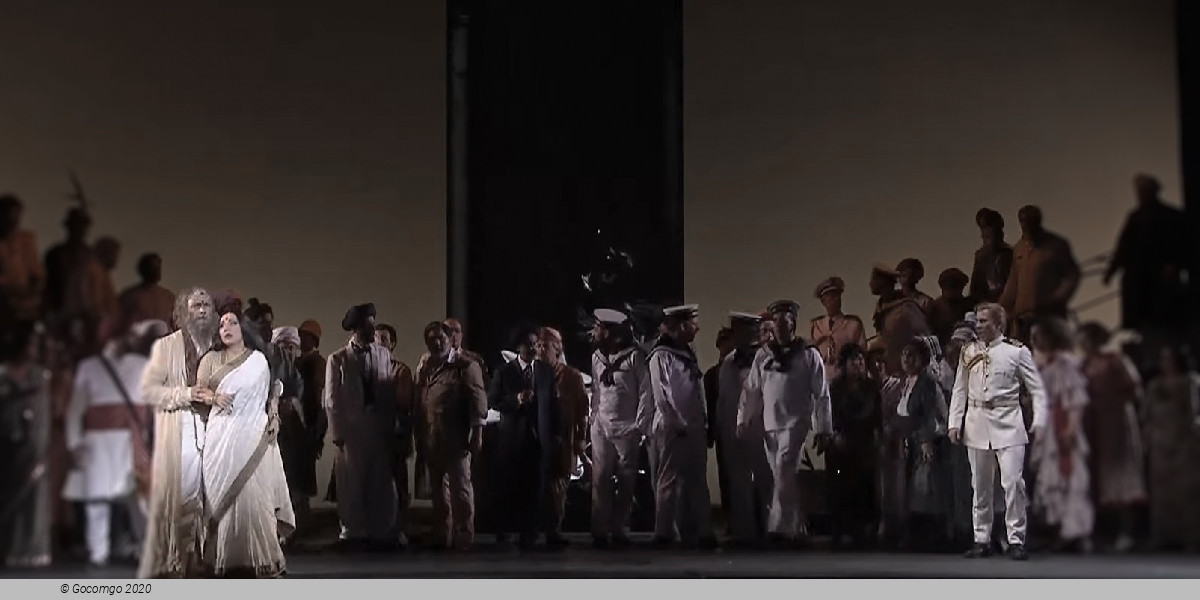
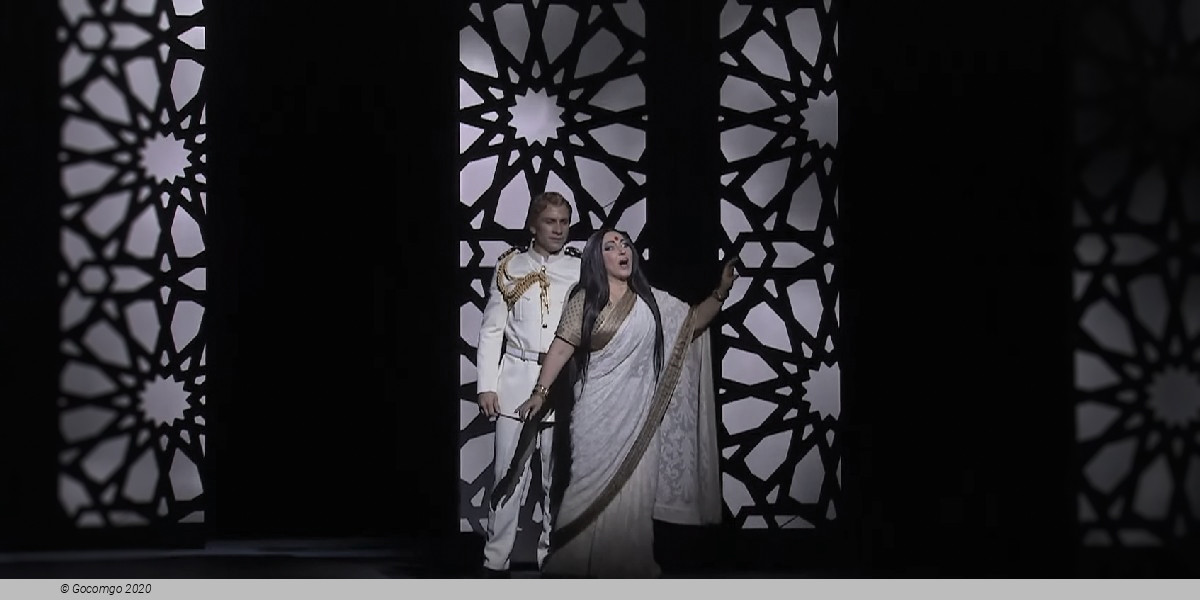
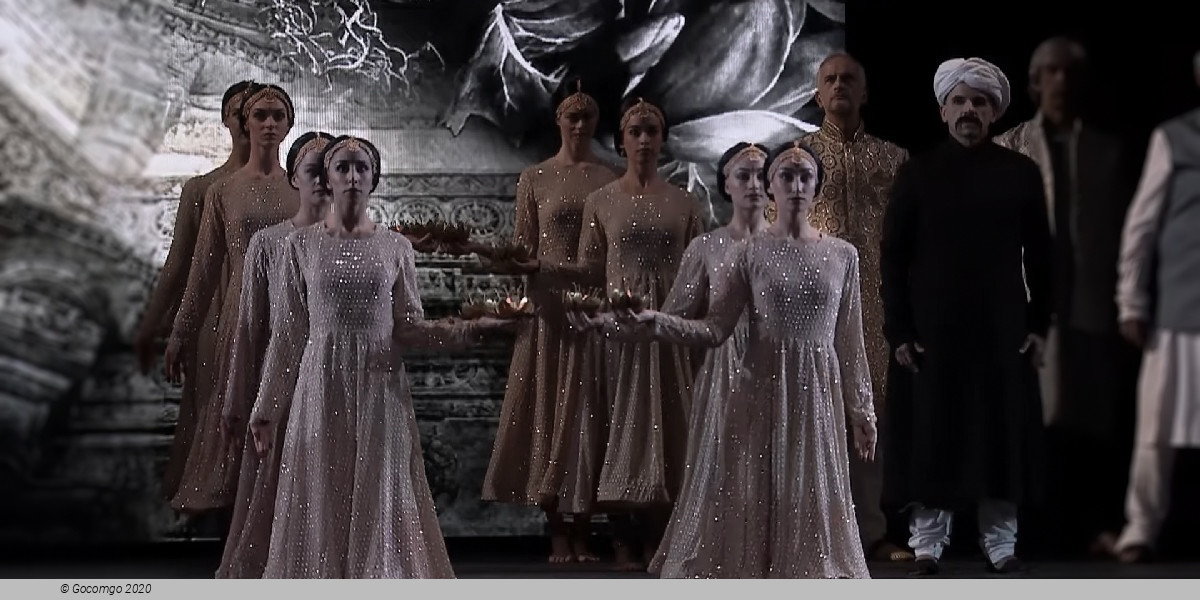
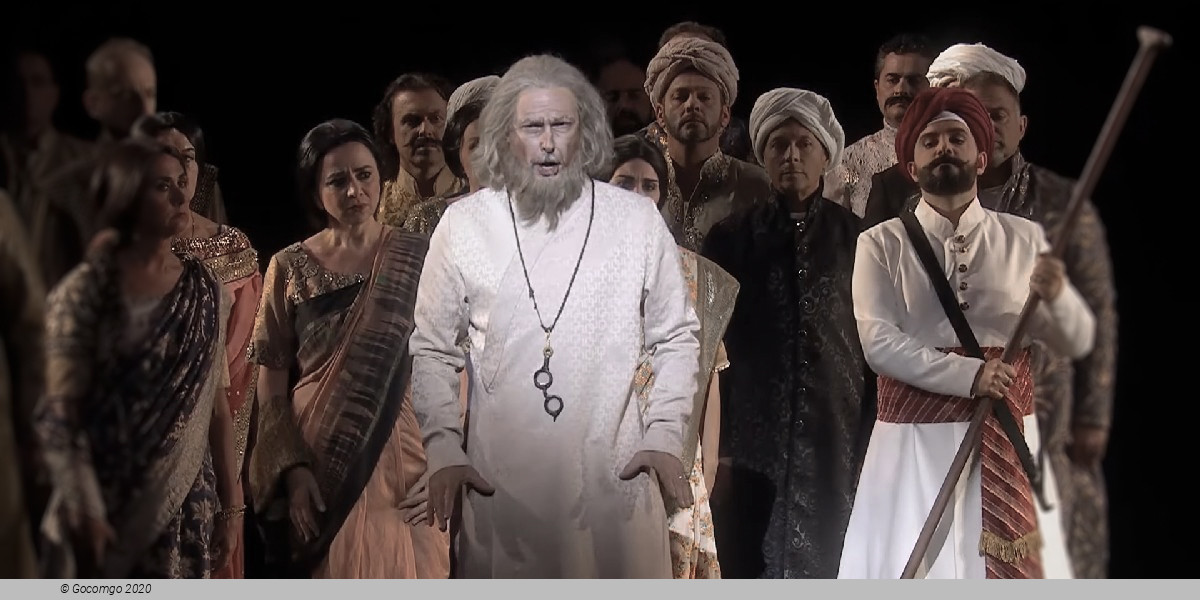
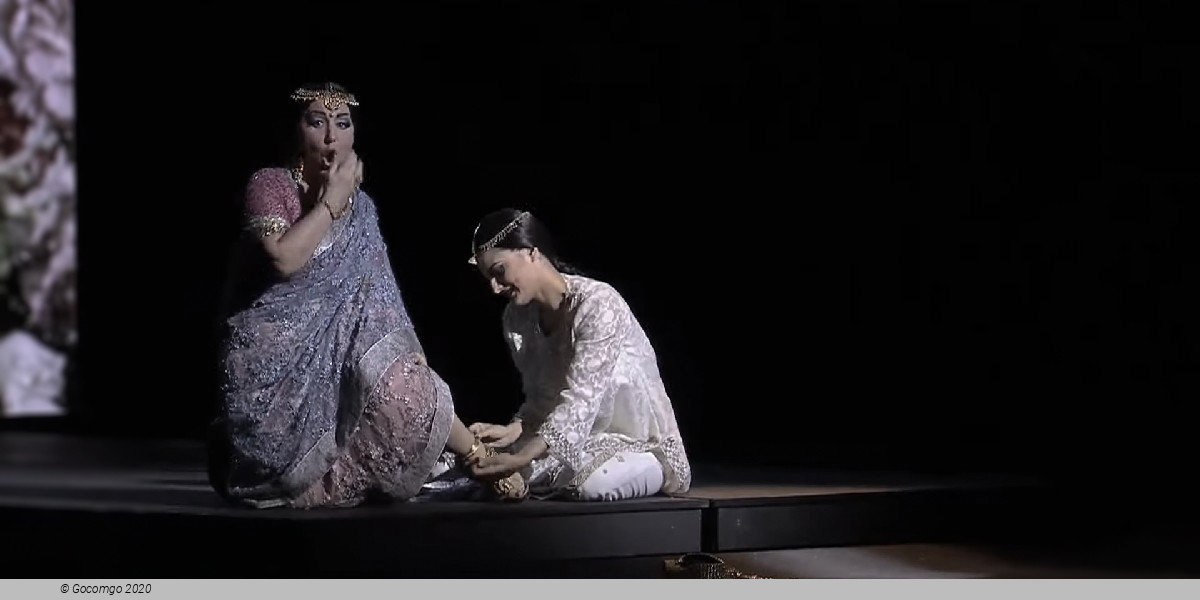
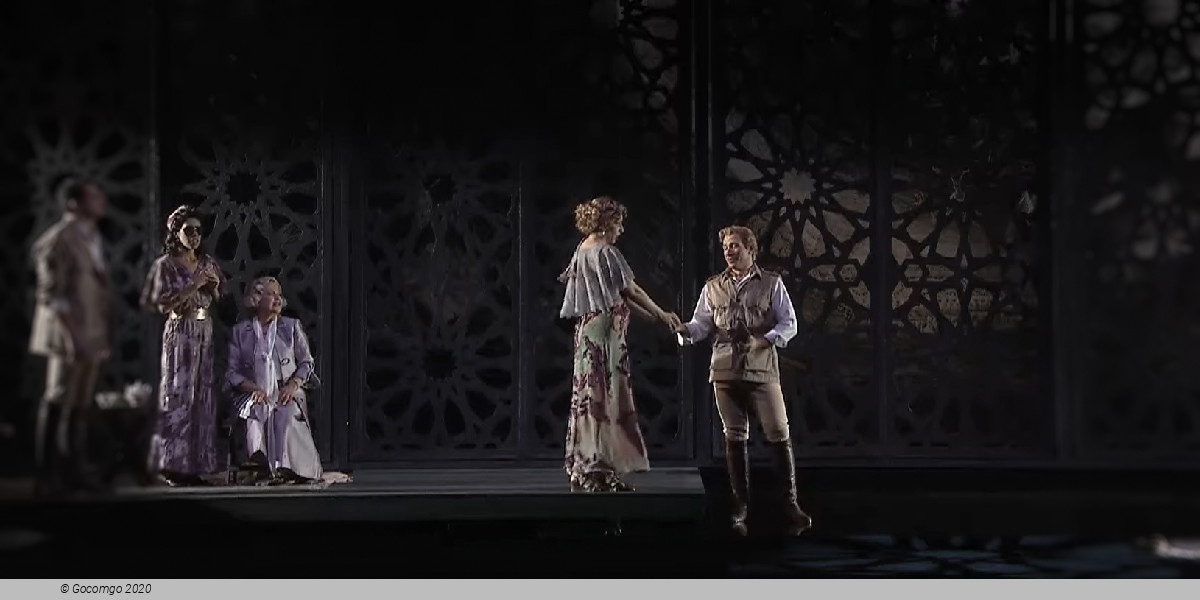
The Hindus go to perform their rites in a sacred Brahmin temple under the high priest, Nilakantha. Nilakantha's daughter Lakmé (which derives from the Sanskrit Lakshmi), and her servant Mallika, are left behind and go down to the river to gather flowers where they sing together the Flower Duet. As they approach the water at the river bank, Lakmé removes her jewellery and places it on a bench. Two British officers, Frederic and Gérald (Delibes uses Frenchified versions of the then common English names Frederick and Gerald), arrive nearby on a picnic with two British girls and their governess. The British girls see the jewellery and, impressed with it, request sketches of it; Gérald volunteers to stay and make sketches of the jewellery. He spots Lakmé and Mallika returning and hides. Mallika leaves Lakmé for a while; while alone Lakmé sees Gérald and, frightened by the foreigner's incursion, cries out for help. However, simultaneously, she is also intrigued by him and so she sends away those who had responded to her call for help when they come to her aid. Lakmé and Gérald begin to fall in love with each other. Nilakantha returns and learns of the British officer's trespassing, vowing revenge on him for what he assumes to be an affront to Lakmé's honour.

Act 2
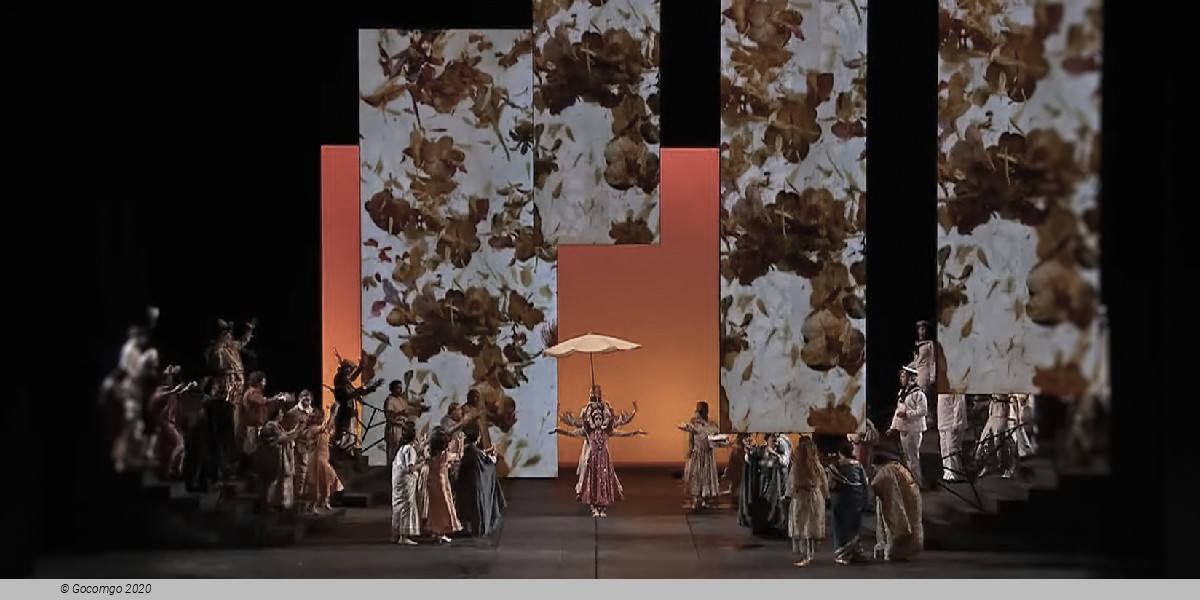
At a busy bazaar, Nilakantha forces Lakmé to sing (the Bell Song) in order to lure the trespasser into identifying himself. When Gérald steps forward, Lakmé faints, thus giving him away. Nilakantha stabs Gérald, wounding him. Lakmé takes Gérald to a secret hideout in the forest, where she lovingly nurses him back to health.

Act 3
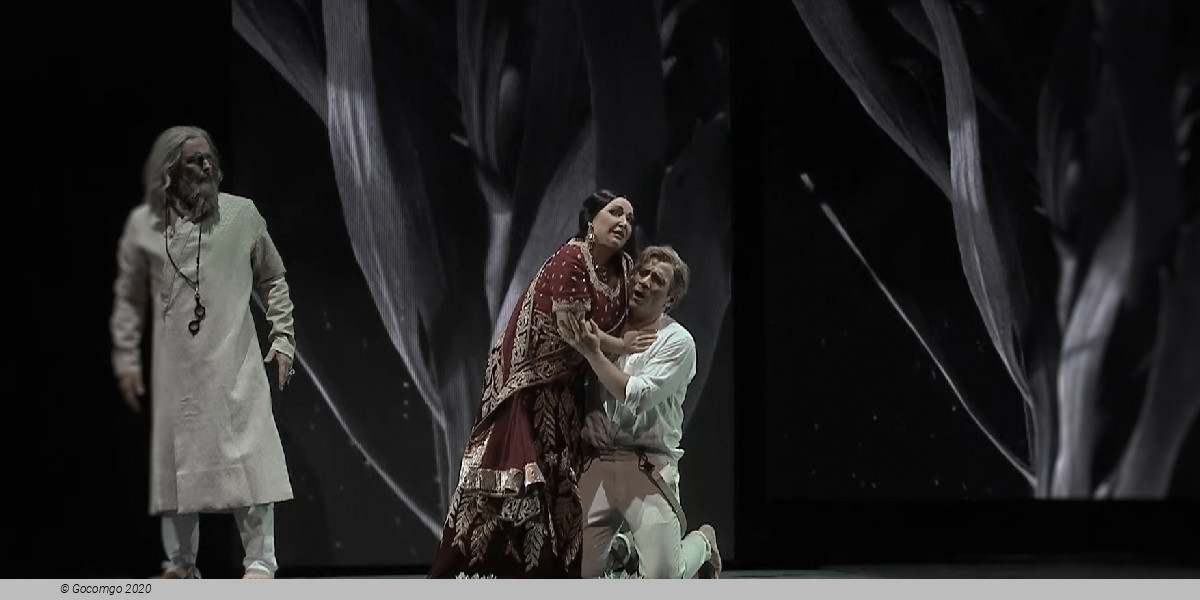
While Lakmé fetches sacred water that will confirm the vows of the lovers, Fréderic, Gérald's fellow British officer, appears before Gérald and reminds him of his military duty to his regiment. Gérald sadly accepts that his colleague is correct. After Lakmé returns, she senses the change in Gérald and realises that she has lost him. She dies with honour, rather than live with dishonour, killing herself by eating the poisonous datura leaf.

Venue Info

Opera de Monte-Carlo - Monaco
Location   Place du Casino

The Opéra de Monte-Carlo is an opera house, which is part of the Monte Carlo Casino located in the Principality of Monaco. With the lack of cultural diversions available in Monaco in the 1870s, Prince Charles III, along with the Société des Bains de mer, decided to include a concert hall as part of the casino. The main public entrance to the hall was from the casino, while Charles III's private entrance was on the western side. It opened in 1879 and became known as the Salle Garnier, after the architect Charles Garnier, who designed it During the renovation of the Salle Garnier in 2004–05, the company presented operas at the Salle des Princes in the local Grimaldi Forum, a modern conference and performance facility where Les Ballets de Monte Carlo and the Monte-Carlo Philharmonic Orchestra regularly perform.

Salle Garnier

The architect Charles Garnier also designed the Paris opera house now known as the Palais Garnier. The Salle Garnier is much smaller, seating 524, compared to about 2,000 for the Palais Garnier, and unlike the Paris theatre, which was started in 1861 and only completed in 1875, the Salle Garnier was constructed in only eight and a half months. Nevertheless, its ornate style was heavily influenced by that of the Palais Garnier, and many of the same artists worked on both theatres. Although the Monte Carlo theatre was not originally intended for opera, it was soon used frequently for that purpose and was remodeled in 1898–99 by Henri Schmit, primarily in the stage area, to make it more suitable for opera.

The hall was inaugurated on 25 January 1879 with a performance by Sarah Bernhardt dressed as a nymph. The first opera performed there was Robert Planquette's Le Chevalier Gaston on 8 February 1879, followed by three additional operas in the first season.

With the influence of the first director, Jules Cohen (who was instrumental in bringing Adelina Patti) and the fortunate combination of Raoul Gunsbourg, the new director from 1892, and Princess Alice, the opera-loving American wife of Charles III's successor, Albert I, the company was thrust onto the world's opera community stage. Gunsbourg remained for sixty years, overseeing such premiere productions as Hector Berlioz's La damnation de Faust in 1893, and the first appearances in January 1894 of the heroic Italian tenor Francesco Tamagno in Verdi's Otello, whose title role he had created for the opera's premiere in Italy. Conductor Arturo Vigna served as music director of the Monte Carlo Opera from 1895-1903.

By the early years of the twentieth century, the Salle Garnier was to see such great performers as Nellie Melba and Enrico Caruso in La bohème and Rigoletto (in 1902), and Feodor Chaliapin in the premiere of Jules Massenet's Don Quichotte (1910). This production formed part of a long association between the company and Massenet and his operas, two of which were presented there posthumously.

Other famous twentieth-century singers to appear at Monte Carlo included Titta Ruffo, Geraldine Farrar, Mary Garden, Tito Schipa, Beniamino Gigli, Claudia Muzio, Georges Thill, Lily Pons, and Mary McCormic.

Apart from Massenet, composers whose works had their first performances at Monte Carlo included: Saint-Saëns (Hélène, 1904); Mascagni (Amica, 1905); and Puccini (La rondine, 1917). Indeed, since its inauguration, the theatre has hosted 45 world premiere productions of operas. René Blum was retained to found the Ballet de l'Opéra. The "Golden Age" of the Salle Garnier has passed, since small companies with small houses are not able to mount highly expensive productions. Nonetheless, the present day company still presents a season containing five or six operas.

Gala Events in Salle Garnier

Twice in its 130-year history the Opéra was transformed into a spectacular venue to host gala-dinners. The first occasion was in 1966 for the celebration of centenary of Monte-Carlo hosted by Grace Kelly and Rainier III; the second was for the royal wedding of Prince Albert II and Princess Charlene. The Opéra was transformed for the third time on 27 July 2013 to host the Love Ball, a fundraising gala event organised by the Naked Heart Foundation.

Important Info
Type: Opera
City: Monaco, Monaco
Starts at: 15:00
Acts: 3
Top of page