









Opera de Monte-Carlo 16 November 2022 - La Damnation de Faust | GoComGo.com

La Damnation de Faust

Opera de Monte-Carlo, Grimaldi Forum - Salle des Princes, Monaco, Monaco
All photos (6)
Select date and time
8 PM

E-tickets: Print at home or at the box office of the event if so specified. You will find more information in your booking confirmation email.

You can only select the category, and not the exact seats.
If you order 2 or 3 tickets: your seats will be next to each other.
If you order 4 or more tickets: your seats will be next to each other, or, if this is not possible, we will provide a combination of groups of seats (at least in pairs, for example 2+2 or 2+3).

Important Info
Type: Opera
City: Monaco, Monaco
Starts at: 20:00
Acts: 4

E-tickets: Print at home or at the box office of the event if so specified. You will find more information in your booking confirmation email.

You can only select the category, and not the exact seats.
If you order 2 or 3 tickets: your seats will be next to each other.
If you order 4 or more tickets: your seats will be next to each other, or, if this is not possible, we will provide a combination of groups of seats (at least in pairs, for example 2+2 or 2+3).

Overview

New production

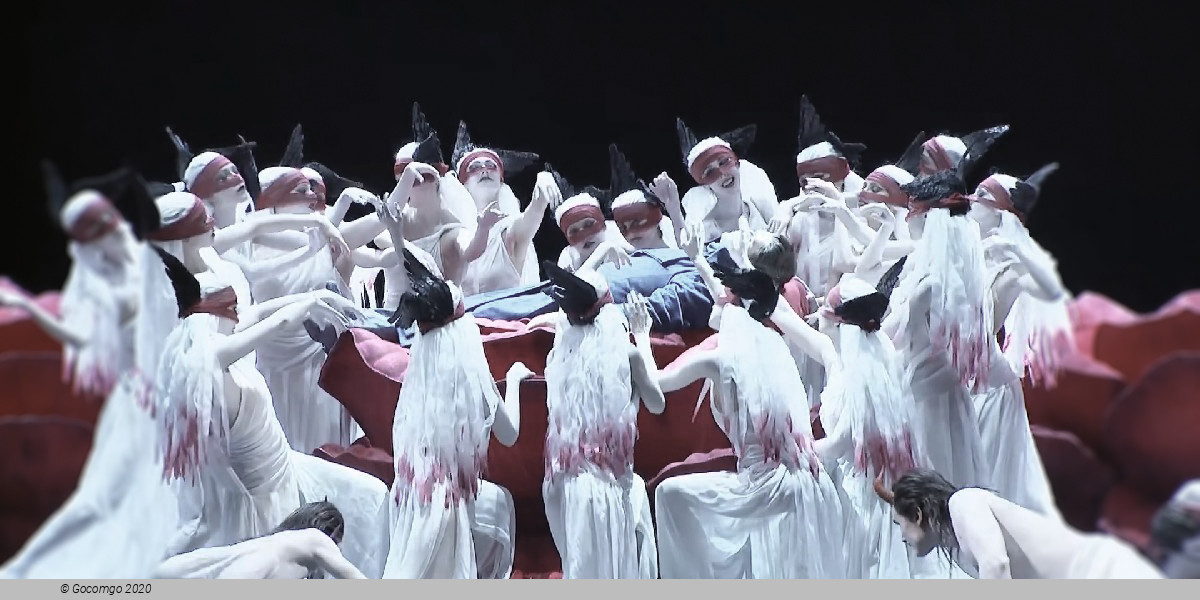
Almost forty years after the premiere of La Damnation de FaustHector Berlioz, Raoul Gunsbourg, the brilliant director of the Opéra de Monte-Carlo, provided a sensational answer to the dilemma that animated the musical world of the 19th century: Was La Damnation de Faust an oratorio (dramatic legend) as announced or a real work intended for the theater? By staging Berlioz's work, Gunsbourg freed himself from a taboo and achieved a masterstroke. The Monegasque stage, known as a luxurious opera hall where one could admire the most famous throats of the time, is then placed in the heart of Europe as an intense center of creation. The impact of this first iconoclastic and phantasmagorical staging is such that it will give Berlioz's work pride of place on international lyrical stages.

To mark the centenary Albert I er, it seemed more than appropriate to return with our eye today on this founding event for the Opéra de Monte-Carlo.

History
Premiere of this production: 06 December 1846, Opéra-Comique in Paris

La damnation de Faust (English: The Damnation of Faust) is a work for four solo voices, full seven-part chorus, a large children's chorus and orchestra by the French composer Hector Berlioz. He called it a "légende dramatique" (dramatic legend). It was first performed at the Opéra-Comique in Paris on 6 December 1846.

Synopsis

Part I

The aging scholar Faust contemplates the renewal of nature. Hearing peasants sing and dance, he realizes that their simple happiness is something he will never experience. An army marches past in the distance (Hungarian March). Faust doesn't understand why the soldiers are so enthusiastic about glory and fame.

Part II
Depressed, Faust has returned to his study. Even the search for wisdom can no longer inspire him. Tired of life, he is about to commit suicide when the sound of church bells and an Easter hymn remind him of his youth, when he still had faith in religion. Suddenly Méphistophélès appears, ironically commenting on Faust's apparent conversion. He offers to take him on a journey, promising him the restoration of his youth, knowledge, and the fulfillment of all his wishes. Faust accepts.

Méphistophélès and Faust arrive at Auerbach's tavern in Leipzig, where Brander, a student, sings a song about a rat whose high life in a kitchen is ended by a dose of poison. The other guests offer an ironic "Amen", and Méphistophélès continues with another song about a flea that brings his relatives to infest a whole royal court (Song of the Flea). Disgusted by the vulgarity of it all, Faust demands to be taken somewhere else.

On a meadow by the Elbe, Méphistophélès shows Faust a dream vision of a beautiful woman named Marguerite, causing Faust to fall in love with her. He calls out her name, and Méphistophélès promises to lead Faust to her. Together with a group of students and soldiers, they enter the town where she lives.

Part III

Faust and Méphistophélès hide in Marguerite's room. Faust feels that he will find in her, his ideal of a pure and innocent woman ("Merci, doux crépuscule!"). Marguerite enters and sings a ballad about the King of Thule, who always remained sadly faithful to his lost love ("Autrefois, un roi de Thulé"). Méphistophélès summons spirits to enchant and deceive the girl and sings a sarcastic serenade outside her window, predicting her loss of innocence. When the spirits have vanished, Faust steps forward. Marguerite admits that she has dreamed of him, just as he has dreamed of her, and they declare their love for each other. Just then, Méphistophélès bursts in, warning them that the girl's reputation must be saved: the neighbors have learned that there is a man in Marguerite's room and have called her mother to the scene. After a hasty goodbye, Faust and Méphistophélès escape.

Part IV

Faust has seduced, then abandoned Marguerite, who still awaits his return ("D'amour l'ardente flamme"). She can hear soldiers and students in the distance, which reminds her of the night Faust first came to her house. But this time he is not among them.

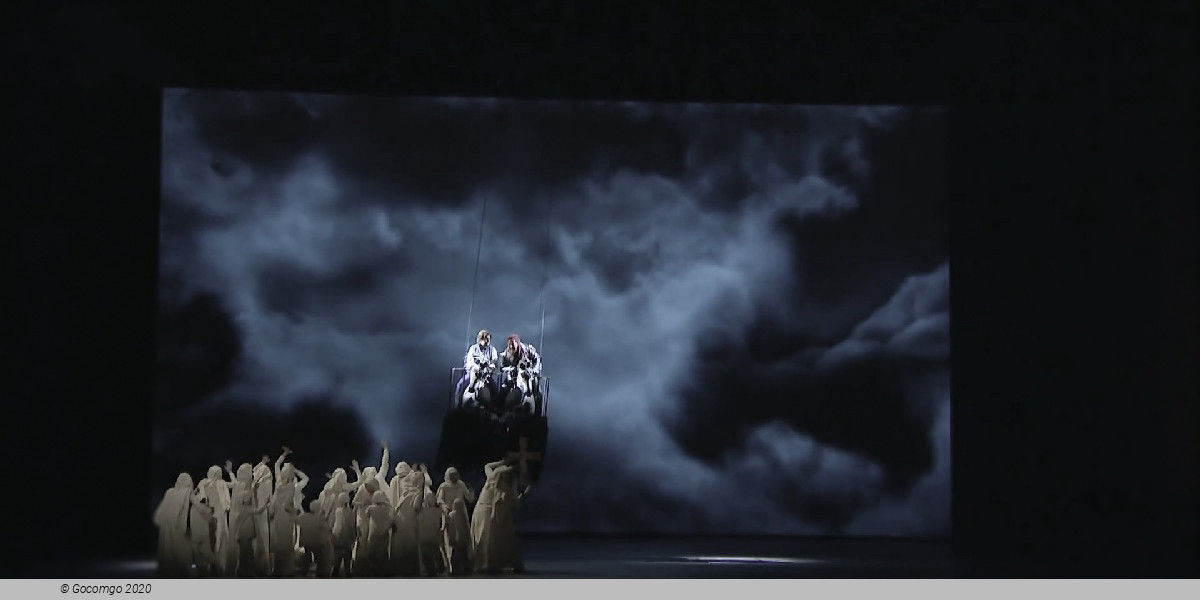
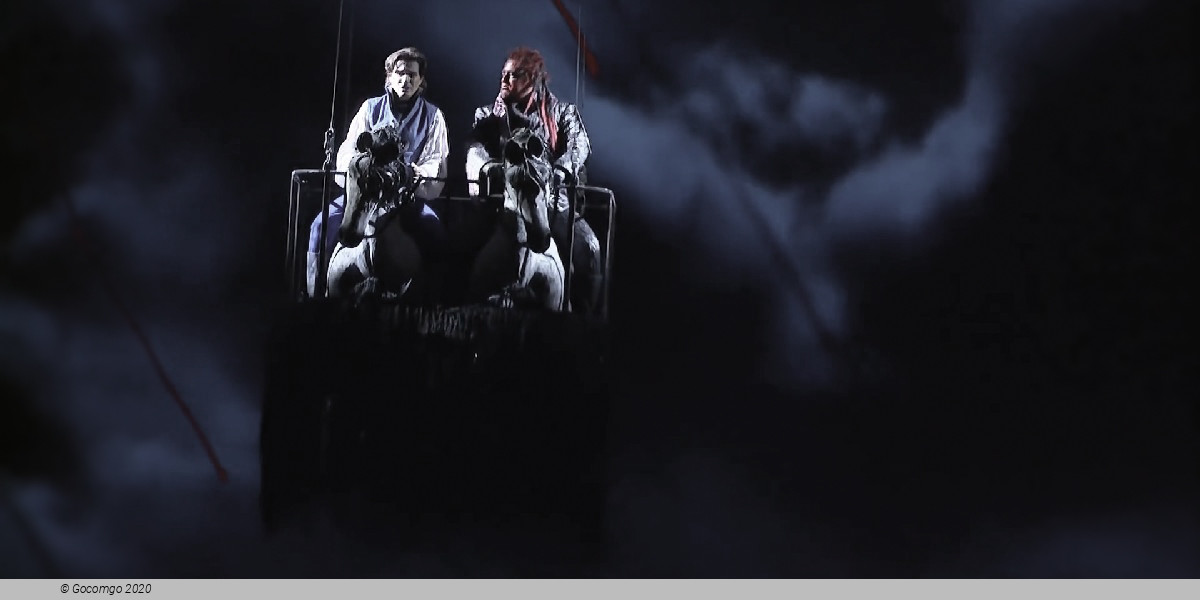
Faust calls upon nature to cure him of his world-weariness ("Nature immense, impénétrable et fière"). Méphistophélès appears and tells him that Marguerite is in prison. While awaiting Faust's return, she has given her mother the sleeping potion Faust had previously provided to calm her mother during their nights of love, and used it so often that she has killed the old woman, and now is to be hanged the next day. Faust panics, but Méphistophélès claims he can save her—if Faust relinquishes his soul to him. Unable to think of anything but saving Marguerite, Faust agrees. The two ride off on a pair of black horses.

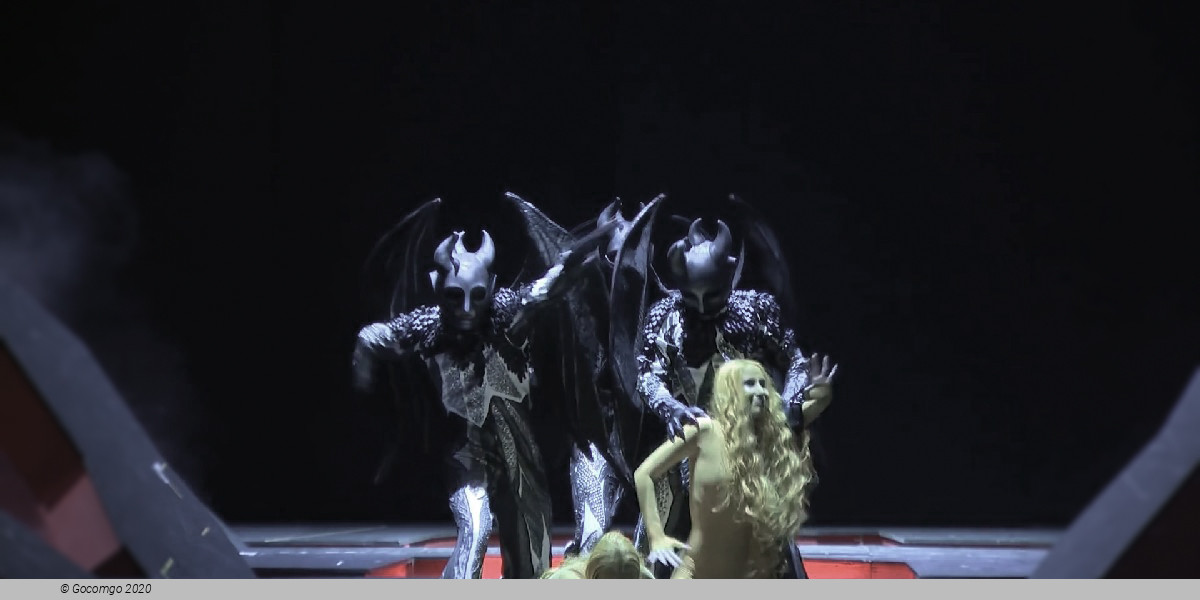
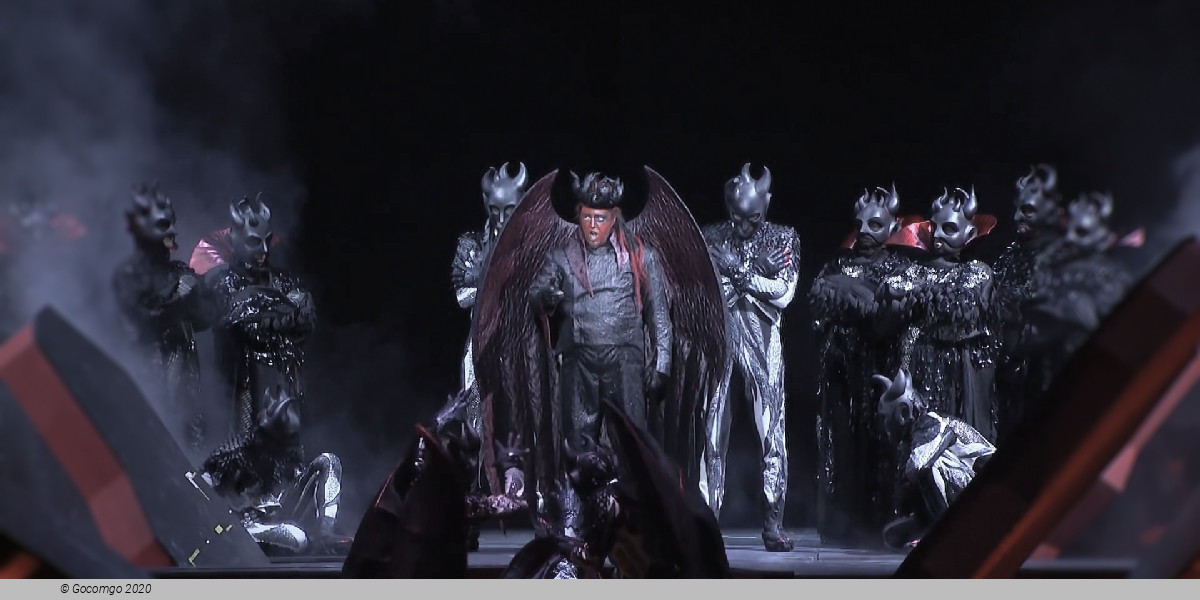
Thinking they are on their way to Marguerite, Faust becomes terrified when he sees demonic apparitions. The landscape becomes more and more horrible and grotesque, and Faust finally realizes that Méphistophélès has taken him directly into hell. Demons and damned spirits greet Méphistophélès in a mysterious infernal language and welcome Faust among them.

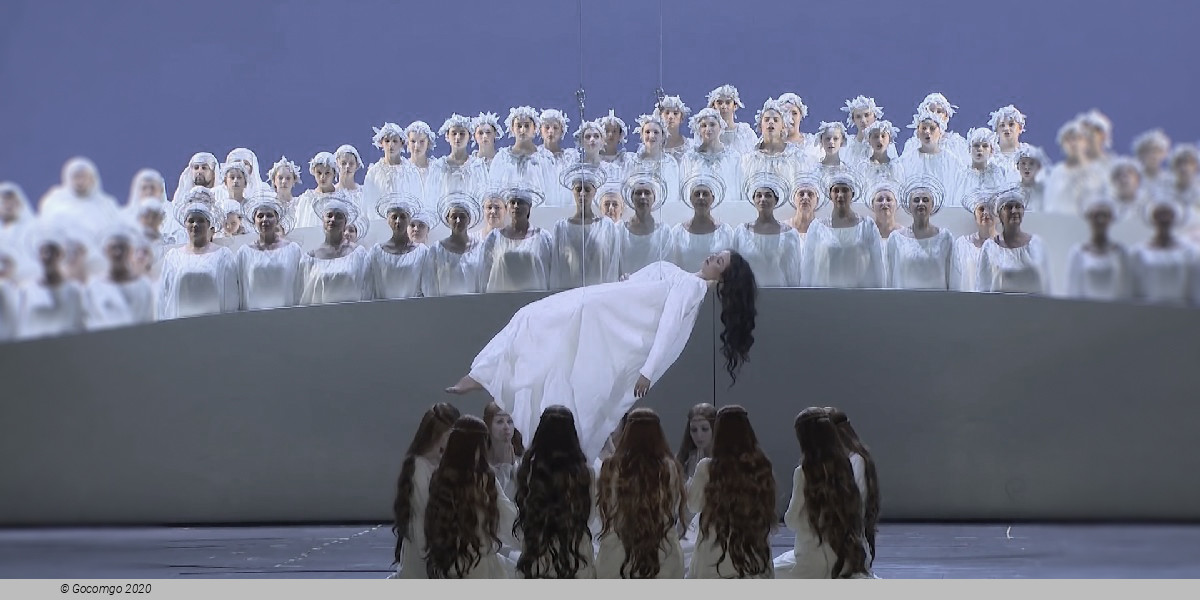
Hell has fallen silent after Faust's arrival—the torment he suffers is unspeakable. Marguerite is saved and welcomed into heaven.

Venue Info

Opera de Monte-Carlo - Monaco
Location   Place du Casino

The Opéra de Monte-Carlo is an opera house, which is part of the Monte Carlo Casino located in the Principality of Monaco. With the lack of cultural diversions available in Monaco in the 1870s, Prince Charles III, along with the Société des Bains de mer, decided to include a concert hall as part of the casino. The main public entrance to the hall was from the casino, while Charles III's private entrance was on the western side. It opened in 1879 and became known as the Salle Garnier, after the architect Charles Garnier, who designed it During the renovation of the Salle Garnier in 2004–05, the company presented operas at the Salle des Princes in the local Grimaldi Forum, a modern conference and performance facility where Les Ballets de Monte Carlo and the Monte-Carlo Philharmonic Orchestra regularly perform.

Salle Garnier

The architect Charles Garnier also designed the Paris opera house now known as the Palais Garnier. The Salle Garnier is much smaller, seating 524, compared to about 2,000 for the Palais Garnier, and unlike the Paris theatre, which was started in 1861 and only completed in 1875, the Salle Garnier was constructed in only eight and a half months. Nevertheless, its ornate style was heavily influenced by that of the Palais Garnier, and many of the same artists worked on both theatres. Although the Monte Carlo theatre was not originally intended for opera, it was soon used frequently for that purpose and was remodeled in 1898–99 by Henri Schmit, primarily in the stage area, to make it more suitable for opera.

The hall was inaugurated on 25 January 1879 with a performance by Sarah Bernhardt dressed as a nymph. The first opera performed there was Robert Planquette's Le Chevalier Gaston on 8 February 1879, followed by three additional operas in the first season.

With the influence of the first director, Jules Cohen (who was instrumental in bringing Adelina Patti) and the fortunate combination of Raoul Gunsbourg, the new director from 1892, and Princess Alice, the opera-loving American wife of Charles III's successor, Albert I, the company was thrust onto the world's opera community stage. Gunsbourg remained for sixty years, overseeing such premiere productions as Hector Berlioz's La damnation de Faust in 1893, and the first appearances in January 1894 of the heroic Italian tenor Francesco Tamagno in Verdi's Otello, whose title role he had created for the opera's premiere in Italy. Conductor Arturo Vigna served as music director of the Monte Carlo Opera from 1895-1903.

By the early years of the twentieth century, the Salle Garnier was to see such great performers as Nellie Melba and Enrico Caruso in La bohème and Rigoletto (in 1902), and Feodor Chaliapin in the premiere of Jules Massenet's Don Quichotte (1910). This production formed part of a long association between the company and Massenet and his operas, two of which were presented there posthumously.

Other famous twentieth-century singers to appear at Monte Carlo included Titta Ruffo, Geraldine Farrar, Mary Garden, Tito Schipa, Beniamino Gigli, Claudia Muzio, Georges Thill, Lily Pons, and Mary McCormic.

Apart from Massenet, composers whose works had their first performances at Monte Carlo included: Saint-Saëns (Hélène, 1904); Mascagni (Amica, 1905); and Puccini (La rondine, 1917). Indeed, since its inauguration, the theatre has hosted 45 world premiere productions of operas. René Blum was retained to found the Ballet de l'Opéra. The "Golden Age" of the Salle Garnier has passed, since small companies with small houses are not able to mount highly expensive productions. Nonetheless, the present day company still presents a season containing five or six operas.

Gala Events in Salle Garnier

Twice in its 130-year history the Opéra was transformed into a spectacular venue to host gala-dinners. The first occasion was in 1966 for the celebration of centenary of Monte-Carlo hosted by Grace Kelly and Rainier III; the second was for the royal wedding of Prince Albert II and Princess Charlene. The Opéra was transformed for the third time on 27 July 2013 to host the Love Ball, a fundraising gala event organised by the Naked Heart Foundation.

Important Info
Type: Opera
City: Monaco, Monaco
Starts at: 20:00
Acts: 4
Top of page