
Opera de Monte-Carlo 20 January 2023 - Premiere Alcina | GoComGo.com

Premiere
Alcina

Opera de Monte-Carlo, Salle Garnier, Monaco, Monaco
All photos (5)
Select date and time
7 PM

E-tickets: Print at home or at the box office of the event if so specified. You will find more information in your booking confirmation email.

You can only select the category, and not the exact seats.
If you order 2 or 3 tickets: your seats will be next to each other.
If you order 4 or more tickets: your seats will be next to each other, or, if this is not possible, we will provide a combination of groups of seats (at least in pairs, for example 2+2 or 2+3).

Important Info
Type: Opera
City: Monaco, Monaco
Starts at: 19:00
Acts: 3

E-tickets: Print at home or at the box office of the event if so specified. You will find more information in your booking confirmation email.

You can only select the category, and not the exact seats.
If you order 2 or 3 tickets: your seats will be next to each other.
If you order 4 or more tickets: your seats will be next to each other, or, if this is not possible, we will provide a combination of groups of seats (at least in pairs, for example 2+2 or 2+3).

Overview

A work of enchantment, music and dance, Handel’s Alcina only reappeared briefly in the 20th century in 1928 before experiencing a real renaissance in the 1960s. Beyond these first literal readings, how can the 21st century nourish our perception of this work?

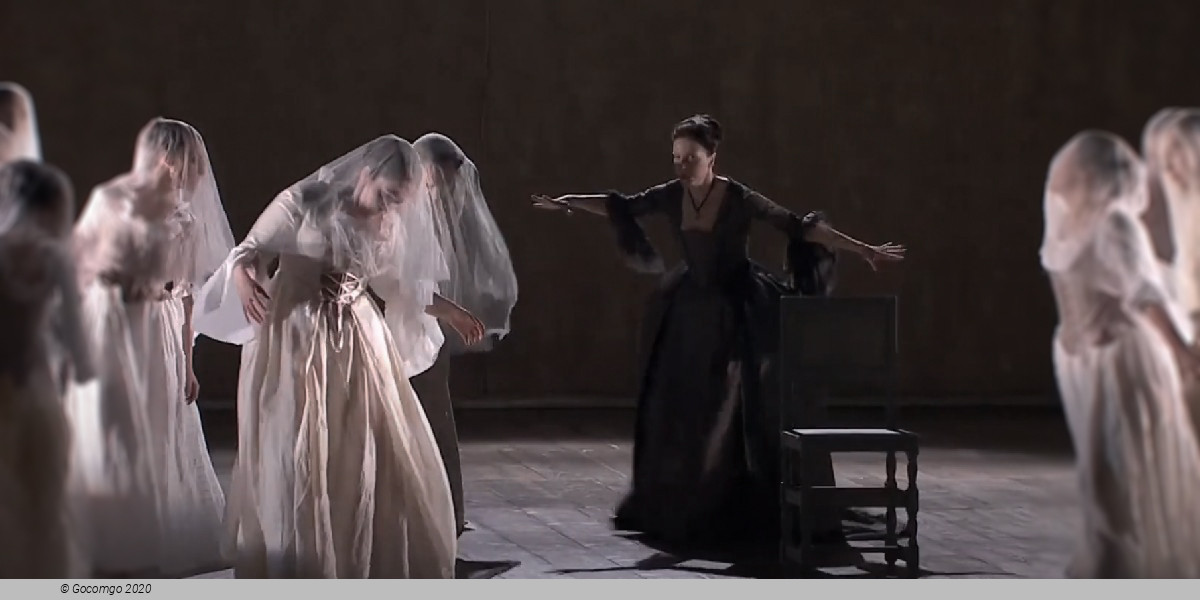
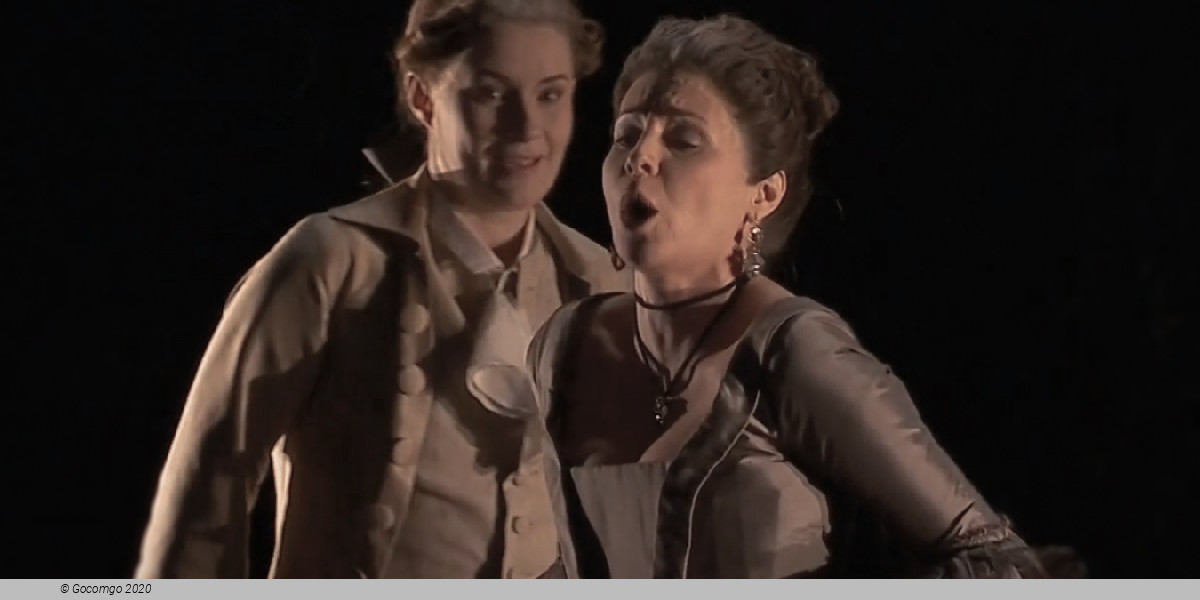
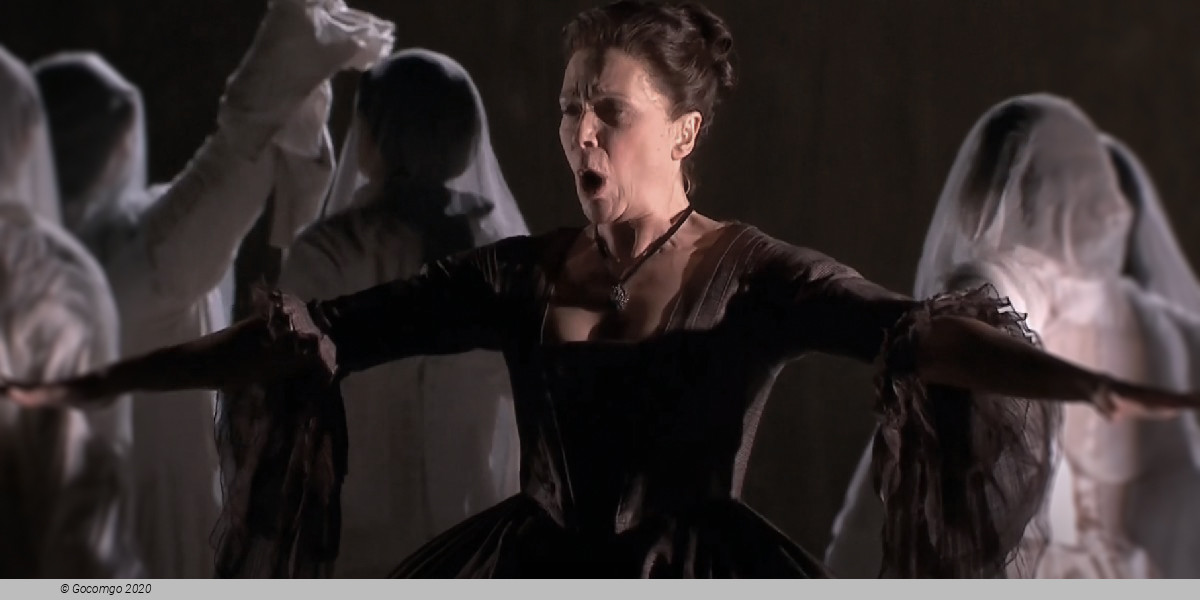
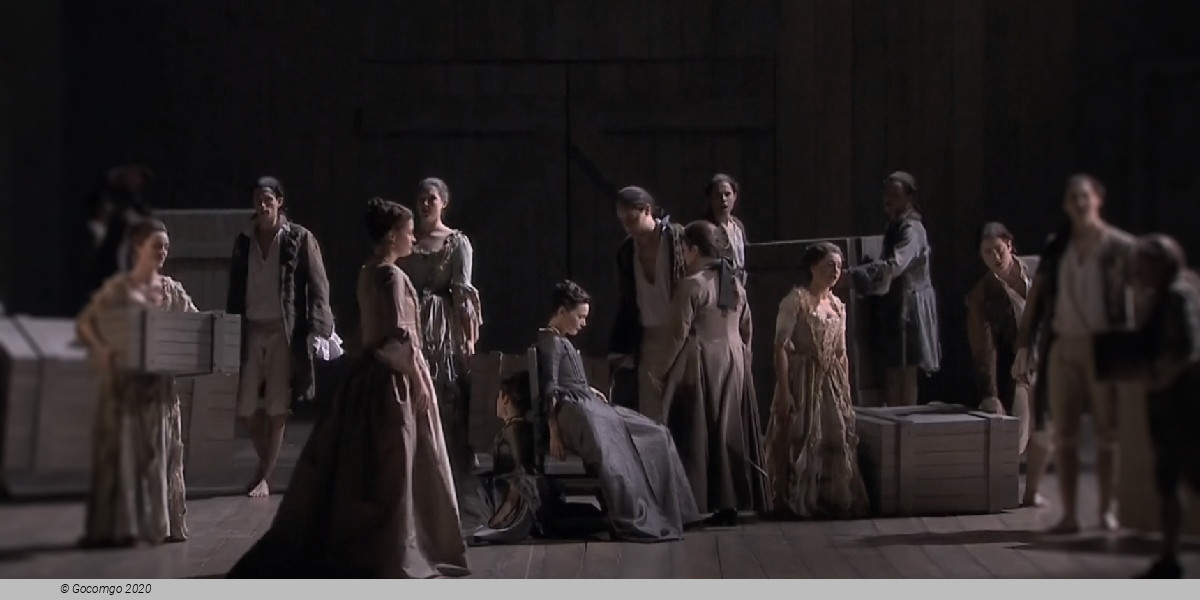
Stage director Christof Loy, whose production of Ariodante was seen on the Monegasque stage in 2019, transforms Alcina’s magical kingdom into a metaphor for theatre. His idea, which allows him to explore a wide scope of options, is built around the singer taking on the title role, Cecilia Bartoli. Capable of expressing all the layers of identity that are superimposed, she offers here all the multiplicity of her incarnation: she is at the same time the character of Alcina but also a singer anchored in her status as a diva. This concept of theatre within the theatre is wonderfully enhanced by the sumptuous sets of Johannes Leiacker and the subtle costumes of Ursula Renzenbrink, enhanced by the lighting of Bernd Purkrabek. Surrounding the main character and led by the idiomatic baton of Gianluca Capuano, we find the finest performers of this repertoire, which requires absolute technical and musical mastery without forgetting a perfect theatrical sensitivity.

Co-production with the Zurich Opera House

History
Premiere of this production: 16 April 1735, Theatre Royal, Covent Garden, London

Alcina - opera seria by George Frideric Handel. Handel used the libretto of L'isola di Alcina, an opera that was set in 1728 in Rome by Riccardo Broschi, which he acquired the year after during his travels in Italy. Partly altered for better conformity, the story was originally taken from Ludovico Ariosto's Orlando furioso (like those of the Handel operas Orlando and Ariodante), an epic poem. The opera contains several musical sequences with opportunity for dance: these were composed for dancer Marie Sallé.

Synopsis

Prologue
The background of the opera comes from the poem Orlando Furioso. The heroic knight Ruggiero is destined to a short but glorious life, and a benevolent magician is always whisking him away from the arms of his fiancée, Bradamante. Bradamante is not the type to put up with the constant disappearance of her lover, and she spends vast portions of the poem in full armor chasing after him. Just before the opera begins she has rescued him from an enchanted castle, only to have her flying horse (a hippogriff) take a fancy to Ruggiero and fly off with him. Ruggiero and the hippogriff land on an island in the middle of the ocean. As the hippogriff begins to eat the leaves of a myrtle bush, Ruggiero is startled to hear the bush begin to speak. The bush reveals that it was once a living soul named Sir Astolfo, and the island belongs to the sister sorceresses Alcina and Morgana. The beautiful Alcina seduces every knight that lands on her isle, but soon tires of her lovers and changes them into stones, animals, plants, or anything that strikes her fancy. Despite Astolfo's warning, Ruggiero strides off to meet this sorceress – and falls under her spell.

Act 1
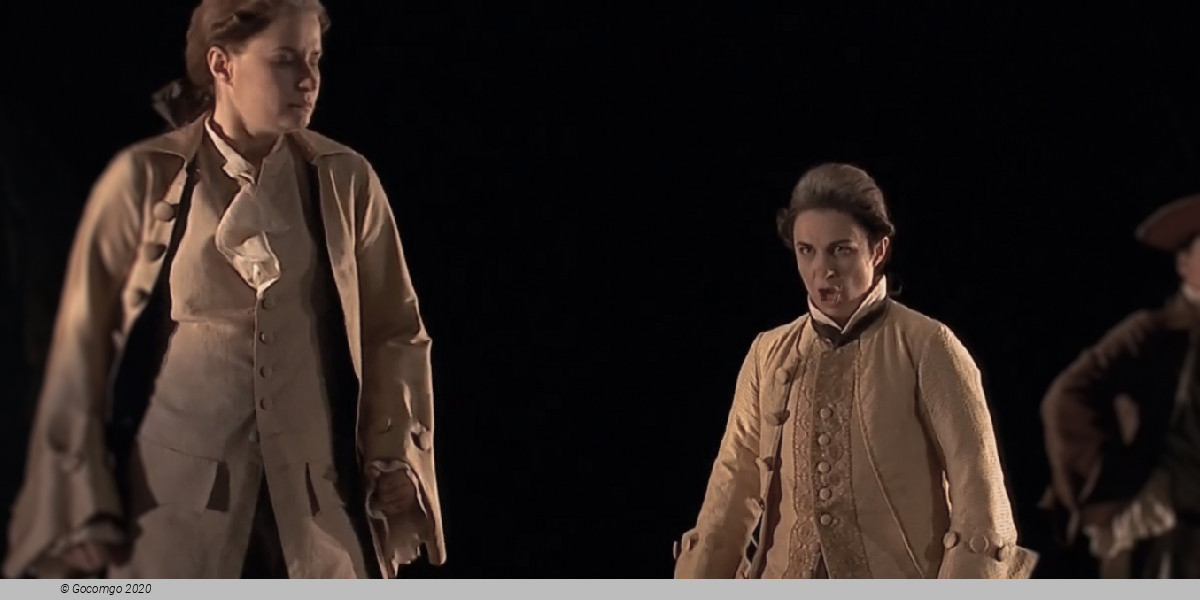
Bradamante, again searching for her lover, arrives on Alcina's island with Ruggiero's former tutor, Melisso. Dressed in armor, Bradamante looks like a young man and goes by the name of her own brother, Ricciardo. She and Melisso possess a magic ring which enables the wearer to see through illusion, which they plan to use to break Alcina's spells and release her captives.

The first person they meet is the sorceress Morgana. Barely human and with no understanding of true love, she immediately abandons her own lover Oronte for the handsome 'Ricciardo.' Morgana conveys the visitors to Alcina's court, where Bradamante is dismayed to discover that Ruggiero is besotted with Alcina and in a state of complete amnesia about his previous life. Also at Alcina's court is a boy, Oberto, who is looking for his father, Astolfo, who was last seen heading toward this island. Bradamante guesses that Astolfo is now transformed into something, but she holds her peace and concerns herself with Ruggiero. Bradamante and Melisso rebuke Ruggiero for his desertion, but he can't think of anything except Alcina.

Meanwhile, Oronte discovers that Morgana has fallen in love with 'Ricciardo,' and challenges 'him' to a duel. Morgana stops the fight, but Oronte is in a foul mood and takes it out on Ruggiero. He tells the young man exactly how Alcina treats her former lovers and adds that, as far as he can tell, Alcina has fallen in love with the newcomer, Ricciardo (Semplicetto! A donna credi? Nr. 12). Ruggiero is horrified and overwhelms Alcina with his jealous fury. Things get even worse when 'Ricciardo' enters and pretends to admire Alcina. Alcina calms Ruggiero (Sì, son quella Nr. 13), but Bradamante is so upset at seeing her fiancé wooed before her very eyes that she reveals her true identity to Ruggiero (La bocca vaga, quell'occhio nero Nr. 14). Melisso hastily contradicts her and Ruggiero becomes very confused.


Alcina tells Morgana that she plans to turn Ricciardo into an animal, just to show Ruggiero how much she really loves him. Morgana begs Ricciardo to escape the island and Alcina's clutches, but 'he' says he'd rather stay, as he loves another. Morgana believes that this other person is herself, and the act ends with Morgana's aria "Tornami a vagheggiar". (In some productions, this aria is sung by Alcina.)

Act 2
Melisso recalls Ruggiero to reason and duty by letting him wear the magic ring: under its influence, Ruggiero sees the island as it really is—a desert, peopled with monsters. Appalled, he realizes he must leave, and sings the famous aria "Verdi prati" ("Green meadows") where he admits that even though he knows the island and Alcina are mere illusion, their beauty will haunt him for the rest of his life.

Melisso warns Ruggiero that he cannot just leave; Alcina still wields immense power, and he should cover his escape by telling her that he wishes to go hunting. Ruggiero agrees, but, thoroughly bewildered by the magic and illusion surrounding him, he refuses to believe his eyes when he at last sees Bradamante as herself, believing that she may be another of Alcina's illusions. Bradamante is in despair, as is Alcina. Convinced of Ruggiero's indifference, she enters to turn Ricciardo into an animal, and Ruggiero has to pull himself together quickly and convince the sorceress that he does not need any proof of her love. It is at this point that the audience realises that Alcina genuinely loves Ruggiero; from now until the end of the opera, she is depicted sympathetically.


Oronte realizes that Ricciardo, Melisso and Ruggiero are in some sort of alliance, and Morgana and Alcina realise they are being deceived. But it is too late: Alcina's powers depend on illusion and, as true love enters her life, her magic powers slip away. As the act ends, Alcina tries to call up evil spirits to stop Ruggiero from leaving her, but her magic fails her.

Act 3
After this the opera finishes swiftly. Morgana and Oronte try to rebuild their relationship; she returns to him and he rebuffs her but (once she is offstage) admits he loves her still. Ruggiero returns to his proper heroic status and sings an aria accompanied by high horns; Oberto is introduced to a lion, to whom he feels strangely attached, and Alcina sings a desolate aria in which she longs for oblivion.

Bradamante and Ruggiero decide that they need to destroy the source of Alcina's magic, usually represented as an urn. Alcina pleads with them, but Ruggiero is deaf to her appeals and smashes the urn. As he does so, everything is both ruined and restored. Alcina's magic palace crumbles to dust and she and Morgana sink into the ground, but Alcina's lovers are returned to their proper selves. The lion turns into Oberto's father, Astolfo, and other people stumble on, "I was a rock," says one, "I a tree" says another, and "I a wave in the ocean..." All the humans sing of their relief and joy, and Alcina is forgotten.

Venue Info

Opera de Monte-Carlo - Monaco
Location   Place du Casino

The Opéra de Monte-Carlo is an opera house, which is part of the Monte Carlo Casino located in the Principality of Monaco. With the lack of cultural diversions available in Monaco in the 1870s, Prince Charles III, along with the Société des Bains de mer, decided to include a concert hall as part of the casino. The main public entrance to the hall was from the casino, while Charles III's private entrance was on the western side. It opened in 1879 and became known as the Salle Garnier, after the architect Charles Garnier, who designed it During the renovation of the Salle Garnier in 2004–05, the company presented operas at the Salle des Princes in the local Grimaldi Forum, a modern conference and performance facility where Les Ballets de Monte Carlo and the Monte-Carlo Philharmonic Orchestra regularly perform.

Salle Garnier

The architect Charles Garnier also designed the Paris opera house now known as the Palais Garnier. The Salle Garnier is much smaller, seating 524, compared to about 2,000 for the Palais Garnier, and unlike the Paris theatre, which was started in 1861 and only completed in 1875, the Salle Garnier was constructed in only eight and a half months. Nevertheless, its ornate style was heavily influenced by that of the Palais Garnier, and many of the same artists worked on both theatres. Although the Monte Carlo theatre was not originally intended for opera, it was soon used frequently for that purpose and was remodeled in 1898–99 by Henri Schmit, primarily in the stage area, to make it more suitable for opera.

The hall was inaugurated on 25 January 1879 with a performance by Sarah Bernhardt dressed as a nymph. The first opera performed there was Robert Planquette's Le Chevalier Gaston on 8 February 1879, followed by three additional operas in the first season.

With the influence of the first director, Jules Cohen (who was instrumental in bringing Adelina Patti) and the fortunate combination of Raoul Gunsbourg, the new director from 1892, and Princess Alice, the opera-loving American wife of Charles III's successor, Albert I, the company was thrust onto the world's opera community stage. Gunsbourg remained for sixty years, overseeing such premiere productions as Hector Berlioz's La damnation de Faust in 1893, and the first appearances in January 1894 of the heroic Italian tenor Francesco Tamagno in Verdi's Otello, whose title role he had created for the opera's premiere in Italy. Conductor Arturo Vigna served as music director of the Monte Carlo Opera from 1895-1903.

By the early years of the twentieth century, the Salle Garnier was to see such great performers as Nellie Melba and Enrico Caruso in La bohème and Rigoletto (in 1902), and Feodor Chaliapin in the premiere of Jules Massenet's Don Quichotte (1910). This production formed part of a long association between the company and Massenet and his operas, two of which were presented there posthumously.

Other famous twentieth-century singers to appear at Monte Carlo included Titta Ruffo, Geraldine Farrar, Mary Garden, Tito Schipa, Beniamino Gigli, Claudia Muzio, Georges Thill, Lily Pons, and Mary McCormic.

Apart from Massenet, composers whose works had their first performances at Monte Carlo included: Saint-Saëns (Hélène, 1904); Mascagni (Amica, 1905); and Puccini (La rondine, 1917). Indeed, since its inauguration, the theatre has hosted 45 world premiere productions of operas. René Blum was retained to found the Ballet de l'Opéra. The "Golden Age" of the Salle Garnier has passed, since small companies with small houses are not able to mount highly expensive productions. Nonetheless, the present day company still presents a season containing five or six operas.

Gala Events in Salle Garnier

Twice in its 130-year history the Opéra was transformed into a spectacular venue to host gala-dinners. The first occasion was in 1966 for the celebration of centenary of Monte-Carlo hosted by Grace Kelly and Rainier III; the second was for the royal wedding of Prince Albert II and Princess Charlene. The Opéra was transformed for the third time on 27 July 2013 to host the Love Ball, a fundraising gala event organised by the Naked Heart Foundation.

Important Info
Type: Opera
City: Monaco, Monaco
Starts at: 19:00
Acts: 3
Top of page