
Oper Frankfurt 8 November 2020 - Don Pasquale | GoComGo.com

Don Pasquale

Oper Frankfurt, Bockenheimer Depot, Frankfurt am Main, Germany
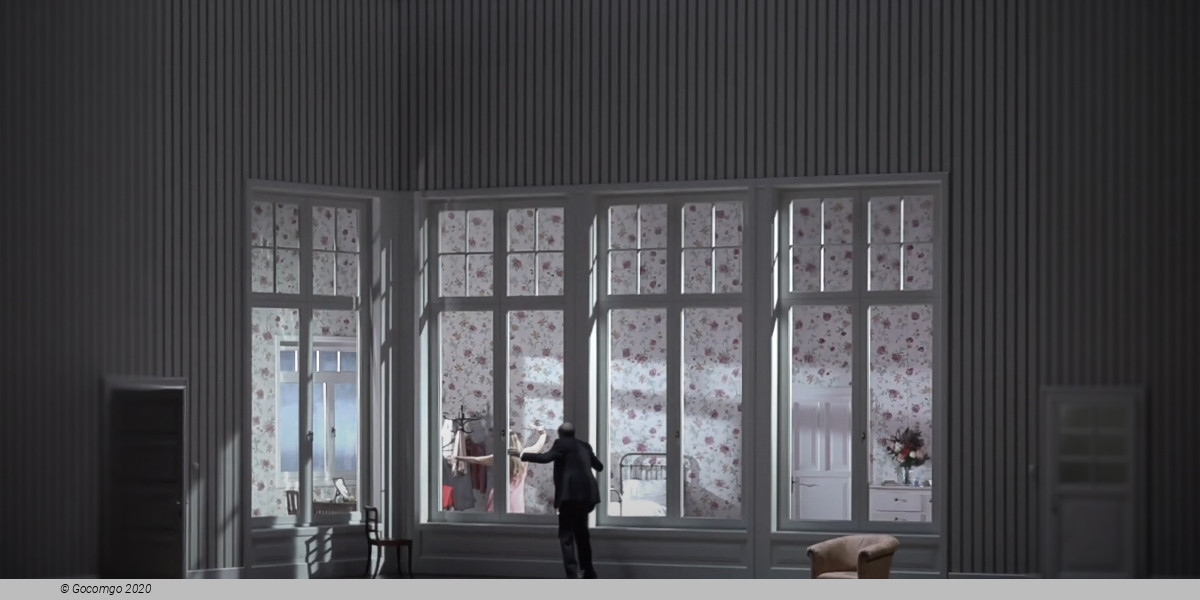
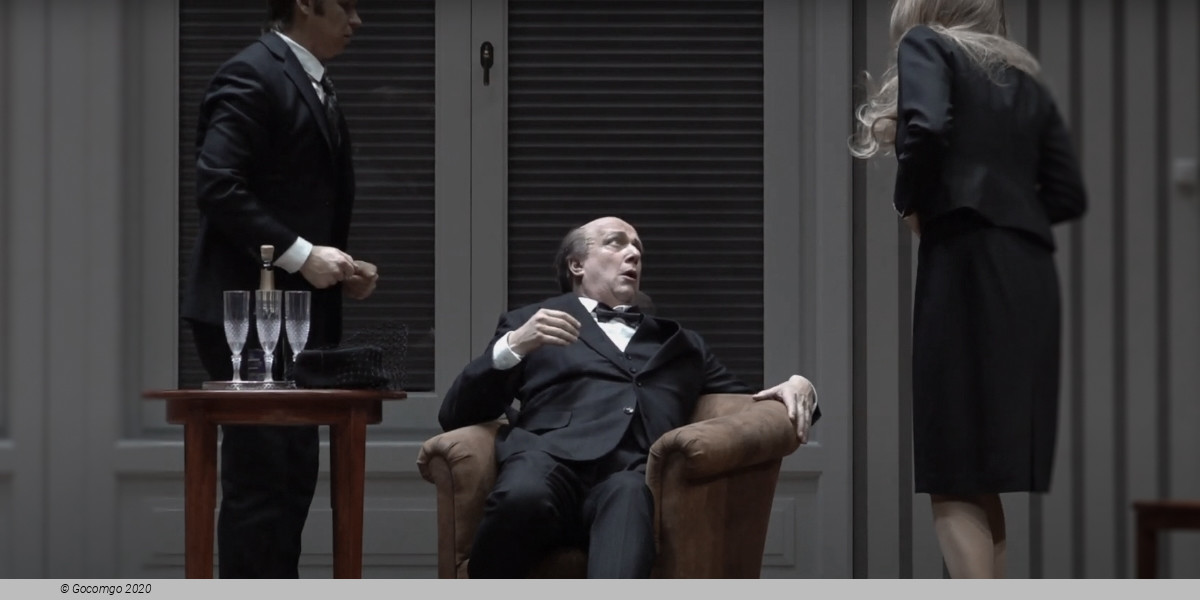
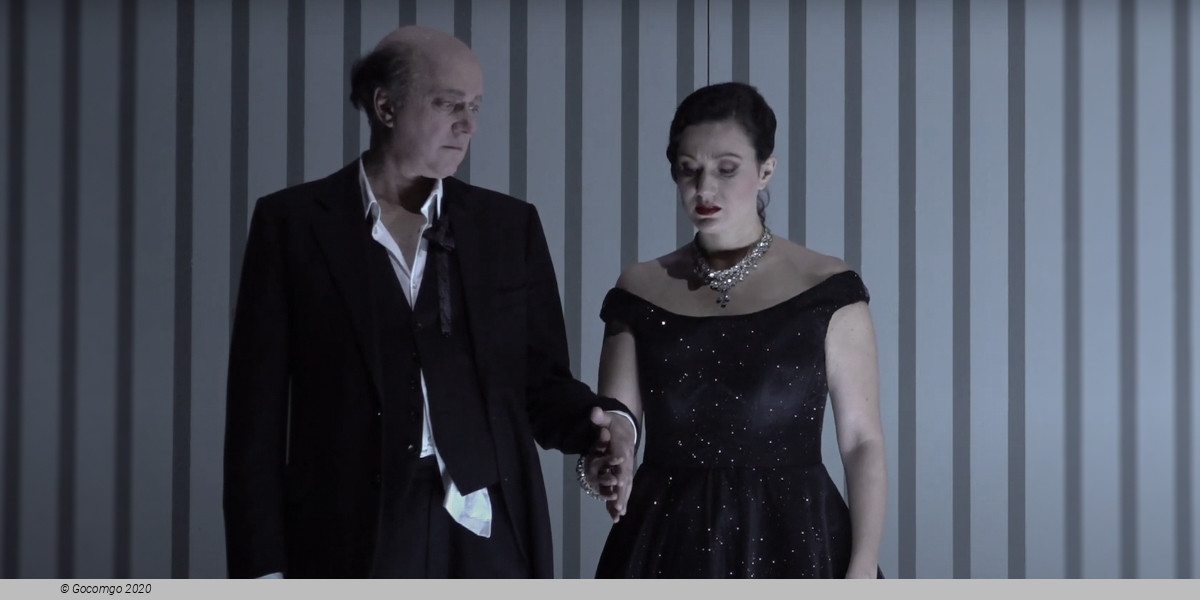
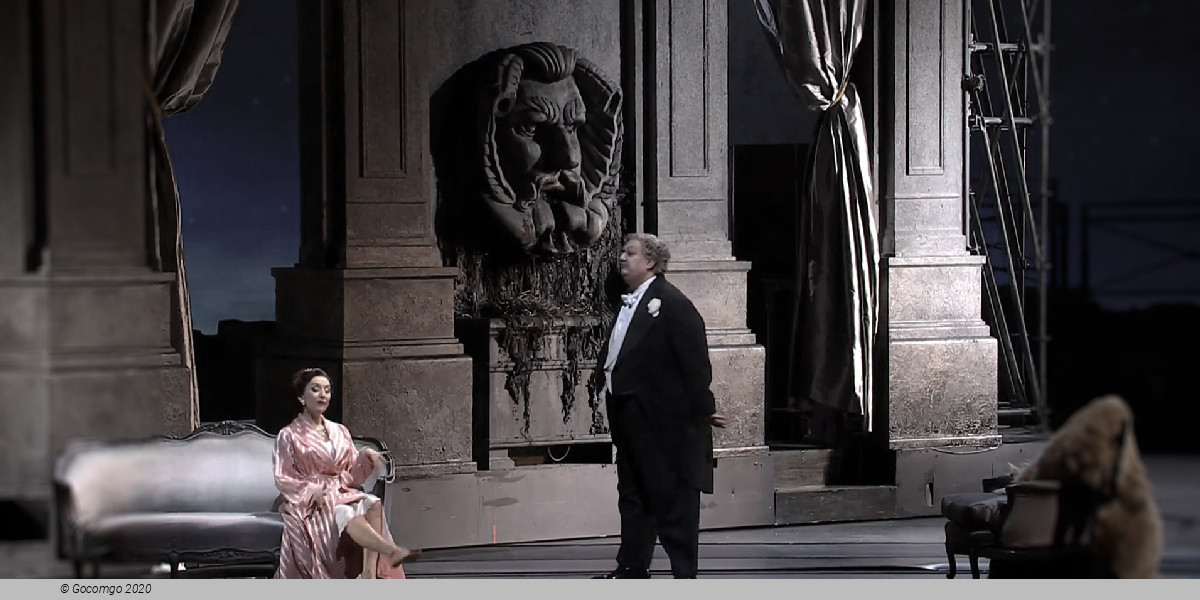
All photos (12)
Select date and time
6 PM
Request for Tickets
Important Info
Type: Opera
City: Frankfurt am Main, Germany
Starts at: 18:00
Acts: 3
Intervals: 1
Duration: 2h 30min
Sung in: Italian
Titles in: German

E-tickets: Print at home or at the box office of the event if so specified. You will find more information in your booking confirmation email.

You can only select the category, and not the exact seats.
If you order 2 or 3 tickets: your seats will be next to each other.
If you order 4 or more tickets: your seats will be next to each other, or, if this is not possible, we will provide a combination of groups of seats (at least in pairs, for example 2+2 or 2+3).

Overview

Introductory talks (in German) in the Bockenheimer Depot 30 minutes before performances begin

A pair of hard up lovers, a machinating doctor and a cranky old man who feels young and randy again.

Wisdom and dignitiy are qualities normally attributed to older people, but when passion and love come into play even the elderly can lose their composure and things become rather amusing ...

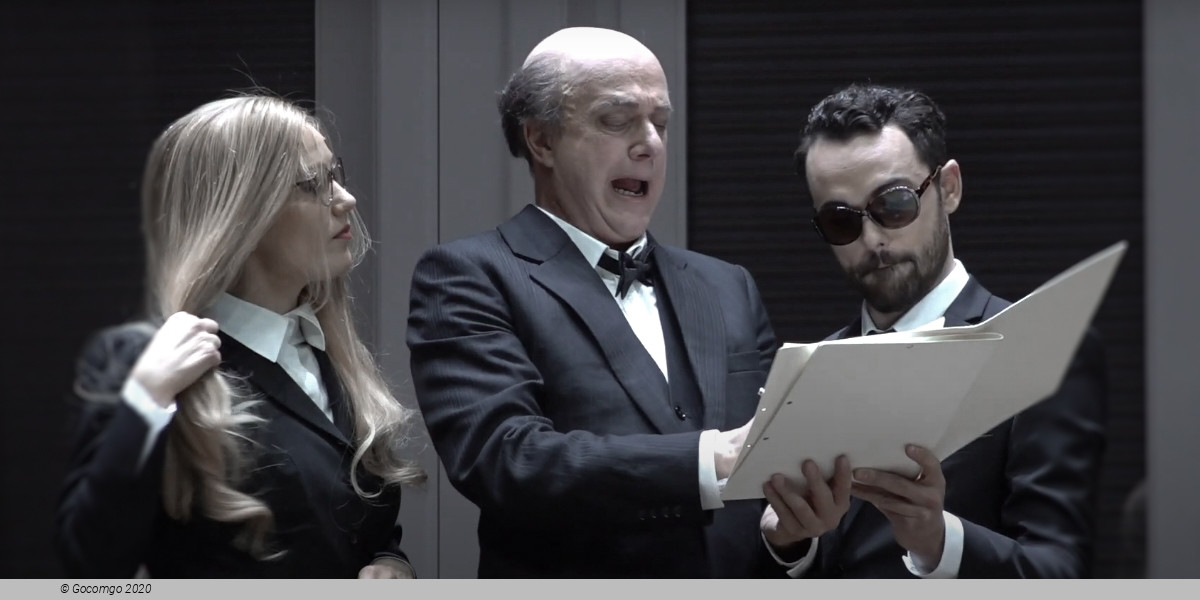
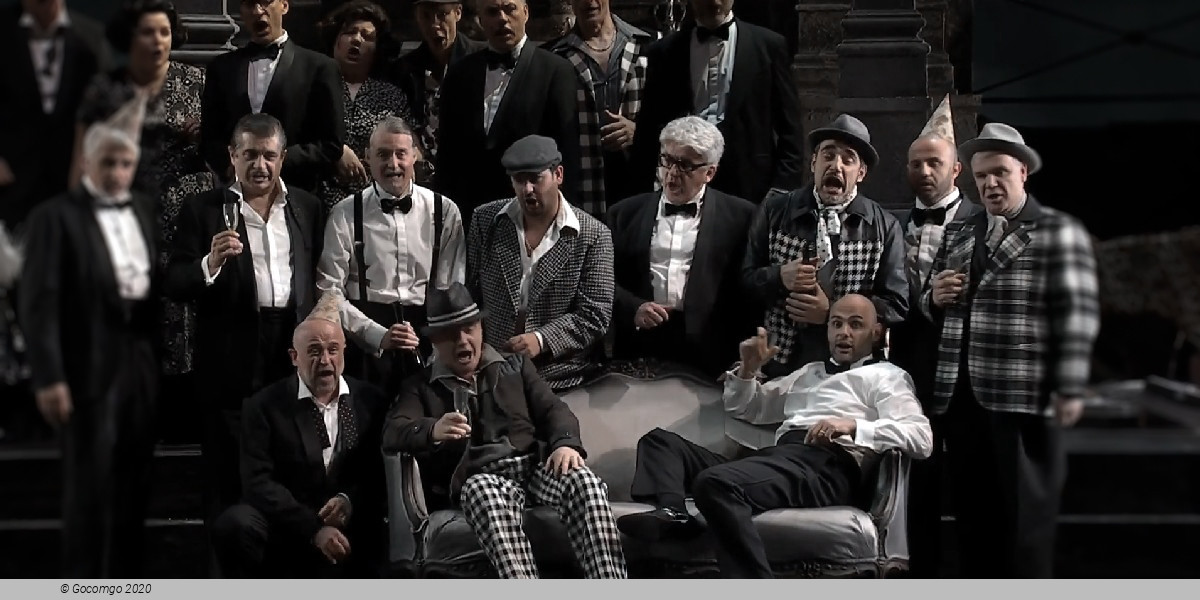
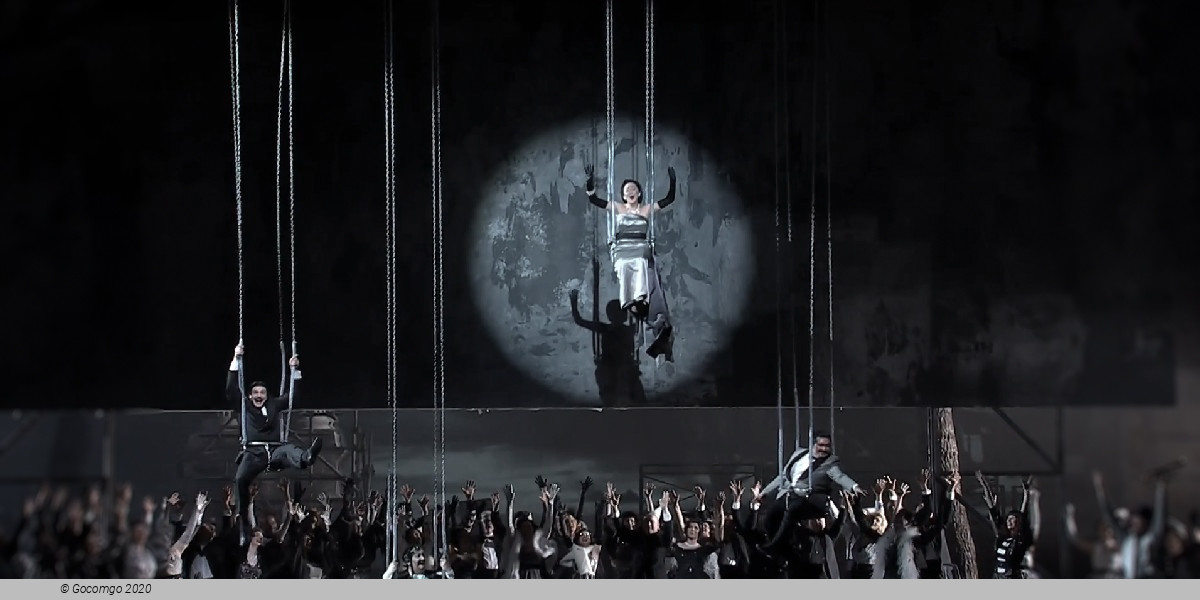
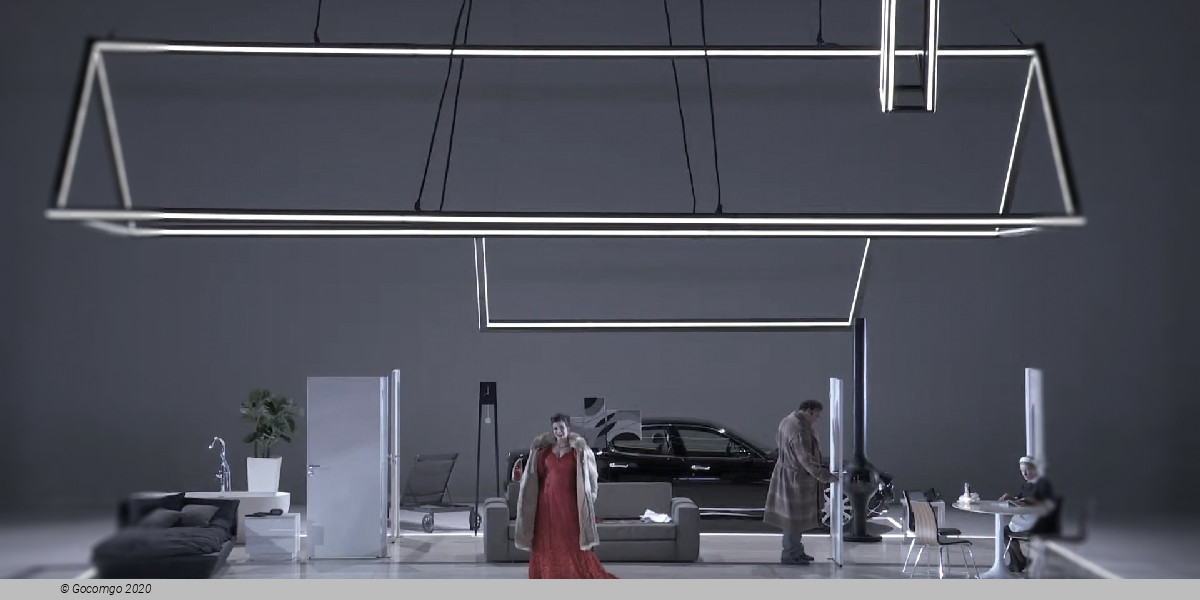
Donizetti’s references to Carlo Goldoni’s Commedia dell’arte figures are unmistakable: Don Pasquale, a real Pantalone, who only cares about money; but would actually quite like a young wife before it’s too late, and the lovers Ernesto and Norina who need help from Don Pasquale's confidante Doctor Malatesta, who's busy spreading intrigues. The turbulent ensembles and explosive emotions of these four on stage are joined by a male chorus, until Don Pasquale ends up lonely, and alone but cured of his egoism,  chuckling over the younger people's little game.

Donizetti and Giovanni Ruffini were pressed for time and the whole process of writing the libretto was very difficult indeed. The librettist wanted to stick to the tried and tested components of opera buffa, while the composer wanted to break new ground, and succeeded in making his characters more credible.

History
Premiere of this production: 03 January 1843, Théâtre-Italien, Paris

Don Pasquale is an opera buffa, or comic opera, in three acts by Gaetano Donizetti with an Italian libretto completed largely by Giovanni Ruffini as well as the composer. It was based on a libretto by Angelo Anelli for Stefano Pavesi's opera Ser Marcantonio written in 1810 but, on the published libretto, the author appears as "M.A.". The opera was first performed on 3 January 1843 by the Théâtre-Italien at the Salle Ventadour in Paris with great success and it is generally regarded as being the high point of the 19th century opera buffa tradition and, in fact, marking its ending.

Synopsis

Time: Early 19th century
Place: Rome

Overture

The music is suggestive of a comic opera; bright and lively, it starts with plenty of percussion and brass instruments. After a while, the ambience changes to suggesting a party, and the overture ends with a finale.

Act 1

Scenes 1–3: A room in the home of Don Pasquale, at 9 o'clock

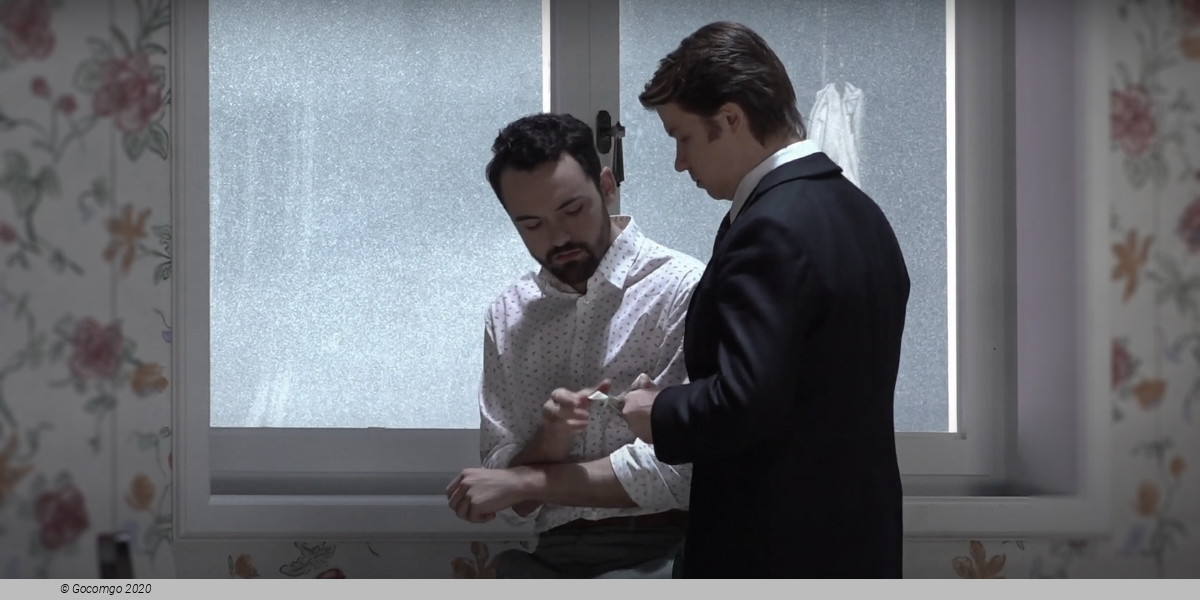
Ernesto has refused the woman that his uncle Don Pasquale had found for him, and as a result is to be disinherited. Ernesto declares his devotion to the young – but poor – widow Norina. In view of Ernesto's determination, Don Pasquale decides to marry in old age to produce his own heir, and anxiously awaits the arrival of his physician, Dr. Malatesta, who is determined to teach Don Pasquale how foolish he is being, but has been pretending to search for a suitable bride. Malatesta, confronted with Pasquale's impatience, mutters that he is a buffoon, but proceeds to describe the attributes of the bride-to-be (Bella siccome un angelo – "Beautiful like an angel"). Honest, modest and sweet – when pressed, Malatesta reveals she is in fact his sister. Overcome with joy, Pasquale demands to meet her at once, and sends Malatesta to fetch her, before singing of the love that has gripped him (Ah, un foco insolito – "A sudden fire").

Ernesto comes back and pleads with the Don to consult with his friend Malatesta – when he hears that Malatesta supposedly supports Pasquale, he is amazed at this apparent betrayal (Mi fa il destino mendico – "Fate has made a beggar of me"). Ernesto determines to elope and writes to tell Norina that all is lost.

Scenes 4–5: An apartment in the home of Norina

Norina sits alone, reading a book. She recites a passage, before laughing at the situation described and reflecting on her own temperament (So anch'io la virtù magica – "I too know your magical virtues"). She is in cahoots with Dr. Malatesta and impatiently waits for him to come and explain his plan at which he had only hinted. A servant delivers the letter from Ernesto, which she quickly reads and is instantly dismayed.

Malatesta arrives to explain the stratagem, but Norina cuts him off and hands him the letter, which he reads aloud: Ernesto has announced his intention to leave Rome, and Europe altogether. Malatesta reassures her, saying that he has adapted his plan: Norina shall play the part of Malatesta's sister. Having arranged for his cousin to act as a notary, they will easily deceive the Don. Norina consents to play her part in the deception, and they discuss her strategies in a lively duet (Pronta son; purch'io non manchi – "I am ready; if I do not miss").

Act 2

A salon in the home of Don Pasquale

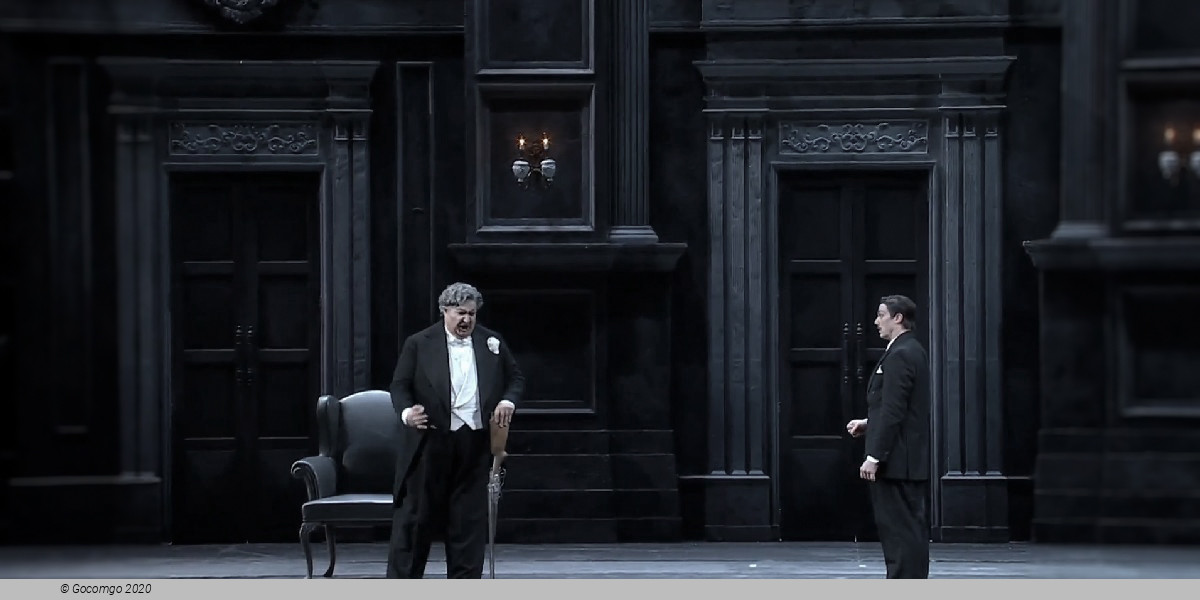
Ernesto is alone: lamenting his fate, he considers his decision to leave Rome (Cercherò lontana terra – "I shall seek a distant land"). He leaves the room just as Pasquale enters, dressed in his outdated finery, along with his servants, to whom he gives instructions to admit Malatesta on his arrival. He parades around in his grand costume, hoping it will conceal his advancing years.

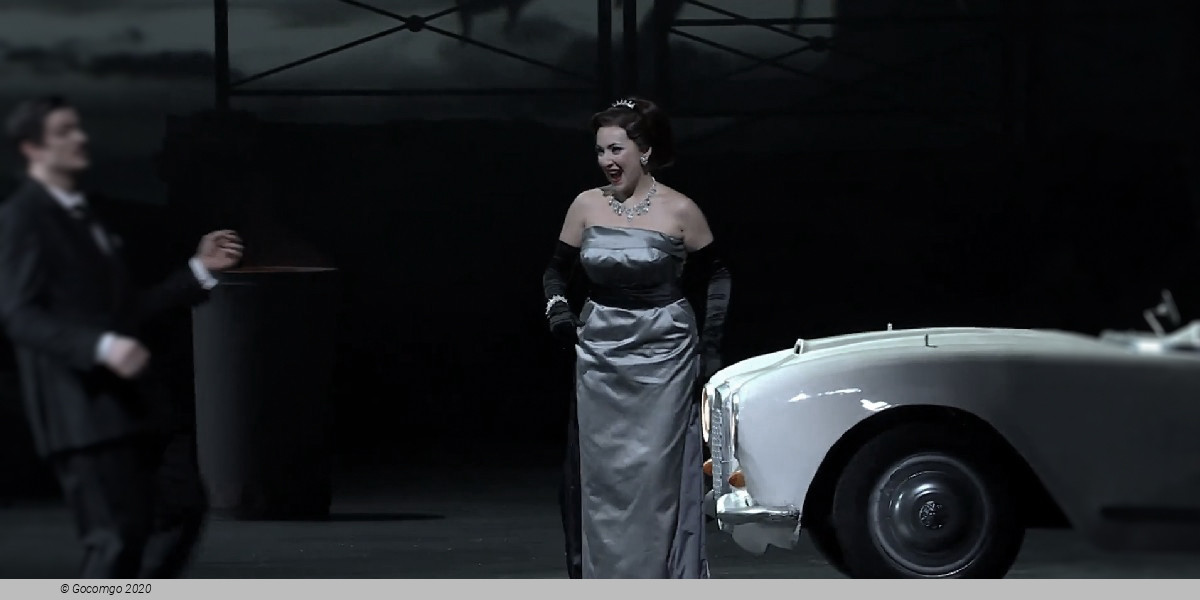
Malatesta arrives with Norina in tow, and introduces her to Pasquale as his sister, Sofronia, fresh out of the convent. Pasquale is smitten, and Norina plays the part of a dutiful, modest and submissive lady, to Pasquale's satisfaction. Norina consents to the proposed marriage, which delights Pasquale. He wants to send for the notary to conduct the ceremony straight away – conveniently, Malatesta has brought one along, who waits in the antechamber.

Malatesta fetches the supposed notary, as servants arrange a table. Taking his seat, the "notary" writes out a marriage contract as dictated by Malatesta and Pasquale (Fra da una parta – "Between, on one hand"), where the Don bequeaths all his estate to be administrated by Sofronia. The contract is quickly drawn up: Pasquale signs but, before Norina can affix her signature, Ernesto bursts in. Intending to say a final farewell, he is amazed to see Norina about to marry Pasquale. However, Malatesta persuades him not to say anything (Figliol non mi far scene – "Son, don't make a scene"), and he is forced to act as the final witness much to Don Pasquale's delight.

As soon as the contract is signed, Norina abandons her pretence of docility, and refuses Pasquale's embrace. She announces her intention to teach him manners, and to have Ernesto as a gallant to accompany her on evening strolls. Pasquale is horrified at this transformation, while Malatesta and Ernesto can barely conceal their amusement (È rimasto là impietrato – "He stands there, petrified"). Summoning the household staff, Norina recites a long list of demands – more servants (young and handsome at that), carriages and horses, furniture – and instructs them to spare no expense doubling all their wages. Pasquale is stricken at his misfortune, so Malatesta urges him to go to bed.

Act 3

Scenes 1–5: A room in the home of Don Pasquale

Pasquale sits in a room, surrounded by piles of newly purchased jewels, dresses and the like, as the servants bustle in and out of Norina's apartment (I diamanti presto presto – "The diamonds, quickly, quickly"). Dismayed by the piles of bills and invoices, the Don summons the courage to confront his tyrannical new wife. Norina emerges, dressed to go out. He attempts to reason with her, but she pays little heed (Signorina, in tanta fretta – "Madam, where are you off to in such a hurry"). He suggests that if she leaves, he may not allow her to return, an idea that she meets with patronising insincerity (Via, caro sposino – "There, there, dear little husband") but the discussion ends in her slapping him. As she exits, she drops a note which Pasquale picks up and reads. The note is addressed to Sofronia, arranging a meeting in the garden with its unnamed, admiring author. Pasquale calls for a servant to summon Malatesta, before leaving the room.

The servants return and, amongst themselves, at once complain at the amount of work they are being made to do, and reveal how much they are enjoying the farcical drama developing between Pasquale and his new wife (Che interminabile andirivieni! – "Such endless coming and going!"). At the approach of Malatesta and Ernesto, however, they exit, assured of more entertainment to come. Malatesta reminds Ernesto of the finer points of their plan, and the latter leaves. The doctor moves forward to greet Don Pasquale, who tells him of Norina's intended assignation, and his own plan to expose her unfaithfulness before a magistrate. Malatesta persuades him to moderate his plan and Pasquale, believing him an ally, consents to his conditions, while plotting his revenge on Norina (Aspetta, aspetta, cara sposina – "Wait, wait, dear little wife").

Scenes 6–7: The garden, adjoining Pasquale's house

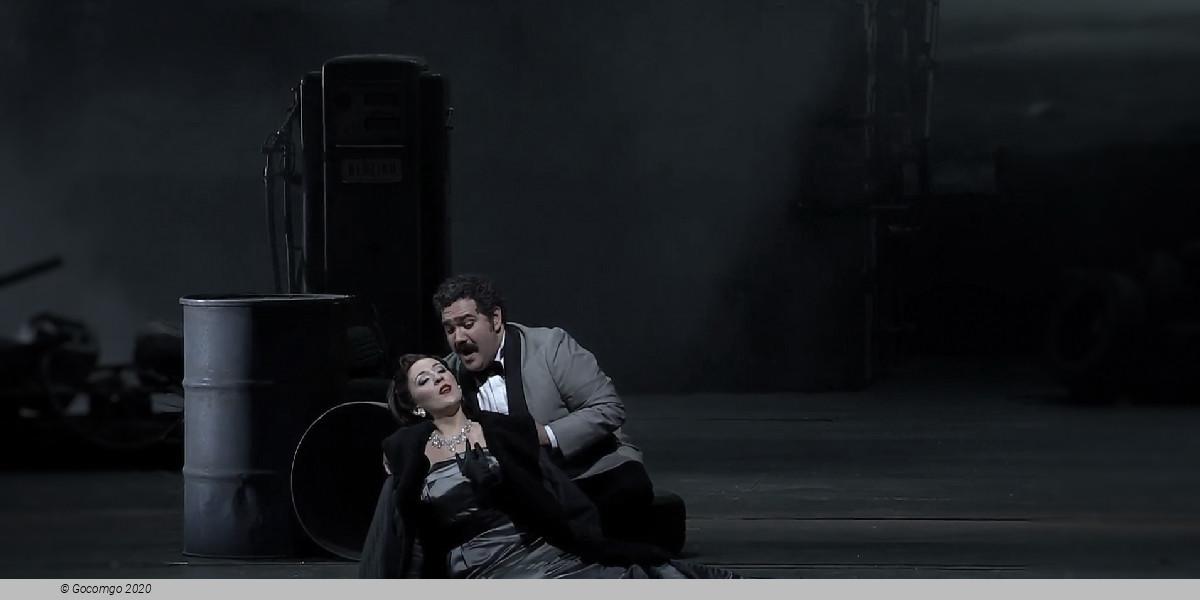
In the garden, as night draws in, Ernesto sings of his love for Norina, as he waits for her arrival (Com'è gentil – "How lovely"). At last, Norina emerges, and they express their love: (Tornami a dir che m'ami – "Tell me once more that you love me"). Don Pasquale and Malatesta have observed and, as they reveal themselves, Ernesto covers himself with a cloak and runs to the house. Pasquale tries to confront Norina – he has caught her in flagrante – but this only provokes a fight that leaves the Don spluttering. She refuses to leave at his demand, so Malatesta, as per his agreement with Pasquale, takes over. Pretending to negotiate with Norina/Sofronia, he tells Pasquale that the only way to make her leave will be to allow Ernesto to marry his beloved, whom "Sofronia" apparently despises. Pasquale consents, and calls out to the house, from which Ernesto and the servants emerge. He instructs Ernesto to send for his would-be bride, but Malatesta reveals that Norina is in fact the woman Pasquale thinks he married, while the real Sofronia remains in a convent. All are reconciled, and the moral of the story – not to marry in old age – is revealed in a playful quartet (La moral di tutto questo – "The moral of all this").

Venue Info

Oper Frankfurt - Frankfurt am Main
Location   Untermainanlage 11

The Oper Frankfurt (Frankfurt Opera) is one of the leading opera companies in Europe, and voted best "Opera house of the year" several times since 1996.

Opera in Frankfurt am Main has a long tradition, with many world premieres such as Franz Schreker's Der ferne Klang in 1912, Fennimore und Gerda by Frederick Delius in 1919, and Carl Orff's Carmina Burana in 1937. Frankfurt's international recognition began in the Gielen Era, 1977 to 1987, when Michael Gielen and stage directors such as Ruth Berghaus collaborated.

A historic opera house from 1880 was destroyed in World War II, and reconstructed as a concert hall, Alte Oper. The present opera house, built in 1963, is under one roof with the stage for drama. The opera orchestra is called Frankfurter Opern- und Museumsorchester. Today's venue for Baroque and contemporary opera is the Bockenheimer Depot, a former tram depot.

Oper Frankfurt is part of the Städtische Bühnen Frankfurt.

Frankfurt's first opera was Johann Theile's Adam und Eva, performed in 1698 by Johann Velten's touring company. The young Goethe's first operas in his home town of Frankfurt were productions by Theobald Marchand's company.

1782 – 1880
Opened in 1782, the Comoedienhaus was the first permanent venue of the Frankfurt Theater (drama and opera). In 1878 German violinist Willy Hess took up the leadership of the Oper Frankfurt. He resigned from that post in 1886 to take up a professorship in the Rotterdam Conservatorium voor Muziek.

1880 – 1944
The first representative opera house of the city was inaugurated in Frankfurt in 1880 at Opernplatz. Under the direction of the first Intendant Emil Claar and the first Kapellmeister Felix Otto Dessoff, the house was opened with Mozart's opera Don Giovanni.

During the 1920s, the opera in Frankfurt had more prominent Jewish singers than any other company in Germany, including the tenor Hermann Schramm, bass Hans Erl (the first King in Schreker's Der Schatzgräber), baritone Richard Breitenfeld and contralto Magda Spiegel, who also toured with Frankfurt Opera performing Wagner in the Netherlands. These singers were forced to leave the opera in June 1933. Orff's Carmina Burana was premiered at Oper Frankfurt in 1937. Jewish members of the opera company among those rounded up at 9 November 1938 at the Festhalle Frankfurt, where Erl sang In diesen Heilgen Hallen, from the Magic Flute for the deportees. Members of Frankfurt Opera were sent to Auschwitz and other camps where they perished.

1945 – 1970s
The opera house was damaged in an air raid in January 1944, and then almost completely destroyed in March. A new house for opera and play was built, completed in 1963 at the Theaterplatz (now Willy-Brandt-Platz). In 1952, Georg Solti became Generalmusikdirektor (GMD) and Intendant of the Oper Frankfurt, where he remained in charge for nine years.

The Gielen Era
From 1977 to 1987, Frankfurt Opera was led by Michael Gielen. This decade became known as the "Gielen Era", notable for the music of a conductor who was also a composer, and directors including Ruth Berghaus and Hans Neuenfels, whose productions of standard works such as Verdi's Aida and Wagner's Ring Cycle were thought-provoking. Operas which received their world premieres at the house were also performed again, including Franz Schreker's Die Gezeichneten.

1987 – present
The stage of the opera house was destroyed by a fire in November 1987. The opera house was rebuilt and opened in April 1991. Many famous singers started their career with the company, including Franz Völker, Edda Moser, Cheryl Studer and Diana Damrau, and many established artists have been engaged there in recent seasons including Christian Gerhaher, whose roles here have included Monteverdi's L'Orfeo and his first Wolfram in Wagner's Tannhäuser, Piotr Beczała in Massenet's Werther and Jan-Hendrik Rootering in Wagner's Parsifal.

Since 2002, Bernd Loebe has served as Intendant of the company. The company's current GMD is Sebastian Weigle, since 2008. Weigle has made commercial recordings of opera with the company for the OEHMS Classics label. He is scheduled to stand down as GMD of Oper Frankfurt at the close of the 2022–2023 season. In October 2021, the company announced the appointment of Thomas Guggeis as the next GMD of the company, effective with the 2023–2024 season, with an initial contract of 5 years.

Oper Frankfurt was voted 1996, 2003, 2015, 2018 and 2020 "Opera House of the Year" by the magazine Opernwelt.

Important Info
Type: Opera
City: Frankfurt am Main, Germany
Starts at: 18:00
Acts: 3
Intervals: 1
Duration: 2h 30min
Sung in: Italian
Titles in: German
Top of page