



The National Theatre Brno is the major theatre house in Brno. It was established in 1884 and modeled on the National Theatre in Prague.
Polish Blood
National Theatre Brno,
Janacek Theatre,
Brno, Czech Republic
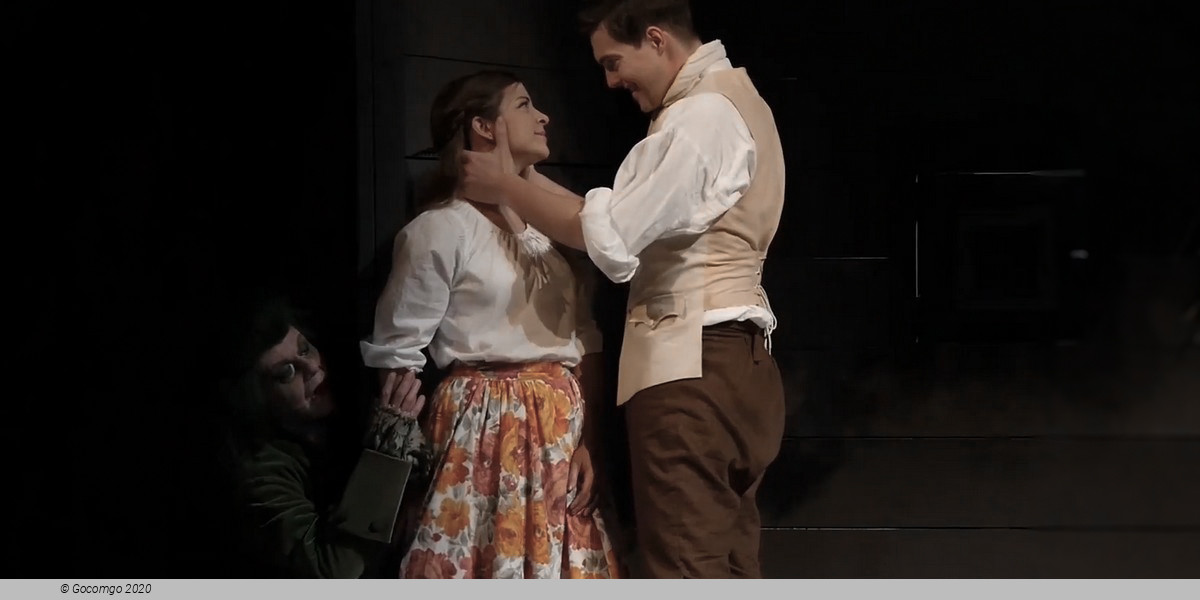
All photos (1)
Select date and time
7 PM
E-tickets: Print at home or at the box office of the event if so specified. You will find more information in your booking confirmation email.
You can only select the category, and not the exact seats.
If you order 2 or 3 tickets: your seats will be next to each other.
If you order 4 or more tickets: your seats will be next to each other, or, if this is not possible, we will provide a combination of groups of seats (at least in pairs, for example 2+2 or 2+3).
Important Info
Type: Operetta
City: Brno, Czech Republic
Starts at: 19:00
Acts: 3
Duration: 2h 35min
Sung in: Czech
Titles in: Czech
E-tickets: Print at home or at the box office of the event if so specified. You will find more information in your booking confirmation email.
You can only select the category, and not the exact seats.
If you order 2 or 3 tickets: your seats will be next to each other.
If you order 4 or more tickets: your seats will be next to each other, or, if this is not possible, we will provide a combination of groups of seats (at least in pairs, for example 2+2 or 2+3).
Overview
Polish Blood, written by the renowned Czech composer and conductor Oskar Nedbal, is one of the most famous and popular Czech operettas. Apart from several theatrical productions, it has also been adapted for film and television. Leo Stein wrote the libretto based on the short story The Squire’s Daughter by Alexander Pushkin. The operetta was first performed in Vienna on 25th October 1913 with the first Czech performance taking place just two months later on 26th December. From that time onwards, thanks to it being a quintessential work of the ‘silver age’ of Viennese operettas, Polish Blood has never left the stage. It is a story about the extravagant Polish count Boleslaw Baranski, the wealthy landowner in Russian Poland Jan Zaremba, and his daughter Helena who is in disguise as a peasant girl. A tale of mistaken identities, two women trying to woo one man, promises an evening full of entertainment. The charming musical numbers such as “Blondýnky něžné” (Sweet Blondes), “Jste kavalír, to vím” (You’re a Cavalier, I Know) and “Diplomat”, are known not only by operetta enthusiasts, but also by the greater public. Funny dialogues, a surprising plotline and above all beautiful melodies, makes it the quintessential Czech operetta.
The new staging of Polish Blood will be the work of a young team: the director, Tomáš Pilař, is already well-known to the Brno audience for his successful production of Papageno Plays the Magic Flute and other collaborations with the National Theatre Brno such as Operetta Gala and the DIVA Awards. Aleš Valášek, the set and costume designer, is one of the major talents of the young generation of artists in the Czech Republic.
History
Premiere of this production: 25 October 1913, Carltheater, Vienna
"Polish Blood" (German: Polenblut) is an operetta in three acts by Oscar Nedbal to a libretto by Leo Stein based on the novel "The Young Lady-Peasant Woman" by Alexander Sergeevich Pushkin. The first performance took place on October 25, 1913 at the Karl-theater in Vienna.
Synopsis
Count Boleslav Baransky (for friends - Bollo) leads a very frivolous life and is close to ruin. His acquaintance, the landowner Jan Zaremba, would like to help him, but does not want to throw money away. But he would not be averse to marrying his daughter Elena to the count: the title will not interfere with the daughter, and the father has no doubt that she will be able to rein in her husband-helicopter. Elena, in turn, is fascinated by the Count. But Bollo flatly refuses to marry: his wife must be no less noble, besides, he is very passionate about the beautiful dancer Wanda.
Then Elena, with the help of a friend of the count, Bronislaw von Popel, settles in a dilapidated count's estate as a housekeeper under the name of Marynia. She wears peasant clothes and puts things in order with a firm hand: she kicks out her freeloader friends, stops frequent drinking, runs the household ... The count is gradually re-educated and at the same time falls in love. In autumn, it turns out that the harvest is magnificent. At a celebration arranged for this occasion, the count announces his intention to take Marynia as his wife. Elena confesses her deception: her thirst for revenge has dried up, she is sure that she and Boleslav are perfect for each other.
Venue Info
National Theatre Brno - Brno
 Dvořákova 589
Dvořákova 589
Important Info
Type: Operetta
City: Brno, Czech Republic
Starts at: 19:00
Acts: 3
Duration: 2h 35min
Sung in: Czech
Titles in: Czech