
National Opera and Ballet of Bulgaria 24 June 2022 - La Bayadère | GoComGo.com

La Bayadère

National Opera and Ballet of Bulgaria, Main Hall, Sofia, Bulgaria
All photos (8)
Select date and time
7 PM

E-tickets: Print at home or at the box office of the event if so specified. You will find more information in your booking confirmation email.

You can only select the category, and not the exact seats.
If you order 2 or 3 tickets: your seats will be next to each other.
If you order 4 or more tickets: your seats will be next to each other, or, if this is not possible, we will provide a combination of groups of seats (at least in pairs, for example 2+2 or 2+3).

Important Info
Type: Ballet
City: Sofia, Bulgaria
Starts at: 19:00
Acts: 3
Intervals: 2
Duration: 2h 45min

E-tickets: Print at home or at the box office of the event if so specified. You will find more information in your booking confirmation email.

You can only select the category, and not the exact seats.
If you order 2 or 3 tickets: your seats will be next to each other.
If you order 4 or more tickets: your seats will be next to each other, or, if this is not possible, we will provide a combination of groups of seats (at least in pairs, for example 2+2 or 2+3).

Overview

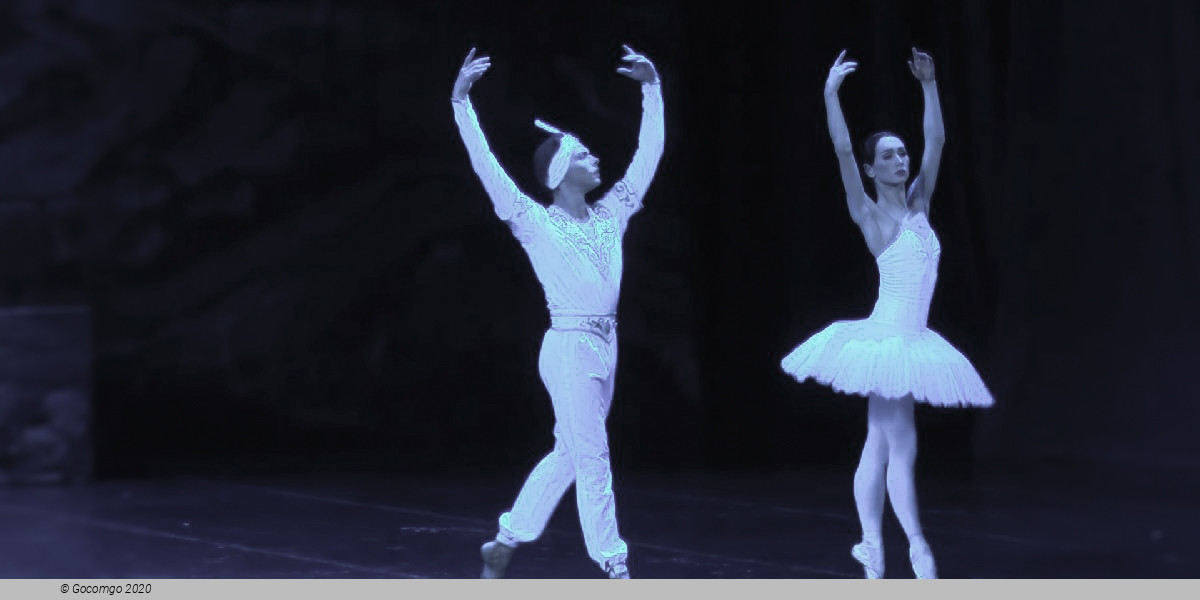
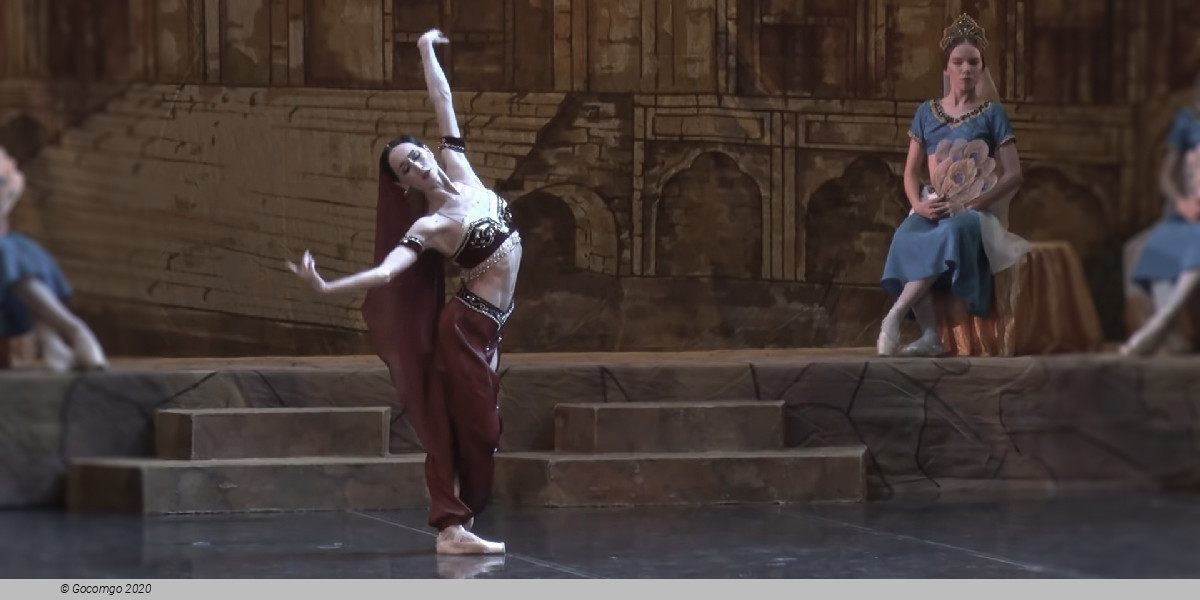
One of the most exciting masterpieces of the famous Petipa is inspired by the drama of the ancient Indian poet Kalidas and Goethe's ballad “La Bayadère”.

For the first time on the stage of the Sofia Opera and Ballet in 2012 the complete original version of this ballet was presented.

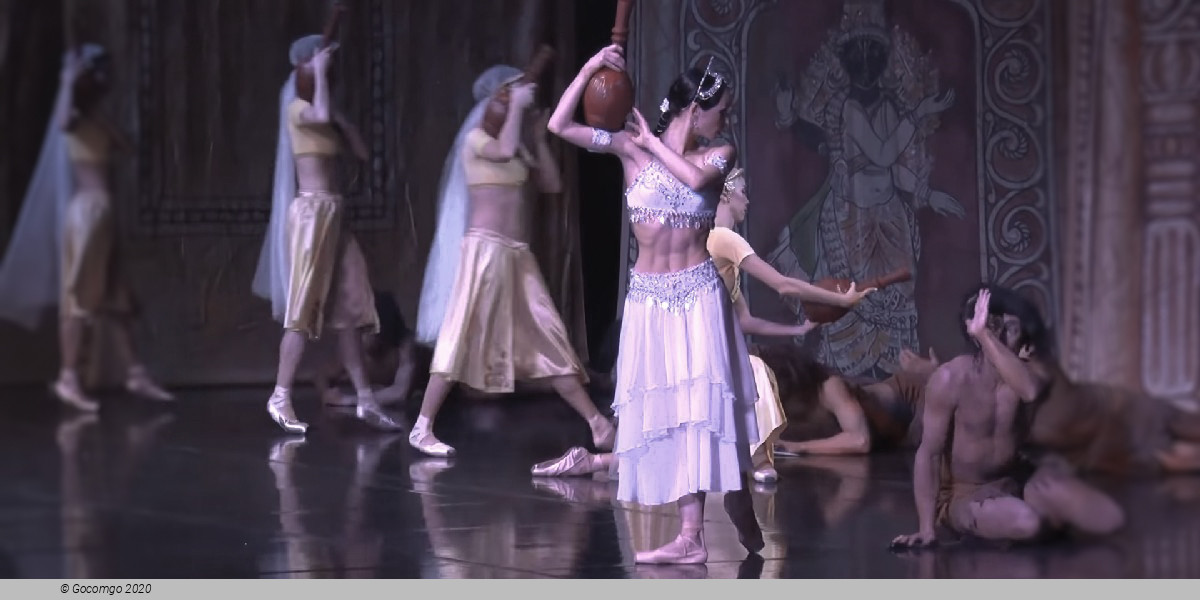
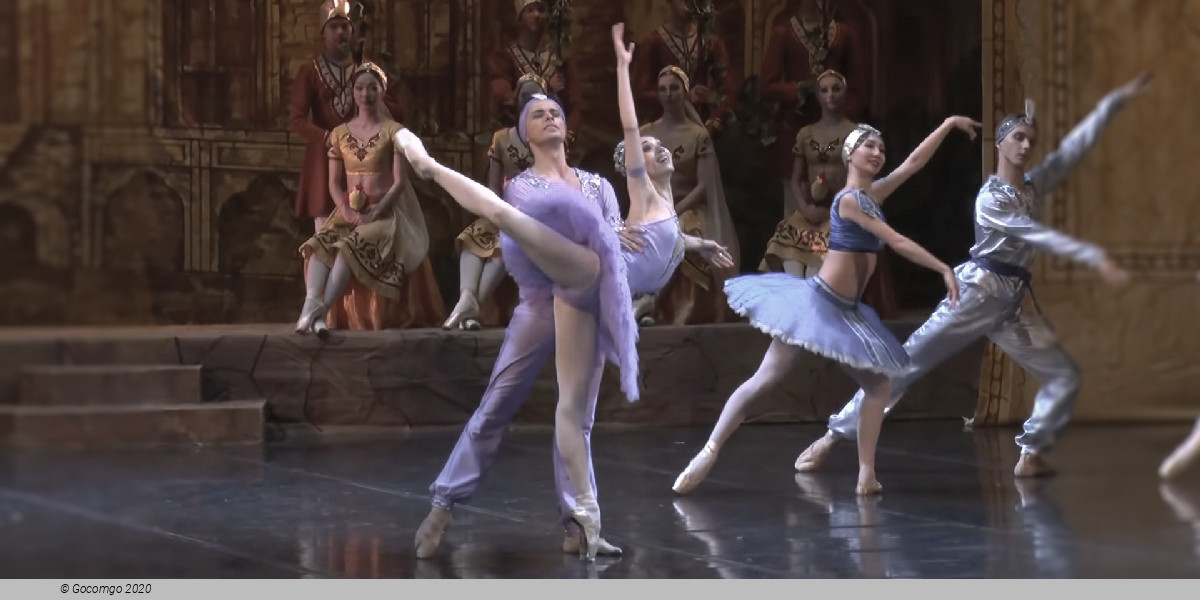
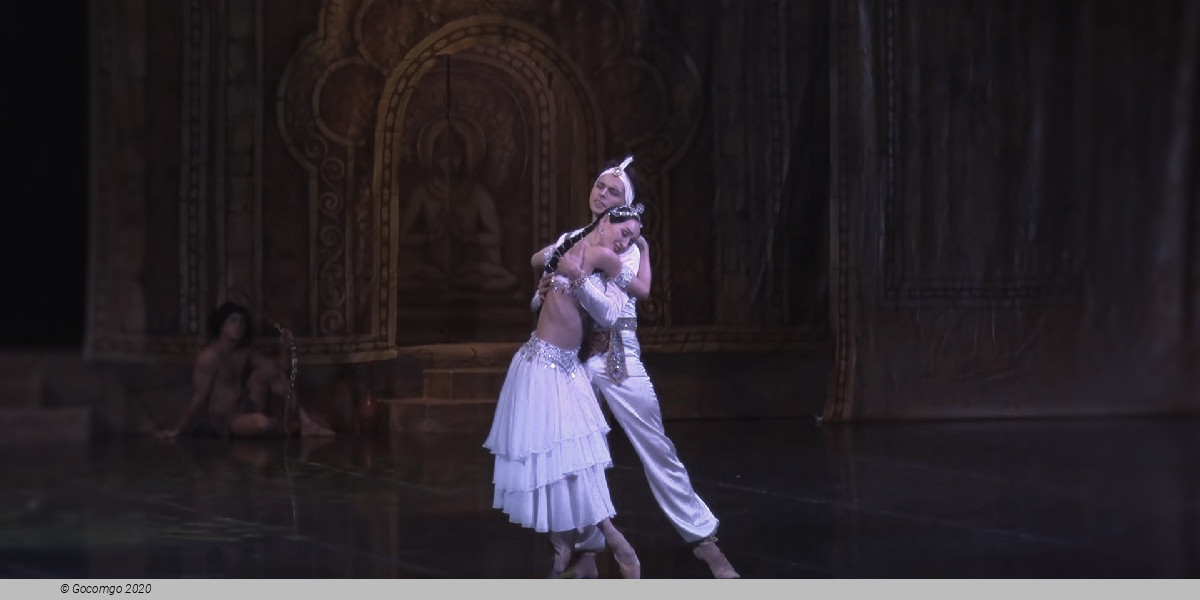
Tragedy and lyrics, the pursuit of happiness, love and freedom are intertwined in this famous work, which takes place in ancient India. The plot transforms the passionate and all-consuming love of La Bayadère Nikiya for the brave warrior Solor. Faithfulness, betrayal, sincerity and insidiousness are at the heart of this expressive ballet spectacle, ruling over time as the apotheosis of fiery love.

About Pavel Stalinski

Pavel Stalinski is one of the most famous Russian choreographers. He stages ballet spectacles all over the world. His father, Alexey Stalinski, was also a ballet dancer and choreographer. Alexey Stalinski instilled in Pavel a love of ballet. The son admires his father, who until the age of 75 was associated with this sublime art. Although he had a heart defect and wounds from the Second World War, Alexey taught young people ballet to his end. Pavel is also completely dedicated to dance. He arrived in Sofia in May 2012 to stage the ballet “La Bayadère”. In this version the work has not been performed in Bulgaria. This is one of the most difficult ballets, like “Swan Lake”.

It is among the peaks in the performing arts.

More than 80 people appear in it individually and in the mass scenes. Among the performers are students from the National School of Dance Art in Sofia.

Pavel Stalinski admires the work of our ballet dancers. He staged “La Bayadère” after Marius Petipa, but strived to give a lot of himself for the perfect construction of each character and its independent sound on the background of the whole production. Stalinski's motto is simple, it has a lot of sincerity and clarity: "You have to dance not only with the body, but also with the soul, to join your role as every believer joins God!"

To the history of the production in Sofia
The choreographer Pavel Stalinski arrived in Sofia in love with his pianist Galya Lushchenko. Exceptionally good pianist, she came with him to Bulgaria to play at the rehearsals of the famous ballet. The two met by chance years ago, at the premiere of the ballet "Don Quixote" in Lvov. Love blazed at first sight. Stalin argues that there is such an attraction. The young lady had a son from her first marriage. The ballet dancer was already the father of two older daughters. Nothing could break their relationship.

"With such strong love," says the choreographer, "dark, evil forces always intervene."

One day, Paul climbed a high ladder to repair the electrical installation in his home. Suddenly it was as if someone pushed the ladder and he fell. He had fractures all over his body, pelvis and vertebrae, he was stiff with pain. Galya didn’t separate from him until he fully recovered. Now the two are inseparable and believe in destiny. Stalinski and Lushchenko are convinced that in the beginning of every attraction is passion, then comes the spiritual connection and then comes the real, great love, as in the ballet “La Bayadère”.

History
Premiere of this production: 23 January 1877, Imperial Bolshoi Kamenny Theatre in St. Petersburg, Russia

La Bayadère (en. The Temple Dancer) is a ballet, originally staged in four acts and seven tableaux by French choreographer Marius Petipa to the music of Ludwig Minkus. The ballet was staged especially for the benefit performance of the Russian Prima ballerina Ekaterina Vazem, who created the principal role of Nikiya.

Synopsis

Set in the Royal India of the past, La Bayadère is a story of eternal love, mystery, fate, vengeance, and justice.  The ballet relates the drama of a temple dancer (bayadère), Nikiya, who is loved by Solor, a noble warrior.  She is also loved by the High Brahmin, but does not love him in return, as she does Solor.

Act I

Scene I, Outside Temple in the Sacred Forest.

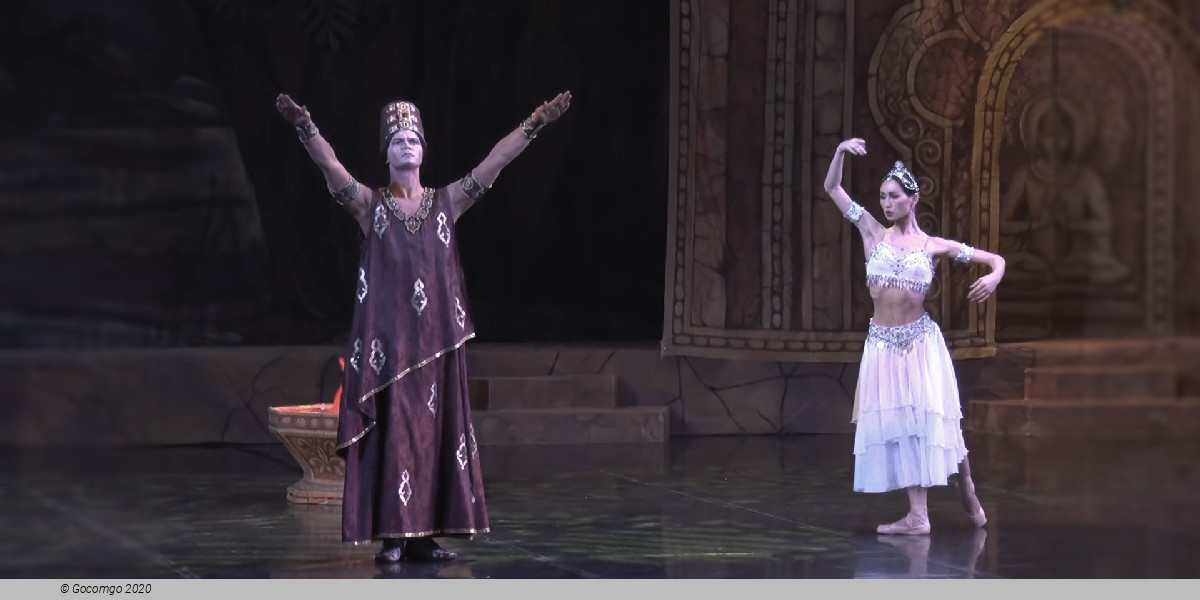
The High Brahmin, priests, and temple dancers are celebrating the Indian Ritual of Fire.  Nikiya, the most beautiful of the bayadères, has been chosen to be consecrated the lead temple dancer.  The High Brahmin declares his love for Nikiya, but is rejected by her.  Nikiya meets secretly with Solor later that evening.  They dance together and swear eternal love over the Sacred Fire, but are discovered by the jealous High Brahmin, who vows to kill Solor.

Scene II, A Room in the Palace.

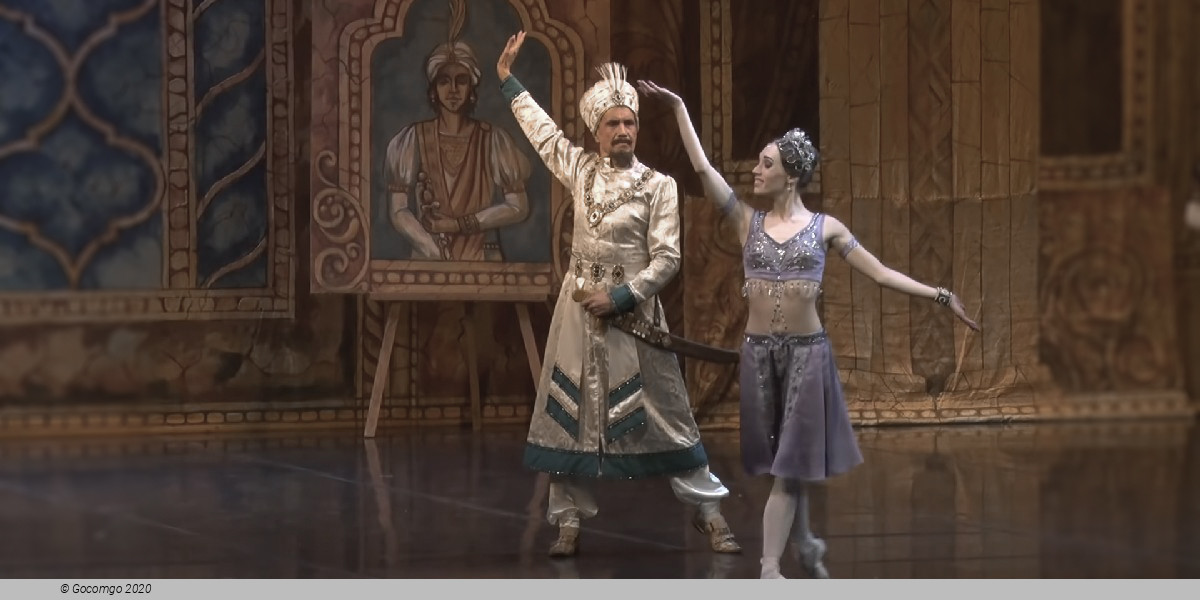
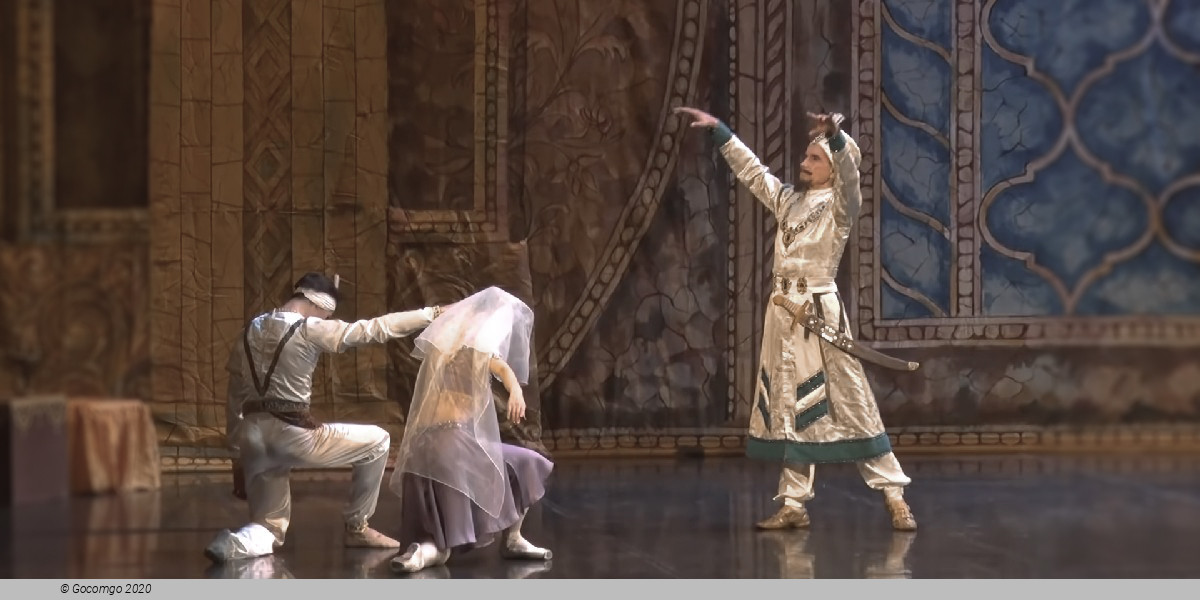
The Rajah has decided to reward Solor’s valor and decrees that the warrior will marry his daughter, Gamzatti.  Gamzatti falls in love with Solor’s portrait, and when they meet, he is overwhelmed by her beauty.  Even though he has sworn eternal love to Nikiya, he cannot defy the wishes of the Rajah and agrees to marry Gamzatti.  The High Brahmin informs the Rajah of Nikiya and Solor’s secret love, hoping that the Rajah will do away with Solor.  Instead, the Rajah decides to kill Nikiya.

This conversation is overhead by Gamzatti, who summons Nikiya to her rooms and attempts to bribe Nikiya to give up Solor.  Refusing, Nikiya frantically attempts to kill  Gamzatti.  Nikiya flees and Gamzatti swears to destroy her.

Scene III, The Garden of the Palace.

At the betrothal of Solor and Gamzatti, Nikiya is commanded to dance.  Gamzatti presents her with a basket of flowers that Nikiya believes to be from Solor, and which conceals a deadly snake.  Nikiya is bitten, and when Solor leaves with Gamzatti, she refuses the proffered antidote and dies.

Act II. The Tent of Solor.

Solor, grief‑stricken and under the influence of opium, dreams of being reunited with Nikiya in the Kingdom of the Shades.  Awakening, he realizes that he must prepare to marry Gamzatti.

Act III. The Temple.

The vision of Nikiya remains with Solor as the wedding ceremony begins at the Sacred Temple.  As Solor and Gamzatti say their vows and are blessed by the High Brahmin, the vengeance of the gods is unleashed, and the temple and all the celebrants are destroyed.  Nikiya and Solor are once again united in eternal love.

Venue Info

National Opera and Ballet of Bulgaria - Sofia
Location   bul. Kniaz Aleksandar Dondukov 30

The National Opera and Ballet is a national cultural institution in Bulgaria that covers opera and ballet. It is based in an imposing building in Sofia, the capital of Bulgaria. The first opera company in Bulgaria was founded in 1890 as part of the Capital Opera and Drama Company. The two sections split in 1891 to form the Salza i Smyah theatrical company and the Capital Bulgarian Opera. It was, however, disbanded the next year due to lack of government funding and financial difficulties.

The Bulgarian Opera Society was established in 1908 and staged its first test performance. The first full opera was performed in 1909 — Pagliacci by Leoncavallo. The first Bulgarian opera works were also presented in the period, including Siromahkinya by Emanuil Manolov, Kamen i Tsena by Ivan Ivanov and Václav Kaucký, Borislav by Georgi Atanasov and Tahir Begovitsa by Dimitar Hadzhigeorgiev.

As the company evolved under the ensemble system and style, the permanent troupe of soloists, choir, orchestra, ballet, technical and production teams produced up to 10 opera and ballet premieres a year, in addition to concert programs. Gradually, the basic repertory of world opera classics was established at the same time as the theatre began to attract Bulgarian composers who created new national works. 20th Century performers such as Nicolai Ghiaurov, Nicola Ghiuselev, and Ghena Dimitrova began their careers within the structure of the National Opera, as did later singers such as Irena Petkova and Kiril Manolov.

The institution became a national one in 1922 and changed its name to National Opera. A ballet company was established and gave its first performance in 1928. The opera ceased its activity for a while after the 1944 bombing of Sofia, but was restored shortly afterward with a significant increase of government funding.

The National Opera and Ballet's building was designed in 1921 and built for the most part between 1947 and its opening in 1953.

In 2000, the company co-organized the Boris Christoff Twelfth International Competition for Young Opera Singers with the idea of attracting a younger audience and supporting young and upcoming singers.

The repertoire historically tended to favour the Italian and French repertoire with little Wagnerian tradition, although since 2010, the artistic director of the opera company Plamen Kartaloff began a Ring Cycle with entirely Bulgarian casts. Following the entry of Parsifal and Tristan und Isolde into the repertoire, the complete cycle was performed both in Moscow and Sofia during 2018.

Important Info
Type: Ballet
City: Sofia, Bulgaria
Starts at: 19:00
Acts: 3
Intervals: 2
Duration: 2h 45min
Top of page