
Belarus National Bolshoi Opera and Ballet Theater 4 October 2022 - The Tsar’s Bride | GoComGo.com

The Tsar’s Bride

Belarus National Bolshoi Opera and Ballet Theater, Main Stage, Minsk, Belarus
All photos (8)
Select date and time
7 PM

E-tickets: Print at home or at the box office of the event if so specified. You will find more information in your booking confirmation email.

You can only select the category, and not the exact seats.
If you order 2 or 3 tickets: your seats will be next to each other.
If you order 4 or more tickets: your seats will be next to each other, or, if this is not possible, we will provide a combination of groups of seats (at least in pairs, for example 2+2 or 2+3).

Important Info
Type: Opera
City: Minsk, Belarus
Starts at: 19:00
Acts: 2
Intervals: 1
Duration: 2h 40min
Sung in: Russian
Titles in: Russian,English

E-tickets: Print at home or at the box office of the event if so specified. You will find more information in your booking confirmation email.

You can only select the category, and not the exact seats.
If you order 2 or 3 tickets: your seats will be next to each other.
If you order 4 or more tickets: your seats will be next to each other, or, if this is not possible, we will provide a combination of groups of seats (at least in pairs, for example 2+2 or 2+3).

Overview

The performace is a laureate of the IV National Theater Prize of the Republic of Belarus in the nomination "Best Opera Performance".

History
Premiere of this production: Private Opera Society, Moscow

The Tsar's Bride is an opera in four acts by Nikolai Rimsky-Korsakov, the composer's tenth opera. The libretto, by Ilia Tyumenev, is based on the drama of the same name by Lev Mey. Mey's play was first suggested to the composer as an opera subject in 1868 by Mily Balakirev. (Alexander Borodin, too, once toyed with the idea.) However, the opera was not composed until thirty years later, in 1898. The first performance of the opera took place in 1899 at the Moscow theater of the Private Opera of S.I. Mamontov.

Synopsis

The action takes place at the Alexandrovskaya Sloboda in autumn 1572
Act 1
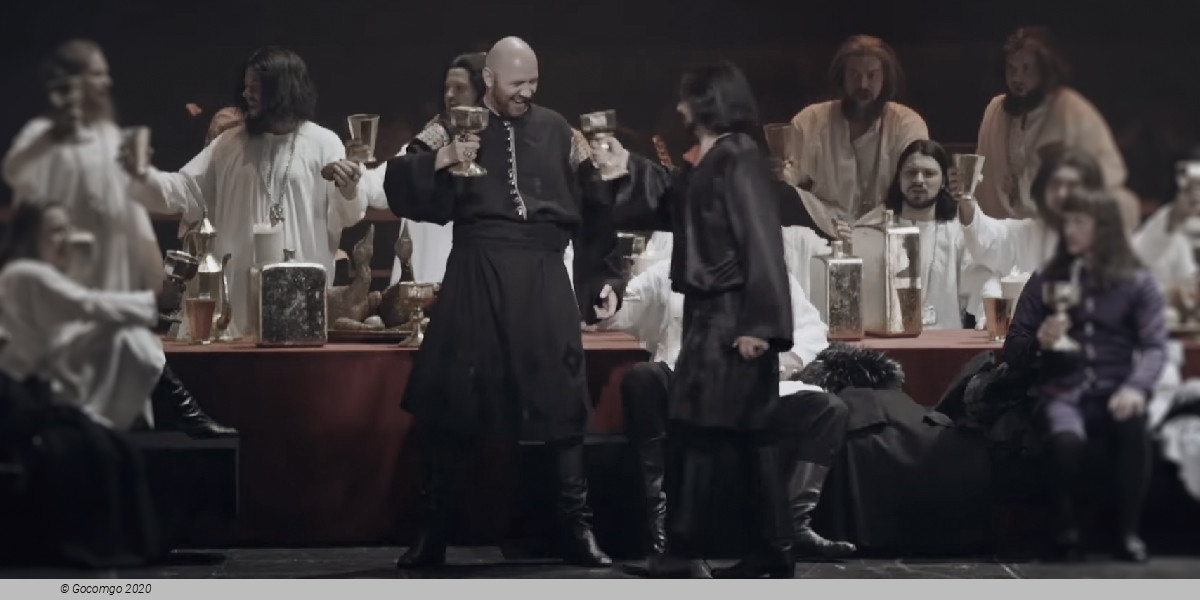
The Carousal
Oprichnik Grigory Gryaznoy is desperate. For the first time in his life, he has passionately fallen in love with the beautiful Marfa. He sent matchmakers to her father in vain: the merchant Sobakin refused cold, as Marfa is already betrothed to the boyar Ivan Lykov. All the thoughts of Grigory are about his love and the lucky rival. To take his mind off the matter, Grigory called some guests. One of them is the Tsar’s physician Yelisey Bomelius, for whom he waits for the most.

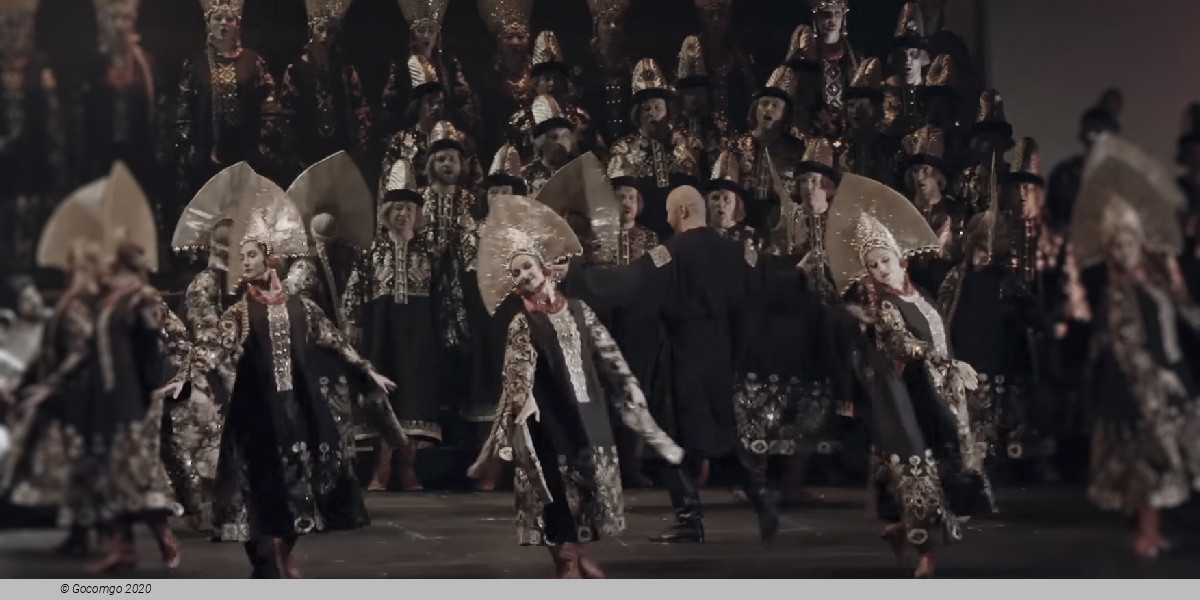
The guests arrive. Among them is Malyuta Skuratov with oprichniks, Lykov, who has just returned to Russia, and Bomelius. After Lykov tells them of German lands Malyuta calls Lyubasha, his god-daughter and Gryaznoy ‘s concubine, whom he had stolen from her own home, and asks her to sing a song, ‘a plangent one that touches to the heart’. Lyubasha gratifies his request; oprichniks thanks for the song and depart.
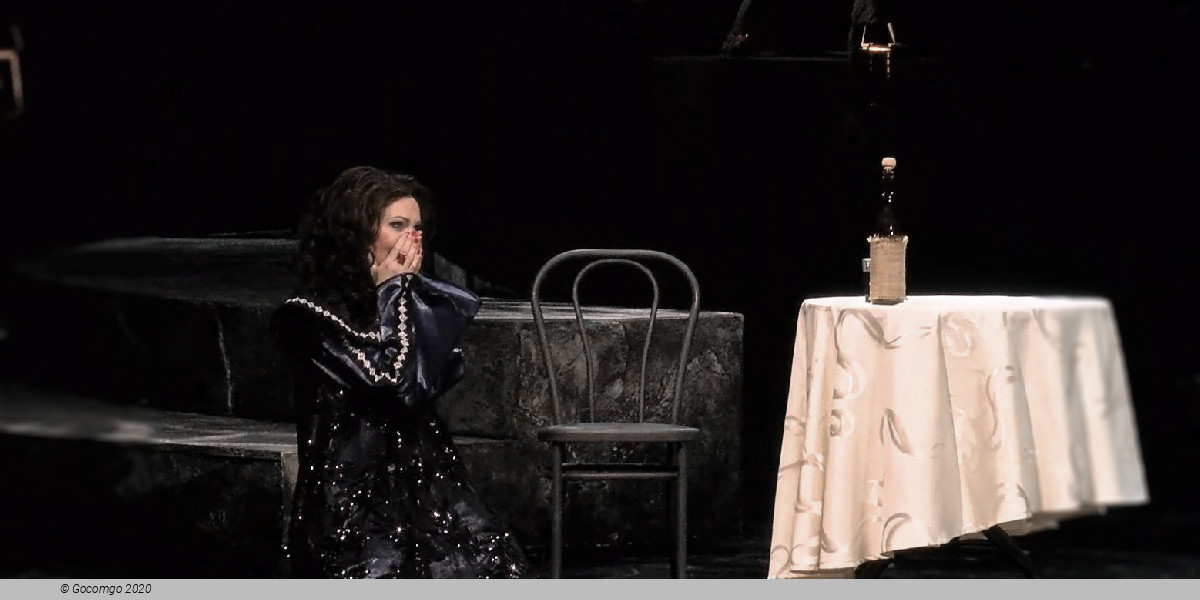
Only Bomelius stays, and Gryaznoy asks him to get a love potion and promises to reward him justly. Lyubasha hears their conversation. After Bomelius has gone, Lyubasha declares her passionate love to Grigory. She has sacrificed her family, honour and shame for him. But in vain: Grigory says he has fallen out of love with her. Lyubasha seethes with hatred towards her rival. She won’t give in and vows cruel vengeance against the villainess.

The Love Potion
The parishioners are coming out of the church after the evening service. They discuss the upcoming Tsar’s wedding: soon ‘the viewing of the bride’ will take place, where the Tsar will choose his future wife-to-be. Marfa stands talking with her friend Dunyasha about her betrothed, Ivan Lykov, who she knows from a boy. Their conversation is interrupted by the appearance of Ivan the Terrible. Marfa is seized with dismay.
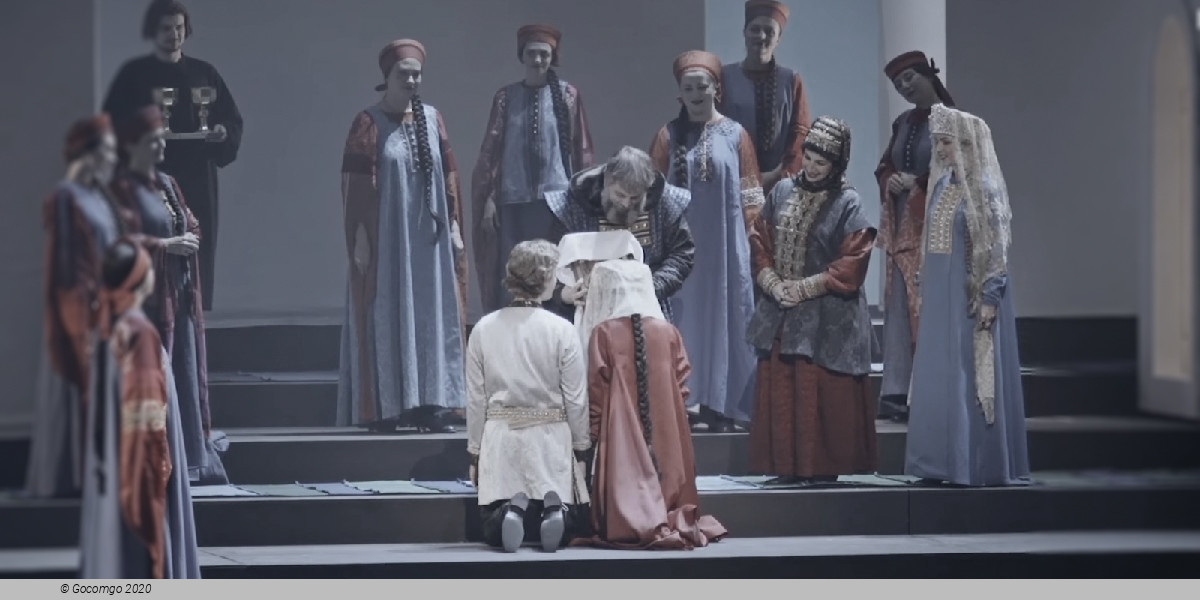
Sobakin and Lykov appear, Lykov greets his bride with a bow. Sobakin invites everybody into the house and the girls follow them in. Dusk is falling. Lyubasha is circling round the Sobakin house. She has found the rival’s house and wants to have a look at her. Lyubasha mistakes Dunyasha for Marfa and calms down: this girl stands no competition for her. But when Lyubasha notices Marfa, she understands: Grigory won’t fall out of love with such a beauty.
Lyubasha decides to ruin her rival, while she will replace the love potion ordered by Gryaznoy with poison. Bomelius agrees, but under threats and promises demands Lyubasha’s love in return. Poor Lyubasha goes for the shameful deal.

Act 2
The Best Man
Wedding preparations at the Sobakin house are underway. The merchant tells Gryaznoy and Lykov that the wedding was supposed to have been celebrated long before, but it was interrupted by the Tsar’s ‘viewing of the bride’ that has gathered the most beautiful girls at the palace. From the two thousand only twelve are left, among them are Marfa and Dunyasha. This alarms both Lykov and Gryaznoy: what should be undertaken, if the Tsar likes Marfa after all?

Girls return together with Domna Saburova, Dunyasha’s mother. She tells the guests that the Tsar liked her daughter. Everybody sighs with relief and congratulates Marfa and Lykov. Sobakin blesses the young couple. Gryaznoy surreptitiously pours the potion into Marfa’s goblet and, as the Best Man, serves the guests.

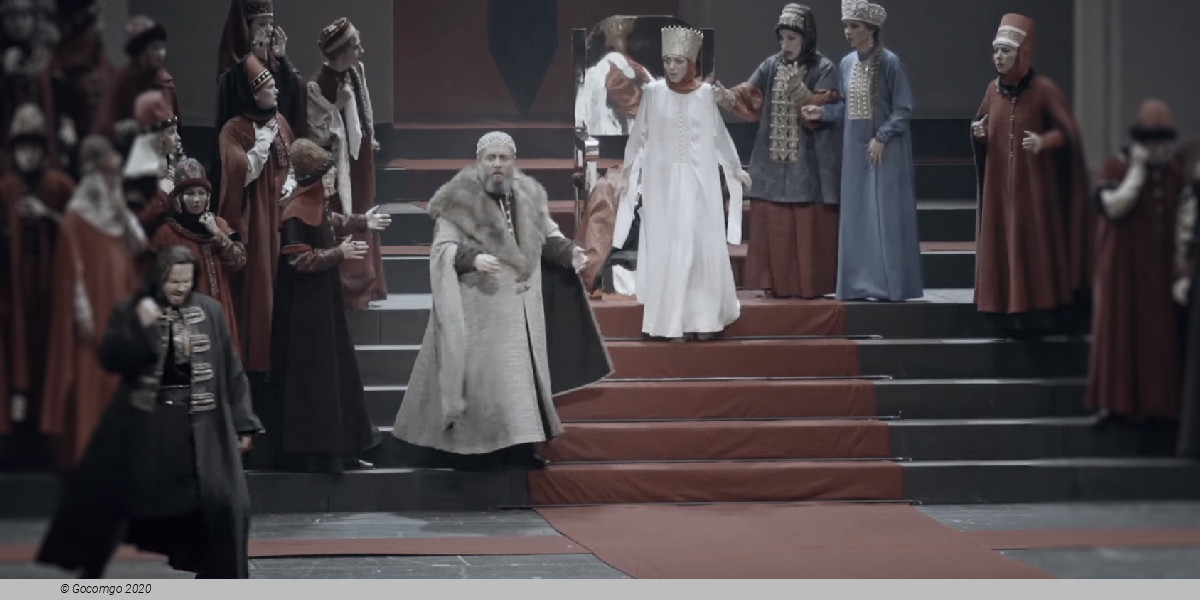
Suddenly appears Malyuta with the boyars and proclaims the Tsar’s will: Marfa is to be his wife.

The Bride
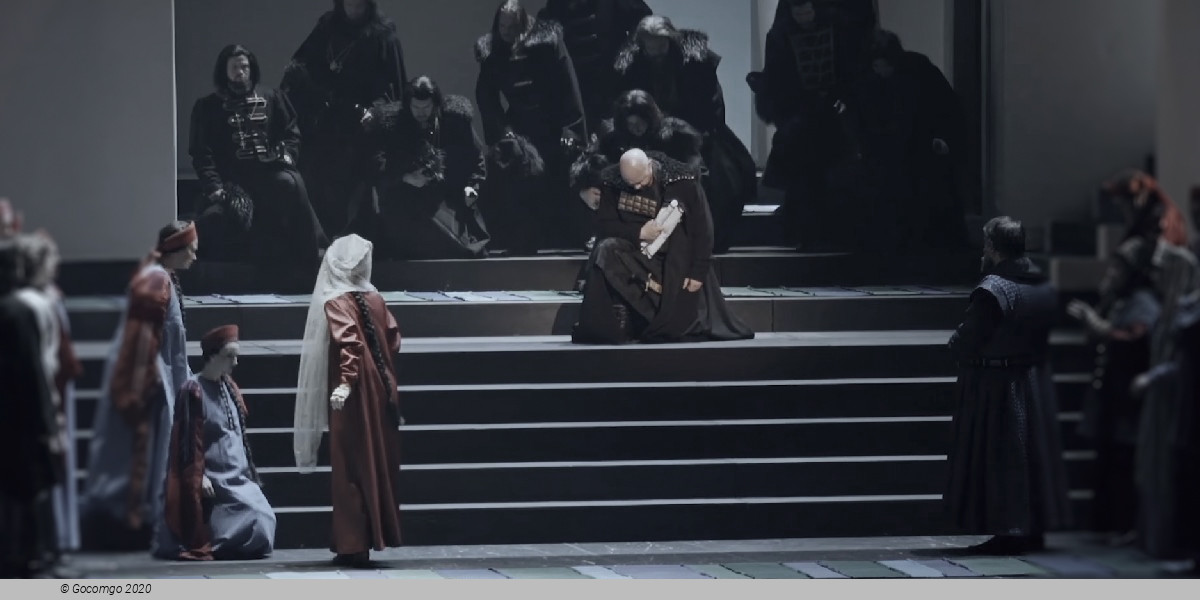
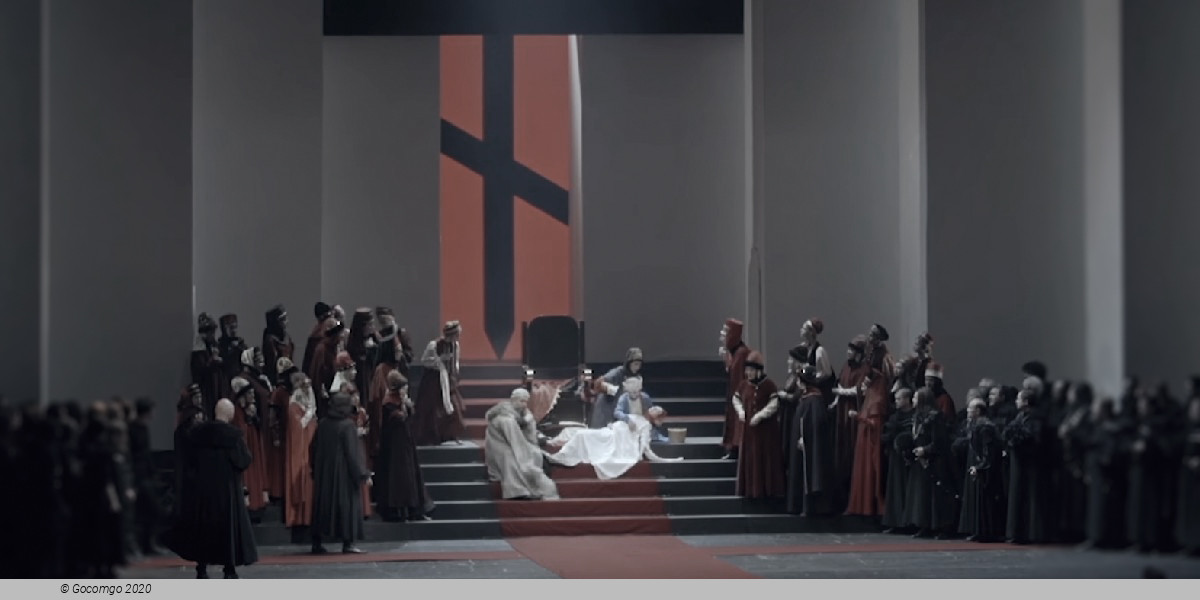
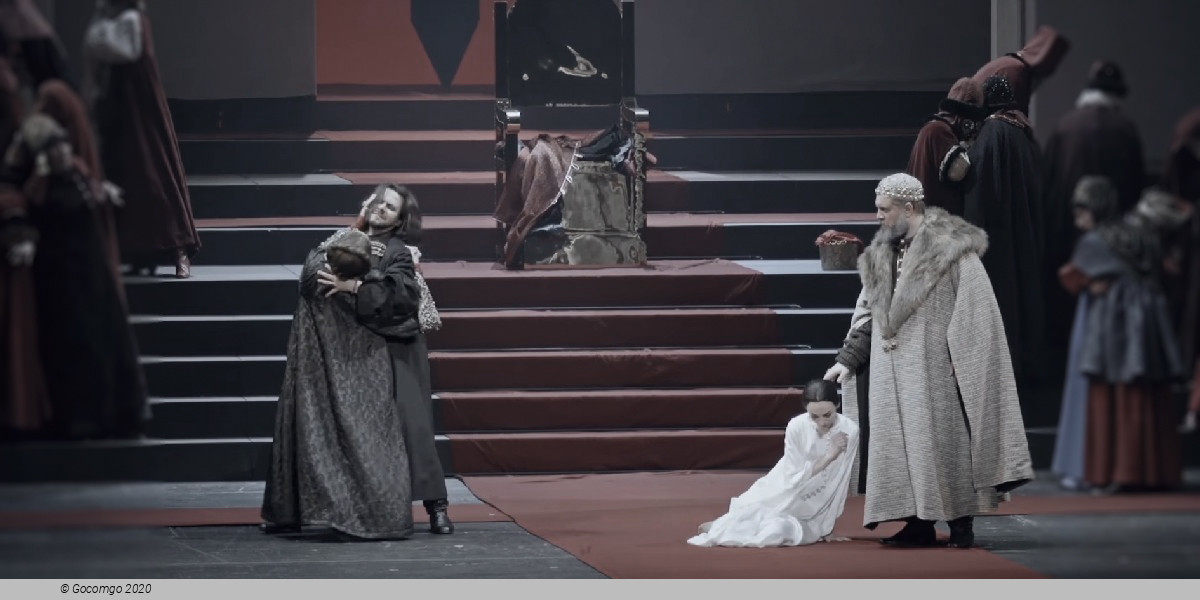
Sobakin is deeply grieved by Marfa’s illness that nobody can cure. Gryaznoy appears and announces the Tsar’s sentence: Bomelius attempts to cure Marfa, and the evil-doer Lykov had confessed to giving Marfa poison and was executed by Grigory himself. Marfa is broken down with grief. Mistaking Gryaznoy for her Vania, she tells him of her wonderful dream. Gryaznoy is horrified by Marfa’s madness: his darling is still in love with Ivan, instead of bewitching he killed her. Unable to endure the anguish of mind, Gryaznoy admits that he had slandered Lykov and that he was the one who gave Marfa the love potion.
Lyubasha follows him and confesses that it was she, who had substituted the love potion for poison. In anger Grigory kills her. He is ready to suffer any torment. Gryaznoy casts the final glance at Marfa. ‘Come tomorrow, Vania!’ are her last words.

Time: Autumn, 1572

Place: Aleksandrovsky settlement, Moscow, Russia

Act 1: The Feast

The Oprichnik Gryaznoi loves Marfa, daughter of the merchant Sobakin, even though Gryaznoi already has a mistress, Lyubasha, whom he has neglected of late. Marfa is already beloved of the boyar Lykov. In a jealous rage against Lykov, Gryaznoi arranges to cast a spell on Marfa with a magic potion from Bomelius, the Tsar's physician. Lyubasha has overheard Gryaznoi's request.

Act 2: The Love Philtre

Lyubasha in turn obtains from Bomelius another magic potion with which to cancel any feelings of Gryaznoi for Marfa. Bomelius consents, but at the price of an assignation with Lyubasha for himself.

Act 3: The Best Man

In the meantime, the Tsar of the title, Ivan IV (known as "Ivan the Terrible"), is looking for a new bride from the best aristocratic maidens in Russia. The Tsar settles upon Marfa. At the celebration of the engagement of Marfa to Lykov, everyone is surprised when the news arrives of the Tsar's choice of Marfa as his bride. Gryaznoi had slipped what he thought was the love potion from Bomelius into Marfa's drink at the feast.

Act 4: The Bride

At the Tsar's palace, Marfa has become violently ill. Lykov has been executed, at the instigation of Gryaznoi, on charges of attempting to kill Marfa. When Marfa learns that Lykov is dead, she goes insane. Eventually, Gryaznoi admits that he had slipped a potion into her drink, and after learning that it was poisonous, asks that he himself be executed. Lyubasha then confesses that she had substituted her potion from Bomelius for Gryaznoi's. In a rage, Gryaznoi murders Lyubasha, and is then taken to prison eventually to be executed. In her madness, Marfa mistakes Gryaznoi for Lykov, inviting him to return the next day to visit her, then dies.

Venue Info

Belarus National Bolshoi Opera and Ballet Theater - Minsk
Location   Paryžskaj Kamuny Square, 1

The National Academic Grand Opera and Ballet Theatre of the Republic of Belarus is located in a park in the Trinity Hill district of Minsk. Local people call it the "Opierny Teatr" (Belarusian) or the "Opera and Ballet Theatre." While the theatre opened on 15 May 1933, in the beginning, it did not have its own performance venue. Until 1938, the troupe performed at the Belarusian Drama Theatre building.

The first permanent theatre was founded in Belarus in 1933 based on the Belarusian Opera and ballet school; the founder of the studio was a famous Russian Opera singer Anton Bonachich (Belarusian: Anton Bonatschitsch). Shortly after, Bonachich died in 1933.

The current theatre's building was opened in 1939. It was designed by the Belarusian architect from Leningrad, Iosif Langbard, whose original design was only partially implemented; some design details were omitted for financial reasons. The theatre has reliefs done by Zair Azgur.

Bizet's Carmen opened the theatre on 25 May 1933 with the title role being sung by Larisa Aleksandrovskaya. Several professional soloists and dancers were added to the troupe in the first few years at this location. Swan Lake, performed by K. Muller, was the first show on the stage of the new theatre. By 1940, Grand was added to the theatre's name to indicate its expansion. The performances by the theatre company during the "Decade of Belarusian Art" in Moscow in June 1940 was a great success which included the first Belarusian ballet, The Nightingale composed by Mikhail Kroshner, as well as other national operas such as "In the Dense Forest of Palesse", "The Flower of Fortune", and the second version of "Mikhas Podgorny". Performances continued during the war in Nizhny Novgorod, then known as Gorky until the liberation of Minsk in 1944; after that performances took place in Kovrov.

Enrichment of post World War 2 repertoire and expansion

During this time the repertoire was greatly enriched. The most famous operas staged in this theatre include Boris Godunov by Modest Mussorgsky, Otello and Don Carlo by Giuseppe Verdi, Jacques Offenbach's The Tales of HoffmannSadko and The Golden Cockerel by Nikolai Rimsky-Korsakov, and Lohengrin by Richard Wagner. Socialist realist operas by Belarusian composers such as Yuri Semenyako, Yevgeny Glebov (Your Spring, 1963) and Heinrich Wagner were included.

Among the most notable composers has been Kulikovich Shcheglov, who like some of the writers went into exile after the war. Others include Yevgeny Glebov, composer of the opera Your Spring (1963) and the ballet Alpine Ballad (1967), ..." In 1967, the theatre was awarded the title of Academic for its status in the progression of the performing arts.

In 1996 the State Theater was divided into two independent theatres: the National Academic Grand Ballet Theatre of the Republic of Belarus and the National Academic Opera Theatre of Belarus, but in 2008 they once again combined to become the present name, National Academic Grand Opera and Ballet Theatre of the Republic of Belarus.

The building was renovated and it reopened in 2009. Many sculptures were added around the theatre, its stage was slightly moved and audience space expanded. The most up-to-date lighting and motion equipment were added while adhering to the original design. The ballet company is considered one of the foremost companies in the world.

The theatre today

Works by Belarus composers in the company's repertoire today include Dmitry Smolsky's The Grey Legend (Russian "Седая легенда" 1978).

The troupe tours internationally. Fans from Spain, Russia, Germany, Poland, Switzerland, Israel, Portugal, and China are well acquainted with the repertoire of the Belarusian theatre. National Opera and Ballet of Belarus performs annually at the German festival "Classic Open Air."

Important Info
Type: Opera
City: Minsk, Belarus
Starts at: 19:00
Acts: 2
Intervals: 1
Duration: 2h 40min
Sung in: Russian
Titles in: Russian,English
Top of page