Act I
Scene 1
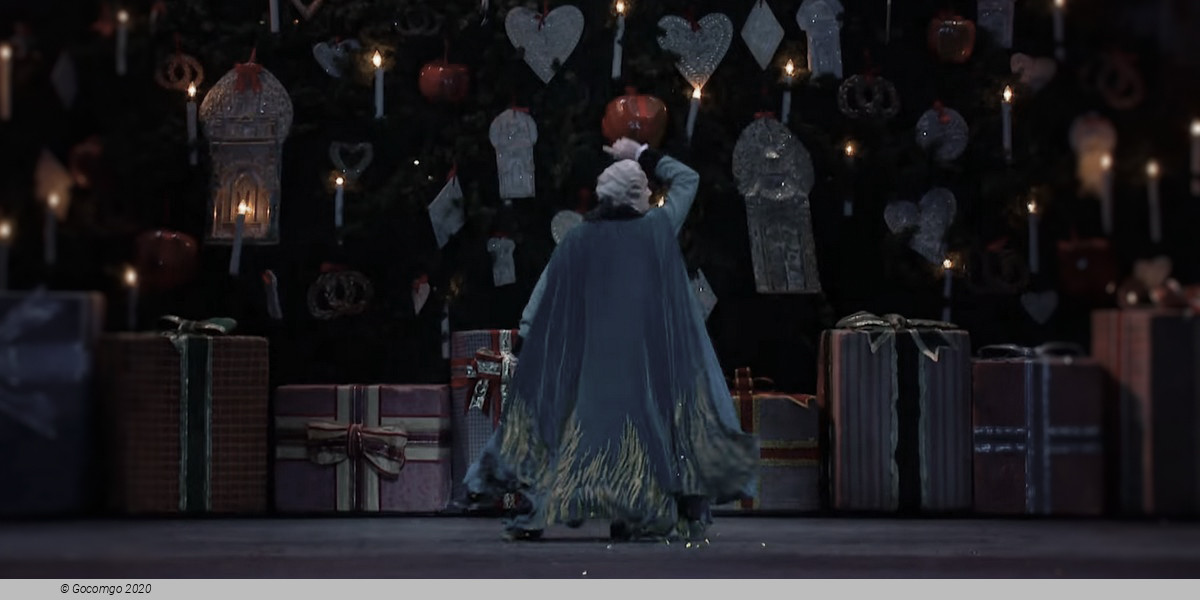
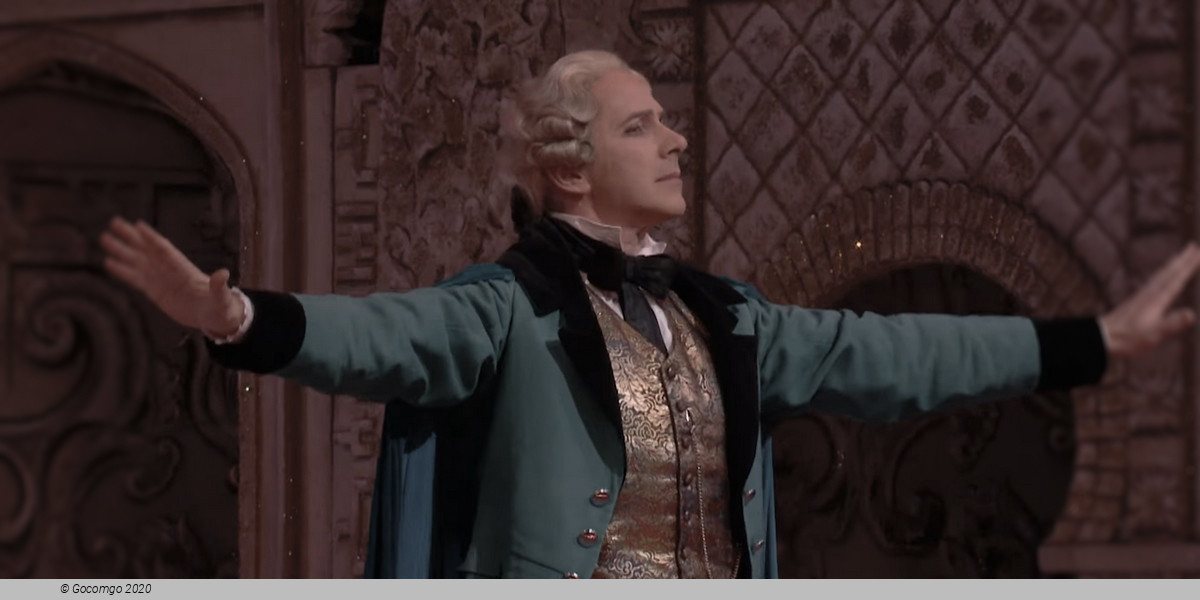
It is a quiet Christmas Eve. Drosselmeyer, a doll master, is busy preparing presents for his goddaughter, Masha, whom he has invited for the Christmas party.
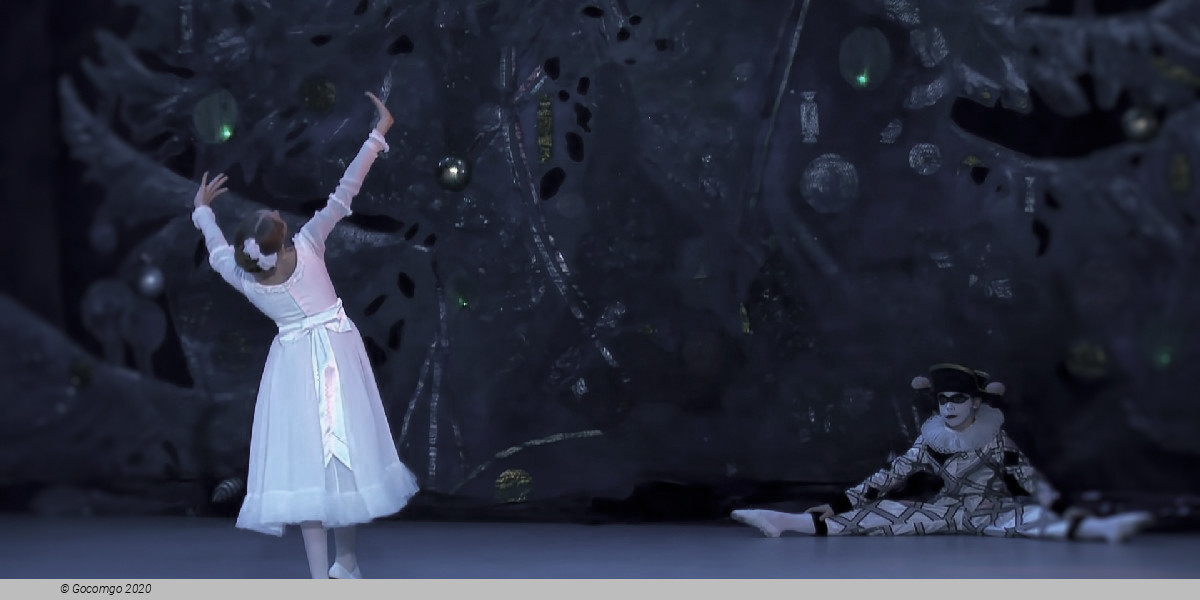
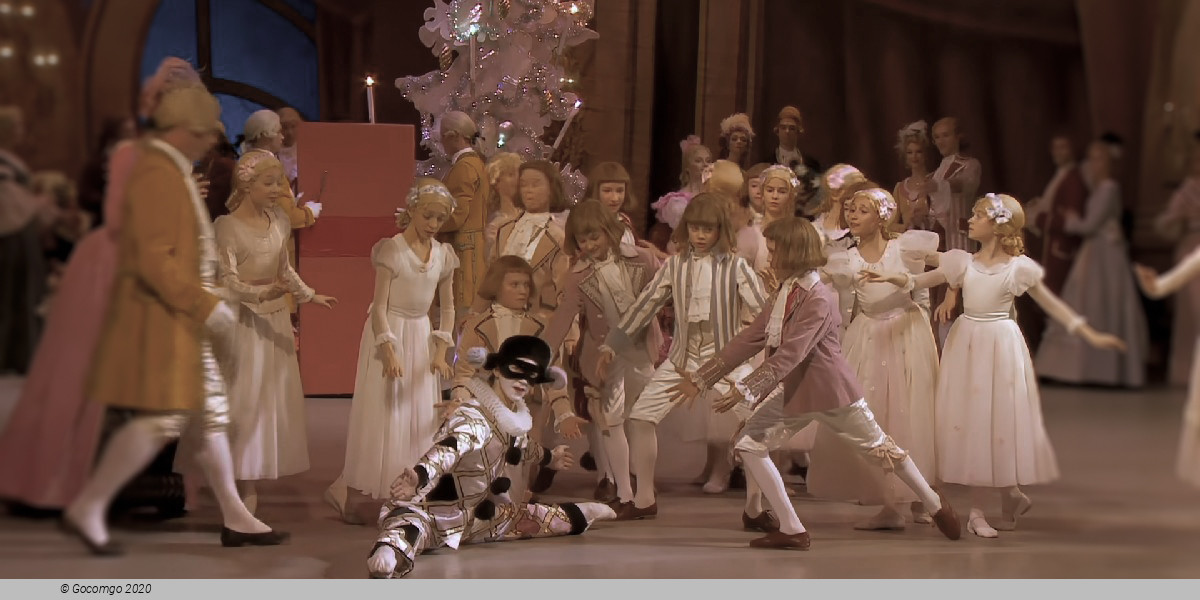
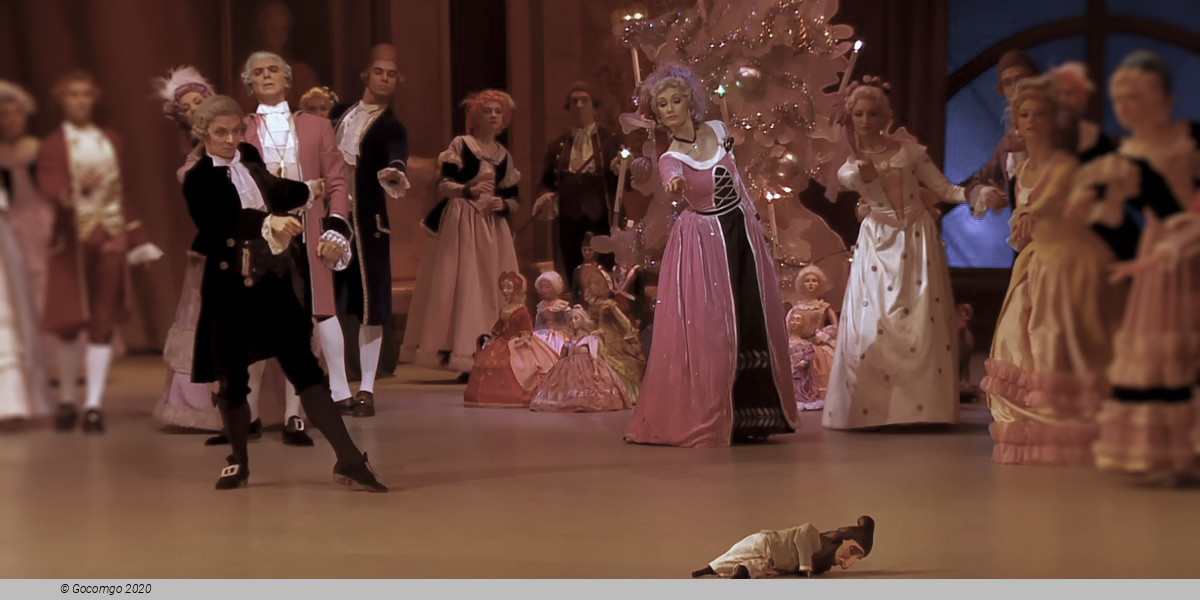
Masha admires a marvellous Christmas tree, multiple wondrous toys, including Russian, Japanese, French, Spanish, Persian dolls, animated by a single movement of Drosselmeyer’s hand. The presentation of dolls is followed by their merry dances. Drosselmeyer has prepared a most exciting surprise for the girl; it’s three unusual dolls: a funny awkward wooden Nutcracker doll, a charming Princess doll, and his favourite one, a Mouse with a crown on its head. The Doll Master, proud and happy with his best creations, ask Masha to choose a doll for her. To Drosselmeyer’s disappointment, she chooses the Nutcracker.
Masha plays with the Nutcracker, but all of a sudden the doll falls, something has happened to the mechanism, it doesn’t work. Drosselmeyer urges her to choose another doll for her, but she is adamant. Drosselmeyer repairs the Nutcracker reluctantly and roughly and goes away, bearing in mind to check Masha’s love for the Nutcracker.
Masha admires the Nutcracker; it seems to her that it is not a doll, but a human being with a kind and deeply feeling heart. Masha is happy.
Drosselmeyer reappears to open the great ball of mechanical dolls. Masha and the Nutcracker are very glad to dance together with the dolls, made by the creative and inventive Doll Master.
But it is rather late. Drosselmeyer stops the dancing and puts Masha to bed. The Nutcracker is by Masha’s bed. The girl falls asleep and Drosselmeyer puts the dolls in order since they will participate in Masha’s dream.
Scene 2
It is midnight. Masha sees an unusual dream.
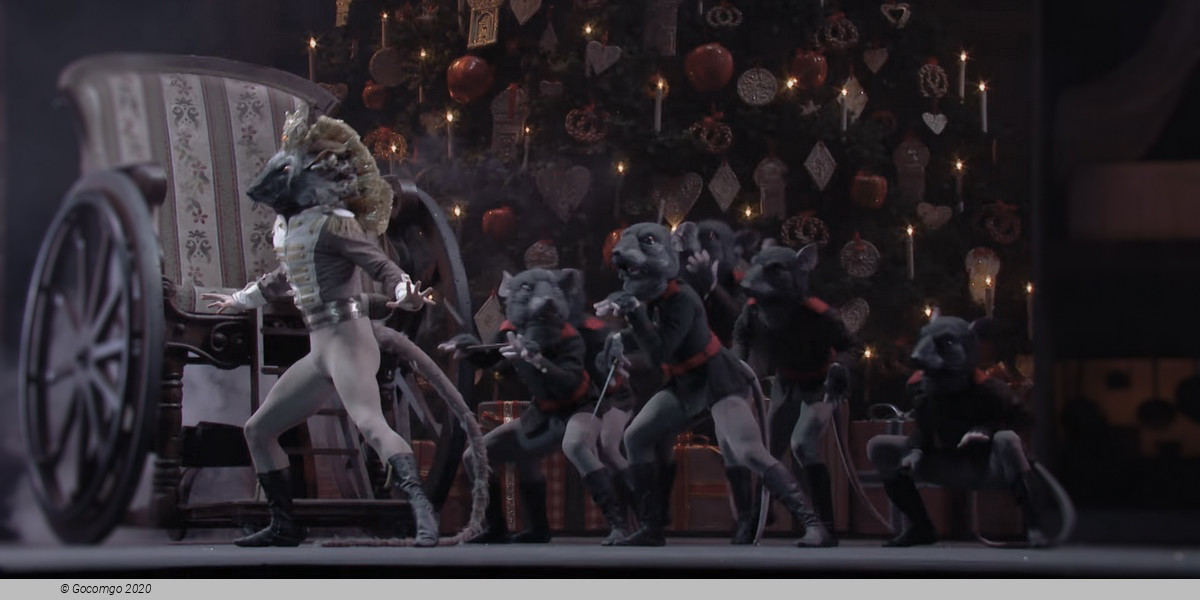
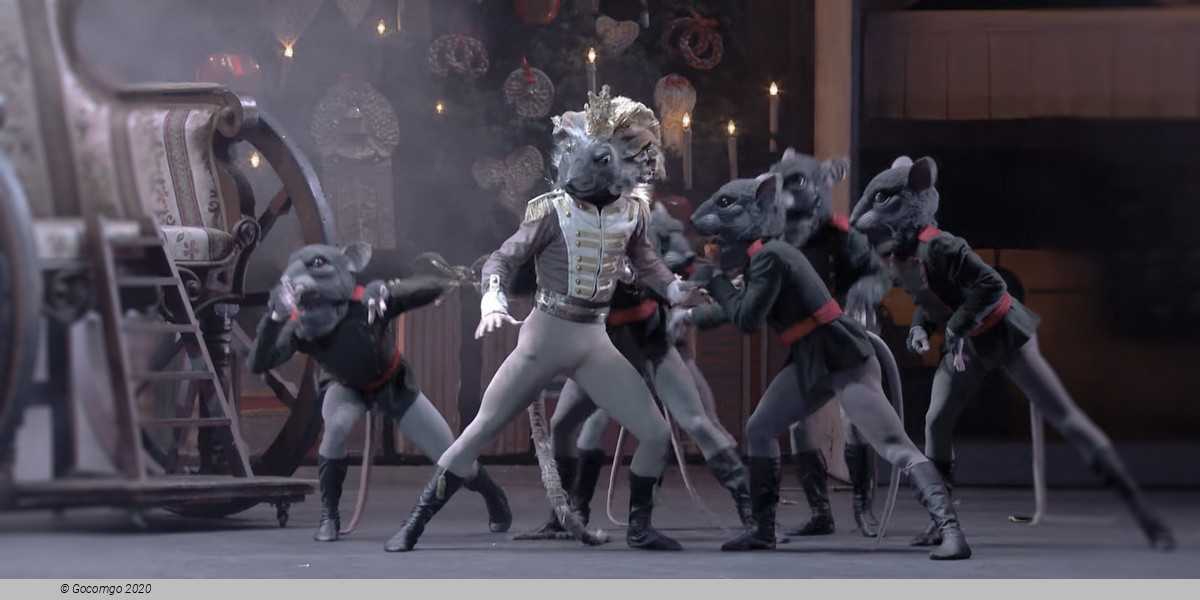
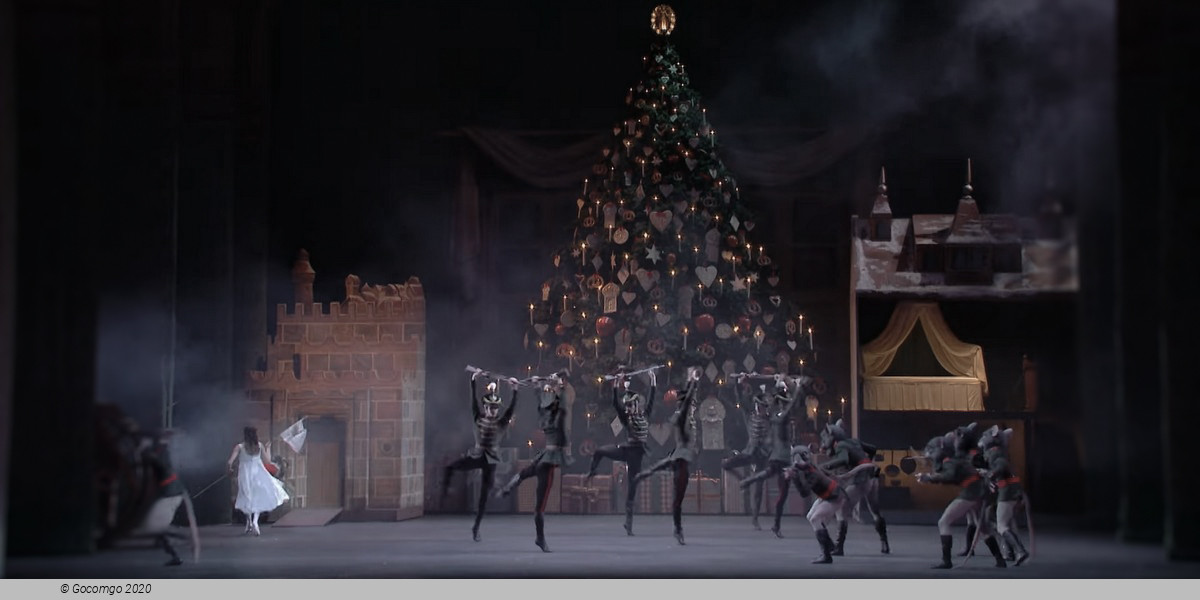
The room is full of mice. There are more and more of them coming. They are creeping towards the Nutcracker. The Mouse King, the leader of the mice army, looks exactly like Drosselmeyer. Feeling the danger, Masha warns the Nutcracker and calls her doll friends for help.
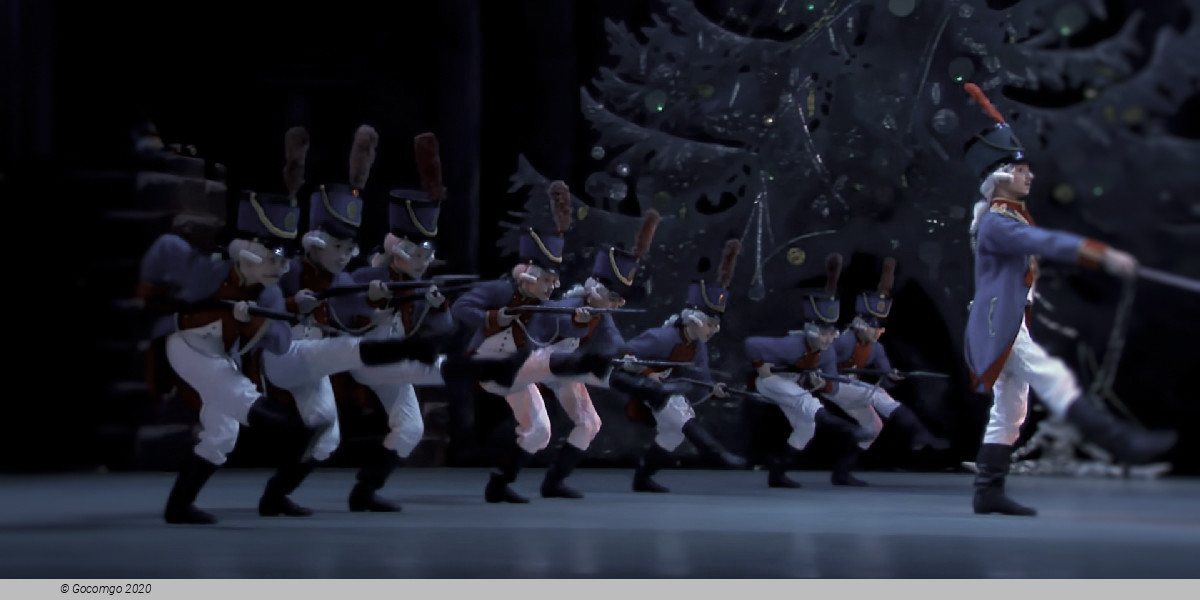
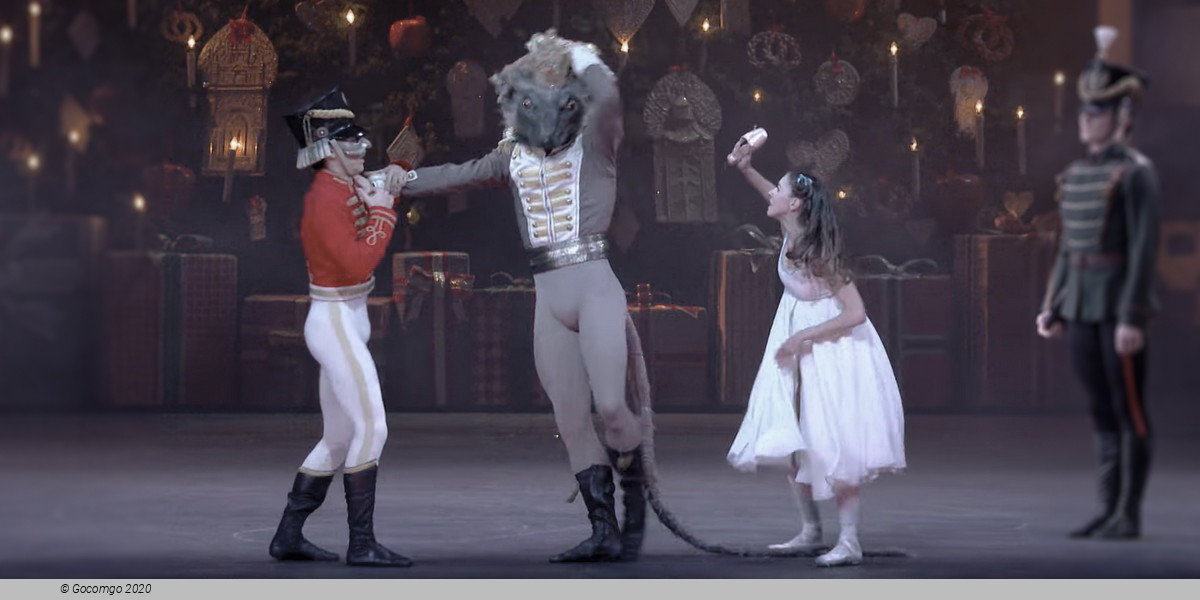
The battle between the dolls and the mice army begins. The brave Nutcracker leads the dolls. He fearlessly enters into single combat with the Mouse King, but their forces are unequal. In the mortal combat, the fate of the bold Nutcracker, who has become so dear to Masha, is being decided. Masha overcomes her fear and rushes to defend him; she throws the Nutcracker’s sabre at the Mouse King. The Mouse King is defeated. The mice run away in horror. The awkward wooden Nutcracker becomes a handsome Prince, and Masha becomes a charming Princess.
Scene 3
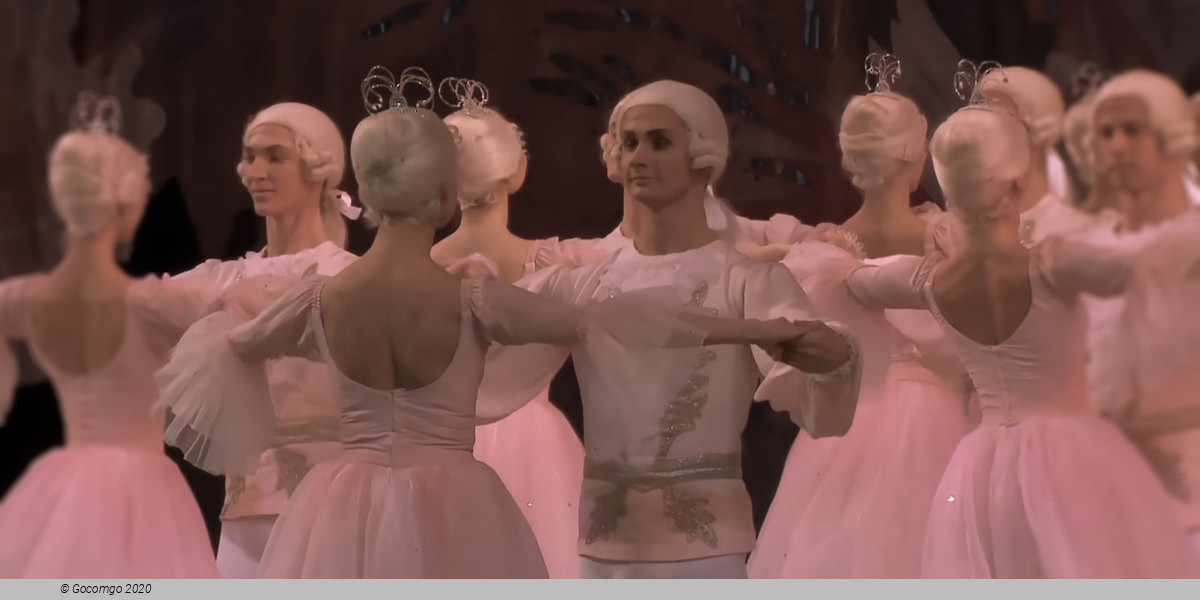
Love triumphs. Masha, the Prince and their friends, the dolls that have come to life, dance in the company of nice snowflakes. The snowflakes take the friends on an amazing journey where new challenges await them.
Act II
In the rays of sunlight, the snowflakes become beautiful flowers. The ambience of the country of childhood is jolly and festive. The journey goes on. But the evil is not totally suppressed. The Mouse King follows the friends, overshadowing their journey. In the last battle of the Nutcracker Prince and the Mouse King, the vanquished King tears off his mask – and what a surprise! Everybody sees the kind and generous Doll Master smiling.
The Prince and Masha have passed the trial, in which their love has grown stronger.
Drosselmeyer invites everybody for the Christmas ball, where Masha and the Prince will be engaged.
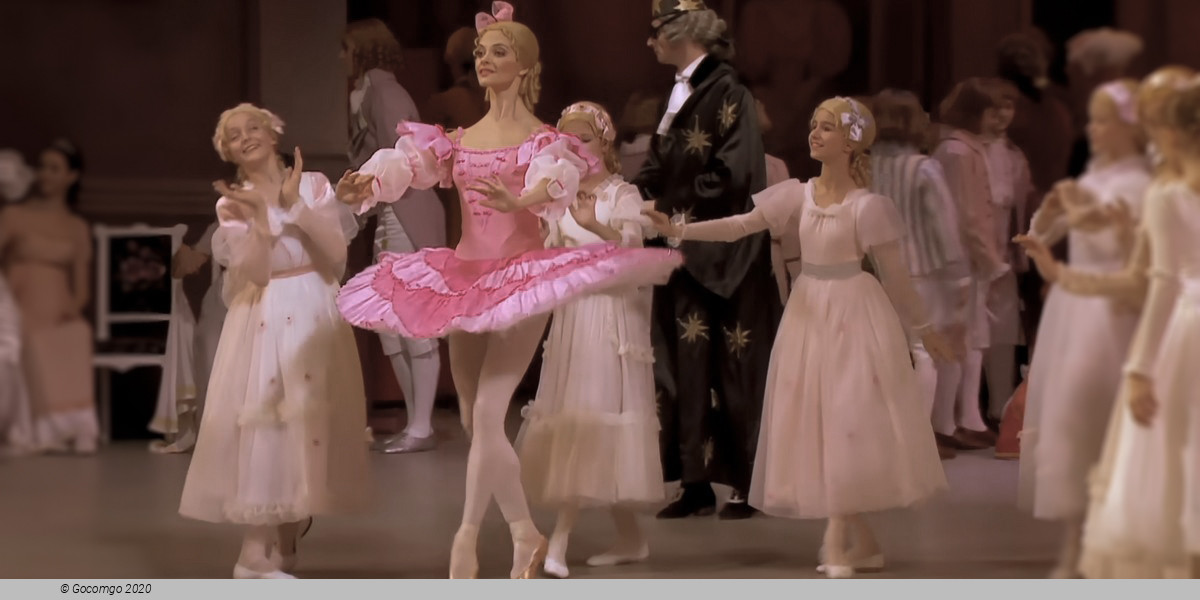
The celebration begins. Drosselmeyer’s dolls congratulate the loving couple. The merrymaking is in full swing.
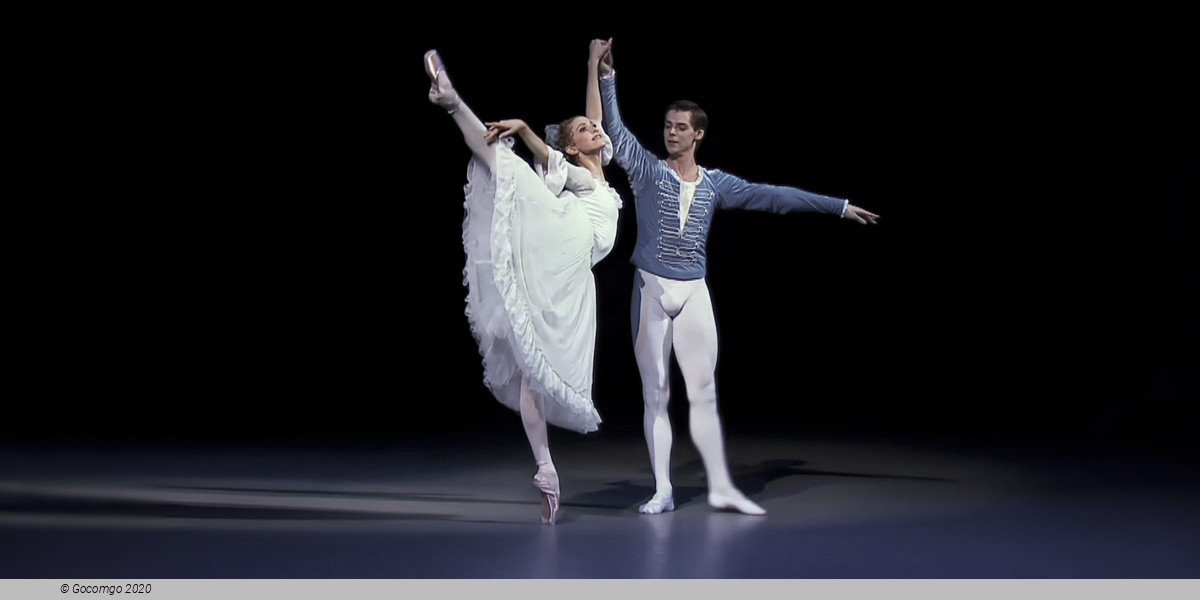
A solemn moment comes: Drosselmeyer joins Masha’s and the Prince’s hands. Their happiness is endless.
***
What a pity that it is a mere dream! Masha wakes up and sees Drosselmeyer’s kind face. He gives her the smiling Nutcracker.
Plot
Below is a synopsis based on the original 1892 libretto by Marius Petipa. The story varies from production to production, though most follow the basic outline. The names of the characters also vary. In the original E. T. A. Hoffmann story, the young heroine is called Marie Stahlbaum and Clara (Klärchen) is her doll's name. In the adaptation by Dumas on which Petipa based his libretto, her name is Marie Silberhaus. In still other productions, such as Baryshnikov's, Clara is Clara Stahlbaum rather than Clara Silberhaus.
Act I
Scene 1: The Stahlbaum Home
It is Christmas Eve. Family and friends have gathered in the parlor to decorate the beautiful Christmas tree in preparation for the party. Once the tree is finished, the children are sent for. They stand in awe of the tree sparkling with candles and decorations.
The party begins. A march is played. Presents are given out to the children. Suddenly, as the owl-topped grandmother clock strikes eight, a mysterious figure enters the room. It is Drosselmeyer, a local councilman, magician, and Clara's godfather. He is also a talented toymaker who has brought with him gifts for the children, including four lifelike dolls who dance to the delight of all. He then has them put away for safekeeping.
Clara and Fritz are sad to see the dolls being taken away, but Drosselmeyer has yet another toy for them: a wooden nutcracker carved in the shape of a little man. The other children ignore it, but Clara immediately takes a liking to it. Fritz, however, breaks it, and Clara is heartbroken.
During the night, after everyone else has gone to bed, Clara returns to the parlor to check on her beloved nutcracker. As she reaches the little bed, the clock strikes midnight and she looks up to see Drosselmeyer perched atop it. Suddenly, mice begin to fill the room and the Christmas tree begins to grow to dizzying heights. The nutcracker also grows to life size. Clara finds herself in the midst of a battle between an army of gingerbread soldiers and the mice, led by their king. They begin to eat the soldiers.
The nutcracker appears to lead the soldiers, who are joined by tin soldiers, and by dolls who serve as doctors to carry away the wounded. As the Mouse King advances on the still-wounded nutcracker, Clara throws her slipper at him, distracting him long enough for the nutcracker to stab him.
Scene 2: A Pine Forest
The mice retreat and the nutcracker is transformed into a handsome Prince. He leads Clara through the moonlit night to a pine forest in which the snowflakes dance around them, beckoning them on to his kingdom as the first act ends.
Act II
Scene 1: The Land of Sweets
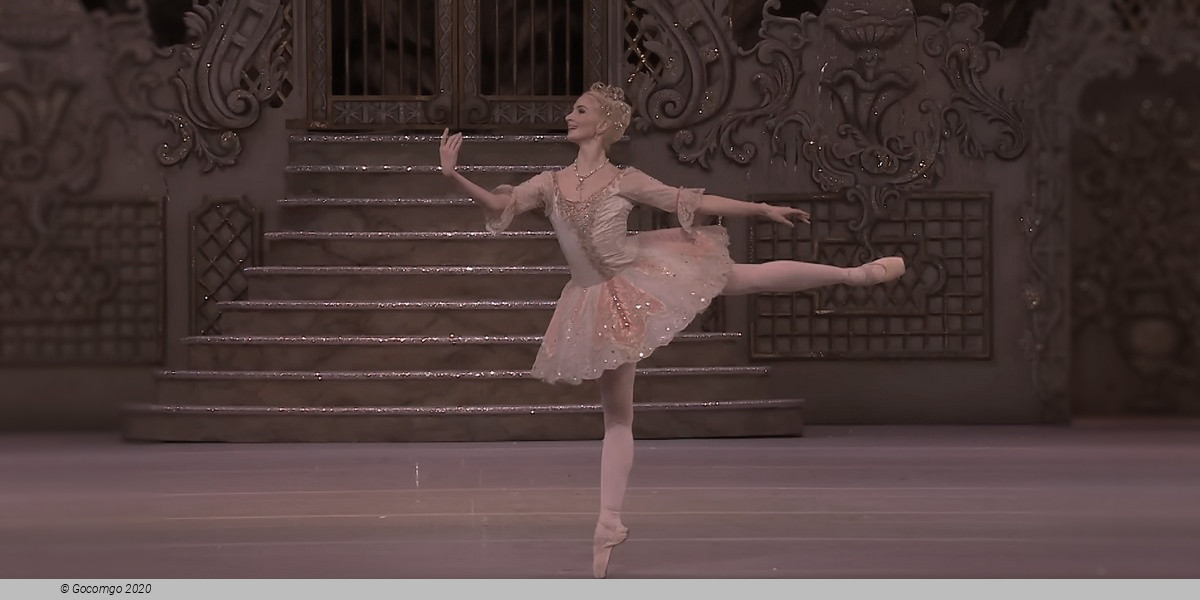
Clara and the Prince travel to the beautiful Land of Sweets, ruled by the Sugar Plum Fairy in the Prince's place until his return. He recounts for her how he had been saved from the Mouse King by Clara and transformed back into himself. In honor of the young heroine, a celebration of sweets from around the world is produced: chocolate from Spain, coffee from Arabia, tea from China, and candy canes from Russia all dance for their amusement; Danish shepherdesses perform on their flutes; Mother Ginger has her children, the Polichinelles, emerge from under her enormous hoop skirt to dance; a string of beautiful flowers perform a waltz. To conclude the night, the Sugar Plum Fairy and her Cavalier perform a dance.
A final waltz is performed by all the sweets, after which the Sugar Plum Fairy ushers Clara and the Prince down from their throne. He bows to her, she kisses Clara goodbye, and leads them to a reindeer drawn sleigh. It takes off as they wave goodbye to all the subjects who wave back.
In the original libretto, the ballet's apotheosis "represents a large beehive with flying bees, closely guarding their riches". Just like Swan Lake, there have been various alternative endings created in productions subsequent to the original.











 Paryžskaj Kamuny Square, 1