ACT I
Scene 1
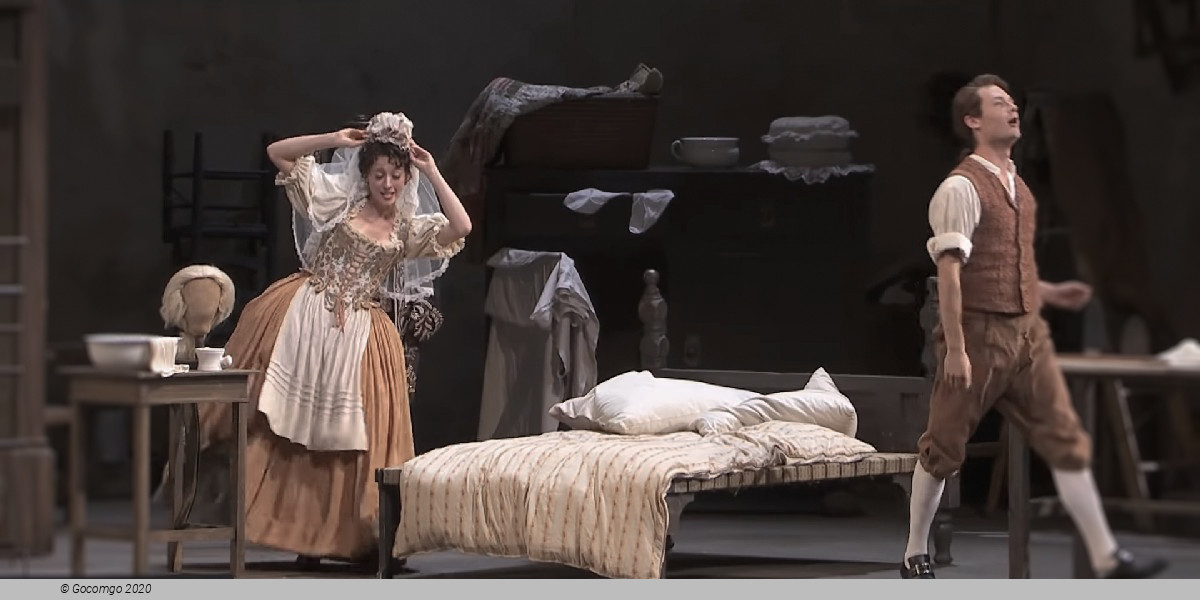
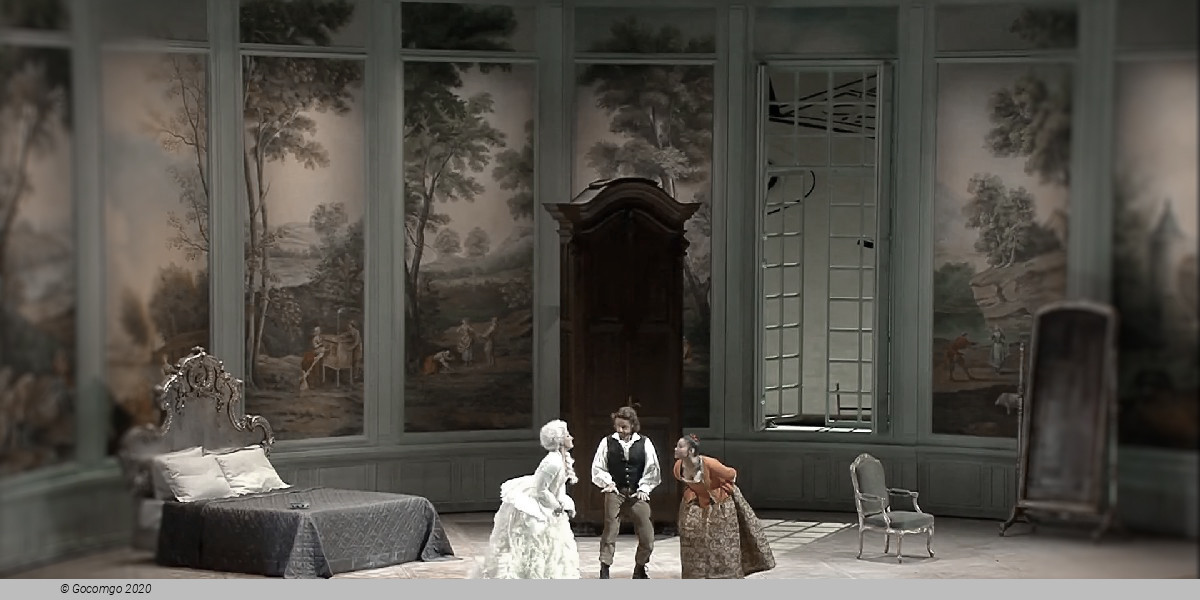
A frenetic day in Count and Countess Almaviva’s estate starts with preparations for the wedding of the masters’ servants: valet Figaro and maid Susanna. Figaro learns from his bride that the Count intends to seduce her. Figaro gets furious and swears to foil the seducer’s plans.
Marcellina and Dr Bartolo plot to prevent Figaro’s wedding too. Marcellina, who herself is in love with Figaro, wants him to honour his promise in the note-of-hand and threatens to take legal action against Figaro: to either make him repay his debt to her or to marry her.
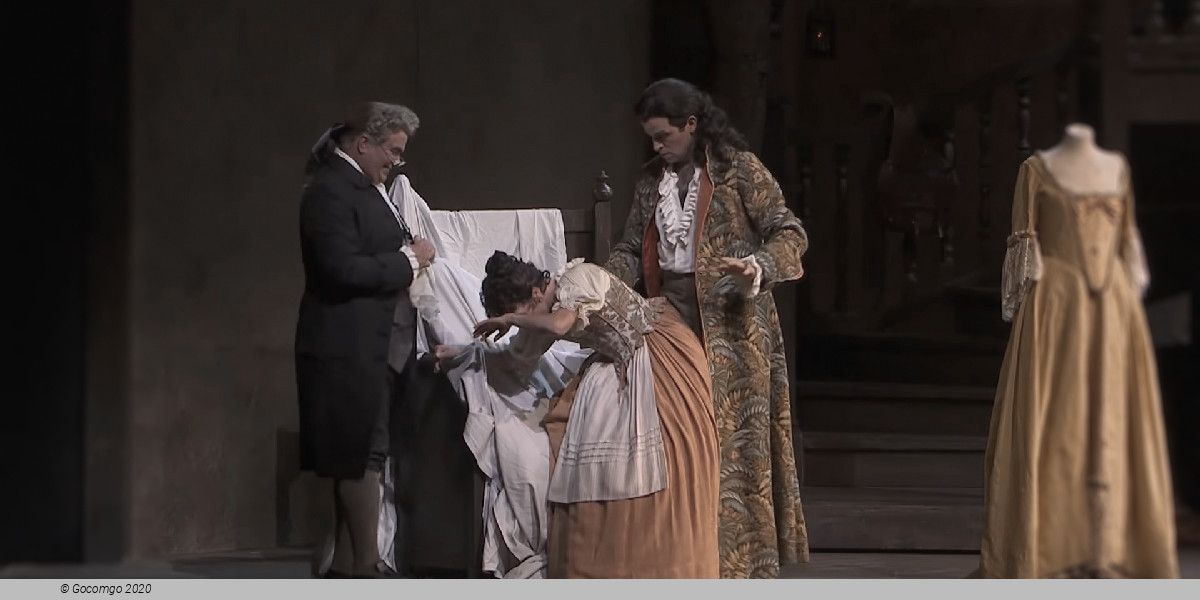
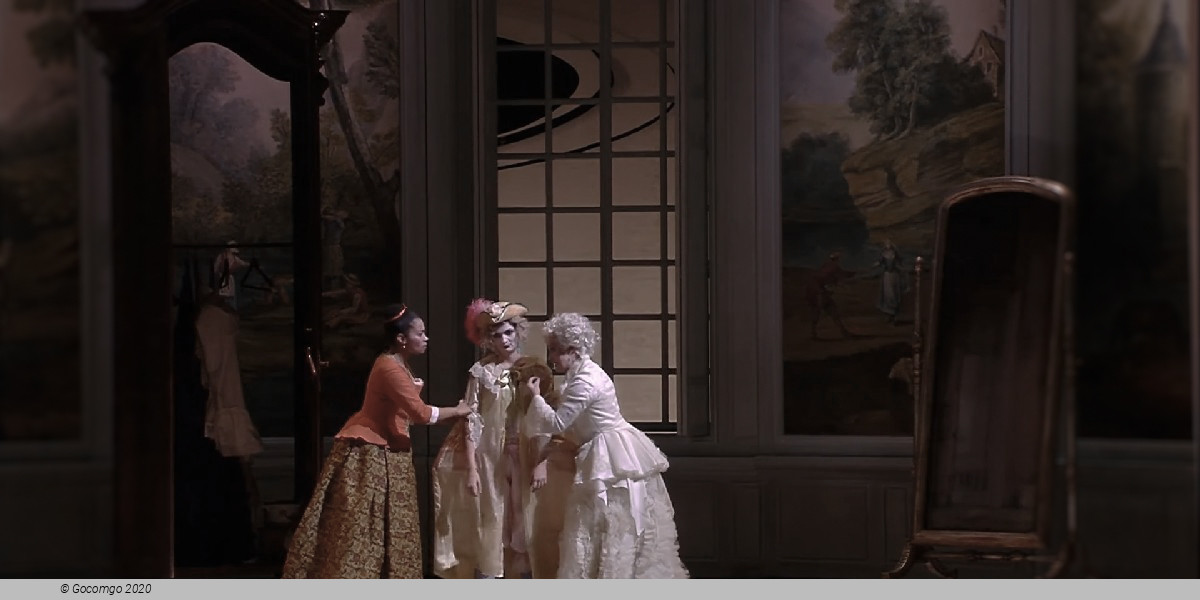
Marcellina runs into Susanna and a sarcastic altercation ensues. In her room Susanna meets the young page, Cherubino, who declares his love to her and reveals his misfortune — the Count has just driven Cherubino away after the page was found with the gardener Antonio’s daughter, Barbarina. Their conversation is suddenly interrupted by the Count’s arrival. Terrified, Cherubino is quick to hide. The Count once again tries to seduce Susanna. Basilio, the music teacher who is an intriguer and gossip by nature, suddenly enters the room. He tries to take the romance written by Cherubino for the Countess away from Susanna. Full of jealousy, the Count bursts out of his hiding and, discovering Cherubino, becomes even more enraged realizing that the page has overheard his conversation with Susanna.
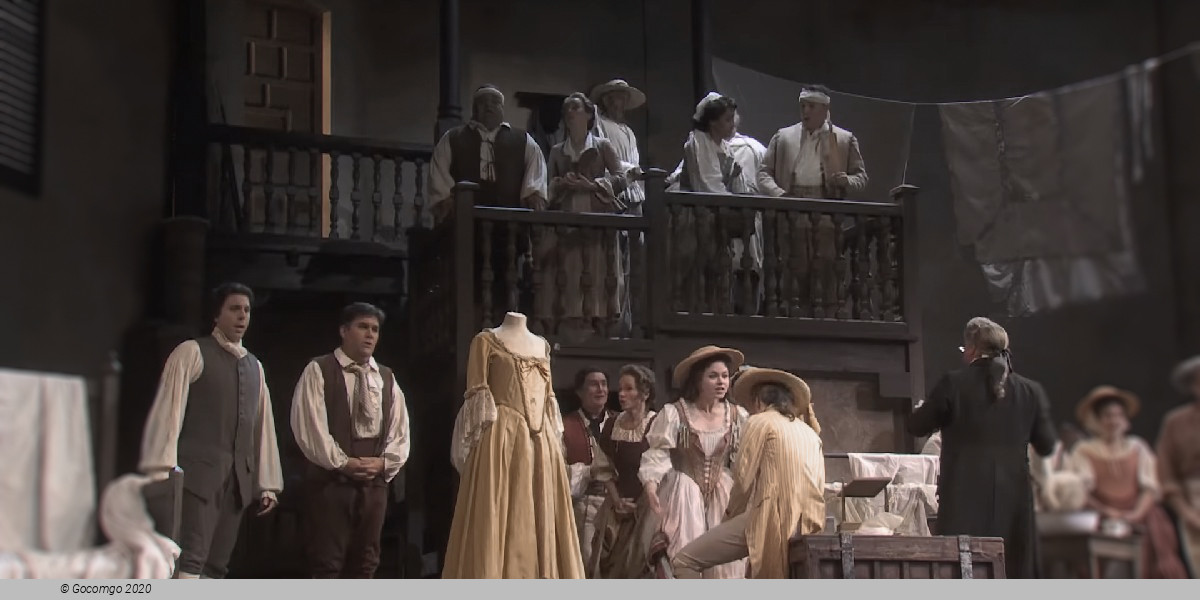
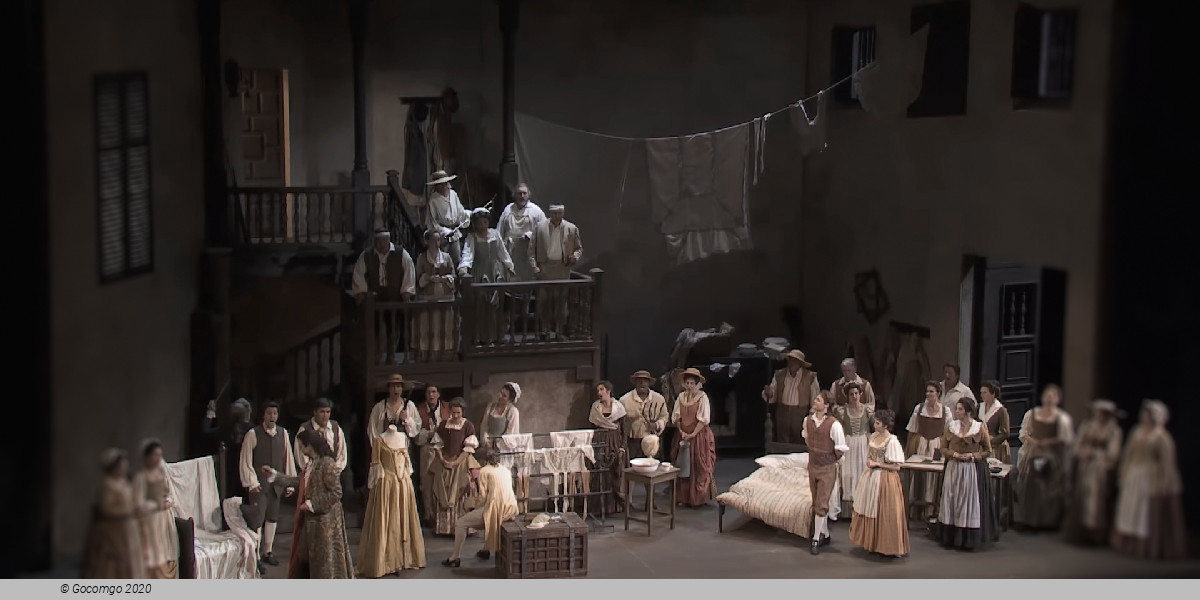
The servants and peasants led by Figaro are going to give thanks and praise to the Count welcoming the abolition of his own order for the jus primae noctis. Almaviva hypocritically asks to postpone the wedding and orders Cherubino to join the army without delay.
Scene 2
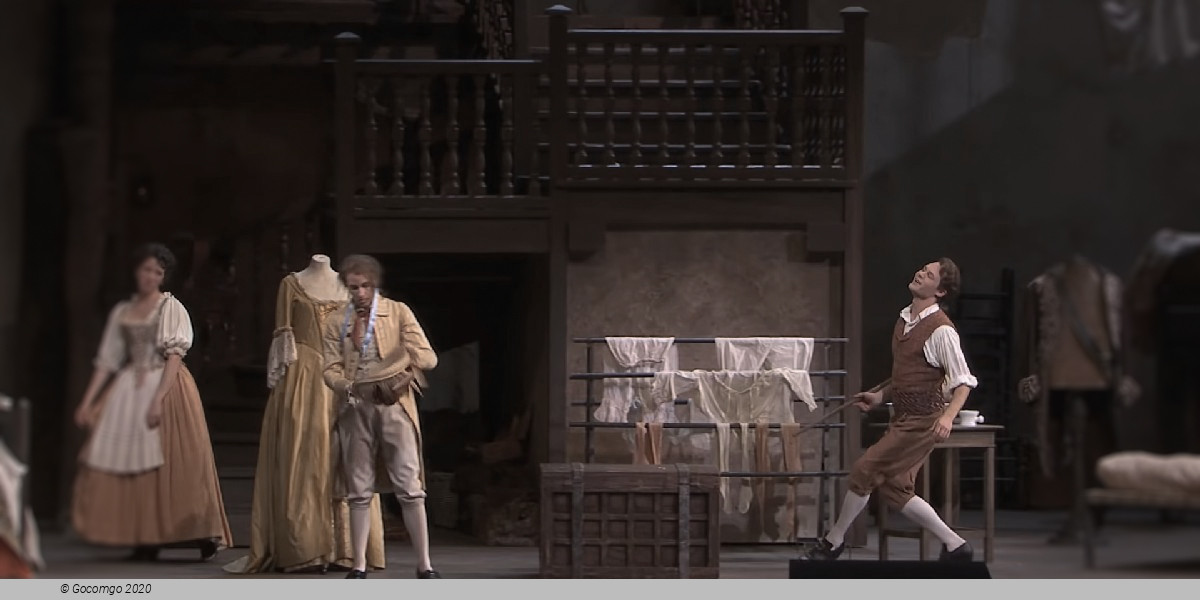
The Countess agonizes over her husband’s indifference and infidelity. Together with Figaro and Susanna, she decides to teach the Count a lesson — the maid is to promise the Count a rendezvous, but instead of Susanna, they will send Cherubino disguised as a woman. The Count’s unexpected arrival confuses the women. The Countess hides Cherubino in an adjoining room. Full of jealous suspicions, the Count demands to unlock the door, but after the Countess’s firm rejection he leaves with his wife in search of tools to force the locked door open. Susanna lets terrified Cherubino out, helps him escape through the window and takes his place.
When the Count and Countess return, both are astonished to find Susanna locked inside the room. The Count has to repent and ask his wife for forgiveness. Figaro turns up to invite all of them to the marriage feast. At that moment Antonio, the gardener, arrives with a broken flowerpot. He complains that someone jumped out of the window and trampled his flowers. The hopeless situation is once again saved by the ever-resourceful Figaro who takes the blame upon himself to the Count’s great dislike.
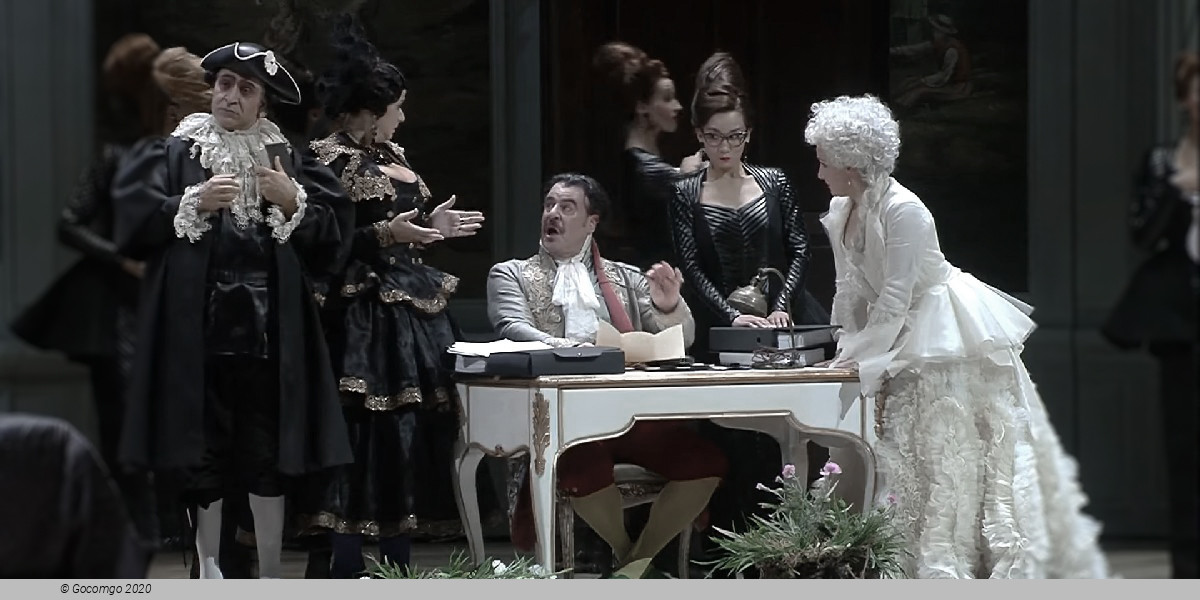
Everything is ready for the wedding, but suddenly Bartolo, Marcellina and Basilio arrive. They bring charges against Figaro and the delighted Count declares that the wedding will be postponed.
ACT II
Scene 1
Susanna gives a false promise to see the Count later that night. The Count is out of his mind with fear until he overhears Susanna telling her bridegroom that he has already won the case. Beside himself with rage, Count Almaviva threatens to take vengeance.
The Countess dreams to win her husband’s love back and decides to participate in the in¬trigue: she will dress up in Susanna’s clothes and meet with him instead of her later that night. Judge Don Curzio supported Marcellina’s claim. The Count is about to celebrate his victory, but suddenly Figaro turns out to be Marcellina and Bartolo’s illegitimate son, abducted as a baby. The happy parents decide to throw two concurrent wedding parties — theirs and their regained son’s.
The Countess dictates a love letter to Susanna which should be handed over to the Count by Barbarina during the feast. Young peasants, the disguised Cherubino among them, arrive. The gardener exposes the young page out. The Count is furious to discover that Cherubino has disobeyed him. Barbarina, quite untimely, reminds the Count of his promise to fulfil any of her wishes, asking Almaviva to make Cherubino marry her. The Count is forced to agree.
Scene 2
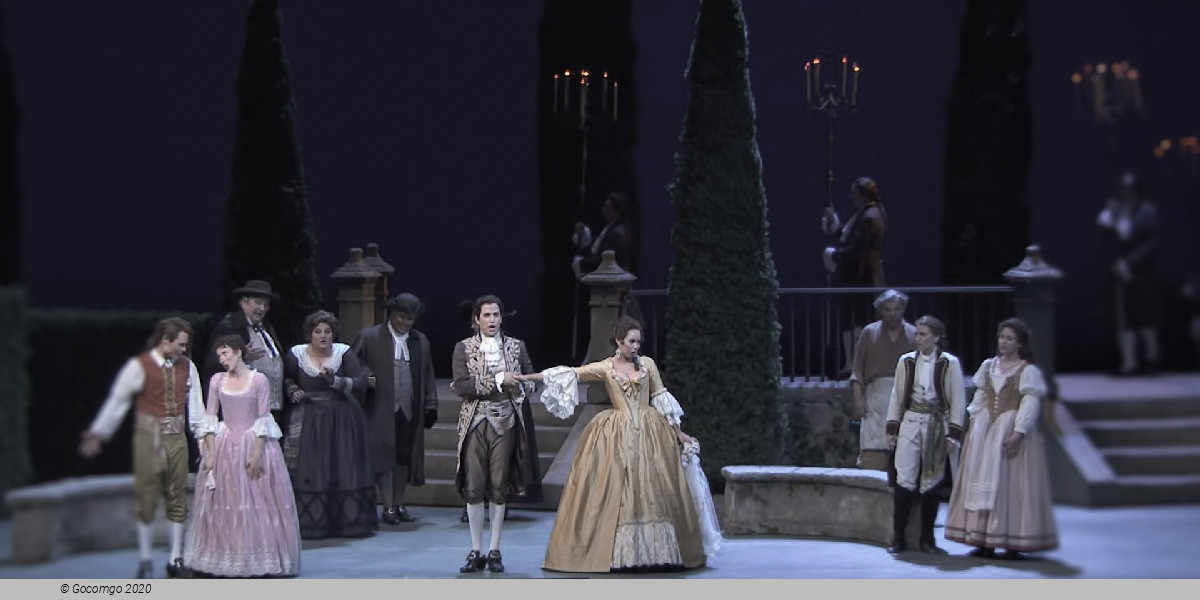
Figaro laughs at his master who pricks his finger on the pin that sealed the love note which was passed to him by Barbarina. Imagine his surprise at seeing the crying Barbarina who has lost the pin. The pin happens to be a sign of the Count’s agreement for the rendezvous with Susanna. Stricken by deception, Figaro rants against all women and decides to set a trap for his bride and master to catch them red-handed. Susanna and the Countess arrive, dressed in each other’s clothes. After the Count’s staggering confessions, Figaro’s vengeful expectations, Susanna’s jealous suspicions, and lots of other misunderstandings, everything is sorted out. The astonished Count recognizes his spouse, disguised as Susanna, and seeks her forgiveness for the second time in a day. Everything ends in a merry celebration of the three weddings: of Figaro and Susanna, Bartolo and Marcellina, young Cherubino and Barbarina.
The play is set at the castle of Aguas Frescas, three leagues from Seville.
Act I
The play begins in a room in the Count's castle—the bedroom to be shared by Figaro and Suzanne after their wedding, which is set to occur later that day. Suzanne reveals to Figaro her suspicion that the Count gave them this particular room because it is so close to his own, and that the Count has been pressing her to begin an affair with him. Figaro at once goes to work trying to find a solution to this problem. Then Dr. Bartholo and Marceline pass through, discussing a lawsuit they are to file against Figaro, who owes Marceline a good deal of money and has promised to marry her if he fails to repay the sum; his marriage to Suzanne will potentially void the contract. Bartholo relishes the news that Rosine is unhappy in her marriage, and they discuss the expectation that the Count will take Figaro's side in the lawsuit if Suzanne should submit to his advances. Marceline herself is in love with Figaro, and hopes to discourage Suzanne from this.
After a brief confrontation between Marceline and Suzanne, a young pageboy named Chérubin comes to tell Suzanne that he has been dismissed for being caught hiding in the bedroom of Fanchette. The conversation is interrupted by the entrance of the Count, and since Suzanne and Chérubin do not want to be caught alone in a bedroom together, Chérubin hides behind an armchair. When the Count enters, he propositions Suzanne (who continues to refuse to sleep with him). They are then interrupted by Bazile's entrance. Again, not wanting to be found in a bedroom with Suzanne, the Count hides behind the armchair. Chérubin is forced to throw himself on top of the armchair so the Count will not find him, and Suzanne covers him with a dress so Bazile cannot see him. Bazile stands in the doorway and begins to tell Suzanne all the latest gossip. When he mentions a rumour that there is a relationship between the Countess and Chérubin, the Count becomes outraged and stands up, revealing himself. The Count justifies his firing Chérubin to Bazile and the horrified Suzanne (now worried that Bazile will believe that she and the Count are having an affair). The Count re-enacts finding Chérubin behind the door in Fanchette's room by lifting the dress covering Chérubin, accidentally uncovering Chérubin's hiding spot for the second time. The Count is afraid that Chérubin will reveal the earlier conversation in which he was propositioning Suzanne, and so decides to send him away at once as a soldier. Figaro then enters with the Countess, who is still oblivious to her husband's plans. A troupe of wedding guests enters with him, intending to begin the wedding ceremony immediately. The Count is able to persuade them to hold it back a few more hours, giving himself more time to enact his plans.
Act II
The scene is the Countess's bedroom. Suzanne has just broken the news of the Count's action to the Countess, who is distraught. Figaro enters and tells them that he has set in motion a new plan to distract the Count from his intentions toward Suzanne by starting a false rumour that the Countess is having an affair and that her lover will appear at the wedding; this, he hopes, will motivate the Count to let the wedding go ahead. Suzanne and the Countess have doubts about the effectiveness of the plot; they decide to tell the Count that Suzanne has agreed to his proposal, and then to embarrass him by sending out Chérubin dressed in Suzanne's gown to meet him. They stop Chérubin from leaving and begin to dress him, but just when Suzanne steps out of the room, the Count comes in. Chérubin hides, half dressed, in the adjoining dressing room while the Count grows increasingly suspicious, especially after having just heard Figaro's rumour of the Countess's affair. He leaves to get tools to break open the dressing room door, giving Chérubin enough time to escape through the window and Suzanne time to take his place in the dressing room; when the Count opens the door, it appears that Suzanne was inside there all along. Just when it seems he calms down, the gardener Antonio runs in screaming that a half-dressed man just jumped from the Countess's window. The Count's fears are settled again once Figaro takes credit to being the jumper, claiming that he started the rumour of the Countess having an affair as a prank and that while he was waiting for Suzanne he became frightened of the Count's wrath, jumping out the window in terror. Just then Marceline, Bartholo and the judge Brid'oison come to inform Figaro that his trial is starting.
Act III
Figaro and the Count exchange a few words, until Suzanne, at the insistence of the Countess, goes to the Count and tells him that she has decided that she will begin an affair with him, and asks he meet her after the wedding. The Countess has actually promised to appear at the assignation in Suzanne's place. The Count is glad to hear that Suzanne has seemingly decided to go along with his advances, but his mood sours again once he hears her talking to Figaro and saying it was only done so they might win the case.
Court is then held, and after a few minor cases, Figaro's trial occurs. Much is made of the fact that Figaro has no middle or last name, and he explains that it is because he was kidnapped as a baby and doesn't know his real name. The Count rules in Marceline's favour, effectively forcing Figaro to marry her, when Marceline suddenly recognizes a birthmark (or scar or tattoo; the text is unclear) in the shape of a spatule (lobster) on Figaro's arm—he is her son, and Dr. Bartholo is his father. Just then Suzanne runs in with enough money to repay Marceline, given to her by the Countess. At this, the Count storms off in outrage.
Figaro is thrilled to have rediscovered his parents, but Suzanne's uncle, Antonio, insists that Suzanne cannot marry Figaro now, because he is illegitimate. Marceline and Bartholo are persuaded to marry in order to correct this problem.
Act IV
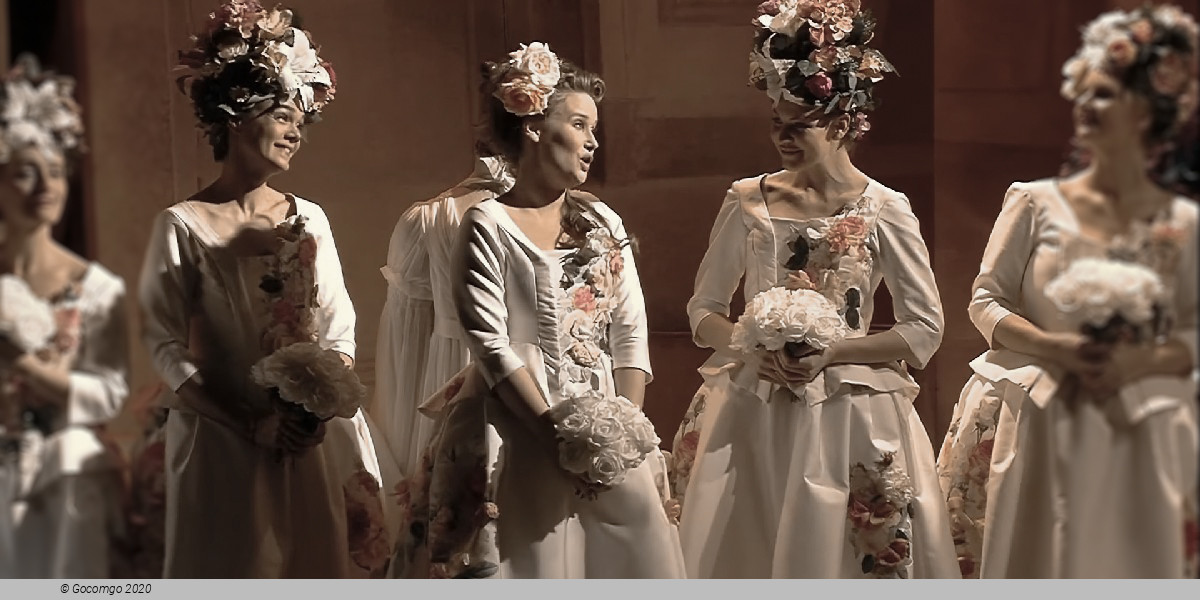
Figaro and Suzanne talk before the wedding, and Figaro tells Suzanne that if the Count still thinks she is going to meet him in the garden later, she should just let him stand there waiting all night. Suzanne promises, but the Countess grows upset when she hears this news, thinking that Suzanne is in the Count's pocket and is wishing she had kept their rendezvous a secret. As she leaves, Suzanne falls to her knees, and agrees to go through with the plan to trick the Count. Together they write a note to him entitled "A New Song on the Breeze" (a reference to the Countess's old habit of communicating with the Count through sheet music dropped from her window), which tells him that she will meet him under the chestnut trees. The Countess lends Suzanne a pin from her dress to seal the letter, but as she does so, the ribbon from Chérubin falls out of the top of her dress. At that moment, Fanchette enters with Chérubin disguised as a girl, a shepherdess, and girls from the town to give the Countess flowers. As thanks, the Countess kisses Chérubin on the forehead. Antonio and the Count enter—Antonio knows Chérubin is disguised because they dressed him at his daughter's (Fanchette's) house. The Countess admits to hiding Chérubin in her room earlier and the Count is about to punish him. Fanchette suddenly admits that she and the Count have been having an affair, and that, since he has promised he will give her anything she desires, he must not punish Chérubin but give him to her as a husband. Later, the wedding is interrupted by Bazile, who had wished to marry Marceline himself; but once he learns that Figaro is her son he is so horrified that he abandons his plans. Later, Figaro witnesses the Count opening the letter from Suzanne, but thinks nothing of it. After the ceremony, he notices Fanchette looking upset, and discovers that the cause is her having lost the pin that was used to seal the letter, which the Count had told her to give back to Suzanne. Figaro nearly faints at the news, believing Suzanne's secret communication means that she has been unfaithful and, restraining tears, he announces to Marceline that he is going to seek vengeance on both the Count and Suzanne.
Act V
In the castle gardens beneath a grove of chestnut trees, Figaro has called together a group of men and instructs them to call together everyone they can find: he intends to have them all walk in on the Count and Suzanne in flagrante delicto, humiliating the pair and also ensuring ease of obtaining a divorce. After a tirade against the aristocracy and the unhappy state of his life, Figaro hides nearby. The Countess and Suzanne then enter, each dressed in the other's clothes. They are aware that Figaro is watching, and Suzanne is upset that her husband would doubt her so much as to think she would ever really be unfaithful to him. Soon afterward the Count comes, and the disguised Countess goes off with him. Figaro is outraged, and goes to the woman he thinks is the Countess to complain; he realises that he is talking to his own wife Suzanne, who scolds him for his lack of confidence in her. Figaro agrees that he was being stupid, and they are quickly reconciled. Just then the Count comes out and sees what he thinks is his own wife kissing Figaro, and races to stop the scene. At this point, all the people who had been instructed to come on Figaro's orders arrive, and the real Countess reveals herself. The Count falls to his knees and begs her for forgiveness, which she grants. After all other loose ends are tied up, the cast breaks into song before the curtain falls.
Figaro's speech
One of the defining moments of the play—and Louis XVI's particular objection to the piece—is Figaro's long monologue in the fifth act, directly challenging the Count:
No, my lord Count, you shan't have her... you shall not have her! Just because you are a great nobleman, you think you are a great genius—Nobility, fortune, rank, position! How proud they make a man feel! What have you done to deserve such advantages? Put yourself to the trouble of being born—nothing more. For the rest—a very ordinary man! Whereas I, lost among the obscure crowd, have had to deploy more knowledge, more calculation and skill merely to survive than has sufficed to rule all the provinces of Spain for a century!
[...]
I throw myself full-force into the theatre. Alas, I might as well have put a stone round my neck! I fudge up a play about the manners of the Seraglio; a Spanish author, I imagined, could attack Mahomet without scruple; but immediately some envoy from goodness-knows-where complains that some of my lines offend the Sublime Porte, Persia, some part or other of the East Indies, the whole of Egypt, the kingdoms of Cyrenaica, Tripoli, Tunis, Algiers and Morocco. Behold my comedy scuppered to please a set of Mohammedan princes—not one of whom I believe can read—who habitually beat a tattoo on our shoulders to the tune of "Down with the Christian dogs!" Unable to break my spirit, they decided to take it out on my body. My cheeks grew hollowed: my time was out. I saw in the distance the approach of the fell sergeant, his quill stuck into his wig.
[...]
I'd tell him that stupidities acquire importance only in so far as their circulation is restricted, that unless there is liberty to criticize, praise has no value, and that only trivial minds are apprehensive of trivial scribbling






 Paryžskaj Kamuny Square, 1