








Belarus National Bolshoi Opera and Ballet Theater 16 June 2021 - Peer Gynt | GoComGo.com

Peer Gynt

Belarus National Bolshoi Opera and Ballet Theater, Minsk, Belarus
All photos (4)
Select date and time
7 PM
Request for Tickets
Important Info
Type: Ballet
City: Minsk, Belarus
Starts at: 19:00
Acts: 2
Intervals: 1
Duration: 2h

E-tickets: Print at home or at the box office of the event if so specified. You will find more information in your booking confirmation email.

You can only select the category, and not the exact seats.
If you order 2 or 3 tickets: your seats will be next to each other.
If you order 4 or more tickets: your seats will be next to each other, or, if this is not possible, we will provide a combination of groups of seats (at least in pairs, for example 2+2 or 2+3).

Overview

The performance uses the works of Edward Grieg:

"Peer Gynt", music to the drama by G. Ibsen, op. 23

"Olaf Trygvasson", fragments of the opera, op. fifty

Norwegian dances, op. 35 year

Symphonic dances, op. 64

Elegiac Melodies, op. 34

Lyric pieces, op. 68

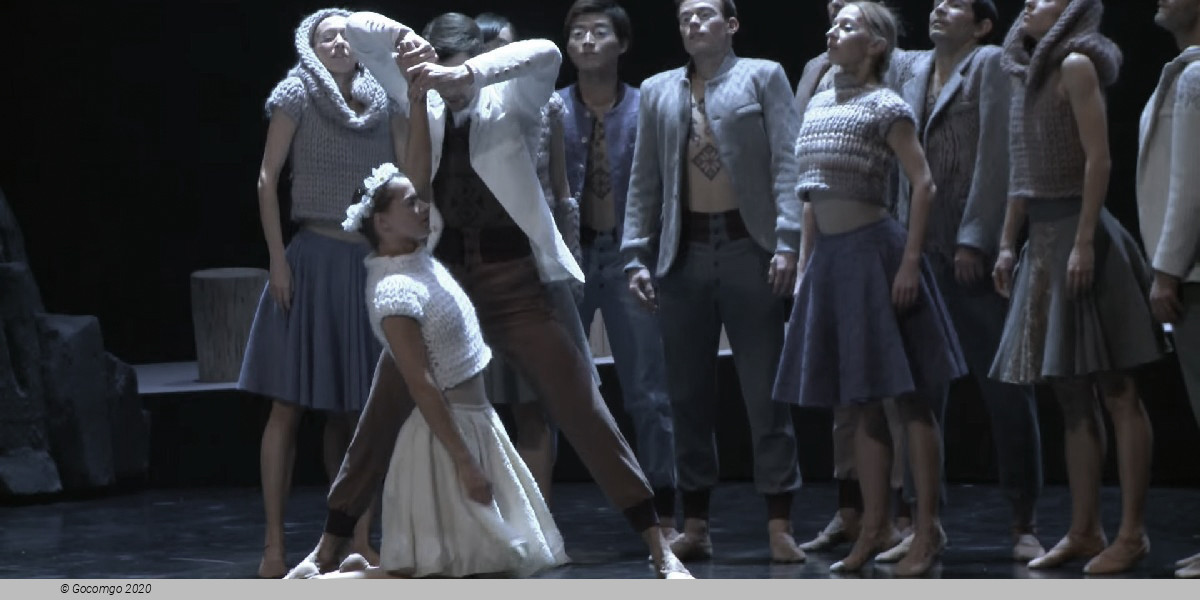
The ballet "Peer Gynt" is the first work of choreographer Sergei Mikel on the stage of the Bolshoi Theater of Belarus. He performs it together with the conductor-producer, People's Artist of Belarus Alexander Anisimov and the production designer Lyubov Sidelnikova.

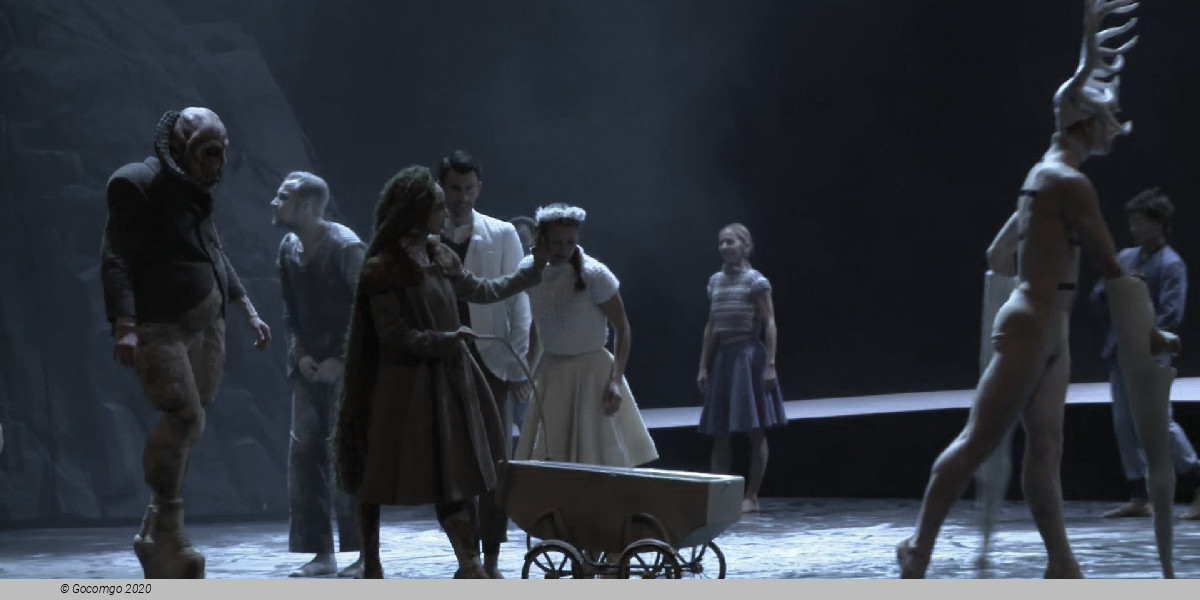
Detailed work with the literary text helped the choreographer-director to understand not only the image of Peer Gynt but also to penetrate into the essence of the characters that surround the protagonist. This is the Troll, who lives with the only motto “Be pleased with yourself!”, And Anitra, who prefers material goods to any spiritual values, and the beautiful Solveig, who has the gift of love.

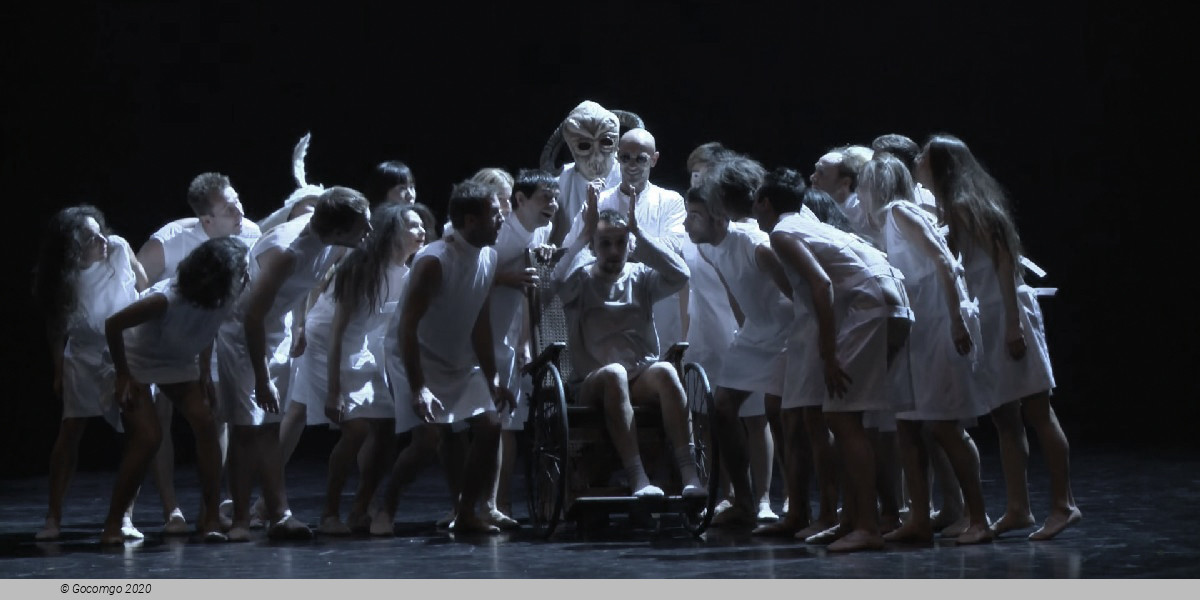
The viewers are waiting for the fusion of the real and fantasy world. So, the romantic-idealized world is the Ose and her travelling theatre, the mystical world is the Troll corporation, which is not at all like the monster corporation, and other dark forces. The real world is the Anitra Desert, an insane asylum with its patients, the homeless. A separate universe is the world of Solveig. Each of these worlds will live in its own plasticity and choreography!


History

Peer Gynt is the incidental music to Henrik Ibsen's 1867 play of the same name, written by the Norwegian composer Edvard Grieg in 1875. It premiered along with the play on 24 February 1876 in Christiania (now Oslo). Grieg later created two suites from his Peer Gynt music. Some of the music from these suites has received coverage in popular culture; see Grieg's music in popular culture.

Synopsis

Prologue

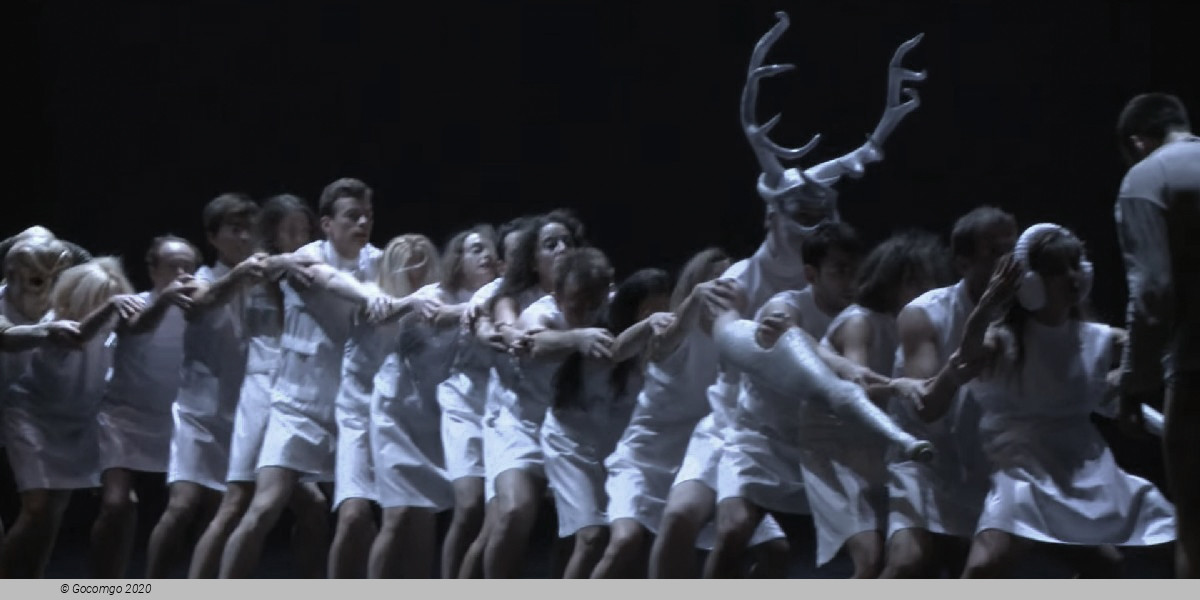
Pursuit. The wounded stag runs away from the pursuer Buttonmoulder, the master for remelting of "unfit" souls – souls, which are not worthy of hell or heaven, souls of those who did not strive for holiness and did not commit great meannesses.

Peer Gynt: in the past, he is a dreamer, hungry for adventure and exciting stories, and a wanderer, seeking fame and immortality, in the present-a man who has passed his entire life without achieving his goals.

Buttonmoulder reminds Peer of a long-standing duty: he must give his soul for remelting: ‘you were created as a button for the world waistcoat, but the ear was broken, bounced off, and now you are supposed to be scrapped and remelted together with the others.’ Peer, looking at himself in the lake, sees himself young and carefree.

Act 1

Suria Muria, a travelling theatre belonging to Åse (Peer's mother), comes to the village of Hegstad. The artists of the theatre perform an outlandish production, but it is interrupted by Peer’s vagary: he kidnaps Ingrid, one of the theatre's artists. Barely cooling down after a heated argument with his mother, Peer sees the migrant Solveig and falls in love with her. However, his heart does not find peace. Peer meets with the Buttonmoulder and, having indulged in fantasies, leaves the people he loves.

Vanity leads the hero to the Troll corporation. Meeting with the Mountain King changes Peer's life. From the Troll chief, he learns the truth that determined his future path: "Troll, be true to yourself!" Troll’s views are close to him, he is ready to accept the invitation to stay and marry the Maiden of Dovre, the king's daughter, and unwittingly gets into Troll’s clutches. The sudden bright image of his mother saves Peer from full transformation into a Troll. He returns to Solveig and finds peace for a while. This quiet sheltered happiness does not last long, Åse dies. Peer Gynt cannot cope with the weight of guilt and leaves the house again. 

Act 2

Peer goes on a journey around the world. Over these years he plays a lot of roles. Each new craft he solemnly declares a long-awaited lifework but devotes himself to it only until difficulties arise. He looks for happiness in money, becoming a businessman, slave trader, arms trafficker, he tries to find himself in passionate dances, seducing the Bedouin Anitra. A mosaic of alternating roles leads him to a madhouse, where people name him Emperor, wearing a crown of antlers on his head, and then he ends up in a dump with homeless people.

At the end of his life, finding himself completely alone, having spent his wealth and lost his position, Peer realizes the threat of non-existence, "melting" in the bucket of the Buttonmoulder: ‘Your life is a failure; it's time to be melted down.’ At the end of his life, he is desperately searching for an answer to the question, what does it mean to be himself and whether he was himself?

Peer meets the white-haired Solveig and only then realizes that he is saved. Behind the most varied masks throughout his motley life, he remained himself only in love with Solveig, protected by her hope and faith.

Venue Info

Belarus National Bolshoi Opera and Ballet Theater - Minsk
Location   Paryžskaj Kamuny Square, 1

The National Academic Grand Opera and Ballet Theatre of the Republic of Belarus is located in a park in the Trinity Hill district of Minsk. Local people call it the "Opierny Teatr" (Belarusian) or the "Opera and Ballet Theatre." While the theatre opened on 15 May 1933, in the beginning, it did not have its own performance venue. Until 1938, the troupe performed at the Belarusian Drama Theatre building.

The first permanent theatre was founded in Belarus in 1933 based on the Belarusian Opera and ballet school; the founder of the studio was a famous Russian Opera singer Anton Bonachich (Belarusian: Anton Bonatschitsch). Shortly after, Bonachich died in 1933.

The current theatre's building was opened in 1939. It was designed by the Belarusian architect from Leningrad, Iosif Langbard, whose original design was only partially implemented; some design details were omitted for financial reasons. The theatre has reliefs done by Zair Azgur.

Bizet's Carmen opened the theatre on 25 May 1933 with the title role being sung by Larisa Aleksandrovskaya. Several professional soloists and dancers were added to the troupe in the first few years at this location. Swan Lake, performed by K. Muller, was the first show on the stage of the new theatre. By 1940, Grand was added to the theatre's name to indicate its expansion. The performances by the theatre company during the "Decade of Belarusian Art" in Moscow in June 1940 was a great success which included the first Belarusian ballet, The Nightingale composed by Mikhail Kroshner, as well as other national operas such as "In the Dense Forest of Palesse", "The Flower of Fortune", and the second version of "Mikhas Podgorny". Performances continued during the war in Nizhny Novgorod, then known as Gorky until the liberation of Minsk in 1944; after that performances took place in Kovrov.

Enrichment of post World War 2 repertoire and expansion

During this time the repertoire was greatly enriched. The most famous operas staged in this theatre include Boris Godunov by Modest Mussorgsky, Otello and Don Carlo by Giuseppe Verdi, Jacques Offenbach's The Tales of HoffmannSadko and The Golden Cockerel by Nikolai Rimsky-Korsakov, and Lohengrin by Richard Wagner. Socialist realist operas by Belarusian composers such as Yuri Semenyako, Yevgeny Glebov (Your Spring, 1963) and Heinrich Wagner were included.

Among the most notable composers has been Kulikovich Shcheglov, who like some of the writers went into exile after the war. Others include Yevgeny Glebov, composer of the opera Your Spring (1963) and the ballet Alpine Ballad (1967), ..." In 1967, the theatre was awarded the title of Academic for its status in the progression of the performing arts.

In 1996 the State Theater was divided into two independent theatres: the National Academic Grand Ballet Theatre of the Republic of Belarus and the National Academic Opera Theatre of Belarus, but in 2008 they once again combined to become the present name, National Academic Grand Opera and Ballet Theatre of the Republic of Belarus.

The building was renovated and it reopened in 2009. Many sculptures were added around the theatre, its stage was slightly moved and audience space expanded. The most up-to-date lighting and motion equipment were added while adhering to the original design. The ballet company is considered one of the foremost companies in the world.

The theatre today

Works by Belarus composers in the company's repertoire today include Dmitry Smolsky's The Grey Legend (Russian "Седая легенда" 1978).

The troupe tours internationally. Fans from Spain, Russia, Germany, Poland, Switzerland, Israel, Portugal, and China are well acquainted with the repertoire of the Belarusian theatre. National Opera and Ballet of Belarus performs annually at the German festival "Classic Open Air."

Important Info
Type: Ballet
City: Minsk, Belarus
Starts at: 19:00
Acts: 2
Intervals: 1
Duration: 2h
Top of page