Act I
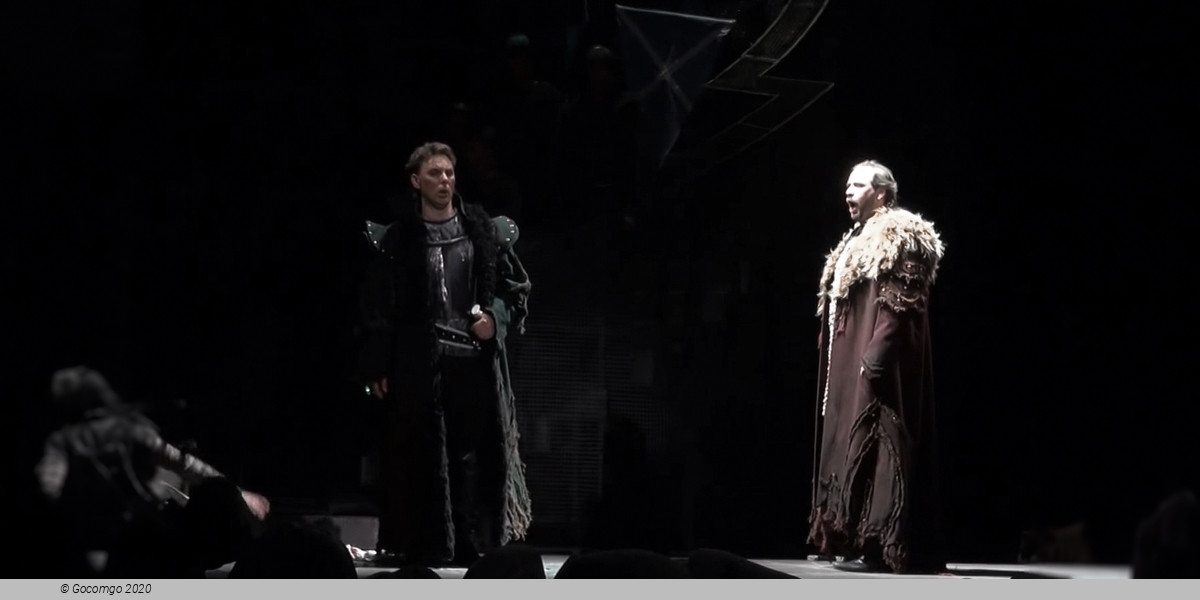
In the dead of night three witches prophesy the future. Drumming announces the approach of Macbeth and Banquo, captains of King Duncan’s army, who return after the victorious campaign against the Norwegians. One after another, the witches welcome Macbeth and address him:
‘All hail, Macbeth! Hail to thee, thane of Glamis! All hail, Macbeth, hail to thee, thane of Cawdor! All hail, Macbeth, thou shalt be king hereafter!’
Macbeth is bewildered: he will inherit the title of the thane of Glamis, but the thane of Cawdor is alive, as well as King Duncan, Macbeth’s cousin. The witches tell Banquo:
‘Hail! Hail! Hail! Lesser than Macbeth, and greater. Not so happy, yet much happier. Thou shalt get kings, though thou be none.’
Duncan’s messengers arrive with the news that the estate and the title of Thane of Cawdor are bestowed upon Macbeth in consideration of the victory in the battle. Banquo notices Macbeth’s thoughts about the future reign.
In Inverness Castle, Lady Macbeth reads a letter from her husband telling her of the witches predictions. Nothing can stop the lady on her way to the throne, Macbeth’s conceit and ambition will be supported by her iron will and endless thirst for power.
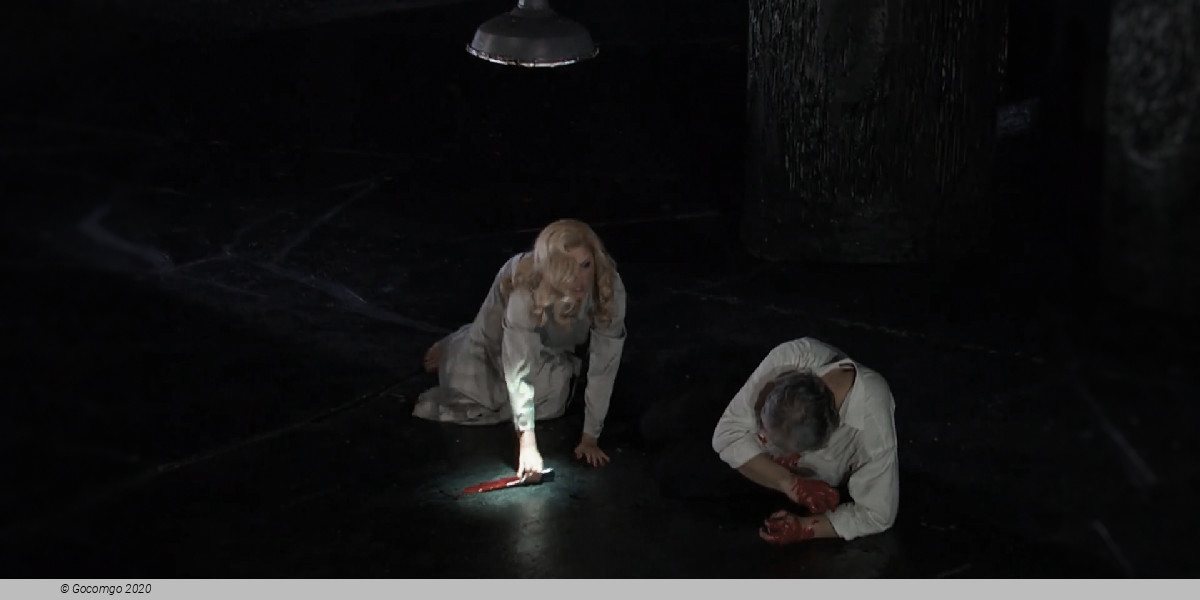
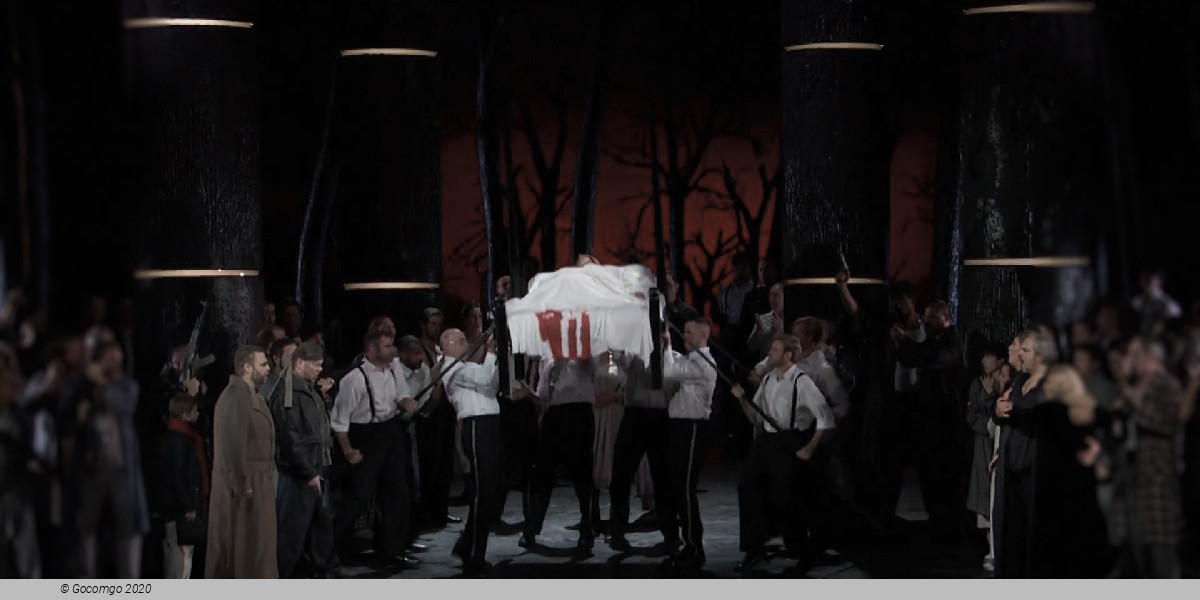
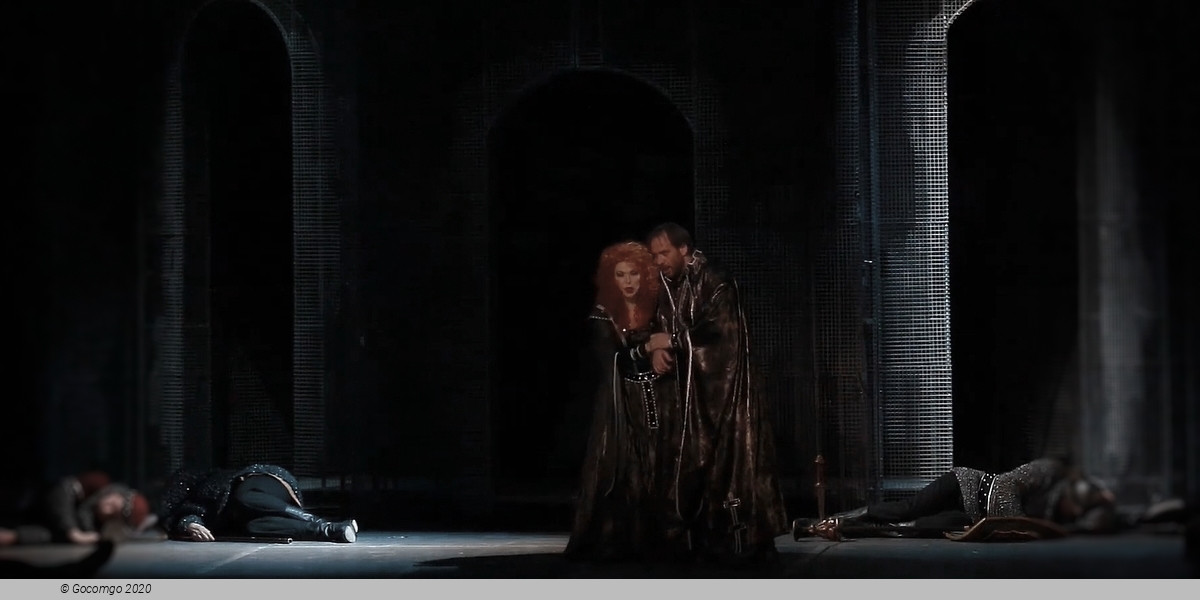
The messenger announces that Duncan and Macbeth will soon arrive at the castle. After their arrival, summoning the forces of evil, the lady persuades Macbeth that it’s necessary to murder the king. The vision of a dagger strengthens Macbeth’s decision to commit a crime, and he kills Duncan in his sleep. The lady helps frame the guards. With bloody hands, she returns to her husband who has lost peace of mind. Everyone is horrified and outraged at the news of the assassination of Duncan.
Act II
Duncan’s son, Malcolm, is suspected of having killed his father and flees to England. Macbeth is crowned King of Scotland. The new king is worried about the prophecy that Banquo will found a great royal line. The captain and his son, Fleance, are alive so far, but their fates are determined by Macbeth and his wife. Anticipating the victory over destiny, the lady is in triumph.
On the way to the royal banquet, Banquo is overwhelmed by evil forebodings:
In a matter of seconds, the captain is killed by assassins, but Fleance manages to escape.
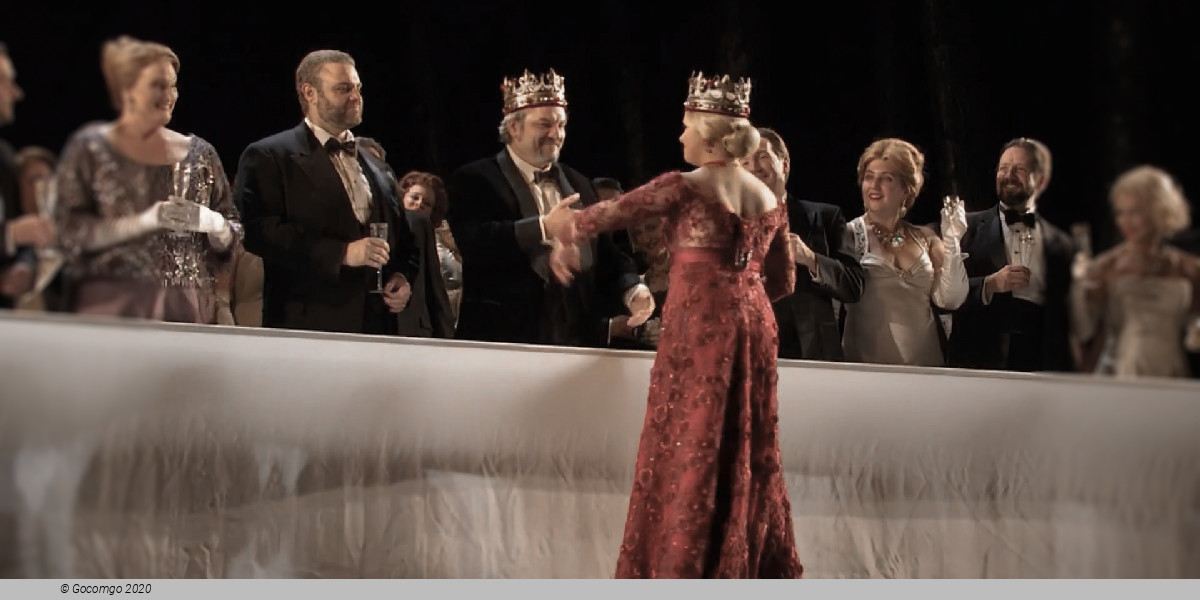
The banquet has gathered all the Scottish thanes except Banquo. Macbeth enquires hypocritically why his dear friend is absent. The assassin quietly tells the king that his order has been fulfilled. The feast begins when suddenly Macbeth is overcome with a vision of the dead Banquo. The lady tries to calm her husband and the guests but the king sees the ghost again and loses his composure completely. Horror-stricken, the guests leave. The thane of Fife, Macduff, decides to flee and join the Scots banished from the country.
Act III
In Inverness Castle the witches prepare a brew, conjuring up the evil spirits. Macbeth comes to their sabbath in search of more predictions. The witches evoke apparitions that bring three prophecies: Macbeth should beware of Macduff; no man of woman born can harm Macbeth; Macbeth will be invincible until Birnam Wood moves against him. As an answer to the question of whether Banquo’s children will ever be on the throne, he sees a procession of eight kings who look like the dead captain. Horrified, Macbeth collapses. When he comes around, he swears to ruin Macduff’s castle and to kill his family.
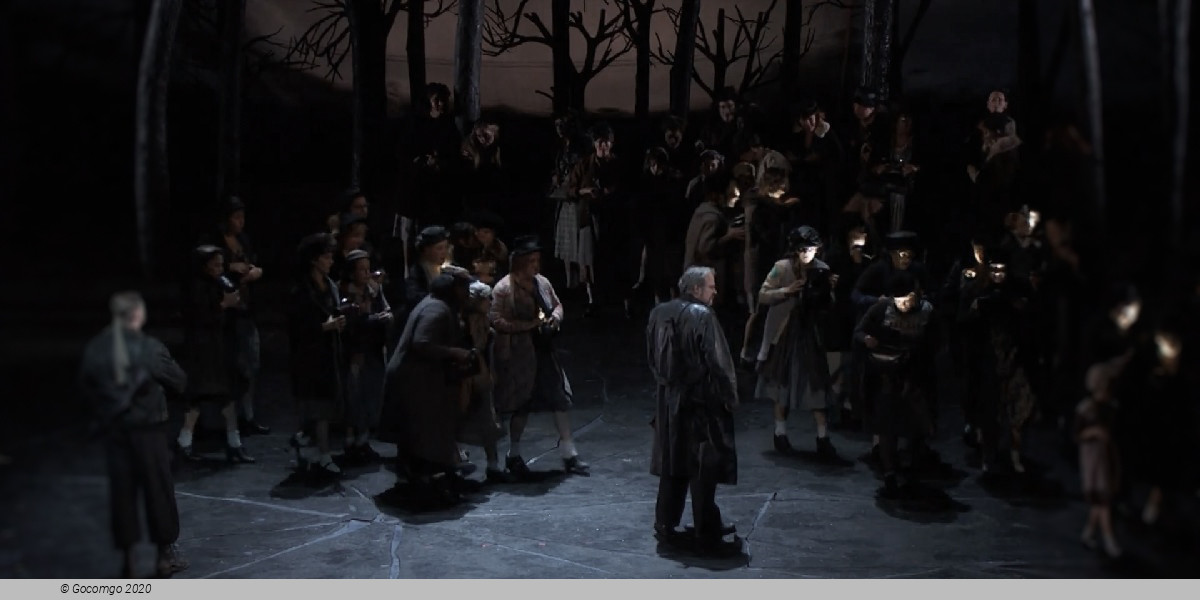
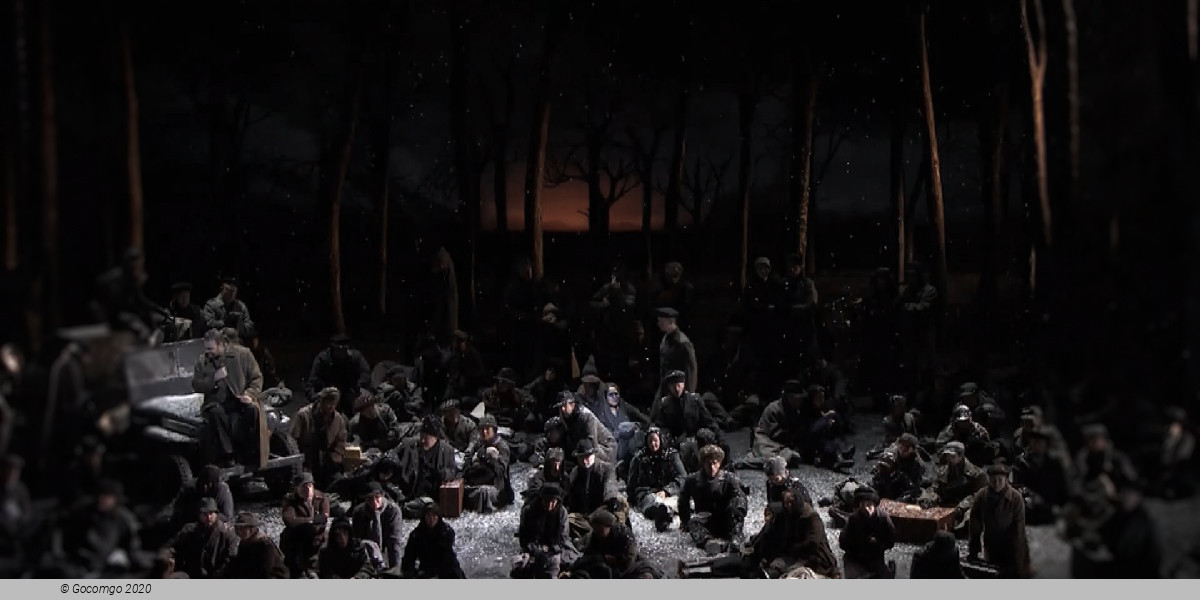
Scottish refugees bewail the plight of their oppressed motherland.
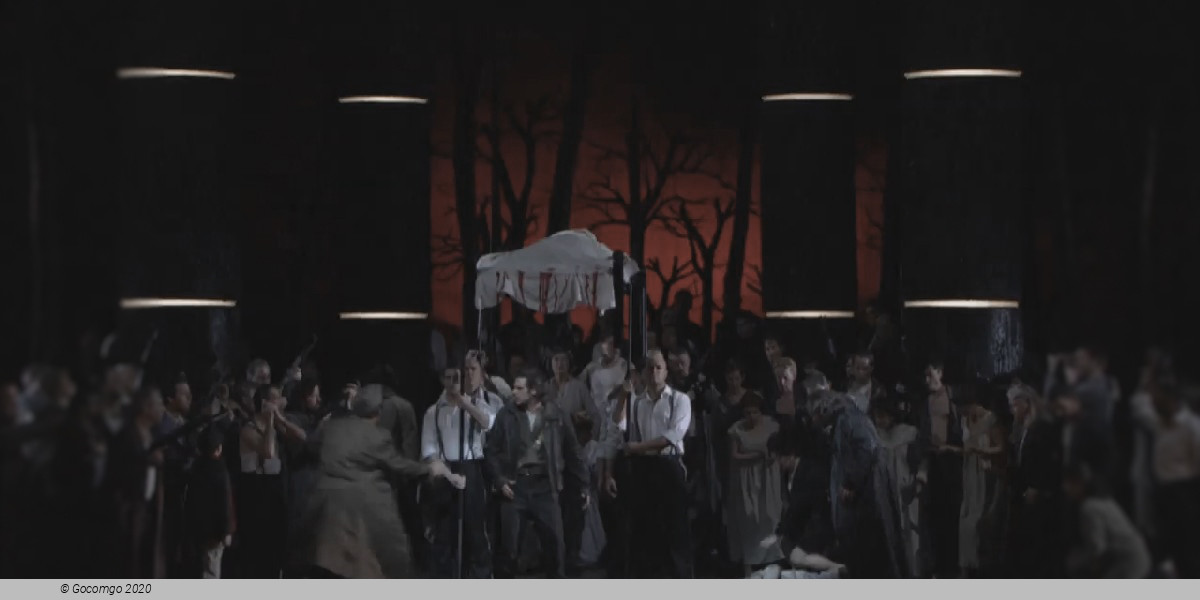
Macduff, whose family has been massacred by Macbeth’s henchmen, is among them. Malcolm enters leading a host of English soldiers; he incites Macduff to seek consolation in revenge and gathers Scots to attack Macbeth, using branches from the trees of the nearby Wood of Birnam as camouflage.
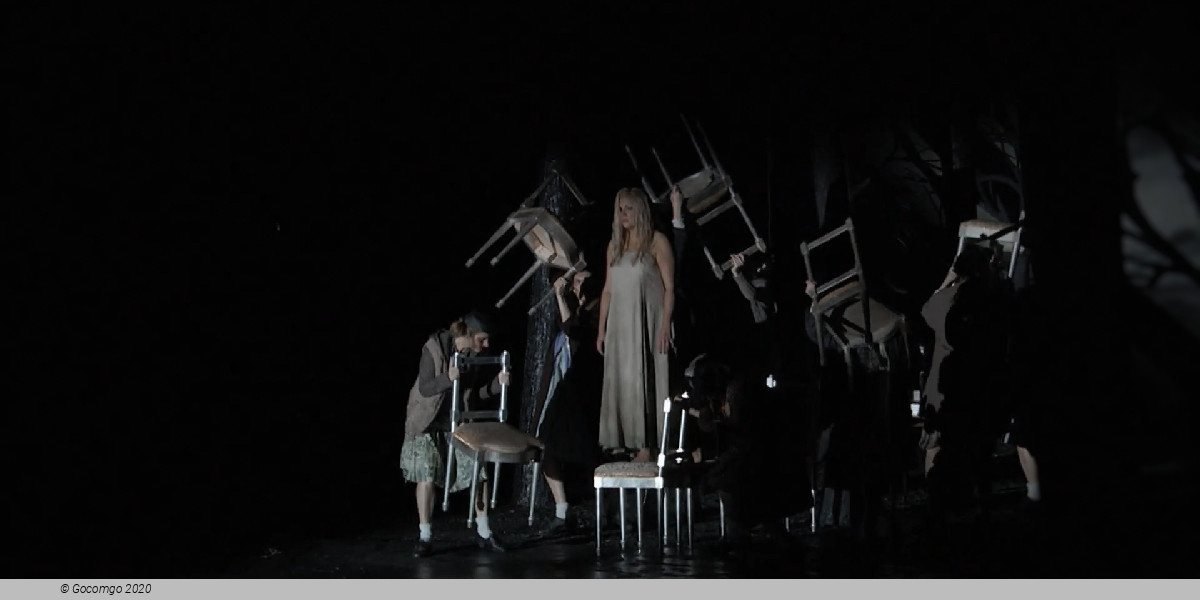
Lady Macbeth is sleepwalking, haunted by the horrors of the crimes she and her husband have committed and vainly trying to wash the blood off her hands.
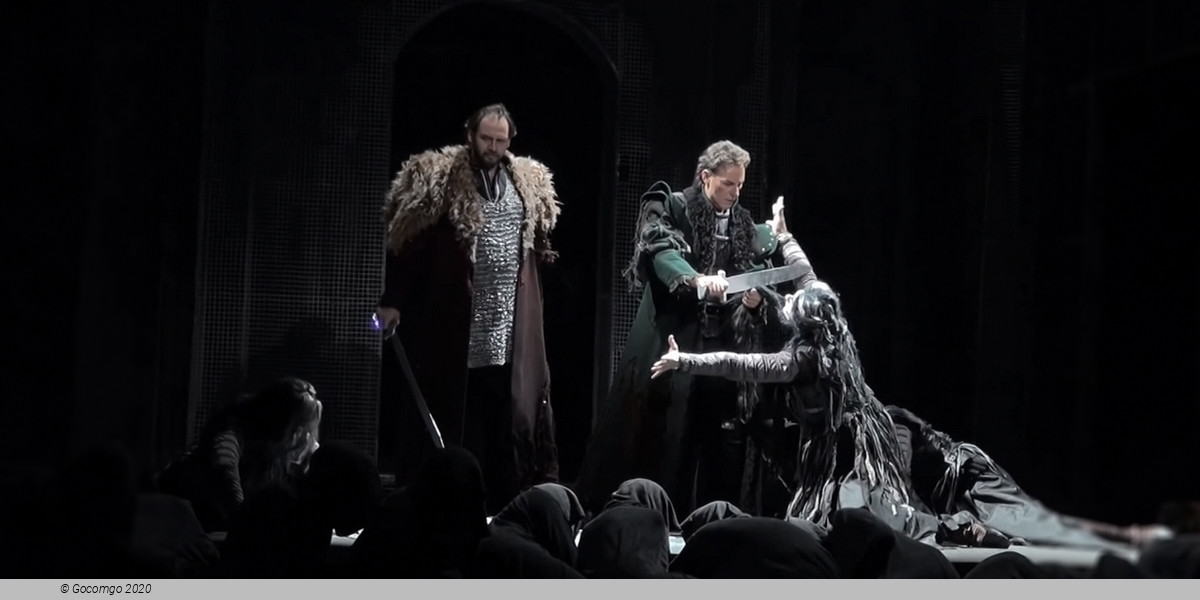
Preparing for the battle, Macbeth is sure of his invulnerability. He is indifferent to the news of the lady’s death. The battle begins. Birnam Wood is striding towards the castle, which makes the king remember the prophecy. Macbeth is confronted by Macduff. The former hopes for victory as he cannot be murdered by a person born of a woman. Macduff reveals that he was untimely ripped from his mother's womb and slays the adversary with his sword. Macbeth curses the witches and the sinister crown as he dies.
Malcolm is declared King.
Place: Scotland
Time: 11th century
Act 1
Scene 1: A heath
Groups of witches gather in a wood beside a battlefield, exchanging stories of the "evils" they have done. The victorious generals Macbeth and Banco enter. The witches hail Macbeth as Thane of Glamis (a title he already holds by inheritance), Thane of Cawdor, and king "hereafter." Banco is greeted as "lesser than Macbeth, but greater", never a king himself, but the progenitor of a line of future kings. The witches vanish, and messengers from the king appear naming Macbeth Thane of Cawdor. Macbeth protests that the holder of that title is still alive, but the messengers reply that the former Thane has been executed as a traitor. Banco, mistrusting the witches, is horrified to find that they have spoken the truth. In a duet, Macbeth and Banco muse that the first of the witches' prophecies has been fulfilled. Macbeth ponders how close he is to the throne, and whether fate will crown him without his taking action, yet dreams of blood and treachery: while Banco ponders on whether the minions of Hell will sometimes reveal an honest truth in order to lead one to future damnation.
Scene 2: Macbeth's castle
Lady Macbeth reads a letter from her husband telling of the encounter with the witches. She is determined to propel Macbeth to the throne - by fair means or foul.
Lady Macbeth is advised that King Duncan will stay in the castle that night; she is determined to see him killed (Or tutti, sorgete / "Arise now, all you ministers of hell"). When Macbeth returns she urges him to take the opportunity to kill the King. The King and the nobles arrive and Macbeth is emboldened to carry out the murder (Mi si affaccia un pugnal? / "Is this a dagger which I see before me?"), but afterwards is filled with horror. Disgusted at his cowardice, Lady Macbeth completes the crime, incriminating the sleeping guards by smearing them with Duncan's blood and planting on them Macbeth's dagger. Macduff arrives for an appointment with the King, while Banco stands guard, only for Macduff instead to discover the murder. He rouses the castle while Banco also bears witness to the fact of Duncan's murder. The chorus calls on God to avenge the killing (Schiudi, inferno, . . / "Open wide thy gaping maw, O Hell").
Act 2
Scene 1: A room in the castle
Macbeth is now king: Duncan's son Malcolm has fled the country, suspicion having conveniently fallen on him for his father's murder: but Macbeth is still disturbed by the prophecy that Banco, not he, will found a great royal line. To prevent this he tells his wife that he will have both Banco and his son murdered as they come to a banquet.
Scene 2: Outside the castle
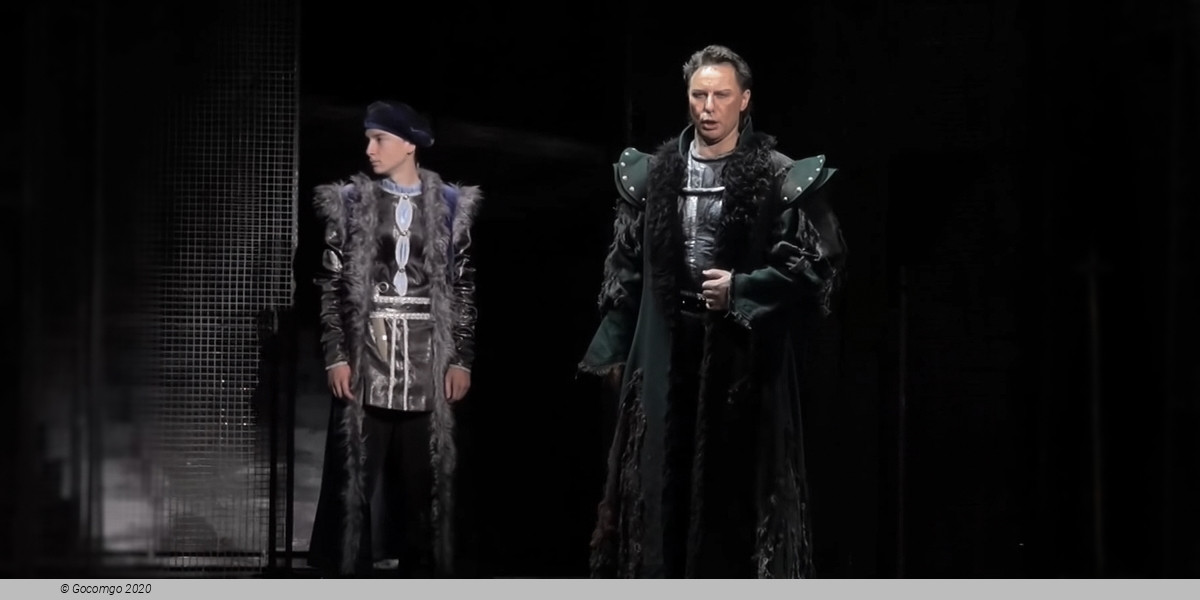
A gang of murderers lie in wait. Banco, sensing danger shares his misgivings with his son. (Come dal ciel precipita / "O, how the darkness falls from heaven"). The murderers attack and stab him to death, but his son escapes.
Scene 3: A dining hall in the castle
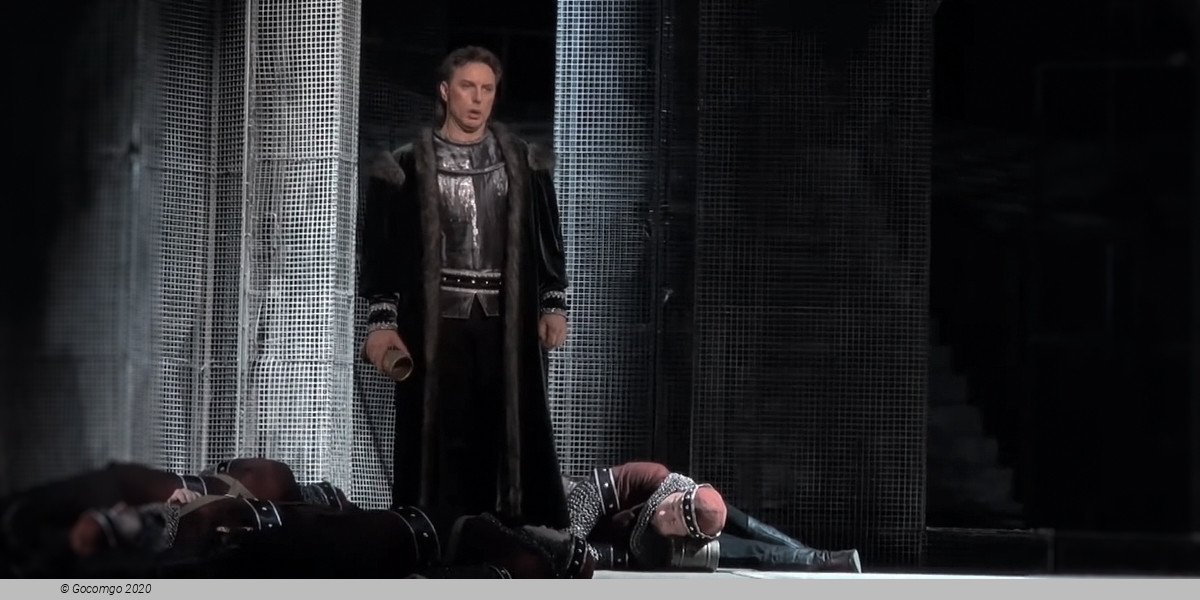
Macbeth receives the guests and Lady Macbeth sings a brindisi (Si colmi il calice / "Fill up the cup"). The assassination is reported to Macbeth, but when he returns to the table the ghost of Banco is sitting in his place. Macbeth raves at the ghost and the horrified guests believe he has gone mad. Lady Macbeth manages to calm the situation once - and even mocks it by calling for a toast to the absent Banco (whose death is not yet public knowledge), only for the ghost to appear a second time and terrify Macbeth into insanity again. Macduff resolves to leave the country, saying it is ruled by a cursed hand and only the wicked may remain: the other guests are terrified by Macbeth's talk of ghosts, phantoms and witches. The banquet ends abruptly with their hurried, frightened departure.
Act 3
The witches' cave
The witches gather around a cauldron in a dark cave. Macbeth enters and they conjure up three apparitions for him. The first advises him to beware of Macduff. The second tells him that he cannot be harmed by a man 'born of woman'. The third that he cannot be conquered till Birnam Wood marches against him. (Macbeth: O lieto augurio / "O, happy augury! No wood has ever moved by magic power")
Macbeth is then shown the ghost of Banco and his descendants, eight future Kings of Scotland, verifying the original prophecy. (Macbeth: Fuggi regal fantasima / "Begone, royal phantom that reminds me of Banco"). He collapses, but regains consciousness in the castle.
The act ends with Macbeth recovering and resolving to assert his authority: Vada in fiamme, e in polve cada / "Macduff's lofty stronghold shall / Be set fire....".
Act 4
Scene 1: Near the border between England and Scotland
Scottish refugees stand near the English border (Chorus: Patria oppressa / "Down-trodden country"):
While each version uses the same libretto, the music of this chorus is different. It begins with a less ominous, much shorter orchestral introduction and is sung straight through by the entire chorus.
In the distance lies Birnam Wood. Macduff is determined to avenge the deaths of his wife and children at the hands of the tyrant (Ah, la paterna mano / "Ah, the paternal hand"). He is joined by Malcolm, the son of King Duncan, and the English army. Malcolm orders each soldier to cut a branch from a tree in Birnam Wood and carry it as they attack Macbeth's army. They are determined to liberate Scotland from tyranny (Chorus: La patria tradita / "Our country betrayed").
Scene 2: Macbeth's castle
A doctor and a servant observe the Queen as she walks in her sleep, wringing her hands and attempting to clean them of blood (Una macchia è qui tuttora! / "Yet here's a spot"). She raves about the deaths of both Duncan and Banco, and even about the deaths of Macduff's family, and that all the perfumes of Arabia would not clean the blood off her hands: all are things that the horrified witnesses would never dare to repeat to any living man.
Scene 3: The battlefield
Macbeth has learned that an army of Scottish rebels backed by England is advancing against him, but is reassured by remembering the words of the apparitions, that no man born of woman can harm him. However, in an aria (Pietà, rispetto, amore / "Compassion, honour, love") he contemplates the fact that he is already hated and feared: there will be no compassion, honour and love for him in his old age even if he wins this battle, nor kind words on a royal tomb, only curses and hatred. He receives the news of the Queen's death with indifference. Rallying his troops he learns that Birnam Wood has indeed come to his castle. Battle is joined.
Macduff pursues and fights Macbeth who falls. He tells Macbeth that he was not "born of woman" but "ripped" from his mother's womb. Fighting continues. Mortally wounded, Macbeth, in a final aria - Mal per me che m'affidai / "Trusting in the prophecies of Hell" - proclaims that trusting in these prophecies has caused his downfall. He dies on stage, while Macduff's men proclaim Malcolm to be the new King.




 Paryžskaj Kamuny Square, 1