PROLOGUE
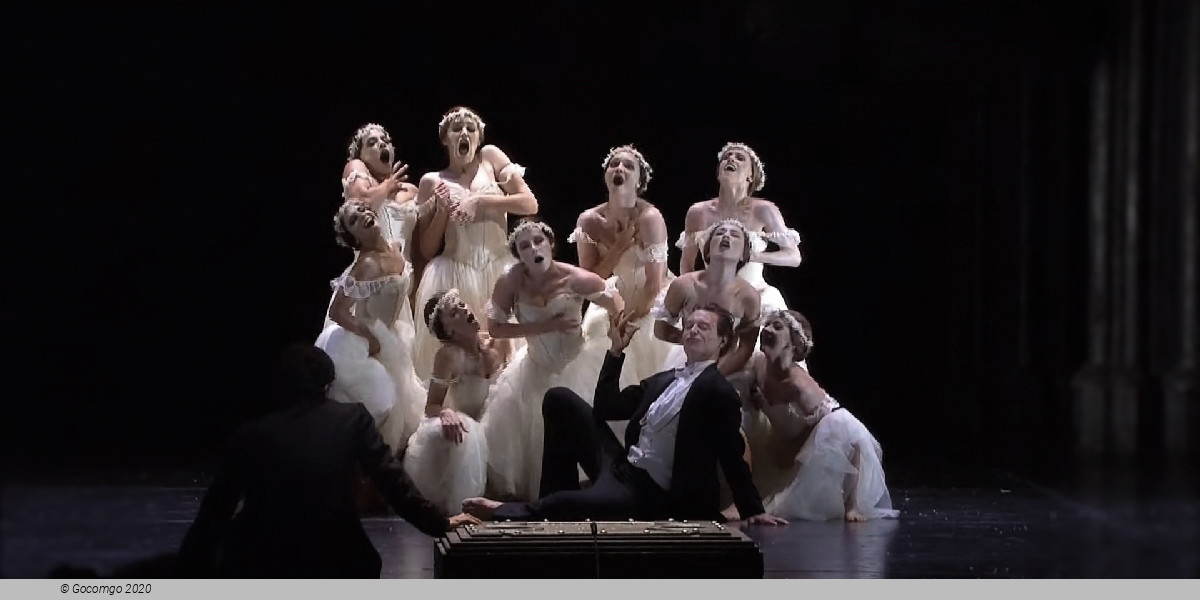
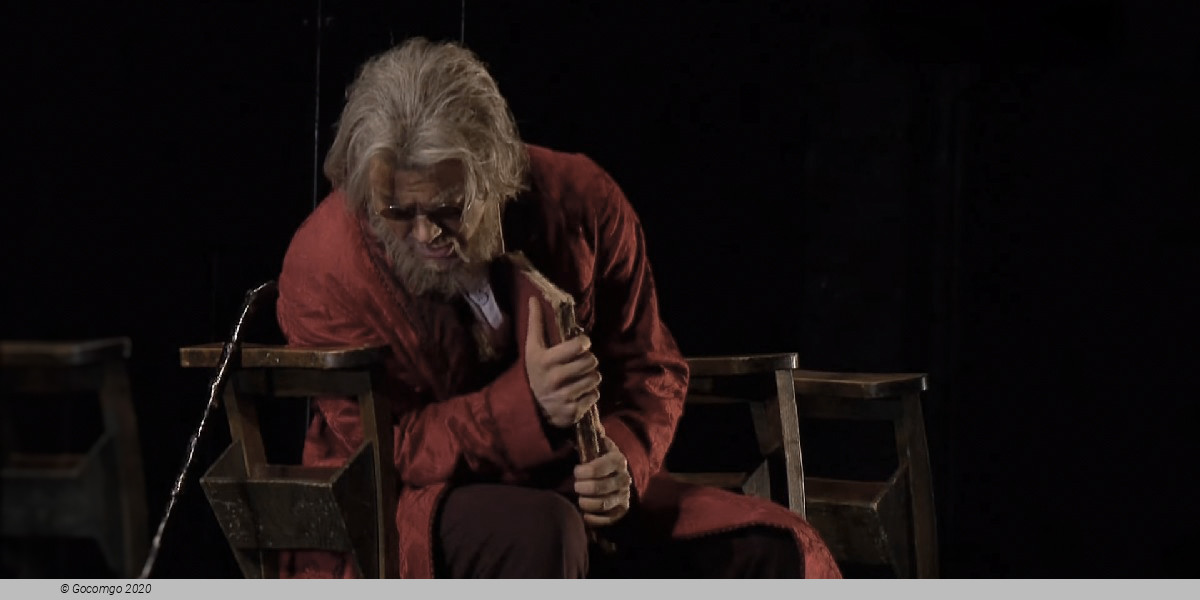
In his declining years, an aging scholar, Dr Faust, realizes that everything he has spent his life on has not brought him the main thing: he has understood the laws of nature, but he cannot control them; he has comprehended the structure and tenets of being, but he has no satisfaction from life. Disappointment suggests the only way out - it is death. Reality abruptly intrudes into the doctor’s thoughts with the voices of the townspeople: carefree and life-loving, they glorify the beauty of the world and praise the Creator. But this joy is unattainable for Faust: what can God give him? He won’t bring him back to a full life!
In desperation, Faust defies the Creator and calls on Satan, but does he, a rationalist, expect that a simple word will change everything? The surrounding space suddenly transforms and fills with strange things and characters. What is it? Is it a game of inflamed consciousness, illusion, or reality? The disconcerted doctor is ready to drive away the uninvited guests. Méphistophélès offers a good deal: the fulfillment of any desires in exchange for a trifle – a soul. Faust voices his dearest wish – the return of his happy youth. The devil’s last argument is a tempting vision of the beautiful Marguerite, and the doctor signs the contract. The old man will regain his vigorous youth, and the master of the underworld will receive his soul for untimely use.
Faust is euphoric, Méphistophélès is intrigued. The game begins!
Act I
The year 1935.
There is a lot of activity at the studio; director Wagner has to film some spectacular episodes today: “The Fair” and “The Carnival” scenes for the film adaptation of the opera Faust, and an episode for The Saga of the Nibelungs. However, his plans are ruined by unforeseen circumstances. Suddenly Marguerite’s brother, Valentin, appears on the set. He is going off to war and is concerned about leaving his sister Marguerite unprotected. Marguerite gives her brother a medallion that is supposed to shield him during battles, Wagner asks Valentin not to worry unnecessarily, and Siébel, a young man in love with Marguerite, swears to Valentin that he will always watch over her. Valentin bids farewell to Marguerite.
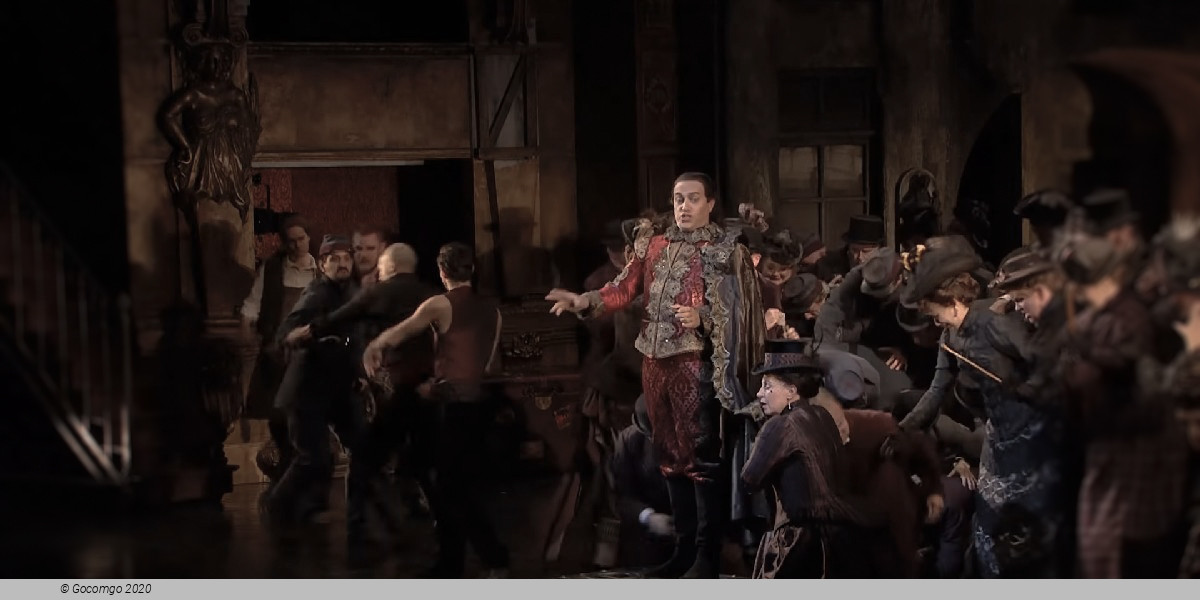
Wagner persuades everyone to forget about their sorrows and sings a humorous song about a rat, but he is interrupted by Méphistophélès who suddenly emerges. Disconcerted by the appearance of a stranger, the director makes fun of him, but nothing can stop Méphistophélès who has come to have fun! Satan makes an indelible impression on everyone: they are intrigued by his song, he predicts Wagner’s imminent death, tells Siébel that flowers will wither at his touch, and treats everyone to magnificent wine that appears out of nowhere.
Valentin is enraged: he attacks the weird stranger, but the weapon breaks in his hand. Everyone retreats in fear, realizing who they are dealing with.
Yet Méphistophélès has not been prepared for such a rebuff. The appearance of Faust, demanding an immediate meeting with Marguerite, forces him to act straight away. The carnival dances the waltz, in the midst of which Marguerite appears. Faust offers her his arm, but Marguerite declines the stranger’s addresses and leaves. Faust is entranced and distressed: the girl has turned him down.
Act II
Siébel sneaks into the garden in front of Marguerite’s house to confess his feelings to her. He picks flowers, wishing to leave a bouquet to his beloved, but the prophecy comes true: the flowers wither as soon as he touches them. Then the young man washes his hands with holy water, and – what a miracle! – the curse no longer holds sway over him.
Méphistophélès leads Faust to Marguerite’s house. Faust is excited about the upcoming meeting, but Méphistophélès offers his best plot also here: a casket of jewels will help Marguerite to make the right choice – Siébel’s bouquets will not be competitive.
In Frau Marthe’s tailor shop, work is in full swing – the girls have to make a new batch of costumes for the film studio. Marguerite sings a ballad about the King of Thule, but her thoughts are far away; she is preoccupied with the young man who has invited her to dance on the set of the film studio.
Suddenly, she notices a bouquet from Siébel and then sees the casket. The girls are thrilled! Alas, the illusion of happiness sometimes so timely overshadows reality.
The appearance of Frau Marthe suddenly changes Méphistophélès’ plans. His attempts to arrange a romantic date for Faust turn into his own affair with a very enterprising person.
Faust is finally left alone with Marguerite. The young man can no longer hide his feelings. The girl is deeply moved by Faust’s fervent and tender declaration. The cunning diabolical plan has worked: the girl tells the stars about her love, and the lovers’ bodies entwine in a fit of passion.
Act III
Marguerite is abandoned by everyone: Faust has left her, her former friends laugh angrily at her misfortune, and society despises her deed. Marthe is poverty-stricken and all her thoughts are about how to get rid of the girl with the child. Siébel is the only support, though he finds no words of comfort.
Marguerite still loves Faust and is ready to pray for him and for his child, whom she is expecting. She goes to church, but the awareness of her sinful deeds does not allow her to cross the threshold of the cathedral. Marguerite makes a plea to God, but Méphistophélès decides to break her will and summons the spirits of evil. Their voices terrify the girl; Satan curses Marguerite.
Soldiers return from the war. At the station square, Valentin meets Siébel, but the young man’s behaviour makes him doubt the joy of the upcoming meeting. Valentin is beside himself.
Beset by remorse, Faust approaches Marguerite’s house. To make Faust forget Marguerite as soon as possible, Méphistophélès sings a sarcastic serenade, and his retinue performs a vulgar theatrical pastorale. Valentin emerges at the sound of the song. He demands satisfaction. Méphistophélès removes the obstacles in his way: Valentin is murdered, Marguerite is cursed and driven to madness. Accompanied by the devil, Faust leaves for the cabaret Walpurgis Night, where only illusion, only pleasure and oblivion await him. But the image of his beloved pops up in Faust’s imagination, and he tries to break the bonds of Walpurgis Night. He understands that punishment is inevitable, but he is prepared to sacrifice himself to save Marguerite!
Marguerite has imprisoned: her mind is totally confused, she has killed her own child and will be executed.
Faust deeply repents of his actions, but Méphistophélès will not give up. Marguerite’s faith and love, the purity of her sincere soul are stronger than Hell. By the power of her prayer, by her willingness to sacrifice herself, Marguerite saves Faust’s soul.
May the light of Divine Love shine on!
Place: Germany
Time: 16th century
Act 1
Faust's cabinet
Faust, an aging scholar, determines that his studies have come to nothing and have only caused him to miss out on life and love (Rien! En vain j'interroge). He attempts to kill himself (twice) with poison but stops each time when he hears a choir. He curses hope and faith, and asks for infernal guidance. Méphistophélès appears (duet: Me voici) and, with a tempting image of Marguerite at her spinning wheel, persuades Faust to buy Méphistophélès's services on earth in exchange for Faust's in Hell. Faust's goblet of poison is magically transformed into an elixir of youth, making the aged doctor a handsome young gentleman; the strange companions then set out into the world.
Act 2
At the city gates
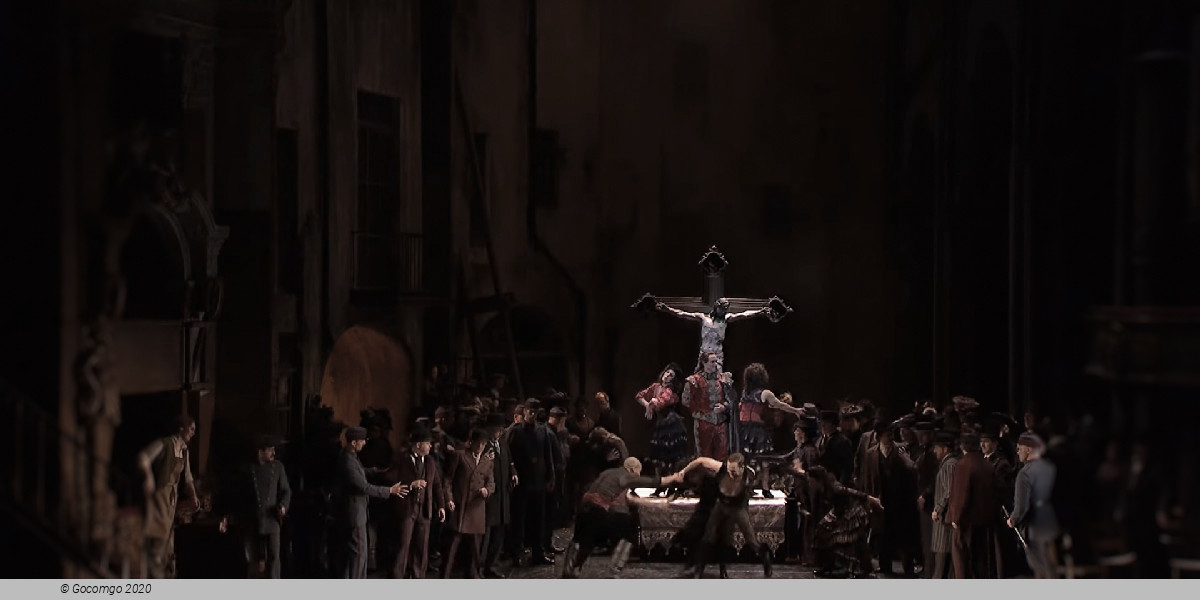
A chorus of students, soldiers and villagers sings a drinking song (Vin ou Bière). Valentin, leaving for war with his friend Wagner, entrusts the care of his sister Marguerite to his youthful friend Siébel (O sainte médaille ... Avant de quitter ces lieux). Méphistophélès appears, provides the crowd with wine, and sings a rousing, irreverent song about the Golden Calf (Le veau d'or). Méphistophélès maligns Marguerite, and Valentin tries to strike him with his sword, which shatters in the air. Valentin and friends use the cross-shaped hilts of their swords to fend off what they now know is an infernal power (chorus: De l'enfer). Méphistophélès is joined by Faust and the villagers in a waltz (Ainsi que la brise légère). Marguerite appears and Faust declares his admiration, but she refuses Faust's arm out of modesty, a quality that makes him love her even more.
Act 3
Marguerite's garden
The lovesick boy Siébel leaves a bouquet for Marguerite (Faites-lui mes aveux). Faust sends Méphistophélès in search of a gift for Marguerite and sings a cavatina (Salut, demeure chaste et pure) idealizing Marguerite as a pure child of nature. Méphistophélès brings in a decorated box containing exquisite jewelry and a hand mirror and leaves it on Marguerite's doorstep, next to Siébel's flowers. Marguerite enters, pondering her encounter with Faust at the city gates, and sings a melancholy ballad about the King of Thule (Il était un roi de Thulé). Marthe, Marguerite's neighbour, notices the jewellery and says it must be from an admirer. Marguerite tries on the jewels and is captivated by how they enhance her beauty, as she sings in the famous aria, the Jewel Song (Ah! je ris de me voir si belle en ce miroir). Méphistophélès and Faust join the women in the garden and romance them. Marguerite allows Faust to kiss her (Laisse-moi, laisse-moi contempler ton visage), but then asks him to go away. She sings at her window for his quick return, and Faust, listening, returns to her. Under the watchful eye and malevolent laughter of Méphistophélès, it is clear that Faust's seduction of Marguerite will be successful.
Act 4
Marguerite's room / A public square outside her house / A cathedral
[Note: The scenes of acts 4 and 5 are sometimes given in a different order and portions are sometimes shortened or cut in performance.]
After being made pregnant and seemingly abandoned by Faust, Marguerite has given birth and is a social outcast. She sings an aria at her spinning wheel (Il ne revient pas). Siébel stands by her. The scene shifts to the square outside Marguerite's house. Valentin's company returns from the war to a military march (Deposons les armes and Gloire immortelle de nos aïeux, the well-known "soldiers' chorus"). Siébel asks Valentin to forgive Marguerite. Valentin rushes to her cottage. While he is inside Faust and Méphistophélès appear, and Méphistophélès, knowing that Marguerite is not in there alone, sings a mocking burlesque of a lover's serenade under Marguerite's window (Vous qui faites l'endormie). Valentin takes the bait and comes out of the cottage, now knowing that Faust has debauched his sister. The two men fight, but Faust is reluctant to hurt the brother of the woman he adores. Méphistophélès blocks Valentin's sword, allowing Faust to make the fatal thrust. With his dying breath Valentin blames Marguerite for his death and condemns her to Hell before the assembled townspeople (Ecoute-moi bien Marguerite). Marguerite goes to the church and tries to pray there but is stopped, first by the sadistic Méphistophélès and then by a choir of devils. She finishes her prayer but faints when she is cursed again by Méphistophélès.
Act 5
The Harz mountains on Walpurgis Night / A cavern / The interior of a prison
Méphistophélès and Faust are surrounded by witches (Un, deux et trois). Faust is transported to a cave of queens and courtesans, and Méphistophélès promises to provide Faust with the love of the greatest and most beautiful women in history. An orgiastic ballet suggests the revelry that continues throughout the night. As dawn approaches, Faust sees a vision of Marguerite and calls for her. Méphistophélès helps Faust enter the prison where Marguerite is being held for killing her child. They sing a love duet (Oui, c'est toi que j'aime). Méphistophélès states that only a mortal hand can deliver Marguerite from her fate, and Faust offers to rescue her from the hangman, but she prefers to trust her fate to God and His angels (Anges purs, anges radieux). At the end she asks why Faust's hands are covered in blood, pushes him away, and falls down motionless. Méphistophélès curses, as a voice on high sings "Sauvée!" ("Saved!"). The bells of Easter sound and a chorus of angels sings "Christ est ressuscité!" ('"Christ is risen!"). The walls of the prison open, and Marguerite's soul rises to heaven. In despair Faust follows it with his eyes; he falls to his knees and prays. Méphistophélès is turned away by the shining sword of the archangel.




 Paryžskaj Kamuny Square, 1