








Belarus National Bolshoi Opera and Ballet Theater 6 October 2022 - Die Fledermaus | GoComGo.com

Die Fledermaus

Belarus National Bolshoi Opera and Ballet Theater, Main Stage, Minsk, Belarus
All photos (6)
Select date and time
7 PM

E-tickets: Print at home or at the box office of the event if so specified. You will find more information in your booking confirmation email.

You can only select the category, and not the exact seats.
If you order 2 or 3 tickets: your seats will be next to each other.
If you order 4 or more tickets: your seats will be next to each other, or, if this is not possible, we will provide a combination of groups of seats (at least in pairs, for example 2+2 or 2+3).

Important Info
Type: Operetta
City: Minsk, Belarus
Starts at: 19:00
Acts: 3
Intervals: 1
Duration: 2h 50min
Sung in: Russian
Titles in: Russian,English

E-tickets: Print at home or at the box office of the event if so specified. You will find more information in your booking confirmation email.

You can only select the category, and not the exact seats.
If you order 2 or 3 tickets: your seats will be next to each other.
If you order 4 or more tickets: your seats will be next to each other, or, if this is not possible, we will provide a combination of groups of seats (at least in pairs, for example 2+2 or 2+3).

Overview
History
Premiere of this production: 05 April 1874, Theater an der Wien in Vienna

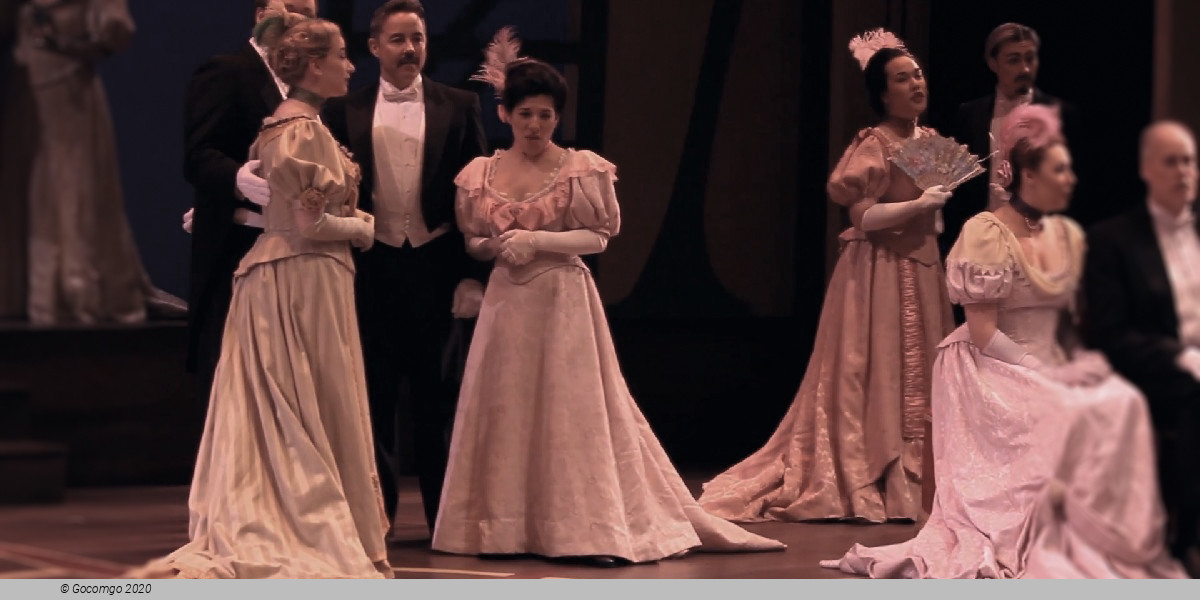
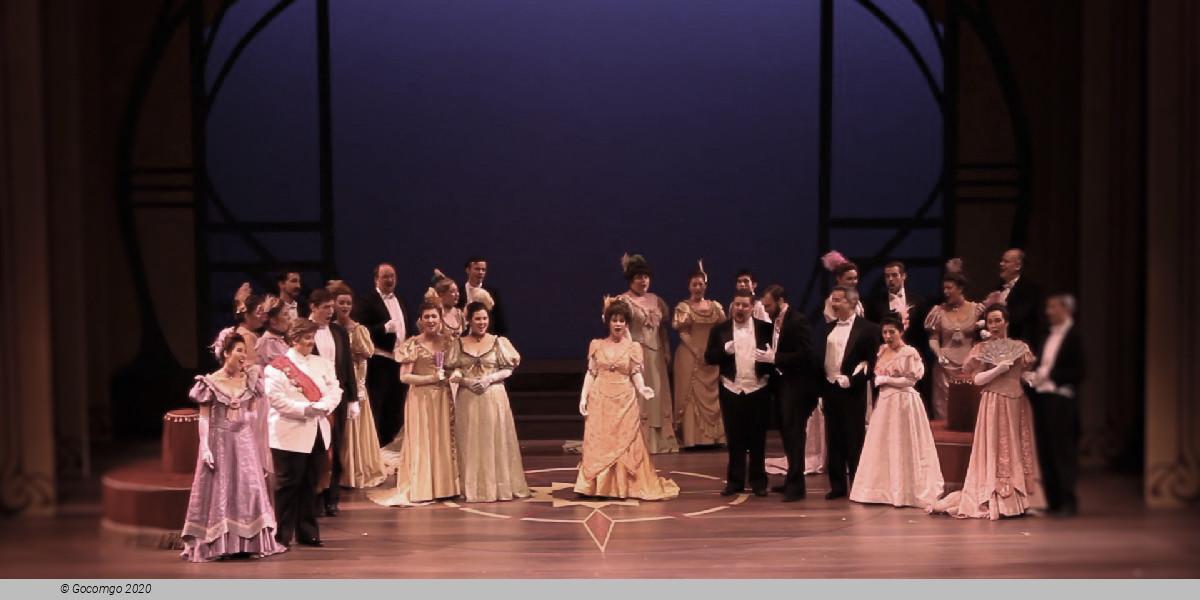
Die Fledermaus is an operetta composed by Johann Strauss II to a German libretto by Karl Haffner and Richard Genée.

Synopsis

Act 1

Eisenstein's apartment

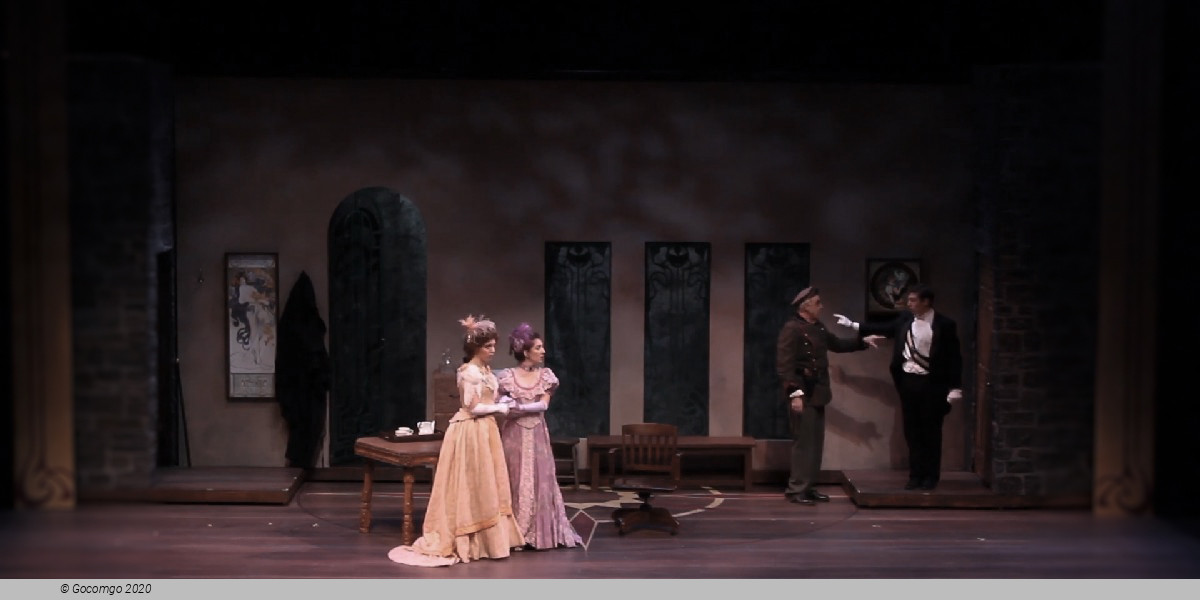
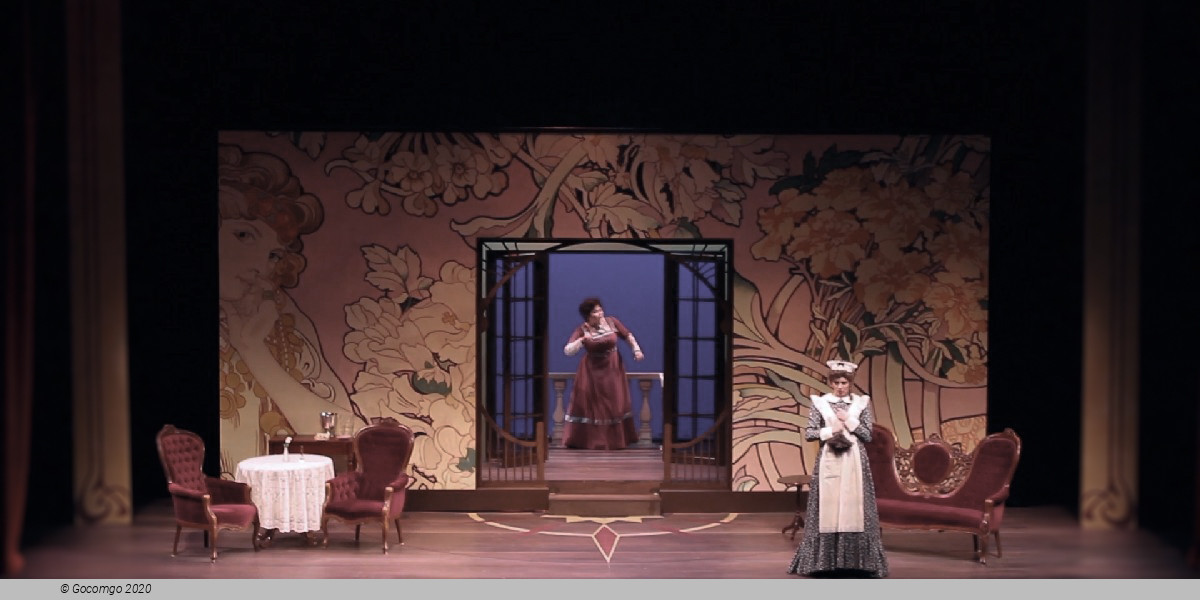
Gabriel von Eisenstein, a Viennese man-about-town, has been sentenced to eight days in prison for insulting an official, partially due to the incompetence of his attorney, Dr. Blind. Adele, Eisenstein's maid, receives a forged letter, allegedly from her sister who is in the company of the ballet, but actually written by Falke, inviting her to Prince Orlofsky's ball. She pretends the letter says that her aunt is very sick, and asks her mistress Rosalinde (Eisenstein's wife) for an evening off ("Da schreibt meine Schwester Ida"/"My sister Ida writes to me"). Falke, Eisenstein's friend, arrives to invite him to the ball (Duet: "Komm mit mir zum Souper"/"Come with me to the souper"). Together, they recall a practical joke which Eisenstein played on Falke a few years ago, for which Falke is secretly planning a light-hearted revenge in kind. Eisenstein bids farewell to Adele and his wife Rosalinde, pretending he is going to prison (Trio: "O Gott, wie rührt mich dies!"/"Oh dear, oh dear, how sorry I am") but really intending to postpone jail for one day and have fun at the ball.

After Eisenstein leaves, Rosalinde is visited by her former lover, the singing teacher Alfred, who serenades her ("Täubchen, das entflattert ist"/"Dove that has escaped"). Frank, the governor of the prison, arrives to take Eisenstein to jail, and finds Alfred instead. In order not to compromise Rosalinde, Alfred agrees to pretend to be Eisenstein and to accompany Frank. (Finale, drinking song: "Glücklich ist, wer vergisst"/"Happy is he who forgets" followed by Rosalinde's defence when Frank arrives: "Mit mir so spät im tête-à-tête"/"In tête-à-tête with me so late," and Frank's invitation: "Mein schönes, großes Vogelhaus"/"My beautiful, large bird-cage.")

Act 2

A summer house in the Villa Orlofsky

It transpires that Falke, with Prince Orlofsky's permission, is using the ball as a way of getting revenge on Eisenstein. Some time before, after a costume-party, Eisenstein had abandoned Falke, very drunk and dressed in a bat-costume, in the center of town, exposing him to ridicule the next day. As part of his scheme, Falke has invited Frank, Adele, and Rosalinde to come the ball, all concealing their identities as well. Rosalinde pretends to be a masked Hungarian countess, Eisenstein goes by the name "Marquis Renard," Frank is "Chevalier Chagrin," and Adele, who has borrowed one of Rosalinde's dresses without permission, pretends she is an actress.

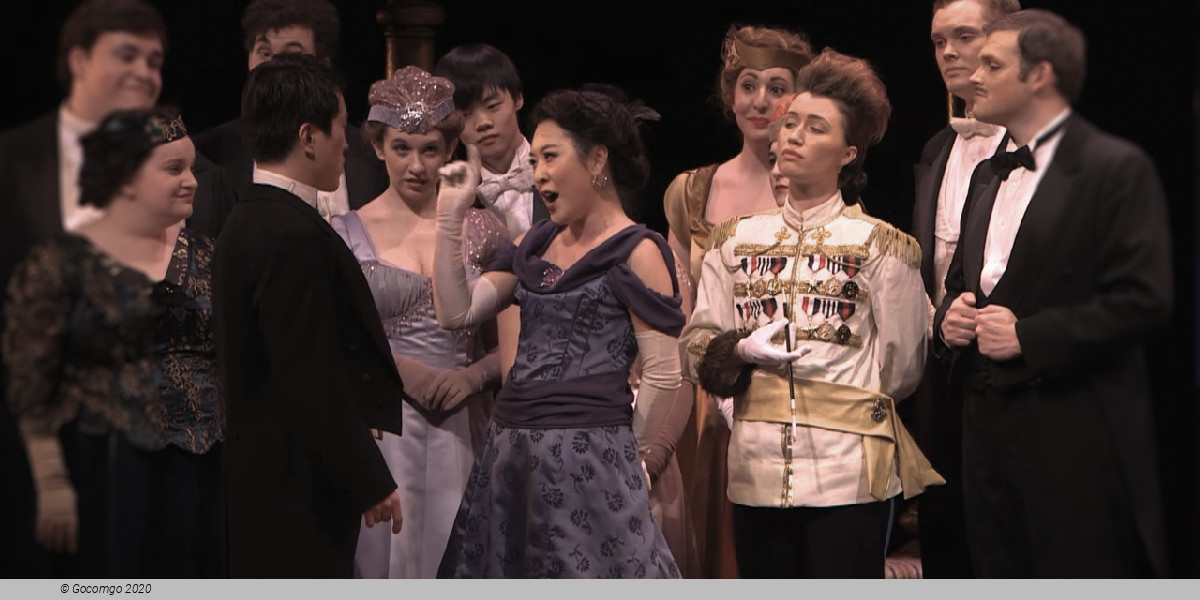
The ball is in progress (Chorus: "Ein Souper heut' uns winkt"/"A souper is before us") and the Prince welcomes his guests ("Ich lade gern mir Gäste ein"/"I love to invite my friends"). Eisenstein is introduced to Adele, but is confused as to who she really is because of her striking resemblance to his maid. ("Mein Herr Marquis"/"My lord marquis," sometimes referred to as "Adele's Laughing Song"). Frank arrives. He and Eisenstein, who are both posing as Frenchmen, attempt to conceal their identities by repeating common French phrases to each other, to Orlofsky's great amusement. Since neither actually knows French, both are fooled. As the party progresses, they both experience alcohol-induced good-feeling and manly camaraderie for each other.

Then Falke introduces the masked Rosalinde to the company. She convinces everyone that she is Hungarian by singing the "Czardas", a sentimental dancing-song ("Klänge der Heimat"/"Sounds from home"). During an amorous tête-à-tête, Eisenstein tries unsuccessfully to persuade the mystery-woman to unmask. She succeeds in extracting a valuable watch from her husband's pocket, something which she can use in the future as evidence of his impropriety. (Watch duet: "Dieser Anstand, so manierlich"/"Her bearing, so well-mannered"). In a rousing finale, Orlofsky makes a toast to champagne, and the company celebrates (The Champagne song: "Im Feuerstrom der Reben"/"In the fire stream of the grape"; followed by the canon: "Brüderlein, Brüderlein und Schwesterlein"/"Brothers, brothers and sisters" and the waltz finale, "Ha, welch ein Fest, welche Nacht voll Freud'!"/"Ha, what joy, what a night of delight.") Eisenstein and Frank dash off as the clock strikes six in the morning.

(Note: The "Champagne song", which is sung by the entire ensemble, should not be confused with the baritone aria "Fin ch' han dal vino" from Don Giovanni, which is often called the "Champagne aria".)

Act 3

In the prison offices of Warden Frank

The next morning they all find themselves at the prison where the confusion increases and is compounded by the jailer, Frosch, who has profited by Warden Frank's absence to become gloriously drunk. Alfred, still in jail in Eisenstein's place, irritates the other prisoners by singing operatic arias.

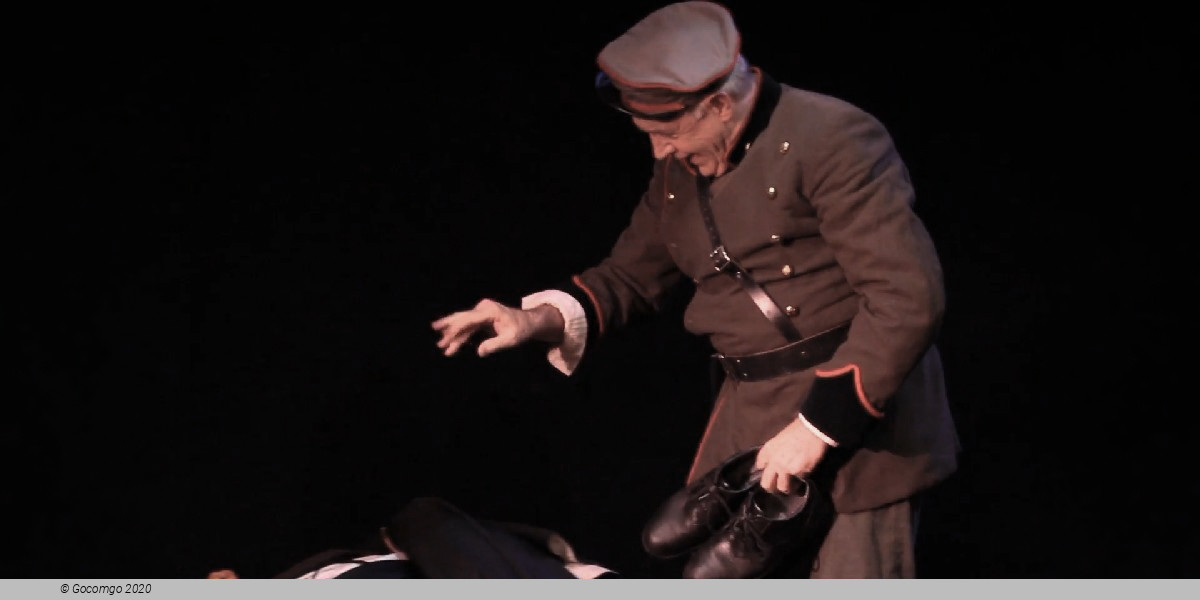
Adele arrives to ask the Chevalier Chagrin (actually Frank) to sponsor her career as an actress, but Frank is not wealthy enough to do this (Melodrama; Couplet of Adele: "Spiel' ich die Unschuld vom Lande"/"If I play the innocent peasant maid"). Meanwhile, Alfred asks Frosch to summon Dr. Blind to help get him released; Frank agrees to allow this and Dr. Blind arrives. Eisenstein enters and says he has come to serve his sentence. He is surprised when Frank tells him that his cell is already occupied by a man who claims to be Eisenstein and whom Frank had arrested in Eisenstein's apartment. Frank further tells Eisenstein that the man he arrested was singing amorous songs to Rosalinde at the time of his arrest, and warmly kissed her goodbye. Enraged, Eisenstein takes Dr. Blind's wig and glasses in order to disguise himself and confront the impersonator Alfred, whom Eisenstein now believes has cuckolded him. Rosalinde enters. Eisenstein takes off his disguise and accuses her of being unfaithful to him with Alfred. Eisenstein, Rosalinde, and Alfred sing a trio in which Eisenstein angrily claims the right of vengeance (Trio: "Ja, ich bin's, den ihr betrogen...Ra-ra-ra-ra-Rache will ich!"/"I'm the one who was mistreated....Ve-ve-ve-ve-vengeance is mine!"). However, Rosalinde produces his watch, and he realizes that the Hungarian mystery-woman he tried to seduce at Orlofsky's party was actually Rosalinde in disguise and that he, not she, is at fault.

Falke enters with all the guests from the party and explains that the whole thing was payback for Eisenstein's practical joke on him three years before. Eisenstein is delighted by the prank, and he begs Rosalinde to forgive him for his attempted infidelity. Rosalinde refuses at first, and threatens to divorce him, but Eisenstein tells her that his misbehavior was caused by the champagne. She accepts this explanation and immediately forgives him unconditionally. Orlofsky promises to finance Adele's acting career, and the company joyfully reprises the "Champagne song" from Act 2.

Venue Info

Belarus National Bolshoi Opera and Ballet Theater - Minsk
Location   Paryžskaj Kamuny Square, 1

The National Academic Grand Opera and Ballet Theatre of the Republic of Belarus is located in a park in the Trinity Hill district of Minsk. Local people call it the "Opierny Teatr" (Belarusian) or the "Opera and Ballet Theatre." While the theatre opened on 15 May 1933, in the beginning, it did not have its own performance venue. Until 1938, the troupe performed at the Belarusian Drama Theatre building.

The first permanent theatre was founded in Belarus in 1933 based on the Belarusian Opera and ballet school; the founder of the studio was a famous Russian Opera singer Anton Bonachich (Belarusian: Anton Bonatschitsch). Shortly after, Bonachich died in 1933.

The current theatre's building was opened in 1939. It was designed by the Belarusian architect from Leningrad, Iosif Langbard, whose original design was only partially implemented; some design details were omitted for financial reasons. The theatre has reliefs done by Zair Azgur.

Bizet's Carmen opened the theatre on 25 May 1933 with the title role being sung by Larisa Aleksandrovskaya. Several professional soloists and dancers were added to the troupe in the first few years at this location. Swan Lake, performed by K. Muller, was the first show on the stage of the new theatre. By 1940, Grand was added to the theatre's name to indicate its expansion. The performances by the theatre company during the "Decade of Belarusian Art" in Moscow in June 1940 was a great success which included the first Belarusian ballet, The Nightingale composed by Mikhail Kroshner, as well as other national operas such as "In the Dense Forest of Palesse", "The Flower of Fortune", and the second version of "Mikhas Podgorny". Performances continued during the war in Nizhny Novgorod, then known as Gorky until the liberation of Minsk in 1944; after that performances took place in Kovrov.

Enrichment of post World War 2 repertoire and expansion

During this time the repertoire was greatly enriched. The most famous operas staged in this theatre include Boris Godunov by Modest Mussorgsky, Otello and Don Carlo by Giuseppe Verdi, Jacques Offenbach's The Tales of HoffmannSadko and The Golden Cockerel by Nikolai Rimsky-Korsakov, and Lohengrin by Richard Wagner. Socialist realist operas by Belarusian composers such as Yuri Semenyako, Yevgeny Glebov (Your Spring, 1963) and Heinrich Wagner were included.

Among the most notable composers has been Kulikovich Shcheglov, who like some of the writers went into exile after the war. Others include Yevgeny Glebov, composer of the opera Your Spring (1963) and the ballet Alpine Ballad (1967), ..." In 1967, the theatre was awarded the title of Academic for its status in the progression of the performing arts.

In 1996 the State Theater was divided into two independent theatres: the National Academic Grand Ballet Theatre of the Republic of Belarus and the National Academic Opera Theatre of Belarus, but in 2008 they once again combined to become the present name, National Academic Grand Opera and Ballet Theatre of the Republic of Belarus.

The building was renovated and it reopened in 2009. Many sculptures were added around the theatre, its stage was slightly moved and audience space expanded. The most up-to-date lighting and motion equipment were added while adhering to the original design. The ballet company is considered one of the foremost companies in the world.

The theatre today

Works by Belarus composers in the company's repertoire today include Dmitry Smolsky's The Grey Legend (Russian "Седая легенда" 1978).

The troupe tours internationally. Fans from Spain, Russia, Germany, Poland, Switzerland, Israel, Portugal, and China are well acquainted with the repertoire of the Belarusian theatre. National Opera and Ballet of Belarus performs annually at the German festival "Classic Open Air."

Important Info
Type: Operetta
City: Minsk, Belarus
Starts at: 19:00
Acts: 3
Intervals: 1
Duration: 2h 50min
Sung in: Russian
Titles in: Russian,English
Top of page