



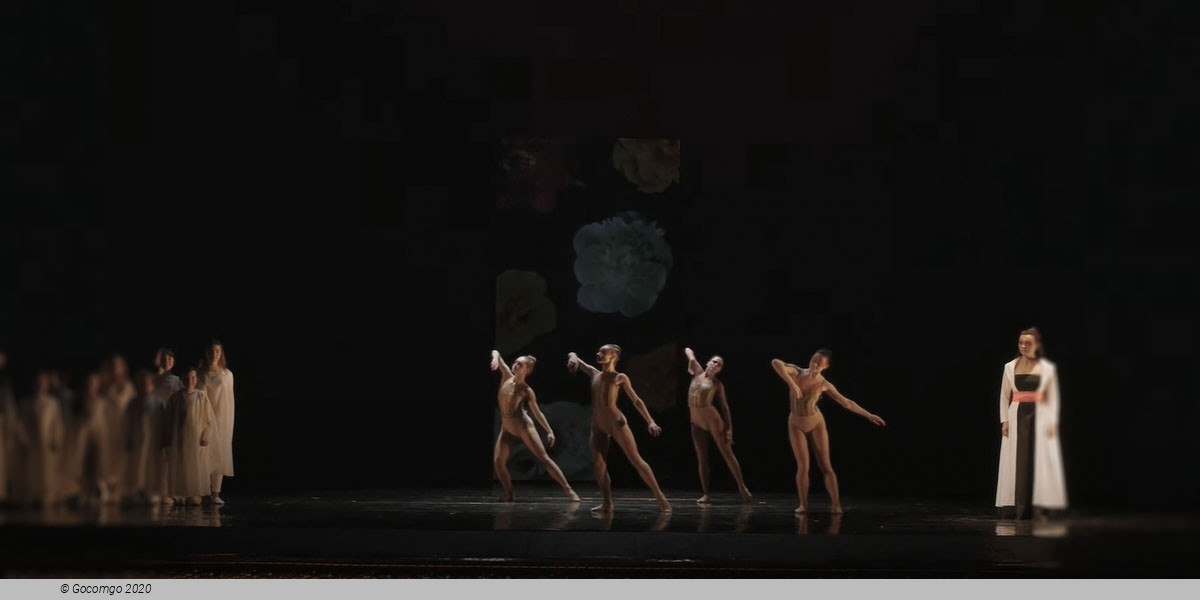
Belarus National Bolshoi Opera and Ballet Theater 2 June 2021 - Carmina Burana. Carmen Suite | GoComGo.com

Carmina Burana. Carmen Suite

Belarus National Bolshoi Opera and Ballet Theater, Minsk, Belarus
All photos (6)
Select date and time
7 PM
Request for Tickets
Important Info
Type: Ballet
City: Minsk, Belarus
Starts at: 19:00
Acts: 2
Duration: 2h 15min

E-tickets: Print at home or at the box office of the event if so specified. You will find more information in your booking confirmation email.

You can only select the category, and not the exact seats.
If you order 2 or 3 tickets: your seats will be next to each other.
If you order 4 or more tickets: your seats will be next to each other, or, if this is not possible, we will provide a combination of groups of seats (at least in pairs, for example 2+2 or 2+3).

Overview

"Carmina Burana" – this is how the manuscript, which was written about 1300 years ago and was founded at the beginning of the XIX century in one of the abbeys in foothills of the Bavarian Alps, is called. The name of the manuscript was given by its creator J. A. Schmeller. “Carmina” from the Latin language is translated as “songs”. “Burana” is the name of the area, where manuscripts with poetry of unknown poets, peasants, craftsmen and also vagrants (that is “tramps”, “wanderers”, this is how the wandering poets were called in the Middle Ages).

The collection “Carmina Burana” was first published in 1847, Carl Orff received only the fourth edition. There were more than 250 poems on various topics in the collection, and on the first page Carl Orff found the famous painting “Fortune’s Wheel”. The poems in the collection were written in the Medieval Latin language. Orff has left the original text in inviolability by choosing 24 poems about love, spring, drinking and satirical songs and several hymn-like strophes. The composer defined the genre of his work as “Society songs for singers and the choir accompanied by the instruments with a presentation on stage”. The storyline of the stage cantata is unsteady and associative. Song and orchestra numbers correspond to the contrast pictures of diverse and versatile life: joys of life, happiness, uncontrollable fun, the beauty of spring nature, loving passion are glorified in ones, in the others – an uneasy life of monks and vagrants, satiric attitude towards the existence. But thoughtfulness about the changeable and powerful human destiny – the Fortune, - remains the main philosophic pivot of the cantata.

The Fortune’s wheel will never get tired of spinning
I’ll be subverted from the peak, humiliated
In the interim the other one will rise and cheer up
By the same wheel will be uplifted to the heights.

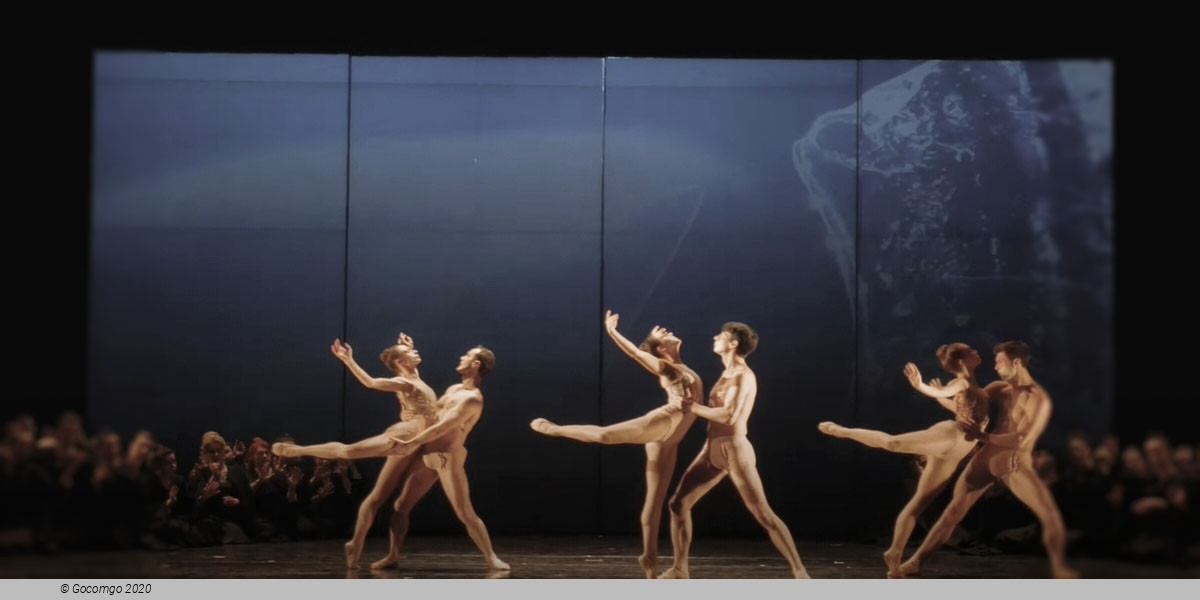
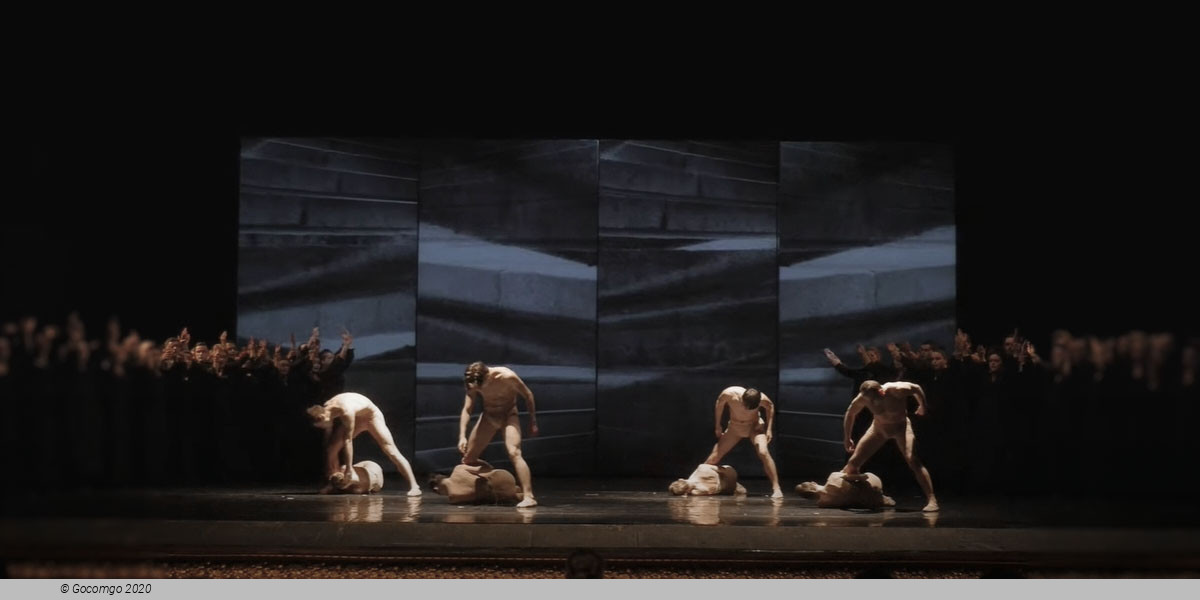
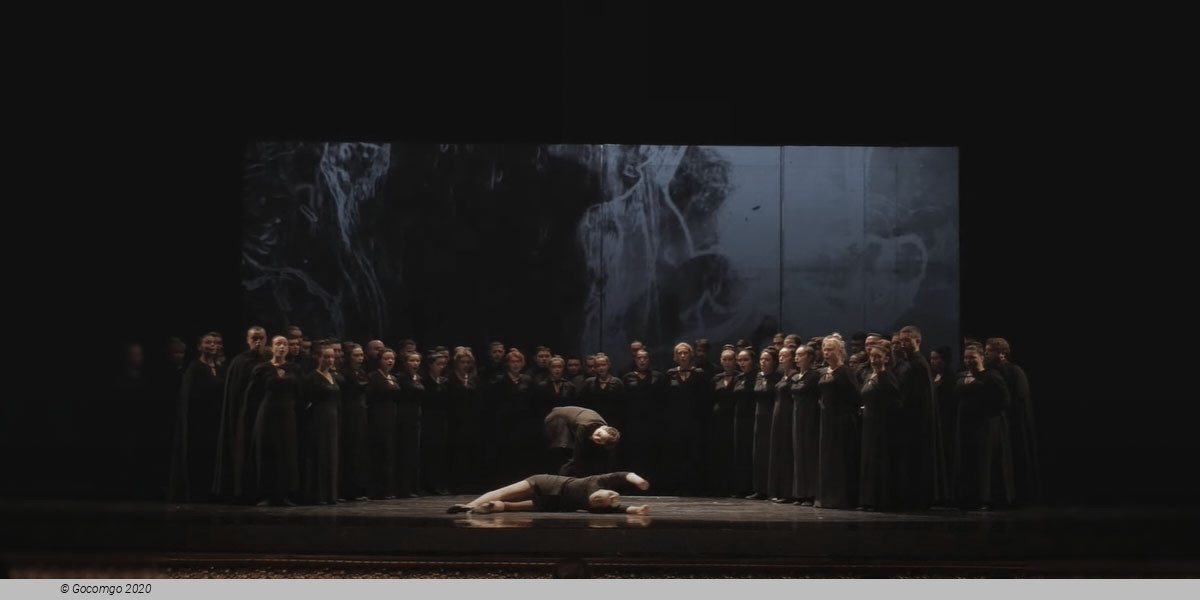
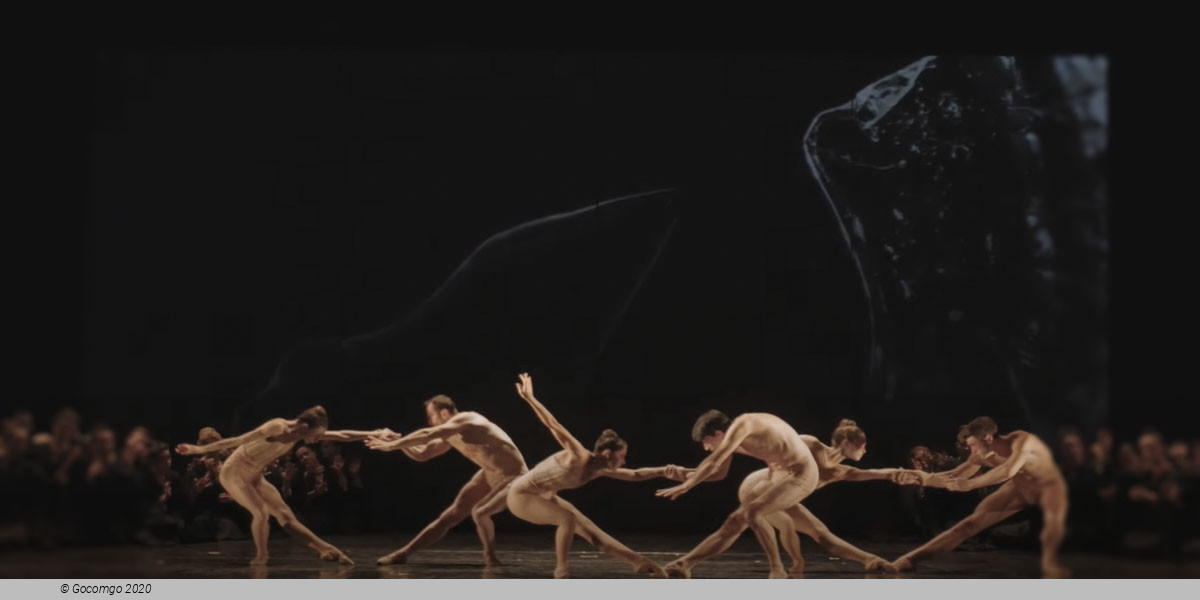
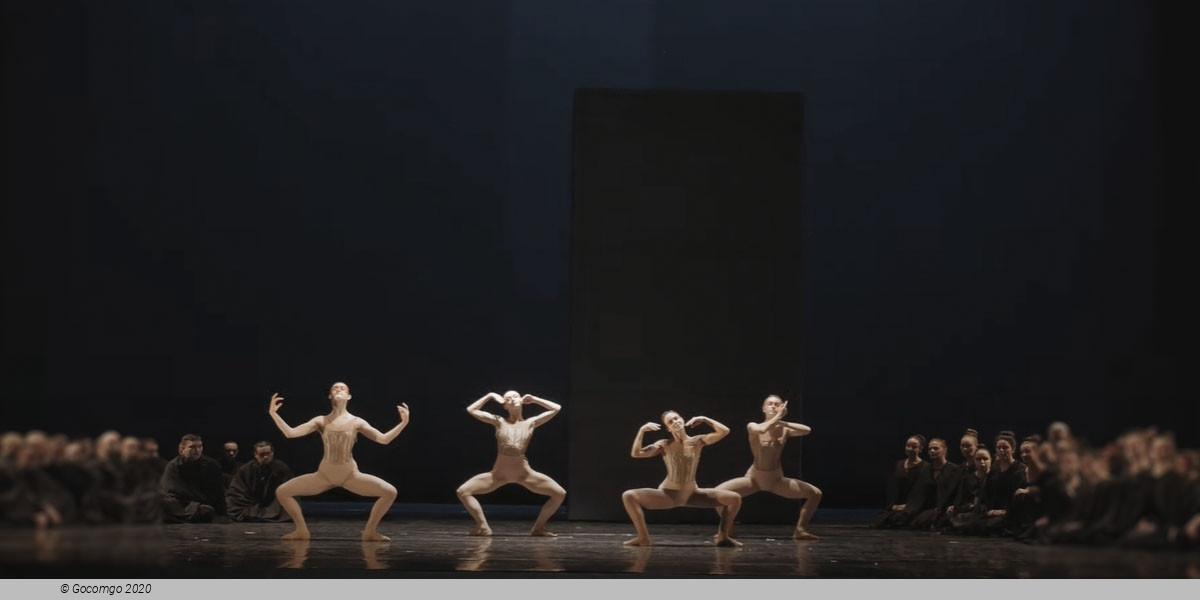
The first performance of the cantata "Carmina Burana" in 1937 made a splash. After the premiere, the composer Carl Orff told his publisher: “Everything that I have written so far, and you, unfortunately, from afar, can destroy. My collected works begin with Carmina Burana. " The cantata "Carmina Burana", performed on the territory of the former Soviet Union only in concert versions, with the production of Valentin Elizariev, for the first time found its stage life. The choreographer created his own storyline for the ballet, showing us in close-up the images of the Poet, the Beloved, the Whore and the Abbot from the motley crowd of Vagant poets, their friends, monks, sinners. Soloists and ballet dancers, as well as opera soloists and the theatre choir, take part in the grandiose vocal and choreographic performance.

In 1974, choreographer Valentin Elizariev staged a performance Carmen Suite to music by J. Bizet, arranged by R. Shchedrin, based on his own libretto, based on the cycle of poems "Carmen" by Alexander Blok. The premiere took place at the Bolshoi Theater of the Byelorussian SSR (Minsk).

“Listening to this music, I saw my Carmen, which was significantly different from Carmen in other performances. For me, she is not only an outstanding woman, proud and uncompromising, and not only a symbol of love. She is a hymn to love, love, pure, honest, burning, demanding, love of a colossal flight of feelings that none of the men she met is capable of.
Carmen is not a doll, not a beautiful toy, not a street girl with whom many would not mind having fun. For her, love is the essence of life. No one was able to appreciate, understand her inner world, hidden behind a dazzling beauty.
Jose fell in love with Carmen. Love transformed the rude, narrow-minded soldier, opened up spiritual joys for him, but for Carmen his arms soon turn into chains. Intoxicated by his feelings, Jose does not try to understand Carmen. He begins to love not Carmen, but his feelings for her ...

She could also fall in love with Torero, who is not indifferent to her beauty. But Torero - exquisitely gallant, brilliant and fearless - is internally lazy, cold, he is not able to fight for love. And naturally, demanding and proud Carmen cannot love someone like him. And without love, there is no happiness in life, and Carmen accepts death from Jose, so as not to embark on the path of compromise or loneliness together. "

Choreographer Valentin Elizariev

History

The representation is on the subject of the traumatic passage from post-adolescence to maturity. The inspiration originates from the original text of Carmina Burana: a group of Clergymen – Clerici Vagantes – become conscience that the world does not function by the moral rules that they have been given, they then create a group that follows the rules of virtue, and dive in completely and with passion to experiment this freedom and life filled with pleasures.

Premiere of this production: 20 April 1967, The Bolshoi Theatre, Moscow

Carmen Suite is a one-act ballet created in 1967 by Cuban choreographer Alberto Alonso to music by Russian composer Rodion Shchedrin for his wife, prima ballerina assoluta Maya Plisetskaya.

Synopsis
  • Place: Seville, Spain, and surrounding hills
  • Time: Around 1820

Alonso's scenario centers on Carmen, Don José and the bullfighter Escamillo. Carmen is a passionate, free-spirited woman in contrast to the temperamental and fickle Don José. Fate, a ballerina dressed in black and a representation of Carmen's alter ego, tells Carmen's fortune with a deck of cards. A fight with tobacco dealers leads to Carmen's arrest by Captain Zúñiga. In jail, she seduces Don José and convinces him to release her. Carmen is subsequently caught in a love triangle between Don José and popular bullfighter Escamillo.

Boris Messerer's sets included a mock bullring which symbolizes life, uniting the bullfight and Carmen's destiny in a sinister personage. Masked spectators and a uniformed judge represent society's disapproval for the unconventional behavior of Carmen and her lovers. Fate reappears in the final act playing the role of a bull and the three main characters meet in the arena. Carmen dances alternatively with Fate, Escamillo and Don José until she is stabbed. She dies caressing Don José's face, revealing him as the assassin.

Venue Info

Belarus National Bolshoi Opera and Ballet Theater - Minsk
Location   Paryžskaj Kamuny Square, 1

The National Academic Grand Opera and Ballet Theatre of the Republic of Belarus is located in a park in the Trinity Hill district of Minsk. Local people call it the "Opierny Teatr" (Belarusian) or the "Opera and Ballet Theatre." While the theatre opened on 15 May 1933, in the beginning, it did not have its own performance venue. Until 1938, the troupe performed at the Belarusian Drama Theatre building.

The first permanent theatre was founded in Belarus in 1933 based on the Belarusian Opera and ballet school; the founder of the studio was a famous Russian Opera singer Anton Bonachich (Belarusian: Anton Bonatschitsch). Shortly after, Bonachich died in 1933.

The current theatre's building was opened in 1939. It was designed by the Belarusian architect from Leningrad, Iosif Langbard, whose original design was only partially implemented; some design details were omitted for financial reasons. The theatre has reliefs done by Zair Azgur.

Bizet's Carmen opened the theatre on 25 May 1933 with the title role being sung by Larisa Aleksandrovskaya. Several professional soloists and dancers were added to the troupe in the first few years at this location. Swan Lake, performed by K. Muller, was the first show on the stage of the new theatre. By 1940, Grand was added to the theatre's name to indicate its expansion. The performances by the theatre company during the "Decade of Belarusian Art" in Moscow in June 1940 was a great success which included the first Belarusian ballet, The Nightingale composed by Mikhail Kroshner, as well as other national operas such as "In the Dense Forest of Palesse", "The Flower of Fortune", and the second version of "Mikhas Podgorny". Performances continued during the war in Nizhny Novgorod, then known as Gorky until the liberation of Minsk in 1944; after that performances took place in Kovrov.

Enrichment of post World War 2 repertoire and expansion

During this time the repertoire was greatly enriched. The most famous operas staged in this theatre include Boris Godunov by Modest Mussorgsky, Otello and Don Carlo by Giuseppe Verdi, Jacques Offenbach's The Tales of HoffmannSadko and The Golden Cockerel by Nikolai Rimsky-Korsakov, and Lohengrin by Richard Wagner. Socialist realist operas by Belarusian composers such as Yuri Semenyako, Yevgeny Glebov (Your Spring, 1963) and Heinrich Wagner were included.

Among the most notable composers has been Kulikovich Shcheglov, who like some of the writers went into exile after the war. Others include Yevgeny Glebov, composer of the opera Your Spring (1963) and the ballet Alpine Ballad (1967), ..." In 1967, the theatre was awarded the title of Academic for its status in the progression of the performing arts.

In 1996 the State Theater was divided into two independent theatres: the National Academic Grand Ballet Theatre of the Republic of Belarus and the National Academic Opera Theatre of Belarus, but in 2008 they once again combined to become the present name, National Academic Grand Opera and Ballet Theatre of the Republic of Belarus.

The building was renovated and it reopened in 2009. Many sculptures were added around the theatre, its stage was slightly moved and audience space expanded. The most up-to-date lighting and motion equipment were added while adhering to the original design. The ballet company is considered one of the foremost companies in the world.

The theatre today

Works by Belarus composers in the company's repertoire today include Dmitry Smolsky's The Grey Legend (Russian "Седая легенда" 1978).

The troupe tours internationally. Fans from Spain, Russia, Germany, Poland, Switzerland, Israel, Portugal, and China are well acquainted with the repertoire of the Belarusian theatre. National Opera and Ballet of Belarus performs annually at the German festival "Classic Open Air."

Important Info
Type: Ballet
City: Minsk, Belarus
Starts at: 19:00
Acts: 2
Duration: 2h 15min
Top of page