








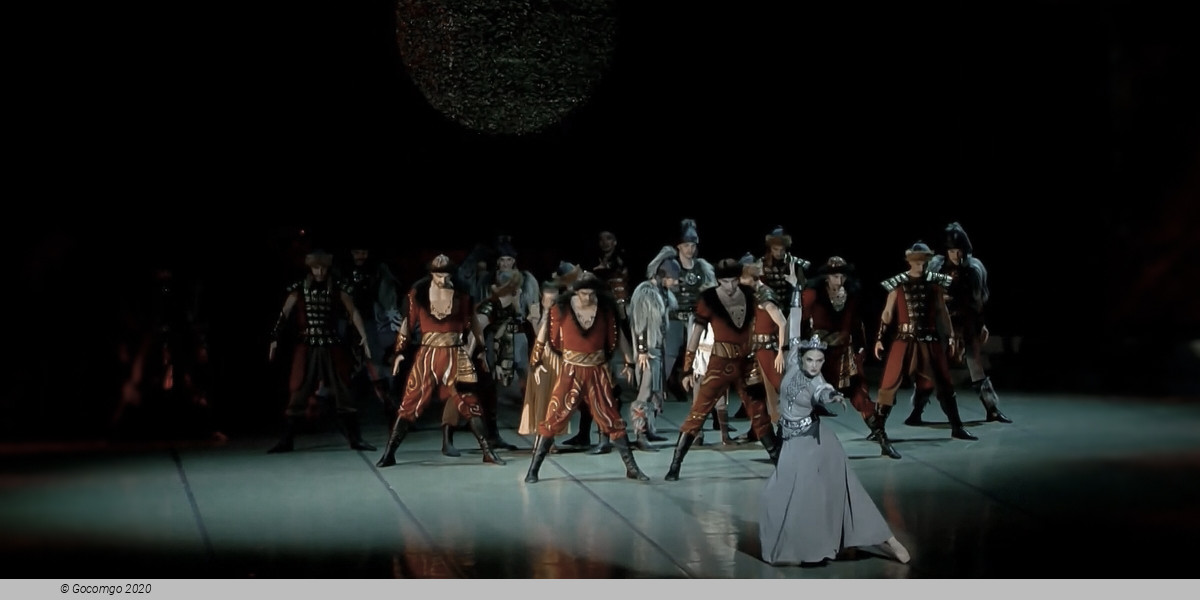
Belarus National Bolshoi Opera and Ballet Theater 18 September 2022 - Anastasia | GoComGo.com

Anastasia

Belarus National Bolshoi Opera and Ballet Theater, Main Stage, Minsk, Belarus
All photos (7)
Select date and time
6 PM

E-tickets: Print at home or at the box office of the event if so specified. You will find more information in your booking confirmation email.

You can only select the category, and not the exact seats.
If you order 2 or 3 tickets: your seats will be next to each other.
If you order 4 or more tickets: your seats will be next to each other, or, if this is not possible, we will provide a combination of groups of seats (at least in pairs, for example 2+2 or 2+3).

Important Info
Type: Ballet
City: Minsk, Belarus
Starts at: 18:00
Acts: 2
Intervals: 1
Duration: 2h

E-tickets: Print at home or at the box office of the event if so specified. You will find more information in your booking confirmation email.

You can only select the category, and not the exact seats.
If you order 2 or 3 tickets: your seats will be next to each other.
If you order 4 or more tickets: your seats will be next to each other, or, if this is not possible, we will provide a combination of groups of seats (at least in pairs, for example 2+2 or 2+3).

Overview
History
Premiere of this production: 30 October 2018, National Academic Bolshoi Opera and Ballet Theater of the Republic of Belarus

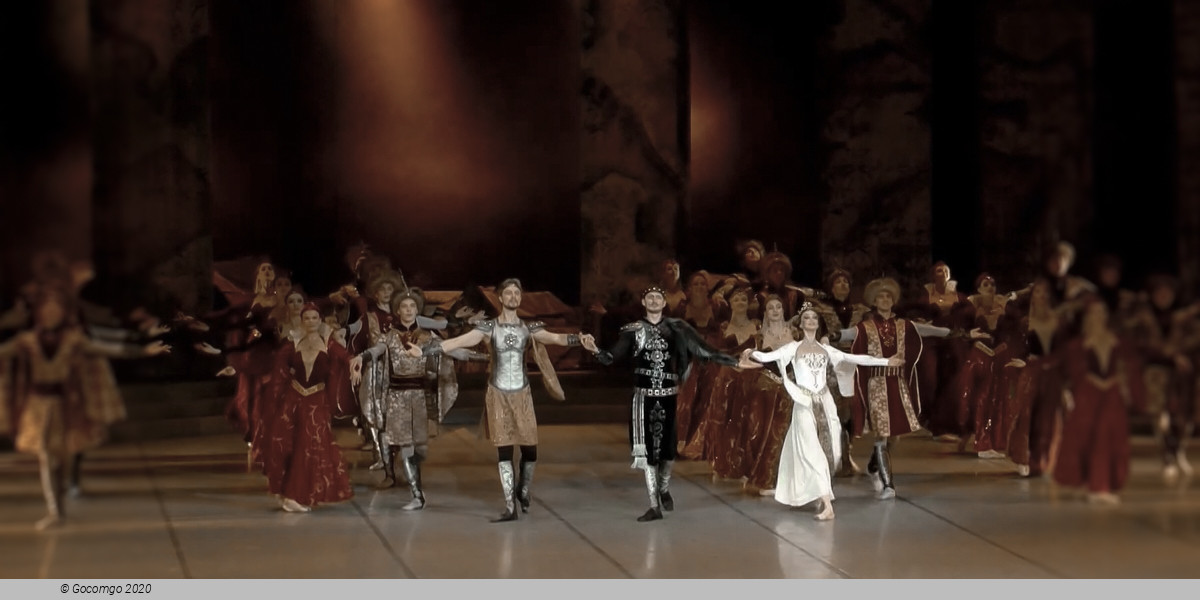
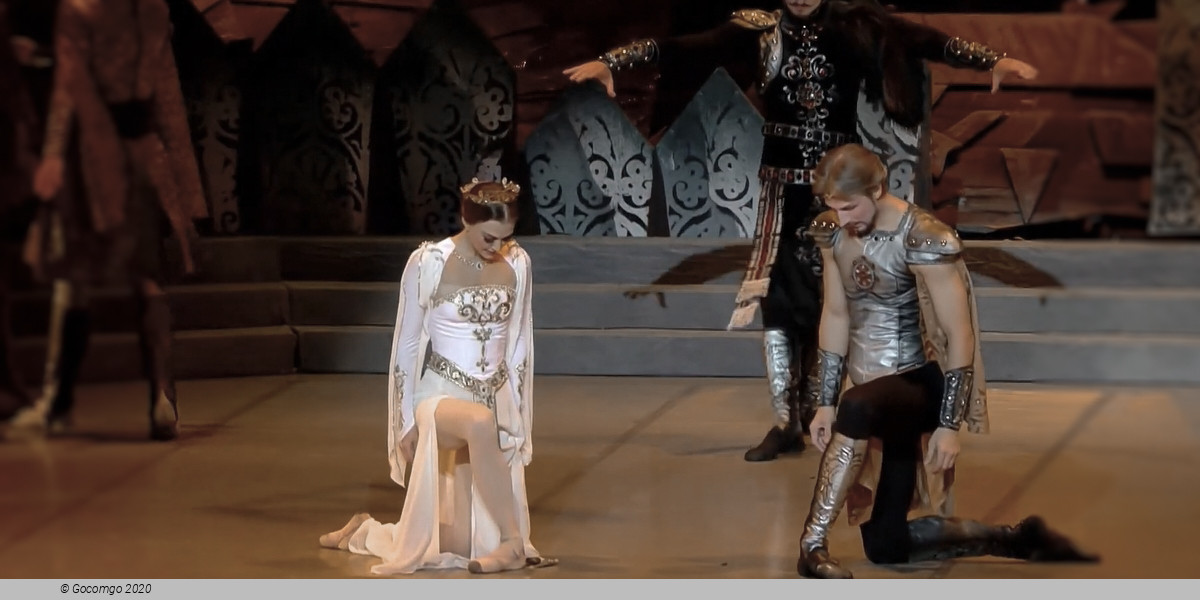
On the stage of the Bolshoi Theater of Belarus to the marvellous music of Vyacheslav Kuznetsov, the legend of Zhanna d'Arc of Belarus - Anastasia Slutskaya has come to life. The ballet was staged by the People's Artist of Belarus Yuri Troyan.

Synopsis

Act 1

Scene 1

Meeting of young Anastasia of Mstislavl and Prince Mikhail Glinski, their first touch, their first kiss. The princess’s first love and vain effort not to let Mikhail go…

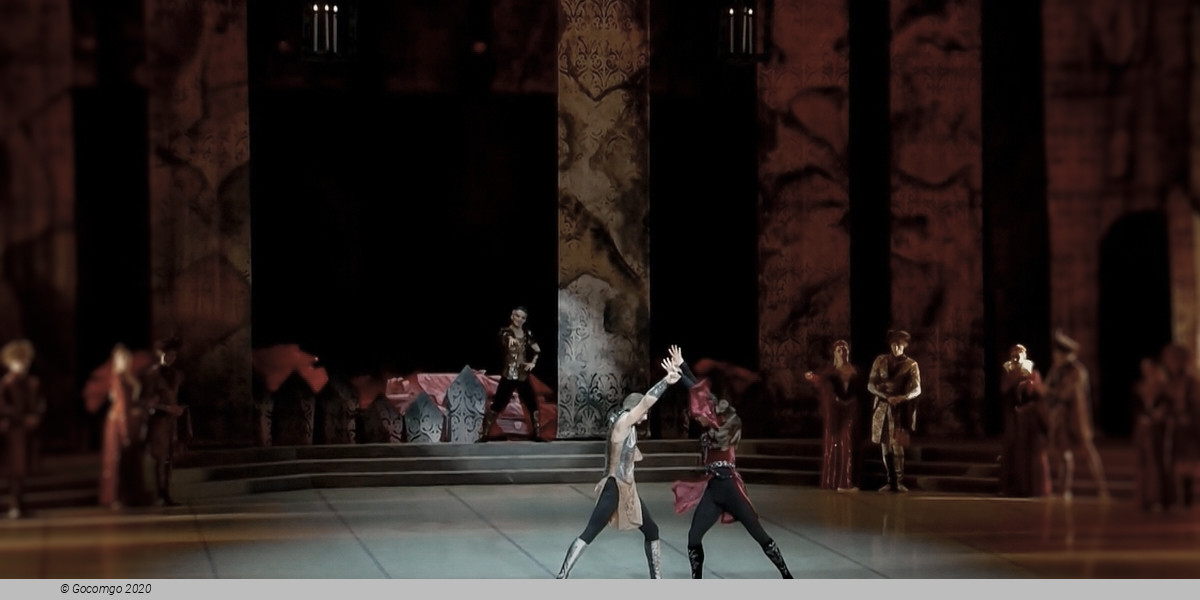
Years later. Anastasia’s father, Prince Ivan of Mstislavl, gives a sumptuous ball in honour of her chosen one, Simeon Olelkovich, the Prince of Slutsk, a descendant of the great Gedymin and Olgerd. Anastasia and Simeon join their hands, and now it’s no longer the touch of a bride and a bridegroom, but of a wife and a husband.   

A flourish of trumpets announces the arrival of new guests. Among them is Mikhail Glinski, who has returned after a number of years in Europe. He is accompanied by the Crimean Khan Ahmed, a cunning artful wily warrior, and his daughter Zaira, an oriental beauty, dashing rider and warrior. 

Prince Glinski is captivated by a grown-up Anastasia and does not conceal his feeling, but she has given her heart to Simeon. Zaira cannot take her eyes off the handsome Mikhail. 

Khan Ahmed suggests that the guests be entertained with a duel between the men, and the winner will get a wonderful Tatar whip as a prize. The fight between the strong but gawky Tatar and Mikhail Glinski, an agile skilled dueller, ends with the Prince’s dramatic victory. Filled with admiration, Zaira congratulates the winner and hovers over him, but she sees that his mind is totally occupied with the Princess of Slutsk.

Prince Simeon notices Anastasia’s confusion and challenges the winner to single combat. The fight is a meeting of worthy adversaries. A complicated dangerous dynamic duel results in the victory of the Prince of Slutsk – the prize is awarded to Simeon. Anastasia hugs her spouse happily. 

Rejoiced at his son-in-law’s victory, Prince Ivan of Mstislavl and the guests congratulate Simeon. Anastasia’s elation is the apotheosis of celebration. But not everyone joins in the revelry. Mikhail anguishes, Ahmed and Zaira are embittered and resentful. 

Scene 2

A winter fete in Slutsk. It’s snowing.

A girl and a boy walk along the streets: they are Yuri and Aleksandra, the children of the Princess and Prince of Slutsk Anastasia and Simeon. Their home town awakens, gleaming in the light of the rising sun. Mummers appear from different sides; their funny gestures and jumping amuse children. The town dwellers celebrate Christmas. The Prince and Princess of Slutsk appear grandly.  

The fete is over. The princely family are in the chambers. Anastasia and Simeon have finally left alone; at last, they can exchange words of love again. Hand in hand, they again dance the love duet of adults who feel each other deeply.

A sudden peal of bells breaks the silence of the night. A clatter of horse hooves is heard, houses are on fire, people rush in panic. The perfidious raid is led by Khan Ahmed and his daughter Zaira. A horrific picture of violence, destruction, and anguish. Prince Simeon is in the centre of the clash. He is an experienced warrior who cannot be defeated in a fair fight. The outcome is decided by Zaira’s evil blow on Simeon’s back. 

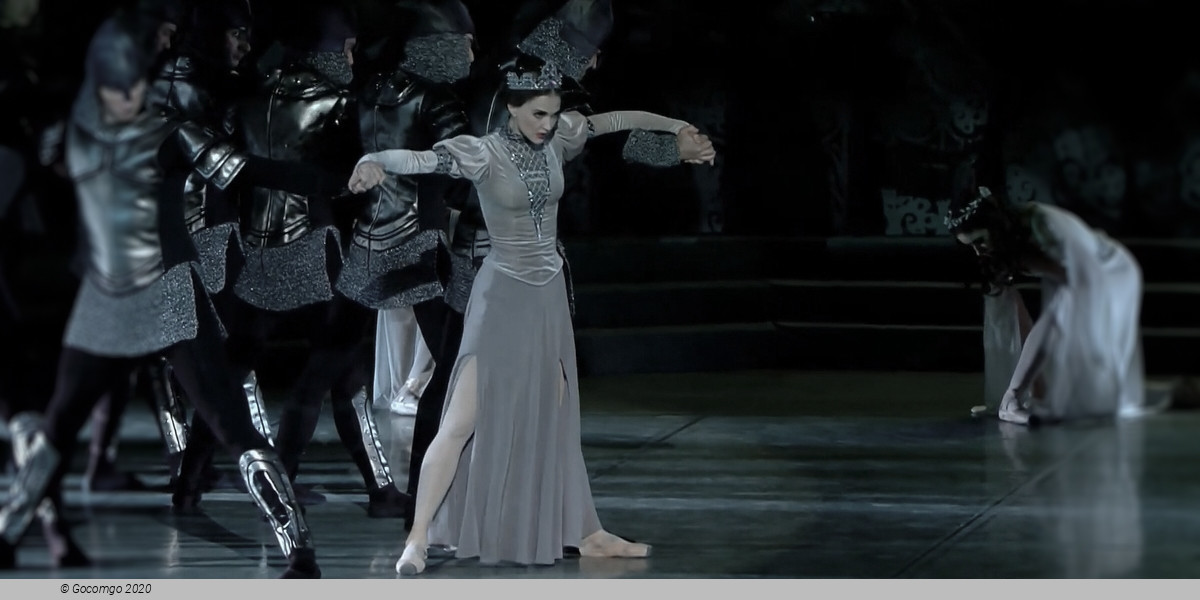
The death of the Prince makes the town defenceless. Anastasia mourns the passing of her husband. With their heads bowed, the men carry the body of the Prince. The Tatars reappear. Having scattered the frightened women, Ahmed, Zaira and the Tatar soldiers' circle around the exhausted and defenceless Princess... Zaira’s hand throws a large net over Anastasia.   

Act 2

Scene 3

Dawn in the Tatar camp. 

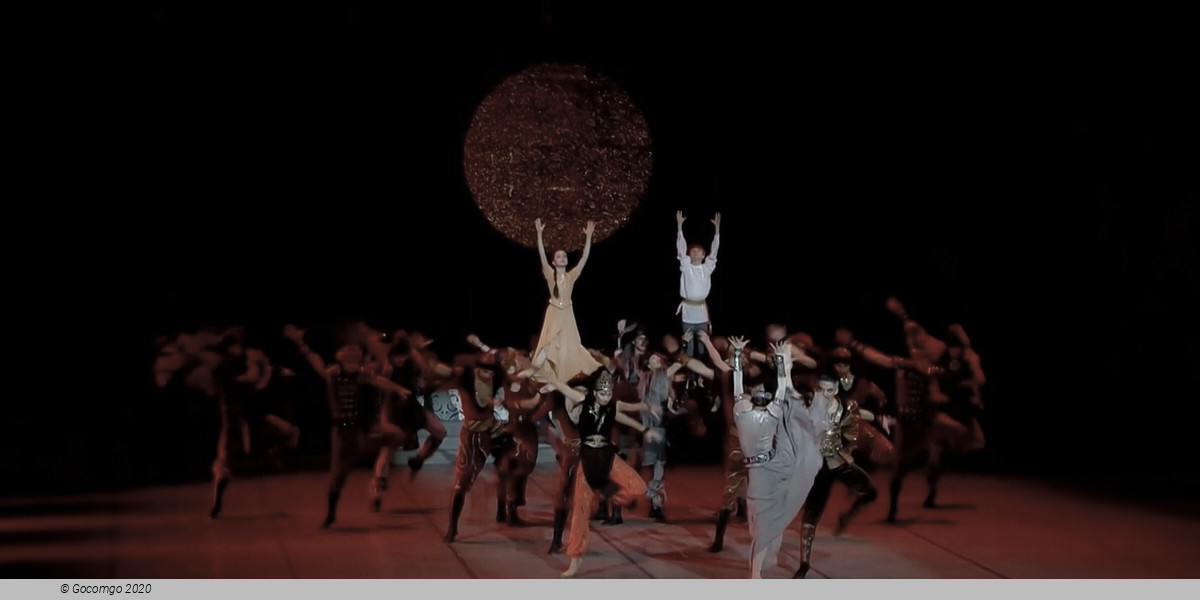
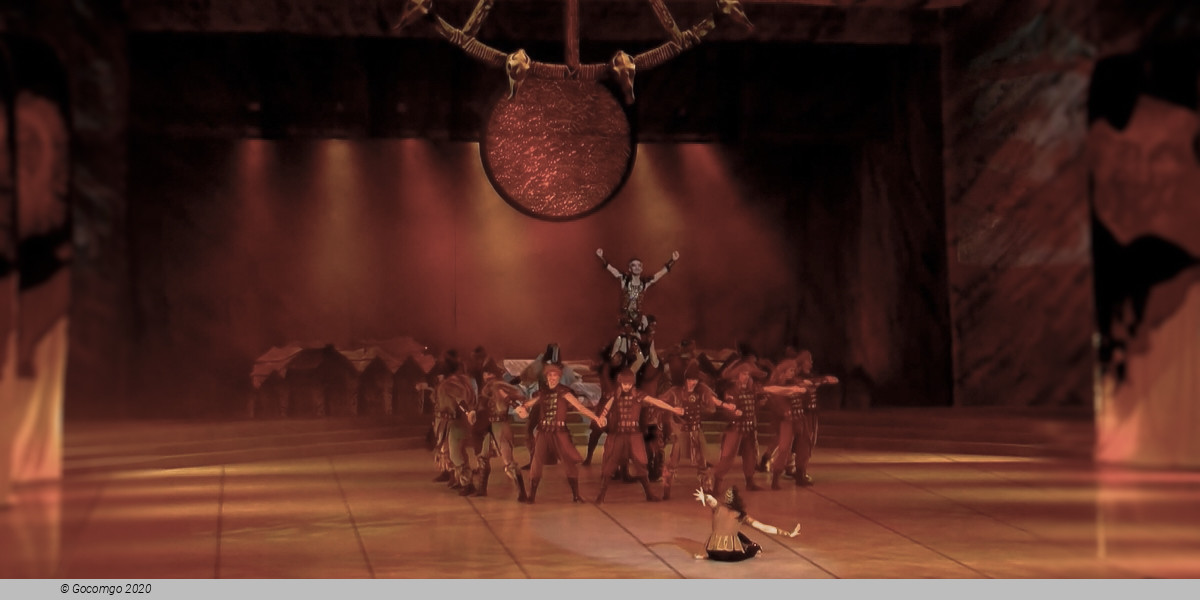
The great Khan Ahmed finishes his morning prayer and invites his soldiers to celebrate the victory over Prince Simeon. The Tatars’ revelry is in full swing, Zaira dancing in the centre. 

The sound of the trumpet announces the arrival of Prince Mikhail. Khan Ahmed orders to bring his presence to the dear guest – it’s a cocoon of the net. Mikhail approaches the cocoon, unwinds the net and sees Anastasia: the Princess is humiliated and exhausted, but she remains invincible.  

Mikhail is still in love with her and hopes she will return his love, but Anastasia rejects him. The Prince sets her free. Impressed by the Prince’s generosity, Anastasia leaves. Headed by Khan Ahmed, the Tatars return and seethe with rage. They are outraged by the Prince’s deed: he has neglected their gift and released the main booty.    

Scene 4

The princely mansion in Slutsk. 

Anastasia and her children are in the chambers. She is bewildered, and only in prayer can she find solace and hope. The Tatars arrive in the town again. They try to persuade Anastasia to forge an alliance and present expensive gifts, but the Princess refuses to accept them. Prince Mikhail Glinski appears: he wishes to be at the head of Slutsk. Anastasia opposes adamantly. Seized with indignation, Khan Ahmed declares war. The infuriated Tatars leave an upset Mikhail following them.     

Memories give Anastasia inner strength. The image of her husband, his power, support and confidence lives in the soul of the lonely Princess. Simeon is always with her, it’s him who gives Anastasia strength to live and struggle. She's ready to protect her family, her kin, her town. The army led by the Princess goes to fight a battle.

Iron footsteps of the Tatar soldiers and a clatter of their horses’ hooves are heard throughout. Plunder, beating and violence against women and children again. However, the brutal Tatars are unexpectedly repulsed by Prince Mikhail Glinski, who has decided to side with Anastasia. Mikhail fights with Ahmed. The Tatars are defeated; Anastasia prevents a perfidious stab in Prince Mikhail’s back. With the last ounce of his strength, the Prince approaches Anastasia with her children. It is she who has led the people and won, after enduring all the sorrows, humiliation and adversity. 

Venue Info

Belarus National Bolshoi Opera and Ballet Theater - Minsk
Location   Paryžskaj Kamuny Square, 1

The National Academic Grand Opera and Ballet Theatre of the Republic of Belarus is located in a park in the Trinity Hill district of Minsk. Local people call it the "Opierny Teatr" (Belarusian) or the "Opera and Ballet Theatre." While the theatre opened on 15 May 1933, in the beginning, it did not have its own performance venue. Until 1938, the troupe performed at the Belarusian Drama Theatre building.

The first permanent theatre was founded in Belarus in 1933 based on the Belarusian Opera and ballet school; the founder of the studio was a famous Russian Opera singer Anton Bonachich (Belarusian: Anton Bonatschitsch). Shortly after, Bonachich died in 1933.

The current theatre's building was opened in 1939. It was designed by the Belarusian architect from Leningrad, Iosif Langbard, whose original design was only partially implemented; some design details were omitted for financial reasons. The theatre has reliefs done by Zair Azgur.

Bizet's Carmen opened the theatre on 25 May 1933 with the title role being sung by Larisa Aleksandrovskaya. Several professional soloists and dancers were added to the troupe in the first few years at this location. Swan Lake, performed by K. Muller, was the first show on the stage of the new theatre. By 1940, Grand was added to the theatre's name to indicate its expansion. The performances by the theatre company during the "Decade of Belarusian Art" in Moscow in June 1940 was a great success which included the first Belarusian ballet, The Nightingale composed by Mikhail Kroshner, as well as other national operas such as "In the Dense Forest of Palesse", "The Flower of Fortune", and the second version of "Mikhas Podgorny". Performances continued during the war in Nizhny Novgorod, then known as Gorky until the liberation of Minsk in 1944; after that performances took place in Kovrov.

Enrichment of post World War 2 repertoire and expansion

During this time the repertoire was greatly enriched. The most famous operas staged in this theatre include Boris Godunov by Modest Mussorgsky, Otello and Don Carlo by Giuseppe Verdi, Jacques Offenbach's The Tales of HoffmannSadko and The Golden Cockerel by Nikolai Rimsky-Korsakov, and Lohengrin by Richard Wagner. Socialist realist operas by Belarusian composers such as Yuri Semenyako, Yevgeny Glebov (Your Spring, 1963) and Heinrich Wagner were included.

Among the most notable composers has been Kulikovich Shcheglov, who like some of the writers went into exile after the war. Others include Yevgeny Glebov, composer of the opera Your Spring (1963) and the ballet Alpine Ballad (1967), ..." In 1967, the theatre was awarded the title of Academic for its status in the progression of the performing arts.

In 1996 the State Theater was divided into two independent theatres: the National Academic Grand Ballet Theatre of the Republic of Belarus and the National Academic Opera Theatre of Belarus, but in 2008 they once again combined to become the present name, National Academic Grand Opera and Ballet Theatre of the Republic of Belarus.

The building was renovated and it reopened in 2009. Many sculptures were added around the theatre, its stage was slightly moved and audience space expanded. The most up-to-date lighting and motion equipment were added while adhering to the original design. The ballet company is considered one of the foremost companies in the world.

The theatre today

Works by Belarus composers in the company's repertoire today include Dmitry Smolsky's The Grey Legend (Russian "Седая легенда" 1978).

The troupe tours internationally. Fans from Spain, Russia, Germany, Poland, Switzerland, Israel, Portugal, and China are well acquainted with the repertoire of the Belarusian theatre. National Opera and Ballet of Belarus performs annually at the German festival "Classic Open Air."

Important Info
Type: Ballet
City: Minsk, Belarus
Starts at: 18:00
Acts: 2
Intervals: 1
Duration: 2h
Top of page