Municipal House 22 December 2022 - Cecilia Bartoli in "La Clemenza Di Tito" | GoComGo.com

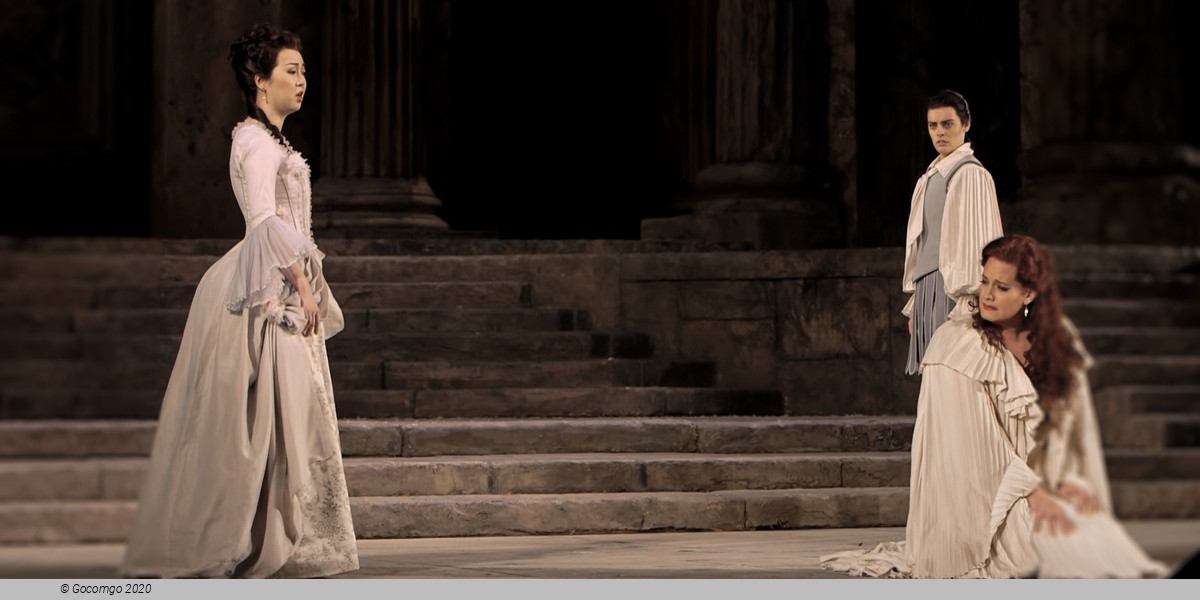
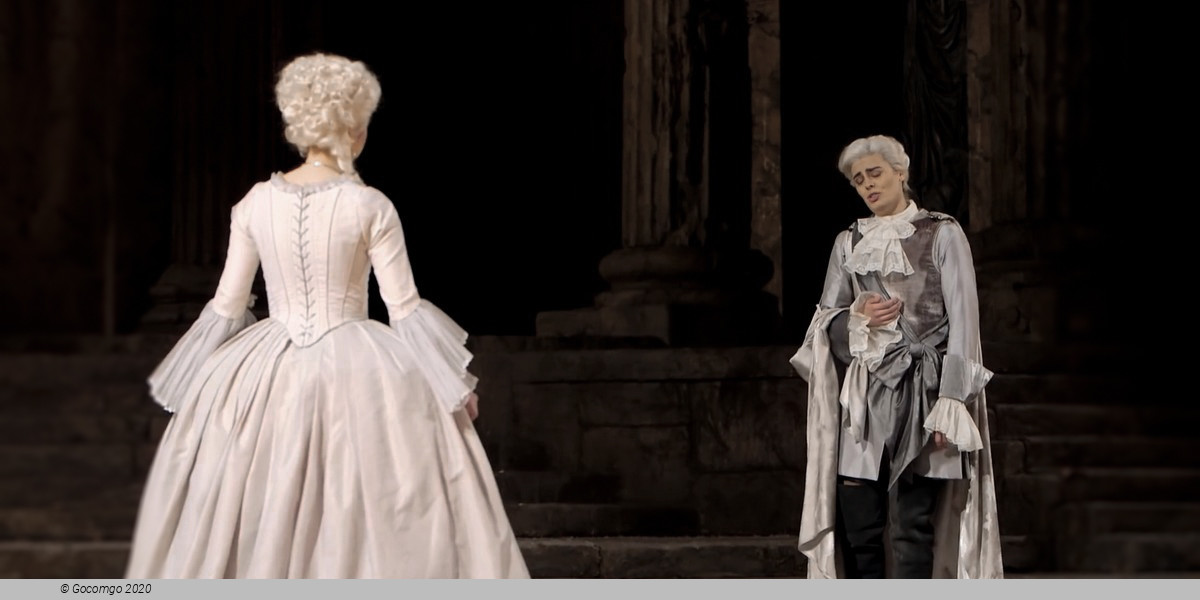
Cecilia Bartoli in "La Clemenza Di Tito"

Municipal House, Smetana Hall, Prague, Czech Republic
All photos (6)
Select date and time
7:30 PM
Request for Tickets
Important Info
Type: Classical Concert
City: Prague, Czech Republic
Starts at: 19:30

E-tickets: Print at home or at the box office of the event if so specified. You will find more information in your booking confirmation email.

You can only select the category, and not the exact seats.
If you order 2 or 3 tickets: your seats will be next to each other.
If you order 4 or more tickets: your seats will be next to each other, or, if this is not possible, we will provide a combination of groups of seats (at least in pairs, for example 2+2 or 2+3).

Programme
Wolfgang Amadeus Mozart: La clemenza di Tito
Wolfgang Amadeus Mozart: Má vlast: Vltava (The Moldau)
Overview

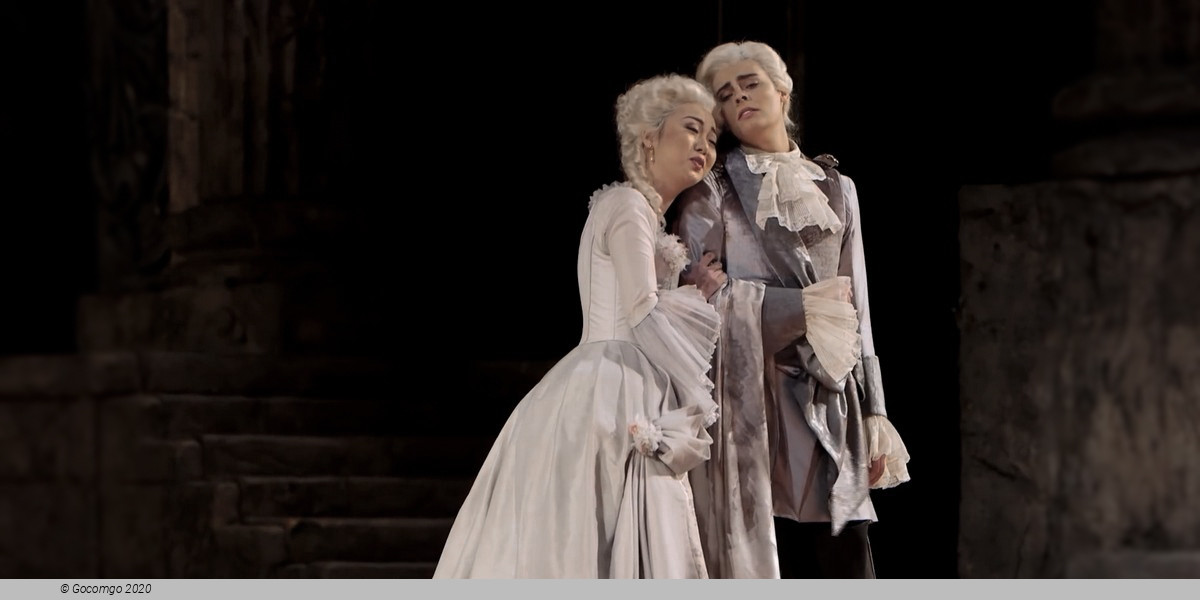
The Roman Capitol is on fire, terror is rampant! A wild desire for revenge and the throne drives the daughter of the overthrown Emperor Vitellius to force her suitor Sesto to burn Rome and assassinate Emperor Titus. A story full of betrayal, love, and passion, but also cruel remorse, despair, and guilt, which results into a happy ending. How could it not, when Emperor Titus is known for his generosity and mercy: he forgives all who have sinned against him! This is Mozart's coronation opera La clemenza di Tito, which had its world premiere on 6th September 1791 at the Estates Theater in Prague.

Praguers who understand not only Mozart but also Cecilia Bartoli will see the last concert performance of this opera as part of a European tour with an absolutely stellar cast. The famous orchestra Les Musiciens du Prince Monaco under the direction of conductor Gianluca Capuan will accompany six wonderful soloists, of course, led by Cecilia. The most famous European halls will see 8 concert performances and we are very happy that the whole tour will conclude in Prague.

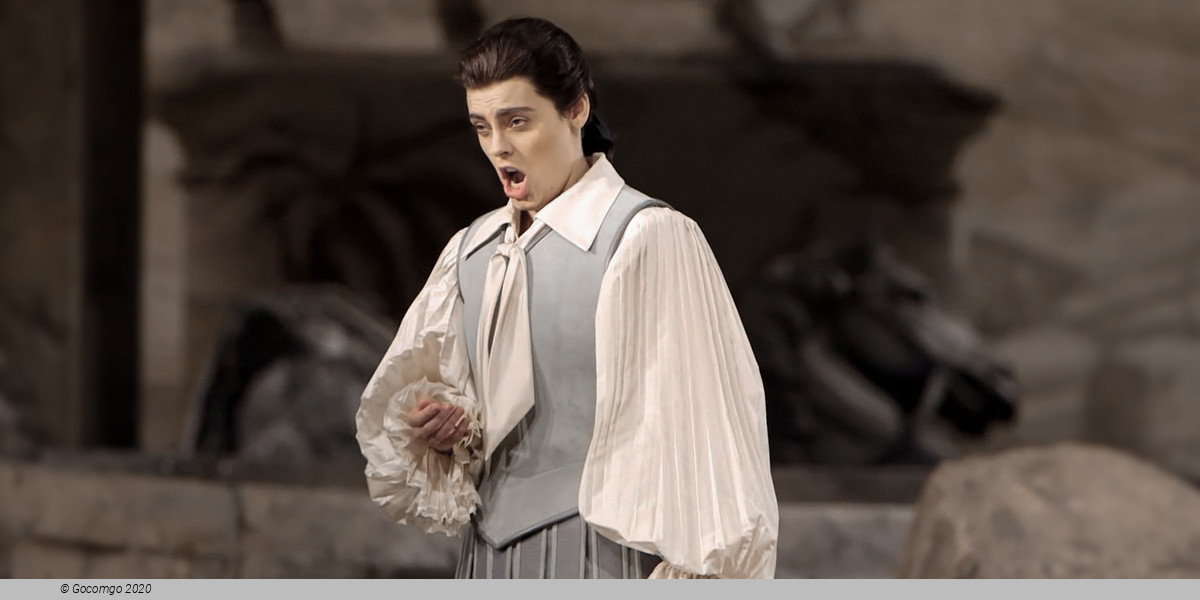
Even when hard at work rehearsing, Cecilia Bartoli lives up to her nickname 'La Gioiosa,' the joyful one. The famous Italian coloratura mezzo-soprano has become a role model for a whole generation of young musicians: with her vocal mastery, extraordinary acting, infectious enthusiasm, and openness. She discovered many musical gems that have been unjustly forgotten over the centuries. She has been a guest of the Nachtigall Artists’ World Opera Stars Series several times since 2008 and has always offered unusual projects. Since 2012, she has been the artistic director of the Whitsun Festival in Salzburg, and in 2023 she will become the first woman in the history of the Opéra de Monte-Carlo to take over the director's chair. The role of Sesto is one of her signature roles.

In other roles, we will hear excellent singers, too, led by the superb American tenor John Osborn (Tito), who is a welcome guest on prestigious opera stages, including the Metropolitan Opera in New York, Milan's La Scala, London's Covent Garden, and the Vienna State Opera. The young Egyptian soprano Fatma Said (Vitellia) was described by the Frankfurter Allgemeine Zeitung as a discovery of the contemporary opera scene, following her sensational debut at Milan's La Scala in 2016 as Mozart's Pamina (Magic Flute). The young German American mezzo-soprano Siena Licht Miller (Annio) will be a soloist at the Zurich Opera from the 2022/23 season. The French soprano Mélissa Petit made her debut at the Salzburg Whitsun Festival in 2021, among others as Mozart's Servilia. The renowned Hungarian bass-baritone Peter Kálmán also made his appearance at the Whitsun Festival 2021 as Publio in the same project and, in the role of Oroves, participated in the production of Bellini's Norma with Cecilia Bartoli in the title role (Salzburg, Paris, Baden-Baden and Monte Carlo).

The ensemble Les Musiciens du Prince-Monaco was formed in the spring of 2016 per the initiative of Cecilia Bartoli and in collaboration with the director of the Opera de Monte-Carlo, Jean-Louis Grinda. The project received the immediate support of Prince Albert II of Monaco, and Princess Caroline of Hanover. Under the supervision of their artistic director Cecilia Bartoli, the best musicians from all over the world came together to create an orchestra modeled on the foundation of ensembles which used to be playing in European royal, princely and tsarist courts in the 17th and 18th centuries. In its six years of existence, the ensemble has established itself on prestigious European stages, including the festival in Salzburg. The ensemble Il Canto di Orfeo was founded in 2005 by the Italian conductor Gianluca Capuano, who became the chief conductor of Les Musicients du Prince Monaco in 2019. He has performed at the Vienna State Opera, the Zurich Opera, and the Bavarian State Opera and conducted Bellini's Norma with Cecilia Bartoli at the Edinburgh Festival, the Théâtre des Champs-Élysées in Paris, and the Festspielhaus in Baden-Baden.

History
Premiere of this production: 06 September 1791, Estates Theatre, Prague

La clemenza di Tito is an opera seria in two acts composed by Wolfgang Amadeus Mozart to an Italian libretto by Caterino Mazzolà, after Pietro Metastasio. It was started after the bulk of Die Zauberflöte (The Magic Flute), the last opera that Mozart worked on, was already written. The work premiered on 6 September 1791 at the Estates Theatre in Prague.

Synopsis

Place and time: Rome, in the year 79.

Act One
Vitellia, daughter of the late emperor Vitellio (who had been deposed by Tito's father Vespasian), wants revenge against Tito. She stirs up Tito's vacillating friend Sesto, who is in love with her, to act against him (duet Come ti piace, imponi). But when she hears word that Tito has sent Berenice of Cilicia, of whom she was jealous, back to Jerusalem, Vitellia tells Sesto to delay carrying out her wishes, hoping Tito will choose her (Vitellia) as his empress (aria Deh, se piacer mi vuoi).

Tito, however, decides to choose Sesto's sister Servilia to be his empress, and orders Annio (Sesto's friend) to bear the message to Servilia (aria Del più sublime soglio). Since Annio and Servilia, unbeknownst to Tito, are in love, this news is very unwelcome to both (duet Ah, perdona al primo affetto). Servilia decides to tell Tito the truth but also says that if Tito still insists on marrying her, she will obey. Tito thanks the gods for Servilia's truthfulness, and immediately forswears the idea of coming between her and Annio (aria Ah, se fosse intorno al trono).

In the meantime, however, Vitellia has heard the news about Tito's interest in Servilia and is again boiling with jealousy. She urges Sesto to assassinate Tito. He agrees, singing one of the opera's most famous arias (Parto, parto, ma tu, ben mio with basset clarinet obbligato). Almost as soon as he leaves, Annio and the guard Publio arrive to escort Vitellia to Tito, who has now chosen her as his empress. She is torn with feelings of guilt and worry over what she has sent Sesto to do.

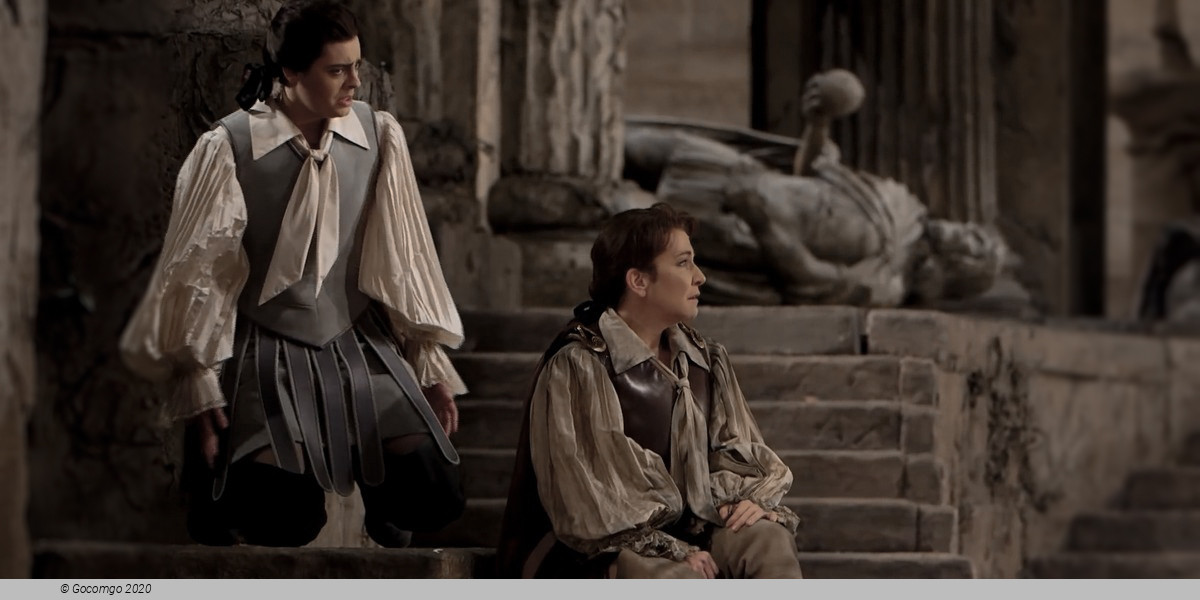
Sesto, meanwhile, is at the Capitol wrestling with his conscience (recitativo Oh Dei, che smania è questa), as he and his accomplices go about to burn it down. The other characters (except Tito) enter severally and react with horror to the burning Capitol. Sesto reenters and announces that he saw Tito slain, but Vitellia stops him from incriminating himself as the assassin. The others lament Tito in a slow, mournful conclusion to act one.

Act Two
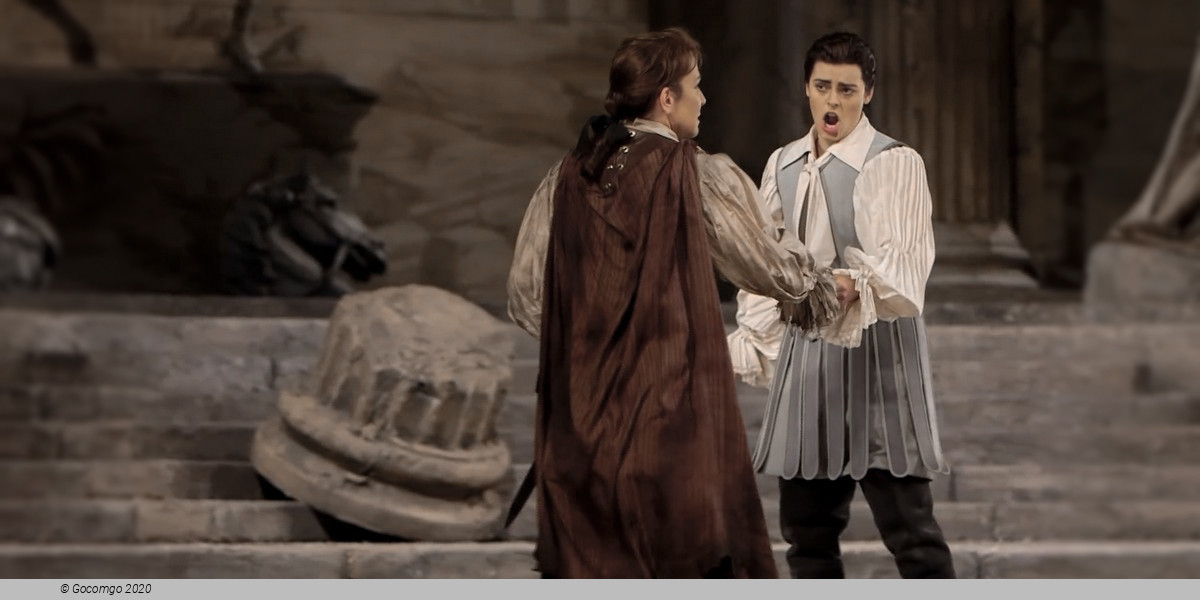
The act begins with Annio telling Sesto that Emperor Tito is in fact alive and has just been seen; in the smoke and chaos, Sesto mistook another for Tito. Sesto wants to leave Rome, but Annio persuades him not to (aria Torna di Tito a lato). Soon Publio arrives to arrest Sesto, bearing the news that it was one of Sesto's co-conspirators who dressed himself in Tito's robes and was stabbed, though not mortally, by Sesto. The Senate tries Sesto as Tito waits impatiently, sure that his friend will be exonerated; Publio expresses his doubts (aria Tardi s'avvede d'un tradimento) and leaves for the Senate. Annio begs Tito to show clemency towards his friend (aria Tu fosti tradito). Publio returns and announces that Sesto has been found guilty and an anguished Tito must sign Sesto's death sentence.

He decides to send for Sesto first, attempting to obtain further details about the plot. Sesto takes all the guilt on himself and says he deserves death (rondo Deh, per questo istante solo), so Tito tells him he shall have it and sends him away. But after an extended internal struggle, Tito tears up the execution warrant for Sesto. He determines that, if the world wishes to accuse him (Tito) of anything, it should charge him with showing too much mercy, rather than with having a vengeful heart (aria Se all'impero).

Vitellia at this time is torn by guilt, but Servilia warns her that tears alone will not save Sesto (aria S'altro che lagrime). Vitellia finally decides to confess all to Tito, giving up her hopes of empire (rondo Non più di fiori with basset horn obbligato). In the amphitheatre, the condemned (including Sesto) are waiting to be thrown to the wild beasts. Tito is about to show mercy, when Vitellia offers her confession as the instigator of Sesto's plot. Although shocked, the emperor includes her in the general clemency he offers (recitativo accompagnato Ma che giorno è mai questo?). The opera concludes with all the subjects praising the extreme generosity of Tito; he then asks that the gods cut short his days, should he ever cease to care for the good of Rome.


Venue Info

Municipal House - Prague
Location   Náměstí Republiky 5

Municipal House (Czech: Obecní dům) is a civic building that houses Smetana Hall, a celebrated concert venue, in Prague. It is located on Náměstí Republiky next to the Powder Gate in the center of the city. Today, the building is used as a concert hall, ballroom, and civic building, and includes a café to the left of the lobby and a French restaurant on the right side. Beneath the ground, there is also a wine bar and an American bar. Many of the rooms in the building are closed to the public and open only for guided tours.

Its interior includes several halls, the largest of which is the Smetana Hall serving as a concert hall for approximately 1,200 listeners; Concerts of the Symphony Orchestra are held here, Prague FOK, then the Prague Spring festival, organ concerts, etc. Other halls are Grégrův sál, Sladkovského sál and the Mayor's Lounge. In addition to concerts, exhibitions and other social events are held here.

Important Info
Type: Classical Concert
City: Prague, Czech Republic
Starts at: 19:30
Top of page