Metropolitan Opera 24 March 2020 - Der Fliegende Holländer | GoComGo.com

Der Fliegende Holländer

Metropolitan Opera, New York, USA
All photos (14)
Select date and time
7:30 PM
Request for Tickets
Important Info
Type: Opera
City: New York, USA
Starts at: 19:30
Acts: 3
Duration:
Sung in: German
Titles in: English,German,Spanish

E-tickets: Print at home or at the box office of the event if so specified. You will find more information in your booking confirmation email.

You can only select the category, and not the exact seats.
If you order 2 or 3 tickets: your seats will be next to each other.
If you order 4 or more tickets: your seats will be next to each other, or, if this is not possible, we will provide a combination of groups of seats (at least in pairs, for example 2+2 or 2+3).

Overview

ESTIMATED RUN TIME

  • ACTS I, II, & III - 139 minutes

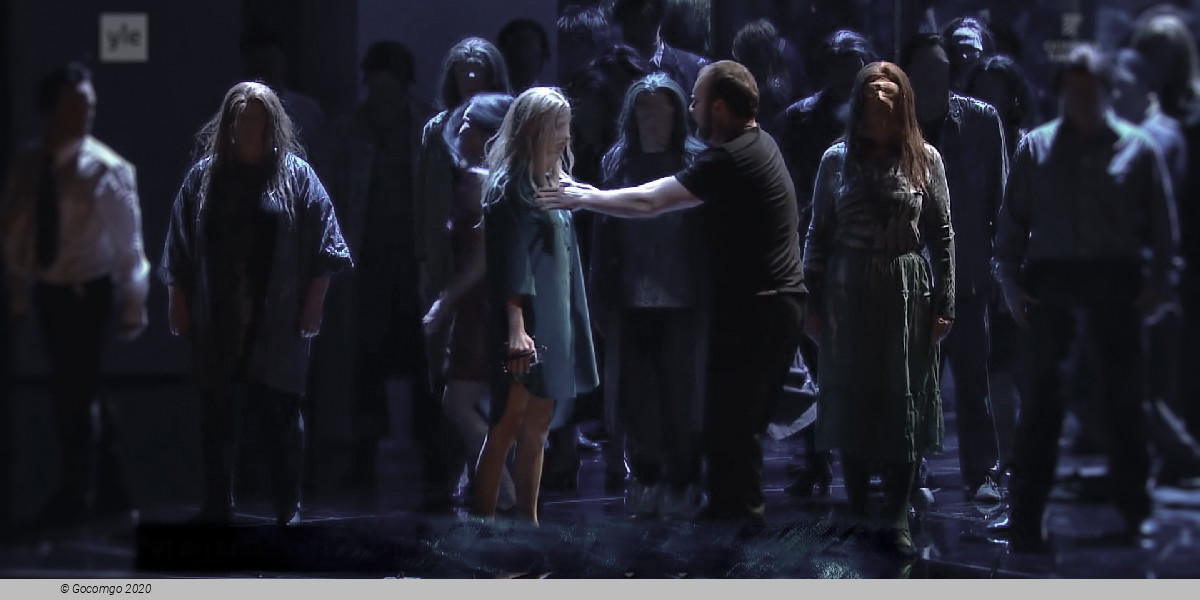
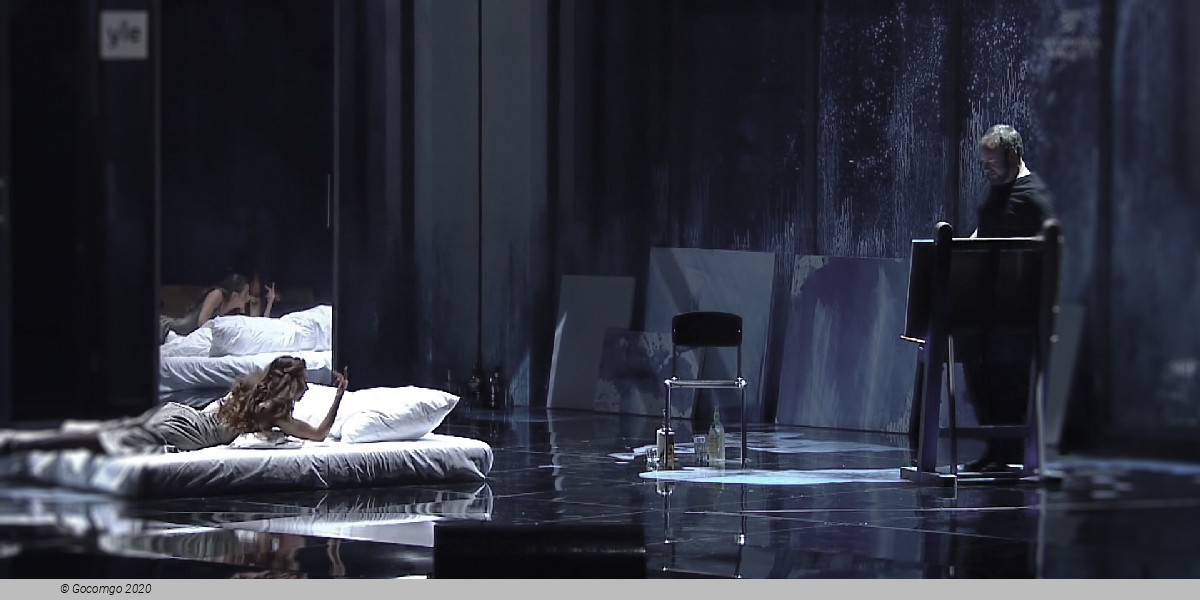
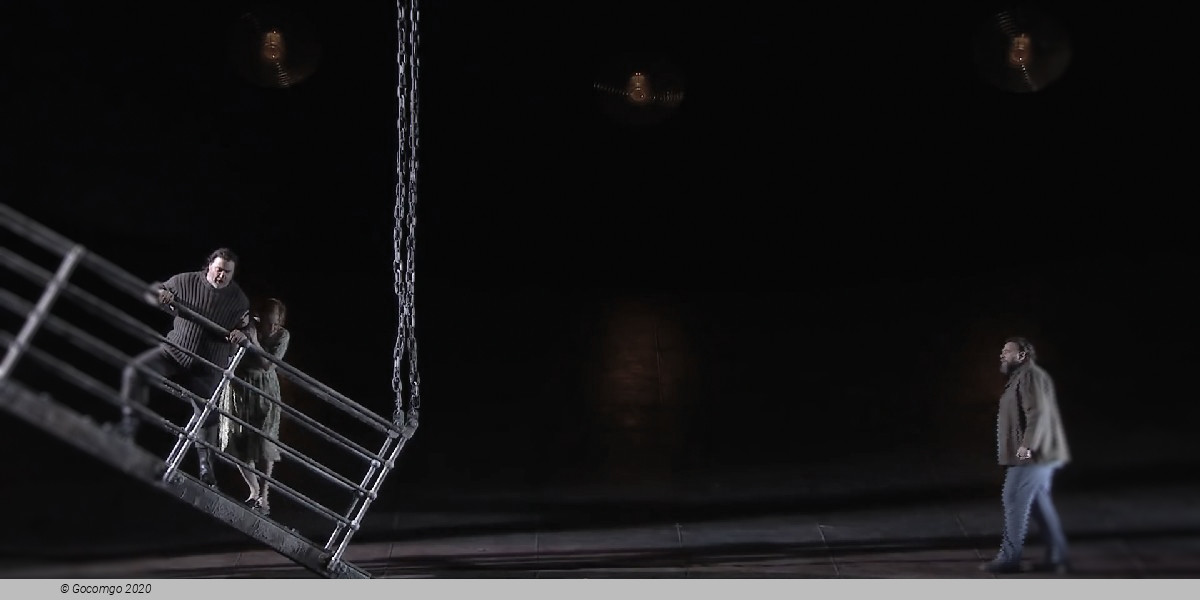
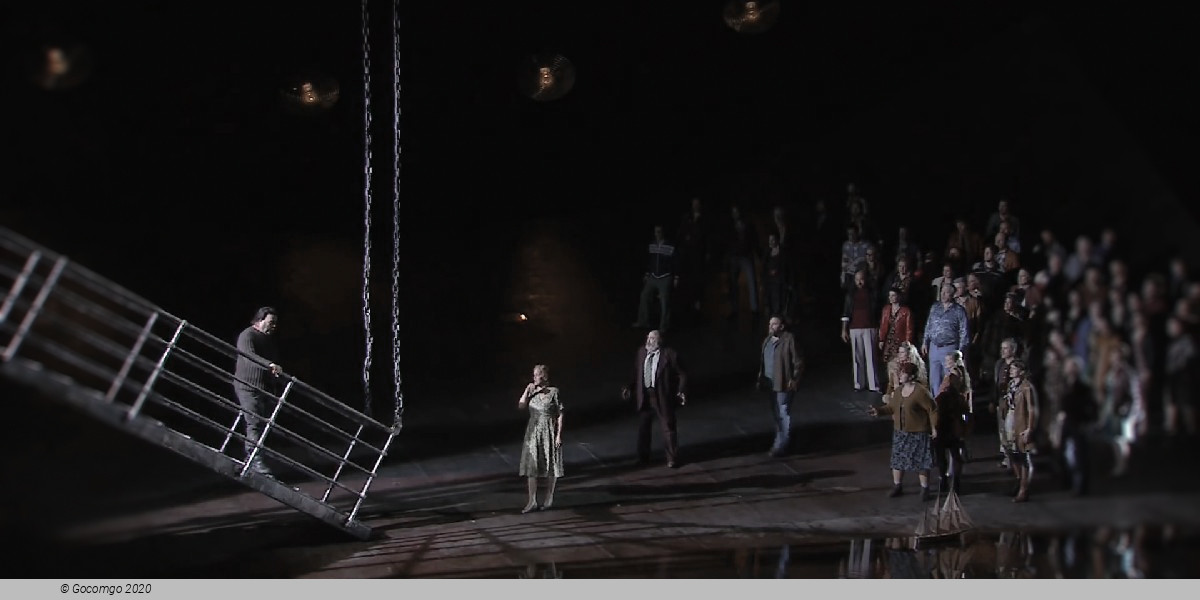
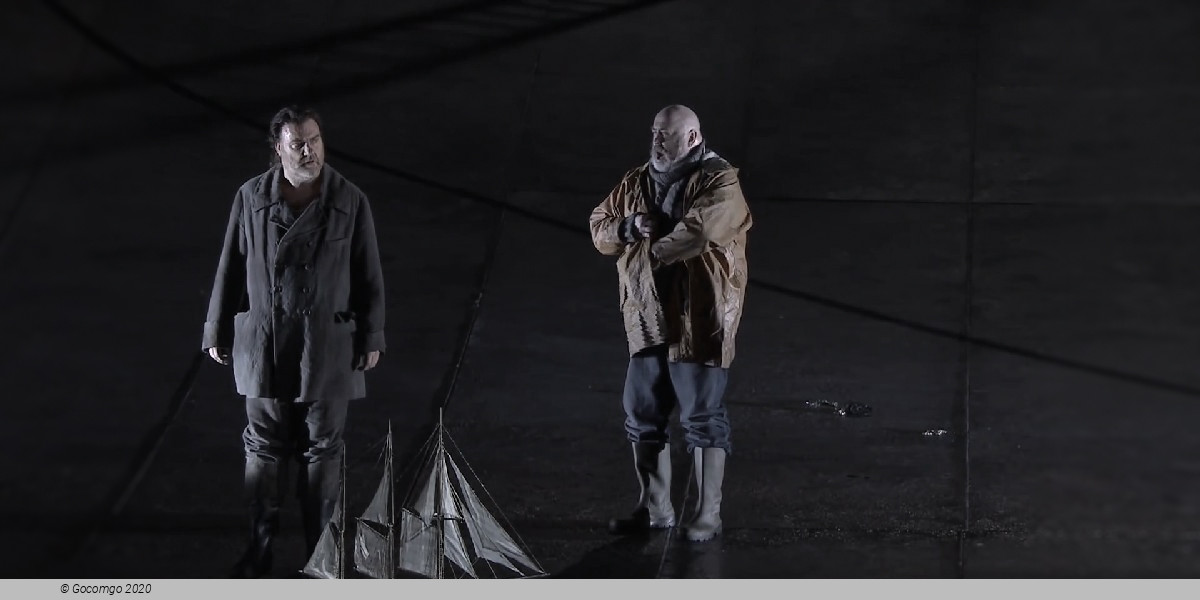
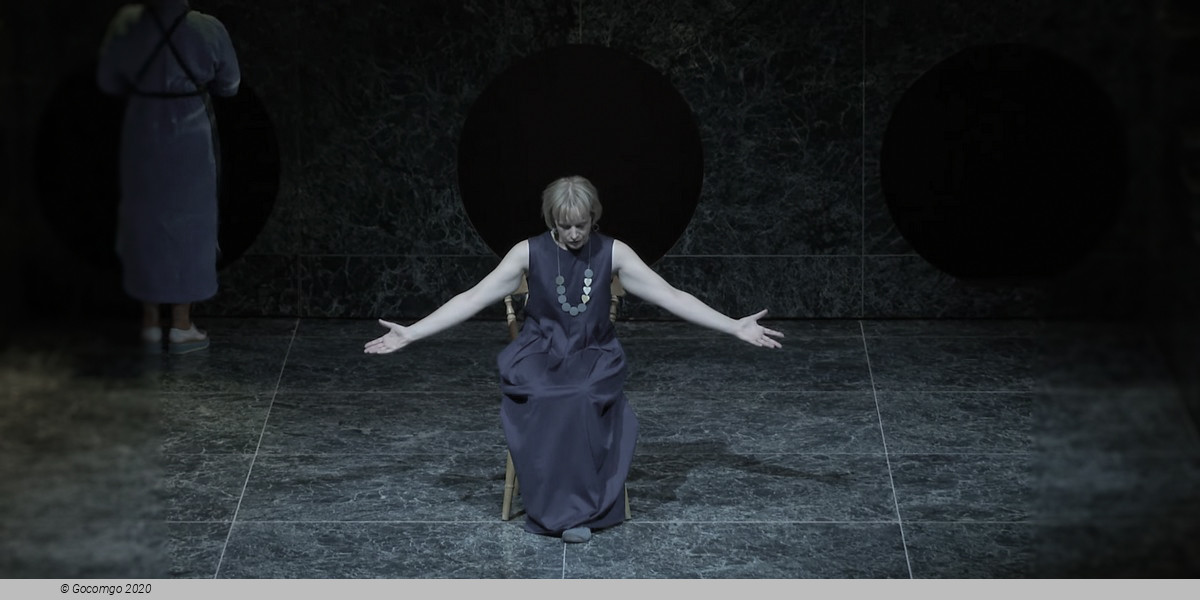
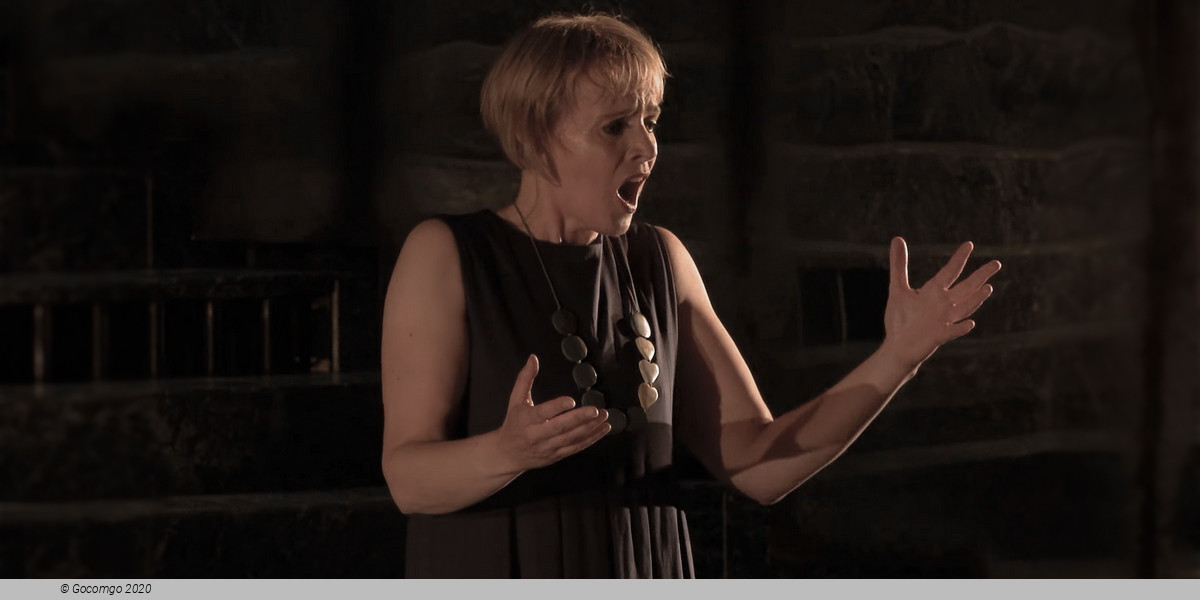
The great bass-baritone Sir Bryn Terfel returns to the company for the first time since 2012, in the title role of the cursed sea captain doomed to sail the open ocean for eternity. Valery Gergiev conducts a new production by François Girard, whose visionary 2013 take on Parsifal set the recent Met standard for Wagner stagings. With sweeping sets by John Macfarlane, Girard’s new production turns the Met stage into a rich, layered tableau reminiscent of a vast oil painting. The gifted German soprano Anja Kampe, in her Met debut, is the devoted Senta, whose selfless love is what the Dutchman seeks, with bass Franz-Josef Selig as her father, Daland, and tenor Sergey Skorokhodov as her deserted former lover, Erik.

A co-production of the Metropolitan Opera; L’Opéra de Québec; and Dutch National Opera, Amsterdam

World premiere: Dresden, Court Opera, 1843. Der Fliegende Holländer is the earliest of Wagner’s operatic creations to remain in the repertory. The two lead roles represent archetypes to which the composer would return, in one form or another, in most of his later works: the “otherworldly stranger” and the woman who sacrifices herself for his salvation. The work’s unearthly ambience is impressive but only one aspect of it: Both the world of nature and of the supernatural are magnificently evoked in the score.

Setting

The opera is set on the Norwegian coast. The time of the action is not specified in the score.

Music

The score of Der Fliegende Holländer is an extraordinary combination of operatic lyricism, dramatic insight, and magnificent effects. At the time it was written, Wagner had not yet developed his theories of music-drama, which would form the basis for his later works. Many of the features of conventional opera (recitatives, arias, ensembles), therefore, can still be found, but the way Wagner integrates them into the fabric of the score clearly foreshadows his later technique of a continuous musical flow.

The Flying Dutchman (Dutch: De Vliegende Hollander) is a legendary ghost ship that can never make port and is doomed to sail the oceans forever. The myth is likely to have originated from the 17th-century golden age of the Dutch East India Company (VOC). The oldest extant version has been dated to the late 18th century. Sightings in the 19th and 20th centuries reported the ship to be glowing with ghostly light. If hailed by another ship, the crew of the Flying Dutchman will try to send messages to land, or to people long dead. In ocean lore, the sight of this phantom ship is a portent of doom.

Origins

The first print reference to the ship appears in Travels in various part of Europe, Asia and Africa during a series of thirty years and upward (1790) by John MacDonald :

The weather was so stormy that the sailors said they saw the Flying Dutchman. The common story is that this Dutchman came to the Cape in distress of weather and wanted to get into harbour but could not get a pilot to conduct her and was lost and that ever since in very bad weather her vision appears.

The next literary reference appears in Chapter VI of A Voyage to Botany Bay (1795) (also known as A Voyage to New South Wales), attributed to George Barrington (1755–1804):

I had often heard of the superstition of sailors respecting apparitions and doom, but had never given much credit to the report; it seems that some years since a Dutch man-of-war was lost off the Cape of Good Hope, and every soul on board perished; her consort weathered the gale, and arrived soon after at the Cape. Having refitted, and returning to Europe, they were assailed by a violent tempest nearly in the same latitude. In the night watch some of the people saw, or imagined they saw, a vessel standing for them under a press of sail, as though she would run them down: one in particular affirmed it was the ship that had foundered in the former gale, and that it must certainly be her, or the apparition of her; but on its clearing up, the object, a dark thick cloud, disappeared. Nothing could do away the idea of this phenomenon on the minds of the sailors; and, on their relating the circumstances when they arrived in port, the story spread like wild-fire, and the supposed phantom was called the Flying Dutchman. From the Dutch the English seamen got the infatuation, and there are very few Indiamen, but what has some one on board, who pretends to have seen the apparition.

The next literary reference introduces the motif of punishment for a crime, in Scenes of Infancy (Edinburgh, 1803) by John Leyden (1775–1811):

It is a common superstition of mariners, that, in the high southern latitudes on the coast of Africa, hurricanes are frequently ushered in by the appearance of a spectre-ship, denominated the Flying Dutchman ... The crew of this vessel are supposed to have been guilty of some dreadful crime, in the infancy of navigation; and to have been stricken with pestilence ... and are ordained still to traverse the ocean on which they perished, till the period of their penance expire.

Thomas Moore (1779–1852) places the vessel in the north Atlantic in his poem Written on passing Dead-man's Island in the Gulf of St. Lawrence, Late in the evening, September, 1804: "Fast gliding along, a gloomy bark / Her sails are full, though the wind is still, / And there blows not a breath her sails to fill." A footnote adds: "The above lines were suggested by a superstition very common among sailors, who call this ghost-ship, I think, 'the flying Dutch-man'."

Sir Walter Scott (1771–1832), a friend of John Leyden's, was the first to refer to the vessel as a pirate ship, writing in the notes to Rokeby; a poem (first published December 1812) that the ship was "originally a vessel loaded with great wealth, on board of which some horrid act of murder and piracy had been committed" and that the apparition of the ship "is considered by the mariners as the worst of all possible omens."

According to some sources, 17th-century Dutch captain Bernard Fokke is the model for the captain of the ghost ship. Fokke was renowned for the speed of his trips from the Netherlands to Java and was suspected of being in league with the Devil. The first version of the legend as a story was printed in Blackwood's Edinburgh Magazine for May 1821, which puts the scene as the Cape of Good Hope. This story introduces the name Captain Hendrick Van der Decken for the captain and the motifs (elaborated by later writers) of letters addressed to people long dead being offered to other ships for delivery, but if accepted will bring misfortune; and the captain having sworn to round the Cape of Good Hope though it should take until the day of judgment.

She was an Amsterdam vessel and sailed from port seventy years ago. Her master's name was Van der Decken. He was a staunch seaman, and would have his own way in spite of the devil. For all that, never a sailor under him had reason to complain; though how it is on board with them nobody knows. The story is this: that in doubling the Cape they were a long day trying to weather the Table Bay. However, the wind headed them, and went against them more and more, and Van der Decken walked the deck, swearing at the wind. Just after sunset a vessel spoke him, asking him if he did not mean to go into the bay that night. Van der Decken replied: "May I be eternally damned if I do, though I should beat about here till the day of judgment." And to be sure, he never did go into that bay, for it is believed that he continues to beat about in these seas still, and will do so long enough. This vessel is never seen but with foul weather along with her.

History
Premiere of this production: 02 January 1843, Königliches Hoftheater, Dresden

The Flying Dutchman (German: Der fliegende Holländer) is a German-language opera, with libretto and music by Richard Wagner. The central theme is redemption through love. Wagner conducted the premiere at the Königliches Hoftheater in Dresden in 1843. Wagner claimed in his 1870 autobiography Mein Leben that he had been inspired to write the opera following a stormy sea crossing he made from Riga to London in July and August 1839. However, in his 1843 Autobiographic Sketch, Wagner acknowledged he had taken the story from Heinrich Heine's retelling of the legend in his 1833 satirical novel The Memoirs of Mister von Schnabelewopski (Aus den Memoiren des Herrn von Schnabelewopski).

Synopsis

ACT I

The Norwegian coast, 19th century. A storm has driven Daland’s ship several miles from his home. Sending his crew off to rest, he leaves the watch in charge of a young steersman, who falls asleep as he sings about his girl. A ghostly schooner drops anchor next to Daland’s ship. Its captain steps ashore and, with increasing despair, reflects on his fate: once every seven years he may leave his ship to find a wife. If she is faithful, she will redeem him from his deathless wandering. If not, he is condemned to sail the ocean until Judgment Day. Daland discovers the phantom ship, and the stranger, who introduces himself as “a Dutchman,” tells him of his plight. The Dutchman offers gold and jewels for a night’s lodging, and when he learns that Daland has a daughter, asks for her hand in marriage. Happy to have found a rich son-in-law, Daland agrees and sets sail for home.

ACT II

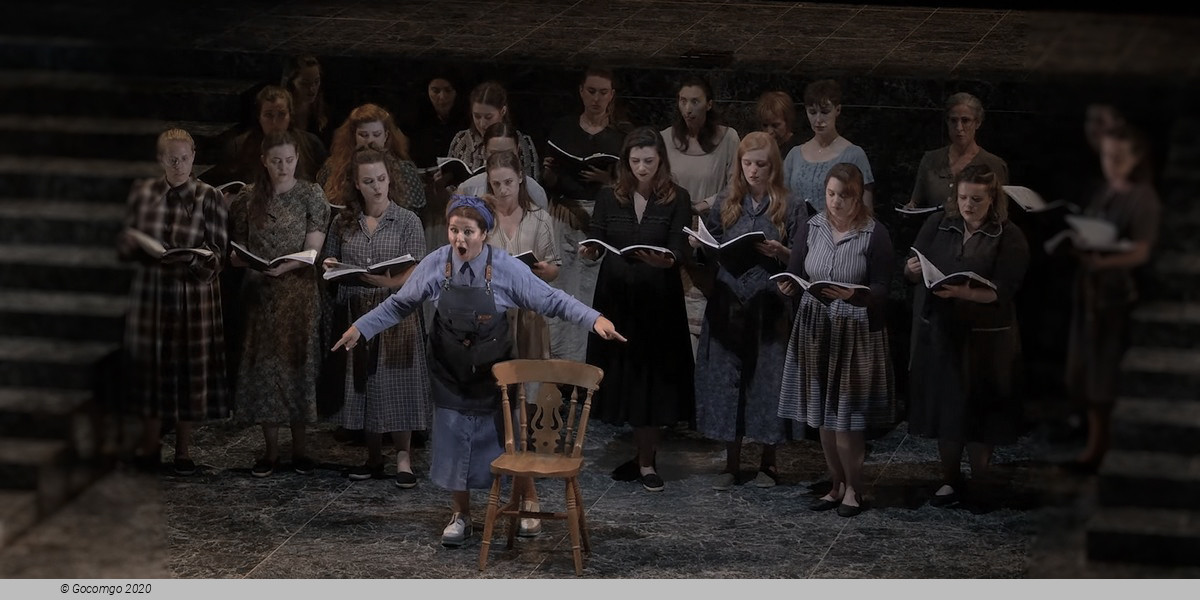
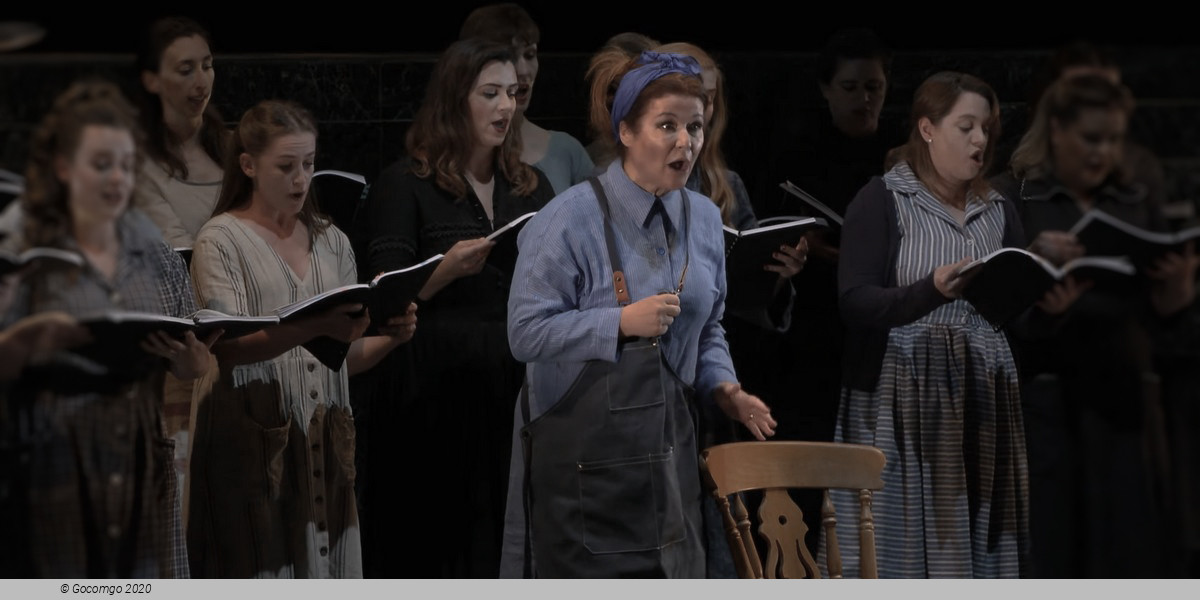
Daland’s daughter, Senta, is captivated by the portrait of a pale man in black—the Flying Dutchman. Her friends, working under the watchful eye of Mary, Senta’s nurse, tease Senta about her suitor, Erik, who is a hunter, not a sailor. When the superstitious Mary refuses to sing a ballad about the Dutchman, Senta sings it herself. The song reveals that the Dutchman’s curse was put on him for a blasphemous oath. To everyone’s horror, Senta suddenly declares that she will be the woman to save him. Erik enters with news of the sailors’ return. Alone with Senta, he reminds her of her father’s wish to find her a husband and asks her to plead his cause, but she remains distant. Realizing how much the Dutchman’s picture means to her, he tells her of a frightening dream in which he saw her embrace the Dutchman and sail away on his ship. Senta declares that this is what she must do, and Erik rushes off in despair. A moment later, the Dutchman enters. Senta stands transfixed. Daland follows and asks his daughter to welcome the stranger, whom he has brought to be her husband. Daland leaves, and the Dutchman, who is equally moved by the meeting, asks Senta if she will accept him. Unaware that she realizes who he is, he warns her of making a rash decision, but she vows to be faithful to him unto death. Daland is overjoyed to learn that his daughter has accepted the suitor.

ACT III

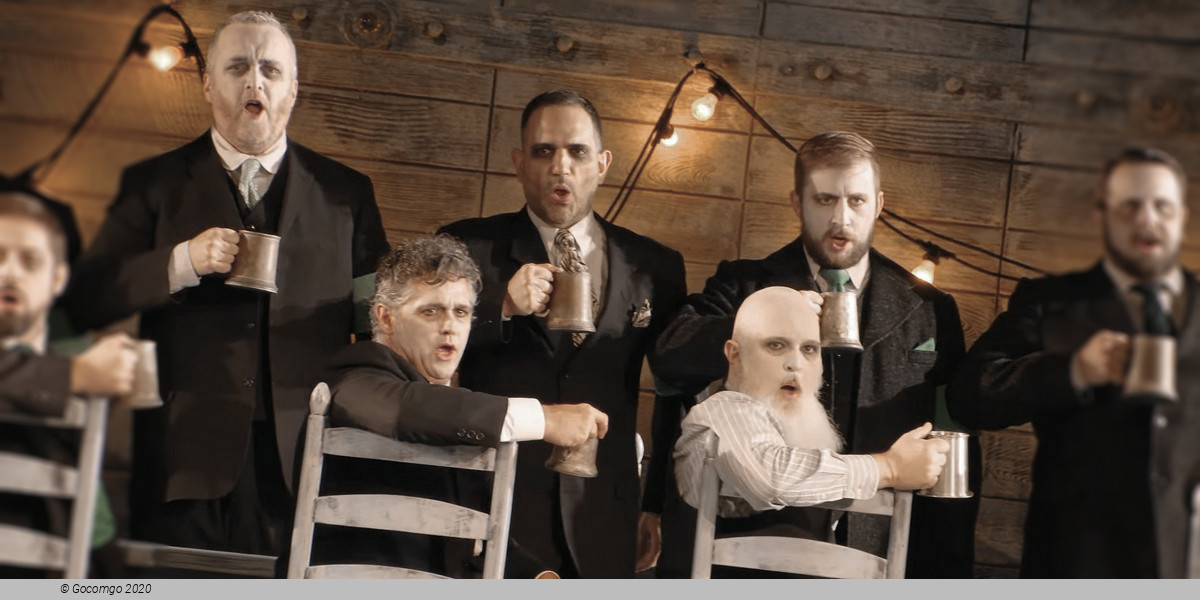
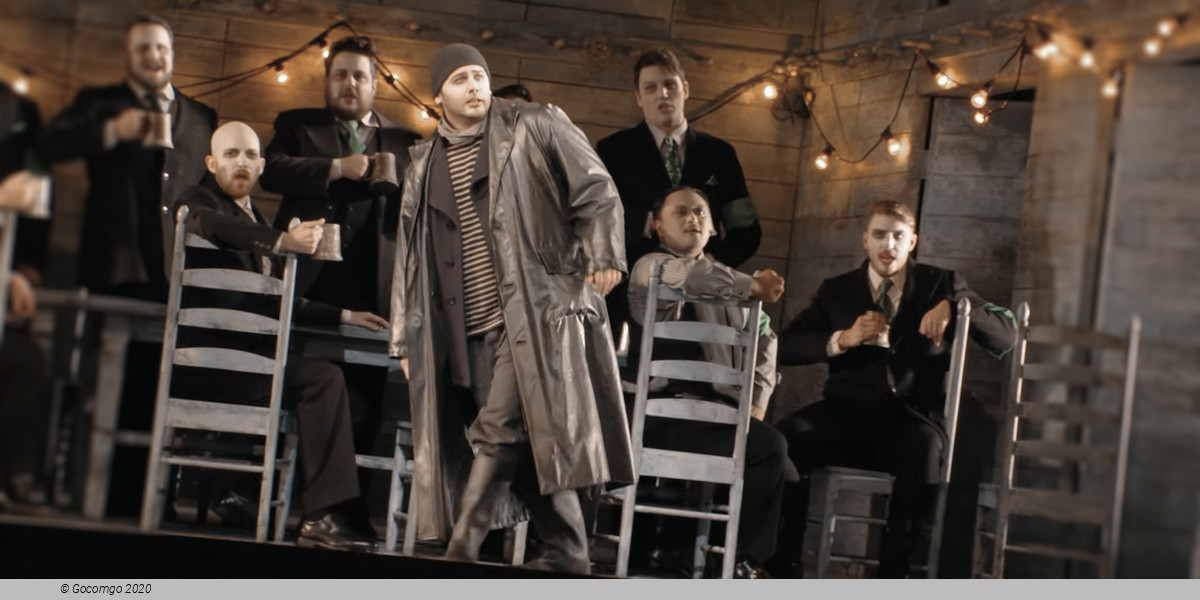
At the harbor, the villagers celebrate the sailors’ return. Baffled by the strange silence aboard the Dutchman’s ship, they call out to the crew, inviting them to join the festivities. Suddenly the ghostly sailors appear, mocking their captain’s quest in hollow chanting. The villagers flee in terror. Quiet returns and Senta appears, followed by the distressed Erik. He pleads with her not to marry the Dutchman since she has already pledged her love to him. The Dutchman, who has overheard them, lets go of all hope and boards his ship. When Senta tries to stop him, he explains she will escape damnation—the fate of those who betray him—only because she has not yet proclaimed her vows before God. He reveals his identity and Senta ecstatically replies that she knows who he is. As his ship pulls away, she throws herself into the sea, faithful unto death.

Place: On the coast of Norway

Act 1

On his homeward journey, the sea captain Daland is compelled by stormy weather to seek a port of refuge near Sandwike in southern Norway. He leaves the helmsman on watch and he and the sailors retire. (Song of the helmsman: "Mit Gewitter und Sturm aus fernem Meer" — "With tempest and storm on distant seas.") The helmsman falls asleep. A ghostly vessel appearing astern is dashed against Daland's vessel by the sea and the grappling irons hold the two ships together. Invisible hands furl the sails. A man of pale aspect, dressed in black, his face framed by a thick black beard, steps ashore. He laments his fate. (Aria: "Die Frist ist um, und abermals verstrichen sind sieben Jahr" — "The time has come and seven years have again elapsed") Because he once invoked Satan, the ghost captain is cursed to roam the sea forever without rest. An angel brought to him the terms of his redemption: Every seven years the waves will cast him upon the shore; if he can find a wife who will be true to him he will be released from his curse.

Daland wakes up and meets the stranger. The stranger hears that Daland has an unmarried daughter named Senta, and he asks for her hand in marriage, offering a chest of treasure as a gift. Tempted by gold, Daland agrees to the marriage. The southwind blows and both vessels set sail for Daland's home.

Act 2

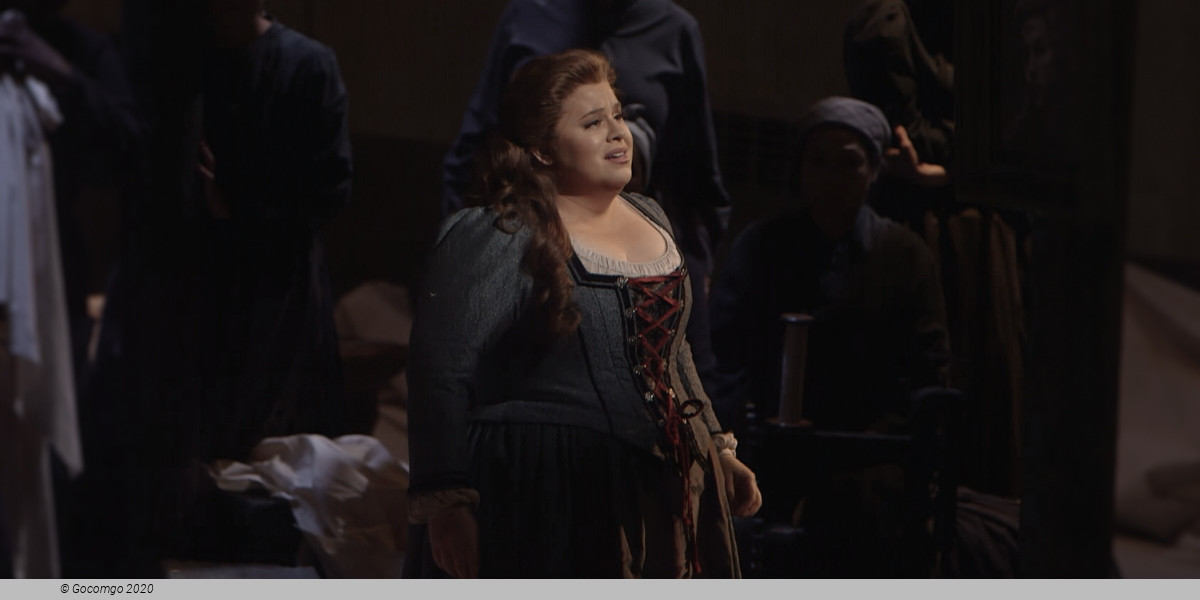
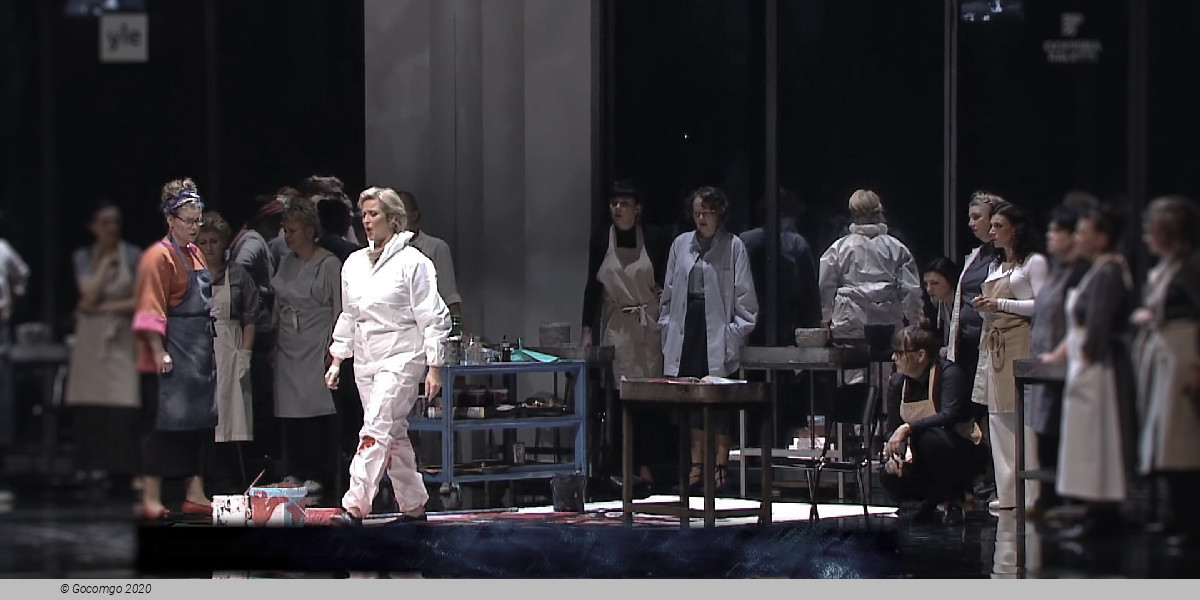
A group of local girls are singing and spinning in Daland's house. (Spinning chorus: "Summ und brumm, du gutes Rädchen" — "Whir and whirl, good wheel") Senta, Daland's daughter, dreamily gazes upon a gorgeous picture of the legendary Dutchman that hangs from the wall; she desires to save him. Against the will of her nurse, she sings to her friends the story of the Dutchman (Ballad with the Leitmotiv), how Satan heard him swear and took him at his word. She vows to save him by her fidelity.

The huntsman Erik, Senta's former boyfriend, arrives and hears her; the girls depart, and the huntsman, who loves the maiden, warns her, telling her of his dream, in which Daland returned with a mysterious stranger, who carried her off to sea. She listens with delight, and Erik leaves in despair.

Daland arrives with the stranger; he and Senta stand gazing at each other in silence. Daland is scarcely noticed by his daughter, even when he presents his guest as her betrothed. In the following duet, which closes the act, Senta swears to be true till death.

Act 3

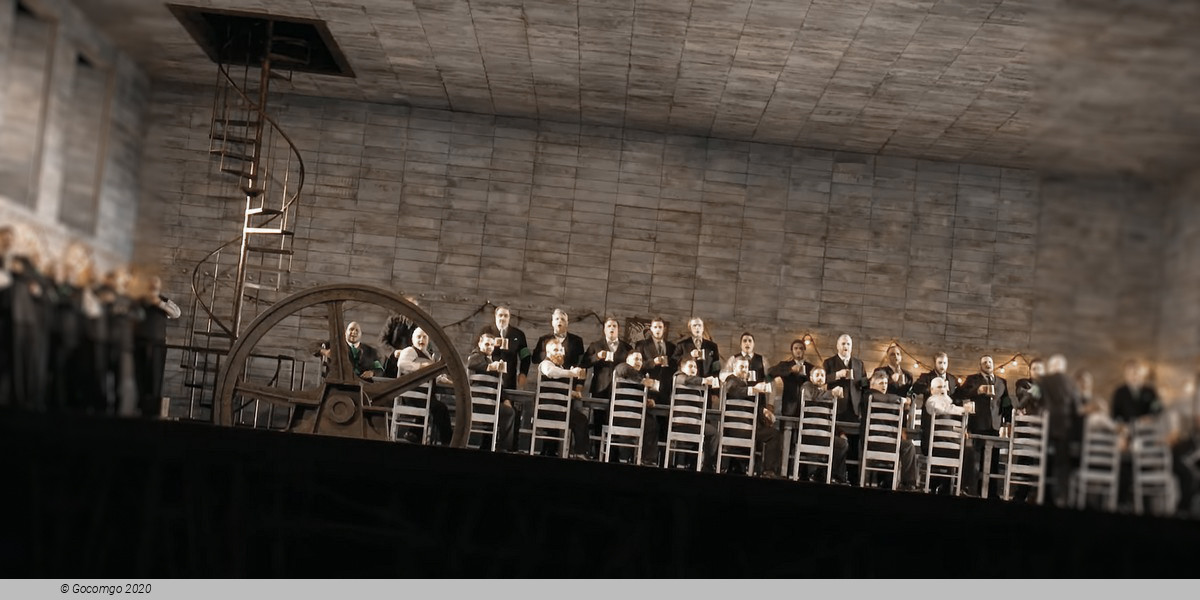
Later in the evening, the local girls bring Daland's men food and drink. They invite the crew of the strange vessel to join in the merry-making, but in vain. The girls retire in wonder; ghostly forms appear at work upon the vessel The Flying Dutchman, and Daland's men retreat in fear.

Senta arrives, followed by Erik, who reproves her for deserting him, as she had formerly loved him and vowed constancy. When the stranger, who has been listening, hears these words, he is overwhelmed with despair, as he thinks he is now forever lost. He summons his men, tells Senta of the curse, and to the consternation of Daland and his crew declares that he is the "Flying Dutchman".

As the Dutchman sets sail, Senta throws herself into the sea, claiming that she will be faithful to him unto death. This is his salvation. The spectral ship disappears, and Senta and the Dutchman are seen ascending to heaven.


Venue Info

Metropolitan Opera - New York
Location   30 Lincoln Center

The Metropolitan Opera is an opera company based in New York City, resident at the Metropolitan Opera House at the Lincoln Center for the Performing Arts. The Metropolitan Opera is the largest classical music theatre in North America. It presents about 27 different operas each year from late September through May. As of 2018, the company's current music director is Yannick Nézet-Séguin.

The Metropolitan Opera Company was founded in 1883 as an alternative to New York's old established Academy of Music opera house. The subscribers to the Academy's limited number of private boxes represented the highest stratum in New York society. By 1880, these "old money" families were loath to admit New York's newly wealthy industrialists into their long-established social circle. Frustrated with being excluded, the Metropolitan Opera's founding subscribers determined to build a new opera house that would outshine the old Academy in every way. A group of 22 men assembled at Delmonico's restaurant on April 28, 1880. They elected officers and established subscriptions for ownership in the new company. The new theater, built at 39th and Broadway, would include three tiers of private boxes in which the scions of New York's powerful new industrial families could display their wealth and establish their social prominence. The first Met subscribers included members of the Morgan, Roosevelt, and Vanderbilt families, all of whom had been excluded from the Academy. The new Metropolitan Opera House opened on October 22, 1883, and was an immediate success, both socially and artistically. The Academy of Music's opera season folded just three years after the Met opened.

The operas are presented in a rotating repertory schedule, with up to seven performances of four different works staged each week. Performances are given in the evening Monday through Saturday with a matinée on Saturday. Several operas are presented in new productions each season. Sometimes these are borrowed from or shared with other opera companies. The rest of the year's operas are given in revivals of productions from previous seasons. The 2015–16 season comprised 227 performances of 25 operas.

The operas in the Met's repertoire consist of a wide range of works, from 18th-century Baroque and 19th-century Bel canto to the Minimalism of the late 20th century. These operas are presented in staged productions that range in style from those with elaborate traditional decors to others that feature modern conceptual designs.

The Met's performing company consists of a large symphony-sized orchestra, a chorus, a children's choir, and many supporting and leading solo singers. The company also employs numerous free-lance dancers, actors, musicians, and other performers throughout the season. The Met's roster of singers includes both international and American artists, some of whose careers have been developed through the Met's young artists programs. While many singers appear periodically as guests with the company, others, such as Renée Fleming and Plácido Domingo, long maintained a close association with the Met, appearing many times each season until they retired.

Important Info
Type: Opera
City: New York, USA
Starts at: 19:30
Acts: 3
Duration:
Sung in: German
Titles in: English,German,Spanish
Top of page