

Vienna State Opera: Peer Gynt Tickets | Event Dates & Schedule | GoComGo.com

Peer Gynt Tickets

Vienna State Opera, Vienna, Austria
Important Info
Type: Ballet
City: Vienna, Austria
Acts: 2
Intervals: 1

E-tickets: Print at home or at the box office of the event if so specified. You will find more information in your booking confirmation email.

You can only select the category, and not the exact seats.
If you order 2 or 3 tickets: your seats will be next to each other.
If you order 4 or more tickets: your seats will be next to each other, or, if this is not possible, we will provide a combination of groups of seats (at least in pairs, for example 2+2 or 2+3).

Cast
Performers
Choose the date to see the peformers
Overview

This story ballet, first performed in 2015 in Maribor, is based on music by Edvard Grieg and the work by Henrik Ibsen, which were chosen by choreographer Edward Clug as the starting point for his libretto: "Ibsen and Grieg have each invented their distinct version of 'Peer Gynt'. My goal was to merge them into a new identity, into a landscape with many doors. I have selected my entrance, which is wide open to you, dear visitors, and I invite you to step through into a new ballet experience."

History

Peer Gynt is the incidental music to Henrik Ibsen's 1867 play of the same name, written by the Norwegian composer Edvard Grieg in 1875. It premiered along with the play on 24 February 1876 in Christiania (now Oslo). Grieg later created two suites from his Peer Gynt music. Some of the music from these suites has received coverage in popular culture; see Grieg's music in popular culture.

Synopsis

ACT I

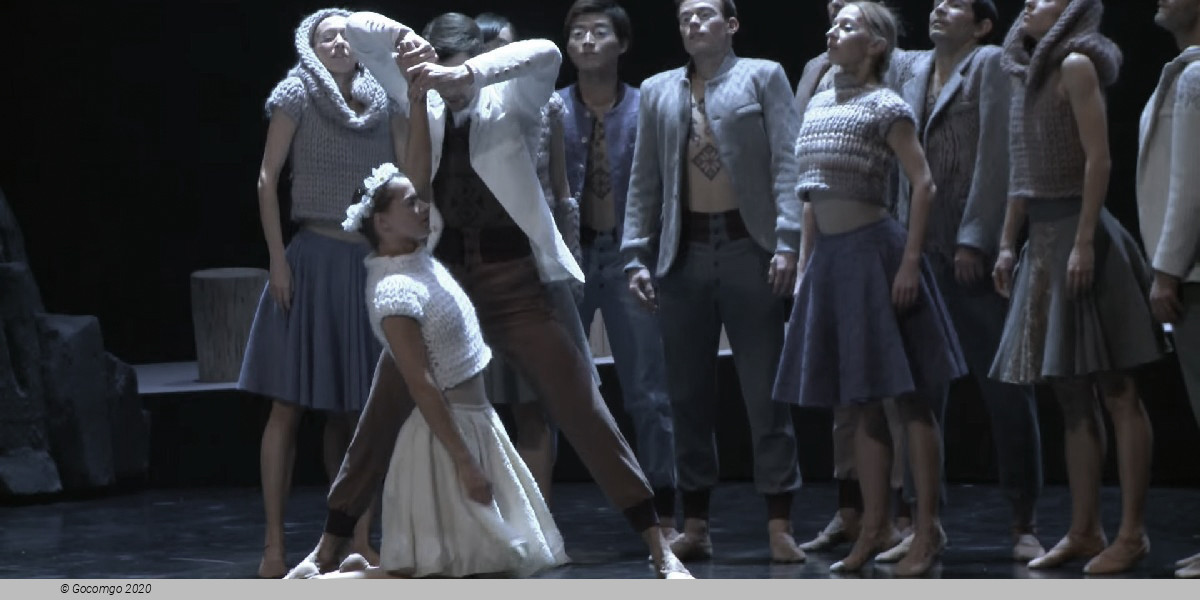
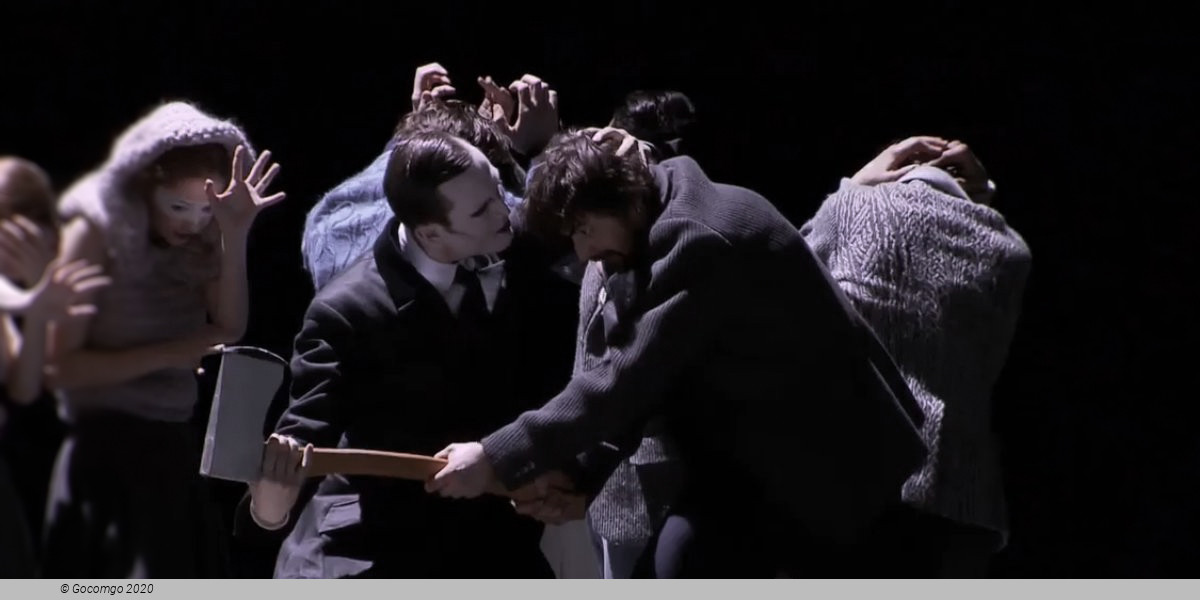
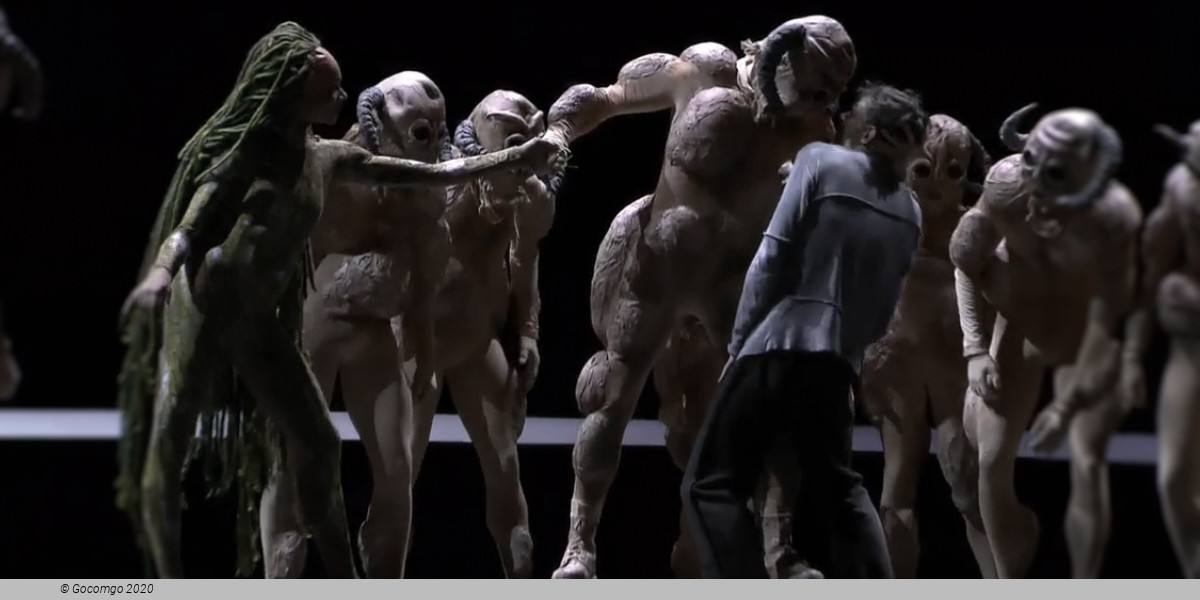
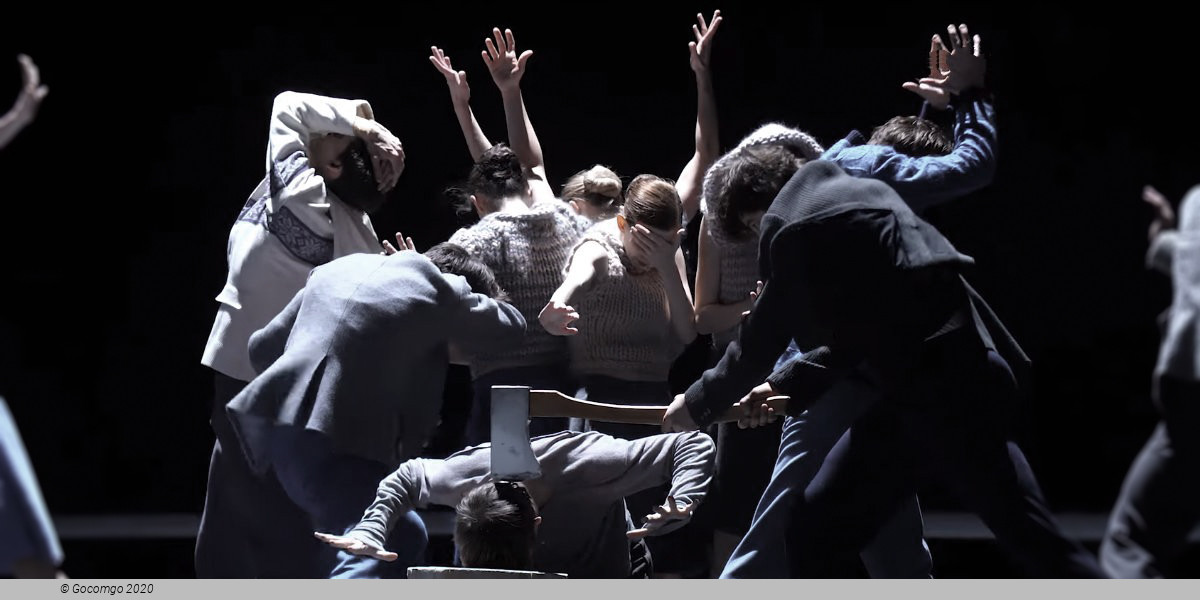
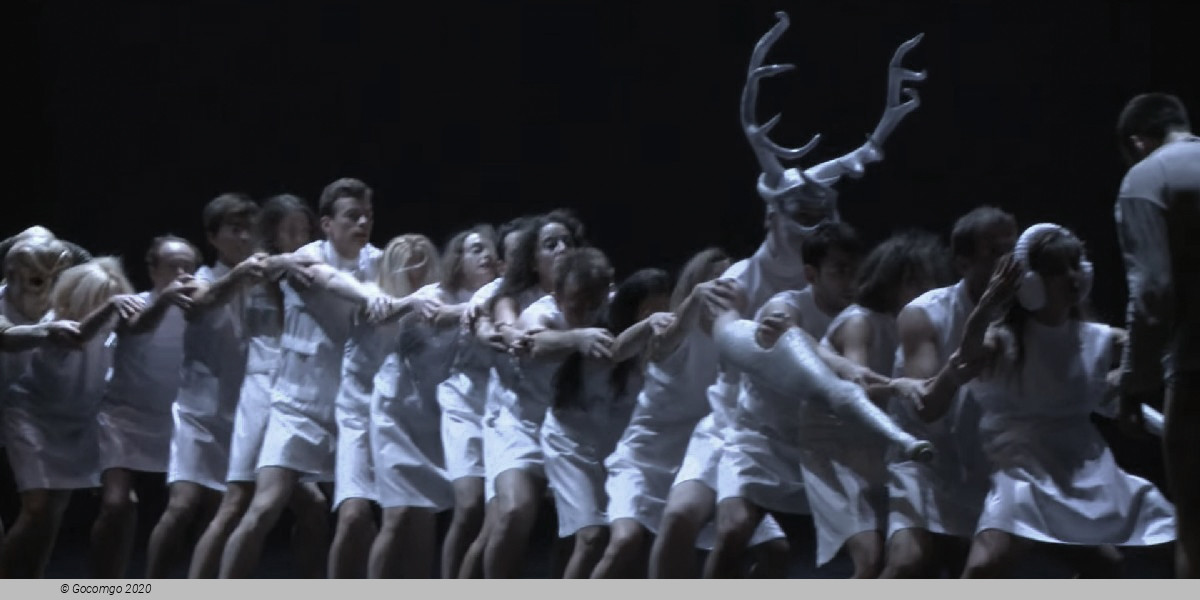
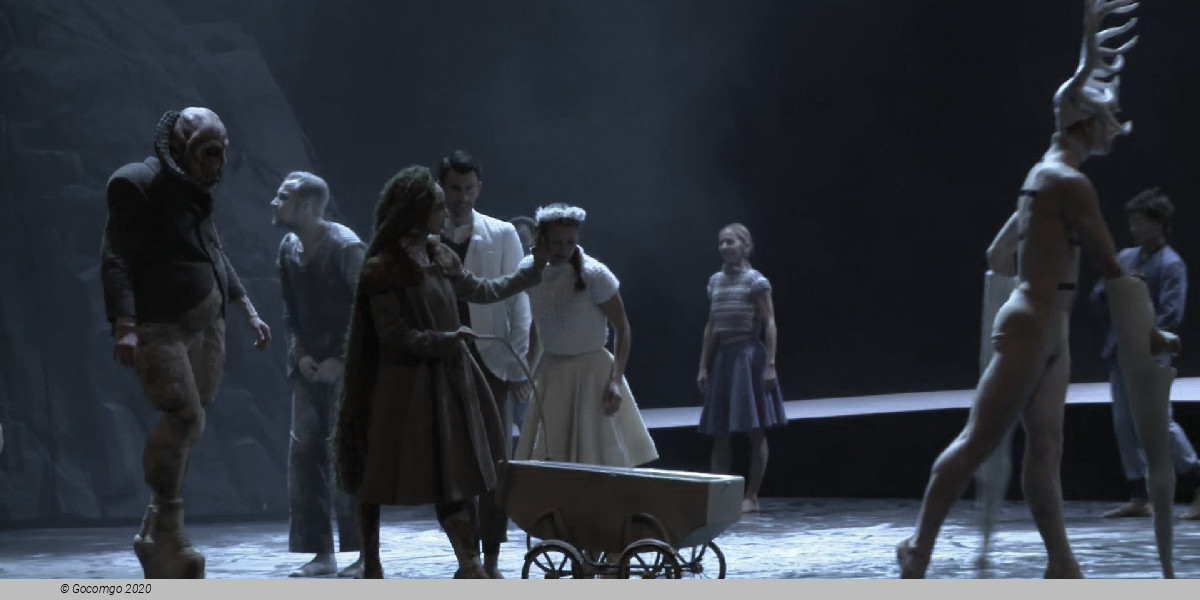
Peer Gynt is daydreaming about hunting a white stag. He shares his story with his mother Ase who accuses him of being a liar and idler. The mother scolds her son for missing out a unique opportunity of marrying Ingrid, Peer’s friend since the childhood, so he could both put an end of their poverty, in which they were left behind by Peer’s negligent father. Ingrid is getting married to Mads Moen, the wealthiest bachelor in the region. Peer joins the wedding guests, but his mother is afraid he could ruin the celebration. The feast begins and the wedding party is cheering out to the bride and groom. Only Ingrid seem to be distracted, thinking about Peer, with whom she once had an affair. In spite of Ingrid’s disinterest, the groom seems to be satisfied with the wedding. Peer’s presence at the event attracts the eye of women, who seem to be enchanted with Peer’s dance. However, the men are annoyed and provoked by Peer’s attitude. Solveig and her little sister Helga are also attending the wedding. At some point, Solveig and Peer come together, and their dance instigates Ingrid’s jealousy and people’s discontent. Helga takes Solveig’s hand and drags her away. Peer then approaches Ingrid, and they begin to dance, which causes a stir among guests. Aslak, the blacksmith, starts to quarrel with Peer, while the villagers try to sedate him with liquor. However, Peer does not quit the fight and mortifies Aslak in front of everyone. Aslak grabs his axe to avenge himself, but the Death intervenes. Peer seizes the opportunity and elopes with Ingrid. Ingrid and Peer spend a passionate night together, even though Peer grows tired of her rather quickly and sends her off. Three dairymaids suddenly approach Peer and they try to seduce him. The next moment, a mysterious girl in green finds Peer all alone and shows him the way to the troll kingdom. Peer, intrigued by its wealth, agrees on marrying the girl in green, who is in fact a troll chief’s daughter. The troll chief is eager to offer him the hand of his daughter, and slowly uncovers her true face. The girl in green then begins with her awkward dance. As she approaches Peer to kiss him, he is horrified with her appearance and wants to escape. Nevertheless, the girl in green wants him all for herself, as she is carrying his yet unborn child. Peer protests and denies paternity, which provokes the troll chief, who wants to take revenge. The troll’s wrath is eventually casted away by little Helga, who also gives a punch to Peer, thus reminding him of his promise to her sister Solveig. The Death enters into the troll kingdom and stops the angry trolls. When the threat is gone, the Death paints Peer and the surrounding landscape on canvas. Helga and Solveig then come to see Peer. When alone, Solveig and Peer promise to each other eternal love. Their romance is interrupted by a stag’s cry that announces the death of Ase. Peer then decides to return home, where he finds his dying mother. To alleviate her pain, Peer tells her a beautiful story, which takes them back to the most beautiful times of Peer’s childhood.

ACT II

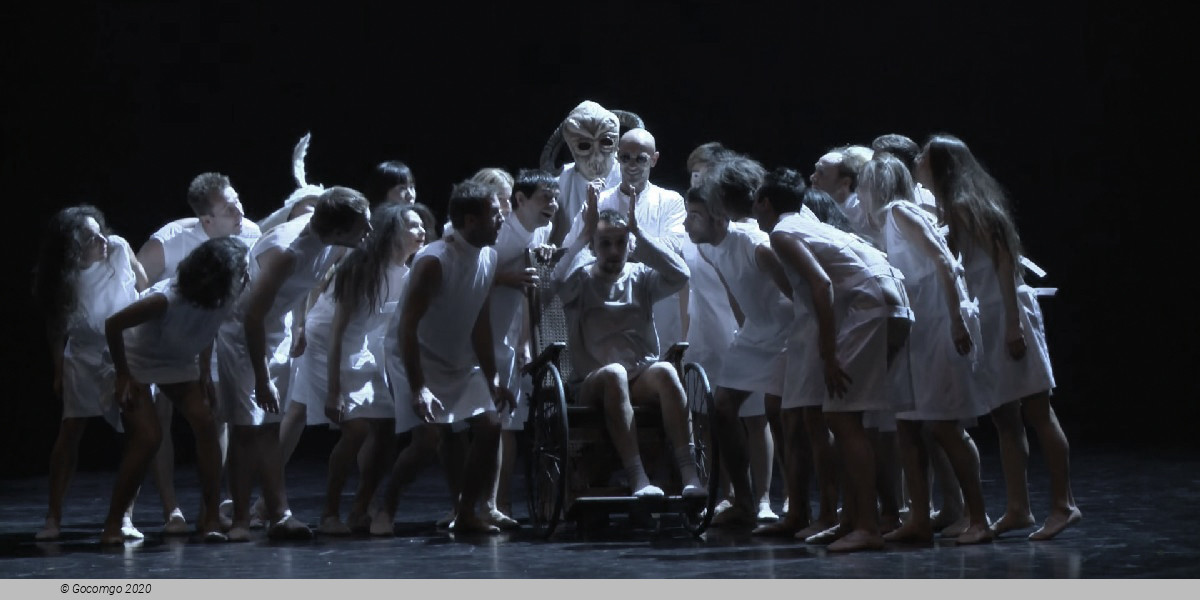
Several years have passed, and Peer has become a very rich capitalist. He undertakes a journey to Morocco desert, where he meets Anitra, a daughter of a Bedouin leader. Peer is irresistibly attracted to her exotic appearance, but Anitra only wants to rob him off his wealth. When she manages to steal everything he has, she leaves him in the foreign land completely alone – well, almost alone, as Peer meets a mysterious stranger, with whom he shares a cigarette. A certain doctor Begriffenfeldt meets Peer, who is wandering around, and invites him to join him in some special place. Peer soon realizes he has ended up in a lunatic asylum, where he is introduced to four lunatics, who seem to be excited by Peer’s arrival. Begriffenfeldt runs a few psychological tests on Peer and writes down his reactions. Peer is now completely exhausted and on a brink of a nervous breakdown. His immense wish of becoming someone else is now finally fulfilled – his friends at the lunatic asylum are crowning him as his king. Peer hits rock bottom and is deeply disappointed with his life: he has to confront the truth that seems to evade him. In his mind, he sees a vision of the unfortunate wedding between Mads Moen and Ingrid. The wedding guests, joined shortly after by the green girl with a new-born child, shout happiness to the newlyweds. Peer is now on a trial by his own conscience, which leads him to Solveig. But Peer’s path is once again crossed by a mysterious stranger, who begs him to step inside his coffin. Peer refuses to do so, as he wants to buy himself some time. Solveig has faithfully waited for Peer all these years and has grown old and blind. Peer bitterly realizes that he has thrown away all things that really matter in his life – most of all, Solveig’s love. He finds his final rest in Solveig’s arms, only their life journey has finally come to an end. They might find love and happiness in some other life, in some other time …

Venue Info

Vienna State Opera - Vienna
Location   Opernring 2

The Vienna State Opera is one of the leading opera houses in the world. Its past is steeped in tradition. Its present is alive with richly varied performances and events. Each season, the schedule features 350 performances of more than 60 different operas and ballets. The members of the Vienna Philharmonic are recruited from the Vienna State Opera's orchestra. The building is also the home of the Vienna State Ballet, and it hosts the annual Vienna Opera Ball during the carnival season.

The 1,709-seat Renaissance Revival venue was the first major building on the Vienna Ring Road. It was built from 1861 to 1869 following plans by August Sicard von Sicardsburg and Eduard van der Nüll, and designs by Josef Hlávka. The opera house was inaugurated as the "Vienna Court Opera" (Wiener Hofoper) in the presence of Emperor Franz Joseph I and Empress Elisabeth of Austria. It became known by its current name after the establishment of the First Austrian Republic in 1921. The Vienna State Opera is the successor of the Vienna Court Opera, the original construction site chosen and paid for by Emperor Franz Joseph in 1861.

The opera house was the first major building on the Vienna Ringstrasse commissioned by the Viennese "city expansion fund". Work commenced on the house in 1861 and was completed in 1869, following plans drawn up by architects August Sicard von Sicardsburg and Eduard van der Nüll. It was built in the Neo-Renaissance style by the renowned Czech architect and contractor Josef Hlávka.

Gustav Mahler was one of the many conductors who have worked in Vienna. During his tenure (1897–1907), Mahler cultivated a new generation of singers, such as Anna Bahr-Mildenburg and Selma Kurz, and recruited a stage designer who replaced the lavish historical stage decors with sparse stage scenery corresponding to modernistic, Jugendstil tastes. Mahler also introduced the practice of dimming the lighting in the theatre during performances, which was initially not appreciated by the audience. However, Mahler's reforms were maintained by his successors.

Herbert von Karajan introduced the practice of performing operas exclusively in their original language instead of being translated into German. He also strengthened the ensemble and regular principal singers and introduced the policy of predominantly engaging guest singers. He began a collaboration with La Scala in Milan, in which both productions and orchestrations were shared. This created an opening for the prominent members of the Viennese ensemble to appear in Milan, especially to perform works by Wolfgang Amadeus Mozart and Richard Strauss.

Ballet companies merge

At the beginning of the 2005–2006 season, the ballet companies of the Staatsoper and the Vienna Volksoper were merged under the direction of Gyula Harangozó.

From the 2010–2011 season a new company was formed called Wiener Staatsballet, Vienna State Ballet, under the direction of former Paris Opera Ballet principal dancer Manuel Legris. Legris eliminated Harangozós's policy of presenting nothing but traditional narrative ballets with guest artists in the leading roles, concentrated on establishing a strong in-house ensemble and restored evenings of mixed bill programs, featuring works of George Balanchine, Jerome Robbins, Jiří Kylián, William Forsythe, and many contemporary choreographers, as well as a reduced schedule of the classic ballets.

Opera ball

For many decades, the opera house has been the venue of the Vienna Opera Ball. It is an internationally renowned event, which takes place annually on the last Thursday in Fasching. Those in attendance often include visitors from around the world, especially prominent names in business and politics. The opera ball receives media coverage from a range of outlets.

Important Info
Type: Ballet
City: Vienna, Austria
Acts: 2
Intervals: 1

E-tickets: Print at home or at the box office of the event if so specified. You will find more information in your booking confirmation email.

You can only select the category, and not the exact seats.
If you order 2 or 3 tickets: your seats will be next to each other.
If you order 4 or more tickets: your seats will be next to each other, or, if this is not possible, we will provide a combination of groups of seats (at least in pairs, for example 2+2 or 2+3).

Top of page