








Metropolitan Opera 21 May 2020 - La Bayadère | GoComGo.com
All photos (9)
Select date and time
7:30 PM
Request for Tickets
Important Info
Type: Ballet
City: New York, USA
Starts at: 19:30
Acts: 3
Duration: 2h 42min

E-tickets: Print at home or at the box office of the event if so specified. You will find more information in your booking confirmation email.

You can only select the category, and not the exact seats.
If you order 2 or 3 tickets: your seats will be next to each other.
If you order 4 or more tickets: your seats will be next to each other, or, if this is not possible, we will provide a combination of groups of seats (at least in pairs, for example 2+2 or 2+3).

Overview

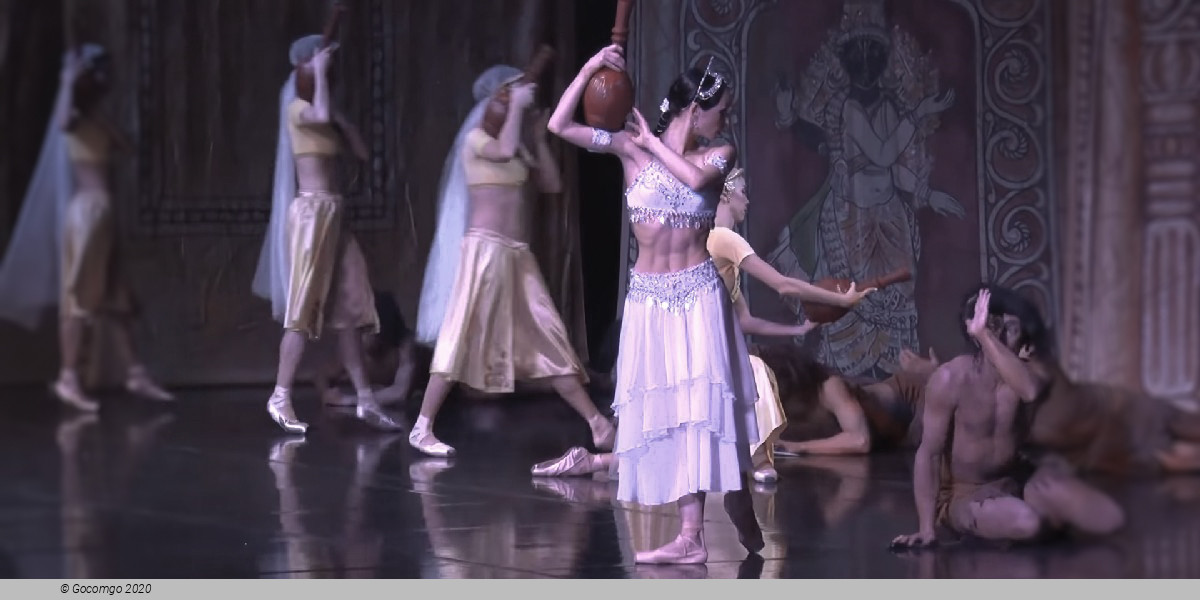
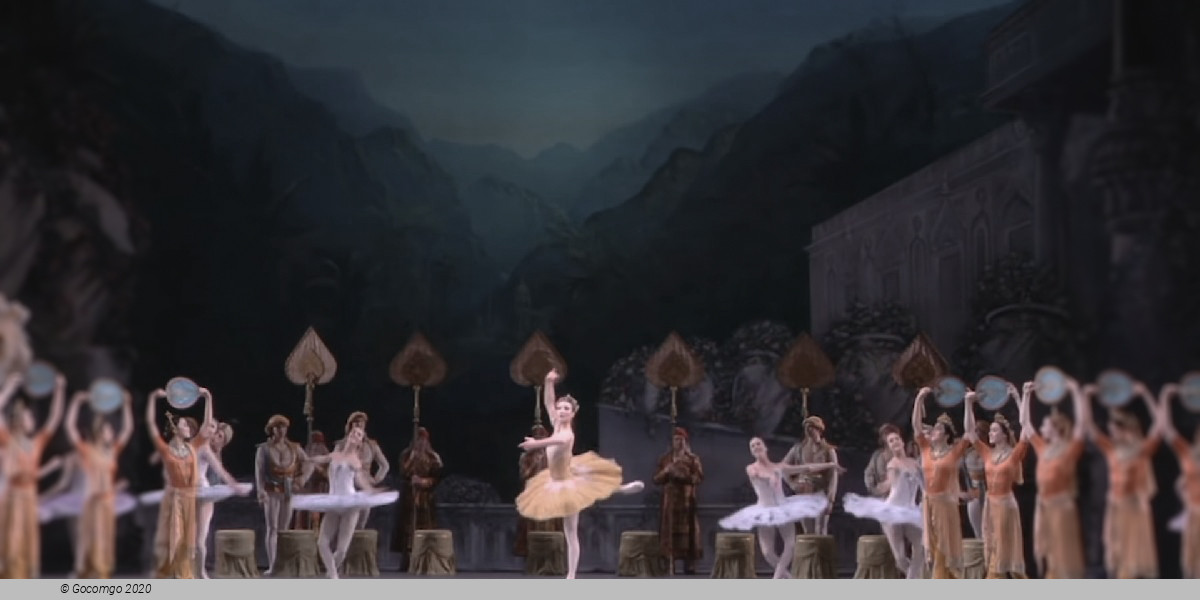
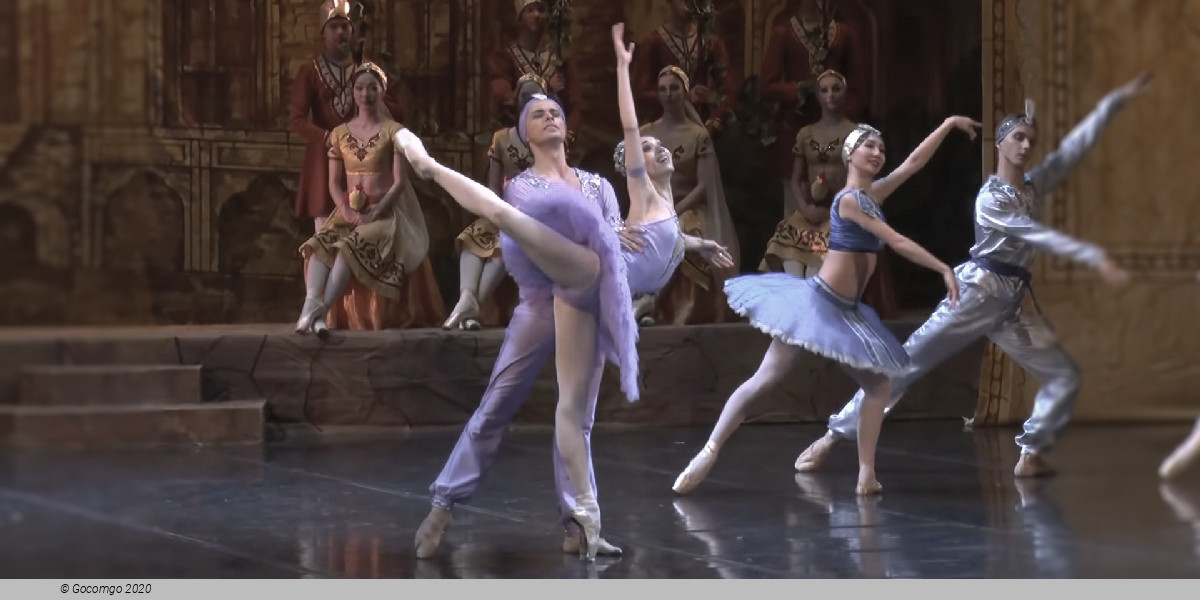
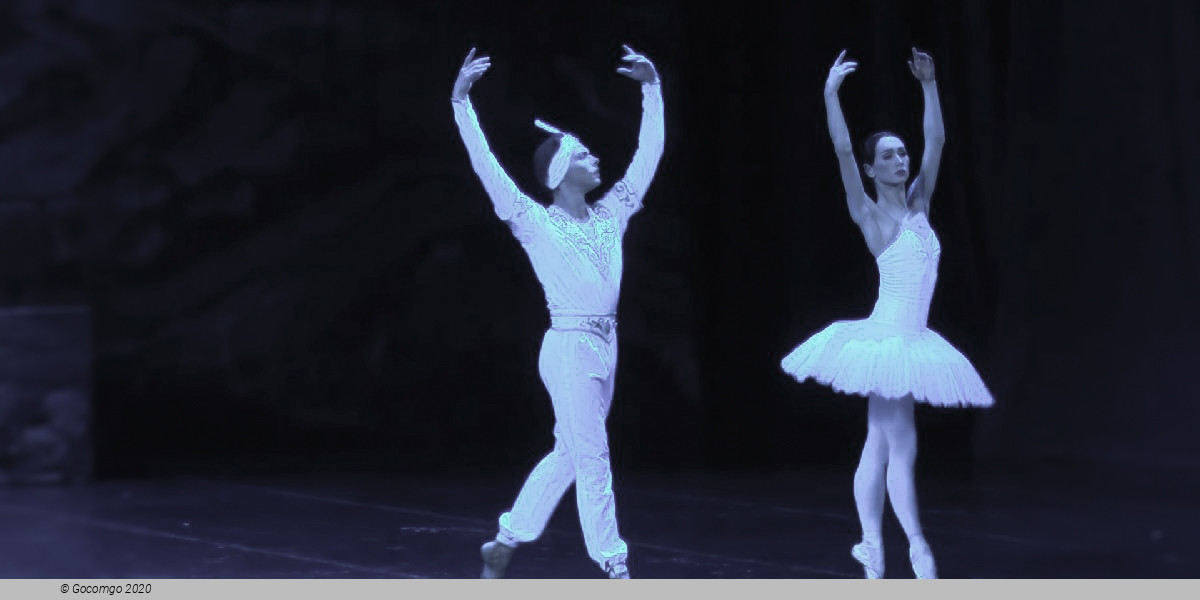
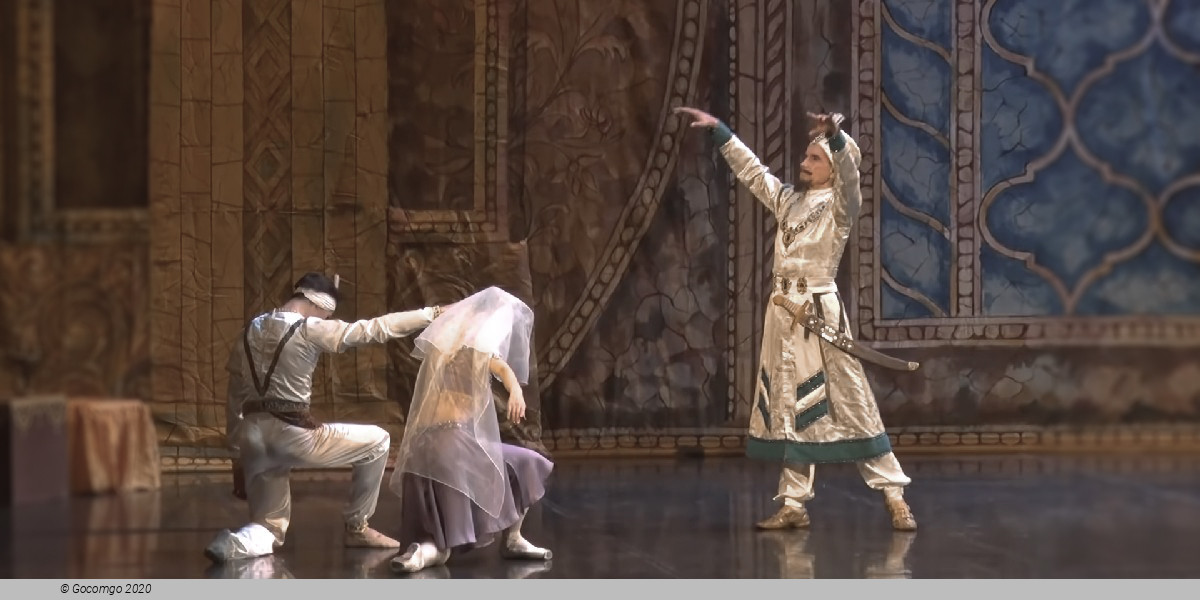
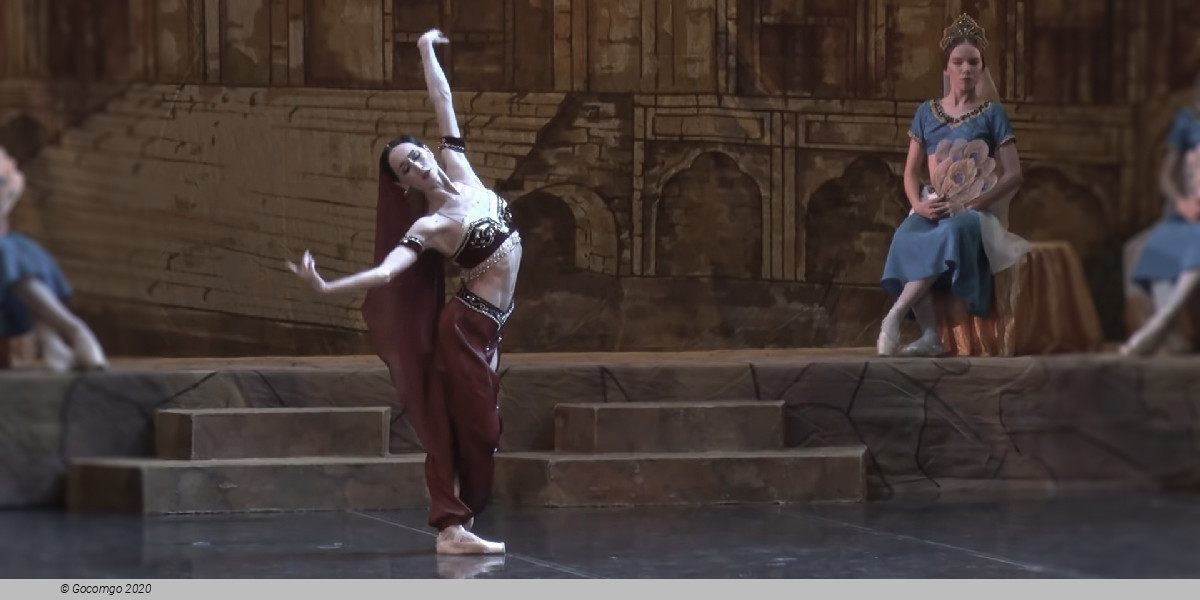
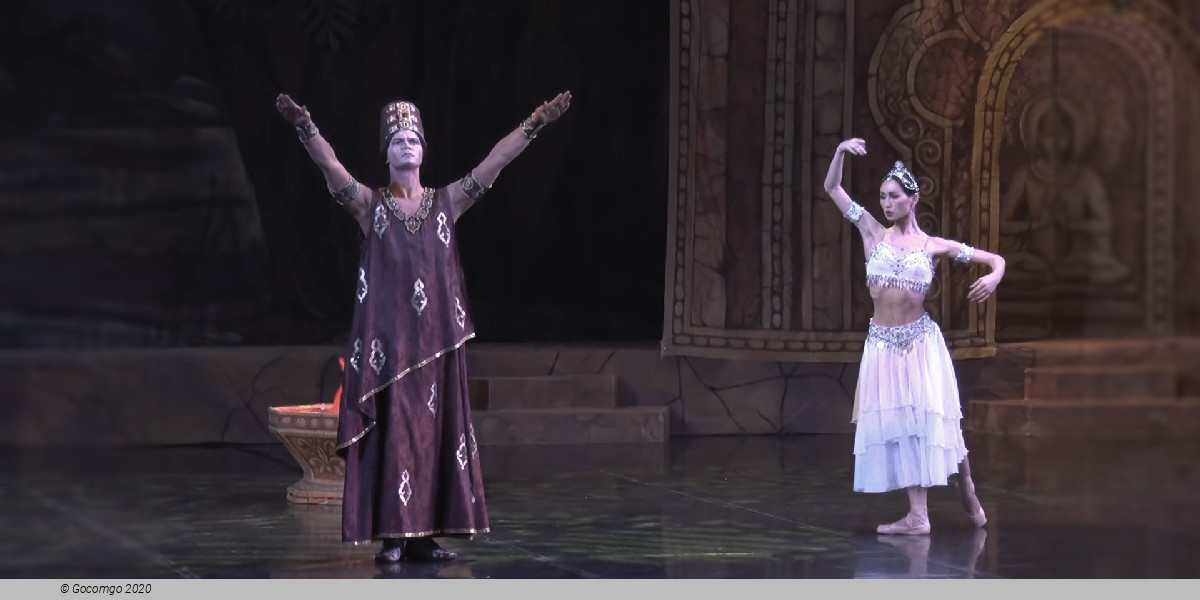
The sweeping vistas and grand temples of mystical India set the stage for this beloved 19th century ballet depicting eternal love and godly revenge. In “sublime classical purity” (Los Angeles Times) ABT’s company of dancers mesmerize as the doomed temple dancer, Nikiya, the warrior who betrays her, Solor, and her archrival in love, Gamzatti.

In 1980 Makarova staged her own version of the full-length work for the company, based largely on the Ponomarev/Chabukiani version she danced during her career with the Kirov Ballet. Makarova's production premiered on May 21, 1980 at the Metropolitan Opera House, and was shown live on PBS during the Live from Lincoln Center broadcast. Makarova danced the role of Nikiya herself, but was replaced by Marianna Tcherkassky due to an injury during the first act. The principal roles included Anthony Dowell as Solor, Cynthia Harvey as Gamzatti, Alexander Minz as the High Brahmin and Victor Barbee as the Rajah. The décor was designed by Pier Luigi Samaritani, with costumes by Theoni V. Aldredge. The premiere was a triumph for American Ballet Theatre, and the company has performed it consistently ever since.

History
Premiere of this production: 23 January 1877, Imperial Bolshoi Kamenny Theatre in St. Petersburg, Russia

La Bayadère (en. The Temple Dancer) is a ballet, originally staged in four acts and seven tableaux by French choreographer Marius Petipa to the music of Ludwig Minkus. The ballet was staged especially for the benefit performance of the Russian Prima ballerina Ekaterina Vazem, who created the principal role of Nikiya.

Synopsis

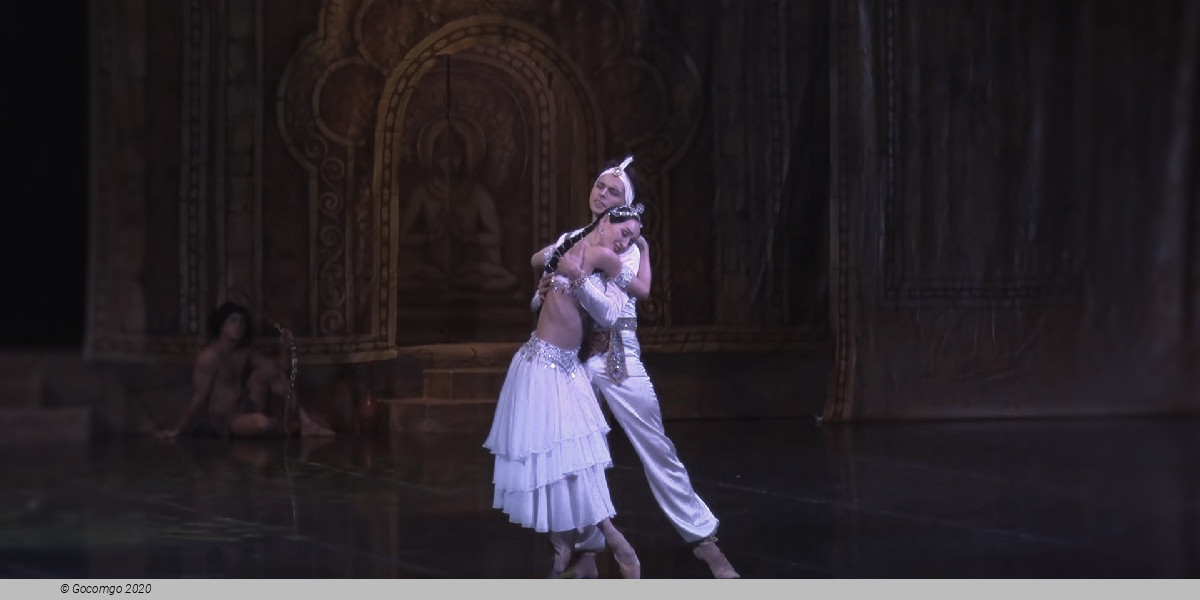
Set in the Royal India of the past, La Bayadère is a story of eternal love, mystery, fate, vengeance, and justice.  The ballet relates the drama of a temple dancer (bayadère), Nikiya, who is loved by Solor, a noble warrior.  She is also loved by the High Brahmin, but does not love him in return, as she does Solor.

Act I

Scene I, Outside Temple in the Sacred Forest.

The High Brahmin, priests, and temple dancers are celebrating the Indian Ritual of Fire.  Nikiya, the most beautiful of the bayadères, has been chosen to be consecrated the lead temple dancer.  The High Brahmin declares his love for Nikiya, but is rejected by her.  Nikiya meets secretly with Solor later that evening.  They dance together and swear eternal love over the Sacred Fire, but are discovered by the jealous High Brahmin, who vows to kill Solor.

Scene II, A Room in the Palace.

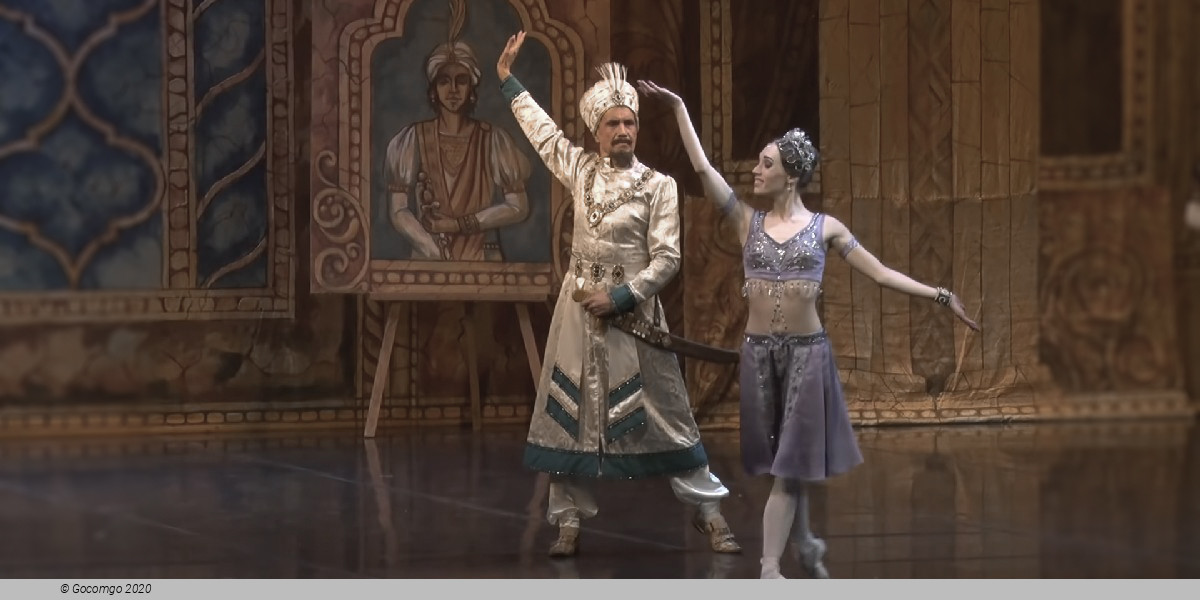
The Rajah has decided to reward Solor’s valor and decrees that the warrior will marry his daughter, Gamzatti.  Gamzatti falls in love with Solor’s portrait, and when they meet, he is overwhelmed by her beauty.  Even though he has sworn eternal love to Nikiya, he cannot defy the wishes of the Rajah and agrees to marry Gamzatti.  The High Brahmin informs the Rajah of Nikiya and Solor’s secret love, hoping that the Rajah will do away with Solor.  Instead, the Rajah decides to kill Nikiya.

This conversation is overhead by Gamzatti, who summons Nikiya to her rooms and attempts to bribe Nikiya to give up Solor.  Refusing, Nikiya frantically attempts to kill  Gamzatti.  Nikiya flees and Gamzatti swears to destroy her.

Scene III, The Garden of the Palace.

At the betrothal of Solor and Gamzatti, Nikiya is commanded to dance.  Gamzatti presents her with a basket of flowers that Nikiya believes to be from Solor, and which conceals a deadly snake.  Nikiya is bitten, and when Solor leaves with Gamzatti, she refuses the proffered antidote and dies.

Act II. The Tent of Solor.

Solor, grief‑stricken and under the influence of opium, dreams of being reunited with Nikiya in the Kingdom of the Shades.  Awakening, he realizes that he must prepare to marry Gamzatti.

Act III. The Temple.

The vision of Nikiya remains with Solor as the wedding ceremony begins at the Sacred Temple.  As Solor and Gamzatti say their vows and are blessed by the High Brahmin, the vengeance of the gods is unleashed, and the temple and all the celebrants are destroyed.  Nikiya and Solor are once again united in eternal love.

Venue Info

Metropolitan Opera - New York
Location   30 Lincoln Center

The Metropolitan Opera is an opera company based in New York City, resident at the Metropolitan Opera House at the Lincoln Center for the Performing Arts. The Metropolitan Opera is the largest classical music theatre in North America. It presents about 27 different operas each year from late September through May. As of 2018, the company's current music director is Yannick Nézet-Séguin.

The Metropolitan Opera Company was founded in 1883 as an alternative to New York's old established Academy of Music opera house. The subscribers to the Academy's limited number of private boxes represented the highest stratum in New York society. By 1880, these "old money" families were loath to admit New York's newly wealthy industrialists into their long-established social circle. Frustrated with being excluded, the Metropolitan Opera's founding subscribers determined to build a new opera house that would outshine the old Academy in every way. A group of 22 men assembled at Delmonico's restaurant on April 28, 1880. They elected officers and established subscriptions for ownership in the new company. The new theater, built at 39th and Broadway, would include three tiers of private boxes in which the scions of New York's powerful new industrial families could display their wealth and establish their social prominence. The first Met subscribers included members of the Morgan, Roosevelt, and Vanderbilt families, all of whom had been excluded from the Academy. The new Metropolitan Opera House opened on October 22, 1883, and was an immediate success, both socially and artistically. The Academy of Music's opera season folded just three years after the Met opened.

The operas are presented in a rotating repertory schedule, with up to seven performances of four different works staged each week. Performances are given in the evening Monday through Saturday with a matinée on Saturday. Several operas are presented in new productions each season. Sometimes these are borrowed from or shared with other opera companies. The rest of the year's operas are given in revivals of productions from previous seasons. The 2015–16 season comprised 227 performances of 25 operas.

The operas in the Met's repertoire consist of a wide range of works, from 18th-century Baroque and 19th-century Bel canto to the Minimalism of the late 20th century. These operas are presented in staged productions that range in style from those with elaborate traditional decors to others that feature modern conceptual designs.

The Met's performing company consists of a large symphony-sized orchestra, a chorus, a children's choir, and many supporting and leading solo singers. The company also employs numerous free-lance dancers, actors, musicians, and other performers throughout the season. The Met's roster of singers includes both international and American artists, some of whose careers have been developed through the Met's young artists programs. While many singers appear periodically as guests with the company, others, such as Renée Fleming and Plácido Domingo, long maintained a close association with the Met, appearing many times each season until they retired.

Important Info
Type: Ballet
City: New York, USA
Starts at: 19:30
Acts: 3
Duration: 2h 42min
Top of page