



Metropolitan Opera: Jane Eyre Tickets | Event Dates & Schedule | GoComGo.com

Jane Eyre Tickets

Metropolitan Opera, New York, USA
Important Info
Type: Ballet
City: New York, USA
Duration: 2h 8min
Acts: 2

E-tickets: Print at home or at the box office of the event if so specified. You will find more information in your booking confirmation email.

You can only select the category, and not the exact seats.
If you order 2 or 3 tickets: your seats will be next to each other.
If you order 4 or more tickets: your seats will be next to each other, or, if this is not possible, we will provide a combination of groups of seats (at least in pairs, for example 2+2 or 2+3).

Cast
Performers
Choose the date to see the peformers
Overview

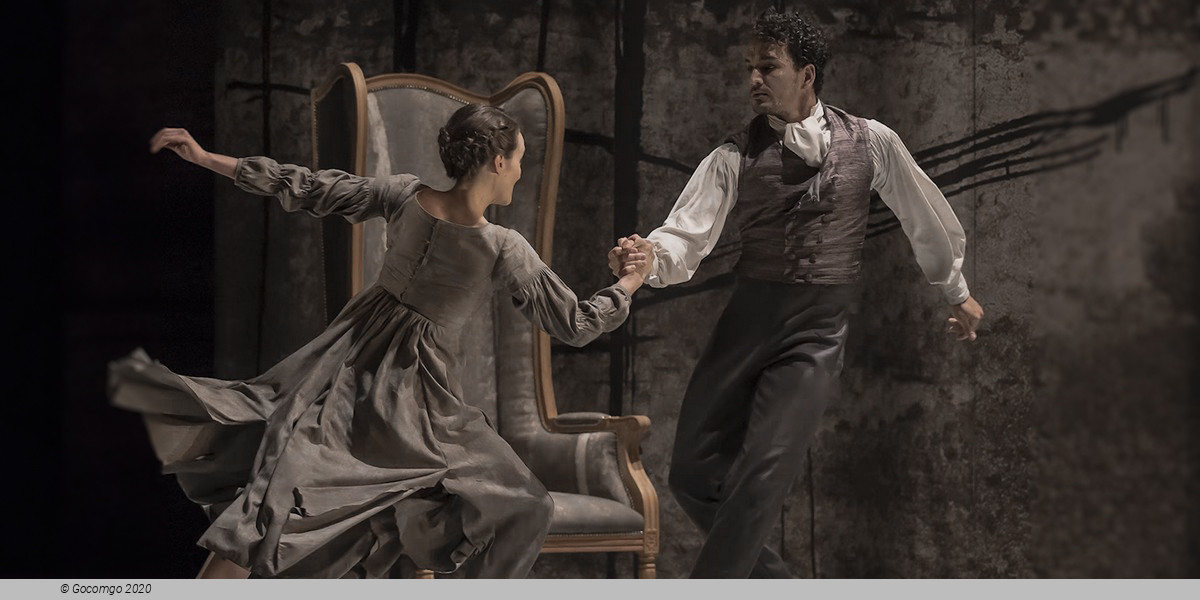
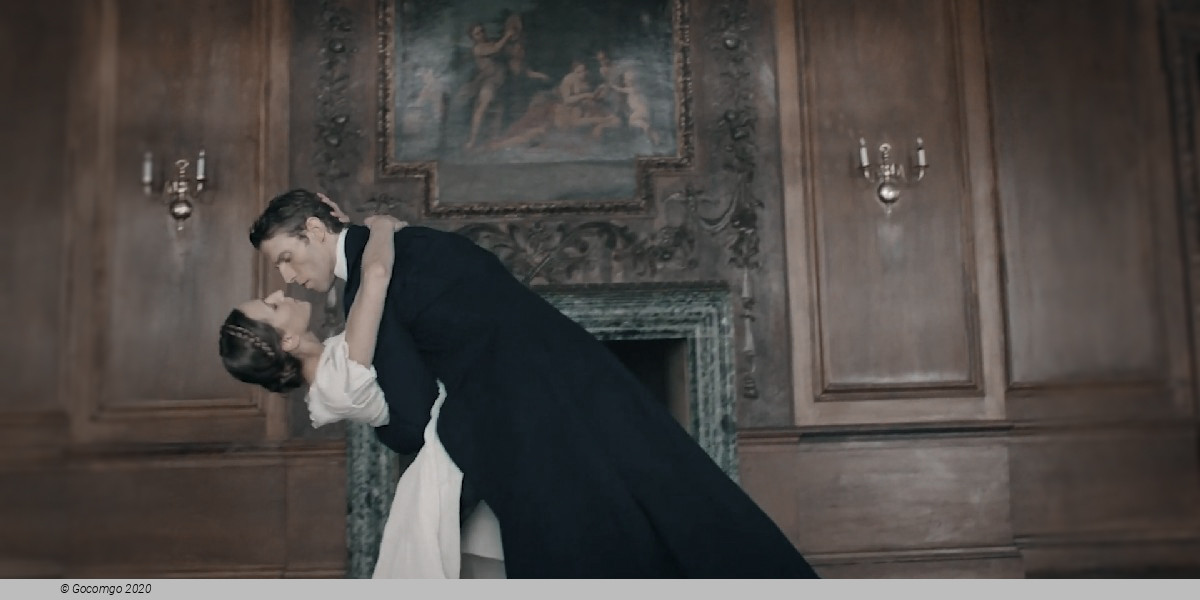
"A textbook example of dance storytelling that honours its source.” (Financial Times) Marston’s Jane Eyre challenges the idea of a classic ballet heroine. After a difficult upbringing, Jane becomes the governess for the mysterious Mr. Rochester, discovering the struggles of society’s expectations. A literary classic brought to life by Cathy Marston’s stirring choreography and an enthralling Victorian design,Jane Eyre shows that love can conquer any obstacle.

History
Premiere of this production: 19 May 2016, Cast Theatre Doncaster, England

Philip Feeney wrote and arranged the music for Jane Eyre, based on excerpts from compositions by Fanny Mendelssohn Hensel, Felix Mendelssohn, and Franz Schubert, to evoke the story’s unique world.   In choreographing the ballet, Cathy Marston sought music that would describe the era during which Charlotte Brontë’s novel was set and give rich dimension to Jane Eyre as a character.

Synopsis

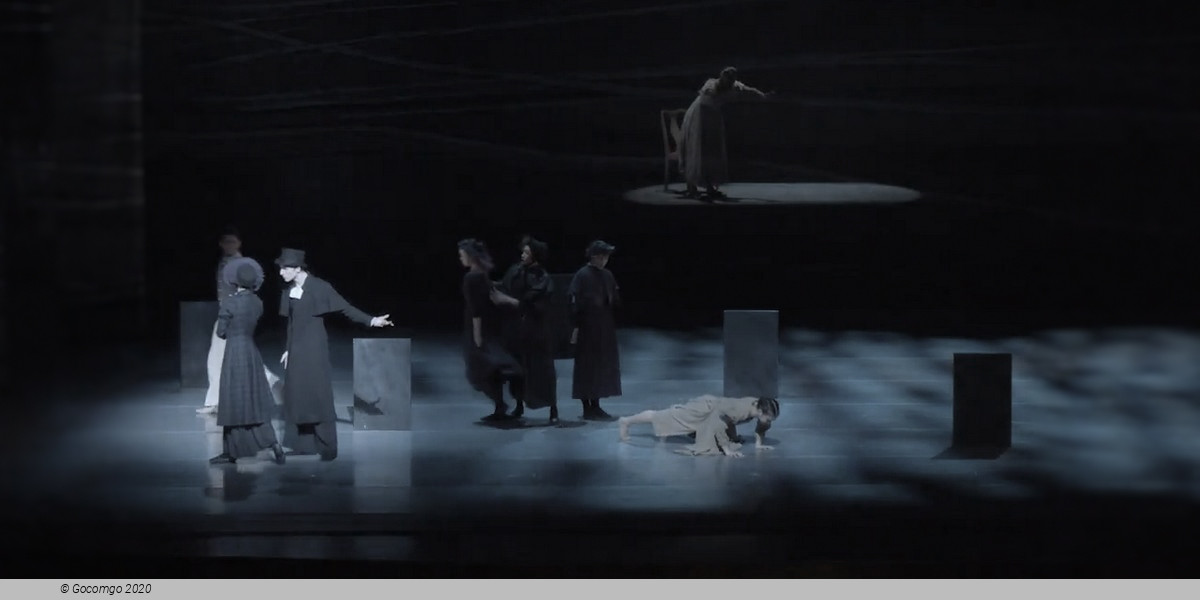
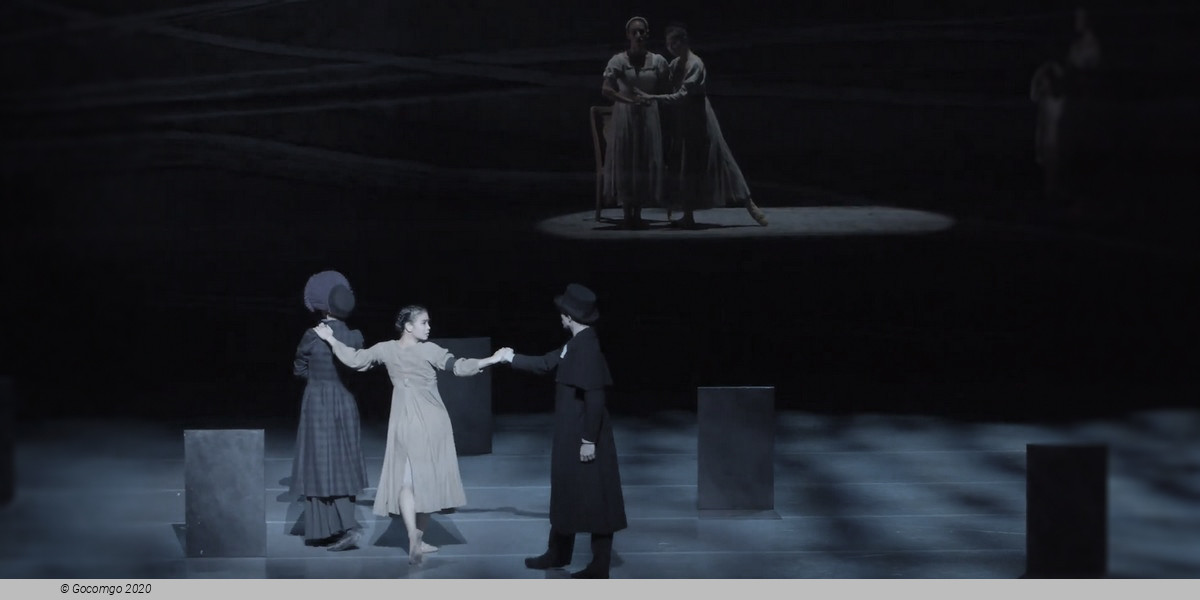
Prologue. Jane is running, her journey hindered by imaginary male figures – her inner demons.  She collapses and is discovered by St. John.  He carries her to his home, and with his sisters, aids her recovery, listening to fragments of her story that escape from her dark dreams.

Act I
An Orphan

Young Jane is orphaned and raised without love by her wealthy Aunt, Mrs. Reed.  Her cousins Eliza, Georgiana and John torment her until she retaliates against John’s physical abuse.  Horrified by what she misconstrues as Jane’s arrogance and violence, her Aunt asks Reverend Brocklehurst to take Jane away to Lowood Institution for orphaned girls.

Lowood Institution.  

The girls lead a rigid life of deprivation under their cruel headmaster Rev. Brocklehurst. Jane befriends Helen Burns, but when Helen dies of consumption, an anguished Jane finds herself questioning her destiny.

Grown Up.

Reaching adulthood, Jane has completed her studies and becomes a teacher to the orphans.  However, she yearns for new experiences in the wider world and accepts an invitation to become governess at Thornfield Hall.

Thornfield.  Jane is welcomed to Thornfield by the housekeeper, Mrs. Fairfax, and her new pupil, Adele.  Her employer, Edward Rochester, returns home from his world travels.  Dark and passionate, he is surprised to meet his intellectual match in Jane and treats her with a respect she has never known. 

All is not peaceful at Thornfield, however; Jane senses secrets within the whispering walls.  One night, Jane is woken by the smell of smoke and rescues Mr. Rochester from his flaming bed.  As they stand in the fire’s aftermath, an intimacy is born that both excites and scares Jane.

Act II
Jealousy. 

A dinner party takes place at Thornfield and Jane feels shy and unconfident in the presence of Rochester’s grand guests, especially the beautiful and wealthy Blanche Ingram, who seems to have caught Mr. Rochester’s attention.  Jane remains at the party at Mr. Rochester’s insistence until the festivities are interrupted by a servant, Grace Poole, who enters inexplicably agitated and injured.  Mr. Rochester sends the party guests away whilst entrusting Grace Poole to Jane’s care.

A Proposal. 

Rochester returns to the ballroom where Jane waits alone.  He attempts to revive the intimacy between them but she pulls back, convinced that he is engaged to Blanche Ingram.  When Rochester proposes marriage to a stunned Jane, she initially believes he is mocking her.  She eventually accepts, unaware of a mysterious woman in red watching them from the shadows.

A Wedding. 

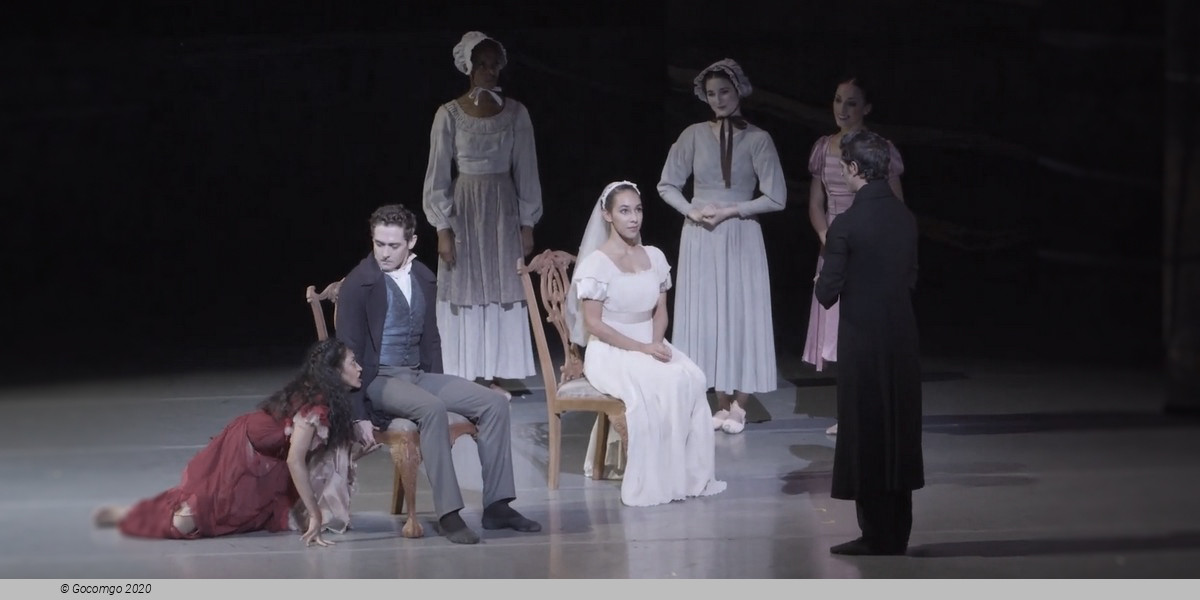
The household prepares for Jane and Rochester’s wedding.  As the intimate ceremony begins, a woman bursts into the room.  She is Bertha Mason, and she claims to be the wife of Mr. Rochester.  He admits that Bertha is speaking the truth and that he cannot legally make Jane his wife.  Utterly heartbroken, Jane cannot conceive of a future with Mr. Rochester and flees alone into the moors, where she collapses.

Taken In. 

St. John Rivers discovers Jane almost unconscious and takes her home to his sisters.  She is very ill and experiences distressing dreams about her past.  Gently, the women nurture Jane back to health.  St. John sees a potential wife in Jane; however, she recoils from his cool yet insistent proposal, recognizing that St. John will never love her with the same passion as Mr. Rochester.

Burnt. 

A determined Jane returns to seek Mr. Rochester at Thornfield, but in her absence there has been a huge fire, ignited – for the second time – by Bertha Mason.  With every reason to wish Bertha dead, Mr. Rochester still attempts to save her from her own hand but fails – she dies, and he is left blind.

Reunited.
Jane finds Mr. Rochester a broken man.  Yet, as he recognizes her presence, he falls into her arms.  Jane proposes marriage to Mr. Rochester, and as they embrace, forever as equals, Jane looks ahead to her future.  She has not only found love but also gained ownership of her own destiny.

Venue Info

Metropolitan Opera - New York
Location   30 Lincoln Center

The Metropolitan Opera is an opera company based in New York City, resident at the Metropolitan Opera House at the Lincoln Center for the Performing Arts. The Metropolitan Opera is the largest classical music theatre in North America. It presents about 27 different operas each year from late September through May. As of 2018, the company's current music director is Yannick Nézet-Séguin.

The Metropolitan Opera Company was founded in 1883 as an alternative to New York's old established Academy of Music opera house. The subscribers to the Academy's limited number of private boxes represented the highest stratum in New York society. By 1880, these "old money" families were loath to admit New York's newly wealthy industrialists into their long-established social circle. Frustrated with being excluded, the Metropolitan Opera's founding subscribers determined to build a new opera house that would outshine the old Academy in every way. A group of 22 men assembled at Delmonico's restaurant on April 28, 1880. They elected officers and established subscriptions for ownership in the new company. The new theater, built at 39th and Broadway, would include three tiers of private boxes in which the scions of New York's powerful new industrial families could display their wealth and establish their social prominence. The first Met subscribers included members of the Morgan, Roosevelt, and Vanderbilt families, all of whom had been excluded from the Academy. The new Metropolitan Opera House opened on October 22, 1883, and was an immediate success, both socially and artistically. The Academy of Music's opera season folded just three years after the Met opened.

The operas are presented in a rotating repertory schedule, with up to seven performances of four different works staged each week. Performances are given in the evening Monday through Saturday with a matinée on Saturday. Several operas are presented in new productions each season. Sometimes these are borrowed from or shared with other opera companies. The rest of the year's operas are given in revivals of productions from previous seasons. The 2015–16 season comprised 227 performances of 25 operas.

The operas in the Met's repertoire consist of a wide range of works, from 18th-century Baroque and 19th-century Bel canto to the Minimalism of the late 20th century. These operas are presented in staged productions that range in style from those with elaborate traditional decors to others that feature modern conceptual designs.

The Met's performing company consists of a large symphony-sized orchestra, a chorus, a children's choir, and many supporting and leading solo singers. The company also employs numerous free-lance dancers, actors, musicians, and other performers throughout the season. The Met's roster of singers includes both international and American artists, some of whose careers have been developed through the Met's young artists programs. While many singers appear periodically as guests with the company, others, such as Renée Fleming and Plácido Domingo, long maintained a close association with the Met, appearing many times each season until they retired.

Important Info
Type: Ballet
City: New York, USA
Duration: 2h 8min
Acts: 2

E-tickets: Print at home or at the box office of the event if so specified. You will find more information in your booking confirmation email.

You can only select the category, and not the exact seats.
If you order 2 or 3 tickets: your seats will be next to each other.
If you order 4 or more tickets: your seats will be next to each other, or, if this is not possible, we will provide a combination of groups of seats (at least in pairs, for example 2+2 or 2+3).

Top of page