The opera is divided into three acts:
Act 1:
Year 1 of Akhnaten's Reign in Thebes
Thebes, 1370 BC
Prelude, verse 1, verse 2, verse 3
Set in the key of A minor, the strings introduce a ground bass theme, with following variations. (A passacaglia). The scribe recites funeral texts from the pyramids. "Open are the double doors of the horizon; unlocked are its bolts."
Scene 1: Funeral of Akhnaten's father Amenhotep III
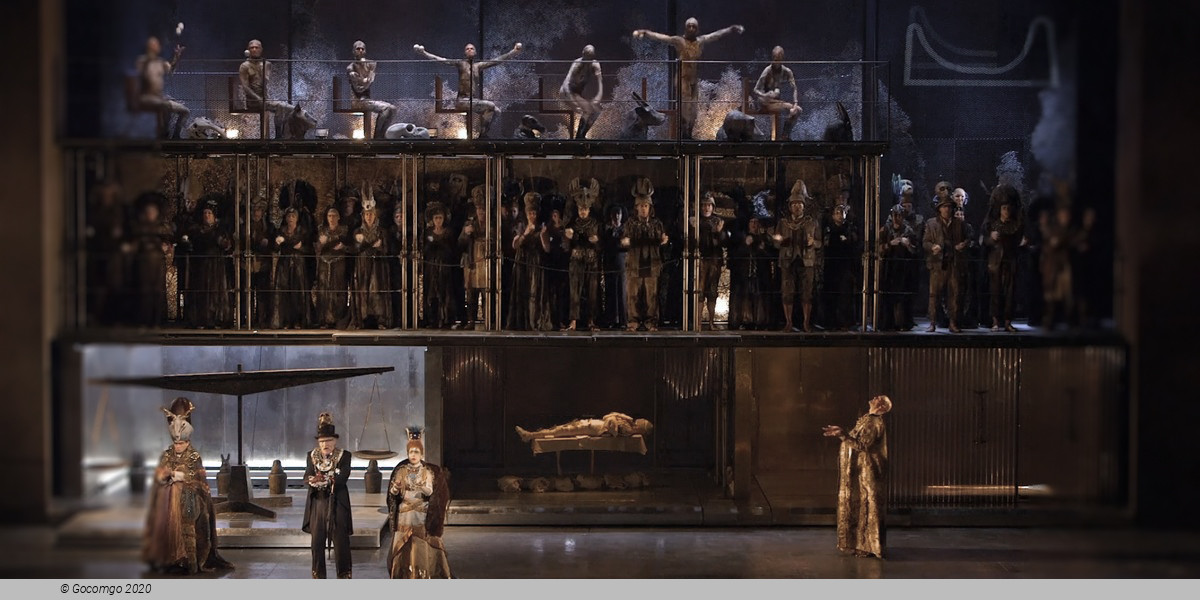
Heralded by hammering drums, Aye and a small male chorus chant a funeral hymn in Egyptian, later joined by the full chorus. The music is basically a march, based on the chords of A major and F♯ minor (with added major sixth), and grows to ecstatic intensity towards the end.
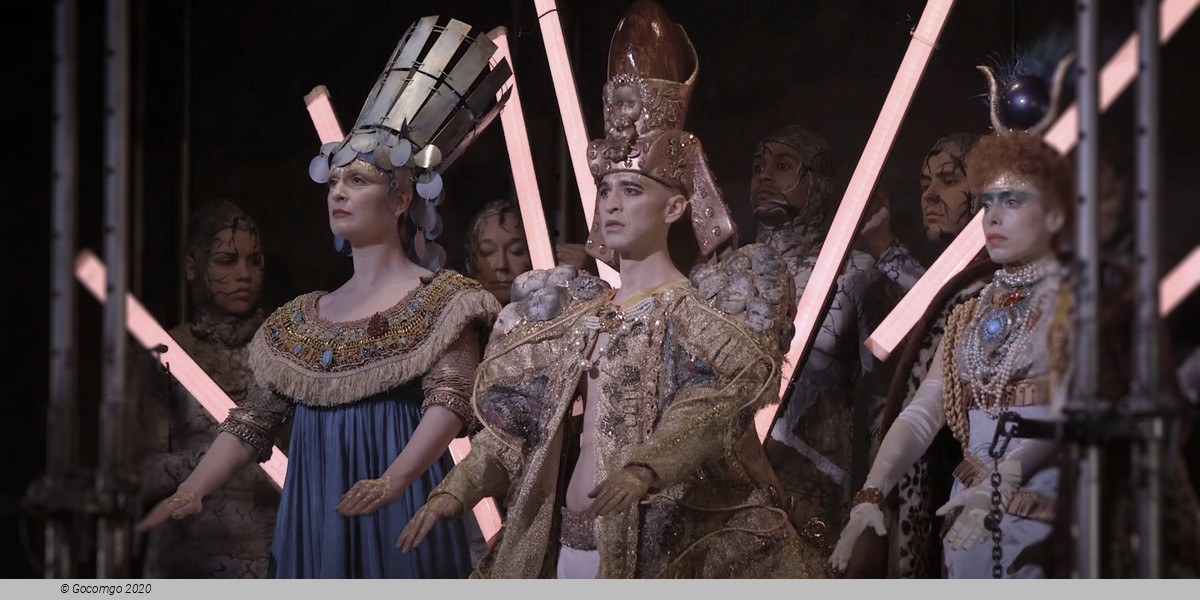
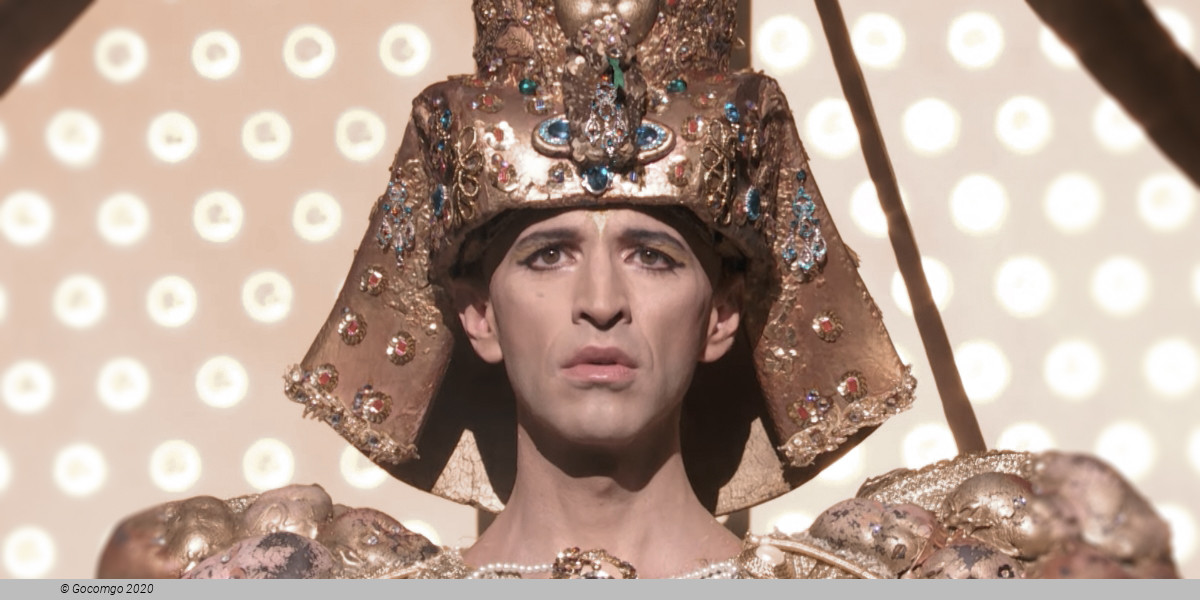
Scene 2: The Coronation of Akhnaten
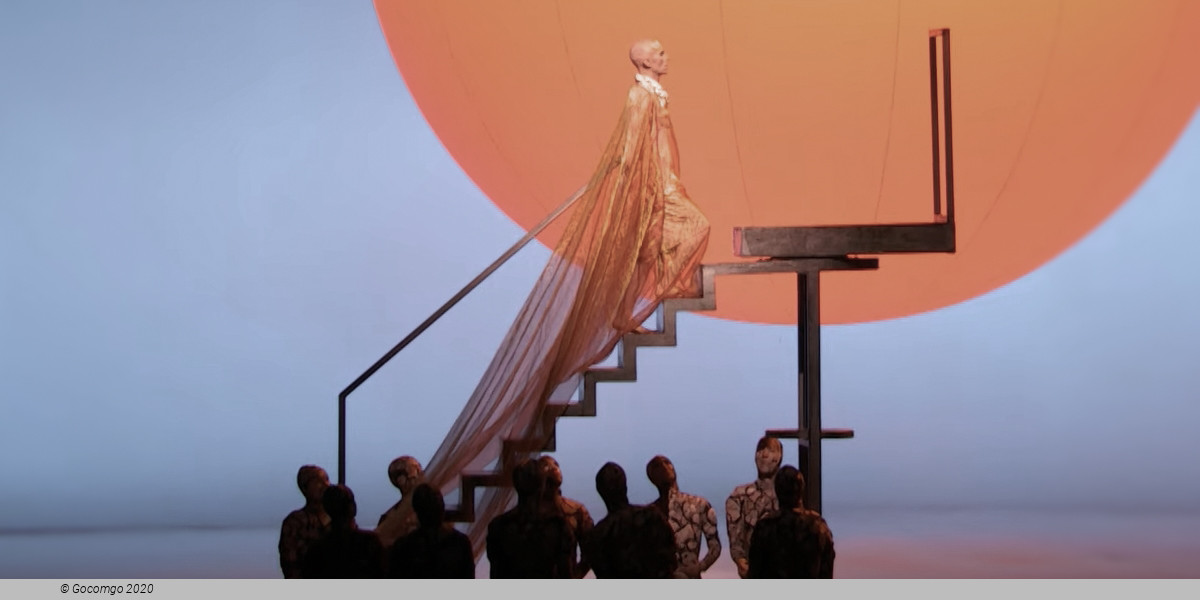
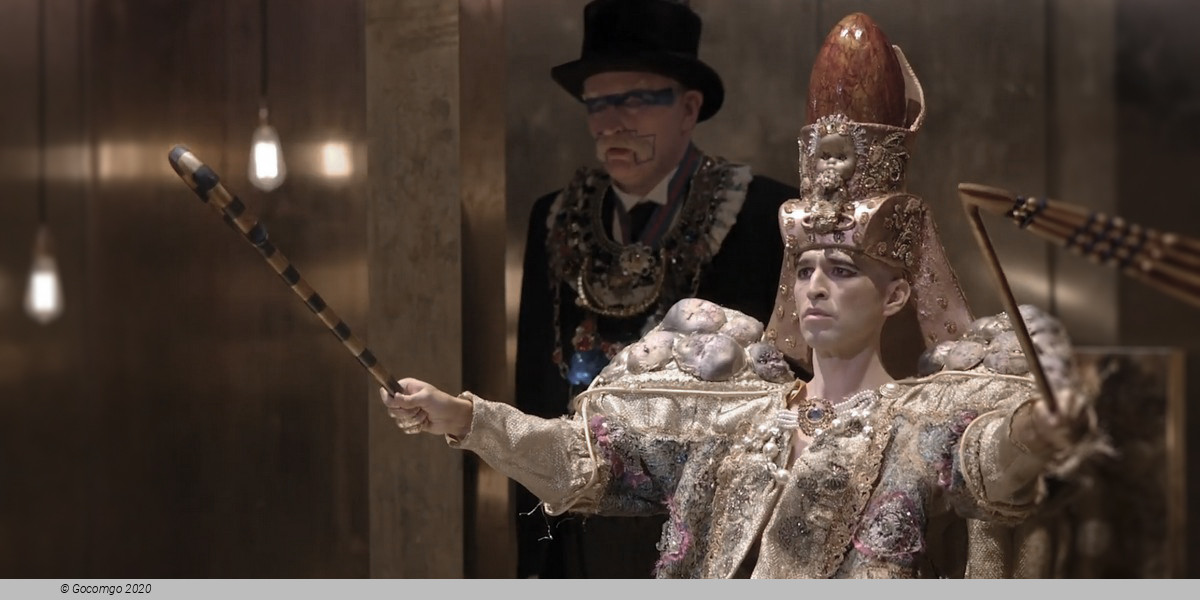
After a lengthy orchestral introduction, during which Akhnaten appears, heralded by a solo trumpet, the High Priest, Aye, and Horemhab sing a ritual text. After that, the Narrator recites a list of royal titles bestowed upon Akhnaten, while he is crowned. After the coronation, the chorus repeats the ritual text from the beginning of the scene. Again, the main key is A minor.
Scene 3: The Window of Appearances
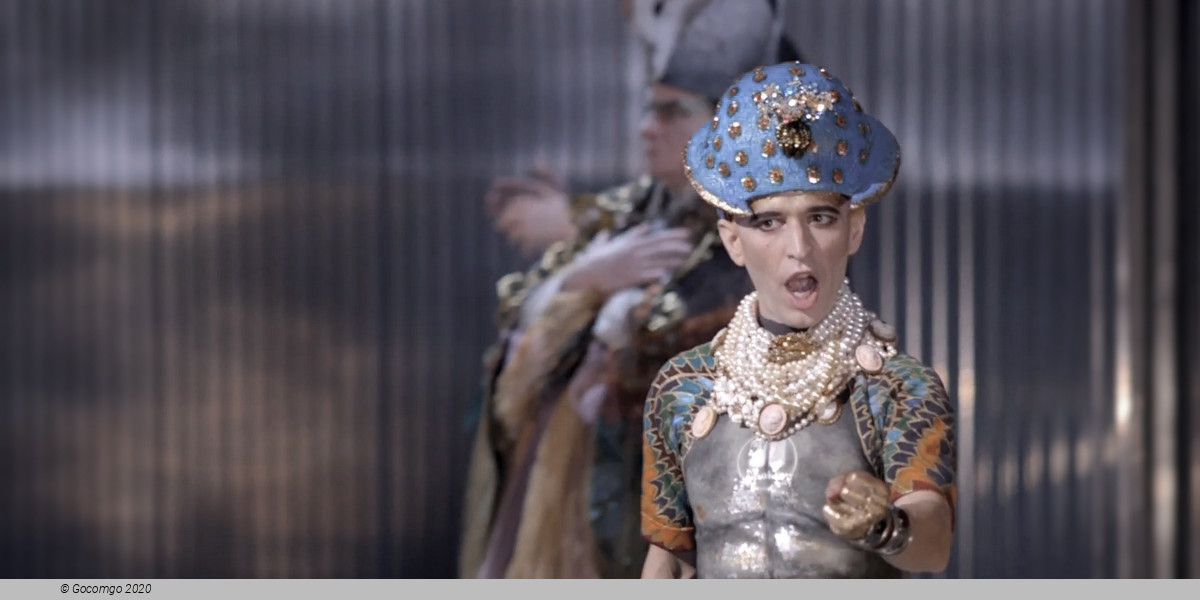
After an introduction in A minor, dominated by tubular bells, Akhnaten sings a praise to the Creator (in Egyptian) at the window of public appearances. This is the first time he actually sings, after he has already been on stage for 20 minutes (and 40 minutes into the opera) and the effect of his countertenor voice (which in 1983 was even more rare than nowadays) is startling. He is joined by Nefertiti, who actually sings lower notes than he, and later by Queen Tye, whose soprano soars high above the intertwining voices of the royal couple.
Act 2:
Years 5 to 15 in Thebes and Akhetaten
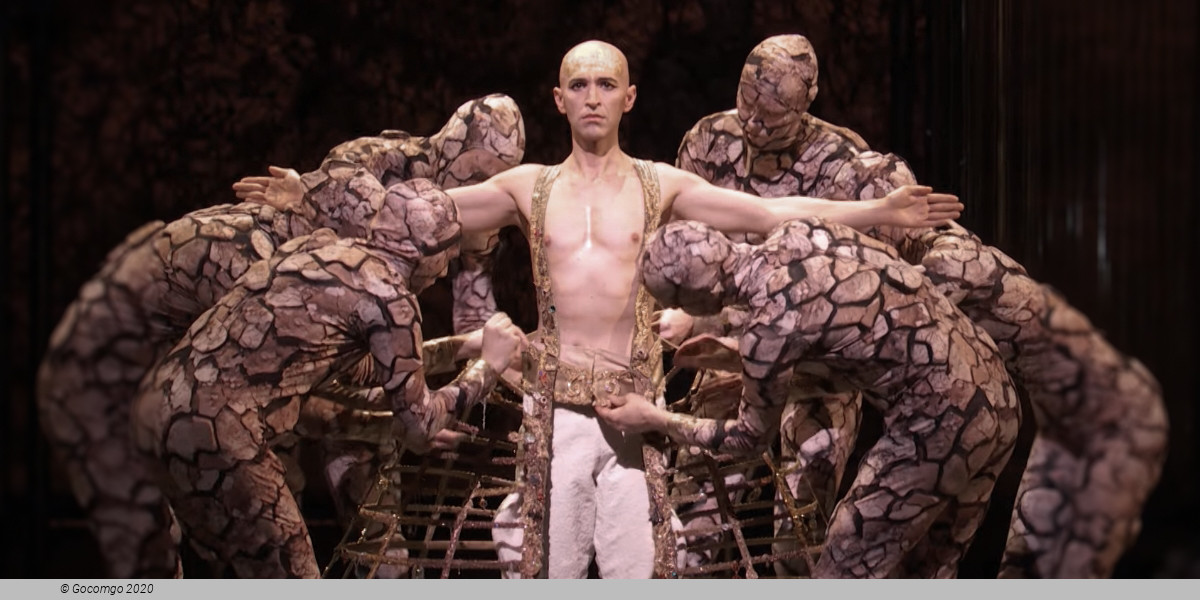
Scene 1: The Temple
The scene opens again in A minor, with the High Priest and a group of priests singing a hymn to Amun, principal god of the old order, in his temple. The music becomes increasingly dramatic, as Akhnaten, together with Queen Tye and his followers, attack the temple. This scene has only wordless singing. The harmonies grow very chromatic, finally reaching A♭ major and E minor. The temple roof is removed and the sun god Aten's rays invade the temple, thus ending Amun's reign and laying the foundation for the worship of the only god Aten.
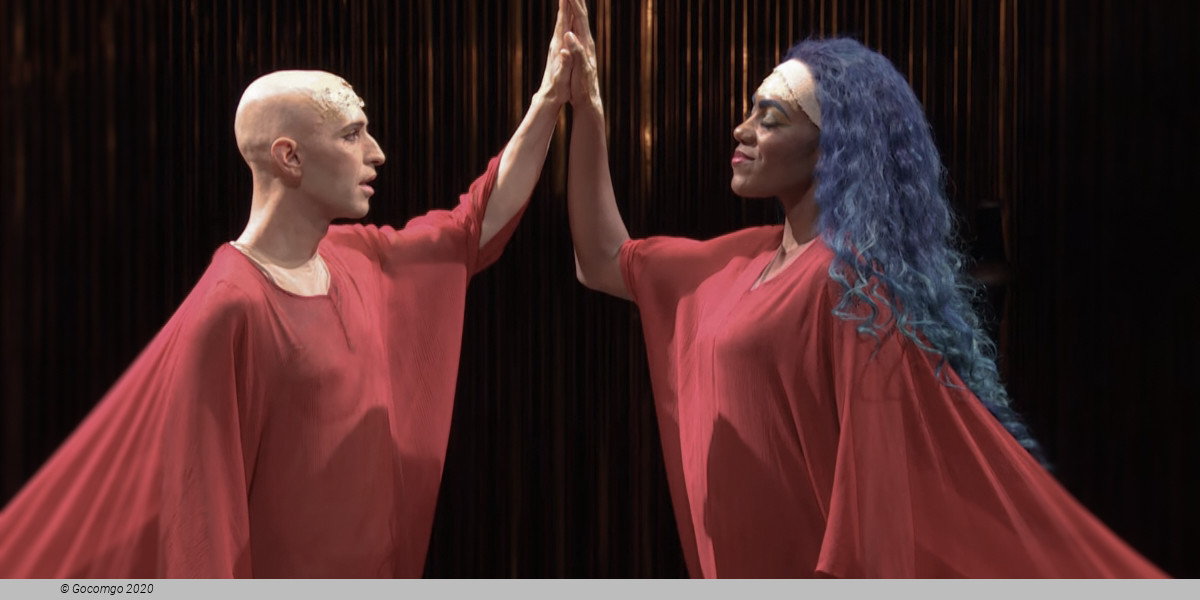
Scene 2: Akhnaten and Nefertiti
Two solo celli introduce a "love theme". Accompanied by a solo trombone while the harmony switches to H(sus), the Narrator recites a prayer-like poem to the sun god. The strings softly take over the music in E minor, and the same poem is recited again, this time actually as a love poem from Akhnaten to Nefertiti. Then Akhnaten and Nefertiti sing the same text to each other (in Egyptian), as an intimate love duet. After a while, the trumpet associated with Akhnaten joins them as the highest voice, turning the duet into a trio.
Scene 3: The City – Dance
The Narrator speaks a text taken from the boundary stones of the new capital of the empire, Akhet-Aten (The Horizon of Aten), describing the construction of the city, with large, light-filled spaces. After a brass fanfare, the completion of the city is celebrated in a light-hearted dance, contrasting with the stark, ritualistic music with which this act began. (In the Stuttgart premiere, the dance actually described the construction of the city.) The dance scene was omitted from the UK premiere production and its 1987 revival.
Scene 4: Hymn
What now follows is a hymn to the only god Aten, a long aria (alternating between A minor and A major) by Akhnaten, and the central piece of the opera. Notably, it is the only text sung in the language of the audience, praising the sun giving life to everything. After the aria, an off-stage chorus sings Psalm 104 in Hebrew, dating some 400 years later, which has strong resemblances to Akhnaten's Hymn, thus emphasizing Akhnaten as the first founder of a monotheistic religion.
Act 3:
Year 17 and the Present
Akhnaten, 1358 BC
Scene 1: The Family
Two oboes d'amore play the "love theme" from act 2. Akhnaten, Nefertiti and their six daughters, sing wordlessly in contemplation, they are oblivious of what happens outside of the palace. As the music switches from E minor to F minor, the Narrator reads letters from Syrian vassals, asking for help against their enemies. Since the king does not send troops, his land is being seized and plundered by their enemies. The scene focuses again on Akhnaten and his family, still oblivious to the country falling apart.
Scene 2: The Attack and Fall of the City
The music moves again to a vigorous F minor. Horemhab, Aye and the High Priest of Aten instigate the people (as the chorus), singing part of the vassal's letters (in their original Akkadian language) until finally the palace is attacked, the royal family killed, and the city of the sun destroyed.
Scene 3: The Ruins
The music of the very beginning of the opera returns. The scribe recites an inscription on Aye's tomb, praising the death of "the heretic" and the new reign of the old gods. He then describes the restoration of Amun's temple by Akhnaten's son Tutenkhamun. The Prelude music grows stronger and the scene moves to present-day Egypt, to the ruins of Amarna, the former capital Akhet-Aton. The Narrator appears as a modern tourist guide and speaks a text from a guide book, describing the ruins. "There is nothing left of this glorious city of temples and palaces".
Scene 4: Epilogue
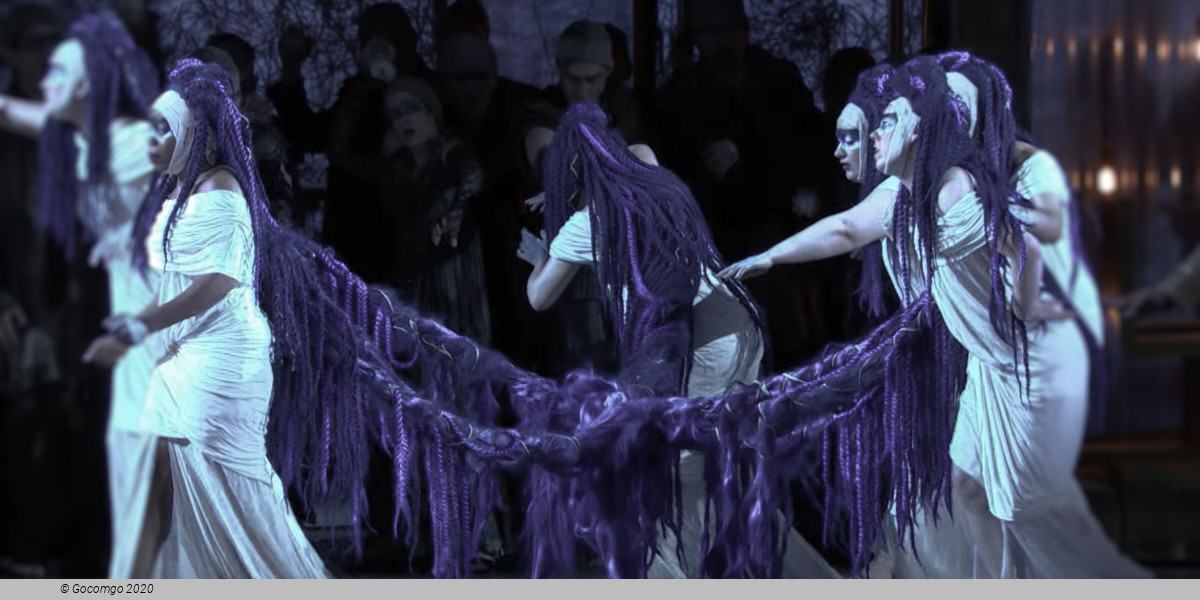
The ghosts of Akhnaten, Nefertiti and Queen Tye appear, singing wordlessly amongst the ruins. The funeral procession from the beginning of the opera appears on the horizon, and they join it. The music introduces a bass line from the beginning of Einstein on the Beach, the first part of Glass's "portrait" trilogy (The second one being Satyagraha and the third one Akhnaten), thus providing a musical bracket for the whole trilogy.
Act 1: Year 1 of Akhnaten's Reign in Thebes
Thebes, 1370 BC
Prelude, verse 1, verse 2, verse 3
Set in the key of A minor, the strings introduce a ground bass theme, with following variations. (A passacaglia). The scribe recites funeral texts from the pyramids. "Open are the double doors of the horizon; unlocked are its bolts."
Scene 1: Funeral of Akhnaten's father Amenhotep III
Heralded by hammering drums, Aye and a small male chorus chant a funeral hymn in Egyptian, later joined by the full chorus. The music is basically a march, based on the chords of A major and F♯ minor (with added major sixth), and grows to ecstatic intensity towards the end.
Scene 2: The Coronation of Akhnaten
After a lengthy orchestral introduction, during which Akhnaten appears, heralded by a solo trumpet, the High Priest, Aye, and Horemhab sing a ritual text. After that, the Narrator recites a list of royal titles bestowed upon Akhnaten, while he is crowned. After the coronation, the chorus repeats the ritual text from the beginning of the scene. Again, the main key is A minor.
Scene 3: The Window of Appearances
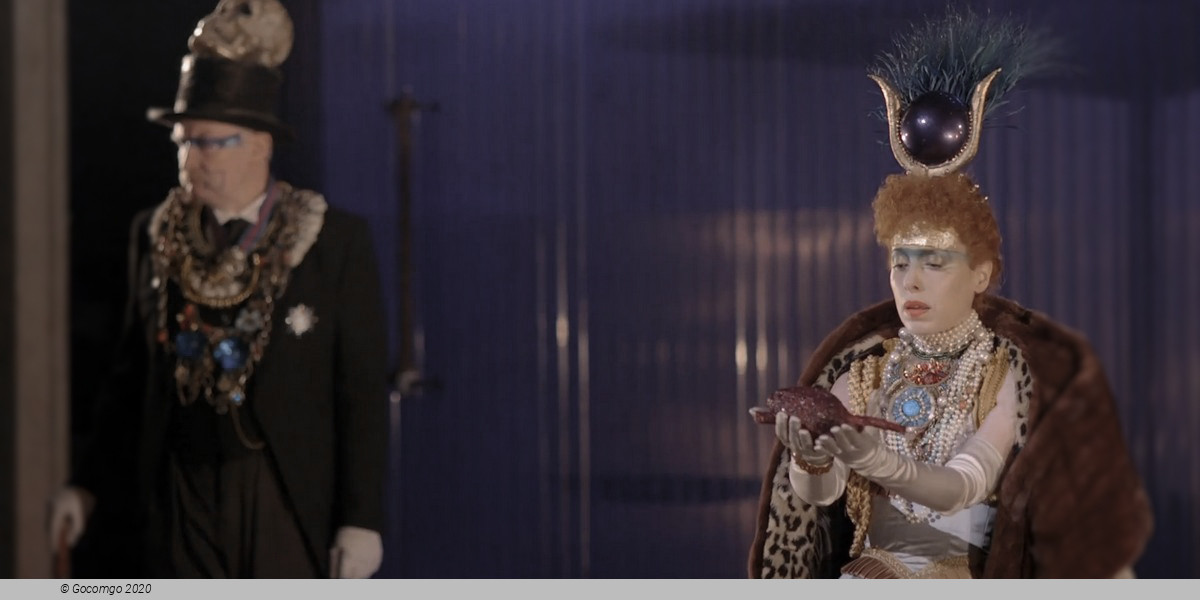
After an introduction in A minor, dominated by tubular bells, Akhnaten sings a praise to the Creator (in Egyptian) at the window of public appearances. This is the first time he actually sings, after he has already been on stage for 20 minutes (and 40 minutes into the opera) and the effect of his countertenor voice (which in 1983 was even more rare than nowadays) is startling. He is joined by Nefertiti, who actually sings lower notes than he, and later by Queen Tye, whose soprano soars high above the intertwining voices of the royal couple.
Act 2: Years 5 to 15 in Thebes and Akhetaten
Scene 1: The Temple
The scene opens again in A minor, with the High Priest and a group of priests singing a hymn to Amun, principal god of the old order, in his temple. The music becomes increasingly dramatic, as Akhnaten, together with Queen Tye and his followers, attack the temple. This scene has only wordless singing. The harmonies grow very chromatic, finally reaching A♭ major and E minor. The temple roof is removed and the sun god Aten's rays invade the temple, thus ending Amun's reign and laying the foundation for the worship of the only god Aten.
Scene 2: Akhnaten and Nefertiti
Two solo celli introduce a "love theme". Accompanied by a solo trombone while the harmony switches to H(sus), the Narrator recites a prayer-like poem to the sun god. The strings softly take over the music in E minor, and the same poem is recited again, this time actually as a love poem from Akhnaten to Nefertiti. Then Akhnaten and Nefertiti sing the same text to each other (in Egyptian), as an intimate love duet. After a while, the trumpet associated with Akhnaten joins them as the highest voice, turning the duet into a trio.
Scene 3: The City – Dance
The Narrator speaks a text taken from the boundary stones of the new capital of the empire, Akhet-Aten (The Horizon of Aten), describing the construction of the city, with large, light-filled spaces. After a brass fanfare, the completion of the city is celebrated in a light-hearted dance, contrasting with the stark, ritualistic music with which this act began. (In the Stuttgart premiere, the dance actually described the construction of the city.) The dance scene was omitted from the UK premiere production and its 1987 revival.
Scene 4: Hymn
What now follows is a hymn to the only god Aten, a long aria (alternating between A minor and A major) by Akhnaten, and the central piece of the opera. Notably, it is the only text sung in the language of the audience, praising the sun giving life to everything. After the aria, an off-stage chorus sings Psalm 104 in Hebrew, dating some 400 years later, which has strong resemblances to Akhnaten's Hymn, thus emphasizing Akhnaten as the first founder of a monotheistic religion.
Act 3: Year 17 and the Present
Akhnaten, 1358 BC
Scene 1: The Family
Two oboes d'amore play the "love theme" from act 2. Akhnaten, Nefertiti and their six daughters, sing wordlessly in contemplation, they are oblivious of what happens outside of the palace. As the music switches from E minor to F minor, the Narrator reads letters from Syrian vassals, asking for help against their enemies. Since the king does not send troops, his land is being seized and plundered by their enemies. The scene focuses again on Akhnaten and his family, still oblivious to the country falling apart.
Scene 2: The Attack and Fall of the City
The music moves again to a vigorous F minor. Horemhab, Aye and the High Priest of Aten instigate the people (as the chorus), singing part of the vassal's letters (in their original Akkadian language) until finally the palace is attacked, the royal family killed, and the city of the sun destroyed.
Scene 3: The Ruins
The music of the very beginning of the opera returns. The scribe recites an inscription on Aye's tomb, praising the death of "the heretic" and the new reign of the old gods. He then describes the restoration of Amun's temple by Akhnaten's son Tutankhamun. The Prelude music grows stronger and the scene moves to present-day Egypt, to the ruins of Amarna, the former capital Akhet-Aton. The Narrator appears as a modern tourist guide and speaks a text from a guide book, describing the ruins. "There is nothing left of this glorious city of temples and palaces".
Scene 4: Epilogue
The ghosts of Akhnaten, Nefertiti and Queen Tye appear, singing wordlessly amongst the ruins. The funeral procession from the beginning of the opera appears on the horizon, and they join it. The music introduces a bass line from the beginning of Einstein on the Beach, the first part of Glass's "portrait" trilogy (The second one being Satyagraha and the third one Akhnaten), thus providing a musical bracket for the whole trilogy.




 30 Lincoln Center