
Mariinsky Theatre 20 February 2020 - Verdi. Requiem | GoComGo.com

Verdi. Requiem

Mariinsky Theatre, Mariinsky Theatre, Saint Petersburg, Russia
All photos (4)
Select date and time
7 PM
Request for Tickets
Important Info
Type: Opera
City: Saint Petersburg, Russia
Starts at: 19:00
Duration:
Titles in: Russian

E-tickets: Print at home or at the box office of the event if so specified. You will find more information in your booking confirmation email.

You can only select the category, and not the exact seats.
If you order 2 or 3 tickets: your seats will be next to each other.
If you order 4 or more tickets: your seats will be next to each other, or, if this is not possible, we will provide a combination of groups of seats (at least in pairs, for example 2+2 or 2+3).

Overview

For soloists, chorus and symphony orchestra (stage version)

“There are already so very many, many funereal masses! There is no need to add another to them,” the sixty-five-yearold Giuseppe Verdi said modestly, putting aside the sketches for his Requiem... in order to return to his idea rather soon in 1874 to complete his own funereal mass. What made the opera composer take a text from a Catholic service and drop the sensuality of Italian for the severity of Latin? The shadows of his great fellow Italians Gioachino Rossini and Alessandro Manzoni cast themselves over this story, the flames of which were fanned by Verdi’s fervent patriotism.
Rossini died in 1868 at his villa in a suburb of Paris. Verdi had never held any particularly warm feelings for him, but the composer’s death disturbed him deeply – “He was the pride of Italy.” Soon after, he proposed that the greatest Italian composers combine forces to write a requiem in Rossini’s memory. But the nobly-intended initiative was silenced by circumstances. On 22 May 1873 the country experienced yet another loss – the death of the poet Alessandro Manzoni, the father of Italian romanticism. Verdi had adored Manzoni and was ready to make whatever effort necessary in order to honour the memory of this idol of the age. This time everything worked out the way the composer planned. The triumphant premiere took place in Milan under the baton of the composer and featured Italy’s finest singers. Then came Paris, London, Berlin, Vienna and St Petersburg...
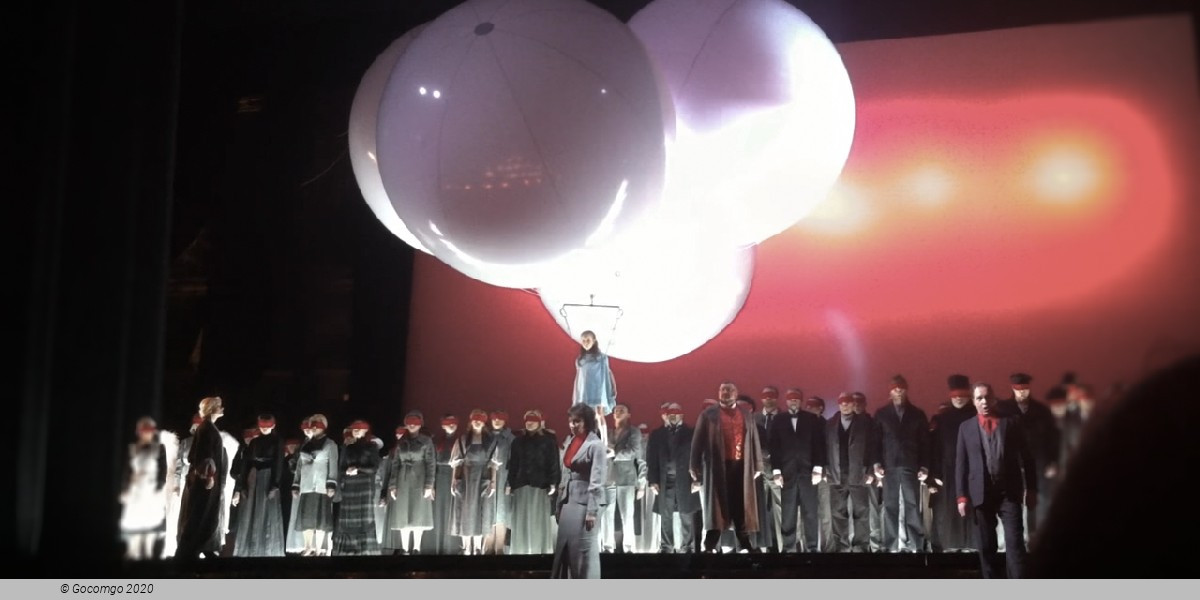
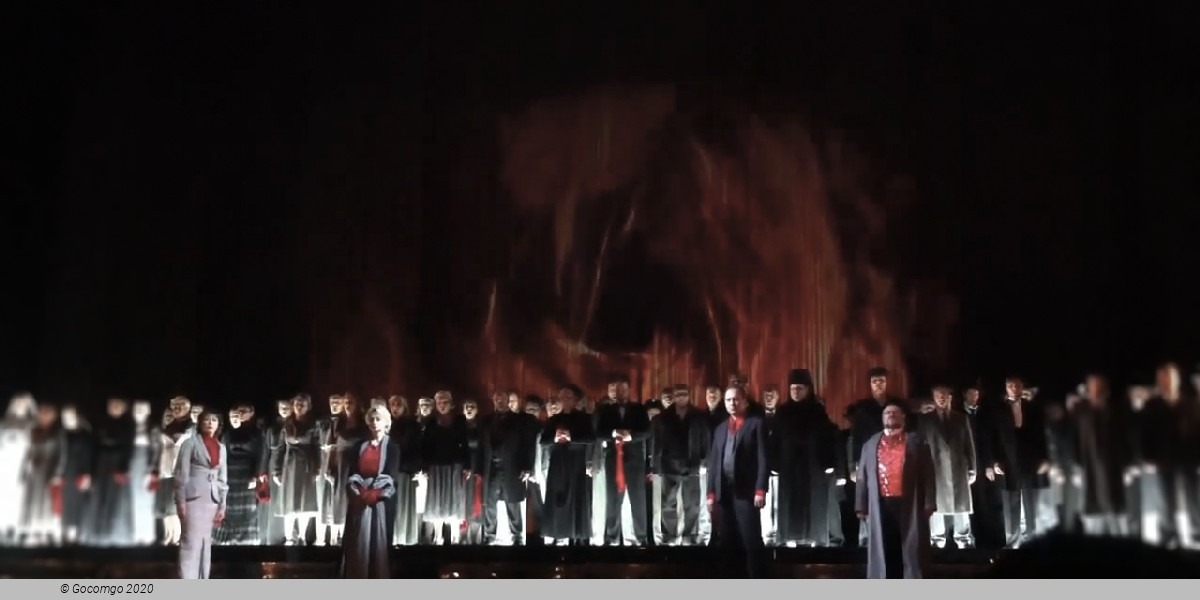
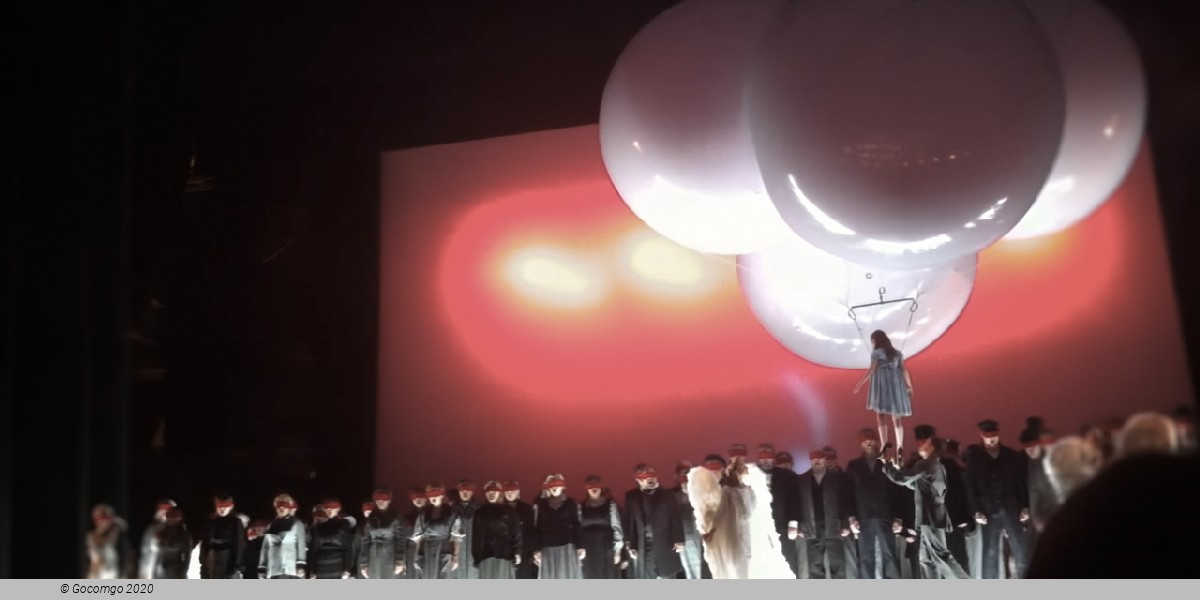
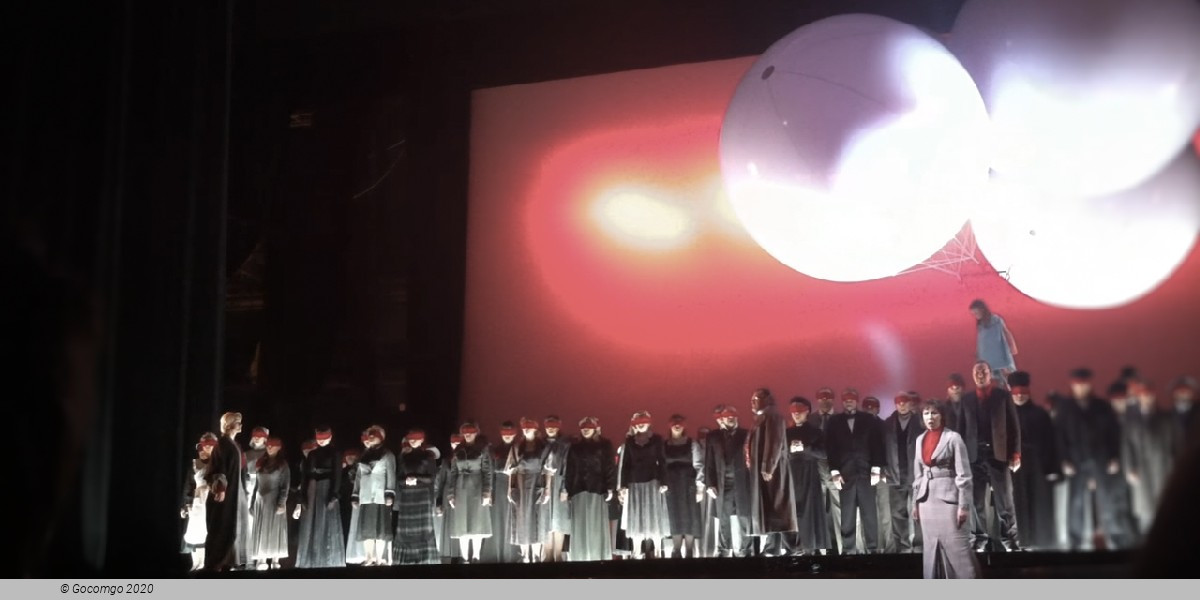
In the 21st century the emotional power of the music, unable to resist cult status, has drawn the attention of stage directors. The Requiem has been staged at the Berliner Staatsoper by Achim Freyer, in Tampere in Finland by Jiři Nekvasil and at the Musorgsky Opera and Ballet Theatre in St Petersburg by Stanislav Gaudasinsky, while Japanese director Ikuto Yamamoto staged a production featuring performers of Japan’s Imperial Kabuki Theatre. The desire to turn the mass into a production can be explained by Verdi’s very musical style itself. Verdi went down in history as an insightful opera reformer. He readily embraced the most contemporary themes, seeking out plots that were “new, meaningful, beautiful, varied... and incredibly bold...” The composer was ready to accept the most radical stage methods on offer at the time: “... there’s a situation which is thrusting itself forwards, but save us from it, oh God! We would be killed. It would be better to show Gilda with the Duke in his bedroom!!! You understand? At least that would be a duet. A magnificent duet!!! But priests, monks and canting hypocrites would yell about the scandal.” And yell they did, only in connection with the opera maestro’s “hijacking” the genre of church music. The premiere of the Requiem at the Church of San Marco was almost the only performance of the work in a church during the composer’s lifetime. Three days later the Requiem was performed at La Scala, later being performed in concerts halls and, more regularly, theatres.
Of course, in the latter half of the 19th century it was already no longer possible to demand that composers followed church canons literally – works to liturgical texts had long since left churches for the stage. But even against such a background as this Verdi’s Requiem stands apart for its open humanity and vivid theatricality. Why? Perhaps it was the generalised Latin text that gave it the desired freedom from operatic cliches against which he had battled his entire life? This freedom allowed Verdi to concentrate on the most important thing – human emotions at that fateful instant between life and death, expressing them in perfect musical form where fiery passion is equalled by moments of heavenly purity and noble severity. Individual sections of the Requiem bring to mind operatic scenes with perturbed recitatives and expressive ariosos. Now the chorus rings out furiously, now it moves to barely audible declamation, almost a whisper. Verdi was as if aiming to compensate the lack of a stage plot with deliberately stressed and specific aural imagery. The anxious “fluttering” of the strings in the Lux aeterna (The Eternal Light), the squally whirlwinds and staggering spatial effect of the proximity of the trumpets heralding the Day of Judgement in the Dies irae (The Day of Wrath)... It is in the grandiose second section that the Requiem’s tragic idea is most vividly embodied. With Verdi, the Dies irae is split into nine episodes including the Day of Judgement intermixed with deeply penetrating vocal declarations that convey the emotions of weak mankind in the face of Death. The musical images of the first sections return in the Requiem’s grandiose finale, Libera me (Deliver Me), in which mankind once again meets with a power that is alien to him. Going against tradition, the result is that the Requiem is not at all a prayer for eternal peace. In the frenetic solos of the finale, where horror of the unavoidable and deep repentance are expressed with all possible directness, one can sense not peace but rather the eternal striving for happiness that moves the characters in Verdi’s operas. “Can peace and love get along in one heart?” de Beaumarchais asked. The answer is clear, because in Verdi’s music the force of love is always greater than the force of destiny.
Anastasia Mursalova

Venue Info

Mariinsky Theatre - Saint Petersburg
Location   1 Theatre Square

The Mariinsky Theatre is a historic theatre of opera and ballet in Saint Petersburg, Russia. Opened in 1860, it became the preeminent music theatre of late 19th-century Russia, where many of the stage masterpieces of Tchaikovsky, Mussorgsky, and Rimsky-Korsakov received their premieres. Through most of the Soviet era, it was known as the Kirov Theatre. Today, the Mariinsky Theatre is home to the Mariinsky Ballet, Mariinsky Opera and Mariinsky Orchestra. Since Yuri Temirkanov's retirement in 1988, the conductor Valery Gergiev has served as the theatre's general director.

The theatre is named after Empress Maria Alexandrovna, wife of Tsar Alexander II. There is a bust of the Empress in the main entrance foyer. The theatre's name has changed throughout its history, reflecting the political climate of the time.

The theatre building is commonly called the Mariinsky Theatre. The companies that operate within it have for brand recognition purposes retained the Kirov name, acquired during the Soviet era to commemorate the assassinated Leningrad Communist Party leader Sergey Kirov (1886–1934).

The Imperial drama, opera and ballet troupe in Saint Petersburg was established in 1783, at the behest of Catherine the Great, although an Italian ballet troupe had performed at the Russian court since the early 18th century. Originally, the ballet and opera performances were given in the wooden Karl Knipper Theatre on Tsaritsa Meadow, near the present-day Tripartite Bridge (also known as the Little Theatre or the Maly Theatre). The Hermitage Theatre, next door to the Winter Palace, was used to host performances for an elite audience of aristocratic guests invited by the Empress.

A permanent theatre building for the new company of opera and ballet artists was designed by Antonio Rinaldi and opened in 1783. Known as the Imperial Bolshoi Kamenny Theatre the structure was situated on Carousel Square, which was renamed Theatre Square in honour of the building. Both names – "Kamenny" (Russian word for "stone") and "Bolshoi" (Russian word for "big") – were coined to distinguish it from the wooden Little Theatre. In 1836, the Bolshoi Kamenny Theatre was renovated to a design by Albert Cavos (son of Catterino Cavos, an opera composer), and served as the principal theatre of the Imperial Ballet and opera.

On 29 January 1849, the Equestrian circus (Конный цирк) opened on Theatre Square. This was also the work of the architect Cavos. The building was designed to double as a theatre. It was a wooden structure in the then-fashionable neo-Byzantine style. Ten years later, when this circus burnt down, Albert Cavos rebuilt it as an opera and ballet house with the largest stage in the world. With a seating capacity of 1,625 and a U-shaped Italian-style auditorium, the theatre opened on 2 October 1860, with a performance of A Life for the Tsar. The new theatre was named Mariinsky after its imperial patroness, Empress Maria Alexandrovna.

Under Yuri Temirkanov, Principal Conductor from 1976 to 1988, the Opera Company continued to stage innovative productions of both modern and classic Russian operas. Although functioning separately from the Theatre’s Ballet Company, since 1988 both companies have been under the artistic leadership of Valery Gergiev as Artistic Director of the entire Theatre.

The Opera Company has entered a new era of artistic excellence and creativity. Since 1993, Gergiev’s impact on opera there has been enormous. Firstly, he reorganized the company’s operations and established links with many of the world's great opera houses, including the Royal Opera House, Covent Garden, the Metropolitan Opera, the Opéra Bastille, La Scala, La Fenice, the Israeli Opera, the Washington National Opera and the San Francisco Opera. Today, the Opera Company regularly tours to most of these cities.

Gergiev has also been innovative as far as Russian opera is concerned: in 1989, there was an all-Mussorgsky festival featuring the composer’s entire operatic output. Similarly, many of Prokofiev’s operas were presented from the late 1990s. Operas by non-Russian composers began to be performed in their original languages, which helped the Opera Company to incorporate world trends. The annual international "Stars of the White Nights Festival" in Saint Petersburg, started by Gergiev in 1993, has also put the Mariinsky on the world’s cultural map. That year, as a salute to the imperial origins of the Mariinsky, Verdi's La forza del destino, which received its premiere in Saint Petersburg in 1862, was produced with its original sets, costumes and scenery. Since then, it has become a characteristic of the "White Nights Festival" to present the premieres from the company’s upcoming season during this magical period, when the hours of darkness practically disappear as the summer solstice approaches.

Presently, the Company lists on its roster 22 sopranos (of whom Anna Netrebko may be the best known); 13 mezzo-sopranos (with Olga Borodina familiar to US and European audiences); 23 tenors; eight baritones; and 14 basses. With Gergiev in charge overall, there is a Head of Stage Administration, a Stage Director, Stage Managers and Assistants, along with 14 accompanists.

Important Info
Type: Opera
City: Saint Petersburg, Russia
Starts at: 19:00
Duration:
Titles in: Russian
Top of page