
Mariinsky Theatre 26 February 2023 - The Snow Maiden | GoComGo.com

The Snow Maiden

Mariinsky Theatre, Mariinsky II, Saint Petersburg, Russia
All photos (8)
Select date and time
12 PM 6 PM
Request for Tickets
Important Info
Type: Opera
City: Saint Petersburg, Russia
Starts at: 18:00
Acts: 4
Intervals: 1
Duration: 3h 5min
Sung in: Russian
Titles in: Russian,English

E-tickets: Print at home or at the box office of the event if so specified. You will find more information in your booking confirmation email.

You can only select the category, and not the exact seats.
If you order 2 or 3 tickets: your seats will be next to each other.
If you order 4 or more tickets: your seats will be next to each other, or, if this is not possible, we will provide a combination of groups of seats (at least in pairs, for example 2+2 or 2+3).

Overview

“You listen, and you melt…” the Snow Maiden sings with her dying heart, recalling the enchanting songs of Lel, the village shepherd. Rimsky-Korsakov invokes similar feelings with his music: at times it takes one’s breath away. The acute suffering of beauty also served as the original impulse that resulted in the creation of one of the most beguiling Russian operas: “In the winter of 1879–80,” the composer recalled, “I once again read The Snow Maiden, and I clearly saw its staggering beauty.”

This is a reference to the play by Nikolai Ostrovsky, his “springtime tale”; this secondary title was retained for the opera, too. Written as if in one breath, surrounded by warm fields and groves, to the singing of birds, Rimsky-Korsakov’s The Snow Maiden became transformed into a hymn to beauty, harmony, nature, life and love. “For me, there was no better subject in the world, there were no finer poetic images than the Snow Maiden, Lel or Spring, there was no better kingdom than that of the Berendeyans with their wonderful tsar, there was no better world-view and religion than worshipping Yarilo the Sun-God,” the composer recalled of the unforgettable summer of 1880, which he spent in his country estate near Luga, working on The Snow Maiden. Two years later came the premiere; the Mariinsky Theatre was to be the first stage from which the marvellous melodies of Lel’s songs were heard, the Snow Maiden’s crystalline and tender voice, the hot speeches of Mizgir the visiting merchant, the passionate declarations of Kupava, the famous “Mighty nature is full, full of wonders” coming from Tsar Berendey’s lips, and the choruses of his faithful subjects – full-sounding, crowded, filled with indomitable and almost magical energy.
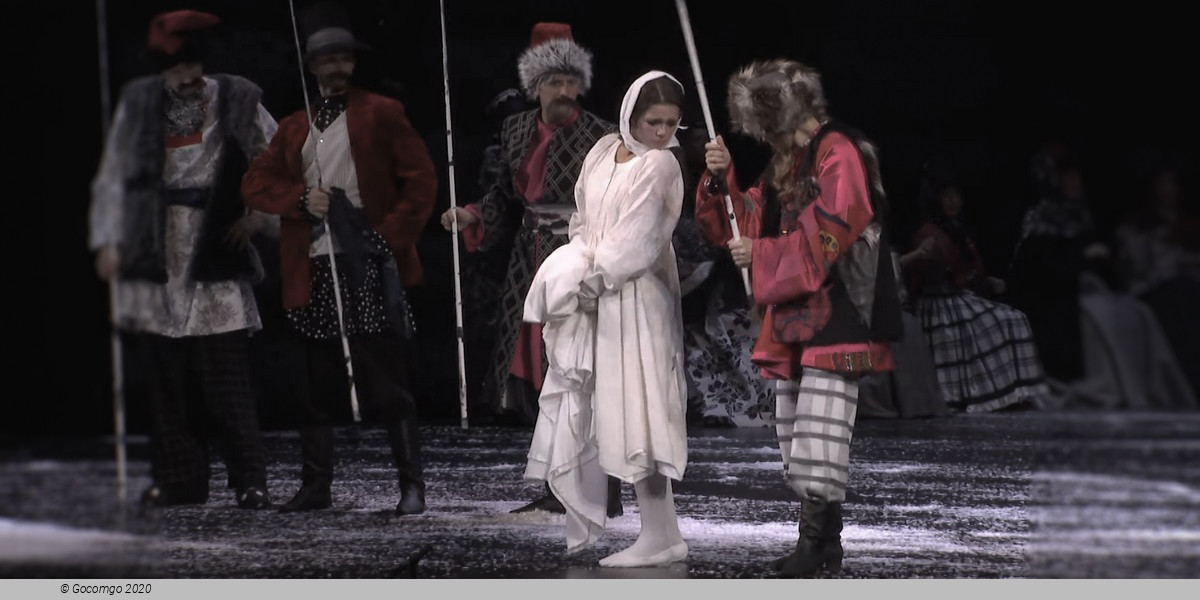
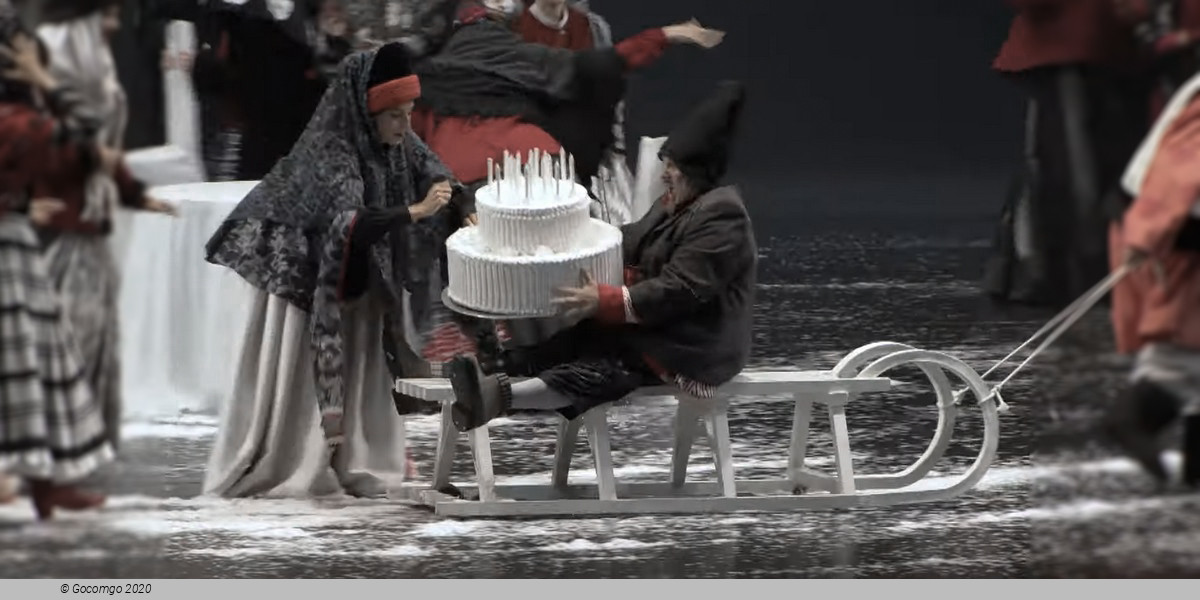
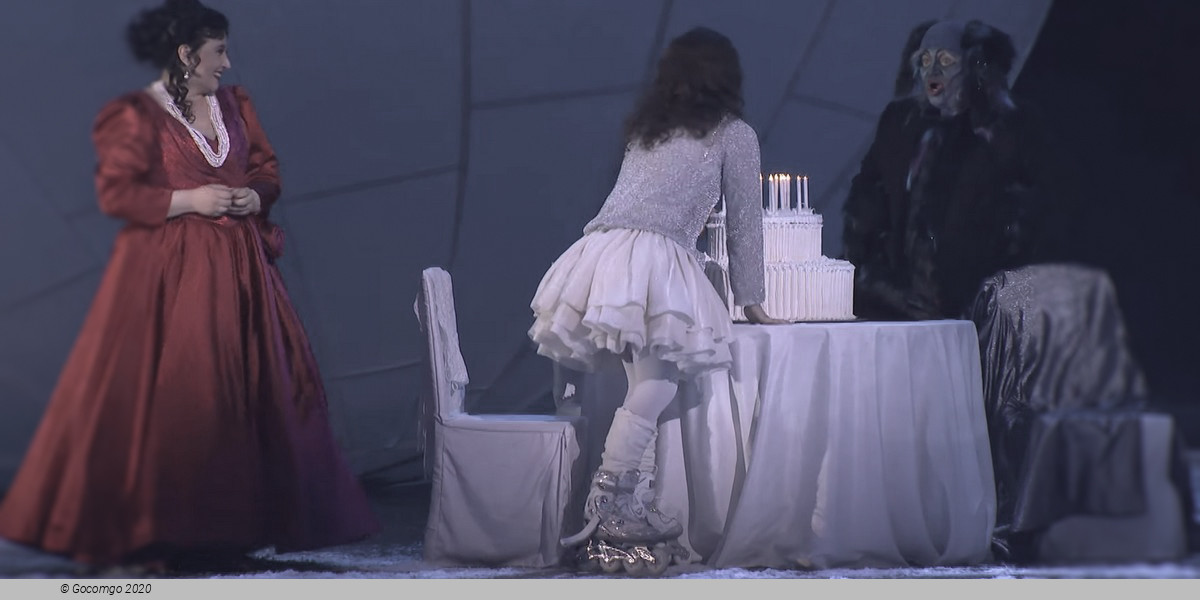
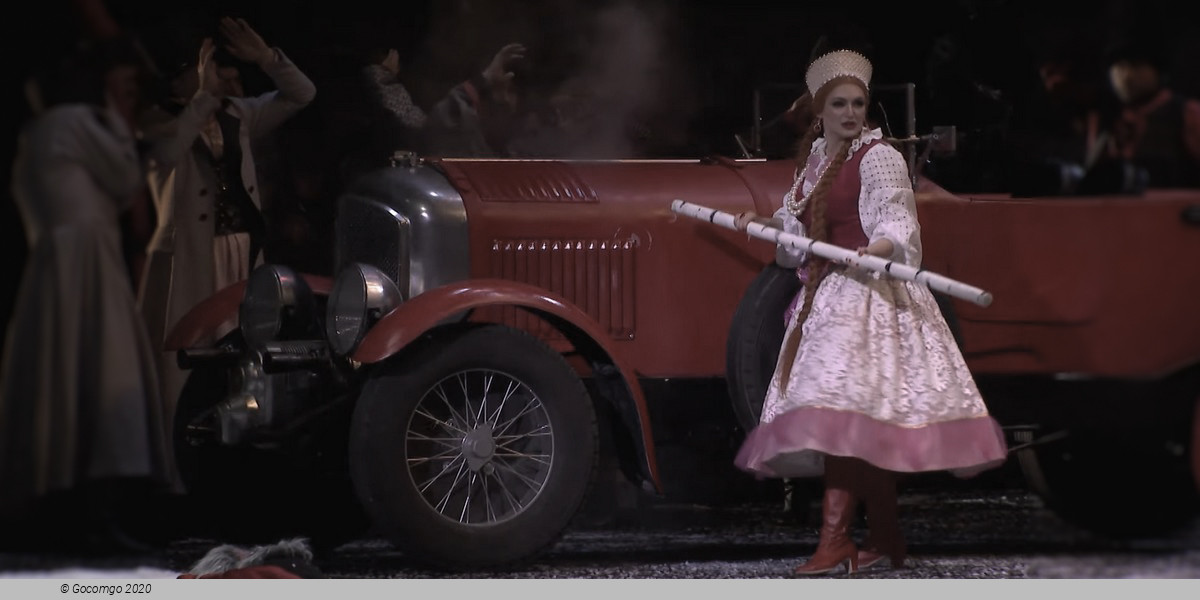
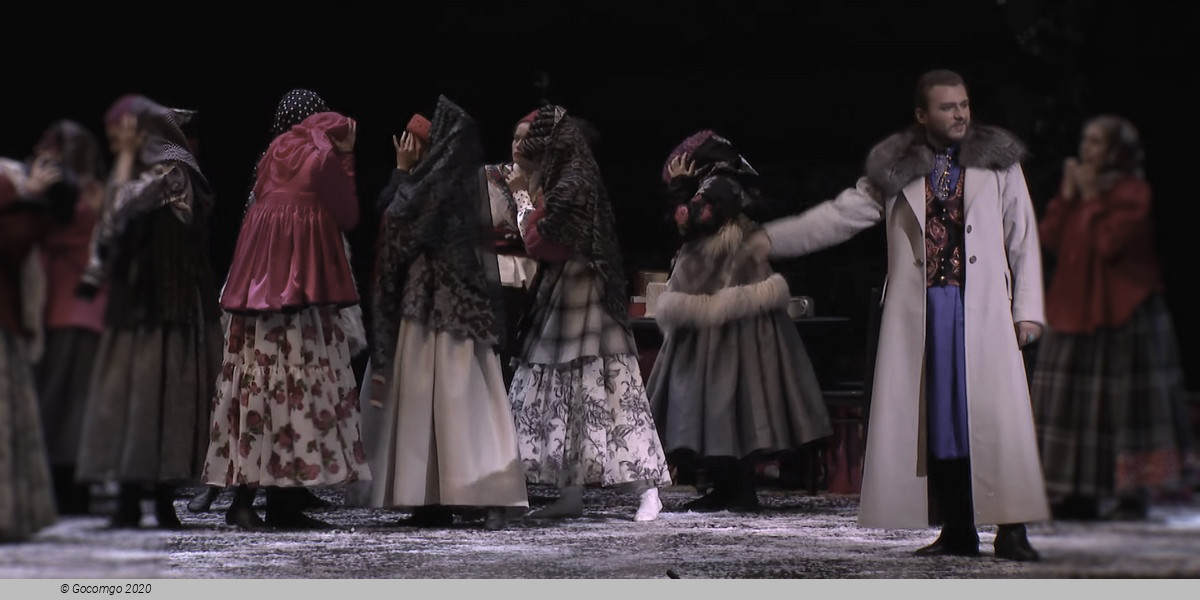
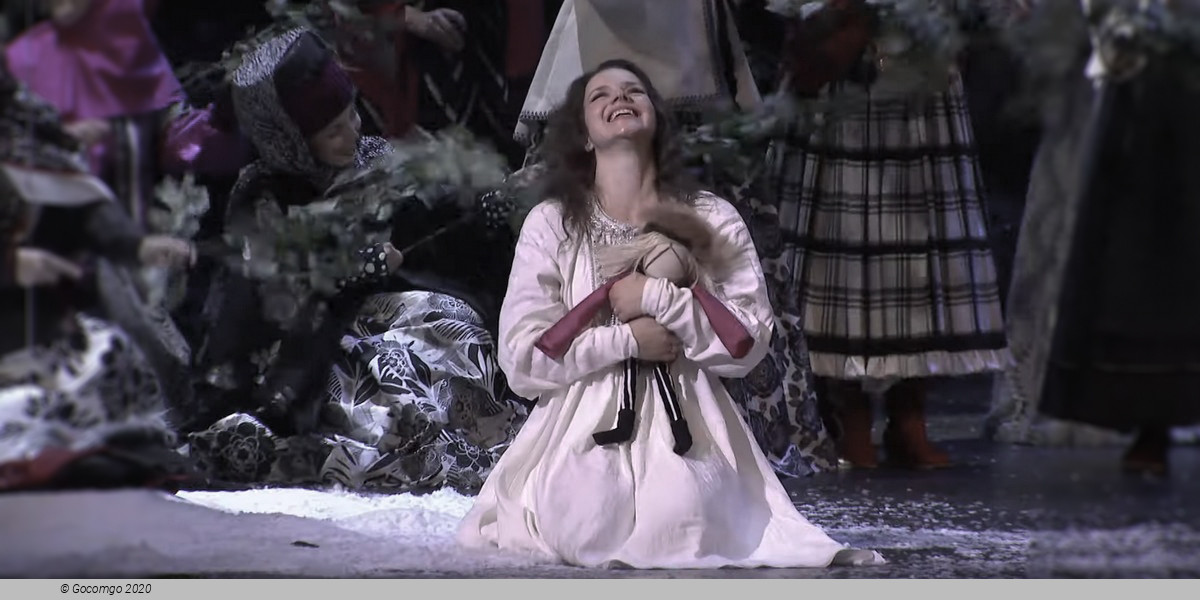
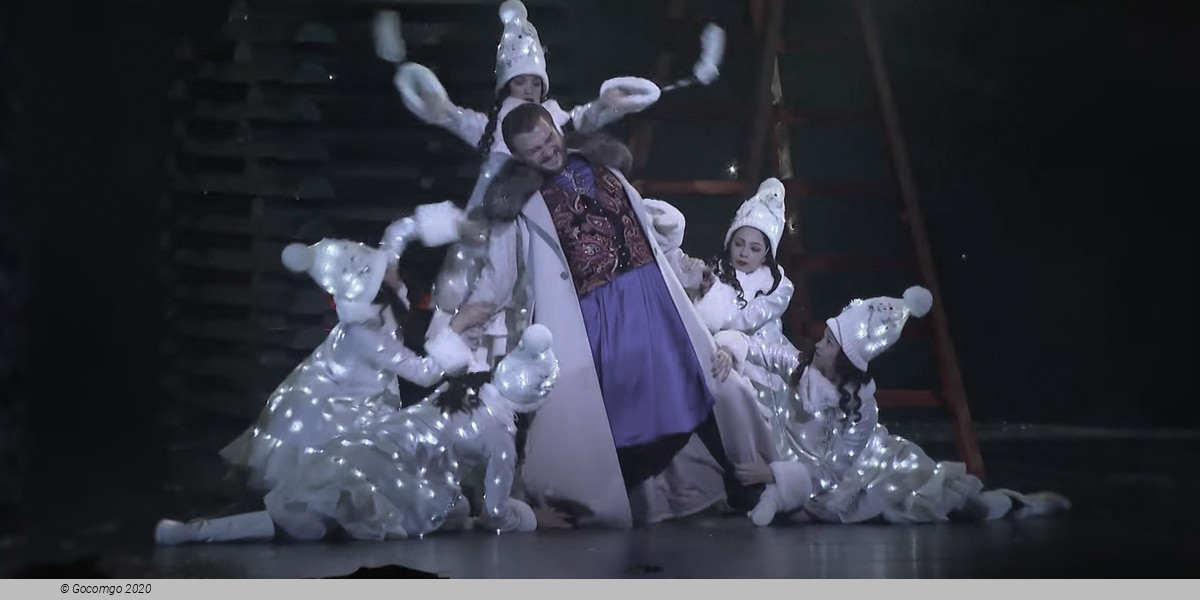
And yet from the very start, in the utopian idyll of the land of the Berendeyans, Rimsky-Korsakov caught something disturbing, and it was not for nothing that following the first reading of the play this kingdom seemed “strange” to the composer. For the sake of preserving the existing world order, a cleansing sacrifice is made, and if archaic consciousness is ready, without hesitation, to recognise the need for this sacrifice, then we, people of a new age, are different: “No solemn ritual and no conviction that everything is done as it should be and goes on as usual will assure us of the justice of retribution,” wrote Boris Asafiev. “We feel sorry for the Snow Maiden,” the scholar sums up, describing the scene where the heroine melts. Anna Matison, who staged The Snow Maiden in 2020 at this opera’s home stage, took the following step of debunking the dubious goodness of the society presented in Rimsky-Korsakov’s opus. Her Snow Maiden is not a pantheistic myth about the violation and restoration of cosmic balance, but rather the story of a lonely teenage girl who finds herself in an odious adult world inhabited by greedy liars. The audience pities the female protagonist from the prologue to the finale. The Berendeyans, despite all the colourful splendour of their festive attire (by costume designer Irina Cherednikova), are not at all a peaceful rustic people, they are not cute Old Slavic “hobbits”, they are an aggressive crowd of consumers, ultimately cursed to being destroyed by their own god. The immense sizzling sphere of Yarilo, so powerfully contrasting with the weightless white ball that is the Snow Maiden (by set designer Alexander Orlov), in this context may be regarded as a menacing warning. 

Khristina Batyushina

History
Premiere of this production: 29 January 1882, Mariinsky Theatre, Saint Petersburg

The Snow Maiden is an opera in four acts with a prologue by Nikolai Rimsky-Korsakov, composed during 1880–1881. The Russian libretto, by the composer, is based on the like-named play by Alexander Ostrovsky (which had premiered in 1873 with incidental music by Tchaikovsky).

Synopsis

Time: Pre-historic times
Place: The land of the Berendeyans

Prologue
On Red Hill, near the Berendeyans' trading quarter and Tsar Berendey's capital. The fifteen-year-old Snow Maiden wants to live with the people in the nearby village, and her parents, Spring Beauty and Grandfather Frost, agree to let her be adopted by Bobyl-Bakula and his wife.

Act 1
In the village of Berendeyevka, on the other side of the river.

Snow Maiden is enchanted by Lel's songs, but is saddened when he goes off with a group of other girls. Kupava enters and announces her own wedding to Mizgir. The ceremony takes place, but then Mizgir notices Snow Maiden, becomes smitten with her, and begs her to love him. Kupava brings this effrontery before the villagers, and they advise her to go to the Tsar for redress.

Act 2
In Tsar Berendey's palace

Kupava complains of Mizgir to Tsar Berendey, who decides to banish Mizgir to the forest. But these deliberations are disrupted by the appearance of the beautiful Snow Maiden. The Tsar asks her whom she loves, and she says, "no one." The Tsar declares that whoever successfully woos Snow Maiden will win both her and a royal reward. Although the maidens present Lel as the likely candidate, Mizgir swears that he will win Snow Maiden's heart. The Tsar agrees to the contest as the people sing his praises.

Act 3
In a forest reserve, that evening

The people amuse themselves with song and dance. The Tsar invites Lel to choose a maiden. Despite Snow Maiden's pleas, he kisses Kupava and goes off with her. Snow Maiden, left alone and disconsolate, wonders why Lel has rejected her. Suddenly Mizgir appears and tries once more to win her love. Frightened by his words, she runs off; but the Wood-Sprite tricks Mizgir to follow an apparition of Snow Maiden instead. Lel and Kupava enter, declaring their mutual love. Snow Maiden finds them and, seeing their happiness, at last truly wishes to have the capacity to love.

Act 4
In the valley of Yarilo, the sun god, dawn is breaking the next day

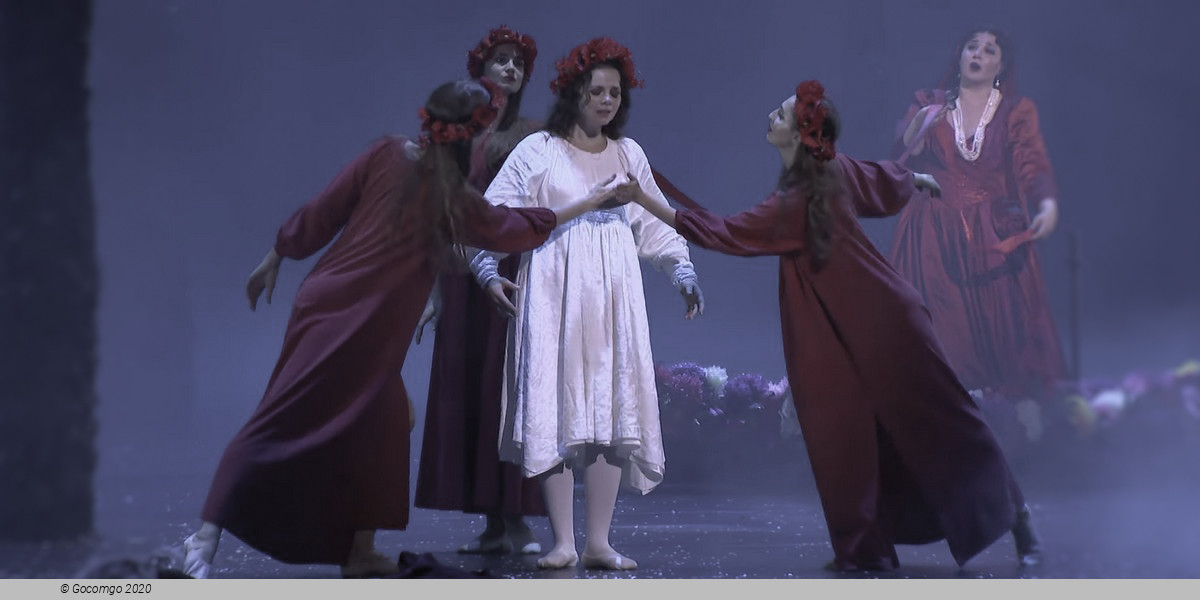
Snow Maiden calls on her mother, Spring-Beauty, who appears from a lake surrounded by flowers. Spring gives her daughter a garland and warns her to stay out of the light of the sun. Spring and her retinue sink into the lake. Before Snow Maiden can enter the protection of the forest, Mizgir appears. No longer able to resist, she professes her love for him. The Berendeyans, in ritual bride-and-groom pairs, arrive to celebrate Yarilo's Day. Mizgir introduces Snow Maiden as his bride. As she declares her love for Mizgir, a bright ray of sunlight appears, and Snow Maiden bids farewell: the power to love is the source of her demise. To the astonishment of the people, she melts. The inconsolable Mizgir drowns himself in the lake. The Tsar calms the horrified Berendeyans with the fact that this event has ended the fifteen-year-long winter that has befallen them. In response the people strike up a stirring hymn to Yarilo.

Venue Info

Mariinsky Theatre - Saint Petersburg
Location   1 Theatre Square

The Mariinsky Theatre is a historic theatre of opera and ballet in Saint Petersburg, Russia. Opened in 1860, it became the preeminent music theatre of late 19th-century Russia, where many of the stage masterpieces of Tchaikovsky, Mussorgsky, and Rimsky-Korsakov received their premieres. Through most of the Soviet era, it was known as the Kirov Theatre. Today, the Mariinsky Theatre is home to the Mariinsky Ballet, Mariinsky Opera and Mariinsky Orchestra. Since Yuri Temirkanov's retirement in 1988, the conductor Valery Gergiev has served as the theatre's general director.

The theatre is named after Empress Maria Alexandrovna, wife of Tsar Alexander II. There is a bust of the Empress in the main entrance foyer. The theatre's name has changed throughout its history, reflecting the political climate of the time.

The theatre building is commonly called the Mariinsky Theatre. The companies that operate within it have for brand recognition purposes retained the Kirov name, acquired during the Soviet era to commemorate the assassinated Leningrad Communist Party leader Sergey Kirov (1886–1934).

The Imperial drama, opera and ballet troupe in Saint Petersburg was established in 1783, at the behest of Catherine the Great, although an Italian ballet troupe had performed at the Russian court since the early 18th century. Originally, the ballet and opera performances were given in the wooden Karl Knipper Theatre on Tsaritsa Meadow, near the present-day Tripartite Bridge (also known as the Little Theatre or the Maly Theatre). The Hermitage Theatre, next door to the Winter Palace, was used to host performances for an elite audience of aristocratic guests invited by the Empress.

A permanent theatre building for the new company of opera and ballet artists was designed by Antonio Rinaldi and opened in 1783. Known as the Imperial Bolshoi Kamenny Theatre the structure was situated on Carousel Square, which was renamed Theatre Square in honour of the building. Both names – "Kamenny" (Russian word for "stone") and "Bolshoi" (Russian word for "big") – were coined to distinguish it from the wooden Little Theatre. In 1836, the Bolshoi Kamenny Theatre was renovated to a design by Albert Cavos (son of Catterino Cavos, an opera composer), and served as the principal theatre of the Imperial Ballet and opera.

On 29 January 1849, the Equestrian circus (Конный цирк) opened on Theatre Square. This was also the work of the architect Cavos. The building was designed to double as a theatre. It was a wooden structure in the then-fashionable neo-Byzantine style. Ten years later, when this circus burnt down, Albert Cavos rebuilt it as an opera and ballet house with the largest stage in the world. With a seating capacity of 1,625 and a U-shaped Italian-style auditorium, the theatre opened on 2 October 1860, with a performance of A Life for the Tsar. The new theatre was named Mariinsky after its imperial patroness, Empress Maria Alexandrovna.

Under Yuri Temirkanov, Principal Conductor from 1976 to 1988, the Opera Company continued to stage innovative productions of both modern and classic Russian operas. Although functioning separately from the Theatre’s Ballet Company, since 1988 both companies have been under the artistic leadership of Valery Gergiev as Artistic Director of the entire Theatre.

The Opera Company has entered a new era of artistic excellence and creativity. Since 1993, Gergiev’s impact on opera there has been enormous. Firstly, he reorganized the company’s operations and established links with many of the world's great opera houses, including the Royal Opera House, Covent Garden, the Metropolitan Opera, the Opéra Bastille, La Scala, La Fenice, the Israeli Opera, the Washington National Opera and the San Francisco Opera. Today, the Opera Company regularly tours to most of these cities.

Gergiev has also been innovative as far as Russian opera is concerned: in 1989, there was an all-Mussorgsky festival featuring the composer’s entire operatic output. Similarly, many of Prokofiev’s operas were presented from the late 1990s. Operas by non-Russian composers began to be performed in their original languages, which helped the Opera Company to incorporate world trends. The annual international "Stars of the White Nights Festival" in Saint Petersburg, started by Gergiev in 1993, has also put the Mariinsky on the world’s cultural map. That year, as a salute to the imperial origins of the Mariinsky, Verdi's La forza del destino, which received its premiere in Saint Petersburg in 1862, was produced with its original sets, costumes and scenery. Since then, it has become a characteristic of the "White Nights Festival" to present the premieres from the company’s upcoming season during this magical period, when the hours of darkness practically disappear as the summer solstice approaches.

Presently, the Company lists on its roster 22 sopranos (of whom Anna Netrebko may be the best known); 13 mezzo-sopranos (with Olga Borodina familiar to US and European audiences); 23 tenors; eight baritones; and 14 basses. With Gergiev in charge overall, there is a Head of Stage Administration, a Stage Director, Stage Managers and Assistants, along with 14 accompanists.

Important Info
Type: Opera
City: Saint Petersburg, Russia
Starts at: 18:00
Acts: 4
Intervals: 1
Duration: 3h 5min
Sung in: Russian
Titles in: Russian,English
Top of page