
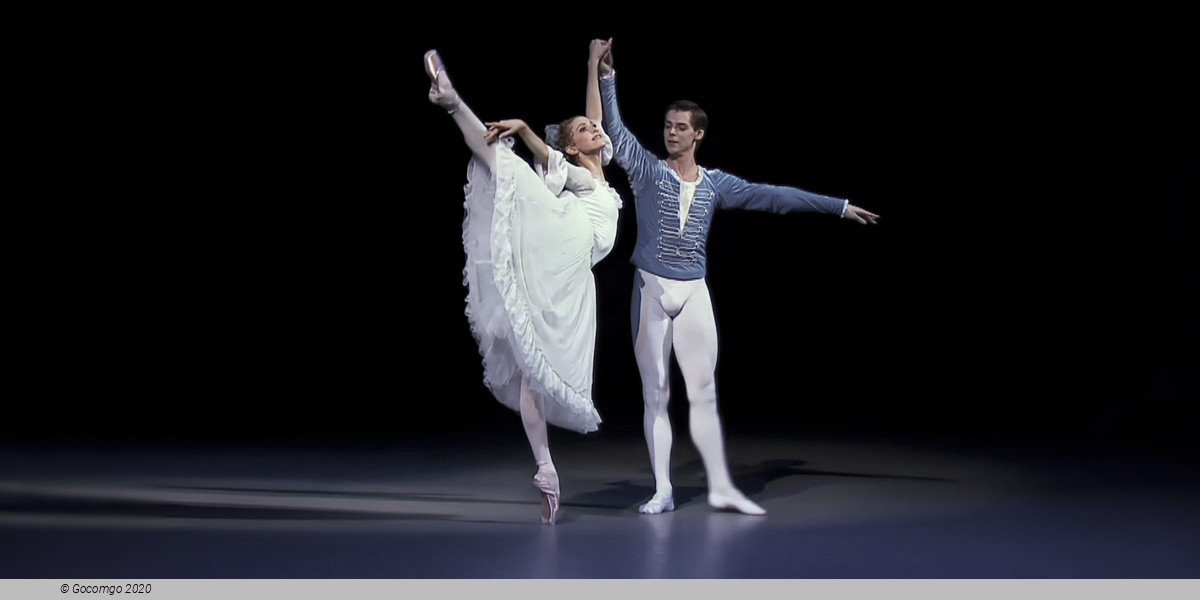
Mariinsky Theatre 21 July 2023 - The Nutcracker | GoComGo.com

The Nutcracker

Mariinsky Theatre, Saint Petersburg, Russia
All photos (15)
Select date and time
7 PM
Request for Tickets
Important Info
Type: Ballet
City: Saint Petersburg, Russia
Starts at: 19:00
Acts: 3
Intervals: 2
Duration: 2h 45min

E-tickets: Print at home or at the box office of the event if so specified. You will find more information in your booking confirmation email.

You can only select the category, and not the exact seats.
If you order 2 or 3 tickets: your seats will be next to each other.
If you order 4 or more tickets: your seats will be next to each other, or, if this is not possible, we will provide a combination of groups of seats (at least in pairs, for example 2+2 or 2+3).

Overview

Composed following the scene plan by Marius Petipa for a fairy-tale ballet féerie, Tchaikovsky's music was first performed in a production staged by Lev Ivanov in 1892. Luxuriously designed, that production answered the spirit of 19th century ballets – the integrity of the subject dramaturgy was not among the choreographer's primary tasks; the ballet master focussed his attention on the wealth of the dance text.

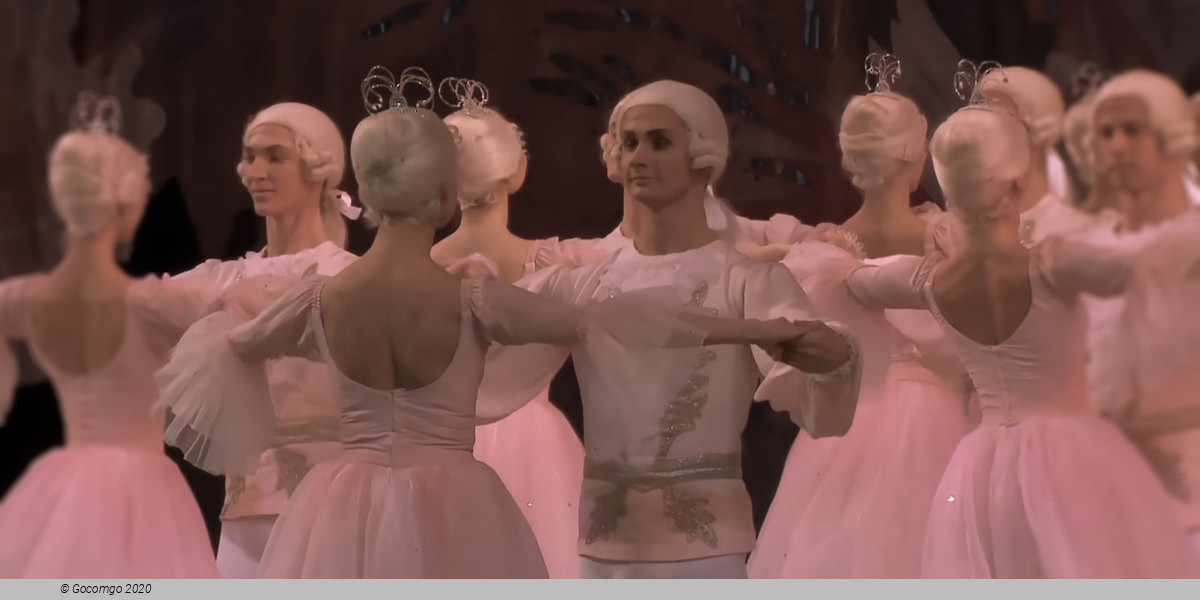
"In the music of The Nutcracker there is not a single rhythm, not a single bar that could not flow into dance. On the stage everything seethes in an unceasingly gentle splash of the calmest of figures with explosions of rubicund and merry children's laughter, children's delights, raptures and momentary disappointments," as the critic Volynsky nostalgically recalled of Ivanov's production which was dropped from the repertoire once the country had become Soviet. The avant-garde 1920s granted the Leningrad stage a new reading of Tchaikovsky's music. In the production staged by Fyodor Lopukhov there was no room for the serene harmony of classical dance. Acrobatic lifts, the splits and melodeclamation squeezed out the traditional variations and pas de deux. And yet the plastique experiments and the choreographer's stressing of the tragic basis of Tchaikovsky's score were met with caution by the critics. And already in 1934 the playbill announced a new Nutcracker – a production by Vasily Vainonen, a child of the new age that welcomed political correctness and the grounding of the dance firmly through the development of the fairy-tale plot. "Petipa's scene plan for The Nutcracker did not satisfy me because of the lack of a realistic interpretation of the first act, the intermitent intrigues and the gloss of sugariness (gingerbread houses, mice dressed in little cloaks etc)," wrote the choreographer and, rejecting imaginary characters, he created a production about a girl who dreamed of miracles. In Tchaikovsky's music the choreographer heard the harmony of sweet, caramel-like children's dreams and created a dance plot referring back to the traditions of 19th century ballet – with full classical ensembles in the Waltz of the Snowflakes and the Waltz of the Flowers, the pas de deux of the lead characters and the divertissement of the character dances in the Land of Sweets. Vainonen's Nutcracker was created using the established language of classical dance, the peripeteia of the plot in it are presented through dance and its choreographic variety was to prove a guarantee for its lengthy stage life. The production has not left the stage for over eighty years. Today it is performed both by performers from the Mariinsky Theatre and students of the Vaganova Ballet Academy. 

Olga Makarova

History
Premiere of this production: 06 December 1892, Imperial Mariinsky Theatre, Saint Petersburg

The Nutcracker (Balet-feyeriya) is a two-act ballet, originally choreographed by Marius Petipa and Lev Ivanov with a score by Pyotr Ilyich Tchaikovsky (Op. 71). The libretto is adapted from E. T. A. Hoffmann's story "The Nutcracker and the Mouse King".

Synopsis

Act I
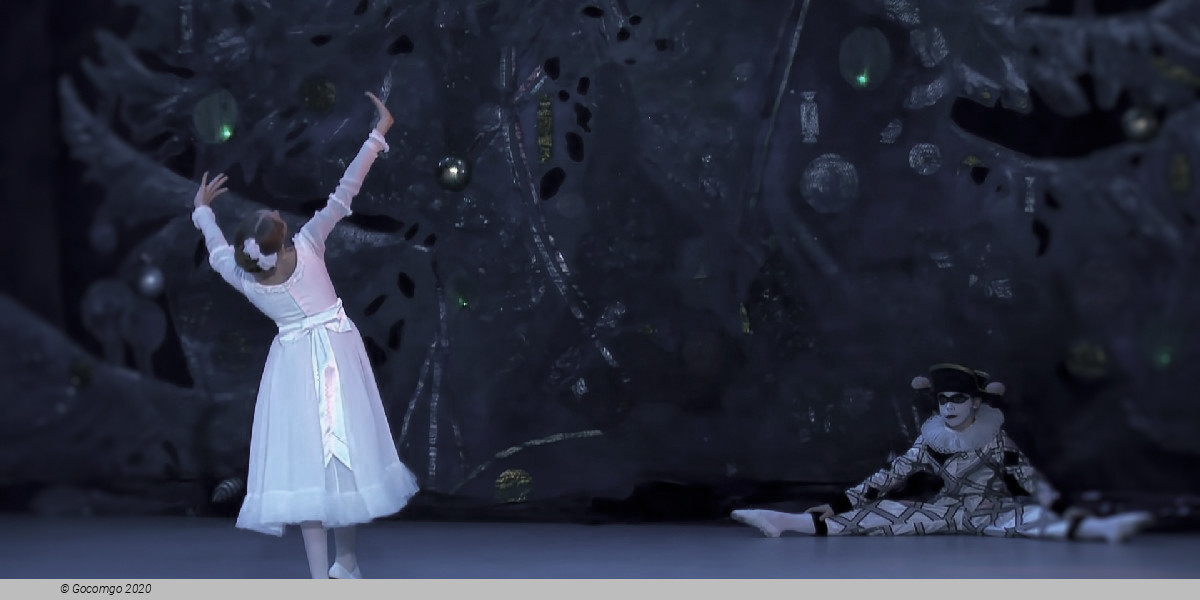
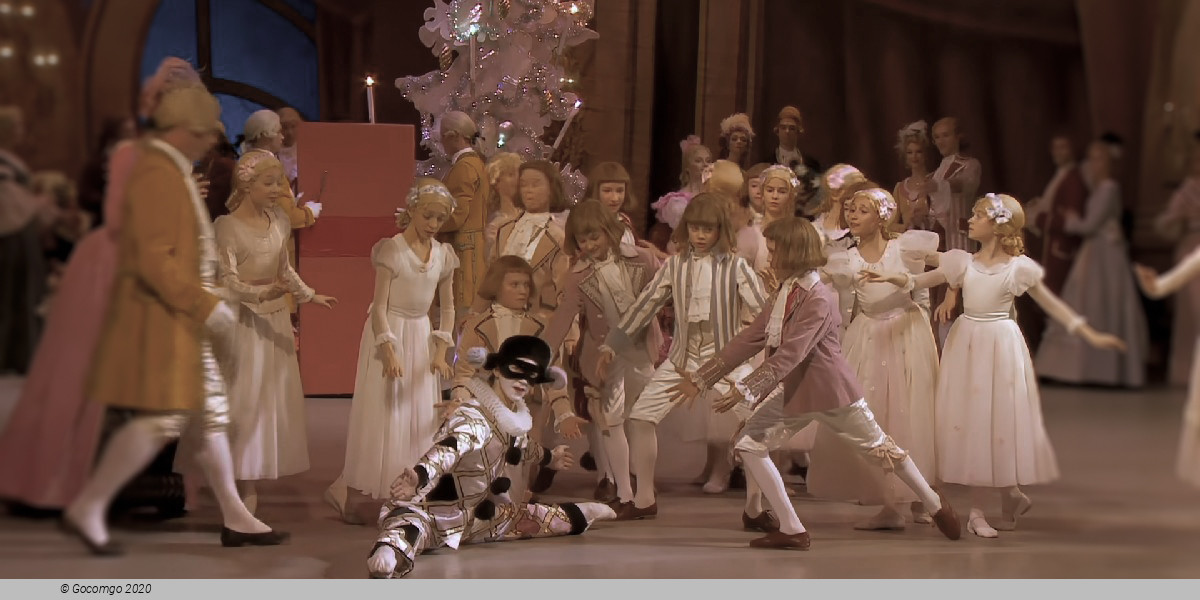
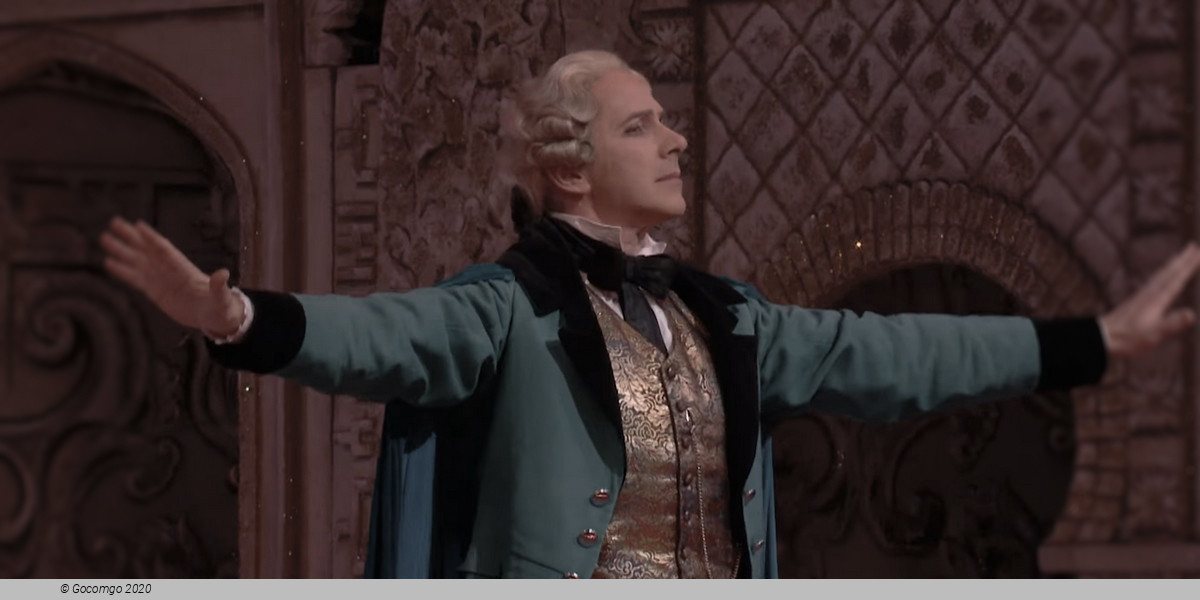
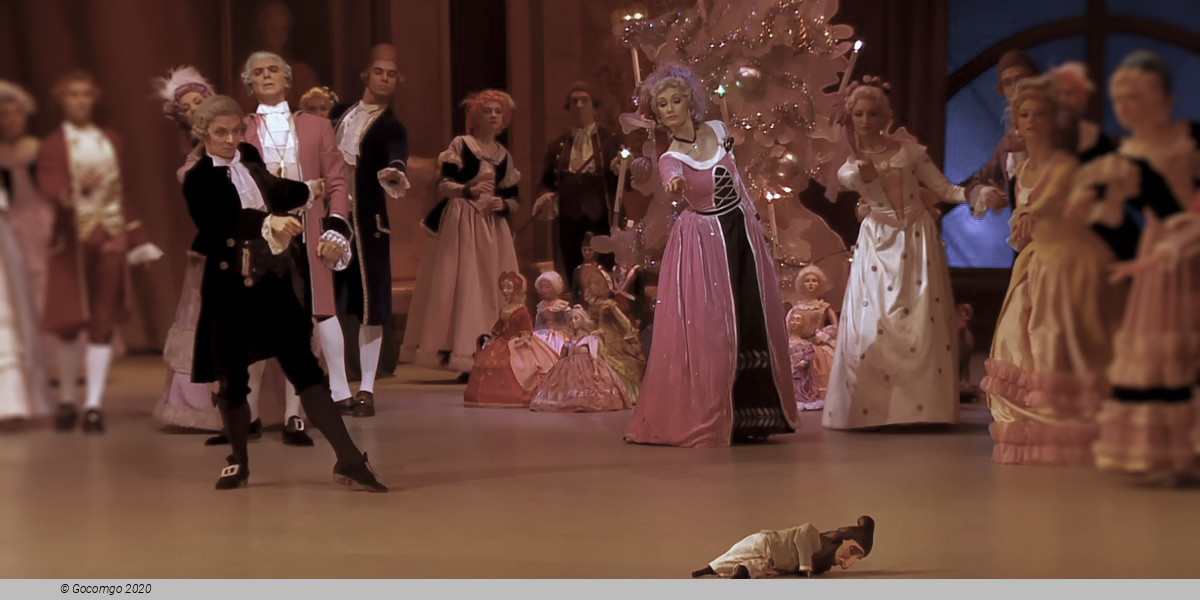
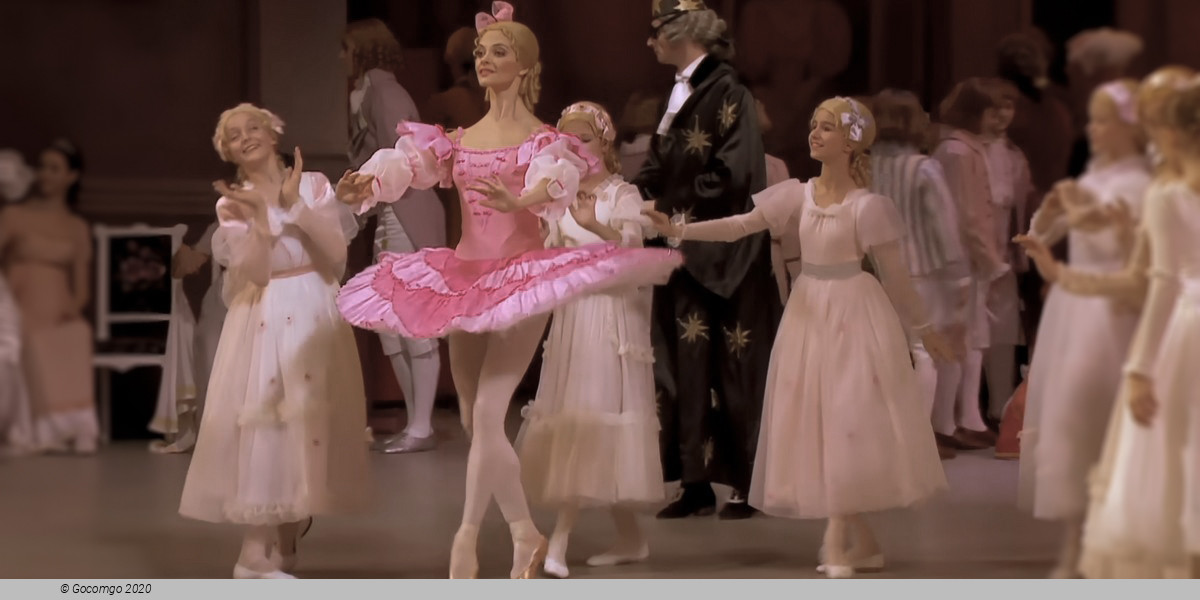
The action takes place in an old German town at the start of the last century but one. Night is falling. It is Christmas Eve and the streets are busy and festive. Drosselmeyer, an eccentric inventor and toy maker loved by children, is among those invited to see the Christmas tree at the large, brightly lit house of Herr Stahlbaum.The drawing room in Herr Stahlbaum’s house is beautifully decorated. The guests assemble. Drosselmeyer enters carrying presents.The party is ready to start. The children rush in. There is a game of blind man’s buff and Drosselmeyer takes part. He is blindfolded. Masha, Herr Stahlbaum’s young daughter, is the first to be caught. After the games, there is dancing. Now dressed as a magician, Drosselmeyer does magic tricks and puts on a puppet show – The Mouse King Wishes to Kidnap the Princess, but the Courageous Nutcracker Kills the Mouse King and Saves the Princess. Drosselmeyer’s ideas seem inexhaustible. He makes clockwork toys including a clown, a doll and a blackamoor dance for the children. The Nutcracker, however, is Masha’s favourite.Franz takes the Nutcracker from Masha and the head comes off in his hands. Drosselmeyer quickly mends the Nutcracker. Masha cuddles and comforts her damaged favourite. It is late and the guests must depart. The party comes to an end with some dances. Masha says goodnight to the Nutcracker and the candles on the tree are extinguished. Masha’s nanny takes her to bed.

Act II
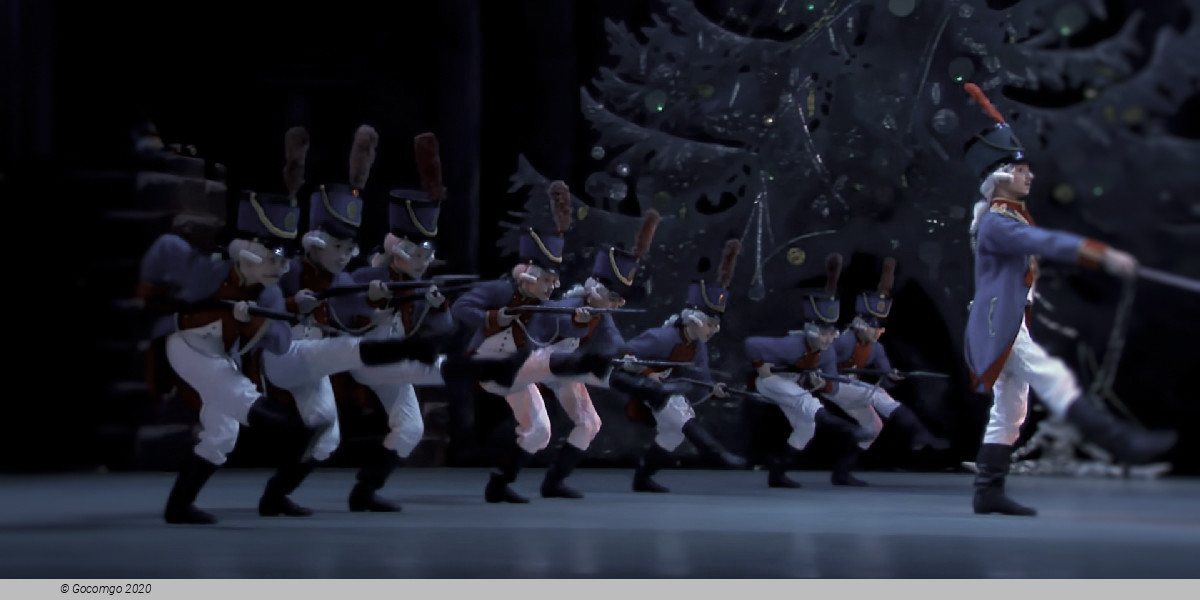
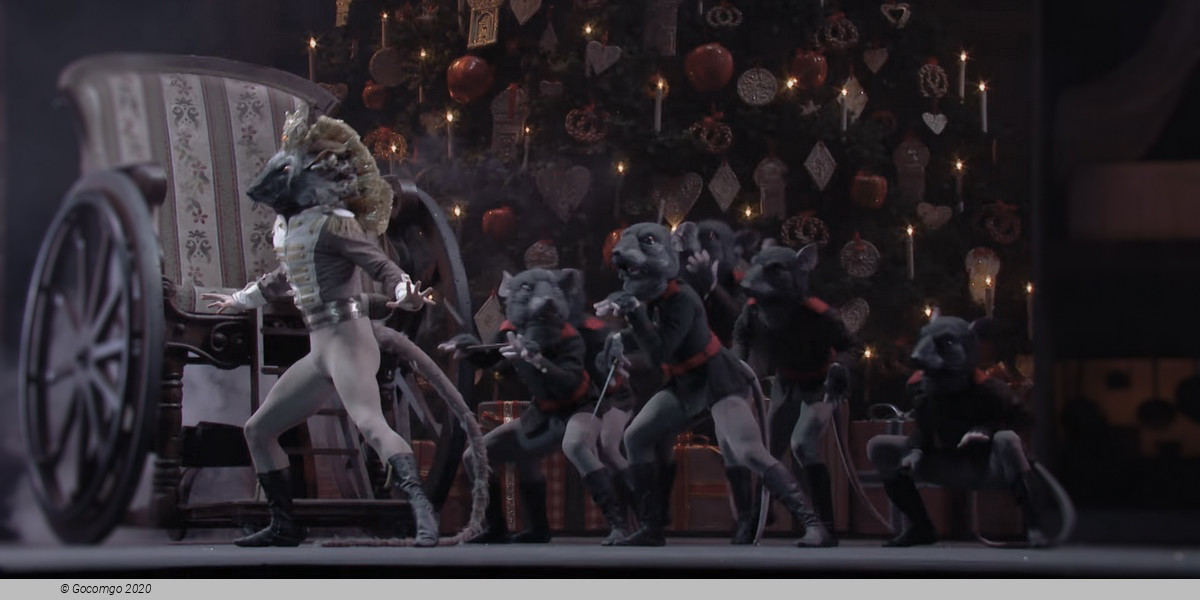
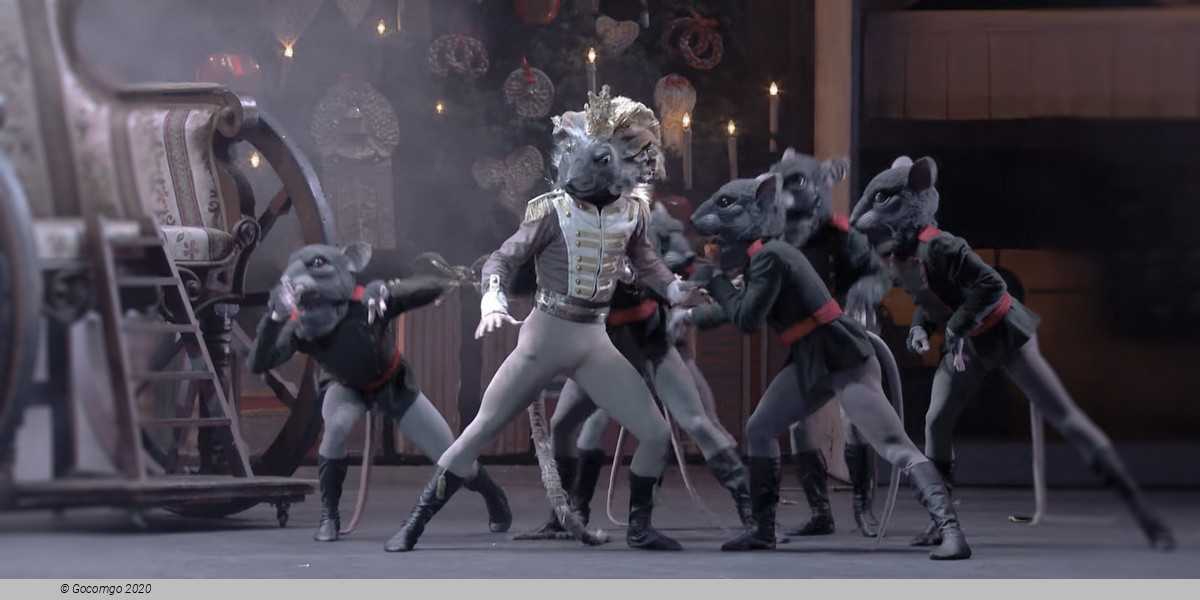
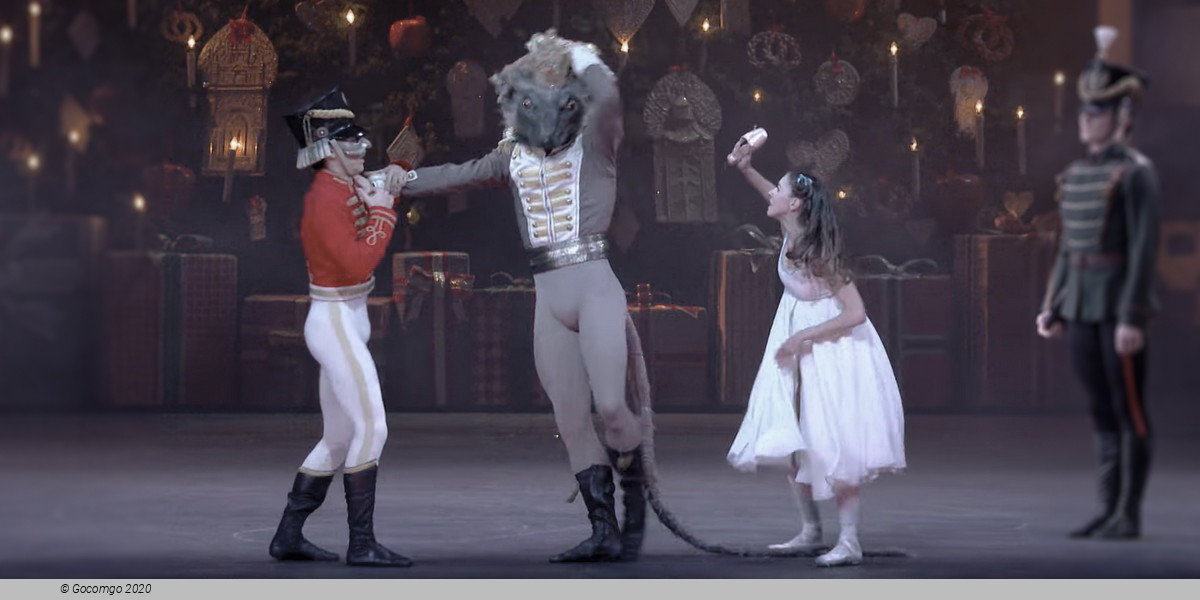
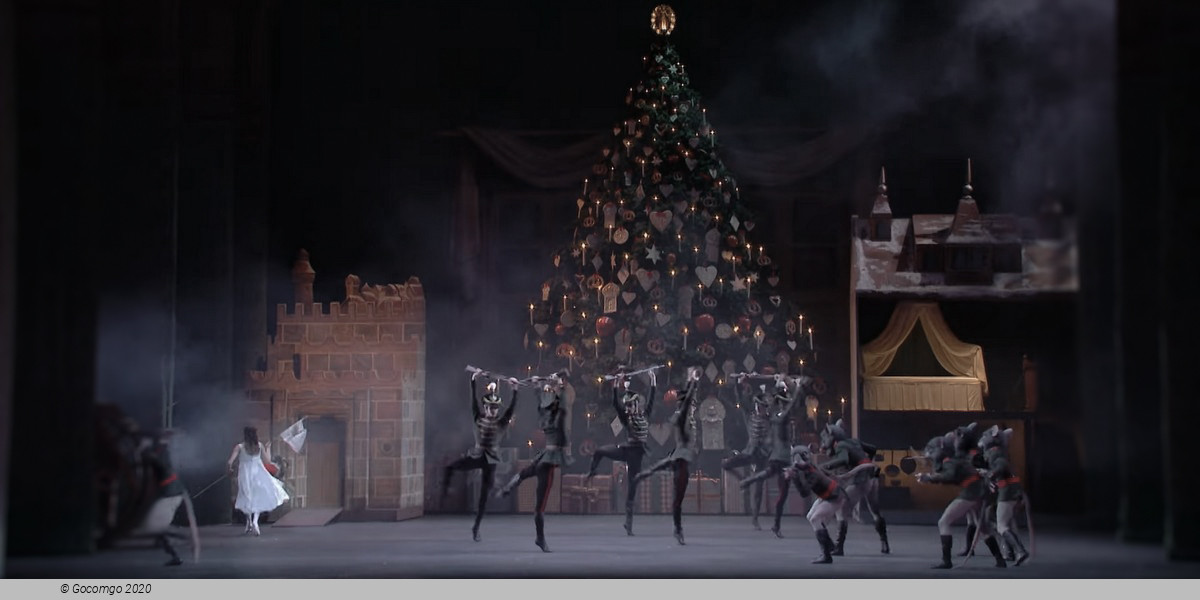
Masha goes to bed and falls asleep. She dreams that mice have taken over the drawing room. They are headed by the Mouse King. The Nutcracker leads the tin soldiers in the attack. Masha follows him. Overcoming her fear, she throws her slipper at the Mouse King at a decisive point in the battle, thus saving the Nutcracker. The Mouse King has been defeated and disappears together with his troops. Drosselmeyer turns Masha and the Nutcracker into a beautiful Prince and Princess. They are caught up in a blizzard and their journey to a fairytale land begins.

Act III
Masha and the Nutcracker are sailing along a magical river. The Nutcracker drives away some bats and clears the way to an enchanted island. Celebrations begin. Masha and the Nutcracker are delighted. They dance and celebrate with the others.

Epilogue
Masha is asleep in bed. It will soon be morning. Her magical dream is over. Masha awakes.

Plot 

Below is a synopsis based on the original 1892 libretto by Marius Petipa. The story varies from production to production, though most follow the basic outline. The names of the characters also vary. In the original E. T. A. Hoffmann story, the young heroine is called Marie Stahlbaum and Clara (Klärchen) is her doll's name. In the adaptation by Dumas on which Petipa based his libretto, her name is Marie Silberhaus. In still other productions, such as Baryshnikov's, Clara is Clara Stahlbaum rather than Clara Silberhaus.

Act I

Scene 1: The Stahlbaum Home

It is Christmas Eve. Family and friends have gathered in the parlor to decorate the beautiful Christmas tree in preparation for the party. Once the tree is finished, the children are sent for. They stand in awe of the tree sparkling with candles and decorations.

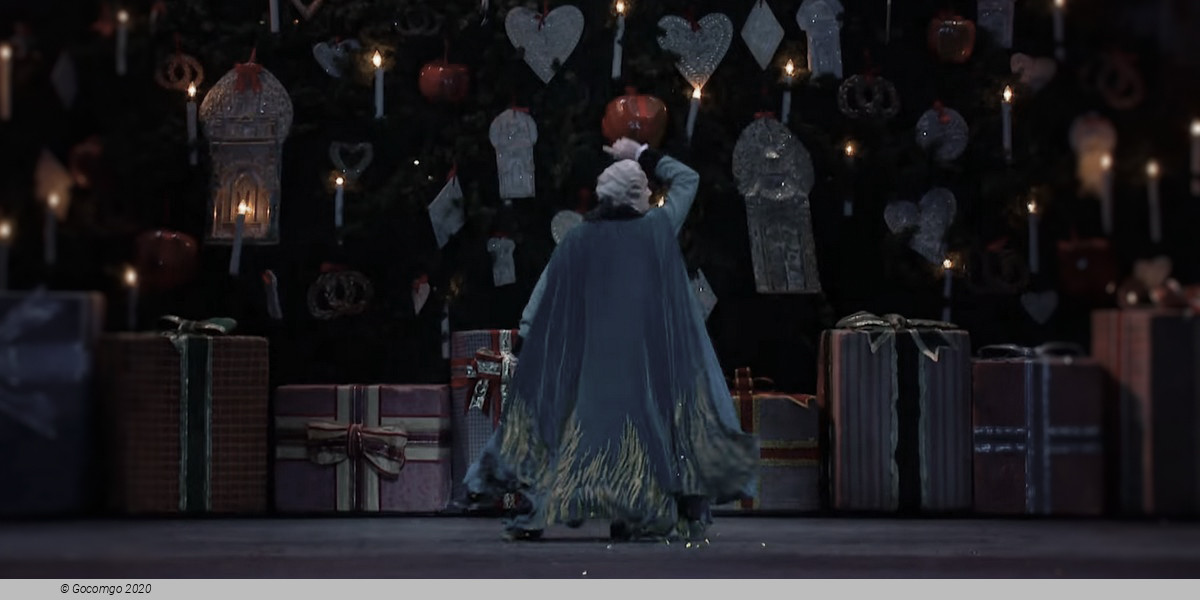
The party begins. A march is played. Presents are given out to the children. Suddenly, as the owl-topped grandmother clock strikes eight, a mysterious figure enters the room. It is Drosselmeyer, a local councilman, magician, and Clara's godfather. He is also a talented toymaker who has brought with him gifts for the children, including four lifelike dolls who dance to the delight of all. He then has them put away for safekeeping.

Clara and Fritz are sad to see the dolls being taken away, but Drosselmeyer has yet another toy for them: a wooden nutcracker carved in the shape of a little man. The other children ignore it, but Clara immediately takes a liking to it. Fritz, however, breaks it, and Clara is heartbroken.

During the night, after everyone else has gone to bed, Clara returns to the parlor to check on her beloved nutcracker. As she reaches the little bed, the clock strikes midnight and she looks up to see Drosselmeyer perched atop it. Suddenly, mice begin to fill the room and the Christmas tree begins to grow to dizzying heights. The nutcracker also grows to life size. Clara finds herself in the midst of a battle between an army of gingerbread soldiers and the mice, led by their king. They begin to eat the soldiers.

The nutcracker appears to lead the soldiers, who are joined by tin soldiers, and by dolls who serve as doctors to carry away the wounded. As the Mouse King advances on the still-wounded nutcracker, Clara throws her slipper at him, distracting him long enough for the nutcracker to stab him.

Scene 2: A Pine Forest

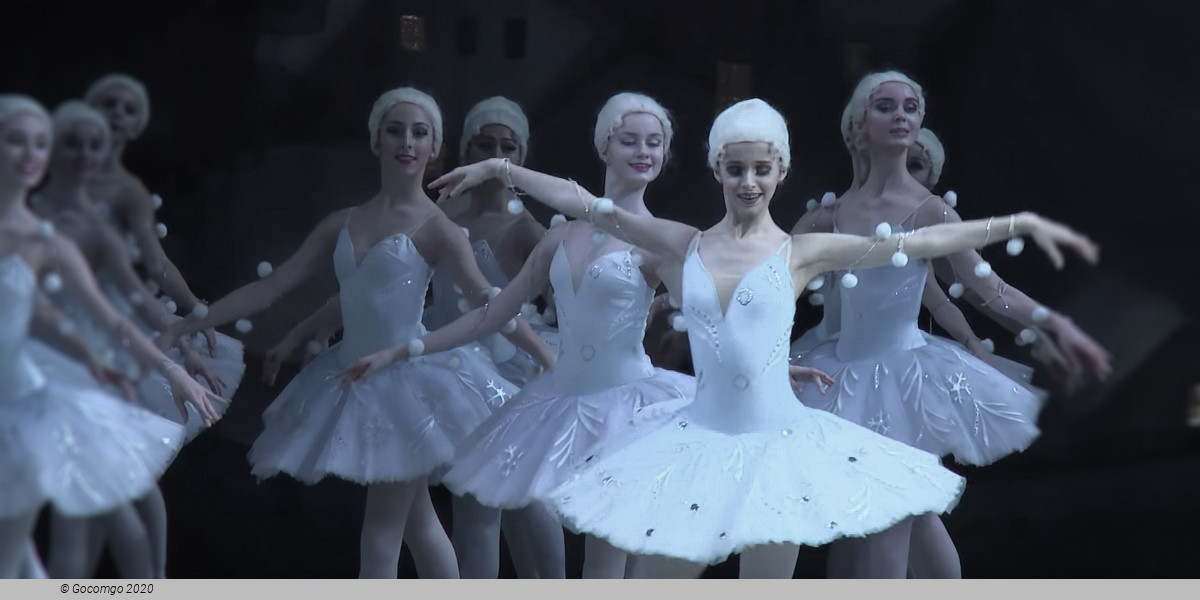
The mice retreat and the nutcracker is transformed into a handsome Prince. He leads Clara through the moonlit night to a pine forest in which the snowflakes dance around them, beckoning them on to his kingdom as the first act ends.

Act II

Scene 1: The Land of Sweets

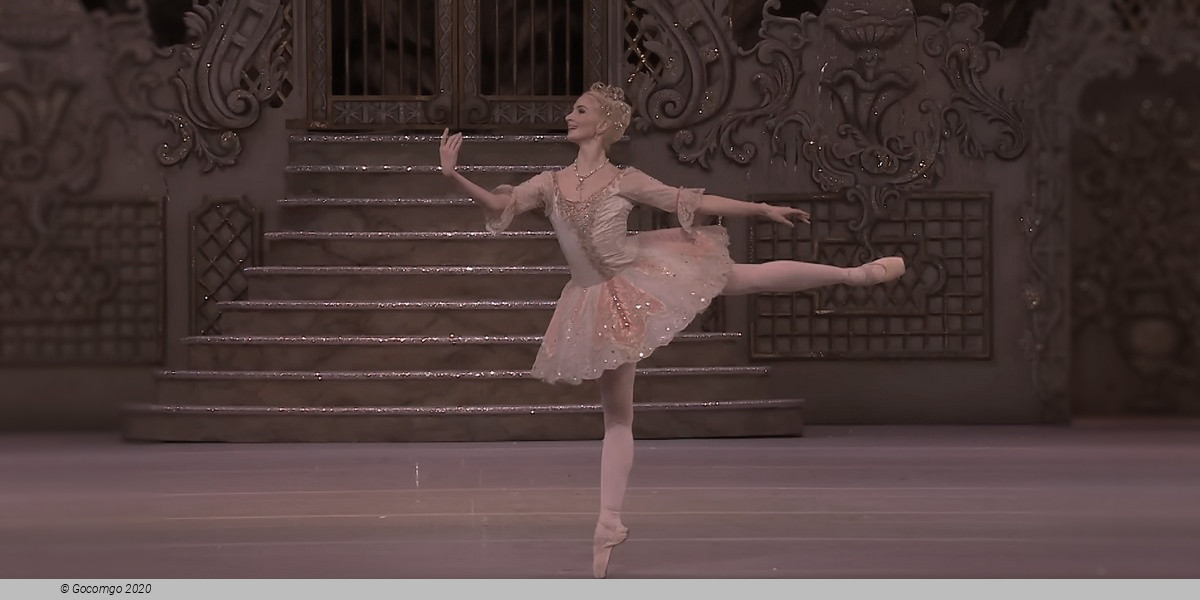
Clara and the Prince travel to the beautiful Land of Sweets, ruled by the Sugar Plum Fairy in the Prince's place until his return. He recounts for her how he had been saved from the Mouse King by Clara and transformed back into himself. In honor of the young heroine, a celebration of sweets from around the world is produced: chocolate from Spain, coffee from Arabia, tea from China, and candy canes from Russia all dance for their amusement; Danish shepherdesses perform on their flutes; Mother Ginger has her children, the Polichinelles, emerge from under her enormous hoop skirt to dance; a string of beautiful flowers perform a waltz. To conclude the night, the Sugar Plum Fairy and her Cavalier perform a dance.

A final waltz is performed by all the sweets, after which the Sugar Plum Fairy ushers Clara and the Prince down from their throne. He bows to her, she kisses Clara goodbye, and leads them to a reindeer drawn sleigh. It takes off as they wave goodbye to all the subjects who wave back.

In the original libretto, the ballet's apotheosis "represents a large beehive with flying bees, closely guarding their riches". Just like Swan Lake, there have been various alternative endings created in productions subsequent to the original.

Venue Info

Mariinsky Theatre - Saint Petersburg
Location   1 Theatre Square

The Mariinsky Theatre is a historic theatre of opera and ballet in Saint Petersburg, Russia. Opened in 1860, it became the preeminent music theatre of late 19th-century Russia, where many of the stage masterpieces of Tchaikovsky, Mussorgsky, and Rimsky-Korsakov received their premieres. Through most of the Soviet era, it was known as the Kirov Theatre. Today, the Mariinsky Theatre is home to the Mariinsky Ballet, Mariinsky Opera and Mariinsky Orchestra. Since Yuri Temirkanov's retirement in 1988, the conductor Valery Gergiev has served as the theatre's general director.

The theatre is named after Empress Maria Alexandrovna, wife of Tsar Alexander II. There is a bust of the Empress in the main entrance foyer. The theatre's name has changed throughout its history, reflecting the political climate of the time.

The theatre building is commonly called the Mariinsky Theatre. The companies that operate within it have for brand recognition purposes retained the Kirov name, acquired during the Soviet era to commemorate the assassinated Leningrad Communist Party leader Sergey Kirov (1886–1934).

The Imperial drama, opera and ballet troupe in Saint Petersburg was established in 1783, at the behest of Catherine the Great, although an Italian ballet troupe had performed at the Russian court since the early 18th century. Originally, the ballet and opera performances were given in the wooden Karl Knipper Theatre on Tsaritsa Meadow, near the present-day Tripartite Bridge (also known as the Little Theatre or the Maly Theatre). The Hermitage Theatre, next door to the Winter Palace, was used to host performances for an elite audience of aristocratic guests invited by the Empress.

A permanent theatre building for the new company of opera and ballet artists was designed by Antonio Rinaldi and opened in 1783. Known as the Imperial Bolshoi Kamenny Theatre the structure was situated on Carousel Square, which was renamed Theatre Square in honour of the building. Both names – "Kamenny" (Russian word for "stone") and "Bolshoi" (Russian word for "big") – were coined to distinguish it from the wooden Little Theatre. In 1836, the Bolshoi Kamenny Theatre was renovated to a design by Albert Cavos (son of Catterino Cavos, an opera composer), and served as the principal theatre of the Imperial Ballet and opera.

On 29 January 1849, the Equestrian circus (Конный цирк) opened on Theatre Square. This was also the work of the architect Cavos. The building was designed to double as a theatre. It was a wooden structure in the then-fashionable neo-Byzantine style. Ten years later, when this circus burnt down, Albert Cavos rebuilt it as an opera and ballet house with the largest stage in the world. With a seating capacity of 1,625 and a U-shaped Italian-style auditorium, the theatre opened on 2 October 1860, with a performance of A Life for the Tsar. The new theatre was named Mariinsky after its imperial patroness, Empress Maria Alexandrovna.

Under Yuri Temirkanov, Principal Conductor from 1976 to 1988, the Opera Company continued to stage innovative productions of both modern and classic Russian operas. Although functioning separately from the Theatre’s Ballet Company, since 1988 both companies have been under the artistic leadership of Valery Gergiev as Artistic Director of the entire Theatre.

The Opera Company has entered a new era of artistic excellence and creativity. Since 1993, Gergiev’s impact on opera there has been enormous. Firstly, he reorganized the company’s operations and established links with many of the world's great opera houses, including the Royal Opera House, Covent Garden, the Metropolitan Opera, the Opéra Bastille, La Scala, La Fenice, the Israeli Opera, the Washington National Opera and the San Francisco Opera. Today, the Opera Company regularly tours to most of these cities.

Gergiev has also been innovative as far as Russian opera is concerned: in 1989, there was an all-Mussorgsky festival featuring the composer’s entire operatic output. Similarly, many of Prokofiev’s operas were presented from the late 1990s. Operas by non-Russian composers began to be performed in their original languages, which helped the Opera Company to incorporate world trends. The annual international "Stars of the White Nights Festival" in Saint Petersburg, started by Gergiev in 1993, has also put the Mariinsky on the world’s cultural map. That year, as a salute to the imperial origins of the Mariinsky, Verdi's La forza del destino, which received its premiere in Saint Petersburg in 1862, was produced with its original sets, costumes and scenery. Since then, it has become a characteristic of the "White Nights Festival" to present the premieres from the company’s upcoming season during this magical period, when the hours of darkness practically disappear as the summer solstice approaches.

Presently, the Company lists on its roster 22 sopranos (of whom Anna Netrebko may be the best known); 13 mezzo-sopranos (with Olga Borodina familiar to US and European audiences); 23 tenors; eight baritones; and 14 basses. With Gergiev in charge overall, there is a Head of Stage Administration, a Stage Director, Stage Managers and Assistants, along with 14 accompanists.

Important Info
Type: Ballet
City: Saint Petersburg, Russia
Starts at: 19:00
Acts: 3
Intervals: 2
Duration: 2h 45min
Top of page