
Mariinsky Theatre 17 June 2023 - The Golden Cockerel | GoComGo.com

The Golden Cockerel

Mariinsky Theatre, Mariinsky II, Saint Petersburg, Russia
All photos (11)
Select date and time
1 PM 7 PM
Request for Tickets
Important Info
Type: Opera
City: Saint Petersburg, Russia
Starts at: 19:00
Acts: 3
Intervals: 2
Duration: 3h
Sung in: Russian
Titles in: English,Russian

E-tickets: Print at home or at the box office of the event if so specified. You will find more information in your booking confirmation email.

You can only select the category, and not the exact seats.
If you order 2 or 3 tickets: your seats will be next to each other.
If you order 4 or more tickets: your seats will be next to each other, or, if this is not possible, we will provide a combination of groups of seats (at least in pairs, for example 2+2 or 2+3).

Festival

Stars of the White Nights Festival 2023

"Stars of the White Nights": bright events of the big summer festival in the Mariinsky.

Overview

From the title of Rimsky-Korsakov's opera The Golden Cockerel, it is no coincidence that Pushkin's word "fairy tale" disappeared: this is not a fairy tale, but a merciless musical and theatrical pamphlet.

The Russo-Japanese War, the revolution of 1905, student unrest, the composer-professor's confrontation with the authorities - this is the historical and biographical background against which Korsakov's "fabulous faces" were created. The Golden Cockerel, composed in 1907, became the last operatic work by Rimsky-Korsakov and, in general, by the entire pre-revolutionary Russian school of composers - the same school that once declared itself the patriotic Life for the Tsar. Korsakov formulated his intentions in the famous phrase: “I hope to disgrace Dodon completely.” This means - even stronger, even tougher than in Pushkin's original fairy tale, reworked by Vladimir Belsky into an operatic libretto. The Golden Cockerel ridicules not only the tsar - "a slave in body and soul" - but the entire state system of Russia as a whole, including the Duma, the army, the country's foreign and domestic policy. The servile people in the kingdom of Dodon exist solely for the sake of their master: “Without you, we would not know why we would exist; for you we were born and got a family. There is not a single worthy person in power, the state is destroying itself, the future of the country is unclear: this is the conclusion made by the authors of the opera.

The specifics of the content also determined the music of The Golden Cockerel, which Academician Asafiev called "a dazzling mosaic of precious sound combinations." Deprived of the psychologism characteristic of a romantic opera, the work is not at all devoid of emotions, and the main of them remains outside the score: this is the anger and bitterness of the composer. The absurdity of what is happening is expressed in parody music; even the most unprepared listener will easily recognize both Chizhik-Pyzhik and The Moon Shines, while the more experienced listener will notice numerous allusions to the composers of The Mighty Handful (including Korsakov himself), to Glazunov, to European musical decadence and other manifestations "someone else's word". Summing up the results of his own creative path, Rimsky-Korsakov in his last work suddenly turns out to be a composer of the twentieth century, in tune with Stravinsky and Scriabin. In a Wagnerian way, the through musical dramaturgy of The Golden Cockerel is perfect in its chased harmony: the triad Cockerel - Astrologer - Queen of Shemakhan with their magical music opposes the Dodonovo kingdom with its musical everydayisms; however, in the epilogue, everything turns upside down and we are told that only the Astrologer and the Queen were living persons, and all the rest were “nonsense, a dream.” Indeed, one cannot expect volume from cartoon characters, they are like two-dimensional popular prints. On the other hand, the orchestral palette of Petushka is by no means flat: enchantingly multicolored, sometimes fiery, poster-like, sometimes exquisitely impressionistic.

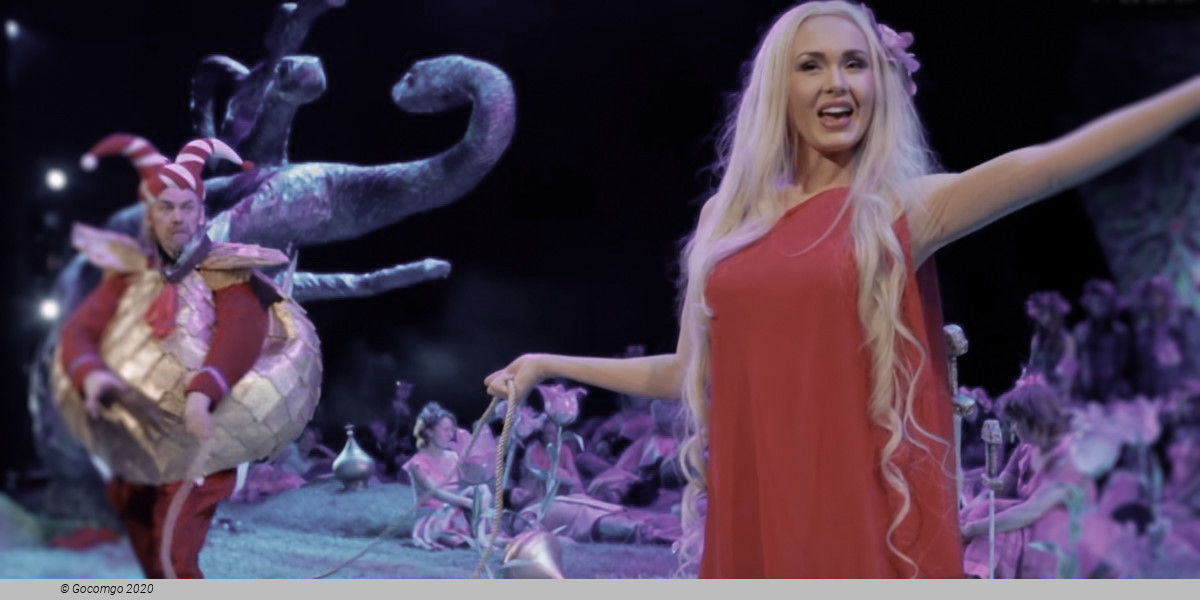
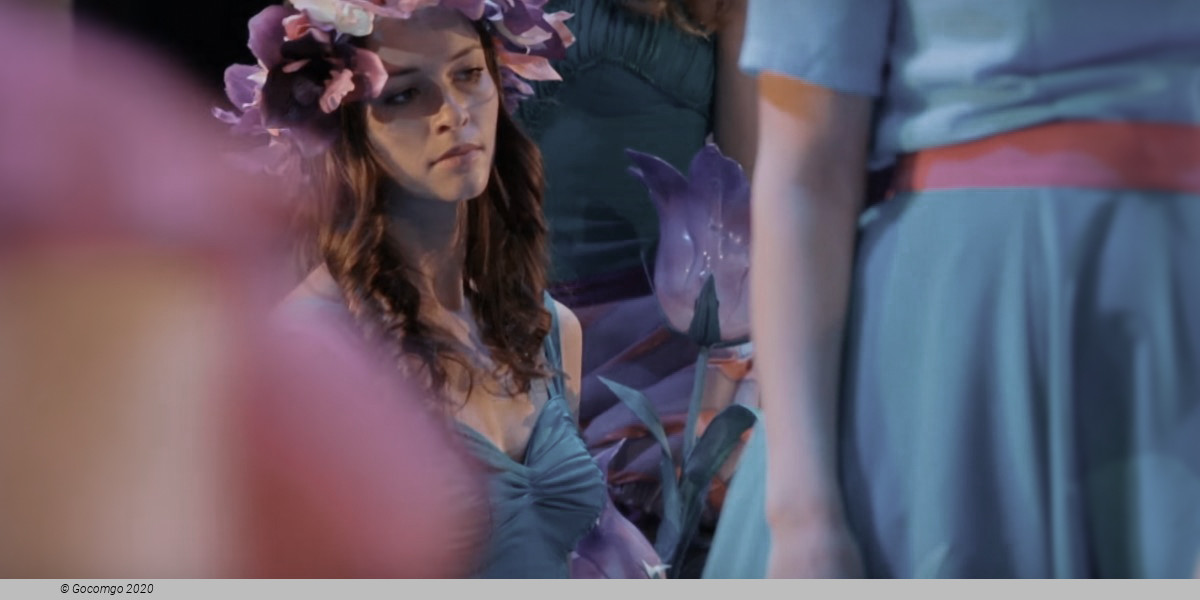
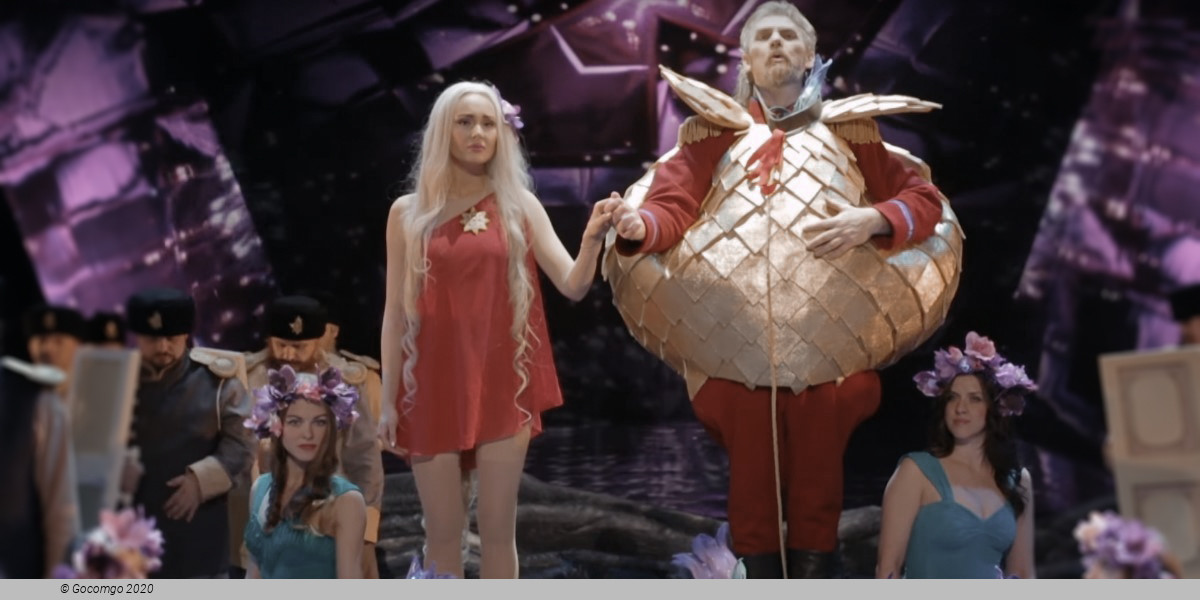
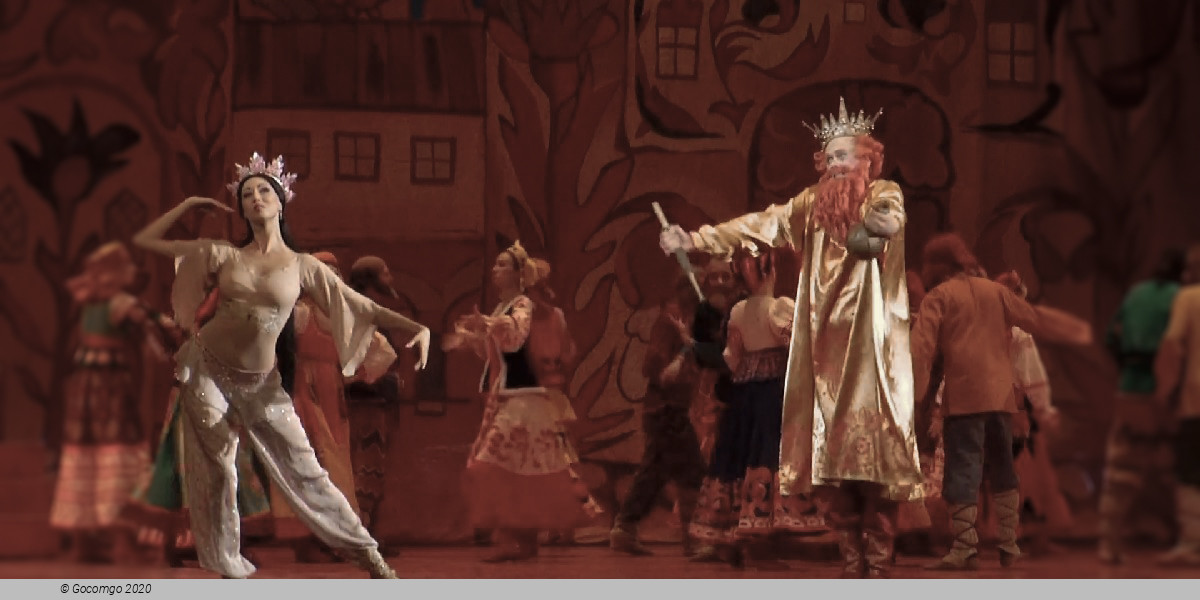
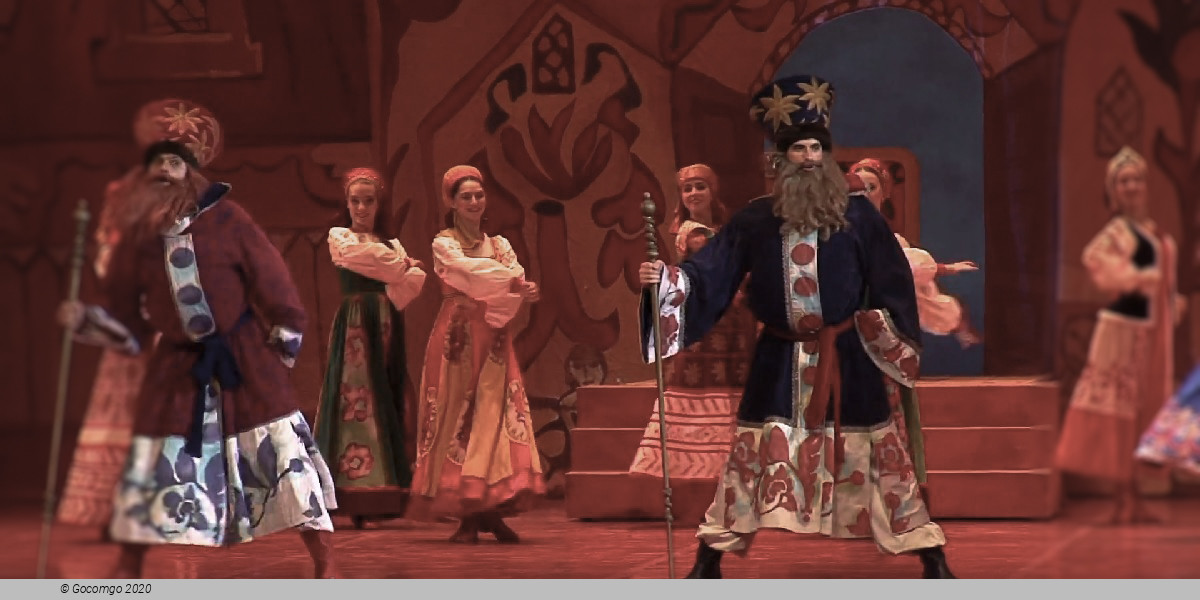
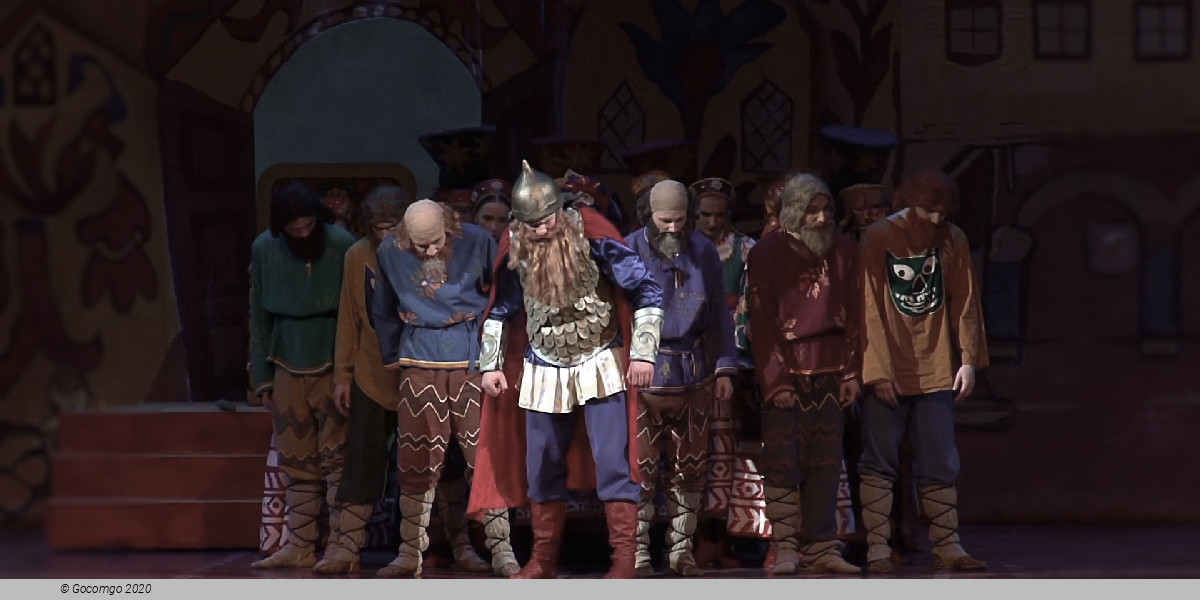
The performance of Anna Mathison, who staged The Golden Cockerel at the Mariinsky Theater in 2014, is also distinguished by dazzling brightness. Lubok is replaced here by a modern version of mass culture - gloss. In this context, the dark-haired oriental beauty naturally turns into a blonde in a red dress. In response to the remark “it’s hard for the mighty Dodon to wear a crown,” Mathison puts huge golden domes on the heads of high-ranking heroes. Since everything happens "for fun", four murders - not counting the warriors who died on the battlefield - do not interfere with marking the opera as 6+. Adult spectators will undoubtedly sigh at the final words of the people: “What will a new dawn give, how will we be without a king?” The answer was the history of Russia, whose cataclysms Rimsky-Korsakov so unmistakably foresaw in the last years of his life.

Christina Batyushina

Premiere at the State Mariinsky Theatre: 14 February 1919
Premiere of this production: 25 December 2014

History
Premiere of this production: 07 October 1909, Solodovnikov Theatre , Moscow, Russia

The Golden Cockerel is an opera in three acts, with short prologue and even shorter epilogue, composed by Nikolai Rimsky-Korsakov. Its libretto written by Vladimir Belsky derives from Alexander Pushkin's 1834 poem The Tale of the Golden Cockerel. The opera was completed in 1907 and premiered in 1909 in Moscow, after the composer's death. Outside Russia it has often been performed in French as Le coq d'or.

Synopsis

The action unfolds in the Thrice-Tenth Kingdom in fantastical times.

Introduction
The Astrologer appears. He addresses the audience:
Here before you an old tale
Will be brought to life by maskers.
The tale is a lie but includes a hint,
A lesson for good, fine fellows...

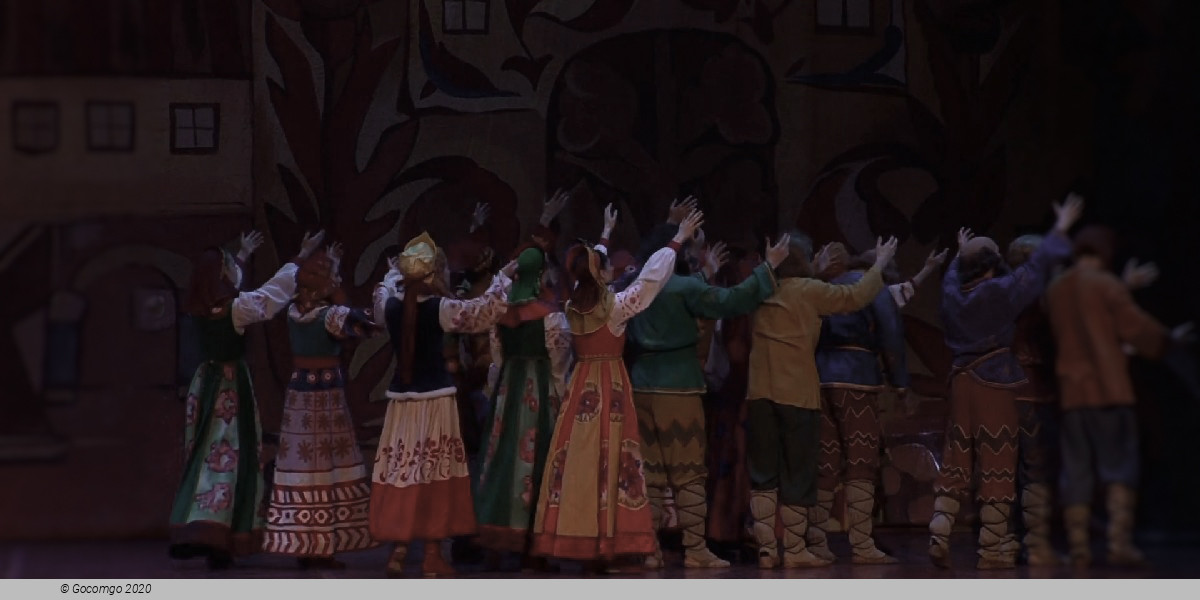
The crowd is assembled behind him. In fear the people gather near a tower on top of which a sentry stands. The Astrologer makes a gesture and the scene is transformed into Dodon’s kingdom.

Act I
A “meeting” of the boyars’ council is underway at the palace. The Tsar turns to the boyars for advice on how to protect his kingdom from attack. His eldest son proposes moving the army away from the border and placing it around the capital. The boyars and the Tsar noisily approve this plan. The old voivode Polkan has doubts as to the decision being the proper one. The Tsar’s youngest son proposes dismissing the army altogether and reassembling it should the enemy appear. Dodon is delighted! Polkan, however, rejects this proposal too. The duma council does not know what decision to take. Then the boyars propose divining the future using beans or dregs of kvass.
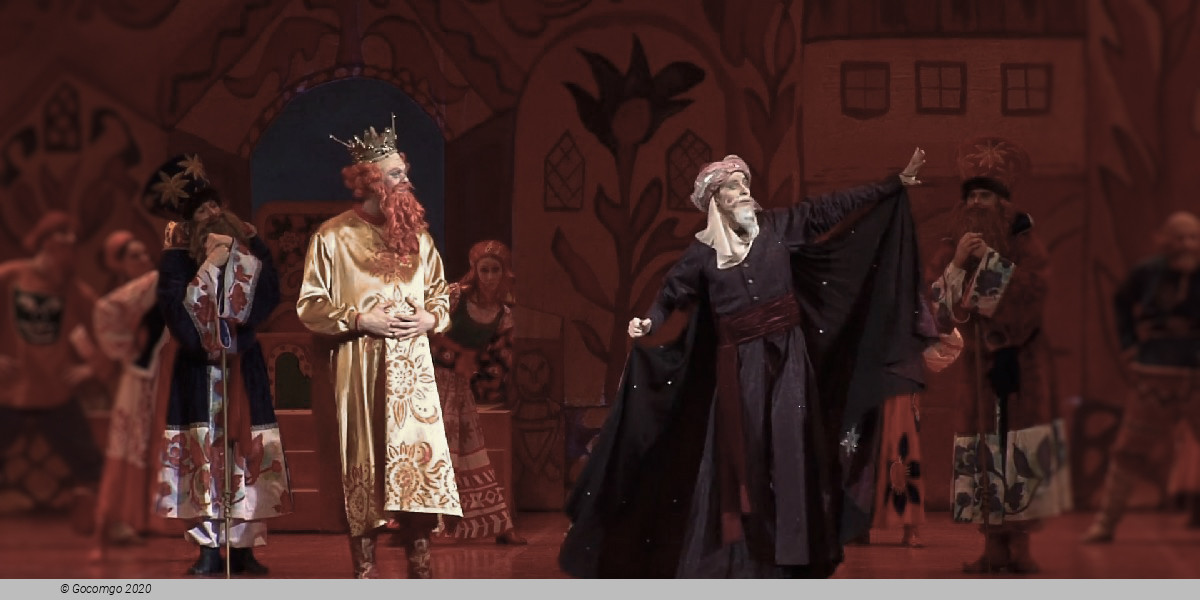
The Astrologer appears. He gives Dodon a magical Golden Cockerel which will always warn of any danger. The Tsar promises the Astrologer any reward he desires:
Your first desire
I will fulfil as my own.

The Astrologer departs. In line with custom the people assemble near the tower, where the Golden Cockerel now stands instead of the sentry. Pacified, Dodon goes to bed. The Golden Cockerel sends Dodon a vision in his peaceful sleep – a vision of an enchanting woman. As soon as the Tsar has fallen in love with this vision the Cockerel cries out “Take care, be on guard!” Much ado and fuss. The Tsar equips his forces, headed by his sons, and himself goes to sleep. His enchanting vision comes back once more. But the Cockerel again warns him of danger. Dodon, assembling an army of old men and invalids, sets out for battle together with Polkan.

Act II
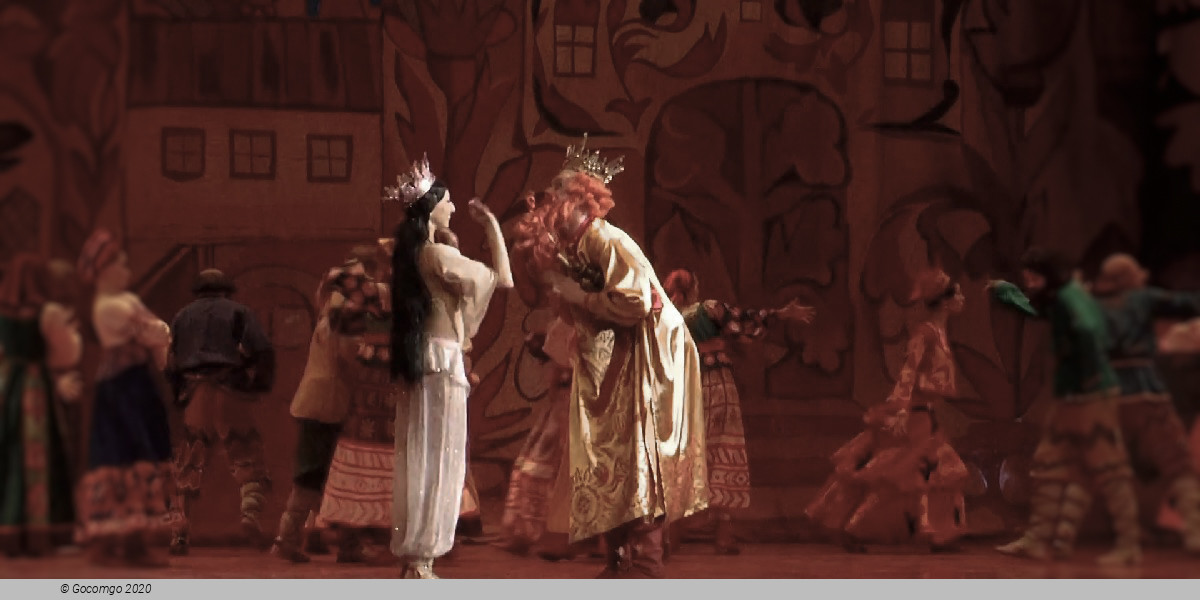
Night. At the bottom of a deep ravine into which Dodon’s army has descended the Tsar is appalled to see his sons are dead – they have stabbed one another with their swords. Day dawns, and a brightly coloured tent appears before Dodon. A beautiful woman emerges from the tent; it is the Queen of Shemakha, whose song greets the rising sun. Dodon is captivated by her beauty and singing. With cunning tricks and deceit, the crafty beauty flatters Dodon and he proposes marriage to the Queen. She accepts. Changing her clothes and dressing Dodon in oriental garb (he is now as humble as a slave!), together with the remains of Dodon’s troops and her own retinue comprising various freaks, the Queen sets out for the capital.

Act III
Life in the capital is unsettled. The Cockerel has fallen strangely quiet and clouds have formed. All are gripped by panic. Suddenly the Golden Cockerel is on its guard – Dodon approaches. Before the stunned people a procession of freaks and monsters passes by – the retinue of the Queen of Shemakha. And there she is herself with Dodon, whose people barely recognise him...
The Astrologer appears. He reminds the Tsar of the latter’s promise and asks him for the Queen of Shemakha. Dodon attempts to make the elderly Astrologer see reason, but the latter insists on his rights. Enraged, Dodon strikes his forehead with a staff and the Astrologer drops to the ground. To the gloating laughter of the Queen, the Cockerel pecks the Tsar’s forehead. Thunder peals. Dodon’s entire kingdom vanishes in flames and clouds of smoke.

Conclusion
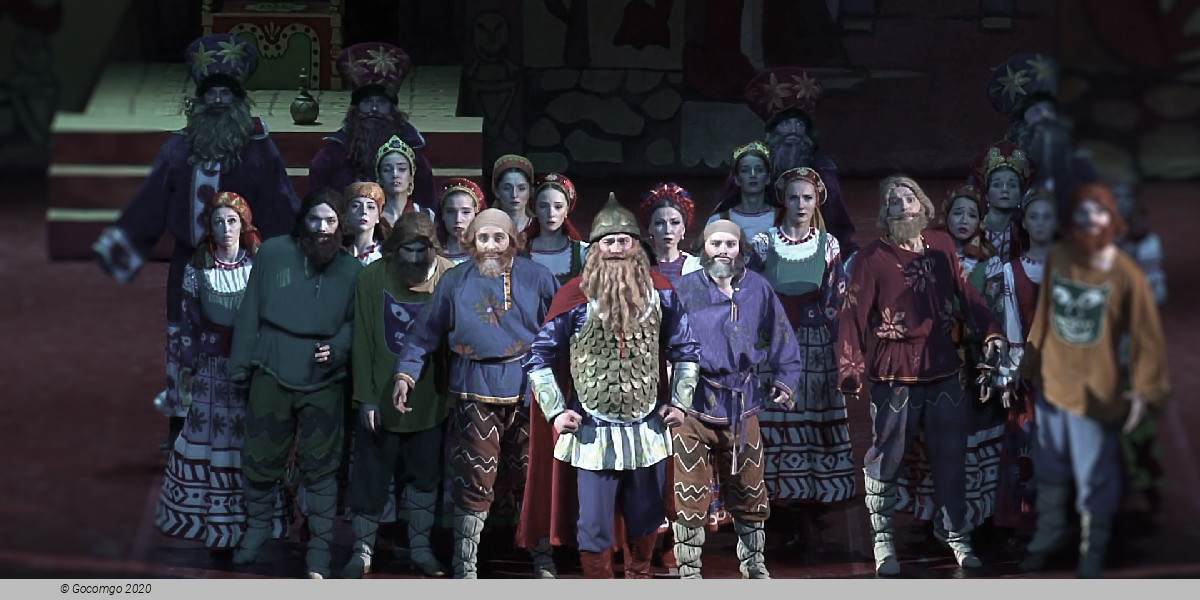
Once the smoke is dispelled the same tower, the confused populace and a fallen crown can be seen.
The Astrologer is still alive – he will never die. And now he finishes the tale he began earlier:
That’s how the story has ended...
But the bloody denouement,
However onerous it may be,
Should not cause you to worry.

And behind his back we see the people crowded around the tower. But at the top of the tower there is no sentry, no Cockerel and no Tsar...

Time: Unspecified
Place: In the thrice-tenth tsardom, a far off place (beyond thrice-nine lands) in Russian folklore
Note: There is an actual city of Shemakha (also spelled "Şamaxı", "Schemacha" and "Shamakhy"), which is the capital of the Shamakhi Rayon of Azerbaijan. In Pushkin's day it was an important city and capital of what was to become the Baku Governorate. But the realm of that name, ruled by its tsaritsa, bears little resemblance to today's Shemakha and region; Pushkin likely seized the name for convenience, to conjure an exotic monarchy.

Prologue
After quotation by the orchestra of the most important leitmotifs, a mysterious Astrologer comes before the curtain and announces to the audience that, although they are going to see and hear a fictional tale from long ago, his story will have a valid and true moral.

Act 1
The bumbling Tsar Dodon talks himself into believing that his country is in danger from a neighbouring state, Shemakha, ruled by a beautiful Tsaritsa. He requests advice of the Astrologer, who supplies a magic Golden Cockerel to safeguard the Tsar's interests. When the little cockerel confirms that the Tsaritsa of Shemakha does harbor territorial ambitions, Dodon decides to preemptively strike Shemakha, sending his army to battle under the command of his two sons.

Act 2
However, his sons are both so inept that they manage to kill each other on the battlefield. Tsar Dodon then decides to lead the army himself, but further bloodshed is averted because the Golden Cockerel ensures that the old Tsar becomes besotted when he actually sees the beautiful Tsaritsa. The Tsaritsa herself encourages this situation by performing a seductive dance – which tempts the Tsar to try and partner her, but he is clumsy and makes a complete mess of it. The Tsaritsa realises that she can take over Dodon’s country without further fighting – she engineers a marriage proposal from Dodon, which she coyly accepts.

Act 3
The Final Scene starts with the wedding procession in all its splendour. As this reaches its conclusion, the Astrologer appears and says to Dodon, “You promised me anything I could ask for if there could be a happy resolution of your troubles ... .” “Yes, yes,” replies the Tsar, “just name it and you shall have it.” “Right,” says the Astrologer, “I want the Tsaritsa of Shemakha!” At this, the Tsar flares up in fury, and strikes down the Astrologer with a blow from his mace. The Golden Cockerel, loyal to his Astrologer master, then swoops across and pecks through the Tsar’s jugular. The sky darkens. When light returns, the Tsaritsa and the little cockerel are gone.

Epilogue
The Astrologer comes again before the curtain and announces the end of his story, reminding the public that what they just saw was “merely illusion,” that only he and the Tsaritsa were mortals and real.

Venue Info

Mariinsky Theatre - Saint Petersburg
Location   1 Theatre Square

The Mariinsky Theatre is a historic theatre of opera and ballet in Saint Petersburg, Russia. Opened in 1860, it became the preeminent music theatre of late 19th-century Russia, where many of the stage masterpieces of Tchaikovsky, Mussorgsky, and Rimsky-Korsakov received their premieres. Through most of the Soviet era, it was known as the Kirov Theatre. Today, the Mariinsky Theatre is home to the Mariinsky Ballet, Mariinsky Opera and Mariinsky Orchestra. Since Yuri Temirkanov's retirement in 1988, the conductor Valery Gergiev has served as the theatre's general director.

The theatre is named after Empress Maria Alexandrovna, wife of Tsar Alexander II. There is a bust of the Empress in the main entrance foyer. The theatre's name has changed throughout its history, reflecting the political climate of the time.

The theatre building is commonly called the Mariinsky Theatre. The companies that operate within it have for brand recognition purposes retained the Kirov name, acquired during the Soviet era to commemorate the assassinated Leningrad Communist Party leader Sergey Kirov (1886–1934).

The Imperial drama, opera and ballet troupe in Saint Petersburg was established in 1783, at the behest of Catherine the Great, although an Italian ballet troupe had performed at the Russian court since the early 18th century. Originally, the ballet and opera performances were given in the wooden Karl Knipper Theatre on Tsaritsa Meadow, near the present-day Tripartite Bridge (also known as the Little Theatre or the Maly Theatre). The Hermitage Theatre, next door to the Winter Palace, was used to host performances for an elite audience of aristocratic guests invited by the Empress.

A permanent theatre building for the new company of opera and ballet artists was designed by Antonio Rinaldi and opened in 1783. Known as the Imperial Bolshoi Kamenny Theatre the structure was situated on Carousel Square, which was renamed Theatre Square in honour of the building. Both names – "Kamenny" (Russian word for "stone") and "Bolshoi" (Russian word for "big") – were coined to distinguish it from the wooden Little Theatre. In 1836, the Bolshoi Kamenny Theatre was renovated to a design by Albert Cavos (son of Catterino Cavos, an opera composer), and served as the principal theatre of the Imperial Ballet and opera.

On 29 January 1849, the Equestrian circus (Конный цирк) opened on Theatre Square. This was also the work of the architect Cavos. The building was designed to double as a theatre. It was a wooden structure in the then-fashionable neo-Byzantine style. Ten years later, when this circus burnt down, Albert Cavos rebuilt it as an opera and ballet house with the largest stage in the world. With a seating capacity of 1,625 and a U-shaped Italian-style auditorium, the theatre opened on 2 October 1860, with a performance of A Life for the Tsar. The new theatre was named Mariinsky after its imperial patroness, Empress Maria Alexandrovna.

Under Yuri Temirkanov, Principal Conductor from 1976 to 1988, the Opera Company continued to stage innovative productions of both modern and classic Russian operas. Although functioning separately from the Theatre’s Ballet Company, since 1988 both companies have been under the artistic leadership of Valery Gergiev as Artistic Director of the entire Theatre.

The Opera Company has entered a new era of artistic excellence and creativity. Since 1993, Gergiev’s impact on opera there has been enormous. Firstly, he reorganized the company’s operations and established links with many of the world's great opera houses, including the Royal Opera House, Covent Garden, the Metropolitan Opera, the Opéra Bastille, La Scala, La Fenice, the Israeli Opera, the Washington National Opera and the San Francisco Opera. Today, the Opera Company regularly tours to most of these cities.

Gergiev has also been innovative as far as Russian opera is concerned: in 1989, there was an all-Mussorgsky festival featuring the composer’s entire operatic output. Similarly, many of Prokofiev’s operas were presented from the late 1990s. Operas by non-Russian composers began to be performed in their original languages, which helped the Opera Company to incorporate world trends. The annual international "Stars of the White Nights Festival" in Saint Petersburg, started by Gergiev in 1993, has also put the Mariinsky on the world’s cultural map. That year, as a salute to the imperial origins of the Mariinsky, Verdi's La forza del destino, which received its premiere in Saint Petersburg in 1862, was produced with its original sets, costumes and scenery. Since then, it has become a characteristic of the "White Nights Festival" to present the premieres from the company’s upcoming season during this magical period, when the hours of darkness practically disappear as the summer solstice approaches.

Presently, the Company lists on its roster 22 sopranos (of whom Anna Netrebko may be the best known); 13 mezzo-sopranos (with Olga Borodina familiar to US and European audiences); 23 tenors; eight baritones; and 14 basses. With Gergiev in charge overall, there is a Head of Stage Administration, a Stage Director, Stage Managers and Assistants, along with 14 accompanists.

Important Info
Type: Opera
City: Saint Petersburg, Russia
Starts at: 19:00
Acts: 3
Intervals: 2
Duration: 3h
Sung in: Russian
Titles in: English,Russian
Top of page