









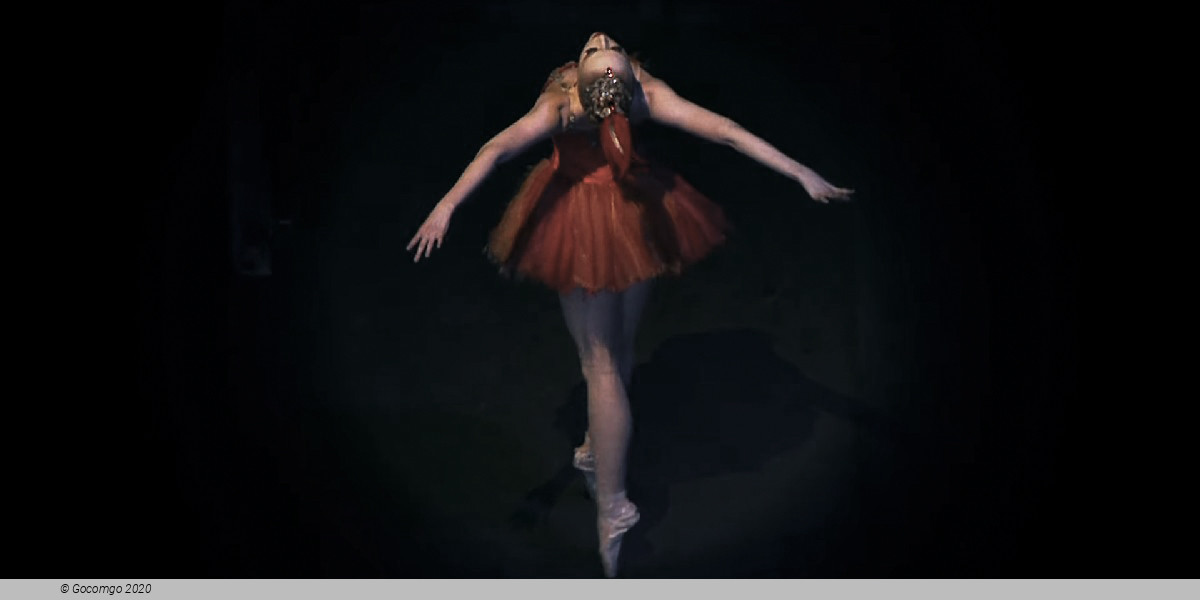
Mariinsky Theatre 5 March 2023 - The Firebird | GoComGo.com

The Firebird

Mariinsky Theatre, Mariinsky Theatre, Saint Petersburg, Russia
All photos (12)
Select date and time
12 PM 7 PM
Request for Tickets
Important Info
Type: Ballet
City: Saint Petersburg, Russia
Starts at: 12:00
Acts: 1
Duration: 50min

E-tickets: Print at home or at the box office of the event if so specified. You will find more information in your booking confirmation email.

You can only select the category, and not the exact seats.
If you order 2 or 3 tickets: your seats will be next to each other.
If you order 4 or more tickets: your seats will be next to each other, or, if this is not possible, we will provide a combination of groups of seats (at least in pairs, for example 2+2 or 2+3).

Overview

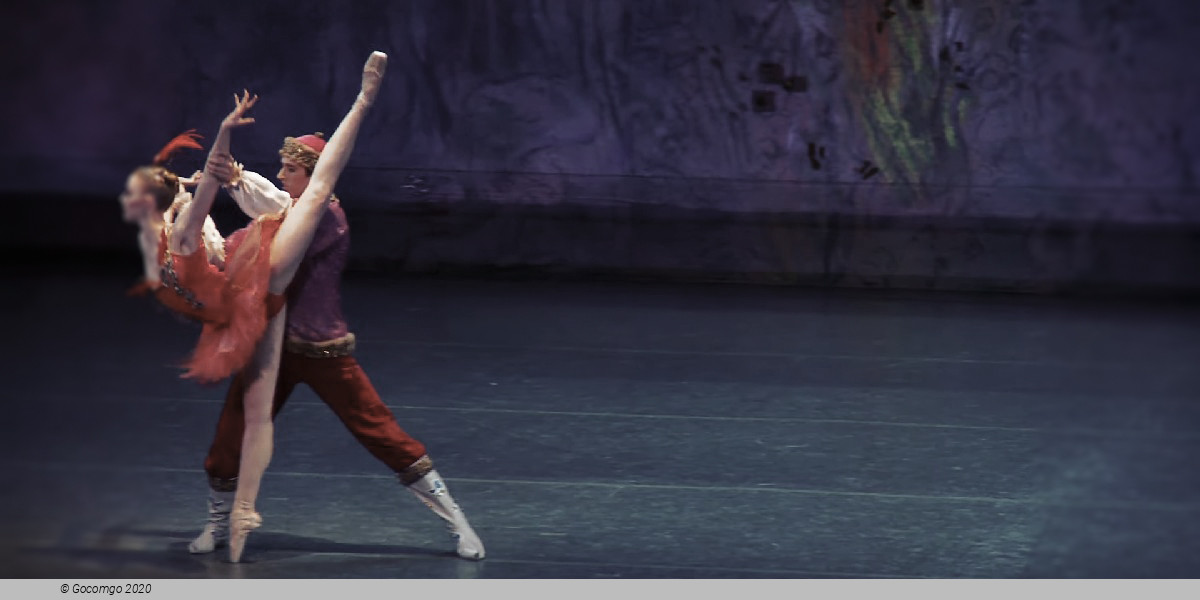
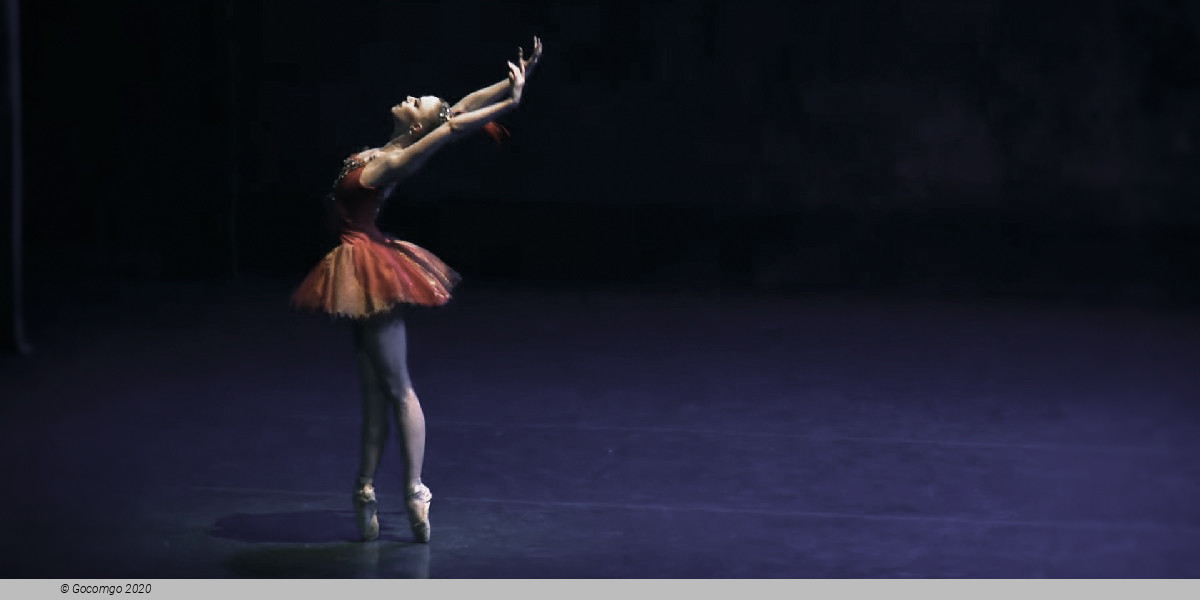
Igor Stravinsky began his career with The Firebird. It was his first commissioned work, his theatrical debut, followed by a huge success. After the ballet was premiered in Paris, this previously unknown aspiring composer was now ranked among the main newsmakers of the new European art. Stravinsky was invited to write a new score for the Ballets Russes by Diaghilev, since Anatoly Lyadov, composer known for his ability to evoke the world of Russian fairy tales, had failed this order on time. Diaghilev who had a knack for discovering new talents had been impressed by young Stravinsky's Scherzo Fantastique for symphony orchestra, which was “burning and sparkling” as choreographer Michel Fokine put it. It was Fokine who came up with a “glowing image” of the Firebird. By the time Stravinsky became involved with the score, the libretto had already been completed. Fokine had a clear vision of the ballet and guided the composer. Colourful musical themes of the Firebird, the round dance of the Princesses with its Russian femininity, the “Infernal Dance of All Kastchei's Subjects” that turns into a riot of rhythm, it all grew out of discussions between the composer, choreographer and designers, Alexander Golovin and Léon Bakst. In 1910, they created an export Russian fairy tale and it conquered Paris. Yet in Russia, Stravinsky’s The Firebird was performed only in 1921 Fedor Lopukhov's avant-garde production. Fokine's version of The Firebird, for which Stravinsky created his score, became a part of the Mariinsky Theatre’s repertoire only in the late 20th century.
Olga Makarova

History
Premiere of this production: 25 June 1910, Théâtre de l´Opéra, Paris

The Firebird is a ballet and orchestral concert work by the Russian composer Igor Stravinsky. It was written for the 1910 Paris season of Sergei Diaghilev's Ballets Russes company; the original choreography was by Michel Fokine, with a scenario by Alexandre Benois and Fokine based on the Russian fairy tales of the Firebird and the blessing and curse it possesses for its owner.

Synopsis

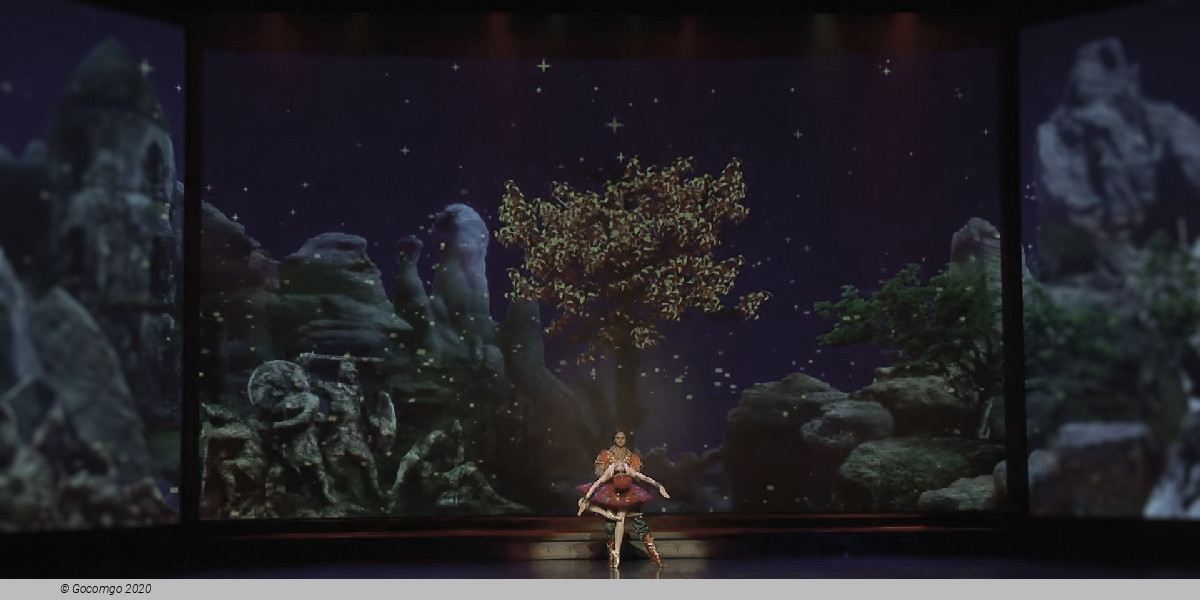
Amidst the crags, on a mountain-top lies the castle of the wicked ruler Kashchei the Immortal. So that no-one gets near Kashchei or abducts his captive fair maidens, and so that no-one steals the golden fruits from the enchanted garden, the castle is surrounded by a fretted golden railing and the garden by a high stone wall.
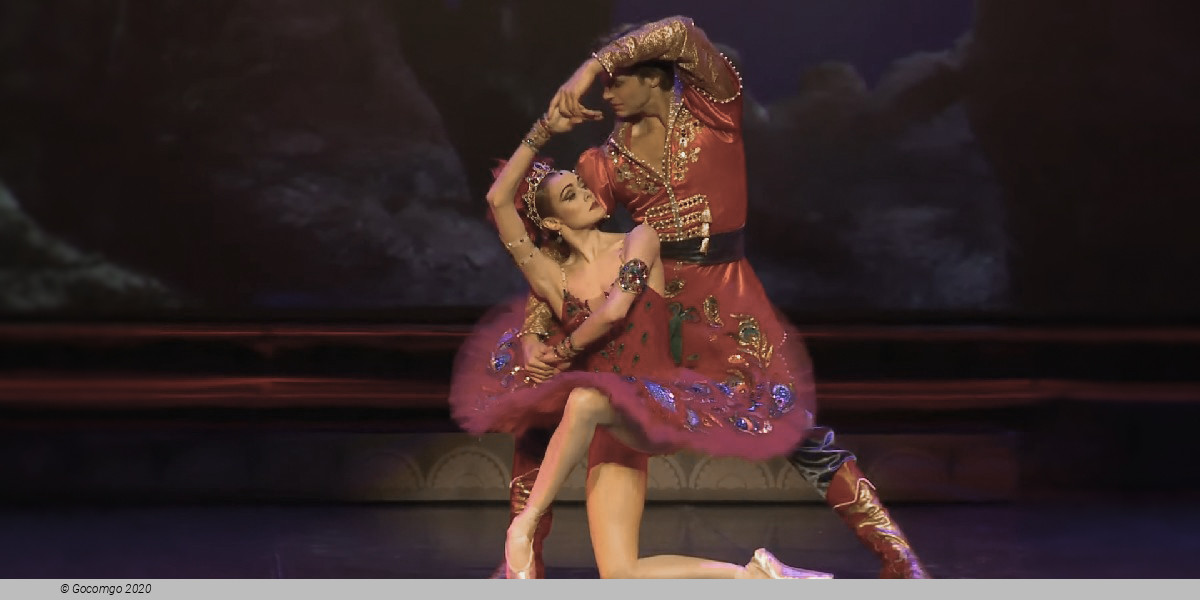
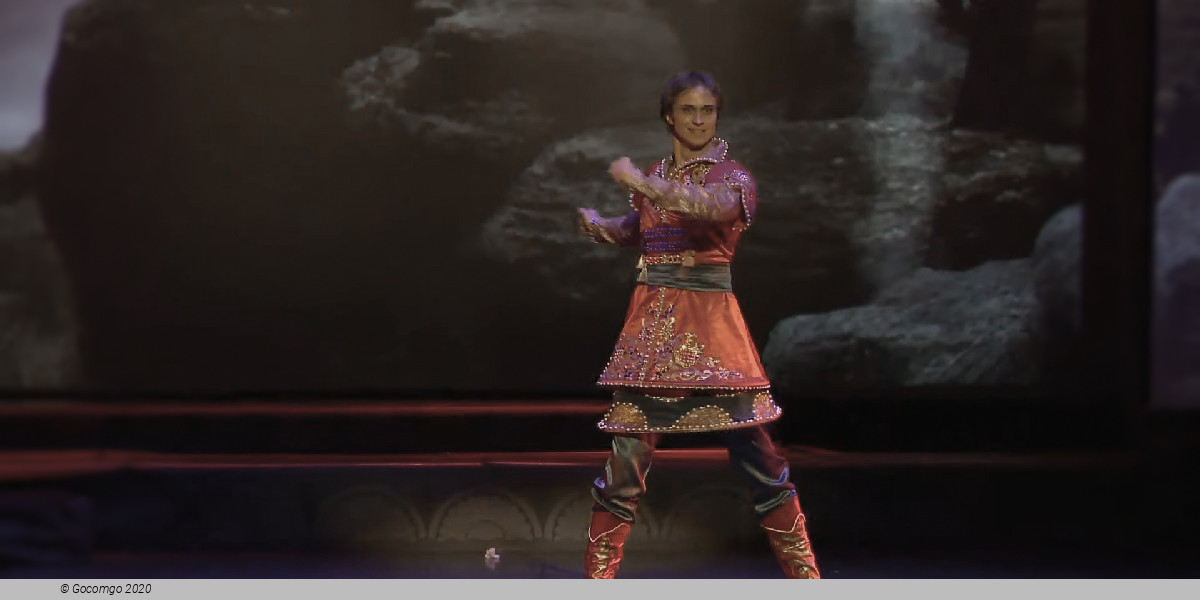
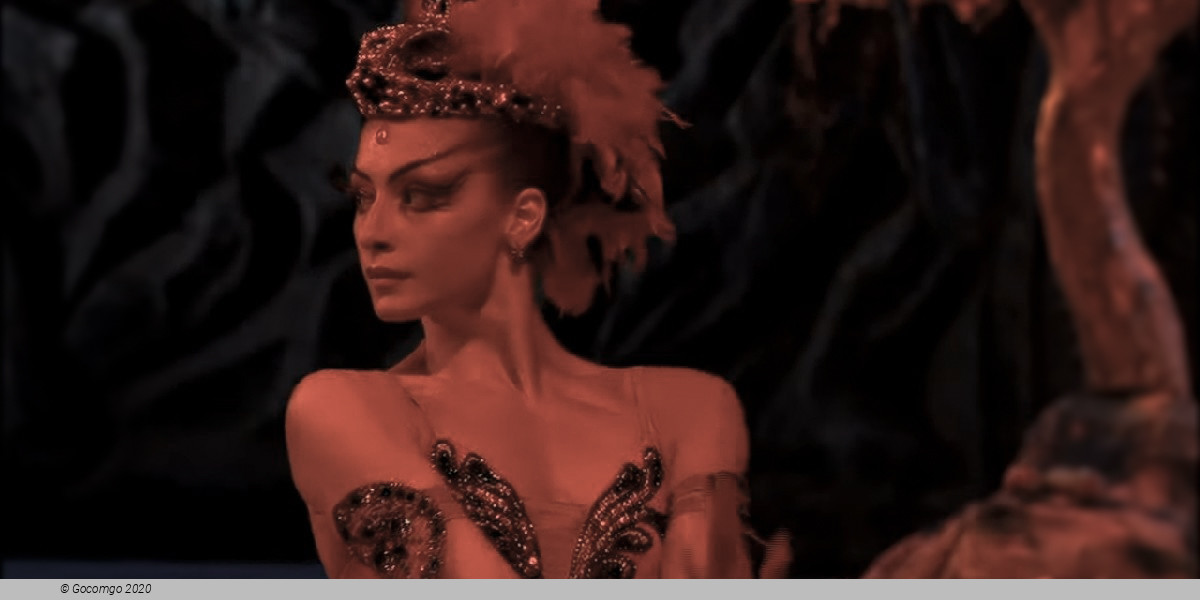
The Firebird flies around the garden. Chasing the bird, Ivan Tsarevich slips into the garden over the high stone defences.
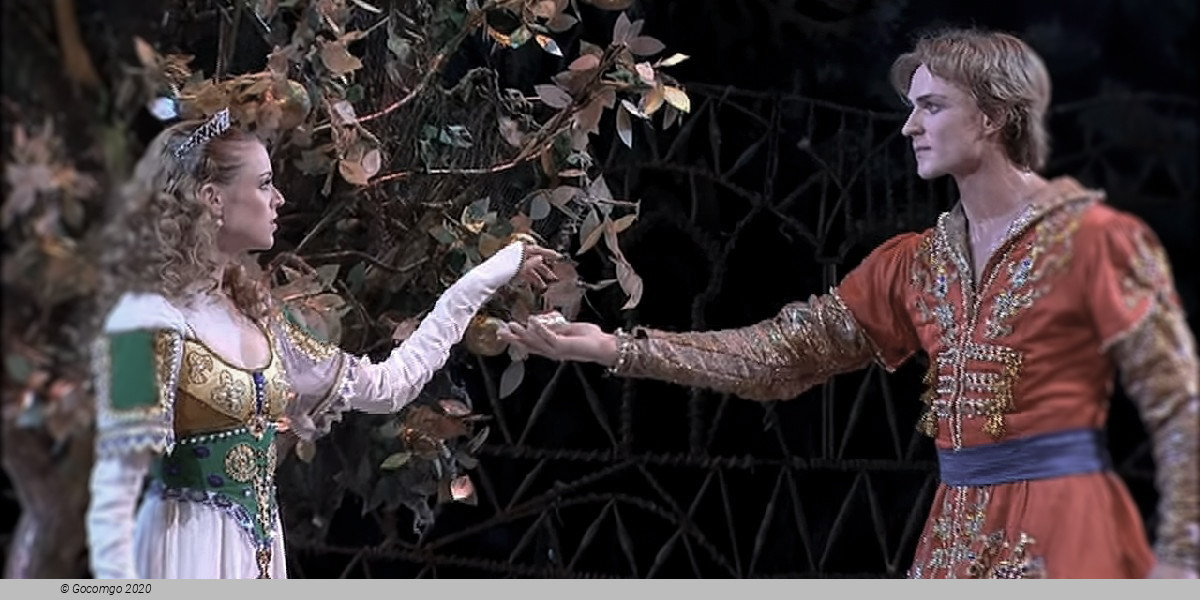
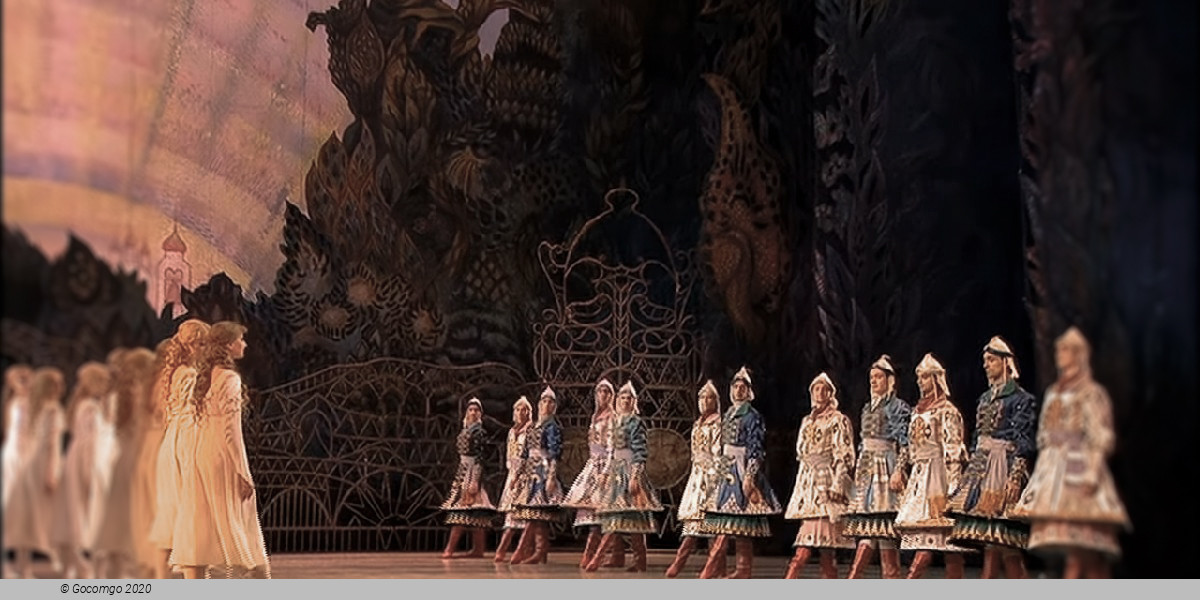
In the depths of the garden Ivan sees a veritable barrier of warriors who have been turned to stone. These are young men who have entered this perfidious kingdom in order to free and save their brides whom the evil Kashchei has abducted. All have died and now stand as immovable stones, covered in moss. And yet Ivan Tsarevich forgets these terrors as he has been dazzled by the Firebird. Initially he wishes to shoot her, but then decides to catch her alive. When the Firebird flies to the tree with golden apples and begins to peck at them, the tsarevich catches her. The bird trembles and beats her wings in his arms, begging to be set free. The tsarevich holds tight and does not let her go. But the bird asks so plaintively and groans so much that the kindly Ivan feels sorry for her. He sets the bird free, and in return she gives him one of her fiery feathers. "You will have need of this," the Firebird says before flying away. The tsarevich hides the feather in his bosom and wants to leave; he is creeping over the barrier when the castle doors open and twelve beautiful tsarevnas appear, followed by the most delightful of all – the Tsarevna of Great Beauty. Unbeknown to the wicked Kashchei, in the moonlight they run into the garden to frolic and play with the apples; the maidens do not see the tsarevich as they throw the apples to each other and laugh with glee. The Tsarevna of Great Beauty's apple lands in the shrubbery. She runs after it, but the tsarevich appears from the bushes and swears he will give her back the apple. The maidens are afraid and run away. But the tsarevich is very handsome, as well as courteous and modest. He has made a good impression on the maidens – particularly the Tsarevna of Great Beauty, and they allow him to join their games and round-dancing. They do not notice the dawn approaching.
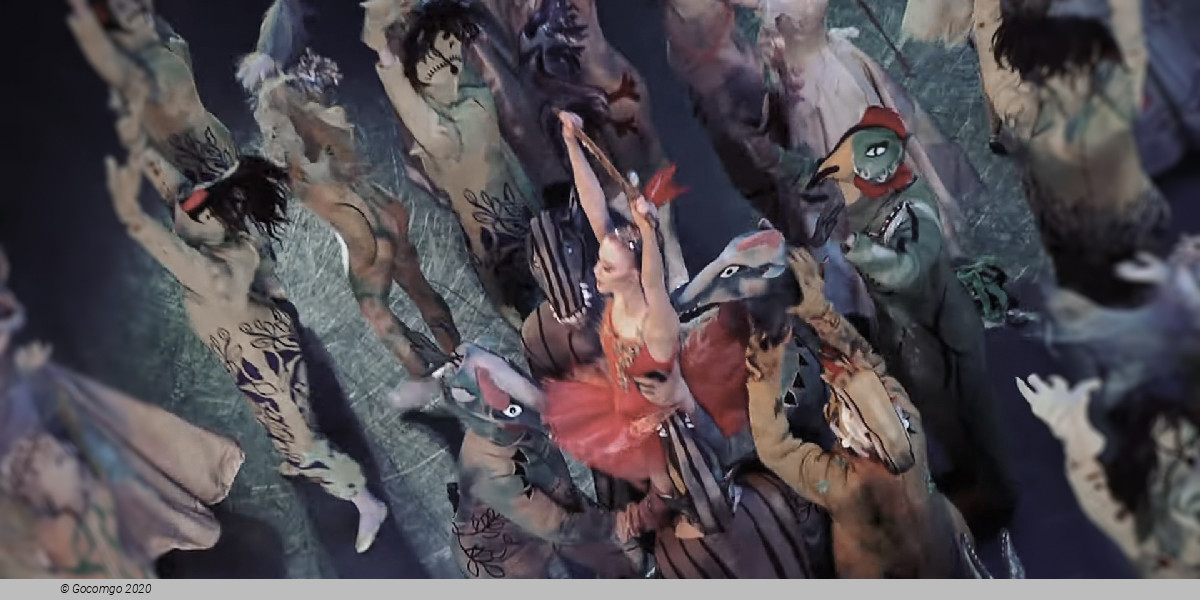
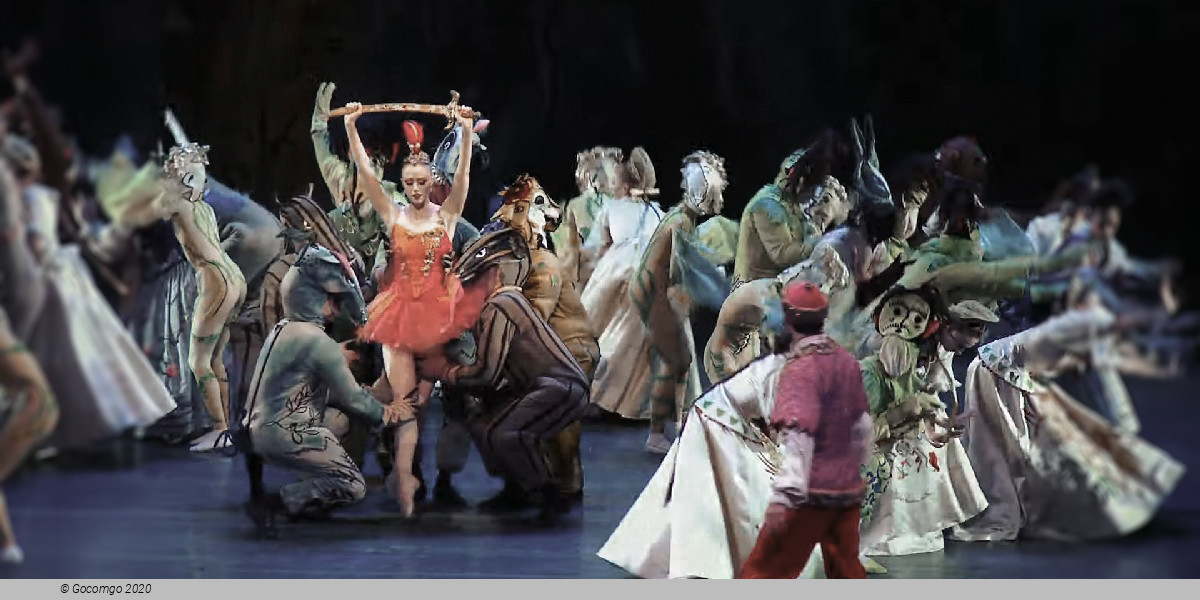
The sun emerges. Alarmed, the maidens flee into the castle. The tsarevich follows them. But the Tsarevna of Great Beauty stops him, warning that death awaits him if he passes through the golden gates; she closes them and runs away. But the tsarevich has so fallen in love with the Tsarevna of Great Beauty that he resolves to slip in after her; he fears nothing. As soon as he breaks open the gates with his sabre, magical bells ring out, the entire kingdom falls asleep, and coming down the mountain from the castle are all kinds of monsters, Kashchei's servants. They seize the tsarevich. Ivan is strong, and tries to shake off these repulsive beings, but the incalculable power of the evil kingdom clings to him and overpowers him. Kashchei himself appears – old and fearsome. He summons Ivan to interrogate him. The tsarevich subdues himself and doffs his cap, but as soon as he sees the wizard's ugly face he cannot stop himself – he spits. The whole evil kingdom cries out and snarls. They drag the tsarevich to the wall. The tsarevna runs in and begs the tsar to pardon Ivan, but Kashchei is already beginning to turn him to stone. Just as Ivan is dying he remembers the fiery feather. He grabs the feather and waves it, and the Firebird comes to his aid. She dazzles everyone, spins them all around and throws them into a dance. The monsters dance; they cannot resist. Tsar Kashchei himself dances. The Firebird exhausts them all till they drop to the ground and then flutters over them with a lullaby as they lie there. The monstrous creatures roll over on their sides and together with their tsar they fall asleep. The Firebird leads the tsarevich to a hollow in the tree. In the hollow is a casket, in the casket there is an egg and within the egg lies Kashchei's death. The tsarevich takes the egg and squeezes it – Kashchei is contorted with pain; as Ivan tosses the egg from one hand to the other, Kashchei flies in all directions; the egg smashes on the earth and Kashchei crumbles.
The perfidious kingdom vanishes. In its place a Christian city rises and the castle is transformed into a church. The petrified warriors come to life. Each of them finds his bride – the tsarevna for whom they came to the loathsome Kashchei and for whom he accepted a cruel death. Ivan Tsarevich also finds his beloved, the Tsarevna of Great Beauty. He declares her his wife – Tsaritsa of the liberated kingdom.
Michel Fokine

The ballet centers on the journey of its hero, Prince Ivan. While hunting in the forest, he strays into the magical realm of Koschei the Immortal, whose immortality is preserved by keeping his soul in a magic egg hidden in a casket. Ivan chases and captures the Firebird and is about to kill her; she begs for her life and he spares her. As a token of thanks, she offers him an enchanted feather that he can use to summon her should he be in dire need.

Prince Ivan then meets thirteen princesses who are under the spell of Koschei and falls in love with one of them. The next day, Ivan confronts the magician and eventually they begin quarrelling. When Koschei sends his minions after Ivan, he summons the Firebird. She intervenes, bewitching the monsters and making them dance an elaborate, energetic dance (the "Infernal Dance").

The creatures and Koschei then fall into a deep sleep. While they sleep, the Firebird directs Ivan to a tree stump where the casket with the egg containing Koschei's soul is hidden. Ivan destroys the egg and with the spell broken, the magical creatures that Koschei held captive are freed and the palace disappears. All of the "real" beings, including the princesses, awaken and with one final hint of the Firebird's music (though in Fokine's choreography she makes no appearance in that final scene on-stage), celebrate their victory.

Venue Info

Mariinsky Theatre - Saint Petersburg
Location   1 Theatre Square

The Mariinsky Theatre is a historic theatre of opera and ballet in Saint Petersburg, Russia. Opened in 1860, it became the preeminent music theatre of late 19th-century Russia, where many of the stage masterpieces of Tchaikovsky, Mussorgsky, and Rimsky-Korsakov received their premieres. Through most of the Soviet era, it was known as the Kirov Theatre. Today, the Mariinsky Theatre is home to the Mariinsky Ballet, Mariinsky Opera and Mariinsky Orchestra. Since Yuri Temirkanov's retirement in 1988, the conductor Valery Gergiev has served as the theatre's general director.

The theatre is named after Empress Maria Alexandrovna, wife of Tsar Alexander II. There is a bust of the Empress in the main entrance foyer. The theatre's name has changed throughout its history, reflecting the political climate of the time.

The theatre building is commonly called the Mariinsky Theatre. The companies that operate within it have for brand recognition purposes retained the Kirov name, acquired during the Soviet era to commemorate the assassinated Leningrad Communist Party leader Sergey Kirov (1886–1934).

The Imperial drama, opera and ballet troupe in Saint Petersburg was established in 1783, at the behest of Catherine the Great, although an Italian ballet troupe had performed at the Russian court since the early 18th century. Originally, the ballet and opera performances were given in the wooden Karl Knipper Theatre on Tsaritsa Meadow, near the present-day Tripartite Bridge (also known as the Little Theatre or the Maly Theatre). The Hermitage Theatre, next door to the Winter Palace, was used to host performances for an elite audience of aristocratic guests invited by the Empress.

A permanent theatre building for the new company of opera and ballet artists was designed by Antonio Rinaldi and opened in 1783. Known as the Imperial Bolshoi Kamenny Theatre the structure was situated on Carousel Square, which was renamed Theatre Square in honour of the building. Both names – "Kamenny" (Russian word for "stone") and "Bolshoi" (Russian word for "big") – were coined to distinguish it from the wooden Little Theatre. In 1836, the Bolshoi Kamenny Theatre was renovated to a design by Albert Cavos (son of Catterino Cavos, an opera composer), and served as the principal theatre of the Imperial Ballet and opera.

On 29 January 1849, the Equestrian circus (Конный цирк) opened on Theatre Square. This was also the work of the architect Cavos. The building was designed to double as a theatre. It was a wooden structure in the then-fashionable neo-Byzantine style. Ten years later, when this circus burnt down, Albert Cavos rebuilt it as an opera and ballet house with the largest stage in the world. With a seating capacity of 1,625 and a U-shaped Italian-style auditorium, the theatre opened on 2 October 1860, with a performance of A Life for the Tsar. The new theatre was named Mariinsky after its imperial patroness, Empress Maria Alexandrovna.

Under Yuri Temirkanov, Principal Conductor from 1976 to 1988, the Opera Company continued to stage innovative productions of both modern and classic Russian operas. Although functioning separately from the Theatre’s Ballet Company, since 1988 both companies have been under the artistic leadership of Valery Gergiev as Artistic Director of the entire Theatre.

The Opera Company has entered a new era of artistic excellence and creativity. Since 1993, Gergiev’s impact on opera there has been enormous. Firstly, he reorganized the company’s operations and established links with many of the world's great opera houses, including the Royal Opera House, Covent Garden, the Metropolitan Opera, the Opéra Bastille, La Scala, La Fenice, the Israeli Opera, the Washington National Opera and the San Francisco Opera. Today, the Opera Company regularly tours to most of these cities.

Gergiev has also been innovative as far as Russian opera is concerned: in 1989, there was an all-Mussorgsky festival featuring the composer’s entire operatic output. Similarly, many of Prokofiev’s operas were presented from the late 1990s. Operas by non-Russian composers began to be performed in their original languages, which helped the Opera Company to incorporate world trends. The annual international "Stars of the White Nights Festival" in Saint Petersburg, started by Gergiev in 1993, has also put the Mariinsky on the world’s cultural map. That year, as a salute to the imperial origins of the Mariinsky, Verdi's La forza del destino, which received its premiere in Saint Petersburg in 1862, was produced with its original sets, costumes and scenery. Since then, it has become a characteristic of the "White Nights Festival" to present the premieres from the company’s upcoming season during this magical period, when the hours of darkness practically disappear as the summer solstice approaches.

Presently, the Company lists on its roster 22 sopranos (of whom Anna Netrebko may be the best known); 13 mezzo-sopranos (with Olga Borodina familiar to US and European audiences); 23 tenors; eight baritones; and 14 basses. With Gergiev in charge overall, there is a Head of Stage Administration, a Stage Director, Stage Managers and Assistants, along with 14 accompanists.

Important Info
Type: Ballet
City: Saint Petersburg, Russia
Starts at: 12:00
Acts: 1
Duration: 50min
Top of page