
Mariinsky Theatre 22 April 2020 - Sylvia | GoComGo.com

Sylvia

Mariinsky Theatre, Mariinsky Theatre, Saint Petersburg, Russia
All photos (14)
Select date and time
7:30 PM
Request for Tickets
Important Info
Type: Ballet
City: Saint Petersburg, Russia
Starts at: 19:30
Acts: 3
Intervals: 2
Duration: 2h 30min

E-tickets: Print at home or at the box office of the event if so specified. You will find more information in your booking confirmation email.

You can only select the category, and not the exact seats.
If you order 2 or 3 tickets: your seats will be next to each other.
If you order 4 or more tickets: your seats will be next to each other, or, if this is not possible, we will provide a combination of groups of seats (at least in pairs, for example 2+2 or 2+3).

Overview

Ashton found the key to unlock Delibes’ magical music. He created an airy, impetuous, light and ironic ballet in which the element of dance reigns supreme, present in precise yet watercolour, weightless forms.
Ashton’s entire ballet is filled with the very nature of dance. Its most important quality is its dynamism. By the middle of the century world ballet had already adopted the experience of Balanchine’s modern classicism – and Ashton immersed the naive old plot into tempestuous series of dance that gave structure to the space, answered the spirit of the music and filled the whole with lively and intense energy.
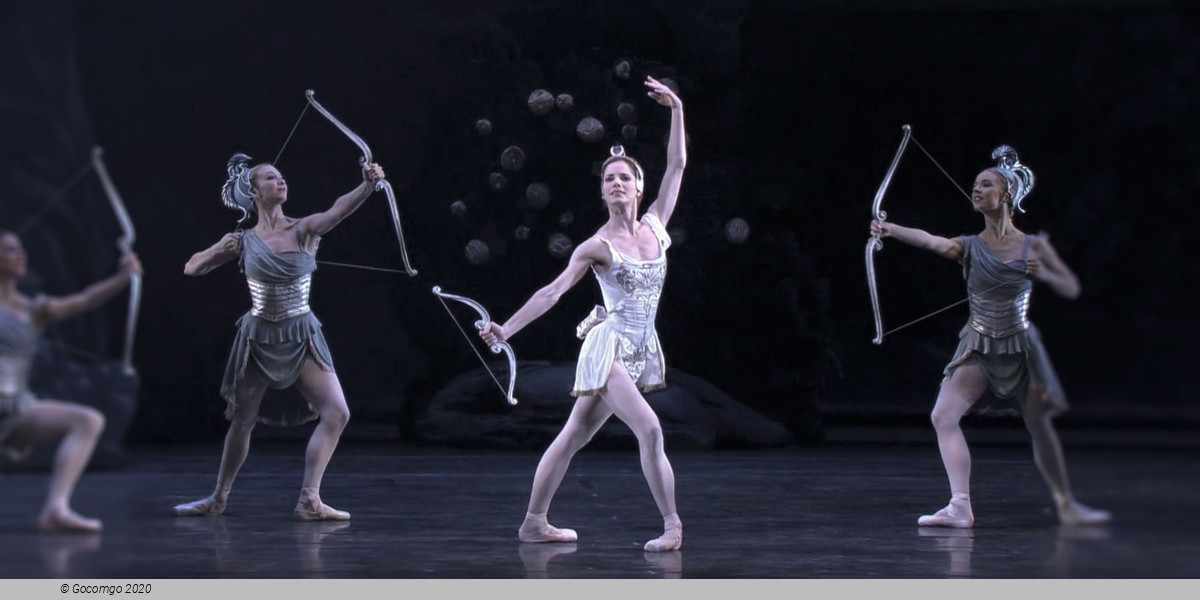
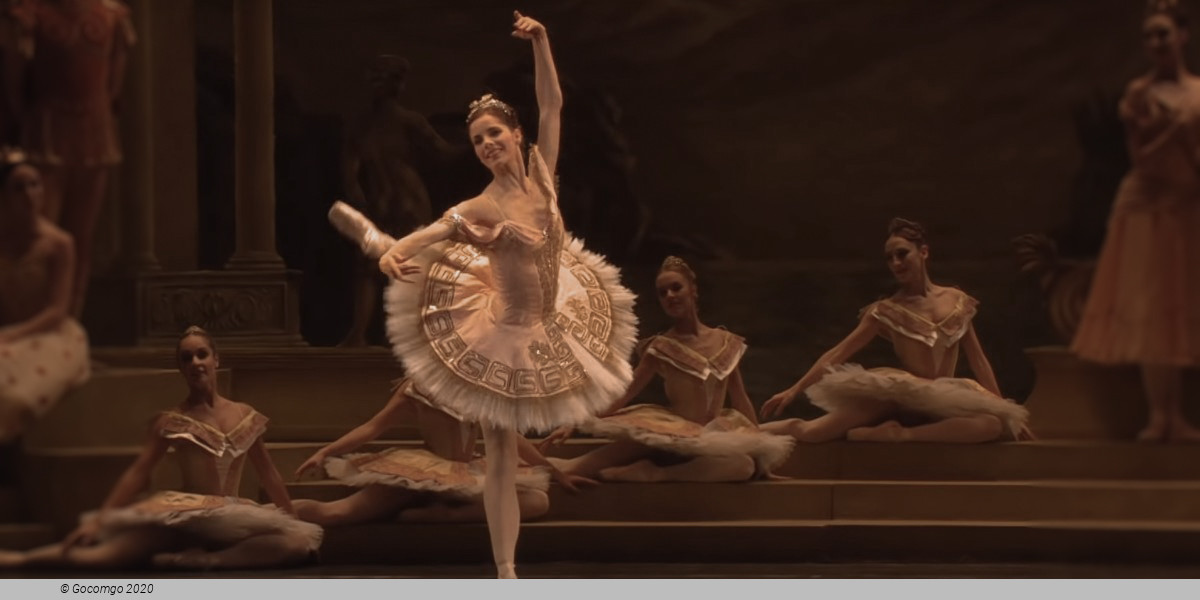
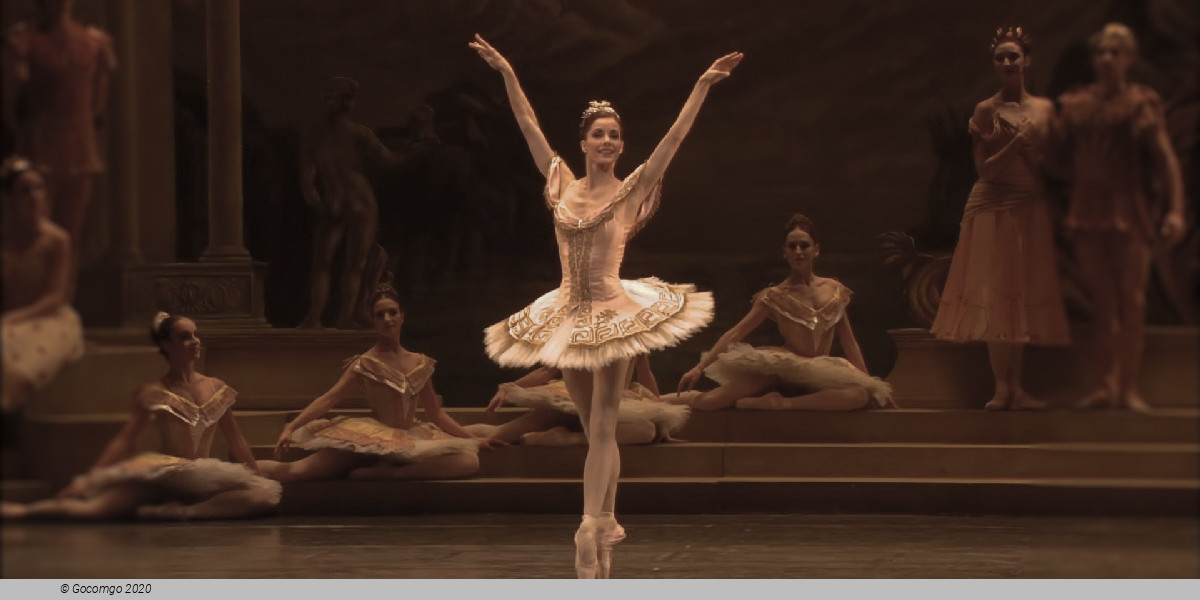
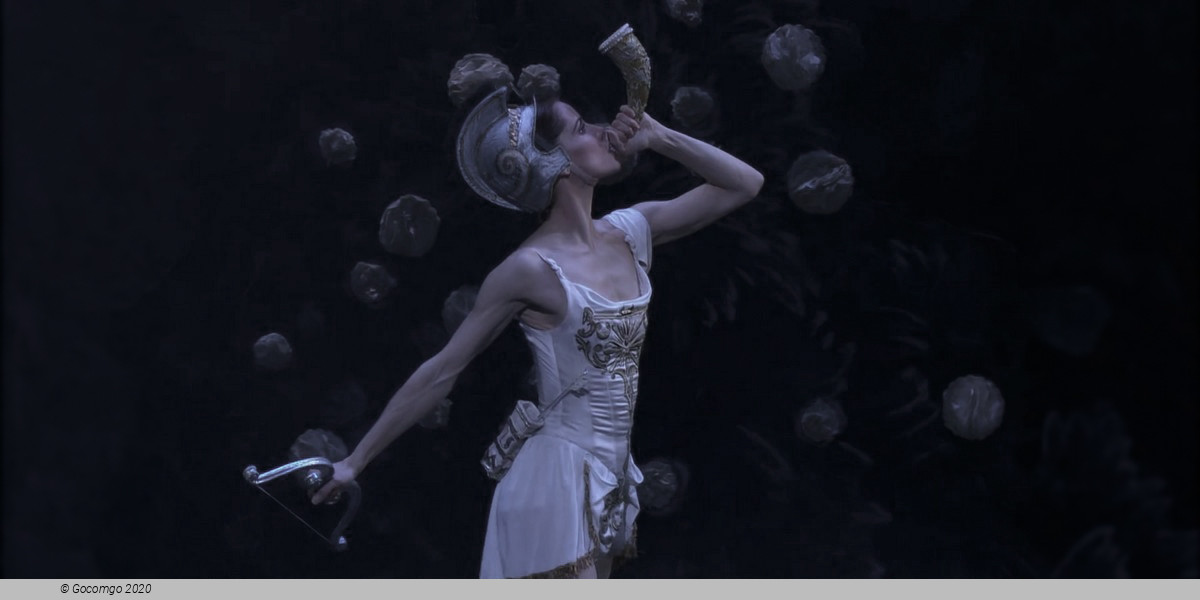
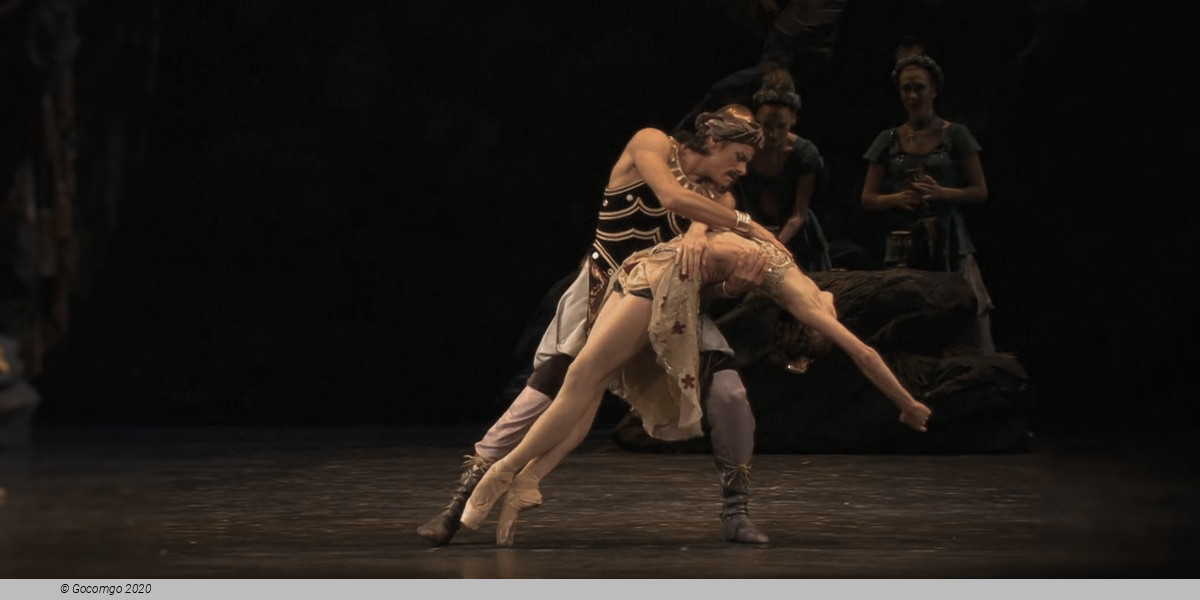
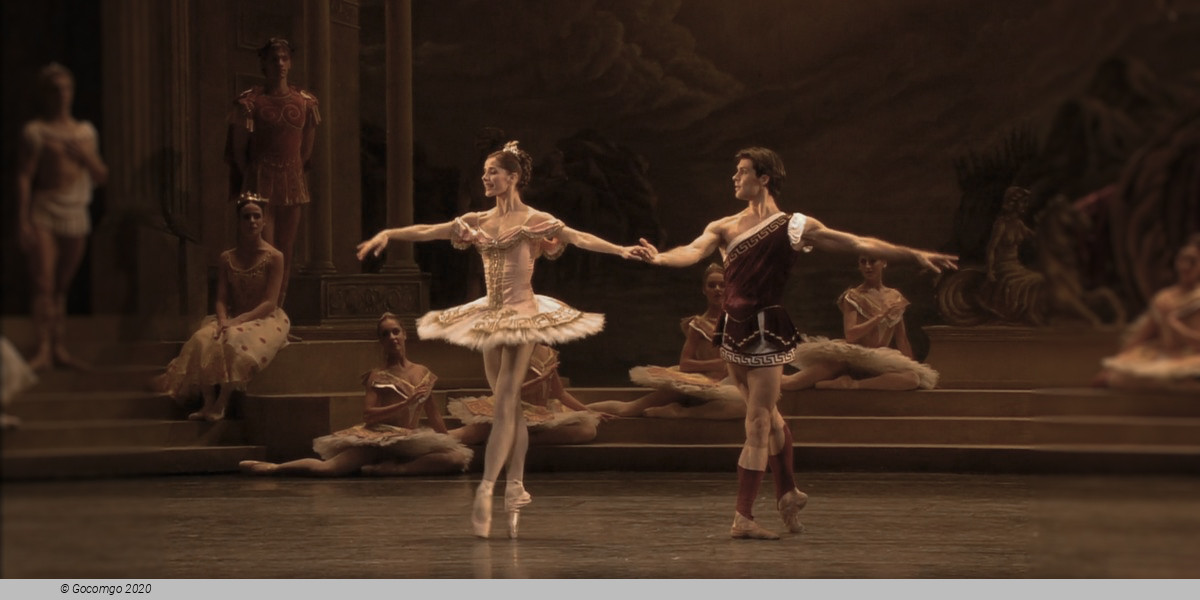
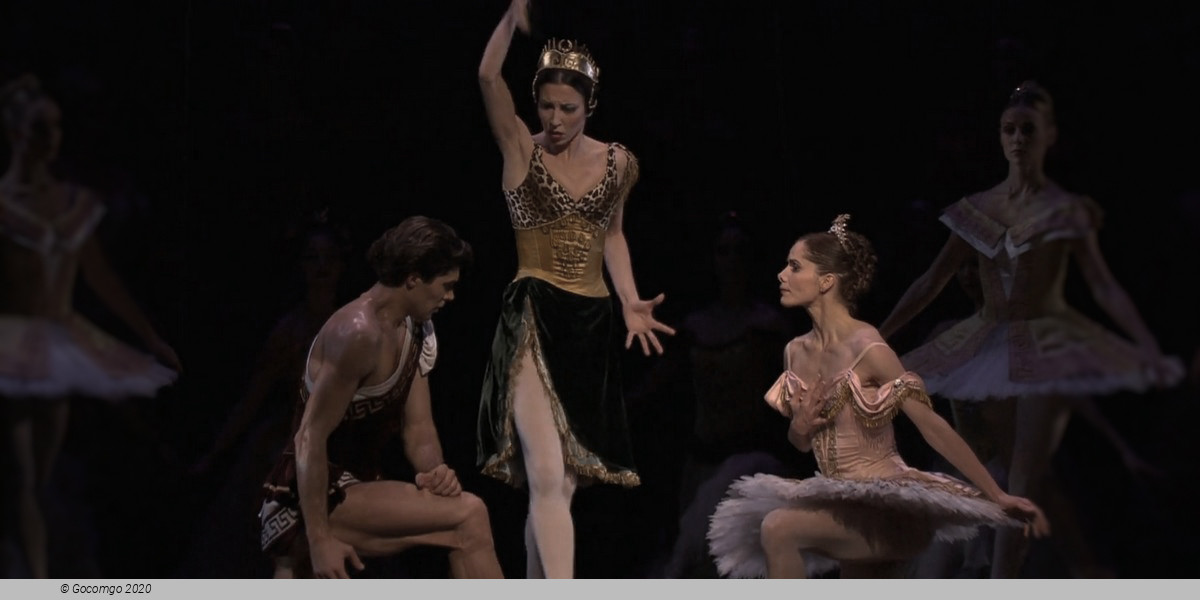
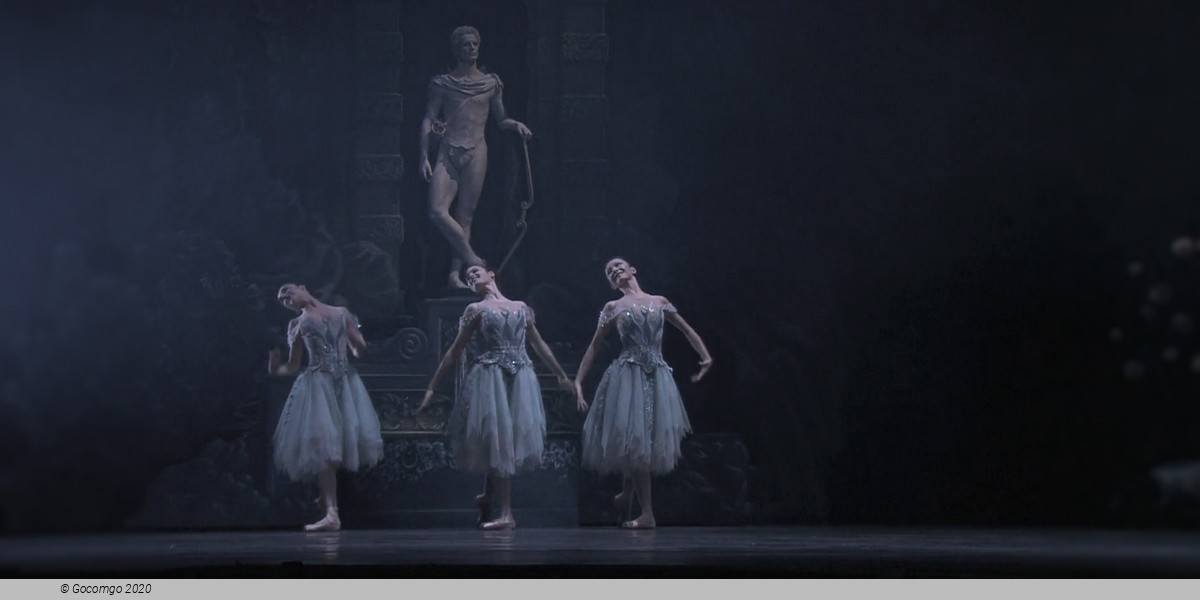
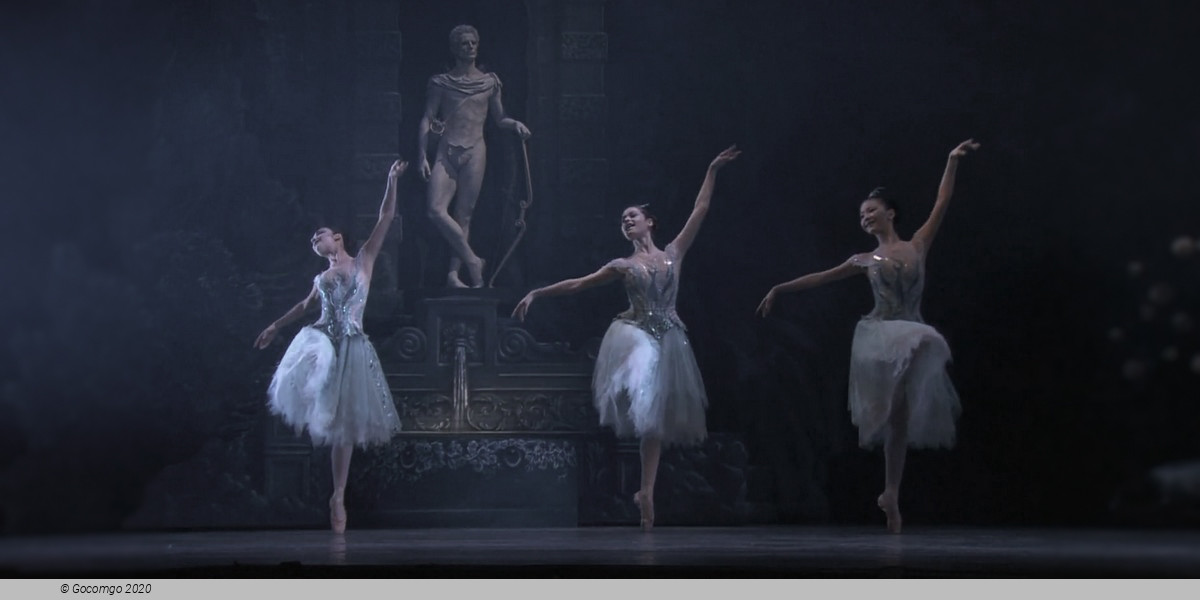
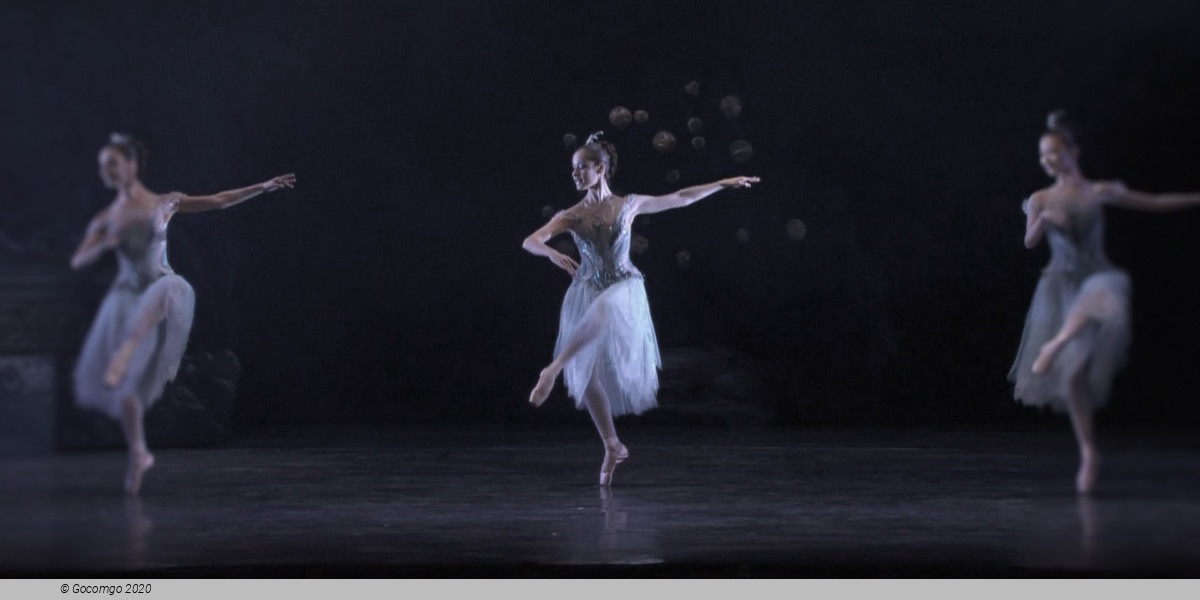
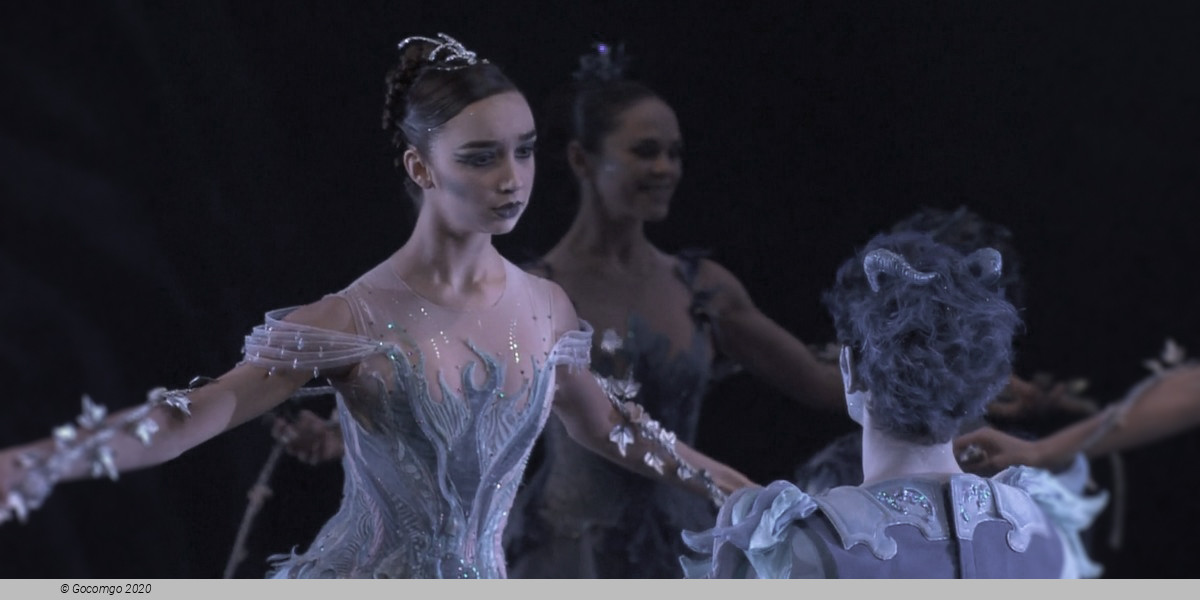
The ballet is structured as a series of dazzling ensembles into which the plot is woven with great wit. The ethereal ensemble of the dryads in long ballet tunics and the fauns who catch them with garlands of flowers, the dynamic ensemble of hunters in short tunics, army helmets and bows, the ensemble of villagers with rakes and wheelbarrows, each succeeding the last. And the story of how Aminta falls in love with Sylvia the huntress-nymph, how he is injured and revived by Eros who adopts the guise of a sorcerer, how Sylvia is abducted by the evil Orion and how she laughs at him and confuses him, is also totally suitable for dance and unfolds without reducing the generally flying pace. These plot scenes are full of refinement and wonderful choreographic humour – humour not just in the character’s behaviour, but also in how typical ballet movements are used and how the music is interpreted.
Sylvia is also a hymn to lightness. Even the terrifying Eros disguised as the old sorcerer in his hood and wide-brimmed hat, moving with a particular and light step – at one and the same time dancing and cat-like – resembles a commedia dell’arte performer. And the conflict of the two rivals – Aminta and Orion – which so resembles the conflict between Jean de Brienne and Abderakhman in the famous Raymonda is also resolved through lightness; the tender Aminta emerges victorious from all the peripeteia while the “masculine” Orion is shamed.
The image of Sylvia combines heroism (the bellicose dances of the hunters) and piquancy (the scene of Orion’s seduction), and elegance with dance passion (a variation to the music of the famous pizzicato).
Inna Sklyarevskaya

Ashton re-choreographed Sylvia in 1952. As the story goes, what sparked Ashton's interest in Sylvia was a dream he had in 1946. In the dream, Delibes charged Ashton with revitalizing his under-appreciated ballet and Ashton, upon waking, took up the task. The master choreographed Sylvia with a strong emphasis on the lead rôle; in fact he designed the entire ballet as a tribute to Margot Fonteyn, a dancer with whom he worked. Clive Barnes, an American drama critic, noted, "the whole ballet is a garland presented to the ballerina by her choreographer." This "garland" was produced by The Royal Ballet and it was first performed at The Royal Opera House in London on September 3, 1952. Ashton also tweaked Barbier's libretto for the premiere to maximize interest in the story.

History
Premiere of this production: 14 June 1876, Palais Garnier

Sylvia, originally Sylvia, ou La nymphe de Diane, is a full-length ballet in two or three acts, first choreographed by Louis Mérante to music by Léo Delibes in 1876. Sylvia is a typical classical ballet in many respects, yet it has many interesting features that make it unique. Sylvia is notable for its mythological Arcadian setting, creative choreographies, expansive sets and, above all, its remarkable score.

Synopsis

Act I
A sacred wood
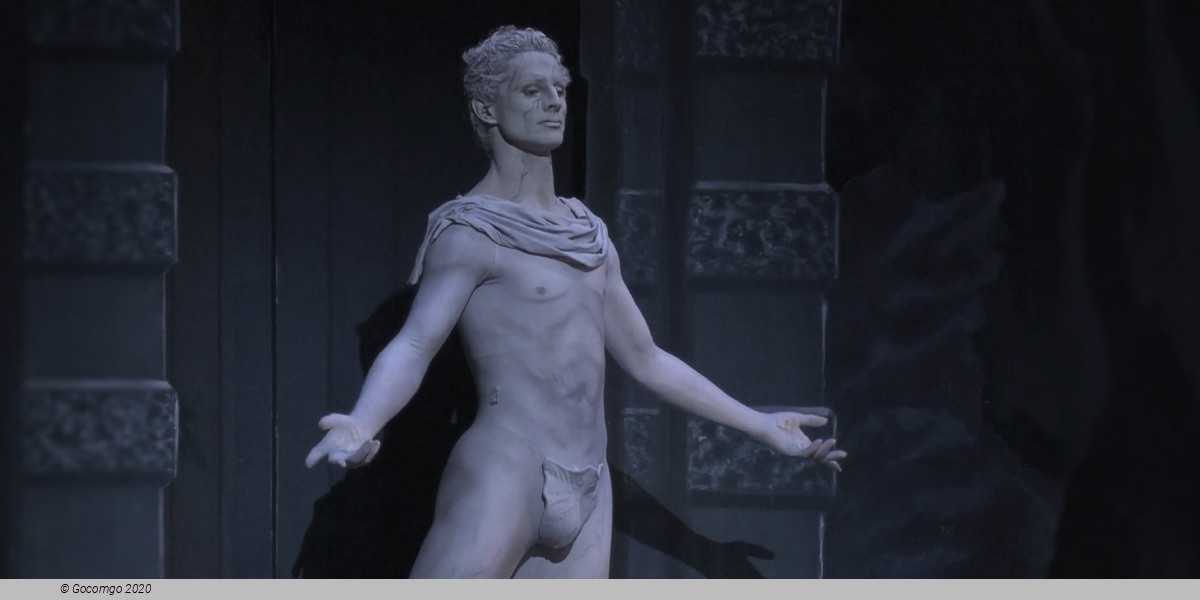
Woodland creatures dance in the moonlight before the shrine of Eros, the god of Love. They are interrupted by the arrival of the shepherd Aminta, who is in love with Sylvia. Hearing Sylvia and her attendants approaching, Aminta hides and watches them dance as they celebrate the success of their hunt. Sylvia, who as one of Diana’s nymphs has promised to renounce love, taunts the statue of Eros. Meanwhile Orion, the evil hunter, has also been secretly watching Sylvia and, inflamed by her beauty, is determined to possess her.
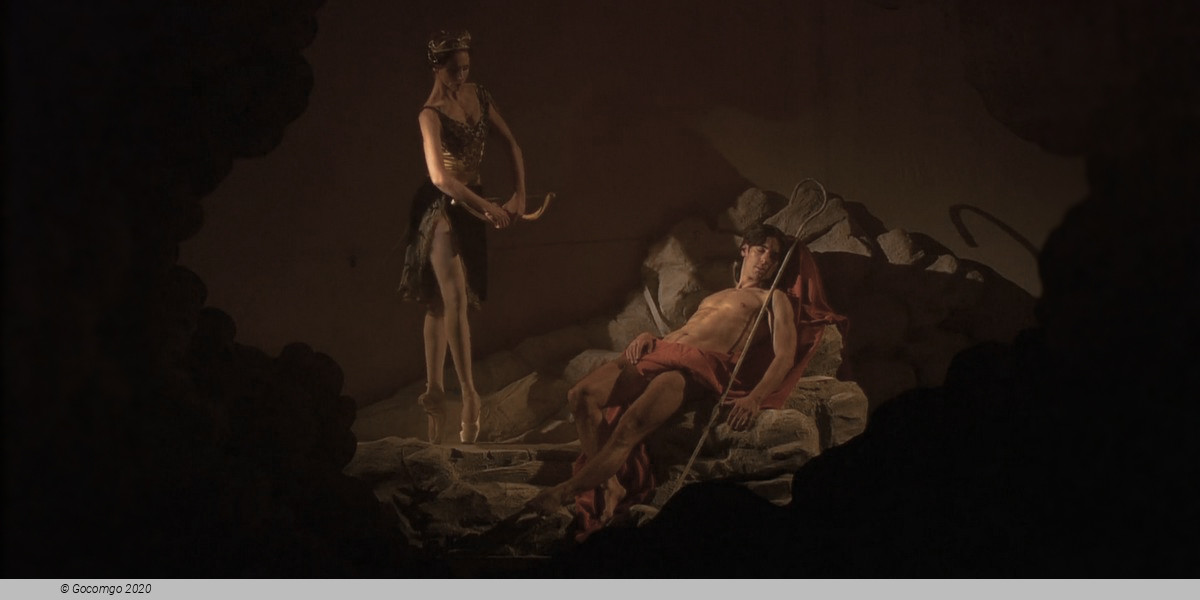
Aminta’s cloak is discovered and the shepherd is dragged from his hiding place. He declares his love for Sylvia, but she is outraged and, blaming the mischievous Eros, draws her bow at the god. Aminta, shielding the statue, is pierced to the heart by Sylvia’s arrow. Eros retaliates by shooting Sylvia. Shaken, she removes the arrow from her heart and leaves with her companions.
Peasants, on their way to the fields, dance in honour of Eros. As they leave, Orion enters and gloats over the body of Aminta. He is interrupted by the return of Sylvia who, having been pierced to the heart by Eros’ arrow, now mourns the dead Aminta. Emerging from his hiding place, Orion captures Sylvia and carries her off to his island cave.
A peasant, having witnessed Sylvia’s abduction, calls his friends back and they too weep over Aminta’s body. A strange cloaked figure appears among them, and they ask for his help. He picks a flower from a nearby bush and, pressing the petals to Aminta’s lips, brings him back to life. Aminta thanks the stranger who then tells him of Sylvia’s abduction. As the peasants find her bow the stranger reveals himself as Eros and sends Aminta in search of Sylvia.

Act II
Orion’s island cave
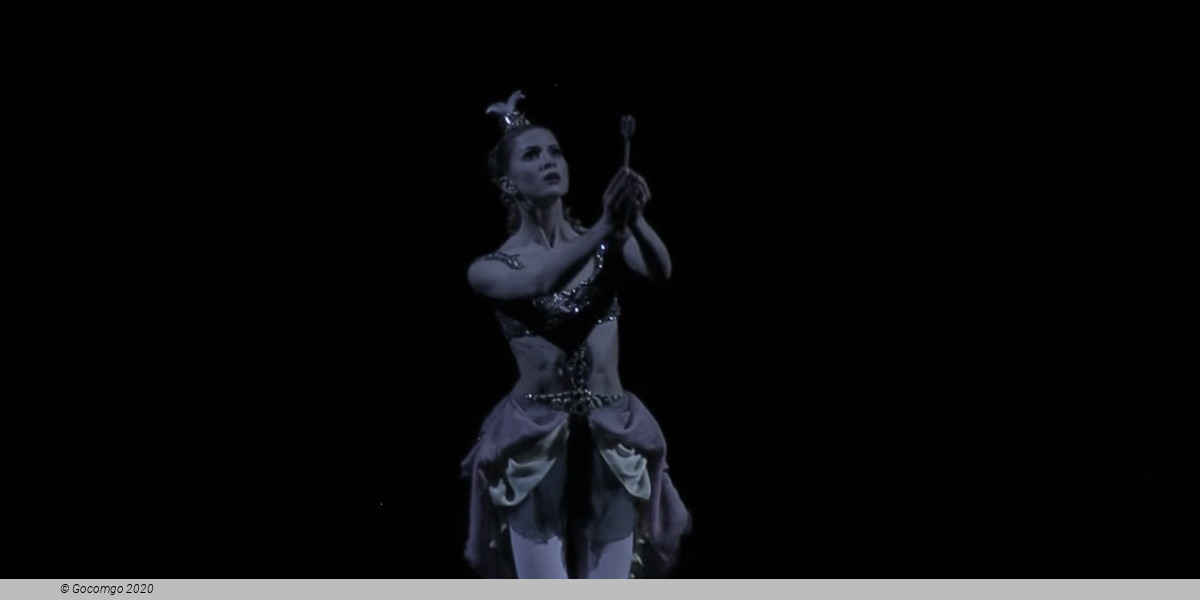
Orion tries in vain to gain Sylvia’s affections by tempting her with jewels and fine clothes. She is reminded of her love for Aminta by Eros’ arrow, but as she attempts to escape, Orion takes it from her. He offers her wine. In order to evade his advances, she encourages him to drink and dances for him until he falls senseless. She retrieves the arrow and prays to Eros for help. The god appears, shows Sylvia a vision of Aminta waiting for her by Diana’s temple, then takes her to be reunited with him.

Act III
The sea coast near the temple of Diana
A festival in honour of the god Bacchus is interrupted by the arrival of Aminta in search of Sylvia. He hopes to find her in Diana’s temple but is met by closed doors. He sees a boat approaching with Eros, Sylvia and her attendants on board, and Eros reunites the lovers.
The general rejoicing is interrupted by Orion, determined to recapture Sylvia. She takes refuge in the temple and, after a fight with Aminta, Orion tries to break in. Enraged by the intrusion, Diana appears and kills him. Her anger is now directed at the lovers and she forbids their union. Eros reminds Diana that she herself was once infatuated with a simple shepherd, Endymion. She relents and gives the lovers her blessing.

Venue Info

Mariinsky Theatre - Saint Petersburg
Location   1 Theatre Square

The Mariinsky Theatre is a historic theatre of opera and ballet in Saint Petersburg, Russia. Opened in 1860, it became the preeminent music theatre of late 19th-century Russia, where many of the stage masterpieces of Tchaikovsky, Mussorgsky, and Rimsky-Korsakov received their premieres. Through most of the Soviet era, it was known as the Kirov Theatre. Today, the Mariinsky Theatre is home to the Mariinsky Ballet, Mariinsky Opera and Mariinsky Orchestra. Since Yuri Temirkanov's retirement in 1988, the conductor Valery Gergiev has served as the theatre's general director.

The theatre is named after Empress Maria Alexandrovna, wife of Tsar Alexander II. There is a bust of the Empress in the main entrance foyer. The theatre's name has changed throughout its history, reflecting the political climate of the time.

The theatre building is commonly called the Mariinsky Theatre. The companies that operate within it have for brand recognition purposes retained the Kirov name, acquired during the Soviet era to commemorate the assassinated Leningrad Communist Party leader Sergey Kirov (1886–1934).

The Imperial drama, opera and ballet troupe in Saint Petersburg was established in 1783, at the behest of Catherine the Great, although an Italian ballet troupe had performed at the Russian court since the early 18th century. Originally, the ballet and opera performances were given in the wooden Karl Knipper Theatre on Tsaritsa Meadow, near the present-day Tripartite Bridge (also known as the Little Theatre or the Maly Theatre). The Hermitage Theatre, next door to the Winter Palace, was used to host performances for an elite audience of aristocratic guests invited by the Empress.

A permanent theatre building for the new company of opera and ballet artists was designed by Antonio Rinaldi and opened in 1783. Known as the Imperial Bolshoi Kamenny Theatre the structure was situated on Carousel Square, which was renamed Theatre Square in honour of the building. Both names – "Kamenny" (Russian word for "stone") and "Bolshoi" (Russian word for "big") – were coined to distinguish it from the wooden Little Theatre. In 1836, the Bolshoi Kamenny Theatre was renovated to a design by Albert Cavos (son of Catterino Cavos, an opera composer), and served as the principal theatre of the Imperial Ballet and opera.

On 29 January 1849, the Equestrian circus (Конный цирк) opened on Theatre Square. This was also the work of the architect Cavos. The building was designed to double as a theatre. It was a wooden structure in the then-fashionable neo-Byzantine style. Ten years later, when this circus burnt down, Albert Cavos rebuilt it as an opera and ballet house with the largest stage in the world. With a seating capacity of 1,625 and a U-shaped Italian-style auditorium, the theatre opened on 2 October 1860, with a performance of A Life for the Tsar. The new theatre was named Mariinsky after its imperial patroness, Empress Maria Alexandrovna.

Under Yuri Temirkanov, Principal Conductor from 1976 to 1988, the Opera Company continued to stage innovative productions of both modern and classic Russian operas. Although functioning separately from the Theatre’s Ballet Company, since 1988 both companies have been under the artistic leadership of Valery Gergiev as Artistic Director of the entire Theatre.

The Opera Company has entered a new era of artistic excellence and creativity. Since 1993, Gergiev’s impact on opera there has been enormous. Firstly, he reorganized the company’s operations and established links with many of the world's great opera houses, including the Royal Opera House, Covent Garden, the Metropolitan Opera, the Opéra Bastille, La Scala, La Fenice, the Israeli Opera, the Washington National Opera and the San Francisco Opera. Today, the Opera Company regularly tours to most of these cities.

Gergiev has also been innovative as far as Russian opera is concerned: in 1989, there was an all-Mussorgsky festival featuring the composer’s entire operatic output. Similarly, many of Prokofiev’s operas were presented from the late 1990s. Operas by non-Russian composers began to be performed in their original languages, which helped the Opera Company to incorporate world trends. The annual international "Stars of the White Nights Festival" in Saint Petersburg, started by Gergiev in 1993, has also put the Mariinsky on the world’s cultural map. That year, as a salute to the imperial origins of the Mariinsky, Verdi's La forza del destino, which received its premiere in Saint Petersburg in 1862, was produced with its original sets, costumes and scenery. Since then, it has become a characteristic of the "White Nights Festival" to present the premieres from the company’s upcoming season during this magical period, when the hours of darkness practically disappear as the summer solstice approaches.

Presently, the Company lists on its roster 22 sopranos (of whom Anna Netrebko may be the best known); 13 mezzo-sopranos (with Olga Borodina familiar to US and European audiences); 23 tenors; eight baritones; and 14 basses. With Gergiev in charge overall, there is a Head of Stage Administration, a Stage Director, Stage Managers and Assistants, along with 14 accompanists.

Important Info
Type: Ballet
City: Saint Petersburg, Russia
Starts at: 19:30
Acts: 3
Intervals: 2
Duration: 2h 30min
Top of page