








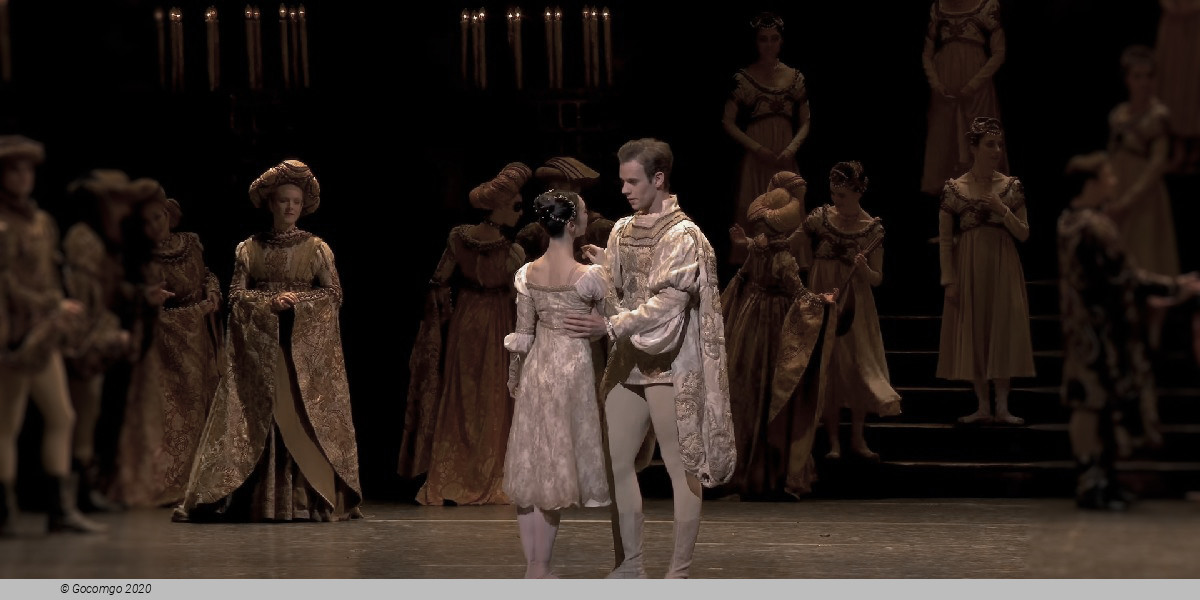
Mariinsky Theatre 3 June 2023 - Romeo and Juliet. Tour of the Perm Opera and Ballet Theater | GoComGo.com

Romeo and Juliet. Tour of the Perm Opera and Ballet Theater

Mariinsky Theatre, Mariinsky II, Saint Petersburg, Russia
All photos (7)
Select date and time
6 PM
Request for Tickets
Important Info
Type: Ballet
City: Saint Petersburg, Russia
Starts at: 18:00
Acts: 3
Intervals: 2
Duration: 3h 15min

E-tickets: Print at home or at the box office of the event if so specified. You will find more information in your booking confirmation email.

You can only select the category, and not the exact seats.
If you order 2 or 3 tickets: your seats will be next to each other.
If you order 4 or more tickets: your seats will be next to each other, or, if this is not possible, we will provide a combination of groups of seats (at least in pairs, for example 2+2 or 2+3).

Festival

Stars of the White Nights Festival 2023

"Stars of the White Nights": bright events of the big summer festival in the Mariinsky.

Overview

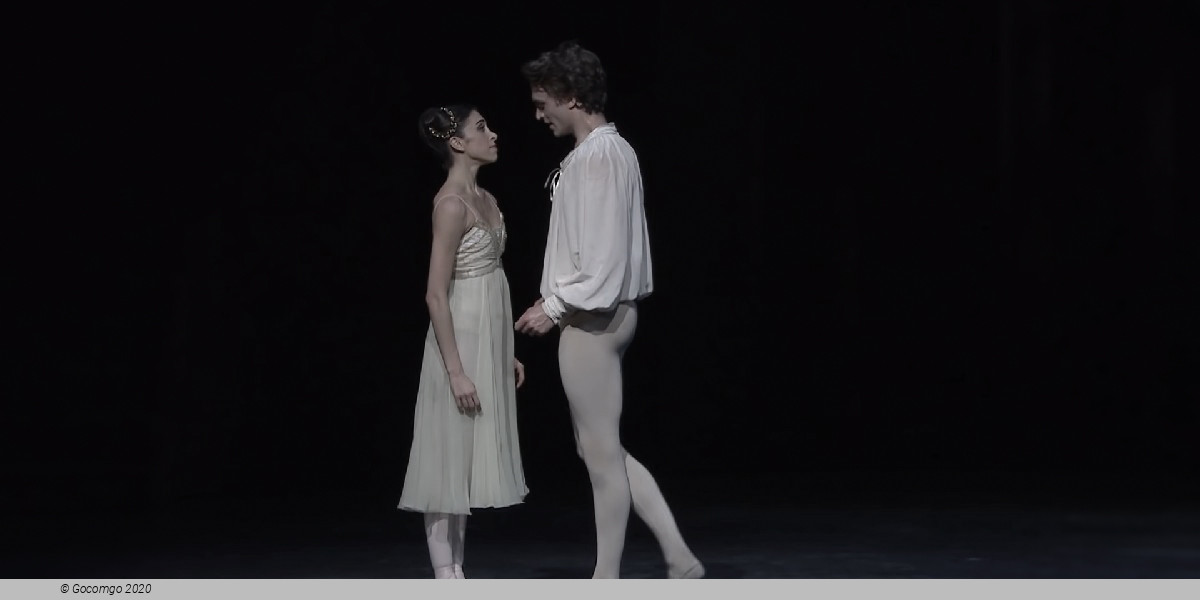
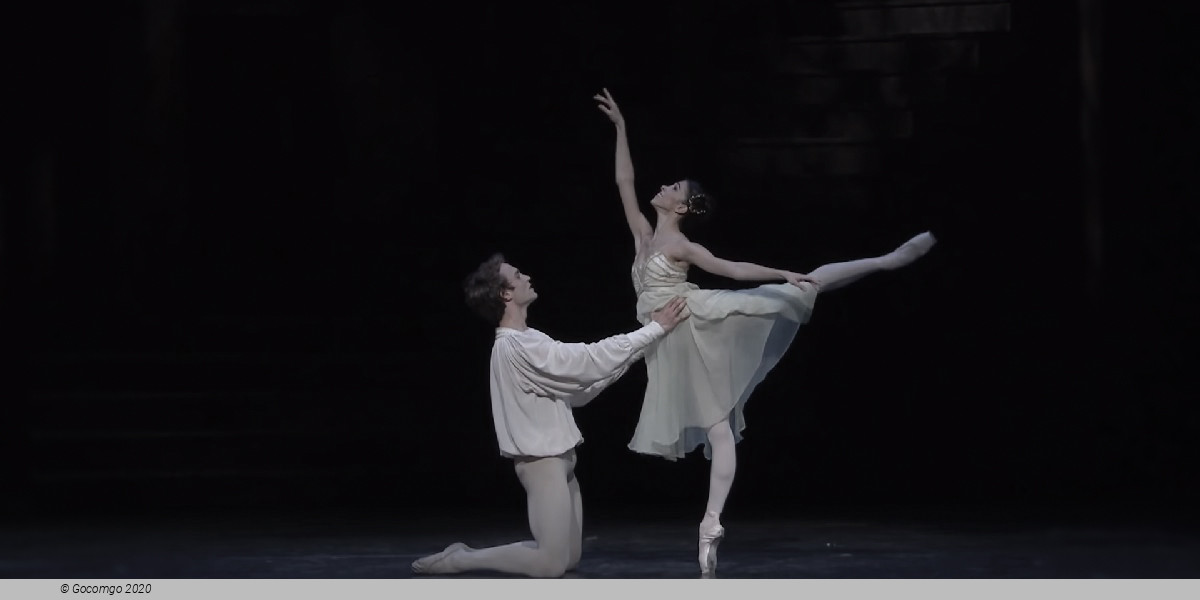
Thanks to Prokofiev's unfading music, "The Saddest Tale in the World" received about a hundred ballet interpretations.

Two of them have become canonical - the Soviet choreographer Leonid Lavrovsky (Leningrad Academic Opera and Ballet Theater named after S. M. Kirov, 1940) and the British classic Kenneth Macmillan (Royal Theater in Covent Garden, 1965).

Sir Kenneth Macmillan revolutionized story ballet, elevating it to the level of psychological theater without depriving the choreography of ingenuity. In 1965, Romeo-Rudolf Nureyev and Juliet-Margot Fonteyn shone on stage at the premiere in London. The audience called them to bow 43 times, and the applause thundered for almost 40 minutes. The Perm Ballet Company is the first among Russian dance companies to present a masterpiece that the British are no less proud of than the Russians - Swan Lake.

History
Premiere of this production: 30 November 1937, Mahen Theatre, Brno

Romeo and Juliet is a ballet by Sergei Prokofiev based on William Shakespeare's play Romeo and Juliet. Prokofiev reused music from the ballet in three suites for orchestra and a solo piano work.

Synopsis

Act I

Scene 1 ‑ The Market place

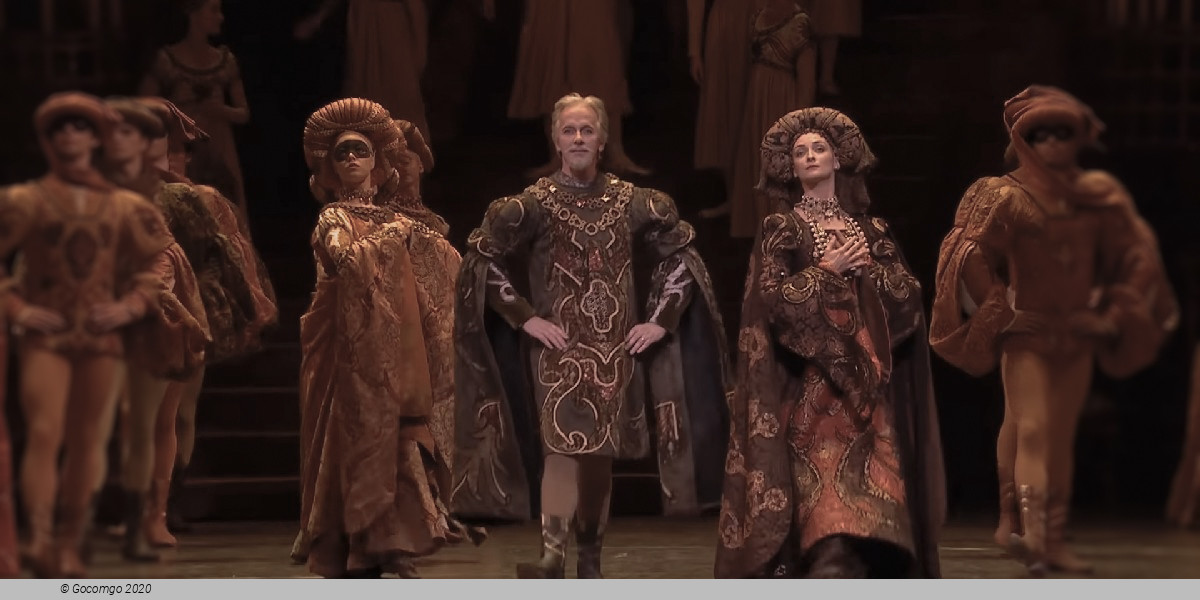
The scene is Verona.  Romeo, son of Montague, tries unsuccessfully to declare his love for Rosaline and is consoled by his friends Mercutio and Benvolio.  As day breaks the townspeople meet in the market place, a quarrel develops between Tybalt, a nephew of Capulet, and Romeo and his friends.  The Capulets and Montagues are sworn enemies and a fight soon begins.  The Lords Montague and Capulet join in the fray, which is stopped by the appearance of the Prince of Verona who commands the families to end their feud.

Scene 2 ‑ Juliet’s ante‑room in the Capulets’ house 

Juliet, playing with her nurse, is interrupted by her parents Lord and Lady Capulet.  They present her to Paris, a wealthy young nobleman who has asked for her hand in marriage.

Scene 3 ‑ Outside the Capulet’s house 

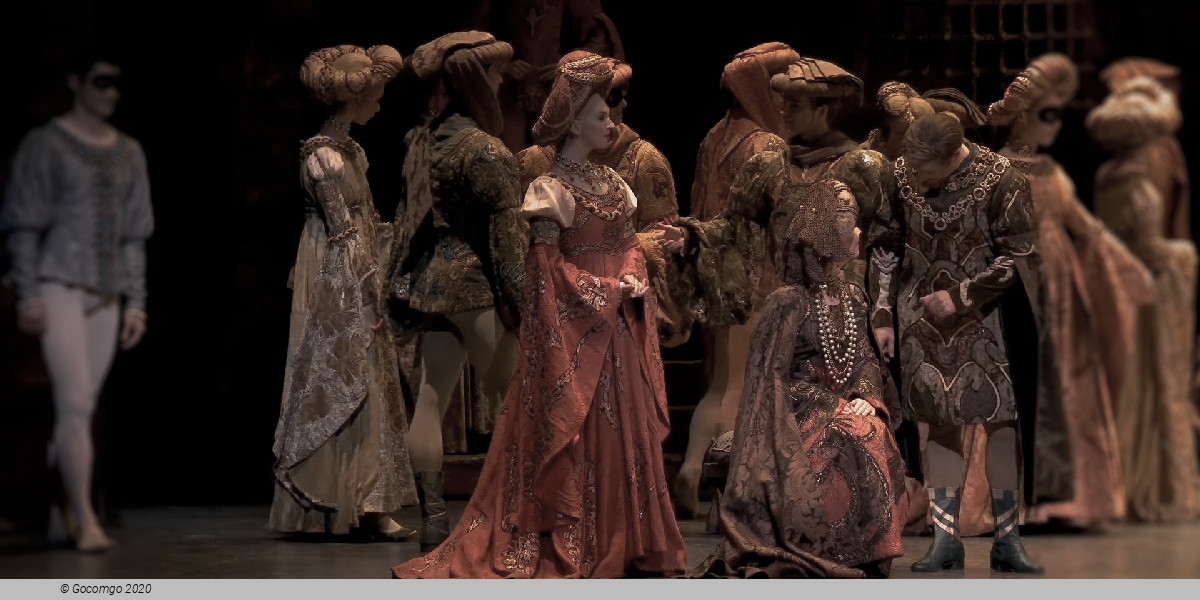
Guests arrive for a ball at the Capulets’ house.  Romeo, Mercutio and Benvolio, disguised in masks, decide to go in pursuit of Rosaline.

Scene 4 ‑ The ballroom

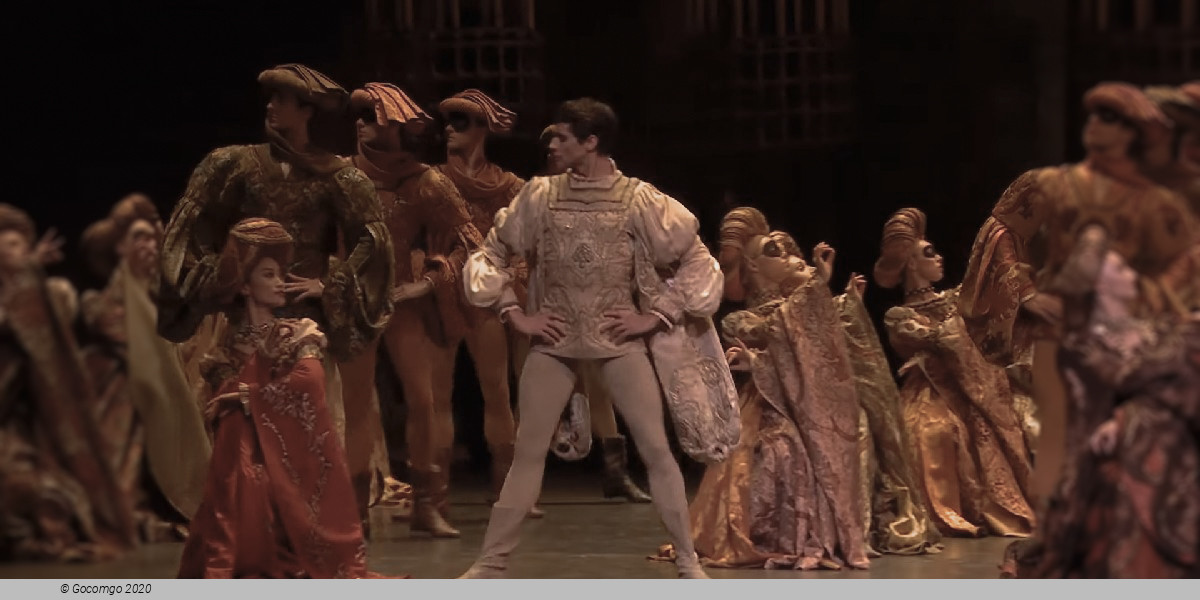
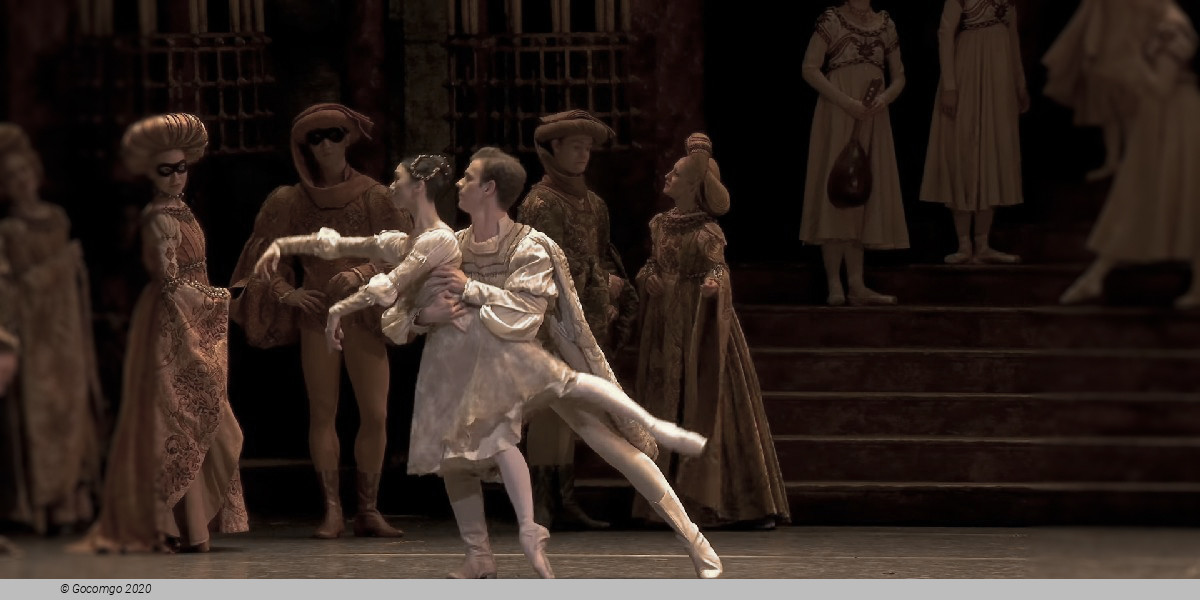
Romeo and his friends arrive at the height of the festivities.  The guests watch Juliet dance.  Mercutio, seeing Romeo is entranced by her, dances to distract attention from him.  Tybalt recognizes Romeo and orders him to leave, but Capulet intervenes and welcomes him as a guest in his house.

Scene 5 ‑ Outside the Capulets’ house

As the guests leave the ball Capulet restrains Tybalt from pursuing Romeo.

Scene 6 ‑ Juliet’s balcony

Unable to sleep, Juliet comes out on to her balcony and is thinking of Romeo, when suddenly he appears in the garden.  They confess their love for each other.

Act II

Scene 1 ‑ The Market place

Romeo can think only of Juliet, and as a wedding procession passes, he dreams of the day when he will marry her.  In the meantime Juliet’s nurse pushes her way through the crowds in search of Romeo to give him a letter from Juliet.  He reads that Juliet has consented to be his wife.

Scene 2 ‑ The chapel

The lovers are secretly married by Friar Laurence who hopes that their union will end the strife between the Montagues and the Capulets.

Scene 3 ‑ The market place

Interrupting the revelry, Tybalt fights with Mercutio and kills him.  Romeo avenges the death of his friend and is exiled.

Act III

Scene 1 ‑ The bedroom

At dawn next morning the household is stirring and Romeo must go.  He embraces Juliet and leaves as her parents enter with Paris. Juliet refuses to marry Paris, and hurt by her rebuff, he leaves.  Juliet’s parents are angry and threaten to disown her.  Juliet rushes to see Friar Laurence.

Scene 2 ‑ The chapel

She falls at the Friar’s feet and begs for his help.  He gives her a phial of sleeping potion which will make her fall into a death‑like sleep.  Her parents, believing her dead, will bury her in the family tomb.  Meanwhile Romeo, warned by Friar Laurence, will return under cover of darkness and take her away from Verona.

Scene 3 ‑ The bedroom

That evening Juliet agrees to marry Paris, but next morning, where her parents arrive with him they find her apparently lifeless on the bed.

Scene 4 ‑ The Capulet family crypt

Romeo, failing to receive the Friar’s message, returns to Verona stunned by grief at the news of Juliet’s death.  Disguised as a monk he enters the crypt, and finding Paris by Juliet’s body, kills him.  Believing Juliet to be dead, Romeo drinks a phial of poison.  Juliet awakes and, finding Romeo dead, stabs herself.

Venue Info

Mariinsky Theatre - Saint Petersburg
Location   1 Theatre Square

The Mariinsky Theatre is a historic theatre of opera and ballet in Saint Petersburg, Russia. Opened in 1860, it became the preeminent music theatre of late 19th-century Russia, where many of the stage masterpieces of Tchaikovsky, Mussorgsky, and Rimsky-Korsakov received their premieres. Through most of the Soviet era, it was known as the Kirov Theatre. Today, the Mariinsky Theatre is home to the Mariinsky Ballet, Mariinsky Opera and Mariinsky Orchestra. Since Yuri Temirkanov's retirement in 1988, the conductor Valery Gergiev has served as the theatre's general director.

The theatre is named after Empress Maria Alexandrovna, wife of Tsar Alexander II. There is a bust of the Empress in the main entrance foyer. The theatre's name has changed throughout its history, reflecting the political climate of the time.

The theatre building is commonly called the Mariinsky Theatre. The companies that operate within it have for brand recognition purposes retained the Kirov name, acquired during the Soviet era to commemorate the assassinated Leningrad Communist Party leader Sergey Kirov (1886–1934).

The Imperial drama, opera and ballet troupe in Saint Petersburg was established in 1783, at the behest of Catherine the Great, although an Italian ballet troupe had performed at the Russian court since the early 18th century. Originally, the ballet and opera performances were given in the wooden Karl Knipper Theatre on Tsaritsa Meadow, near the present-day Tripartite Bridge (also known as the Little Theatre or the Maly Theatre). The Hermitage Theatre, next door to the Winter Palace, was used to host performances for an elite audience of aristocratic guests invited by the Empress.

A permanent theatre building for the new company of opera and ballet artists was designed by Antonio Rinaldi and opened in 1783. Known as the Imperial Bolshoi Kamenny Theatre the structure was situated on Carousel Square, which was renamed Theatre Square in honour of the building. Both names – "Kamenny" (Russian word for "stone") and "Bolshoi" (Russian word for "big") – were coined to distinguish it from the wooden Little Theatre. In 1836, the Bolshoi Kamenny Theatre was renovated to a design by Albert Cavos (son of Catterino Cavos, an opera composer), and served as the principal theatre of the Imperial Ballet and opera.

On 29 January 1849, the Equestrian circus (Конный цирк) opened on Theatre Square. This was also the work of the architect Cavos. The building was designed to double as a theatre. It was a wooden structure in the then-fashionable neo-Byzantine style. Ten years later, when this circus burnt down, Albert Cavos rebuilt it as an opera and ballet house with the largest stage in the world. With a seating capacity of 1,625 and a U-shaped Italian-style auditorium, the theatre opened on 2 October 1860, with a performance of A Life for the Tsar. The new theatre was named Mariinsky after its imperial patroness, Empress Maria Alexandrovna.

Under Yuri Temirkanov, Principal Conductor from 1976 to 1988, the Opera Company continued to stage innovative productions of both modern and classic Russian operas. Although functioning separately from the Theatre’s Ballet Company, since 1988 both companies have been under the artistic leadership of Valery Gergiev as Artistic Director of the entire Theatre.

The Opera Company has entered a new era of artistic excellence and creativity. Since 1993, Gergiev’s impact on opera there has been enormous. Firstly, he reorganized the company’s operations and established links with many of the world's great opera houses, including the Royal Opera House, Covent Garden, the Metropolitan Opera, the Opéra Bastille, La Scala, La Fenice, the Israeli Opera, the Washington National Opera and the San Francisco Opera. Today, the Opera Company regularly tours to most of these cities.

Gergiev has also been innovative as far as Russian opera is concerned: in 1989, there was an all-Mussorgsky festival featuring the composer’s entire operatic output. Similarly, many of Prokofiev’s operas were presented from the late 1990s. Operas by non-Russian composers began to be performed in their original languages, which helped the Opera Company to incorporate world trends. The annual international "Stars of the White Nights Festival" in Saint Petersburg, started by Gergiev in 1993, has also put the Mariinsky on the world’s cultural map. That year, as a salute to the imperial origins of the Mariinsky, Verdi's La forza del destino, which received its premiere in Saint Petersburg in 1862, was produced with its original sets, costumes and scenery. Since then, it has become a characteristic of the "White Nights Festival" to present the premieres from the company’s upcoming season during this magical period, when the hours of darkness practically disappear as the summer solstice approaches.

Presently, the Company lists on its roster 22 sopranos (of whom Anna Netrebko may be the best known); 13 mezzo-sopranos (with Olga Borodina familiar to US and European audiences); 23 tenors; eight baritones; and 14 basses. With Gergiev in charge overall, there is a Head of Stage Administration, a Stage Director, Stage Managers and Assistants, along with 14 accompanists.

Important Info
Type: Ballet
City: Saint Petersburg, Russia
Starts at: 18:00
Acts: 3
Intervals: 2
Duration: 3h 15min
Top of page