

Mariinsky Theatre 29 September 2021 - Renard. Mavra. The Fairy's Kiss | GoComGo.com

Renard. Mavra. The Fairy's Kiss

Mariinsky Theatre, Mariinsky II, Saint Petersburg, Russia
All photos (9)
Select date and time
8 PM

E-tickets: Print at home or at the box office of the event if so specified. You will find more information in your booking confirmation email.

You can only select the category, and not the exact seats.
If you order 2 or 3 tickets: your seats will be next to each other.
If you order 4 or more tickets: your seats will be next to each other, or, if this is not possible, we will provide a combination of groups of seats (at least in pairs, for example 2+2 or 2+3).

Important Info
Type: Ballet
City: Saint Petersburg, Russia
Starts at: 20:00

E-tickets: Print at home or at the box office of the event if so specified. You will find more information in your booking confirmation email.

You can only select the category, and not the exact seats.
If you order 2 or 3 tickets: your seats will be next to each other.
If you order 4 or more tickets: your seats will be next to each other, or, if this is not possible, we will provide a combination of groups of seats (at least in pairs, for example 2+2 or 2+3).

Overview

The three works by Igor Stravinsky in this programme represent three genres.

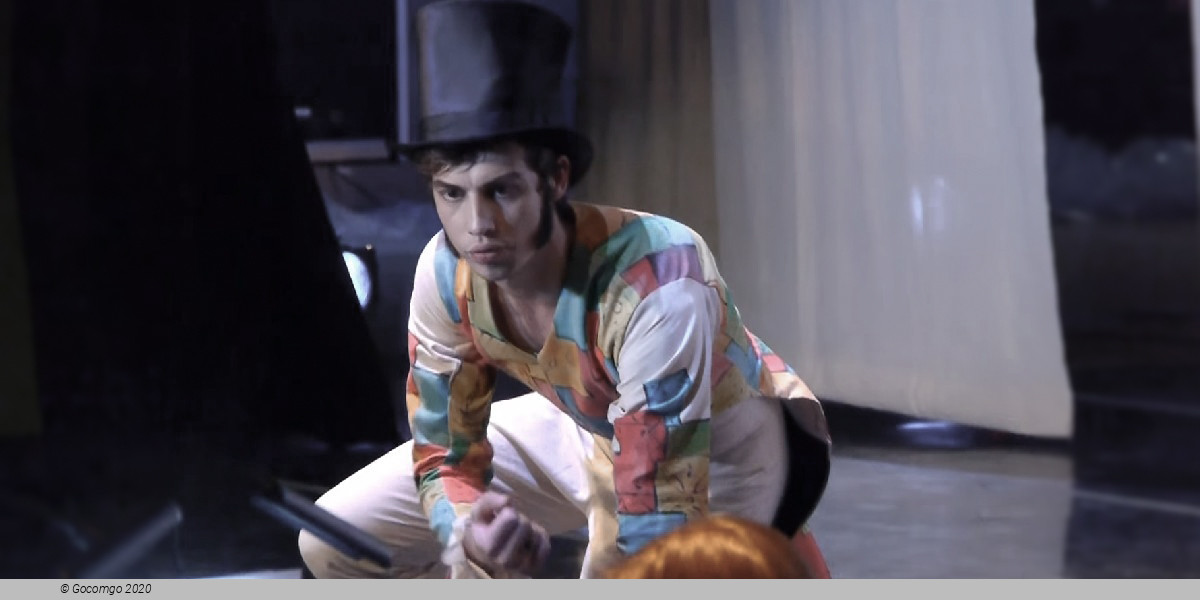
Renard is an “histoire burlesque chantée et joée”. Even by fairytale standards, the plot is banal (a vixen abducts a cockerel and other animals save him) and, in general, has little meaning: the voices of the four singers are not determined by the characters. Line by line and word by word, when compiling the libretto from Russian folk tales Stravinsky was interested, first and foremost, in the phonetics and the rhythm of the text. Today, this text reminds us most of Daniil Kharms and Alexander Vvedensky, while the tempo and energy of the musical presentation invokes rap.

Mavra is an opera based on Pushkin’s the Little House in Kolomna, a bridge between Russia and Europe: the score is indeed dedicated to the memory of Alexander Pushkin, Mikhail Glinka and Pyotr Tchaikovsky, the three leading pro-western men in 19th century Russian art. Voices from a past that is beautiful – with urban romances, gypsy songs and Italian opera in a Russian format – sound like listening to an old record. (Stravinsky had actually found the sliding musical intonations so typical of Mavra in gramophone recordings, still very imperfect in the 1920s.) One hears voices of St Petersburg’s Kolomna district where Stravinsky grew up: the church bells of the St Nicholas Naval Cathedral and the marches of the army brass bands that were based in New Holland.

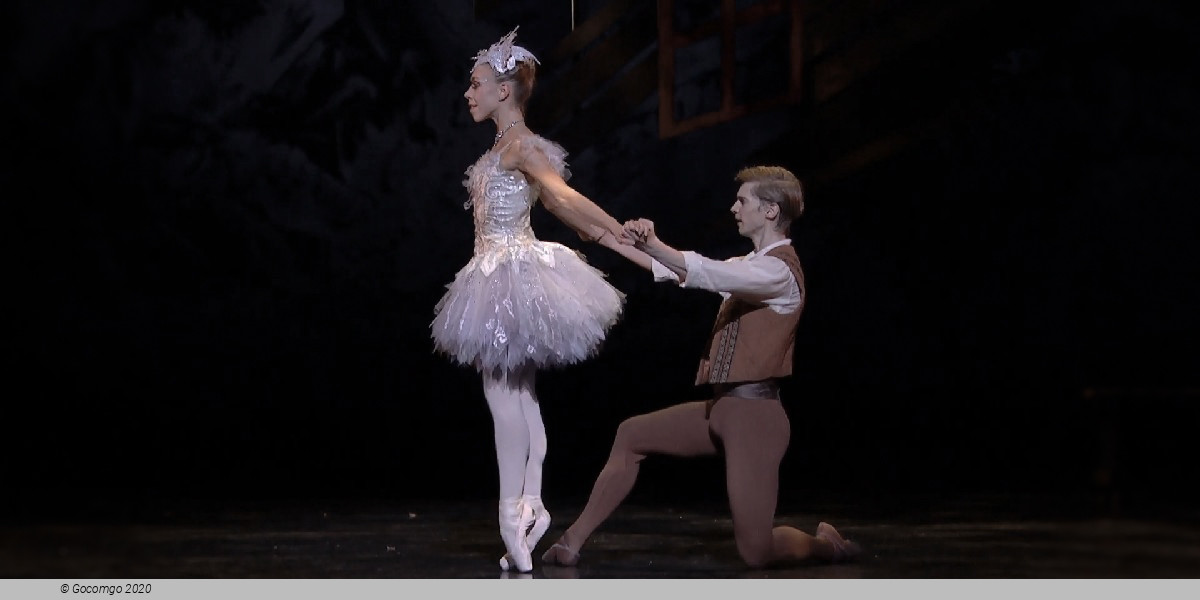
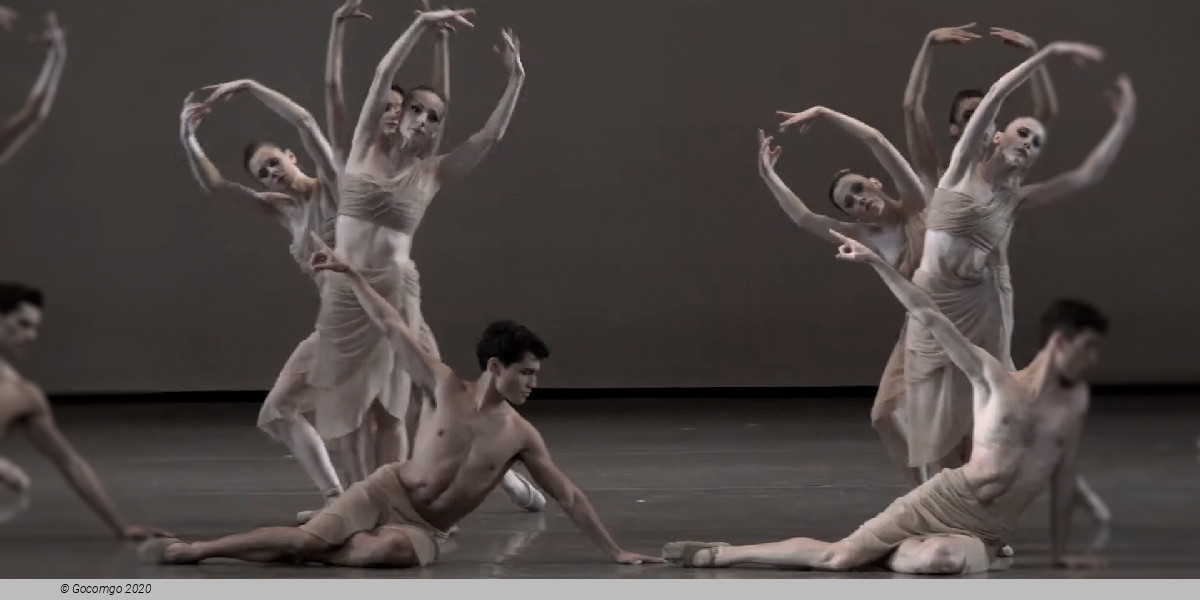
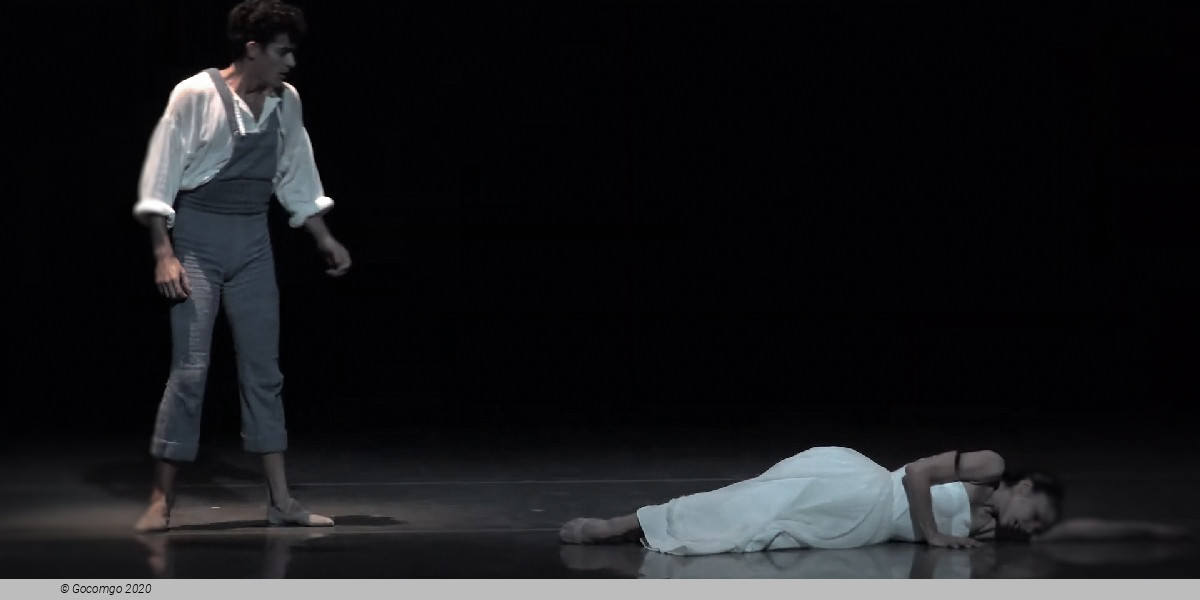
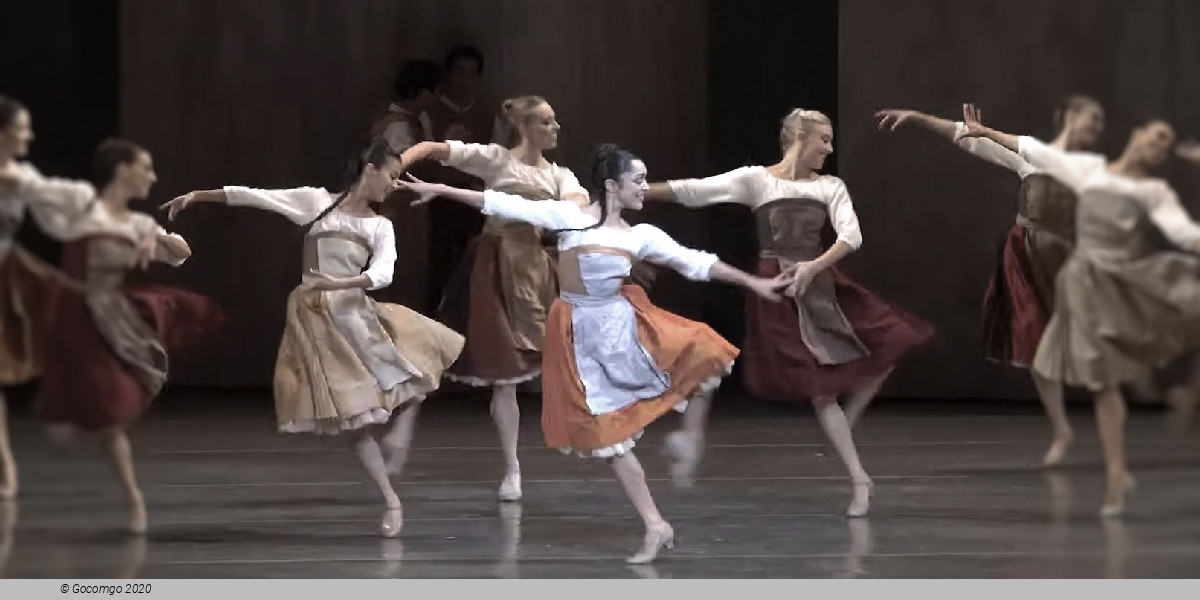
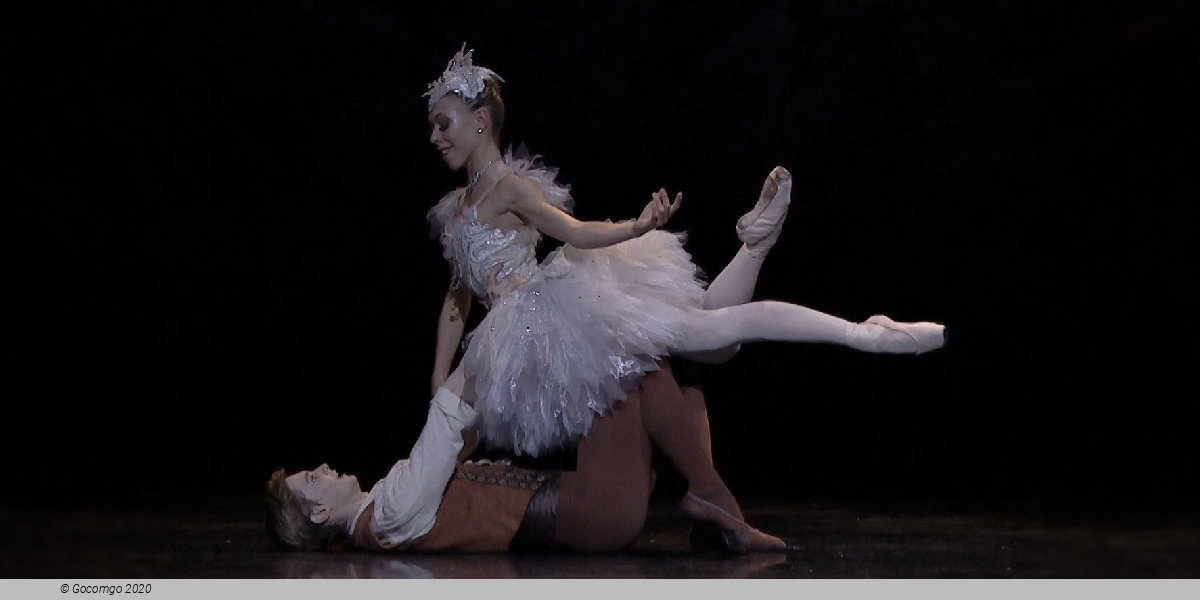
Le Baiser de la fée is a ballet. Stravinsky took pieces by Tchaikovsky to work on and dedicated the score to him. One may discern a dozen direct citations from piano miniatures and romances, though more frequently the listener will be perturbed vaguely familiar intonations: Le Baiser de la fée is reminiscent of a “toothy” neural work, and all of Tchaikovsky’s music flows through it. As the basis of the plot, Andersen’s “Ice-Maiden” is listed in purely nominal terms – the ballet’s true plot in actual fact comprises the adventures of a great Russian classic in the future. the journey travelled by the audience is one from “A lullaby into a storm”, instigated in the very first bars, to “A lullaby in the land of eternity” (the title of the epilogue), from a comprehensible and highly structured life to the emptiness of the vast stage of the Mariinsky-II. 

Bogdan Korolyok

History
Premiere of this production: 18 May 1922, Théâtre de l’Opéra, Paris

Renard, Histoire burlesque chantée et jouée (The Fox: burlesque tale sung and played) is a one-act chamber opera-ballet by Igor Stravinsky, written in 1916. The Russian text by the composer was based on Russian folk tales from the collection by Alexander Afanasyev.

Premiere of this production: 18 May 1922, Théâtre de l'Opéra Paris

Mavra is a one-act comic opera composed by Igor Stravinsky, and one of the earliest works of Stravinsky's neo-classical period.

Premiere of this production: 27 November 1928, Paris

Le Baiser de la fée (The Fairy's Kiss) is a ballet in one act and four scenes composed by Igor Stravinsky in 1928 and revised in 1950 for George Balanchine and the New York City Ballet. Based on Hans Christian Andersen's short story Isjomfruen (English: The Ice-Maiden), the work is an homage to Pyotr Ilyich Tchaikovsky, for the 35th anniversary of the composer's death.

Synopsis

This is a moralizing story, a farmyard fairy tale about Reynard the Fox, who deceives the Cock, the Cat and the Goat; but in the end they catch and punish him. The Cock is twice tricked and captured by the Fox, only to be rescued each time by the Cat and the Goat. After the Cock's second rescue, the Cat and the Goat strangle the Fox, and the three friends dance and sing. It also contains a slight irony relating to religion and the church – to be invulnerable the Fox wears the black gown of the nun (nuns used the privilege of inviolability in Russia).

As in his later ballet Les noces, Stravinsky employs here the singers as part of the orchestra, and the vocal parts are not identified with specific characters.

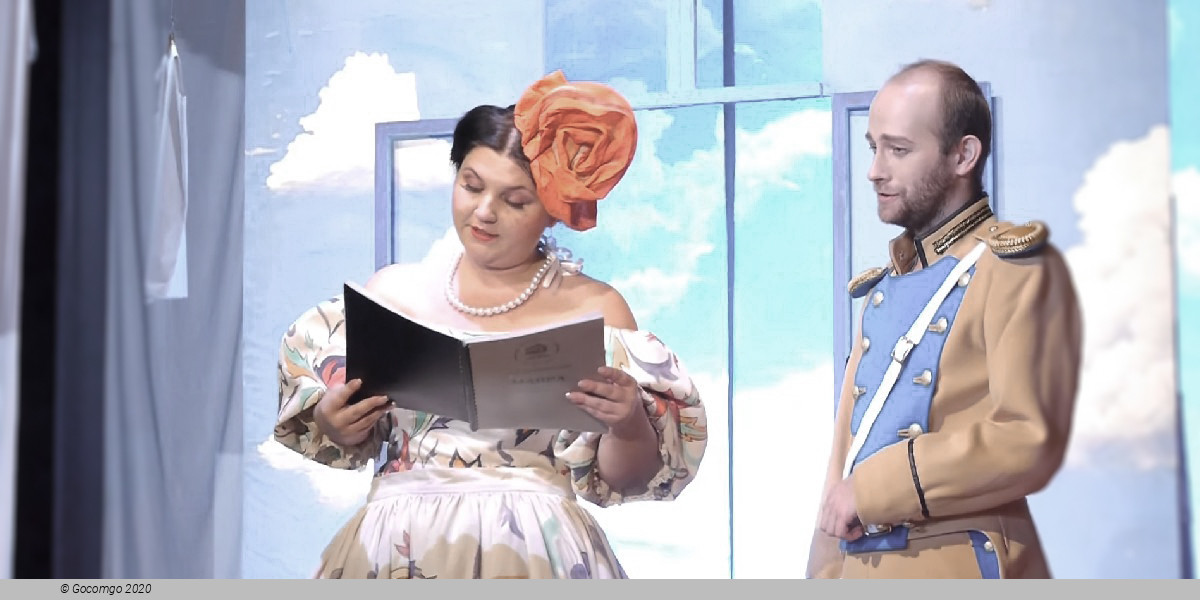
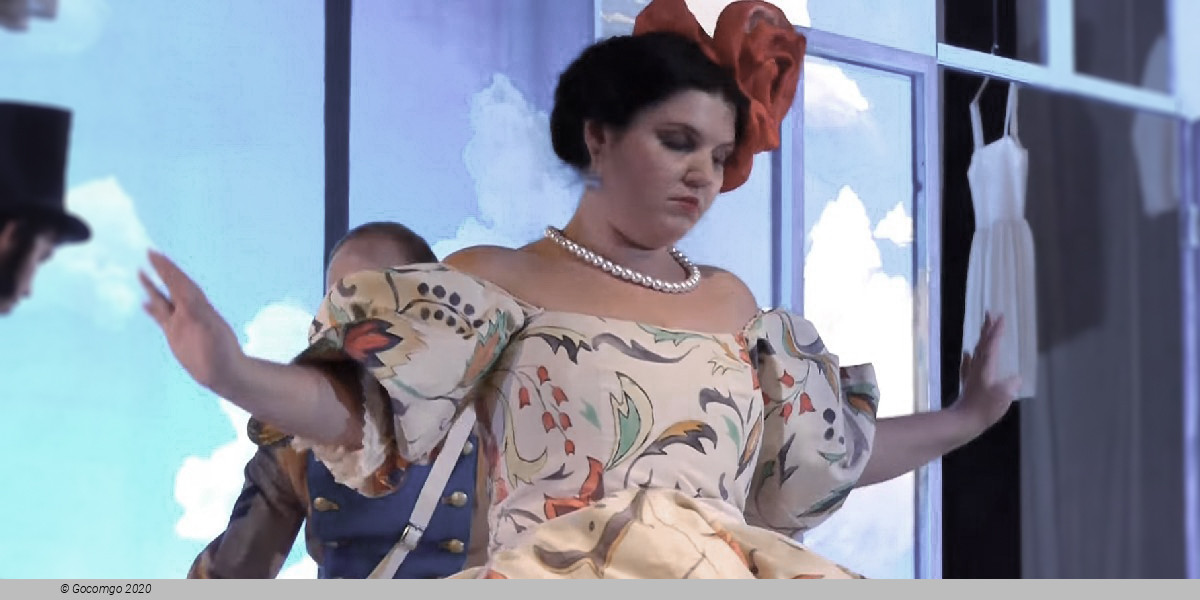
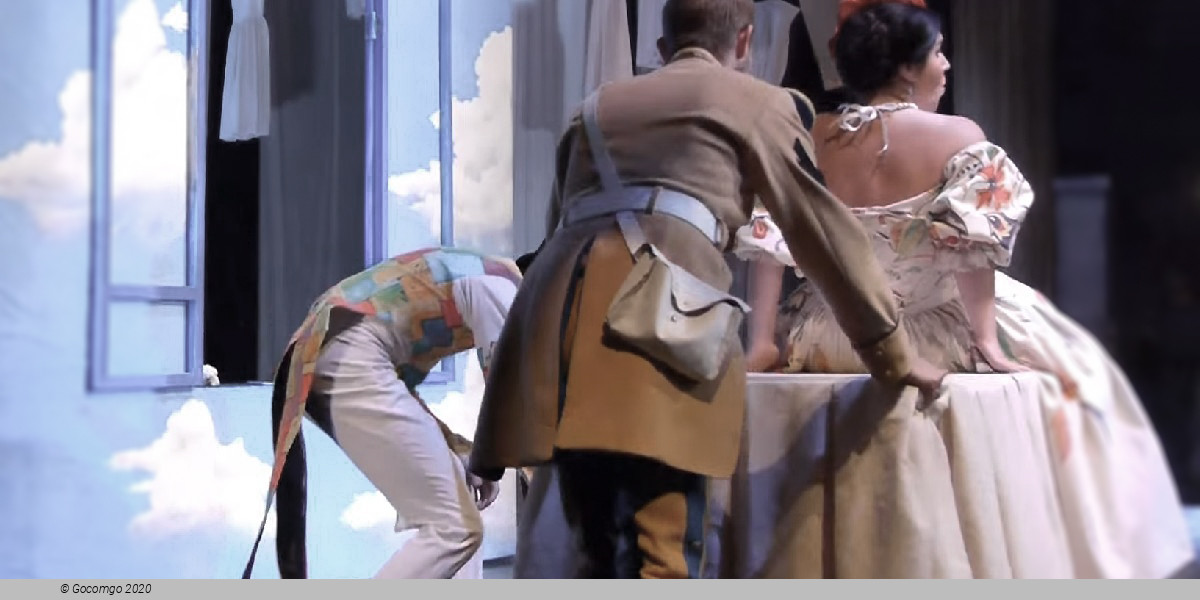
Parasha is in love with her neighbour, Vassili, a young hussar, but they have difficulty in meeting. After they sing a duet, Vassili leaves, and then Parasha's mother enters. She is lamenting the difficulty of finding a new maid-servant after their prior maid-servant, Thecla, died. The mother orders her daughter to find a new maid-servant. Parasha comes up with a scheme to smuggle Vassili into her house disguised as Mavra, a female maid-servant. The ruse initially succeeds, and Parasha and Vassili are happy at being under the same roof. Parasha and her mother go out for a walk. At one moment, Vassili shaves. The ladies return, disconcerted to see their new maid-servant shaving. Vassili escapes out the window, her mother faints, the next door neighbour rushes in to try to help, and Parasha laments the loss of her young love.

Venue Info

Mariinsky Theatre - Saint Petersburg
Location   1 Theatre Square

The Mariinsky Theatre is a historic theatre of opera and ballet in Saint Petersburg, Russia. Opened in 1860, it became the preeminent music theatre of late 19th-century Russia, where many of the stage masterpieces of Tchaikovsky, Mussorgsky, and Rimsky-Korsakov received their premieres. Through most of the Soviet era, it was known as the Kirov Theatre. Today, the Mariinsky Theatre is home to the Mariinsky Ballet, Mariinsky Opera and Mariinsky Orchestra. Since Yuri Temirkanov's retirement in 1988, the conductor Valery Gergiev has served as the theatre's general director.

The theatre is named after Empress Maria Alexandrovna, wife of Tsar Alexander II. There is a bust of the Empress in the main entrance foyer. The theatre's name has changed throughout its history, reflecting the political climate of the time.

The theatre building is commonly called the Mariinsky Theatre. The companies that operate within it have for brand recognition purposes retained the Kirov name, acquired during the Soviet era to commemorate the assassinated Leningrad Communist Party leader Sergey Kirov (1886–1934).

The Imperial drama, opera and ballet troupe in Saint Petersburg was established in 1783, at the behest of Catherine the Great, although an Italian ballet troupe had performed at the Russian court since the early 18th century. Originally, the ballet and opera performances were given in the wooden Karl Knipper Theatre on Tsaritsa Meadow, near the present-day Tripartite Bridge (also known as the Little Theatre or the Maly Theatre). The Hermitage Theatre, next door to the Winter Palace, was used to host performances for an elite audience of aristocratic guests invited by the Empress.

A permanent theatre building for the new company of opera and ballet artists was designed by Antonio Rinaldi and opened in 1783. Known as the Imperial Bolshoi Kamenny Theatre the structure was situated on Carousel Square, which was renamed Theatre Square in honour of the building. Both names – "Kamenny" (Russian word for "stone") and "Bolshoi" (Russian word for "big") – were coined to distinguish it from the wooden Little Theatre. In 1836, the Bolshoi Kamenny Theatre was renovated to a design by Albert Cavos (son of Catterino Cavos, an opera composer), and served as the principal theatre of the Imperial Ballet and opera.

On 29 January 1849, the Equestrian circus (Конный цирк) opened on Theatre Square. This was also the work of the architect Cavos. The building was designed to double as a theatre. It was a wooden structure in the then-fashionable neo-Byzantine style. Ten years later, when this circus burnt down, Albert Cavos rebuilt it as an opera and ballet house with the largest stage in the world. With a seating capacity of 1,625 and a U-shaped Italian-style auditorium, the theatre opened on 2 October 1860, with a performance of A Life for the Tsar. The new theatre was named Mariinsky after its imperial patroness, Empress Maria Alexandrovna.

Under Yuri Temirkanov, Principal Conductor from 1976 to 1988, the Opera Company continued to stage innovative productions of both modern and classic Russian operas. Although functioning separately from the Theatre’s Ballet Company, since 1988 both companies have been under the artistic leadership of Valery Gergiev as Artistic Director of the entire Theatre.

The Opera Company has entered a new era of artistic excellence and creativity. Since 1993, Gergiev’s impact on opera there has been enormous. Firstly, he reorganized the company’s operations and established links with many of the world's great opera houses, including the Royal Opera House, Covent Garden, the Metropolitan Opera, the Opéra Bastille, La Scala, La Fenice, the Israeli Opera, the Washington National Opera and the San Francisco Opera. Today, the Opera Company regularly tours to most of these cities.

Gergiev has also been innovative as far as Russian opera is concerned: in 1989, there was an all-Mussorgsky festival featuring the composer’s entire operatic output. Similarly, many of Prokofiev’s operas were presented from the late 1990s. Operas by non-Russian composers began to be performed in their original languages, which helped the Opera Company to incorporate world trends. The annual international "Stars of the White Nights Festival" in Saint Petersburg, started by Gergiev in 1993, has also put the Mariinsky on the world’s cultural map. That year, as a salute to the imperial origins of the Mariinsky, Verdi's La forza del destino, which received its premiere in Saint Petersburg in 1862, was produced with its original sets, costumes and scenery. Since then, it has become a characteristic of the "White Nights Festival" to present the premieres from the company’s upcoming season during this magical period, when the hours of darkness practically disappear as the summer solstice approaches.

Presently, the Company lists on its roster 22 sopranos (of whom Anna Netrebko may be the best known); 13 mezzo-sopranos (with Olga Borodina familiar to US and European audiences); 23 tenors; eight baritones; and 14 basses. With Gergiev in charge overall, there is a Head of Stage Administration, a Stage Director, Stage Managers and Assistants, along with 14 accompanists.

Important Info
Type: Ballet
City: Saint Petersburg, Russia
Starts at: 20:00
Top of page