
Mariinsky Theatre 2 October 2020 - Lolita | GoComGo.com

Lolita

Mariinsky Theatre, Mariinsky II, Saint Petersburg, Russia
All photos (5)
Select date and time
7:30 PM
Request for Tickets
Important Info
Type: Opera
City: Saint Petersburg, Russia
Starts at: 19:30
Acts: 2
Intervals: 1
Duration: 2h 55min
Sung in: Russian
Titles in: Russian,English

E-tickets: Print at home or at the box office of the event if so specified. You will find more information in your booking confirmation email.

You can only select the category, and not the exact seats.
If you order 2 or 3 tickets: your seats will be next to each other.
If you order 4 or more tickets: your seats will be next to each other, or, if this is not possible, we will provide a combination of groups of seats (at least in pairs, for example 2+2 or 2+3).

Overview

Performance due to have taken place on 22 April

Premiere of this production: 3 October 2019, National Theatre, Prague

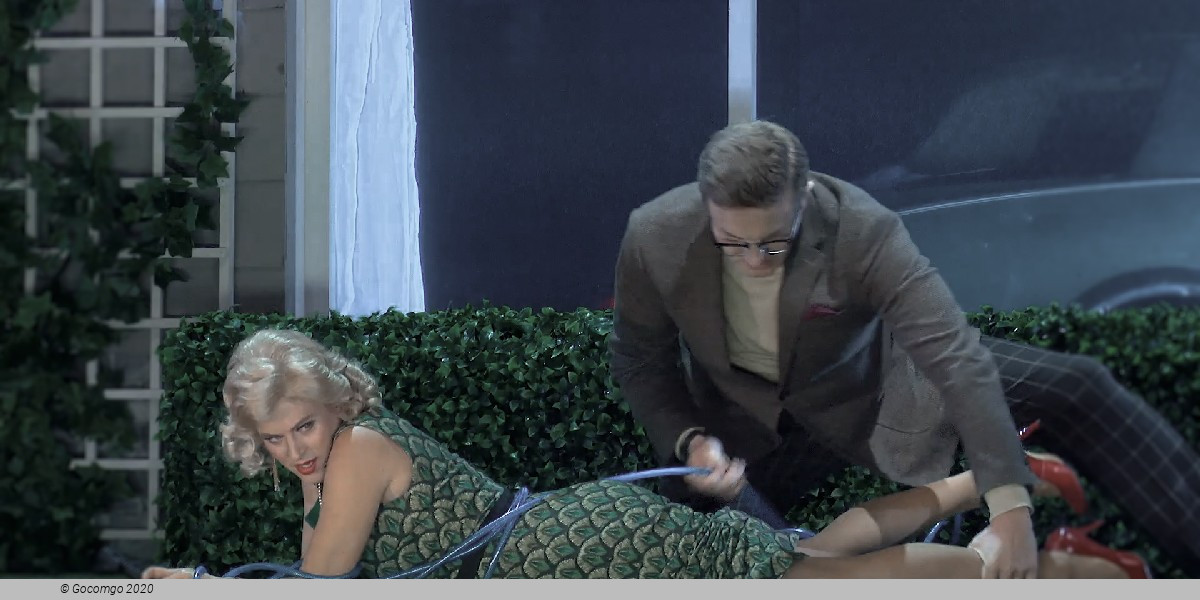
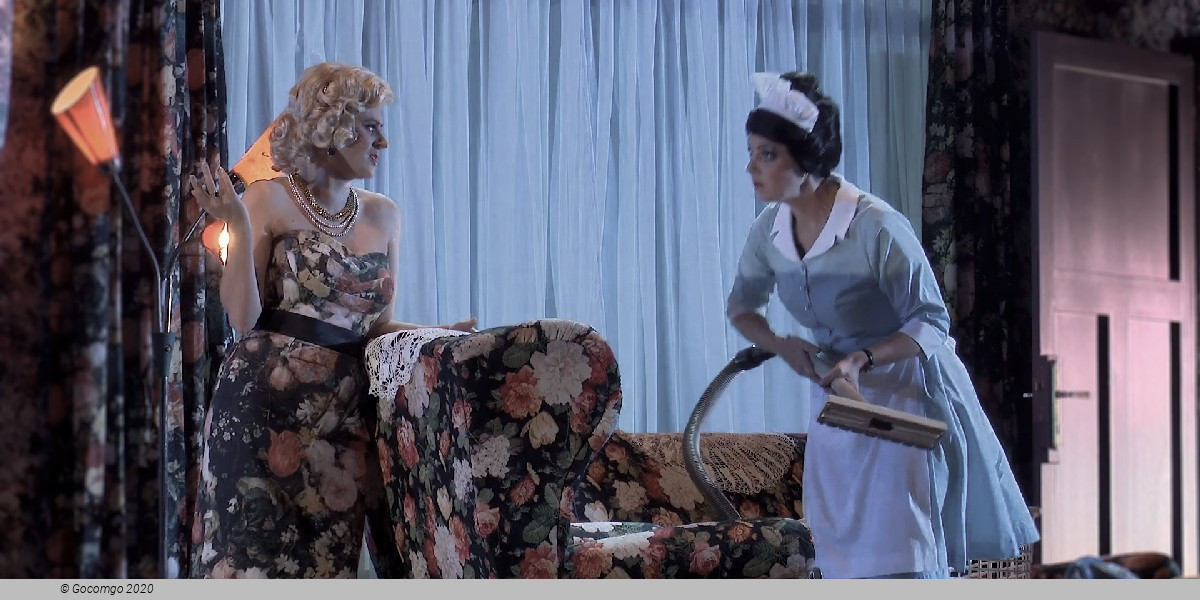
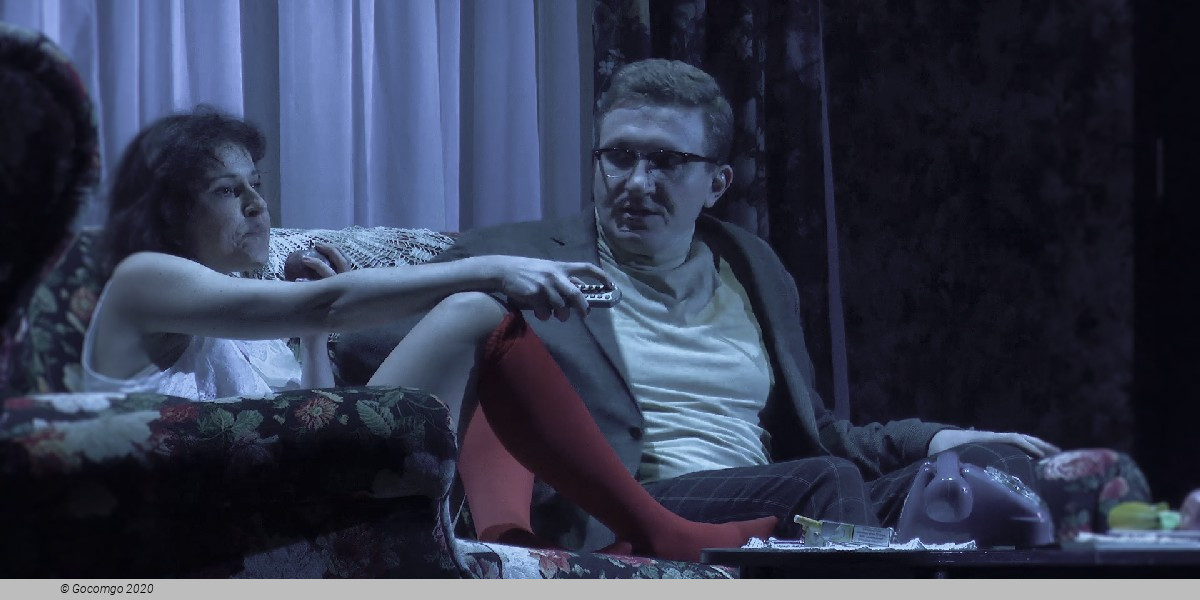
The collection of operas by Shchedrin staged at the Mariinsky Theatre will be complete with the addition of Lolita to the repertoire: here all of the maestro’s operas are performed. Written in 1992, the grand opera (the composer’s designation) Lolita has been staged on four occasions: the world premiere took place in Stockholm (1994), subsequently being mounted in Perm (2003), in Wiesbaden in Germany in 2011 and, last year, at the Národní Divadlo (National Theatre) in Prague. The latter production is the one being brought to St Petersburg. “The Prague production is the most successful of all, it ‘hears’ my score,” the composer believes, “and it is also the one that is closest to Nabokov’s novel in as much as, in addition to the plot (which, of course, has been retained), there one may find a thought-provoking accentuation that combines tragedy with tenderness. Nabokov himself called Lolita a book of great pathos and lamented the fact that critics were unable to grasp the tenderness with which it is filled. It is a magical text, in understanding which one cannot limit oneself to the storyline alone. If one clings to the plot, then many novels by Dostoevsky, too, are mere judicial chronicles or detective fiction... The important thing is how it is done, what surrounds it. And that is where the art springs from. The Prague production was achieved specifically with these artistic considerations in mind, and not in order to take and retell this seemingly erotic narrative. And so in it I see and sense a caring attitude to the tragic destinies of its characters.”

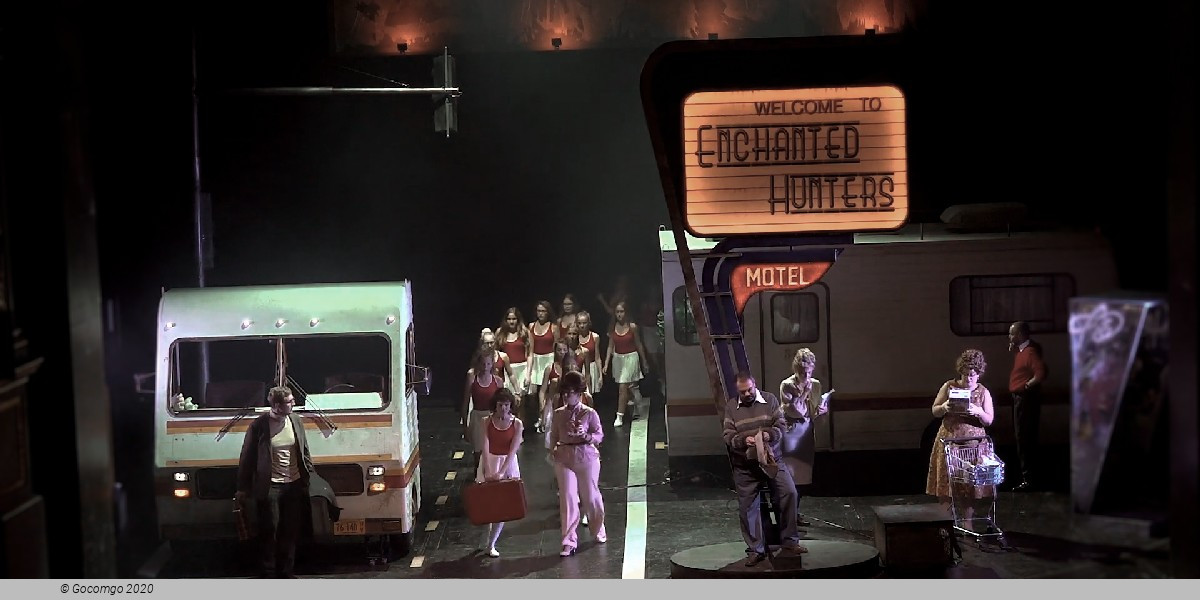
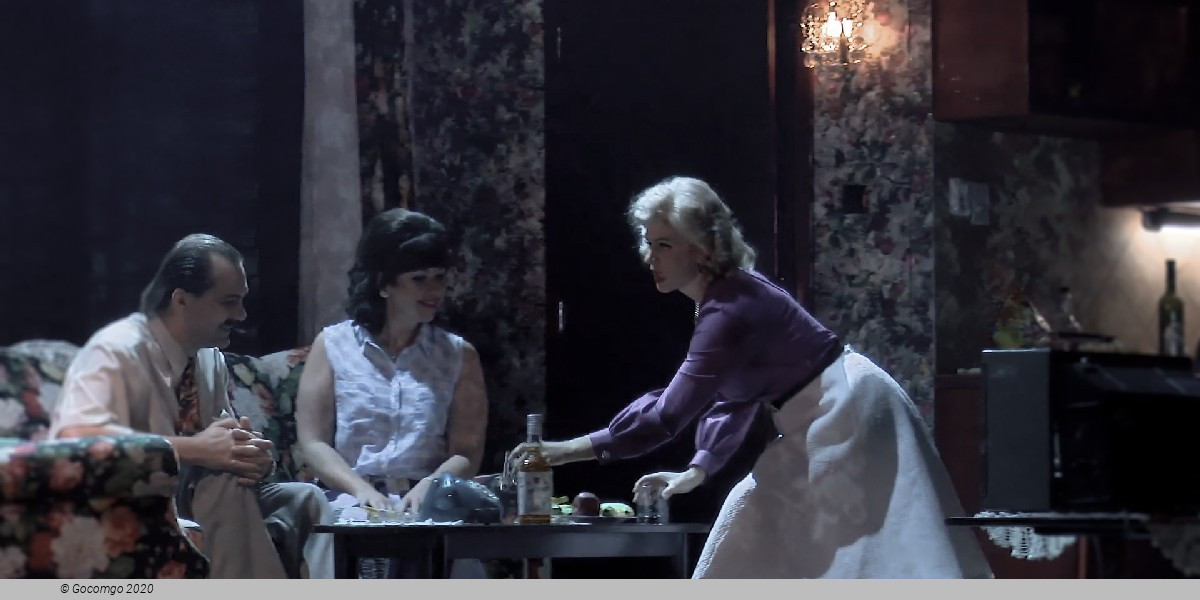
Pelageya Kurennaya, who sang the title role in Prague, adds that “Lolita is unlike either A Christmas Tale or The Lefthander, even although at times I can hear some echoes from them. It is an entirely different style, reminiscent of a thriller with elements of mysticism and instances of romance. At the very start of the opera, to Humbert’s words “Lolita, my sin, poor, tormented girl”, the chords sound like stabs to the heart; I hear them with a shudder... The opera has been staged by a fantastic director. Sláva Daubnerová has placed a revolving structure in the centre of the stage, so the scenes run flowingly from one to the next. Dimmed lighting is used, the spotlights are aimed at the protagonists, and everything around them is in some mysterious mist; it turned out to be a kind of 3D opera. Sláva sees Lolita as an angular yet gentle tomboy. For her, everything begins with a game, as she has known no father, she just needed the attention of someone new. In Act I and Act II Lolita appears as two different kinds of music. Initially there is the running and skipping friskiness; in Act II her voice has changed, lyricism has been added, there is cantilena and, at the very end of the opera, there is pain. Rodion Konstantinovich Shchedrin created characters which are completely different to one another in terms of music. Each has his own characteristic melos: Quilty, Charlotte, Humbert, Lolita... Not stepping back from the novel, the composer brought it into the genre of opera with such incredible talent that it would be impossible to imagine anything better.”

History
Premiere of this production: 14 December 1994, Royal Swedish Opera

Lolita is an opera in two acts by composer Rodion Shchedrin. Composed in 1992, it uses a Russian language libretto by the composer which is based on Vladimir Nabokov's 1955 novel of the same name, written in English. The opera premiered in 1994 at the Royal Swedish Opera, Stockholm, using a Swedish language translation of the original libretto.

Synopsis

Humbert Humbert, a 37-year-old European intellectual and literary critic is attracted to young girls. After renting a flat in a small American town, he meets his landlady Charlotte Haze’s 12-year-old daughter, Lolita. A great passion towards the teenage girl overtakes him. So as to become closer to Lolita, Humbert marries her mother. Humbert’s journal, including a description of his true feelings towards Lolita, fall into Charlotte’s hands; shocked, she runs out of the house and is run over by a passing automobile. Custody over Charlotte falls unto Humbert, who under the pretense of caring for his stepdaughter undertakes a road-trip with her across America. Having gotten closer to Lolita, Humbert keeps her by his side with threats and gifts. Finding the right moment, Lolita runs away to the popular dramatist Clare Quilty, who in turn forces her to act in pornographic films. Humbert searches for Lolita, but to no avail. Three years later, he receives a letter from his already grown-up stepdaughter, requesting money: she is married, with child, and in debt. Humbert goes to Lolita, hoping to get her back, but is rejected. After finding out that Quilty stole Lolita from him, Humbert finds his foe and murders him. For the corruption of a minor and murder, the criminal must stand before court. Awaiting his trial, the “white widowed male” writes his confession, however, before the trial, he dies from a stroke. Having given birth to a stillborn, Lolita too dies thereafter.

Lolita is the only staged opera after Nabokov's novel, which was written in English in the United States. The story of the "famous and infamous novel" is told by Humbert Humbert, a 37-year-old literary scholar, who becomes obsessed and sexually involved with his landlady's daughter Lolita, who is 12 years old at the beginning of the story. Shchedrin called the novel "a wonderful thriller begging to be transformed into an opera". He commented further: "It feels like a nostalgia for beauty; it is a symbol, really. ... For me personally, Lolita as a character is less of a human being but rather an archetype, a symbol of beauty but a fleeting beauty." He kept most of the plot, but moved the beginning to a court where Humbert is sentenced.

The publisher summarizes: "Humbert Humbert, professor of literature and sophisticate, is obsessed with 12-year-old fatherless Lolita. He seduces the girl and lives with her for some time after marrying pro forma her mother (who dies shortly after). Three years after the end of their increasingly fraught relationship, Humbert meets Lolita again, now married to another man and expecting his baby. Humbert's jealousy, however, is not directed towards Lolita or her husband, but towards the Mephistophelian film director Quilty, who has used Lolita for porn films. Humbert takes bloody revenge on Quilty – and is sentenced to death in the electric chair."

A review of the German premiere has more details: Humbert marries Charlotte, Lolita's mother, to get closer to Lolita. When Charlotte detects Humbert's passion for her daughter, she panics and dies in a car accident. Humbert keeps her death a secret to Lolita and travels with her through the United States. The girl escapes to an affair with Quilty, who abuses her for porn films and is killed by Humbert. Humbert dies in prison; Lolita, again in a new affair, dies giving birth. Lolita's death was in the novel, but originally not in the opera until the German premiere.

Venue Info

Mariinsky Theatre - Saint Petersburg
Location   1 Theatre Square

The Mariinsky Theatre is a historic theatre of opera and ballet in Saint Petersburg, Russia. Opened in 1860, it became the preeminent music theatre of late 19th-century Russia, where many of the stage masterpieces of Tchaikovsky, Mussorgsky, and Rimsky-Korsakov received their premieres. Through most of the Soviet era, it was known as the Kirov Theatre. Today, the Mariinsky Theatre is home to the Mariinsky Ballet, Mariinsky Opera and Mariinsky Orchestra. Since Yuri Temirkanov's retirement in 1988, the conductor Valery Gergiev has served as the theatre's general director.

The theatre is named after Empress Maria Alexandrovna, wife of Tsar Alexander II. There is a bust of the Empress in the main entrance foyer. The theatre's name has changed throughout its history, reflecting the political climate of the time.

The theatre building is commonly called the Mariinsky Theatre. The companies that operate within it have for brand recognition purposes retained the Kirov name, acquired during the Soviet era to commemorate the assassinated Leningrad Communist Party leader Sergey Kirov (1886–1934).

The Imperial drama, opera and ballet troupe in Saint Petersburg was established in 1783, at the behest of Catherine the Great, although an Italian ballet troupe had performed at the Russian court since the early 18th century. Originally, the ballet and opera performances were given in the wooden Karl Knipper Theatre on Tsaritsa Meadow, near the present-day Tripartite Bridge (also known as the Little Theatre or the Maly Theatre). The Hermitage Theatre, next door to the Winter Palace, was used to host performances for an elite audience of aristocratic guests invited by the Empress.

A permanent theatre building for the new company of opera and ballet artists was designed by Antonio Rinaldi and opened in 1783. Known as the Imperial Bolshoi Kamenny Theatre the structure was situated on Carousel Square, which was renamed Theatre Square in honour of the building. Both names – "Kamenny" (Russian word for "stone") and "Bolshoi" (Russian word for "big") – were coined to distinguish it from the wooden Little Theatre. In 1836, the Bolshoi Kamenny Theatre was renovated to a design by Albert Cavos (son of Catterino Cavos, an opera composer), and served as the principal theatre of the Imperial Ballet and opera.

On 29 January 1849, the Equestrian circus (Конный цирк) opened on Theatre Square. This was also the work of the architect Cavos. The building was designed to double as a theatre. It was a wooden structure in the then-fashionable neo-Byzantine style. Ten years later, when this circus burnt down, Albert Cavos rebuilt it as an opera and ballet house with the largest stage in the world. With a seating capacity of 1,625 and a U-shaped Italian-style auditorium, the theatre opened on 2 October 1860, with a performance of A Life for the Tsar. The new theatre was named Mariinsky after its imperial patroness, Empress Maria Alexandrovna.

Under Yuri Temirkanov, Principal Conductor from 1976 to 1988, the Opera Company continued to stage innovative productions of both modern and classic Russian operas. Although functioning separately from the Theatre’s Ballet Company, since 1988 both companies have been under the artistic leadership of Valery Gergiev as Artistic Director of the entire Theatre.

The Opera Company has entered a new era of artistic excellence and creativity. Since 1993, Gergiev’s impact on opera there has been enormous. Firstly, he reorganized the company’s operations and established links with many of the world's great opera houses, including the Royal Opera House, Covent Garden, the Metropolitan Opera, the Opéra Bastille, La Scala, La Fenice, the Israeli Opera, the Washington National Opera and the San Francisco Opera. Today, the Opera Company regularly tours to most of these cities.

Gergiev has also been innovative as far as Russian opera is concerned: in 1989, there was an all-Mussorgsky festival featuring the composer’s entire operatic output. Similarly, many of Prokofiev’s operas were presented from the late 1990s. Operas by non-Russian composers began to be performed in their original languages, which helped the Opera Company to incorporate world trends. The annual international "Stars of the White Nights Festival" in Saint Petersburg, started by Gergiev in 1993, has also put the Mariinsky on the world’s cultural map. That year, as a salute to the imperial origins of the Mariinsky, Verdi's La forza del destino, which received its premiere in Saint Petersburg in 1862, was produced with its original sets, costumes and scenery. Since then, it has become a characteristic of the "White Nights Festival" to present the premieres from the company’s upcoming season during this magical period, when the hours of darkness practically disappear as the summer solstice approaches.

Presently, the Company lists on its roster 22 sopranos (of whom Anna Netrebko may be the best known); 13 mezzo-sopranos (with Olga Borodina familiar to US and European audiences); 23 tenors; eight baritones; and 14 basses. With Gergiev in charge overall, there is a Head of Stage Administration, a Stage Director, Stage Managers and Assistants, along with 14 accompanists.

Important Info
Type: Opera
City: Saint Petersburg, Russia
Starts at: 19:30
Acts: 2
Intervals: 1
Duration: 2h 55min
Sung in: Russian
Titles in: Russian,English
Top of page