









Mariinsky Theatre 3 March 2020 - Le Réveil de Flore. “Paquita” Grand pas | GoComGo.com

Le Réveil de Flore. “Paquita” Grand pas

Mariinsky Theatre, Mariinsky Theatre, Saint Petersburg, Russia
All photos (19)
Select date and time
7 PM
Request for Tickets
Important Info
Type: Ballet
City: Saint Petersburg, Russia
Starts at: 19:00
Acts: 1
Duration:

E-tickets: Print at home or at the box office of the event if so specified. You will find more information in your booking confirmation email.

You can only select the category, and not the exact seats.
If you order 2 or 3 tickets: your seats will be next to each other.
If you order 4 or more tickets: your seats will be next to each other, or, if this is not possible, we will provide a combination of groups of seats (at least in pairs, for example 2+2 or 2+3).

Overview

The score of the ballet Le Réveil de Flore has been revived from the manuscript by Riccardo Drigo preserved at the Mariinsky Theatre Central Music Library.
The choreographic text of Marius Petipa and Lev Ivanov has been revived from the records of Nikolai Sergeyev, executed in the Stepanov Notation System housed at the Harvard Theatre Collection and from violin répétiteurs retained at the Mariinsky Theatre Central Music Library.
The sets and costumes have been reconstructed from photos and sketches by Mikhail Bocharov and Yevgeny Ponomarev from the archives of the St Petersburg State Museum of Theatre and Music.
The costumes have been reconstructed from sketches by Yevgeny Ponomarev from the archives of the St Petersburg State Museum of Theatre and Music.

In 2005, the choreographer and historian Sergei Vikharev utilized this choreographic notation to stage a reconstruction of Petipa's original 1894 choreography for Le Réveil de Flore for the Mariinsky Ballet. The production also included a complete restoration of the original décor and costumes. Riccardo Drigo's score was restored from the original hand-written manuscript held in the archives of the Mariinsky Theatre's music library by conductor Pavel Bubelnikov with the assistance of the musicologists Lyudmila Sveshnikova and Elena Belyaeva.

The production was first presented at the Mariinsky Theatre during the VIIth International Ballet Festival on 12 April 2007 at the Mariinsky Theatre, St. Petersburg. The principal dancers were Evgenia Obraztsova as the Goddess Flora, Xenia Ostreikovskaya as the Goddess Aurora, Svetland Ivanova as the Goddess Diana, Vladimir Shklyarov as the God Zephyr, Maxim Chaschegorov as the God Apollo, Valeria Martynyuk as the God Cupid, Alexei Timofeyev as the God Mercury and Daria Sukhorukova as the Goddess Hebe.

Sergei Vikharev commented to the St. Petersburg Times that the ballet was "... like an ornate Fabergé egg." 

The production of Le Réveil de Flore was awarded the 2007 Golden Mask award.

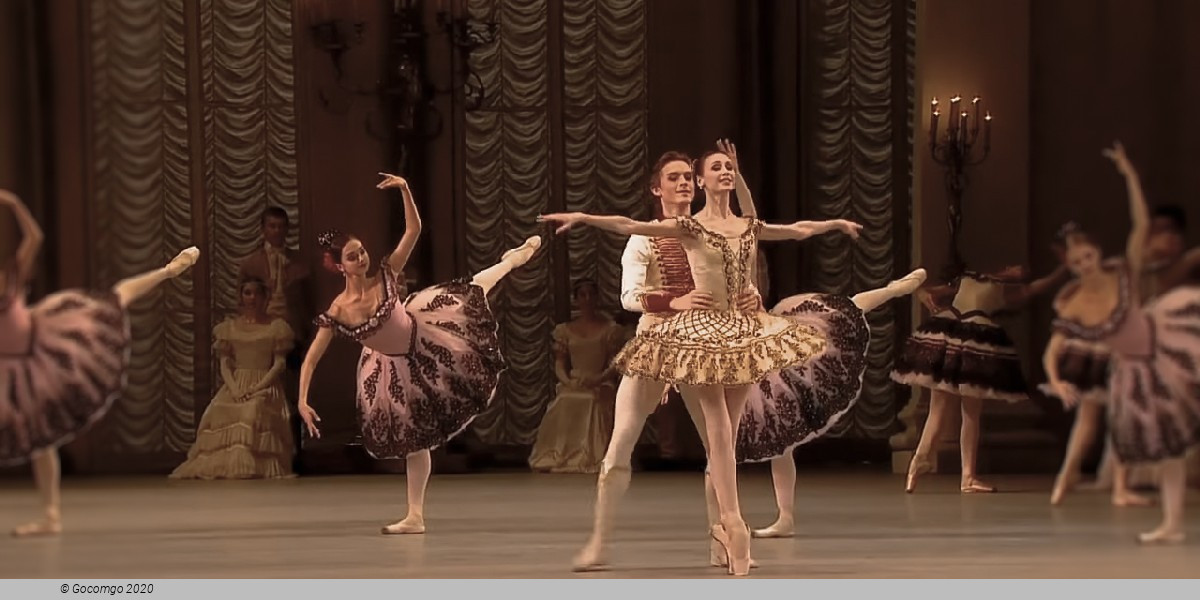
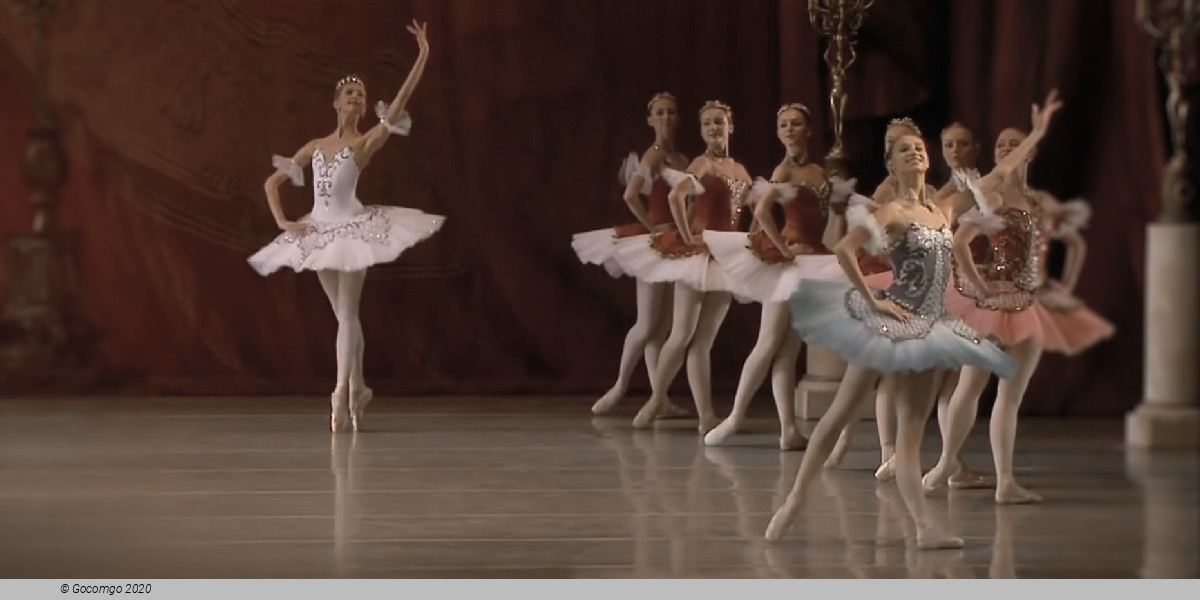
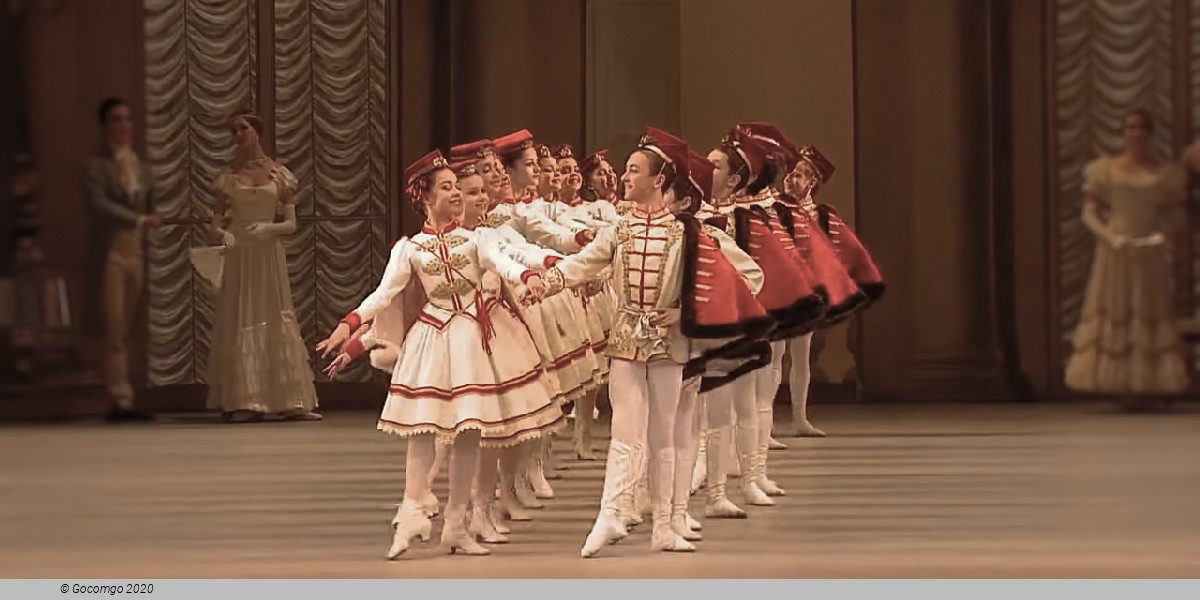
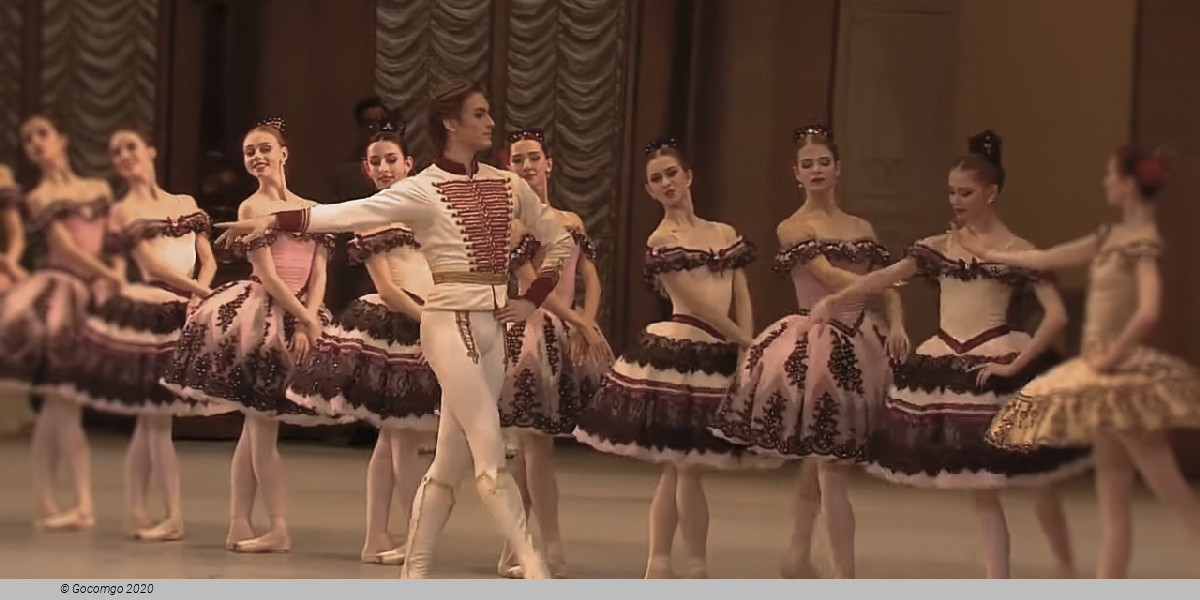
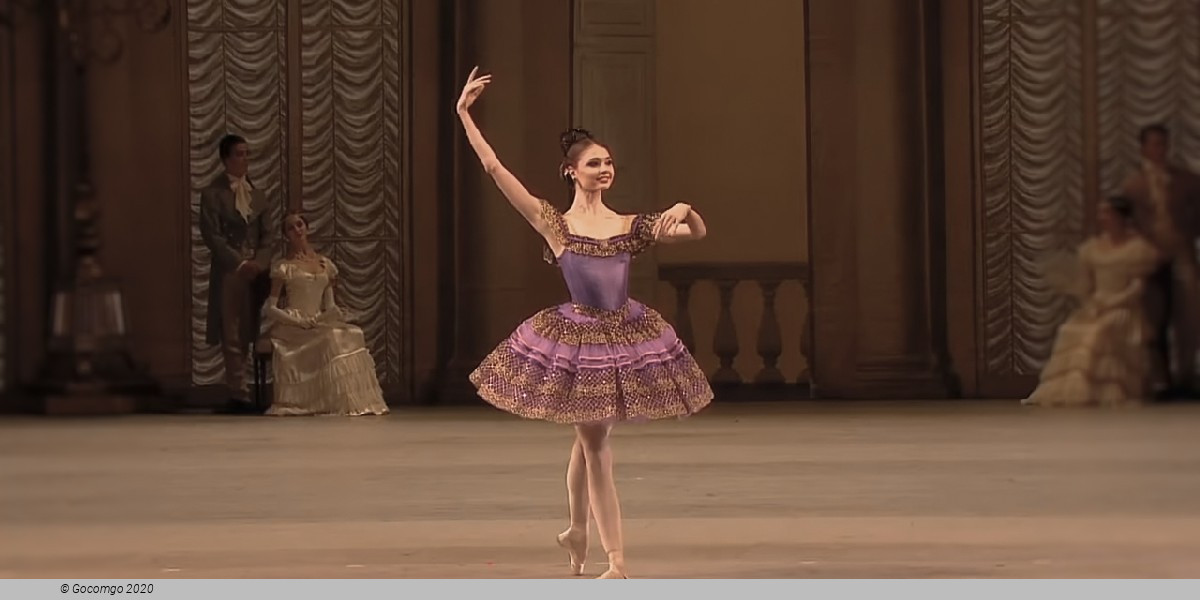
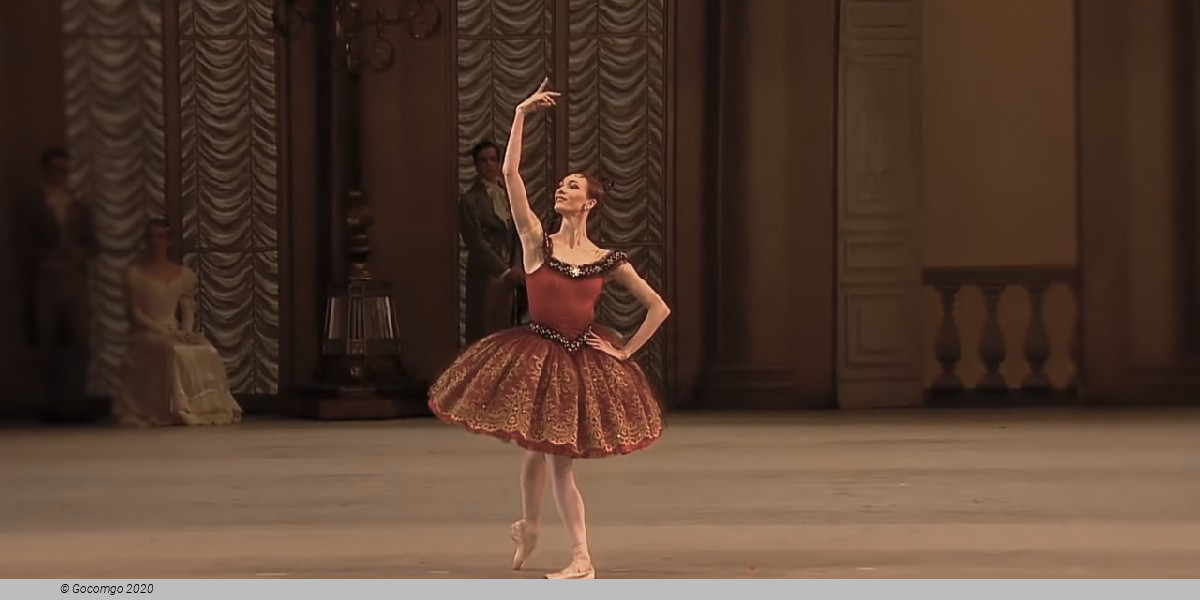
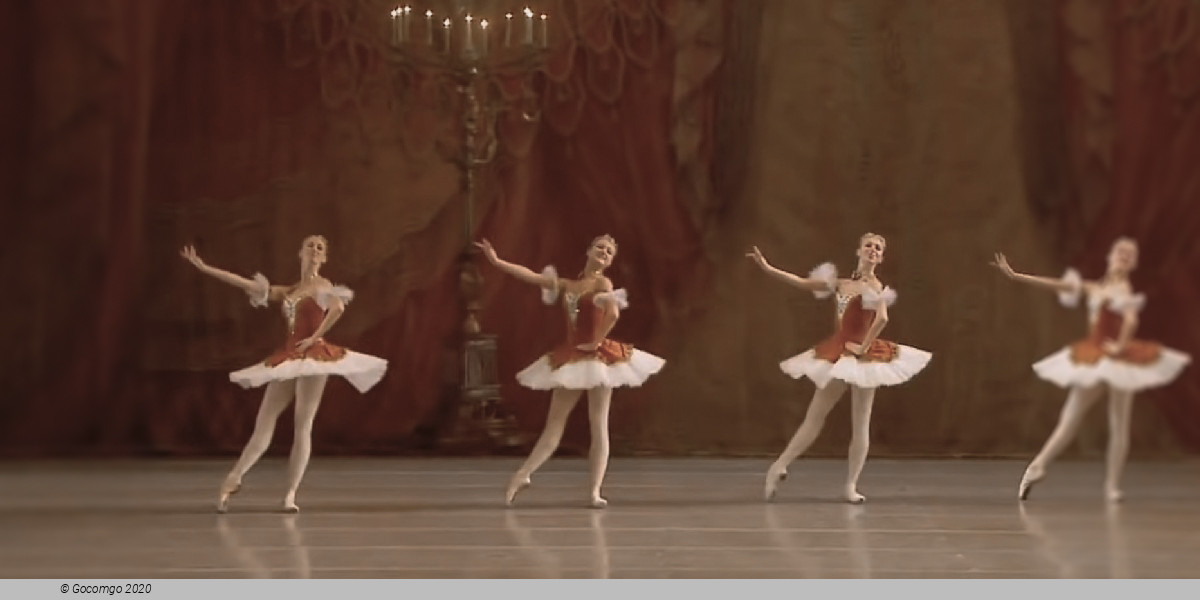
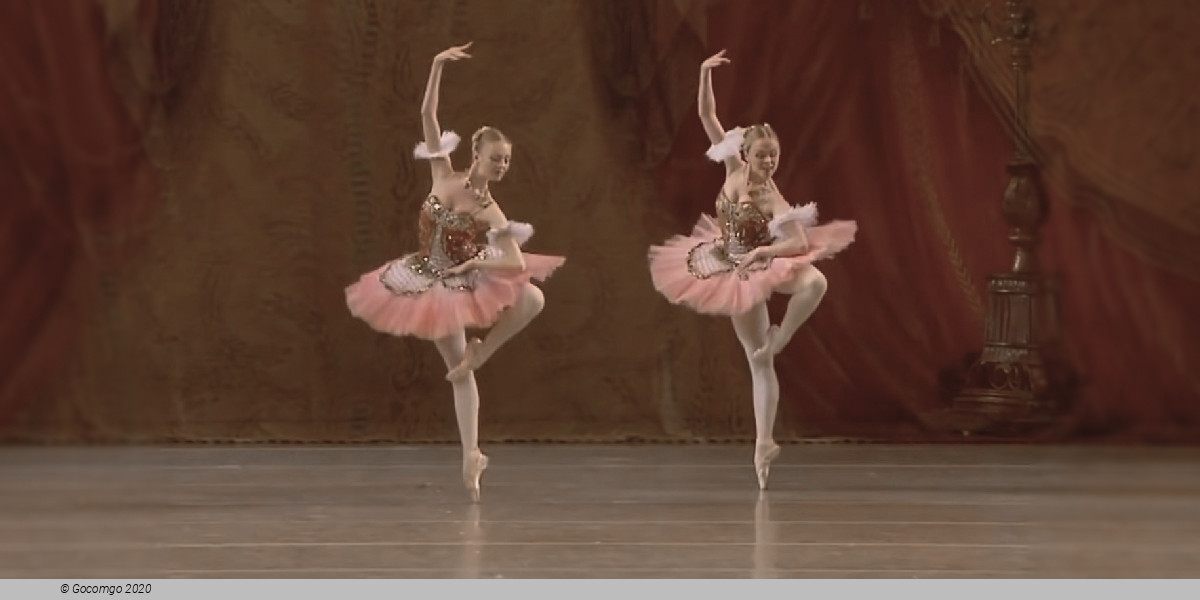
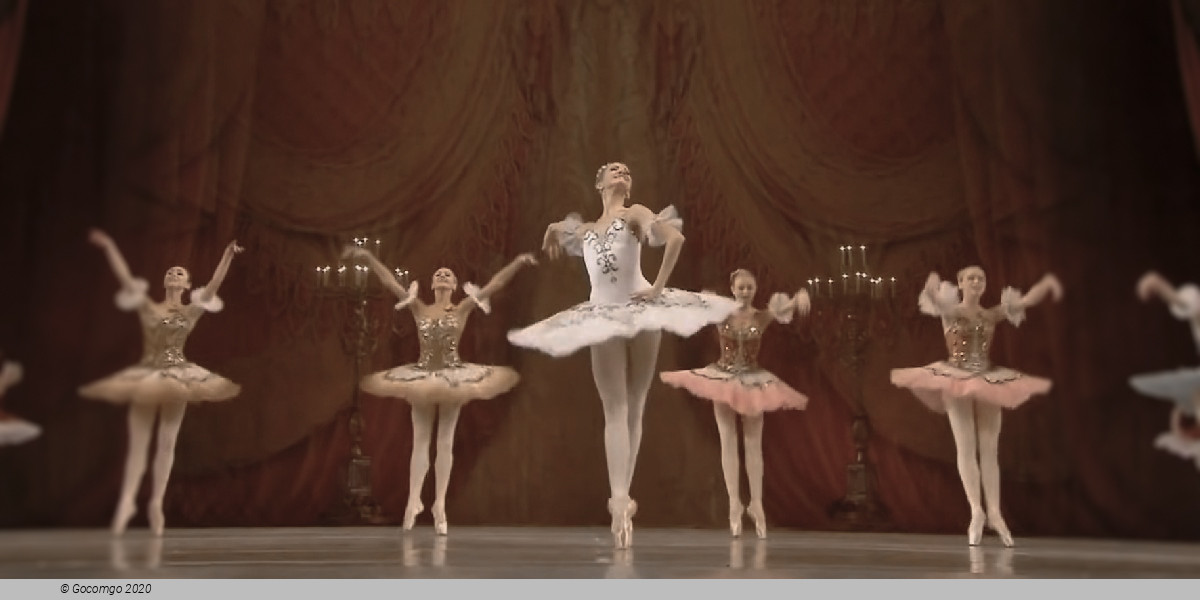
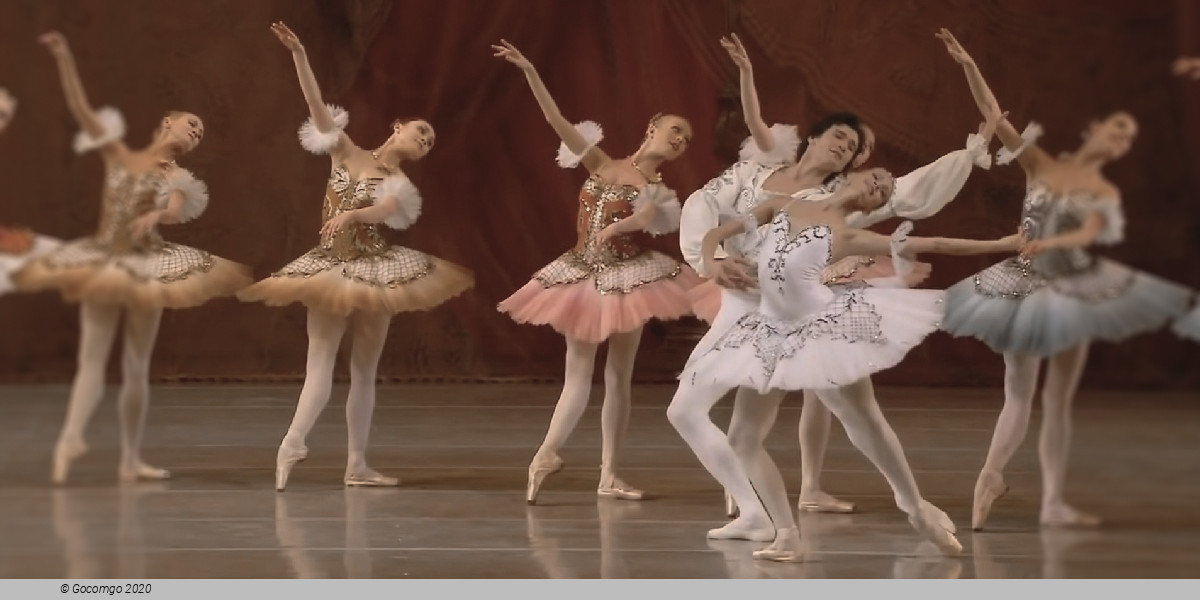
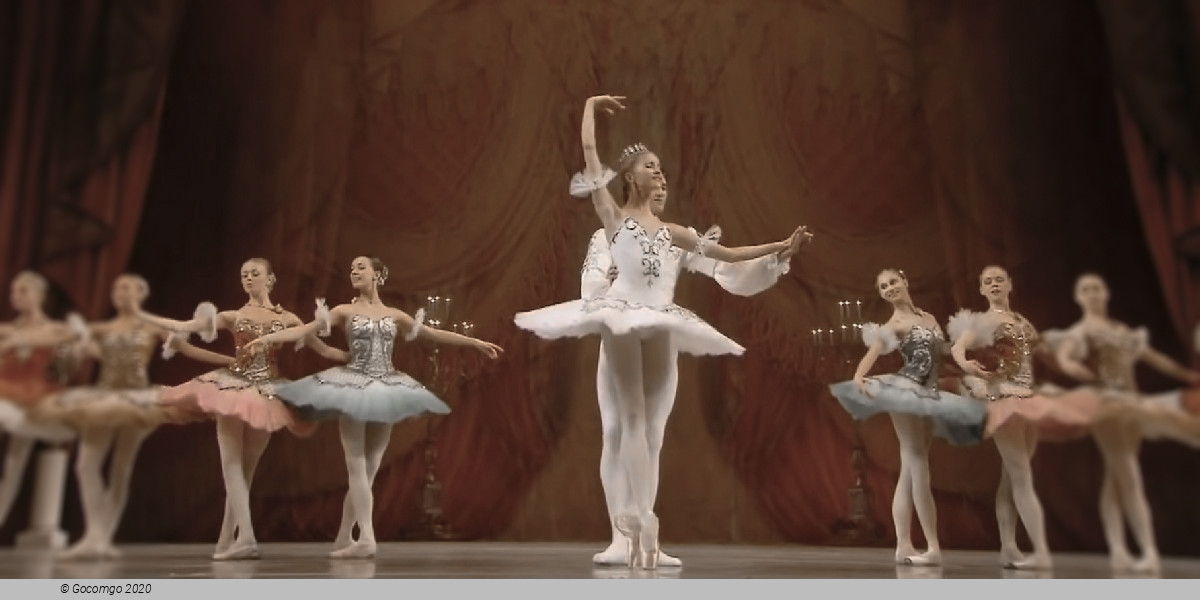
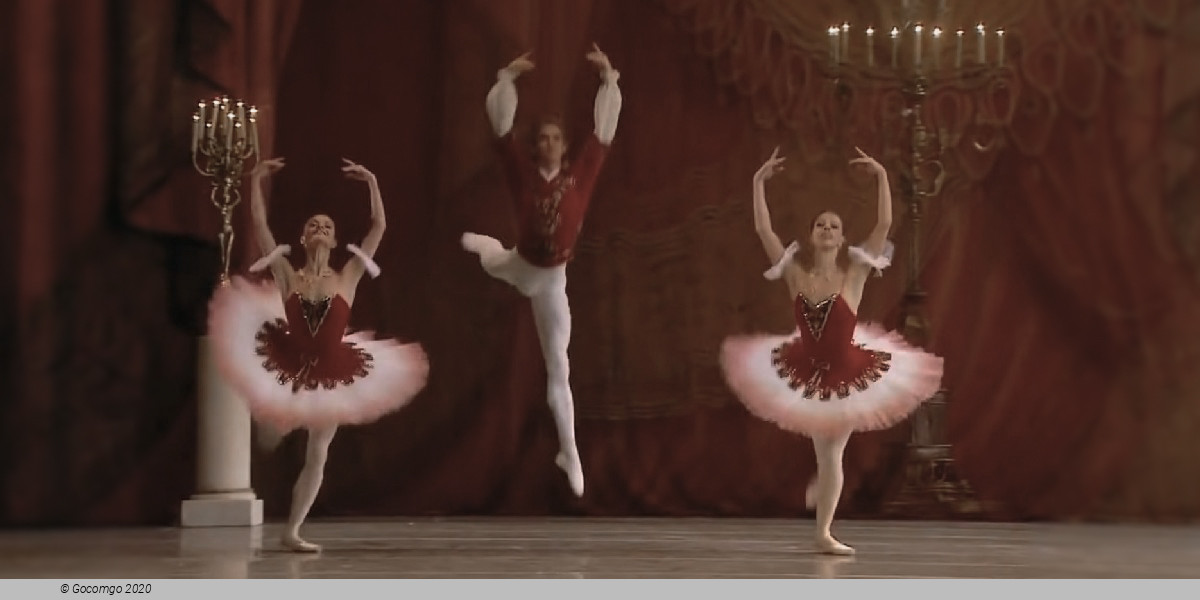
In the dim and distant past, Paquita was a grand ballet with gypsies, smugglers, a bottle of poison, a hiding place in the fireplace, a kidnapped noblewoman, a cherished locket, Spanish cloaks, daggers, weddings, diamonds and dances. The new sensation of Paris came to the St Petersburg stage in 1847. In 1881 Marius Petipa added an extra act to the ballet, consisting of one dramatic Grand pas from beginning to end. After the Imperial Mariinsky Theatre became Soviet, and Paquita itself disappeared from the repertoire, Grand Pas appeared on theatre posters with capital letters and took on a life of its own. There remain, however, even today, hints of former, Imperial times. The entree of the dancers reflects the official hierarchy of the ballet company: corps de ballet, coryphee, soloists then the prima ballerina. This hierarchy in turn mirrors the pomp of the Imperial Court. The brilliance of dancers’ entrechats rivalled that of the diamonds worn by ladies in the boxes. Balletomanes, just as they did over one hundred years ago, fervently observe the competitive sequence of the soloists, each, one after the other, dancing a specially selected variation.

In Marius Petipa and Ludwig Minkus's original staging of the Paquita grand pas classique in 1881, only one variation was included for the leading ballerina Ekaterina Vazem, being a polonaise arranged for solo violin.

Anna Pavlova included the Grand Pas classique in her company's repertory.

History
Premiere of this production: 06 August 1894, Peterhof Palace, Peterhof

Le Réveil de Flore (en. The Awakening of Flora), is a ballet anacréontique in one act, with choreography by Marius Petipa and music by Riccardo Drigo, to a libretto written by Petipa and Lev Ivanov. First presented by the Imperial Ballet at Peterhof Palace on 6 August [O.S. 25 July] 1894.

Premiere of this production: 01 April 1846, Salle Le Peletier, Paris

Paquita is a ballet in two acts and three scenes originally choreographed by Joseph Mazilier to music by Édouard Deldevez and Ludwig Minkus. Paul Foucher received royalties as librettist.

Synopsis

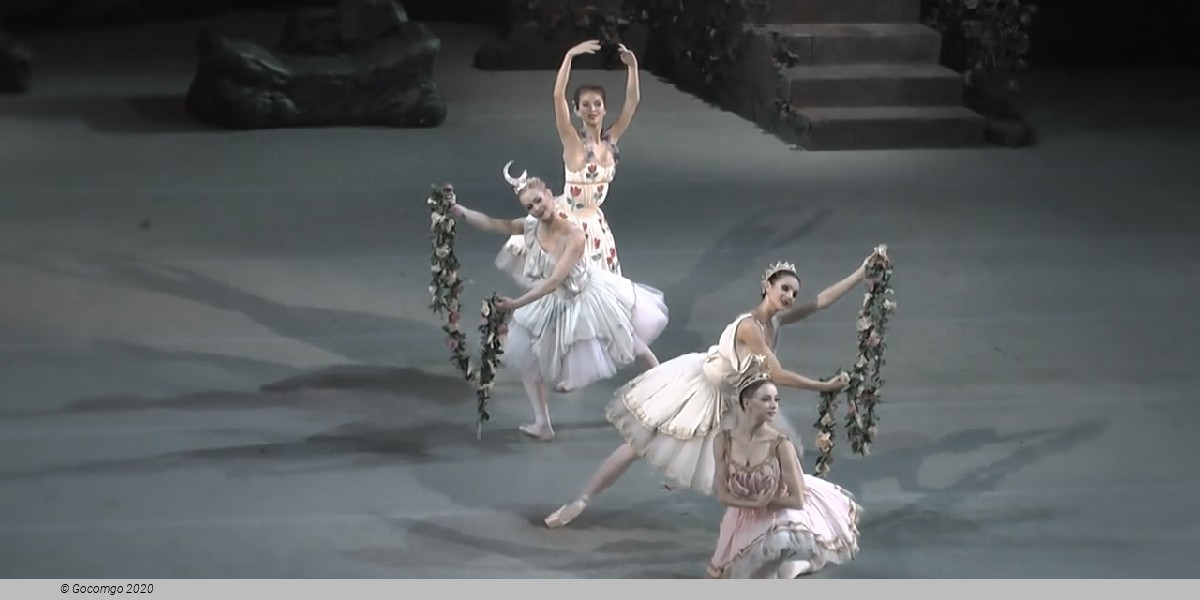
Scene 1. Danse de Diane. Night. Flore and her nymphs are in a deep sleep; Diane, the Goddess of the Night, guards their peace. As dawn approaches there is a freshness in the air. Diane hides in the clouds.
Scene 2. Entrée d’Aquilon, Danse de la rosée. Aquilon storms over the stage; his sudden appearance awakes the sleeping maidens and makes them seek refuge among the leafage. The appearance of the cool dew brings despair to Flore and she begs Aurore to come to their assistance.
Scene 3. Arrivée d’Aurore, Valse. Aurore comforts Flore with tender caresses and declares that she will be followed by the God of the Day – Apollon, who will put an end to their sufferings.
Scene 4. Entrée d’Apollon, Zéphyr, Cupidon et les Amours, Pas d’action. As the radiant Apollon appears everything comes to life. Enchanted by the beauty of the Goddess of Flowers, he kisses her. At the summons of the God of the Day, the light and gentle breeze Zéphyr flies into the embrace of Flore, his beloved. “You must be his friend,” Apollon tells her, “That is the will of the gods.” All are delighted. Cupidon, the Amours and Nymphs rejoice at the lovers’ happiness.
Scene 5. Arrivée de Mercure, Ganymède et Hébé. Mercure, the messenger of the gods, announces the arrival of Ganymède. Flore and Zéphyr bring forth a cup of nectar and declare that Jupiter will grant them eternal youth.
Scene 6. Cortège, Grand pas. Procession. Bacchus and Ariadne’s chariot, accompanied by maenads, satyrs, fauns and sylphs.
Apotheosis. Olympia. Jupiter, Juno, Neptune, Vulcan, Minerva, Ceres, Mars, Pluto, Proserpina and Venus all appear.

Content printed after the Annual of the Imperial Theatres for 1893–1894.

Taken from the original published piano score of 1894.

Tableau 1 — It is night. Flora, the goddess of Spring, is deep asleep with her nymphs; Diana, the goddess of Moon, guards their peace. With the approach of dawn, a freshness is felt in the air. Diana hides in the clouds.

Tableau 2 — Aquilon, the northern wind, rushes stormily over the locale; his cold breath of wind awakens Flora and forces her to seek refuge in the foliage. The appearance of chilling dew brings Flora to despair, and she implores Aurora, the goddess of the dawn, to help them.

Tableau 3 — Aurora consoles Flora with tender caresses and announces that Apollo, the god of day, who will end their sufferings, is following behind her. Aurora, Flora, and her nymphs perform a waltz.

Tableau 4 — With the appearance of resplendent Apollo, everything becomes animated. Smitten with the beauty of Flora, Apollo kisses her. At his call, Zephyr, the god of the gentle west wind, flies to his beloved Flora's embrace. He is followed by Cupid and her little amours. "You must be his helpmate," Apollo tells her, "It is the will of the gods." Everyone is delighted; Cupid, amours, and nymphs rejoice over the lover's happiness. A classical Pas d’action is performed.

Tableau 5 — Mercury, messenger of the gods, announces Hebé, the goddess of youth, and Ganymede, cupbearer to the gods. They present Flora and Zephyr a cup of nectar and proclaim that Jupiter has given them eternal youth.

Tableau 6 — A procession. The chariot of Bacchus and Ariadne is accompanied by bacchantes, satyrs, fauns, sylvans, and others. A Grand pas is performed by all assembled, followed by a rousing finale.

Apotheosis — Olympus is revealed; Jupiter appears, Juno, Neptune, Vulcan, Minerva, Ceres, Mars, Pluto, Proserpina, Venus, and others.

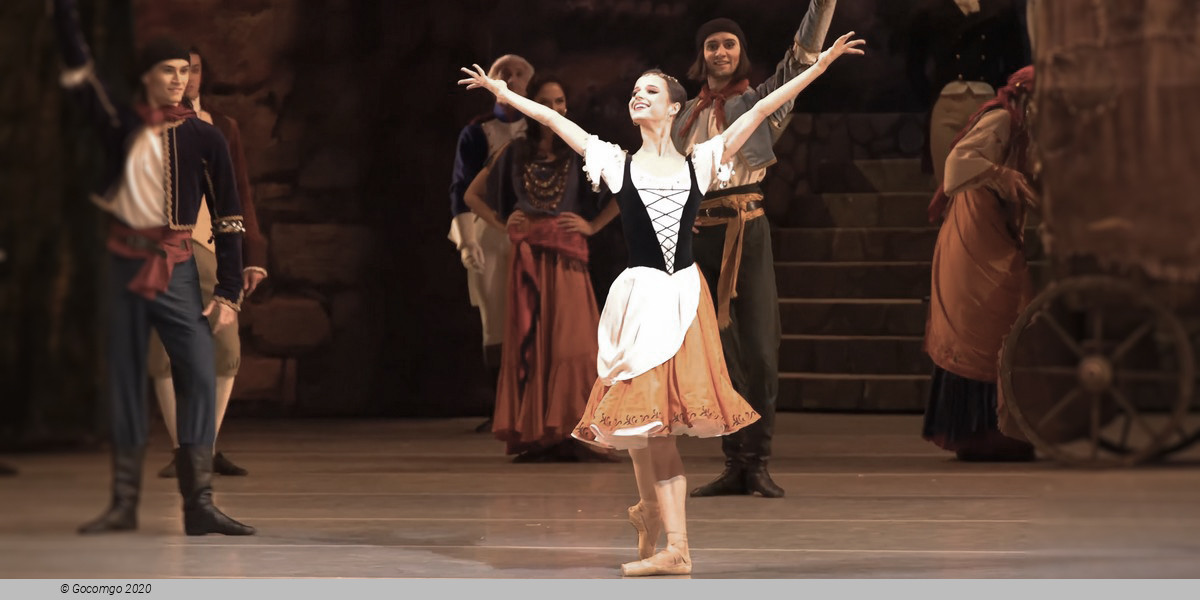
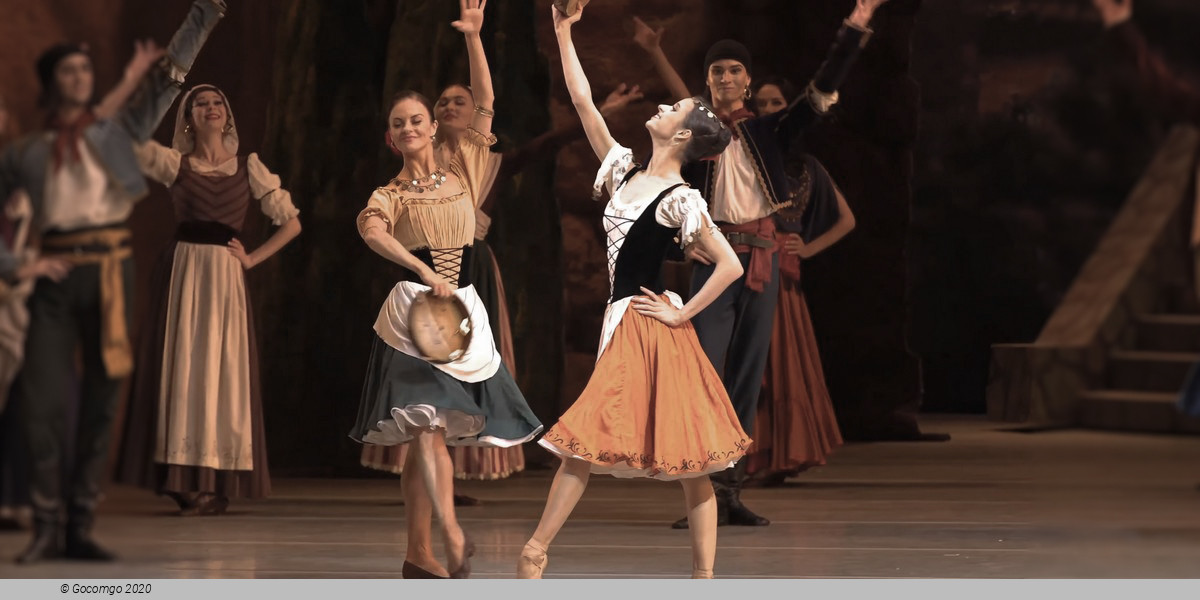
The story takes place in Spain during the presence of Napoleon's army. The heroine is the young gypsy girl, Paquita. Unbeknownst to Paquita, she is really of noble birth, having been abducted by gypsies when she was an infant. She saves the life of a young French officer, Lucien d'Hervilly, who is the target of a Spanish governor who desires to have him killed by Iñigo, a gypsy chief. By way of a medallion she discovers that she is of noble birth, being in fact the cousin of Lucien. As such, she and the Officer are able to get married.

Venue Info

Mariinsky Theatre - Saint Petersburg
Location   1 Theatre Square

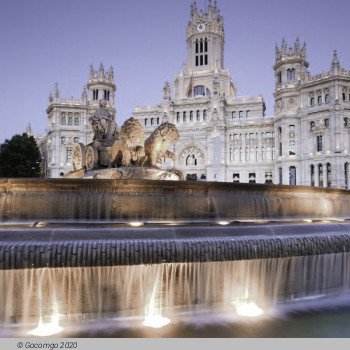
The Mariinsky Theatre is a historic theatre of opera and ballet in Saint Petersburg, Russia. Opened in 1860, it became the preeminent music theatre of late 19th-century Russia, where many of the stage masterpieces of Tchaikovsky, Mussorgsky, and Rimsky-Korsakov received their premieres. Through most of the Soviet era, it was known as the Kirov Theatre. Today, the Mariinsky Theatre is home to the Mariinsky Ballet, Mariinsky Opera and Mariinsky Orchestra. Since Yuri Temirkanov's retirement in 1988, the conductor Valery Gergiev has served as the theatre's general director.

The theatre is named after Empress Maria Alexandrovna, wife of Tsar Alexander II. There is a bust of the Empress in the main entrance foyer. The theatre's name has changed throughout its history, reflecting the political climate of the time.

The theatre building is commonly called the Mariinsky Theatre. The companies that operate within it have for brand recognition purposes retained the Kirov name, acquired during the Soviet era to commemorate the assassinated Leningrad Communist Party leader Sergey Kirov (1886–1934).

The Imperial drama, opera and ballet troupe in Saint Petersburg was established in 1783, at the behest of Catherine the Great, although an Italian ballet troupe had performed at the Russian court since the early 18th century. Originally, the ballet and opera performances were given in the wooden Karl Knipper Theatre on Tsaritsa Meadow, near the present-day Tripartite Bridge (also known as the Little Theatre or the Maly Theatre). The Hermitage Theatre, next door to the Winter Palace, was used to host performances for an elite audience of aristocratic guests invited by the Empress.

A permanent theatre building for the new company of opera and ballet artists was designed by Antonio Rinaldi and opened in 1783. Known as the Imperial Bolshoi Kamenny Theatre the structure was situated on Carousel Square, which was renamed Theatre Square in honour of the building. Both names – "Kamenny" (Russian word for "stone") and "Bolshoi" (Russian word for "big") – were coined to distinguish it from the wooden Little Theatre. In 1836, the Bolshoi Kamenny Theatre was renovated to a design by Albert Cavos (son of Catterino Cavos, an opera composer), and served as the principal theatre of the Imperial Ballet and opera.

On 29 January 1849, the Equestrian circus (Конный цирк) opened on Theatre Square. This was also the work of the architect Cavos. The building was designed to double as a theatre. It was a wooden structure in the then-fashionable neo-Byzantine style. Ten years later, when this circus burnt down, Albert Cavos rebuilt it as an opera and ballet house with the largest stage in the world. With a seating capacity of 1,625 and a U-shaped Italian-style auditorium, the theatre opened on 2 October 1860, with a performance of A Life for the Tsar. The new theatre was named Mariinsky after its imperial patroness, Empress Maria Alexandrovna.

Under Yuri Temirkanov, Principal Conductor from 1976 to 1988, the Opera Company continued to stage innovative productions of both modern and classic Russian operas. Although functioning separately from the Theatre’s Ballet Company, since 1988 both companies have been under the artistic leadership of Valery Gergiev as Artistic Director of the entire Theatre.

The Opera Company has entered a new era of artistic excellence and creativity. Since 1993, Gergiev’s impact on opera there has been enormous. Firstly, he reorganized the company’s operations and established links with many of the world's great opera houses, including the Royal Opera House, Covent Garden, the Metropolitan Opera, the Opéra Bastille, La Scala, La Fenice, the Israeli Opera, the Washington National Opera and the San Francisco Opera. Today, the Opera Company regularly tours to most of these cities.

Gergiev has also been innovative as far as Russian opera is concerned: in 1989, there was an all-Mussorgsky festival featuring the composer’s entire operatic output. Similarly, many of Prokofiev’s operas were presented from the late 1990s. Operas by non-Russian composers began to be performed in their original languages, which helped the Opera Company to incorporate world trends. The annual international "Stars of the White Nights Festival" in Saint Petersburg, started by Gergiev in 1993, has also put the Mariinsky on the world’s cultural map. That year, as a salute to the imperial origins of the Mariinsky, Verdi's La forza del destino, which received its premiere in Saint Petersburg in 1862, was produced with its original sets, costumes and scenery. Since then, it has become a characteristic of the "White Nights Festival" to present the premieres from the company’s upcoming season during this magical period, when the hours of darkness practically disappear as the summer solstice approaches.

Presently, the Company lists on its roster 22 sopranos (of whom Anna Netrebko may be the best known); 13 mezzo-sopranos (with Olga Borodina familiar to US and European audiences); 23 tenors; eight baritones; and 14 basses. With Gergiev in charge overall, there is a Head of Stage Administration, a Stage Director, Stage Managers and Assistants, along with 14 accompanists.

Important Info
Type: Ballet
City: Saint Petersburg, Russia
Starts at: 19:00
Acts: 1
Duration:
Top of page