
Mariinsky Theatre tickets 4 July 2026 - La Gioconda | GoComGo.com

La Gioconda

Mariinsky Theatre, Mariinsky II, Saint Petersburg, Russia
All photos (10)
Select date and time
7 PM
Request for Tickets
Important Info
Type: Opera
City: Saint Petersburg, Russia
Starts at: 19:00
Intervals: 1
Duration: 3h 15min
Sung in: Italian
Titles in: Russian

E-tickets: Print at home or at the box office of the event if so specified. You will find more information in your booking confirmation email.

You can only select the category, and not the exact seats.
If you order 2 or 3 tickets: your seats will be next to each other.
If you order 4 or more tickets: your seats will be next to each other, or, if this is not possible, we will provide a combination of groups of seats (at least in pairs, for example 2+2 or 2+3).

Cast
Performers
Orchestra: Mariinsky Orchestra
Chorus: Mariinsky Chorus
Creators
Composer: Amilcare Ponchielli
Librettist: Arrigo Boito
Director: Orlin Anastasov
Overview

The composer Amilcare Ponchielli (1834–1886) spent many, many years approaching his most important creation – the opera La Gioconda. He had to compose six operas and several ballets which brought him no serious success before Giulio Ricordi took an interest in him. The largest publisher and impresario in Italy was looking for a replacement for Giuseppe Verdi who had fallen silent. As a candidate for the vacancy of “the new Verdi”, Ponchielli received a commission to write the opera I Lituani (1874). I Lituani was followed by La Gioconda. Its premiere at the Teatro alla Scala in Milan on 8 April 1876 brought the composer long-awaited glory.

The basis of the libretto of La Gioconda came with Victor Hugo’s play Angelo, tyran de Padoue (1835). The playwright and composer Arrigo Boito, in the future Verdi’s librettist, changed the names of the characters and transferred the action from Padua to Venice in the 17th century. Thus, too, the sea and a carnival appeared in the opera. Boito allocated each of the four acts vivid titles: “The Lion’s Mouth”, “The Rosary”, “The Ca’ d’oro” and “The Orfano Canal”. He opened the choral introduction with Juvenal’s famous phrase “Pane e circenses!” (“Bread and circuses!”), while Laura’s prayer from Act III is a quotation from the medieval hymn of the Mother of God Hail, Queen of the Sea. The libretto presented Ponchielli with rich opportunities. The first two acts of La Gioconda open with scenes of the sea – a regatta on the Venetian Lagoon and a song of the sailors onboard Enzo’s ship. The carnival is present almost uninterruptedly throughout the opera.

It is against such a rich background that the battle between the heroine, a singer known as Gioconda (from “la gioconda”, Italian for “the merry one”), and the villain Barnaba, a spy of the inquisition, unfolds. Their themes, which emerge in the orchestral prelude, run throughout the entire work.

In terms of genre, La Gioconda is a “grand opera” in the style of Aida, with the romantic weaving of fateful passions, jealousy, envy and imaginary and actual murders. The complex ensembles and choruses, the confessional arias and the ballet numbers (the famous Dance of the Hours) make it attractive for the public and it is favoured by singers. La Gioconda has inexplicably long been absent from the St Petersburg stage, and it is intended for this concert performance to fill the gap. Audiences will find it hard to refrain from comparing Gioconda with other verist actresses – Tosca and Adrienne Lecouvreur, ruined in the prime of their lives by the characters of the eponymous operas from the late 19th and early 20th centuries. Anna Bulycheva

History
Premiere of this production: 08 April 1876, Teatro alla Scala, Milan

La Gioconda is an opera in four acts by Amilcare Ponchielli set to an Italian libretto by Arrigo Boito (as Tobia Gorrio), based on Angelo, Tyrant of Padua, a play in prose by Victor Hugo, dating from 1835. (This is the same source as Gaetano Rossi had used for his libretto for Mercadante's Il giuramento in 1837).

Synopsis

The opera's title translates as The Happy Woman, but is usually given in English as The Ballad Singer. However, as this fails to convey the irony inherent in the original, the Italian is usually used. Each act of La Gioconda has a title.

Place: Venice
Time: 17th century
The story revolves around a woman, Gioconda, who so loves her mother that when Laura, her rival in love for the heart of Enzo, saves her mother's life, Gioconda puts aside her own romantic love to repay her. The villain Barnaba tries to seduce Gioconda, but she prefers death.

Act 1 The Lion's Mouth

The courtyard of the Doge's Palace

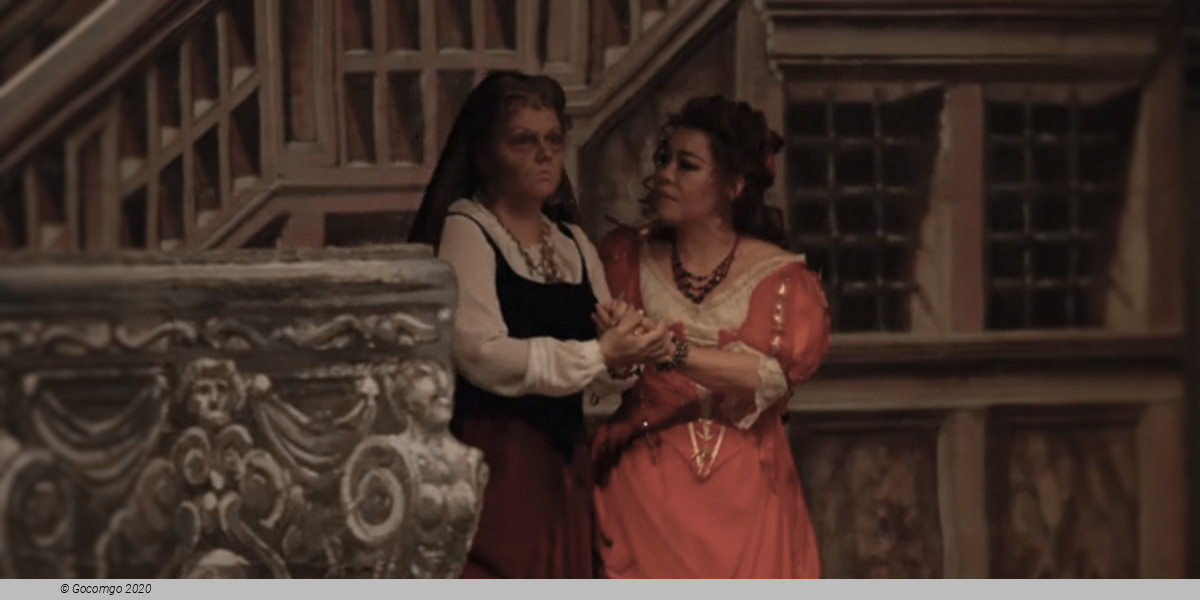
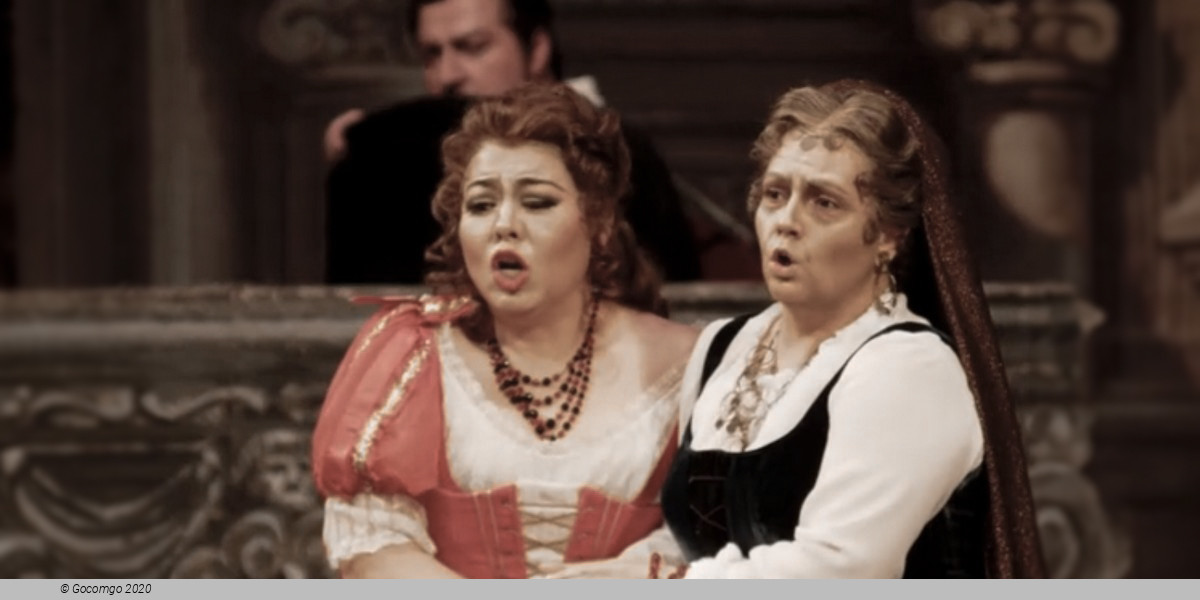
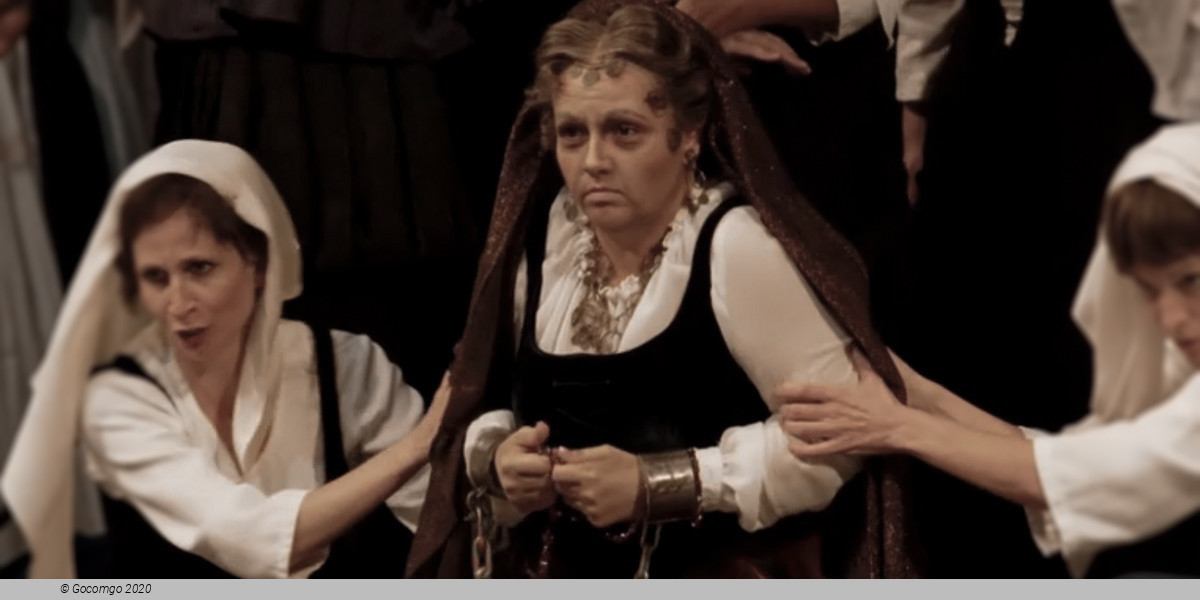
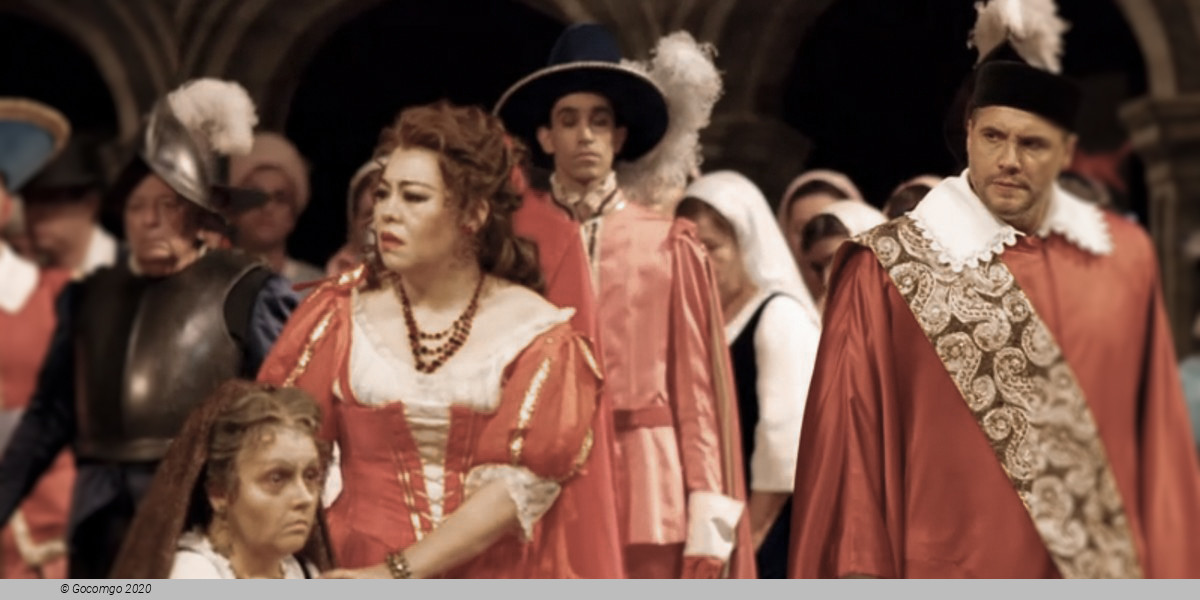
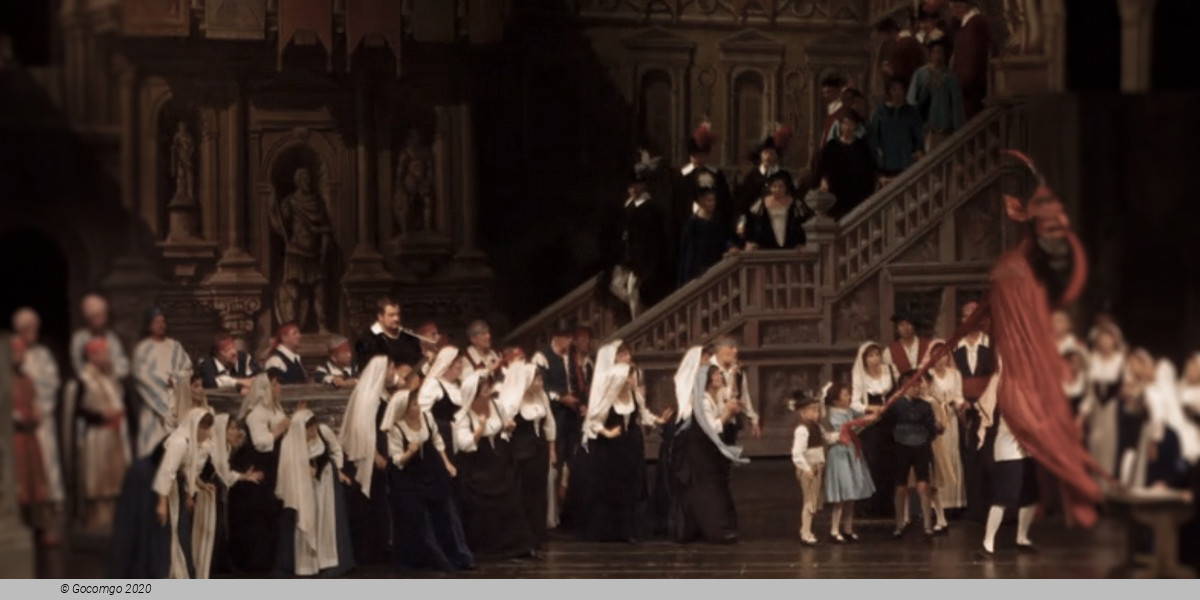
During Carnival celebrations before Lent, while everyone else is preoccupied with a regatta, Barnaba, a state spy, lustfully watches La Gioconda as she leads her blind mother, La Cieca, across the Square. When his amorous advances are firmly rejected, he exacts his revenge by denouncing the old lady as a witch whose evil powers influenced the outcome of the gondola race. It is only the intervention of a young sea captain that keeps the angry mob at bay.

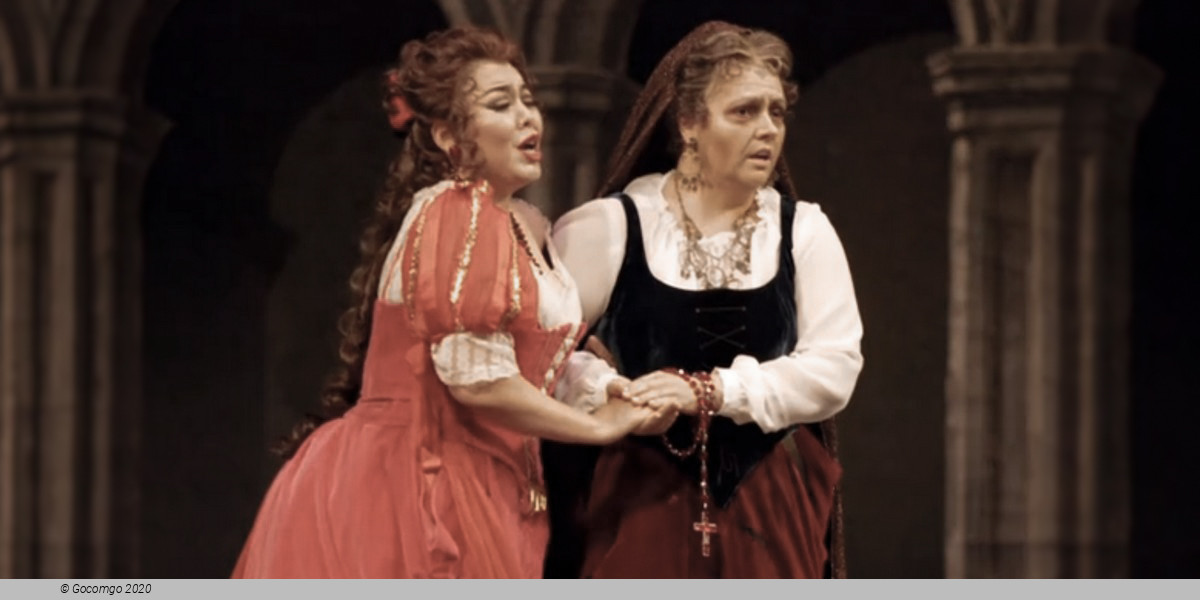
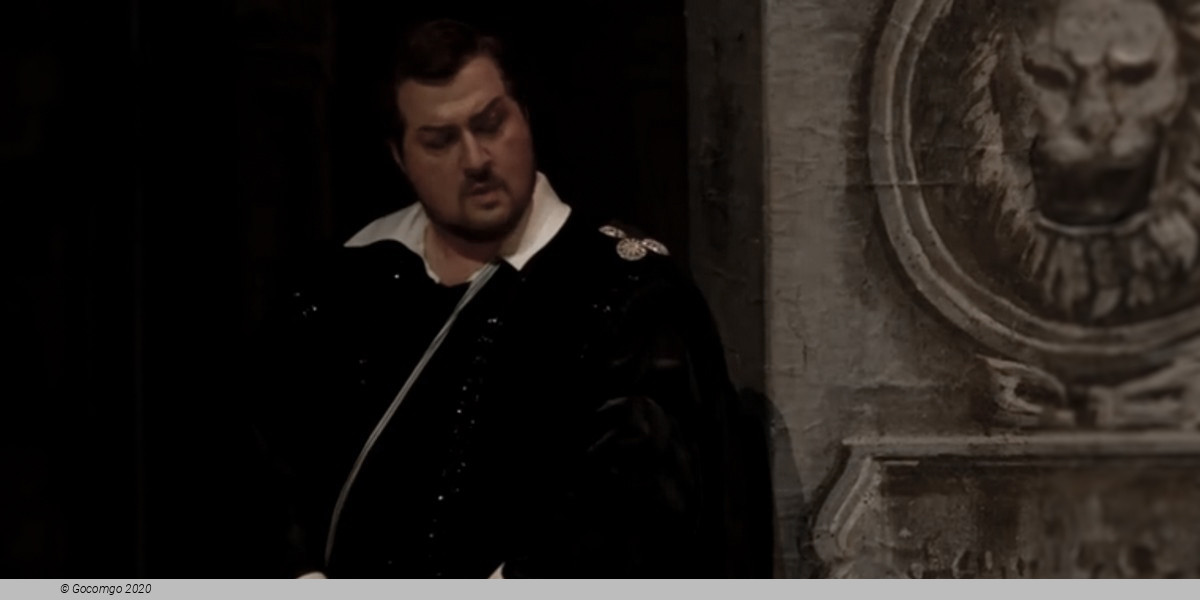
Calm is restored at the approach of Alvise Badoero, a member of the Venetian Inquisition, and his wife, Laura. Laura places La Cieca under her personal protection, and in gratitude the old woman presents her with her most treasured possession, a rosary. The sharp-eyed Barnaba notices furtive behaviour between Laura and the sea captain indicating a secret relationship. Recalling that Laura was engaged to the now banished nobleman Enzo Grimaldo before her forced marriage to Alvise, Barnaba realises that the sea captain is Enzo in disguise.

Barnaba confronts Enzo, who admits his purpose in returning to Venice is to take Laura and begin a new life elsewhere. Barnaba knows that Gioconda is also infatuated with Enzo and he sees an opportunity to improve his chances with her by assisting Enzo with his plan of elopement.

When Enzo has gone, Barnaba dictates a letter to Alvise revealing his wife's infidelity and the lovers' plan of escape. He is unaware that he has been overheard by Gioconda. The act ends with Barnaba dropping the letter into the Lion's Mouth, where all secret information for the Inquisition is posted, while Gioconda laments Enzo's perceived treachery, and the crowd returns to its festivities.

Act 2 The Rosary

The deck of Enzo's ship

Enzo waits for Barnaba to row Laura out from the city to his vessel. Their joyful reunion is overshadowed by Laura's fears as she does not trust Barnaba. Gradually Enzo is able to reassure her, and he leaves her on deck while he goes to prepare for their departure.

La Gioconda has been following Laura with the intention of exacting revenge from her rival. Alvise and his armed men are also in hot pursuit, but as Gioconda is about to stab Laura she sees her mother's rosary hanging round her neck and has an instant change of heart. She hurries Laura into her boat so that she can evade her pursuers.

Enzo returns to the deck to find that Laura has fled leaving Gioconda triumphant. Furthermore, Alvise's men are rapidly approaching. He sets fire to the ship rather than let it fall into the hands of his enemies before diving into the lagoon.

Act 3 The Ca' d'Oro (House of Gold)

Alvise's palace

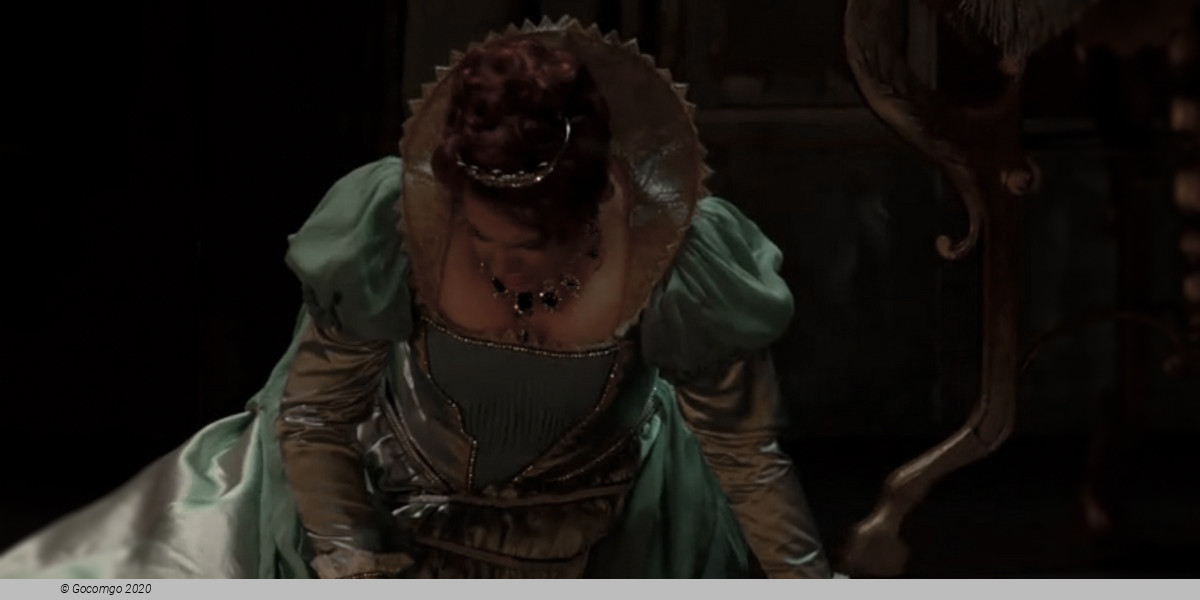
Laura has been captured, and her vengeful husband insists she must die by poisoning herself (effectively committing suicide and condemning herself to Hell). Once again Gioconda has followed and has found her way into the palace, this time with the intention of saving her rival. Finding Laura alone Gioconda replaces the phial of poison with a powerful drug which creates the appearance of death. The second scene begins with Alvise welcoming his fellow members of the nobility to the palace; Barnaba and Enzo are amongst those present. Lavish entertainment is provided and the act ends with the famous ballet Dance of the Hours. The mood of revelry is shattered as a funeral bell begins to toll and the body of Laura is revealed awaiting burial. A distraught Enzo flings off his disguise and is promptly seized by Alvise's men.

Act 4 The Orfano Canal

A crumbling ruin on the island of Giudecca

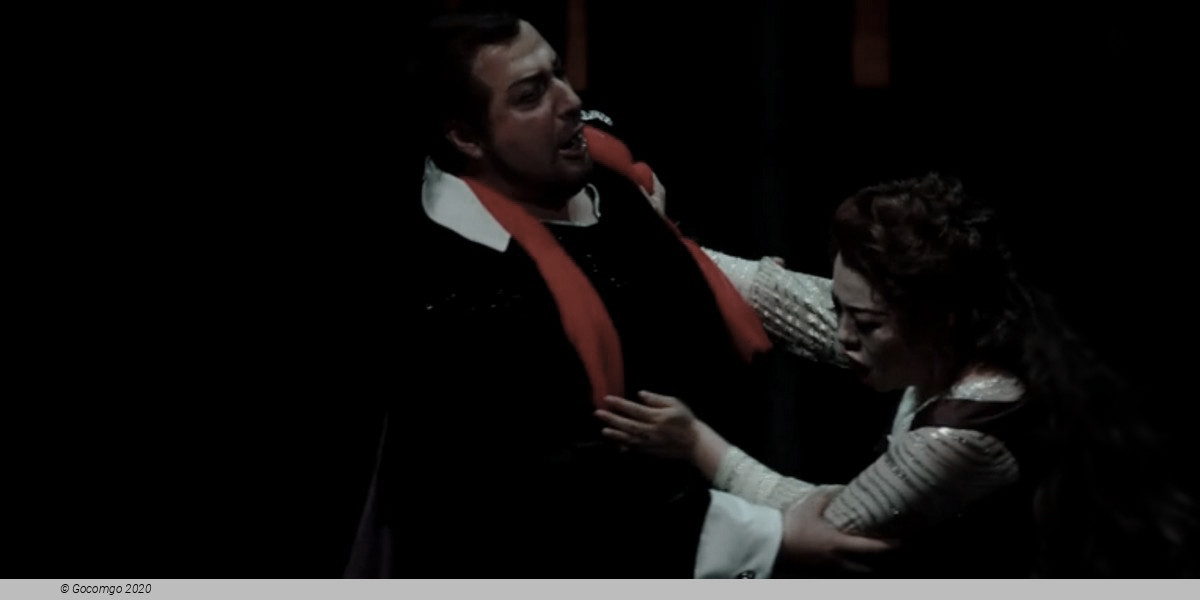
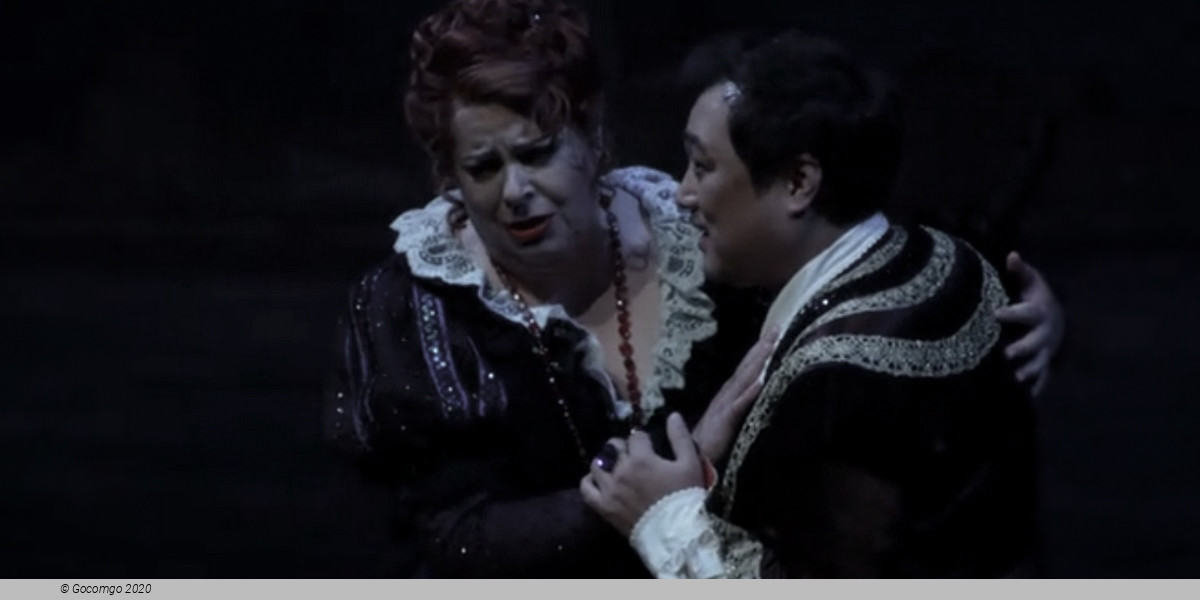
In exchange for Enzo's release from prison, La Gioconda has agreed to give herself to Barnaba. When Enzo is brought in, he is initially furious when Gioconda reveals that she has had Laura's body brought from its tomb. He is about to stab her when Laura's voice is heard and Gioconda's part in reuniting the lovers becomes clear. Enzo and Laura make their escape, leaving La Gioconda to face the horrors awaiting her with Barnaba. The gondoliers' voices are heard in the distance telling that there are corpses floating in the city. When Gioconda tries to leave, she is caught by Barnaba. She then pretends to welcome his arrival, but under cover of decking herself in her jewellery, seizes a dagger and stabs herself to death. In frustrated rage Barnaba tries to perpetrate one last act of evil, screaming at the lifeless body "Last night your mother offended me. I drowned her!"

Famous arias and excerpts
"Voce di donna o d'angelo" (La Cieca)
"O monumento" (Barnaba)
"Cielo e mar" (Enzo)
"Stella del Marinar" (Laura)
"E un anatema!... L'amo come il fulgor creato" (duet Gioconda with Laura)
"Si! Morir ella de!" (Alvise)
Dance of the Hours
"Suicidio!" (Gioconda)
"Ora posso morir... Vo' farmi più gaia" (final duet Gioconda with Barnaba)

Venue Info

Mariinsky Theatre - Saint Petersburg
Location   1 Theatre Square

The Mariinsky Theatre is a historic theatre of opera and ballet in Saint Petersburg, Russia. Opened in 1860, it became the preeminent music theatre of late 19th-century Russia, where many of the stage masterpieces of Tchaikovsky, Mussorgsky, and Rimsky-Korsakov received their premieres. Through most of the Soviet era, it was known as the Kirov Theatre. Today, the Mariinsky Theatre is home to the Mariinsky Ballet, Mariinsky Opera and Mariinsky Orchestra. Since Yuri Temirkanov's retirement in 1988, the conductor Valery Gergiev has served as the theatre's general director.

The theatre is named after Empress Maria Alexandrovna, wife of Tsar Alexander II. There is a bust of the Empress in the main entrance foyer. The theatre's name has changed throughout its history, reflecting the political climate of the time.

The theatre building is commonly called the Mariinsky Theatre. The companies that operate within it have for brand recognition purposes retained the Kirov name, acquired during the Soviet era to commemorate the assassinated Leningrad Communist Party leader Sergey Kirov (1886–1934).

The Imperial drama, opera and ballet troupe in Saint Petersburg was established in 1783, at the behest of Catherine the Great, although an Italian ballet troupe had performed at the Russian court since the early 18th century. Originally, the ballet and opera performances were given in the wooden Karl Knipper Theatre on Tsaritsa Meadow, near the present-day Tripartite Bridge (also known as the Little Theatre or the Maly Theatre). The Hermitage Theatre, next door to the Winter Palace, was used to host performances for an elite audience of aristocratic guests invited by the Empress.

A permanent theatre building for the new company of opera and ballet artists was designed by Antonio Rinaldi and opened in 1783. Known as the Imperial Bolshoi Kamenny Theatre the structure was situated on Carousel Square, which was renamed Theatre Square in honour of the building. Both names – "Kamenny" (Russian word for "stone") and "Bolshoi" (Russian word for "big") – were coined to distinguish it from the wooden Little Theatre. In 1836, the Bolshoi Kamenny Theatre was renovated to a design by Albert Cavos (son of Catterino Cavos, an opera composer), and served as the principal theatre of the Imperial Ballet and opera.

On 29 January 1849, the Equestrian circus (Конный цирк) opened on Theatre Square. This was also the work of the architect Cavos. The building was designed to double as a theatre. It was a wooden structure in the then-fashionable neo-Byzantine style. Ten years later, when this circus burnt down, Albert Cavos rebuilt it as an opera and ballet house with the largest stage in the world. With a seating capacity of 1,625 and a U-shaped Italian-style auditorium, the theatre opened on 2 October 1860, with a performance of A Life for the Tsar. The new theatre was named Mariinsky after its imperial patroness, Empress Maria Alexandrovna.

Under Yuri Temirkanov, Principal Conductor from 1976 to 1988, the Opera Company continued to stage innovative productions of both modern and classic Russian operas. Although functioning separately from the Theatre’s Ballet Company, since 1988 both companies have been under the artistic leadership of Valery Gergiev as Artistic Director of the entire Theatre.

The Opera Company has entered a new era of artistic excellence and creativity. Since 1993, Gergiev’s impact on opera there has been enormous. Firstly, he reorganized the company’s operations and established links with many of the world's great opera houses, including the Royal Opera House, Covent Garden, the Metropolitan Opera, the Opéra Bastille, La Scala, La Fenice, the Israeli Opera, the Washington National Opera and the San Francisco Opera. Today, the Opera Company regularly tours to most of these cities.

Gergiev has also been innovative as far as Russian opera is concerned: in 1989, there was an all-Mussorgsky festival featuring the composer’s entire operatic output. Similarly, many of Prokofiev’s operas were presented from the late 1990s. Operas by non-Russian composers began to be performed in their original languages, which helped the Opera Company to incorporate world trends. The annual international "Stars of the White Nights Festival" in Saint Petersburg, started by Gergiev in 1993, has also put the Mariinsky on the world’s cultural map. That year, as a salute to the imperial origins of the Mariinsky, Verdi's La forza del destino, which received its premiere in Saint Petersburg in 1862, was produced with its original sets, costumes and scenery. Since then, it has become a characteristic of the "White Nights Festival" to present the premieres from the company’s upcoming season during this magical period, when the hours of darkness practically disappear as the summer solstice approaches.

Presently, the Company lists on its roster 22 sopranos (of whom Anna Netrebko may be the best known); 13 mezzo-sopranos (with Olga Borodina familiar to US and European audiences); 23 tenors; eight baritones; and 14 basses. With Gergiev in charge overall, there is a Head of Stage Administration, a Stage Director, Stage Managers and Assistants, along with 14 accompanists.

Important Info
Type: Opera
City: Saint Petersburg, Russia
Starts at: 19:00
Intervals: 1
Duration: 3h 15min
Sung in: Italian
Titles in: Russian
Top of page