








Mariinsky Theatre 28 November 2020 - Mozart and Salieri / Kashchey the Immortal (one act operas) | GoComGo.com

Mozart and Salieri / Kashchey the Immortal (one act operas)

Mariinsky Theatre, Concert Hall, Saint Petersburg, Russia
All photos (9)
Select date and time
12 PM 7 PM
Request for Tickets
Important Info
Type: Opera
City: Saint Petersburg, Russia
Starts at: 19:00
Acts: 1
Duration: 1h 10min
Sung in: Russian
Titles in: English,Russian

E-tickets: Print at home or at the box office of the event if so specified. You will find more information in your booking confirmation email.

You can only select the category, and not the exact seats.
If you order 2 or 3 tickets: your seats will be next to each other.
If you order 4 or more tickets: your seats will be next to each other, or, if this is not possible, we will provide a combination of groups of seats (at least in pairs, for example 2+2 or 2+3).

Overview

Performance due to have taken place on 25 April

History
Premiere of this production: Solodovnikov Theater in Moscow

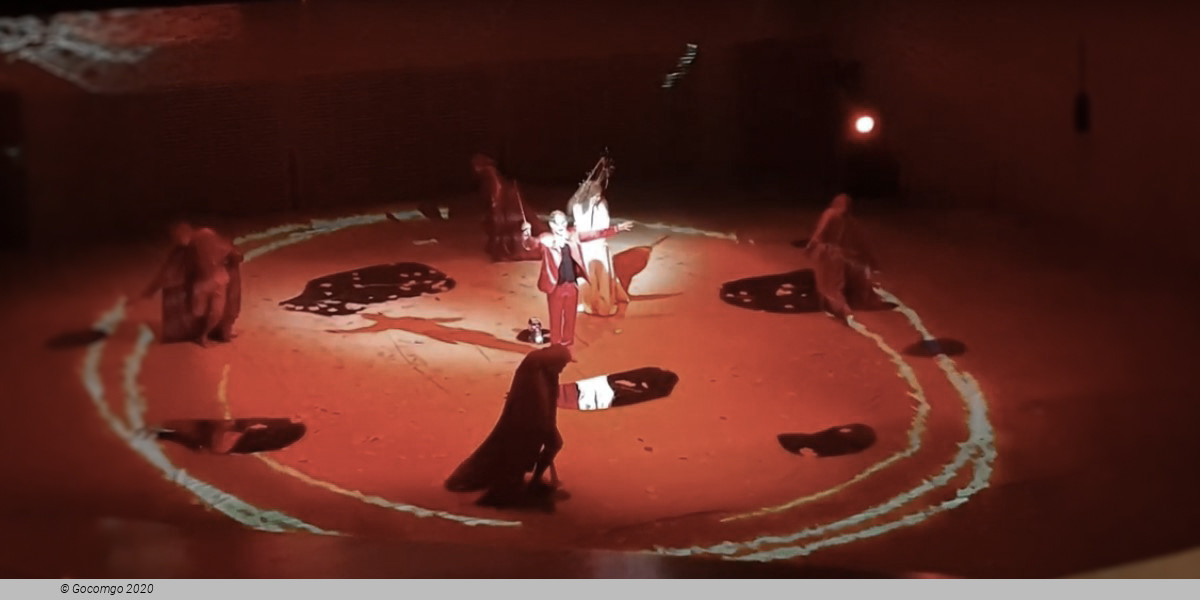
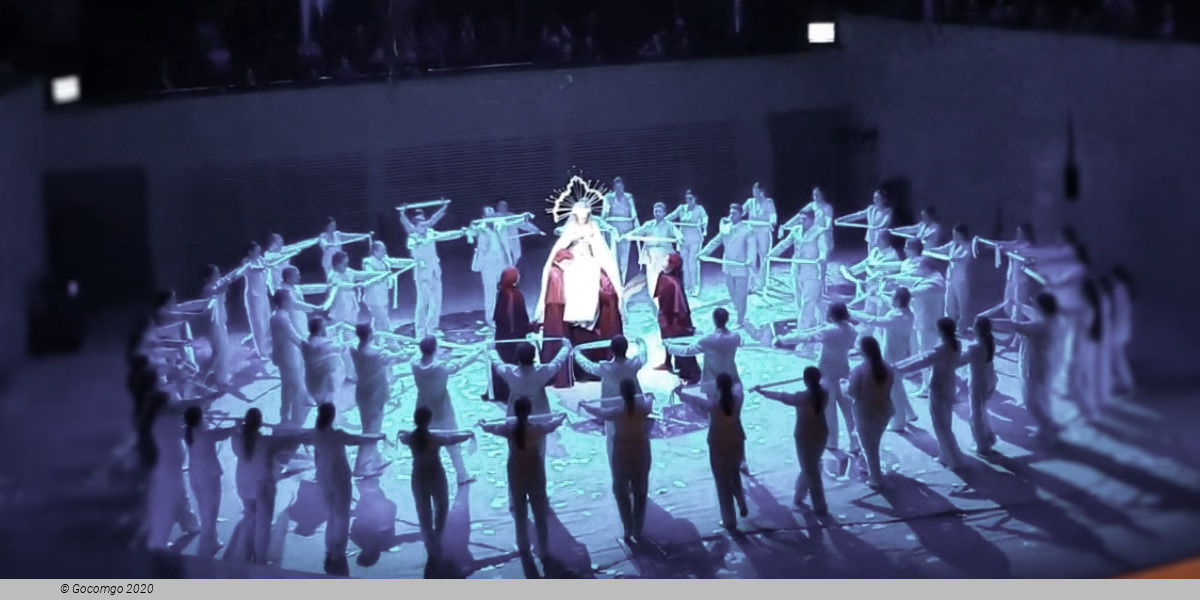
Kashchey the Deathless, a.k.a. Kashchey the Immortal, is a one-act opera in three scenes (styled a "little autumnal fairy tale") by Nikolai Rimsky-Korsakov. The libretto was written by the composer, and is based on a Russian fairy tale about Koschei the Deathless, an evil, ugly old wizard, who menaced principally young women. A similar fairy tale was also used by Igor Stravinsky (Rimsky-Korsakov's pupil) and Michel Fokine to create their iconic ballet, The Firebird.

Premiere of this production: Solodovnikov Theater, Moscow

Mozart and Salieri is a one-act opera in two scenes by Nikolai Rimsky-Korsakov, written in 1897 to a Russian libretto taken almost verbatim from Alexander Pushkin's 1830 verse drama of the same name.

Synopsis

Scene 1
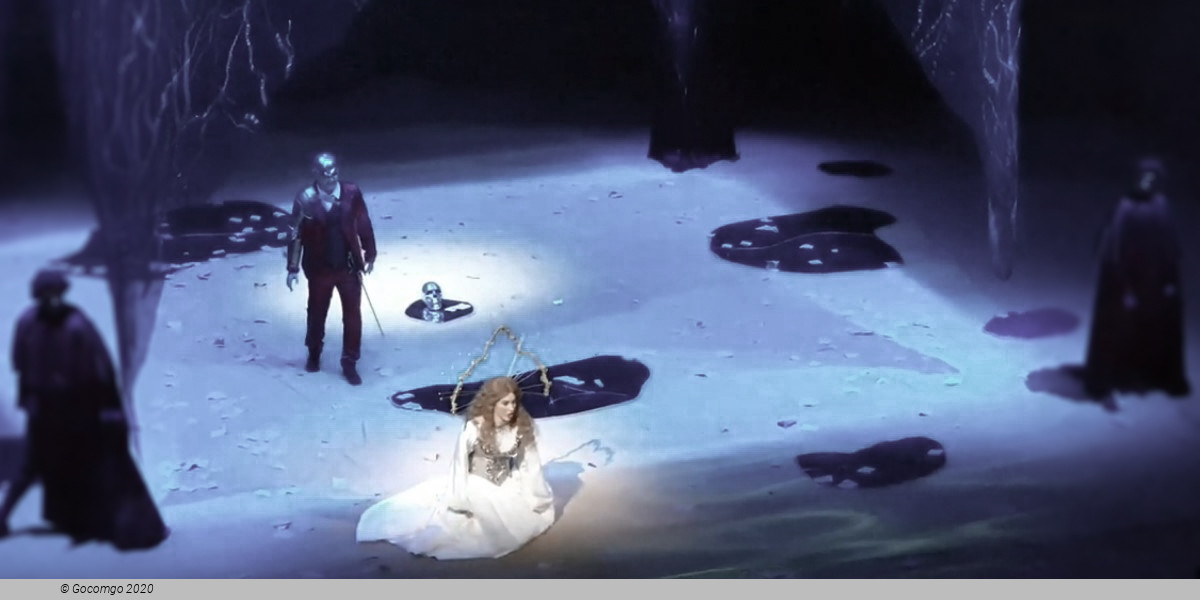
All is despondent and gloomy in Kashchey's kingdom. It is mid-autumn. The Princess of Untold Beauty languishes in her confinement, forcibly separated from her beloved Ivan-Tsarevich ("Days without light, sleepless nights, like wintry clouds they pass in an unchanging course..."). Kashchey enters. The Princess begs that the evil wizard gives her a chance to see her betrothed. Kashchey gives the Princess a magic mirror in which she sees Kashchey's daughter, and next to her is Ivan-Tsarevich. Kashchey also looks into the mirror and sees his own death there. Frightened, he sends Storm-Wind to his daughter to discover whether she still keeps his death close to her. The Princess asks Storm-Wind to reveal her intended and to tell him hwo she languishes in captivity. Storm-Wind sets out for the Far-Away Kingdom where Kashcheyevna lives.
Kashchey speaks of the secret of his immortality which lies in his daughter's tears – until Kashcheyevna cries nothing can threaten the wizard ("I have discovered the mystery of nature: I have found the gift of immortality"). Then he calls the Princess and asks her to sing him a lullaby, but she does not wish to enter the tower. Vengeful, Kashchey calls forth a snow-storm and blizzard on his kingdom.

Scene 2
A rocky island by the sea. In the moonlight, Kashcheyevna approaches the sea with a cup containing a magical elixir that she offers to young knights before killing them ("Night has fallen. The wind has dropped. Sweet-smelling darkness all around, and the wicked waves roll in more strongly...). Ivan-Tsarevich appears. The beauty of nature makes him think once more with nostalgia about the Princess ("Hark, oh night and sweet-smelling garden, night waves, stars and flower!"). Kashcheyevna offers the Tsarevich the goblet. He drains it and falls under the power of Kashcheyevna's magic charms. The wizard's daughter is also attracted by the knight ("A wave of passion shall carry us in a golden boat, through a sea of sweet dreams."). The Tsarevich falls asleep and Kashcheyevna holds a sword above him, but in a moment of indecision she hesitates. Suddenly Kashchei's Storm-Wind herald appears. Storm-Wind dispels the witch's charms – upon wakening, Ivan-Tarevich sets of with Storm-Wind for Kashchei's kingdom. Kashcheyevna also races there.

Scene 3
Kashchei is asleep in his tower, while the Princess, sitting on the porch, sings an evil lullaby to him ("Hush, hush, grey-headed Kashchey, evil immortal!"). Storm-Wind brings Ivan-Tsarevich to Kashchey's kingdom. The lovers greet each other in delight. ("The hour of separation has passed, my beloved friend is with me."). The Tsarevich lures the Princess after him to her freedom, but on the way they are stopped by Kashcheyevna. Love has erupted in her cold heart. She begs the Tsarevich to remain with her, promising to grant the Princess freedom. Moved by a sudden feeling of compassion, the Princess kisses Kashcheyevna. Kashcheyevna's heart softens, and tears appear in her eyes ("My eyes weep tears, for the first time. Like the dew on a fragrant flower, the tears refresh my heart..."). Kasheyevna is transformed into a beautiful weeping willow, and as she weeps so Kashchey's death comes.
Unseen voices announce the death of Kashchei. Storm-Wind throws the gates open wide – from the kingdom of death they may now travel the road to the kingdom of love and happiness.

Time: Unspecified
Place: Kashchey's realm in the thrice-tenth kingdom, a far off place (beyond thrice-nine lands) in Russian folklore.

Scene 1

Kashchey's realm

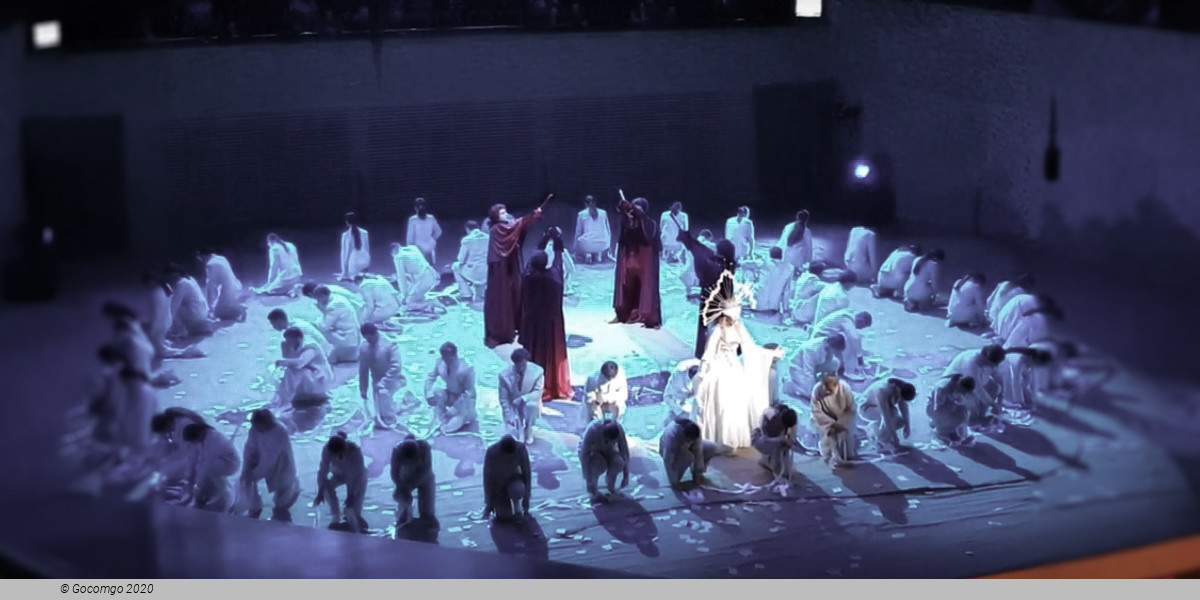
The beautiful Tsarevna (Princess) is imprisoned by the evil wizard Kashchey the Deathless in his gloomy kingdom, longing for her beloved Prince Ivan-Korolevich. She is upset when she looks into Kaschey's magic mirror and sees Ivan together with Kashcheyevna, the daughter of Kashchey. Kashchey is afraid that Ivan could discover the secret of his immortality and cause his death. He reveals that he hid his death in one of Kascheyevna's tears: if she ever cries, Kaschey will be able to die. Fortunately, Kascheyevna is hard and cold. Kaschey breaks the mirror and sends the Burya-Bogatyr (Storm Knight) to Kascheyevna to ask how safely she keeps his death.

Scene 2

Kashcheyevna's domain

Kashcheyevna prepares a magic potion to lull the Prince to sleep and force him to forget his beautiful Princess. She also whets her sword, planning to kill Ivan while he sleeps. When Ivan-Korolevich enters, she gives him the potion and tries to seduce him. He falls asleep and Kascheyevna tries to strike his head off, but cannot do it. Burya-Bogatyr suddenly appears, awakening Ivan and ending Kascheyevna's charm. Burya-Bogatyr also reveals that the Tsarevna is imprisoned in Kaschey's kingdom and that Kascheyevna has something to do with preserving Kaschey's immortality. Ivan follows Burya-Bogatyr back to Kaschey's kingdom.

Scene 3

Kashchey's realm

The Tsarevna sings a lullaby to Kashchey. Ivan arrives and attempts to free the Tsarevna. Kascheyevna arrives and pleads with Ivan to go with her instead, since he is the first man to awaken love in her heart. Moved to compassion, the Tsarevna kisses Kascheyevna, who begins to cry. Invisible voices announce the death of Kashchey. Kashcheyevna is turned into a weeping willow. Burya-Bogatyr opens the gates to show the lovers the way out of the gloomy kingdom, and into the world of light, Spring, and love.

Vienna at the end of the 18th century
Scene 1
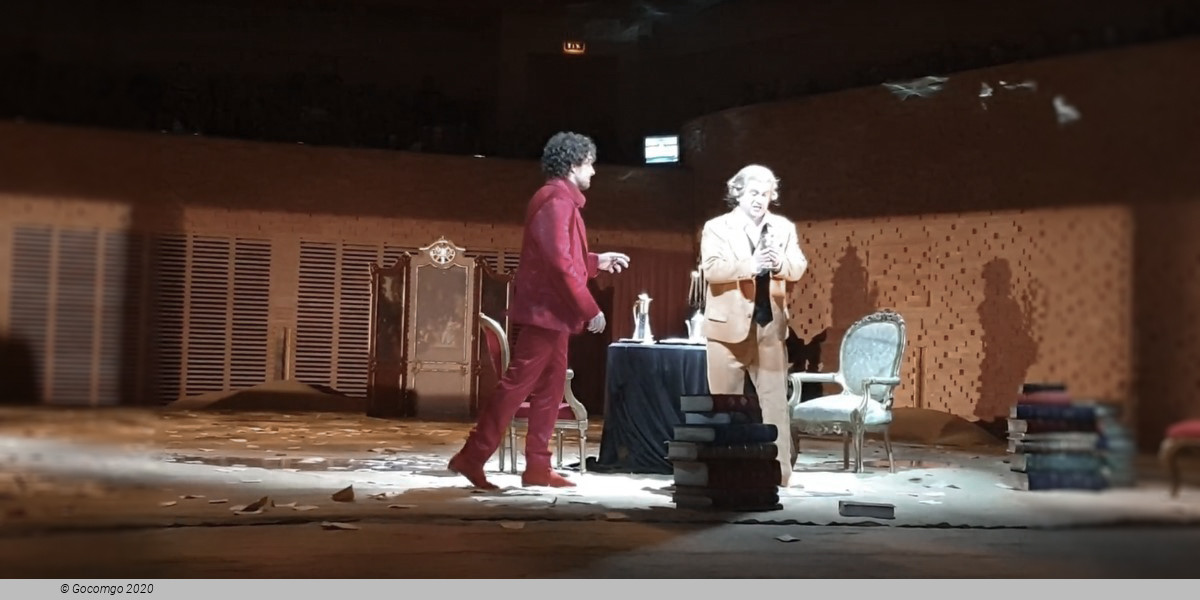
Salieri is deep in thought. He remembers his own convoluted path to glory and sorely envies Mozart: “Where, where is rightness? When the sacred gift, immortal genius, comes not in reward for fervent love, for total self-rejection, for work and for exertion and for prayers, but casts its light upon a madman's head, an idle loafer's brow...”
Mozart enters. He brings with him a blind fiddler, who played tunes from Mozart’s operas in an inn. The old man plays Zerlina’s aria from Don Giovanni, but does so out of tune. Mozart roars with laughter, while furious Salieri send the fiddler away.
Mozart shows his new work to his friend. Salieri is astounded by it and cannot hide his jealousy. Mozart and Salieri decide to dine together and part ways. Alone, Salieri decides that he has been chosen to stop Mozart, whose genius brings only destruction: “Like some celestial cherub, he came to bring us several tunes from heaven, to rouse within us, creatures of the dust, wingless desire and fly away thereafter. So fly away! The sooner now, the better.” He procures poison and intends to kill Mozart.

Scene 2
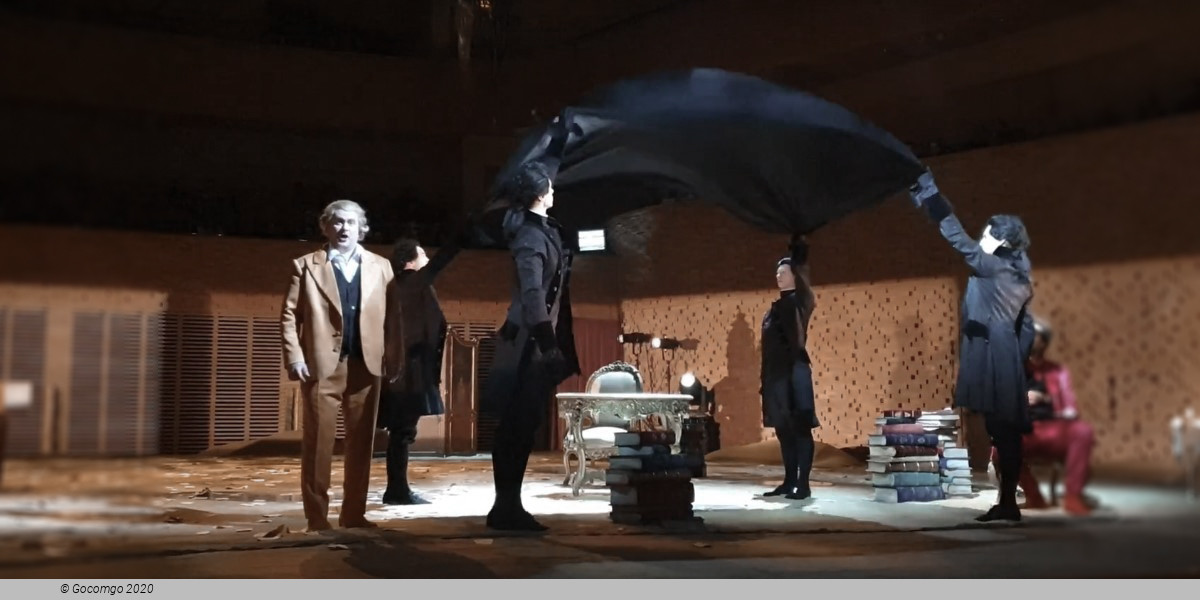
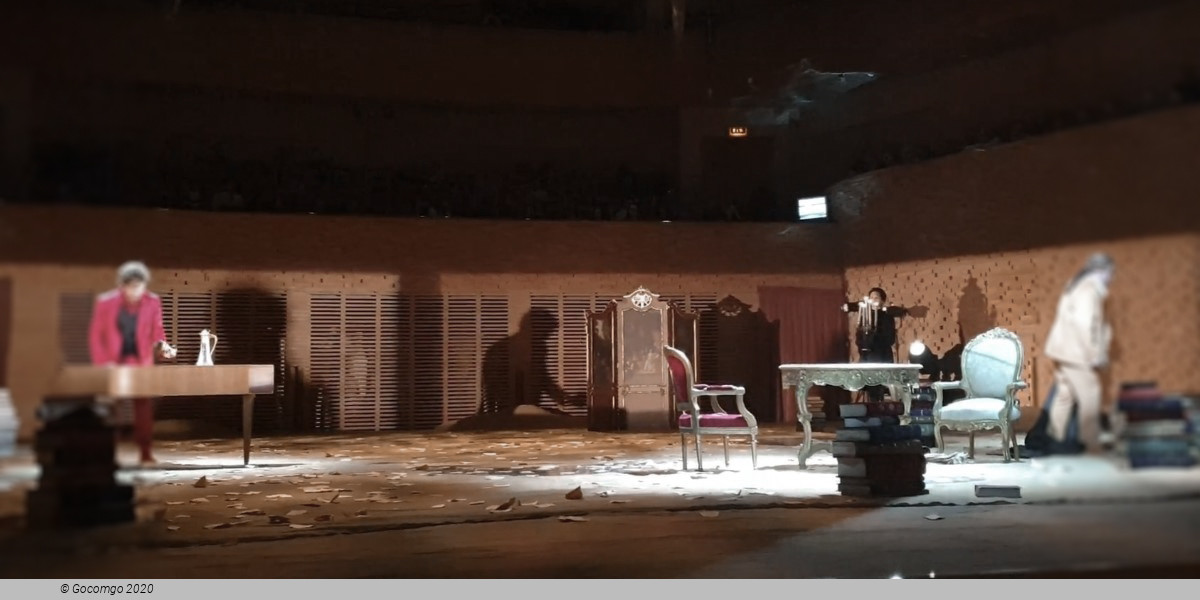
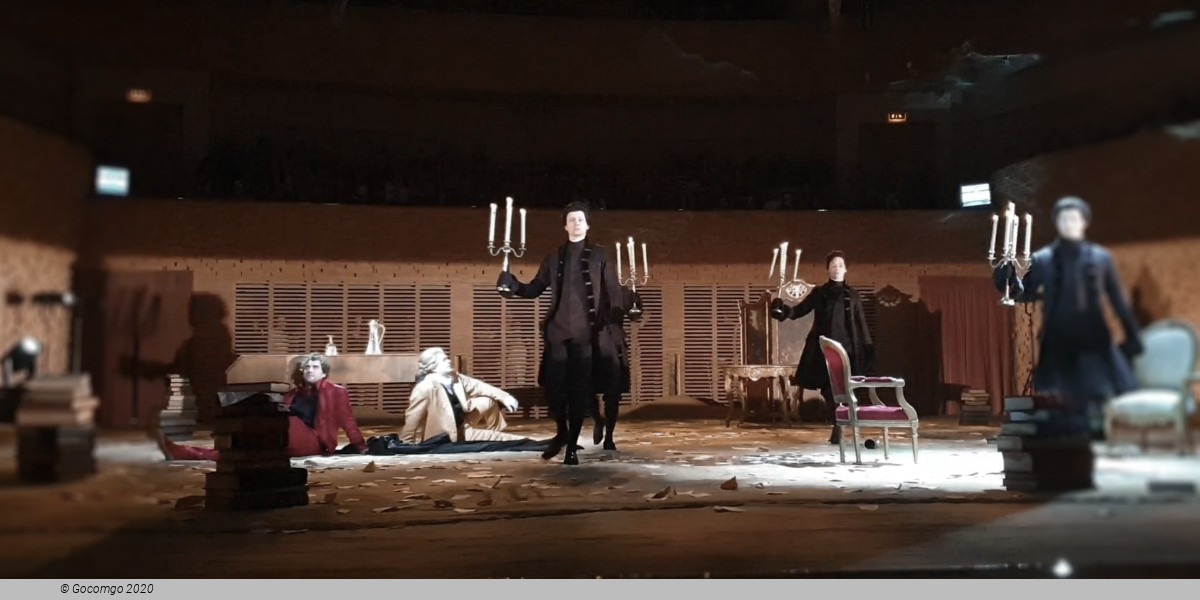
A room at the Golden Lion Inn. Mozart and Salieri are talking. Mozart tells his friend of a strange man in black, who came over a couple days ago – he commissioned Requiem from him and then never showed up again. He confesses that “by day and night my man in black would not leave me in peace.”
Salieri tries to soothe Mozart and suggests that he uncork a bottle of champagne, as advised by his companion Beaumarchais, or to reread Le Nozze di Figaro. Mozart asks whether it is true that Beaumarchais had poisoned someone, and hears the answer: “too laughable a fellow for such a serious craft.” He was a genius, objects Mozart, and “genius and evildoing are incompatibles.”
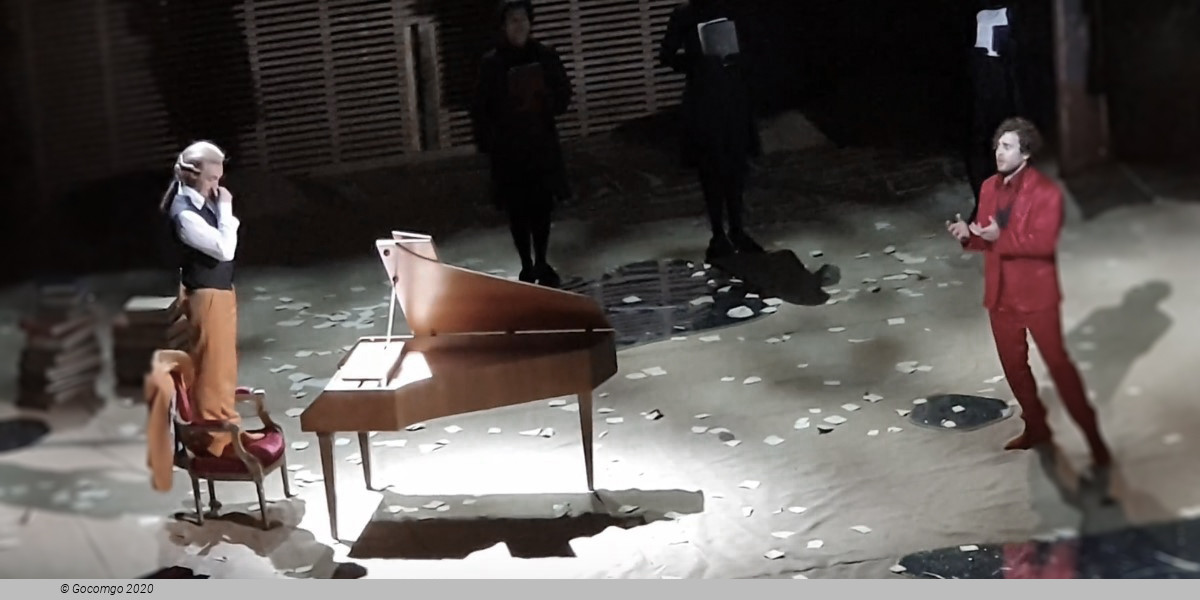
Salieri hesitates for a second and then eventually throws poison into Mozart’s glass. Deep in his thoughts, Mozart drinks his wine, then sits down at the piano and plays his Requiem. Rattled by this, Salieri cries. He unburdens his heart in a small arioso: “As if I had fulfilled a heavy duty, as if at last the healing knife had chopped a suffering member off.” Mozart, seeing Salieri’s tears, exclaims: “If only all so quickly felt the power of harmony!” But then he feels sick, bids his farewell, and leaves.
Salieri is alone again. Heavy doubts crawl into his soul as he is recollecting Mozart’s words of genius and evildoing being incompatible. Then what? Does it mean that he, Salieri, is no genius? “That is not true,” he cries desperately, “and Buonarotti? Or is it a legend of the dull-witted, senseless crowd – while really the Vatican's creator was no murderer?” His exclamation is left unanswered.

Time: End of the 18th century Place: Vienna, Austria

Scene 1
Salieri enjoys high social position as a composer, and has dedicated himself to the service of his art. Secretly, however, he is jealous of Mozart's works because he recognizes their superior quality, especially given what he sees as the "idle" character of Mozart. Salieri invites Mozart to dinner and plans to poison him.

Scene 2
Mozart and Salieri are dining at an inn. Mozart is troubled by his work on his Requiem, which a stranger in black commissioned from him. Mozart recalls Salieri's collaboration with Pierre Beaumarchais and asks if it could be true that Beaumarchais once poisoned someone, for genius and criminality are surely incompatible. Salieri then surreptitiously pours poison into Mozart's drink. Mozart begins to play at the keyboard, as Salieri begins to cry. Mozart sees this, but Salieri urges Mozart to continue. Mozart begins to feel ill, and leaves. Salieri ends the opera pondering Mozart's belief that a genius could not murder: did not Michelangelo kill for his commissions at the Vatican, or were those idle rumors?

Venue Info

Mariinsky Theatre - Saint Petersburg
Location   1 Theatre Square

The Mariinsky Theatre is a historic theatre of opera and ballet in Saint Petersburg, Russia. Opened in 1860, it became the preeminent music theatre of late 19th-century Russia, where many of the stage masterpieces of Tchaikovsky, Mussorgsky, and Rimsky-Korsakov received their premieres. Through most of the Soviet era, it was known as the Kirov Theatre. Today, the Mariinsky Theatre is home to the Mariinsky Ballet, Mariinsky Opera and Mariinsky Orchestra. Since Yuri Temirkanov's retirement in 1988, the conductor Valery Gergiev has served as the theatre's general director.

The theatre is named after Empress Maria Alexandrovna, wife of Tsar Alexander II. There is a bust of the Empress in the main entrance foyer. The theatre's name has changed throughout its history, reflecting the political climate of the time.

The theatre building is commonly called the Mariinsky Theatre. The companies that operate within it have for brand recognition purposes retained the Kirov name, acquired during the Soviet era to commemorate the assassinated Leningrad Communist Party leader Sergey Kirov (1886–1934).

The Imperial drama, opera and ballet troupe in Saint Petersburg was established in 1783, at the behest of Catherine the Great, although an Italian ballet troupe had performed at the Russian court since the early 18th century. Originally, the ballet and opera performances were given in the wooden Karl Knipper Theatre on Tsaritsa Meadow, near the present-day Tripartite Bridge (also known as the Little Theatre or the Maly Theatre). The Hermitage Theatre, next door to the Winter Palace, was used to host performances for an elite audience of aristocratic guests invited by the Empress.

A permanent theatre building for the new company of opera and ballet artists was designed by Antonio Rinaldi and opened in 1783. Known as the Imperial Bolshoi Kamenny Theatre the structure was situated on Carousel Square, which was renamed Theatre Square in honour of the building. Both names – "Kamenny" (Russian word for "stone") and "Bolshoi" (Russian word for "big") – were coined to distinguish it from the wooden Little Theatre. In 1836, the Bolshoi Kamenny Theatre was renovated to a design by Albert Cavos (son of Catterino Cavos, an opera composer), and served as the principal theatre of the Imperial Ballet and opera.

On 29 January 1849, the Equestrian circus (Конный цирк) opened on Theatre Square. This was also the work of the architect Cavos. The building was designed to double as a theatre. It was a wooden structure in the then-fashionable neo-Byzantine style. Ten years later, when this circus burnt down, Albert Cavos rebuilt it as an opera and ballet house with the largest stage in the world. With a seating capacity of 1,625 and a U-shaped Italian-style auditorium, the theatre opened on 2 October 1860, with a performance of A Life for the Tsar. The new theatre was named Mariinsky after its imperial patroness, Empress Maria Alexandrovna.

Under Yuri Temirkanov, Principal Conductor from 1976 to 1988, the Opera Company continued to stage innovative productions of both modern and classic Russian operas. Although functioning separately from the Theatre’s Ballet Company, since 1988 both companies have been under the artistic leadership of Valery Gergiev as Artistic Director of the entire Theatre.

The Opera Company has entered a new era of artistic excellence and creativity. Since 1993, Gergiev’s impact on opera there has been enormous. Firstly, he reorganized the company’s operations and established links with many of the world's great opera houses, including the Royal Opera House, Covent Garden, the Metropolitan Opera, the Opéra Bastille, La Scala, La Fenice, the Israeli Opera, the Washington National Opera and the San Francisco Opera. Today, the Opera Company regularly tours to most of these cities.

Gergiev has also been innovative as far as Russian opera is concerned: in 1989, there was an all-Mussorgsky festival featuring the composer’s entire operatic output. Similarly, many of Prokofiev’s operas were presented from the late 1990s. Operas by non-Russian composers began to be performed in their original languages, which helped the Opera Company to incorporate world trends. The annual international "Stars of the White Nights Festival" in Saint Petersburg, started by Gergiev in 1993, has also put the Mariinsky on the world’s cultural map. That year, as a salute to the imperial origins of the Mariinsky, Verdi's La forza del destino, which received its premiere in Saint Petersburg in 1862, was produced with its original sets, costumes and scenery. Since then, it has become a characteristic of the "White Nights Festival" to present the premieres from the company’s upcoming season during this magical period, when the hours of darkness practically disappear as the summer solstice approaches.

Presently, the Company lists on its roster 22 sopranos (of whom Anna Netrebko may be the best known); 13 mezzo-sopranos (with Olga Borodina familiar to US and European audiences); 23 tenors; eight baritones; and 14 basses. With Gergiev in charge overall, there is a Head of Stage Administration, a Stage Director, Stage Managers and Assistants, along with 14 accompanists.

Important Info
Type: Opera
City: Saint Petersburg, Russia
Starts at: 19:00
Acts: 1
Duration: 1h 10min
Sung in: Russian
Titles in: English,Russian
Top of page