




Mariinsky Theatre 15 October 2023 - Cinderella | GoComGo.com

Cinderella

Mariinsky Theatre, Mariinsky II, Saint Petersburg, Russia
All photos (6)
Select date and time
7 PM
Request for Tickets
Important Info
Type: Ballet
City: Saint Petersburg, Russia
Starts at: 19:00
Acts: 3
Intervals: 2
Duration: 2h 50min

E-tickets: Print at home or at the box office of the event if so specified. You will find more information in your booking confirmation email.

You can only select the category, and not the exact seats.
If you order 2 or 3 tickets: your seats will be next to each other.
If you order 4 or more tickets: your seats will be next to each other, or, if this is not possible, we will provide a combination of groups of seats (at least in pairs, for example 2+2 or 2+3).

Overview

There are so many “Cinderellas” staged to Prokofiev’s music – those dancing on pointe shoes, and barefoot, and in tutus, and in tights. It is not at all necessary that the ball in the palace sparkle with diamonds on lush dresses, and that miracles are performed by a beautiful fairy with a magic wand - in the Mariinsky Theater production, a businesslike old beggar woman with a net of oranges and a retinue of cocky punks are responsible for the transformations, and the Prince carries the treasured shoe in his backpack for back. Even twenty years after its premiere, this ironic and funny ballet remains one of the best examples of the Mariinsky’s modern repertoire.

Premiere of Sergei Prokofiev's ballet choreographed by Rostislav Zakharov – 21 November 1945, Bolshoi Theatre, Moscow
Performance premiere – 5 March 2002, Mariinsky Theatre

History
Premiere of this production: 21 November 1945, Bolshoi Theatre, Moscow

Cinderella is a ballet composed by Sergei Prokofiev to a scenario by Nikolai Volkov. It is one of his most popular and melodious compositions and has inspired a great many choreographers since its inception.

Synopsis

Act I

Cinderella, a young woman whose domineering step-mother forces her to act as a servant in her own home, helps her step-mother and two step-sisters to prepare for the Spring Ball, at which it is rumoured that the Prince will choose his bride-to-be. As the two step-sisters work together to produce a new shawl, they get into an argument over who will wear it, and end up tearing it in two through their bickering. The pair storm off, while the step-mother orders Cinderella to clear up the remnants and finish her chores, as her father returns home from business. Since her father's remarriage, Cinderella has had to sleep by the kitchen fireplace, leaving her nothing to wear but rags covered in ashes. Her father has never moved past the grief of his first wife's death, and though he is concerned for his daughter, he is just as much under the step-mother's control as Cinderella herself is. Their brief peace is interrupted, however, as the mother and sisters reenter and begin ordering them about. During supper, a beggar woman turns up, asking for shelter. The sisters and mother try to chase her off, but Cinderella offers her a place by the kitchen fire and an old pair of slippers. The beggar thanks her for her kindness and departs, leaving the preparations for the ball to resume. After choosing dresses and a quick dancing lesson, the family finally sets off for the night with the father reluctantly in tow, leaving Cinderella behind.

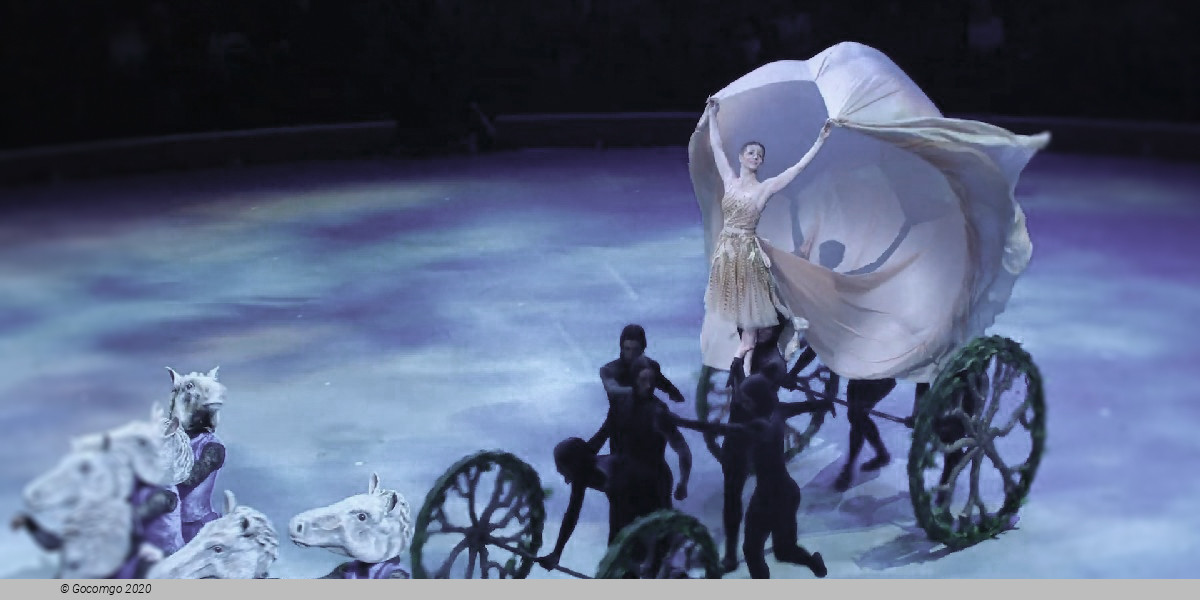
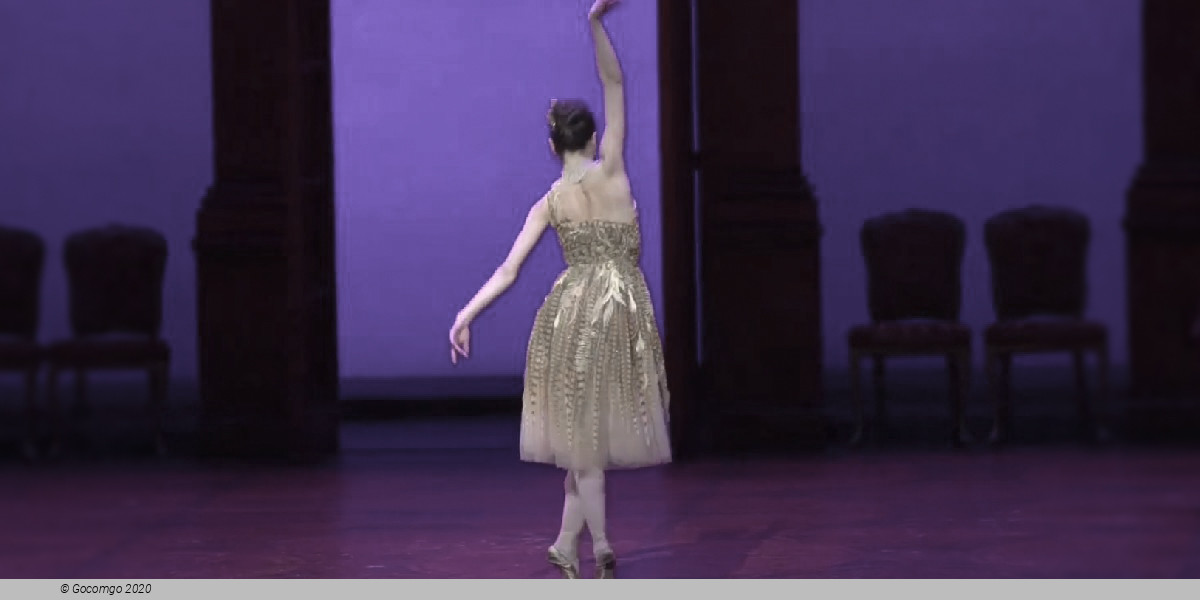
Although lonely at first, she cheers herself up by dancing with her broom, imagining the Prince himself has asked her for a dance. She is surprised, however, when the beggar woman appears out of nowhere, wishing to return the slippers with her thanks. To Cinderella's amazement, the shoes have been transformed into dancing slippers of glass. The beggar woman throws off her disguise and reveals herself as Cinderella's fairy godmother, come to grant her wish of going to the ball. Summoning the fairies of Spring, Summer, Autumn and Winter for assistance, she turns Cinderella's rags into a beautiful dress, a pumpkin and mice into a carriage and horses, and grasshoppers and dragonflies into a retinue of footmen. As she is about to leave, however, the fairy godmother warns her that the magic will only last until midnight, at which time the spell will break, and everything will revert to its original form. Only the glass slippers will remain as a gift for her kindness. She then summons twelve dwarfs, who will appear to repeat her message if she has not left by midnight. With this warning in mind, Cinderella departs for the ball.

Act II

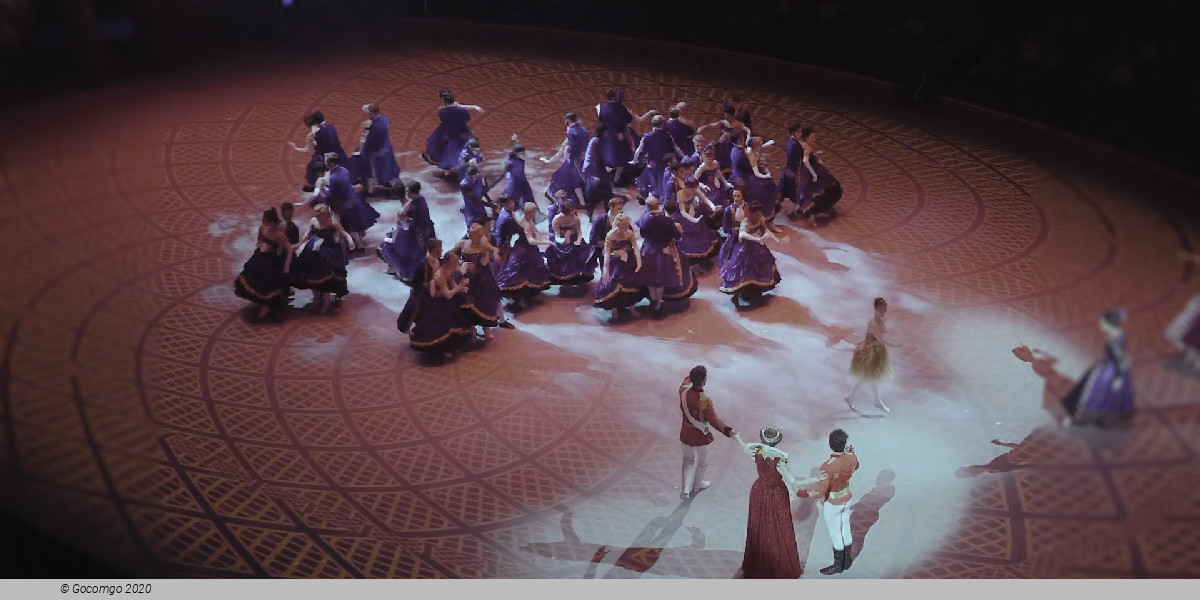
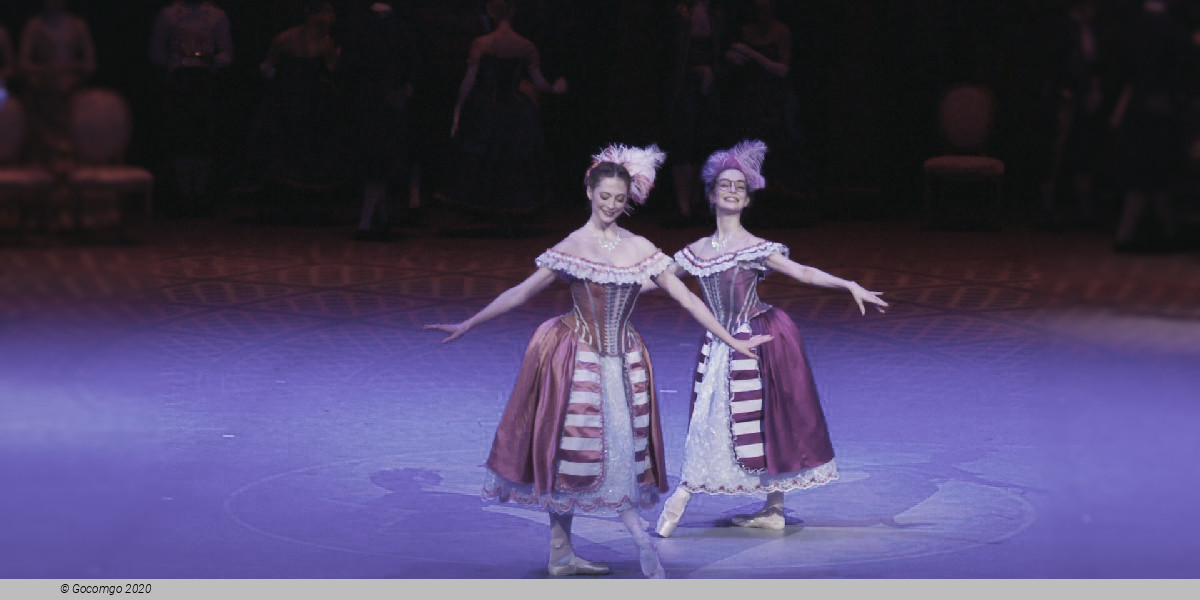
The Spring Ball is in full swing, with guests arriving from all over the kingdom and beyond to dance and pay respect to the Prince. The two step-sisters attempt to win favour with the royal court by showing off their dancing skills, but have less than successful results, much to their mother's dismay. The Prince then joins the celebrations, but finding state events such as the Spring Ball dull, and being reluctant to enter a marriage without love, he declines any offers for a dance, particularly in the case of the obnoxious step-sisters.

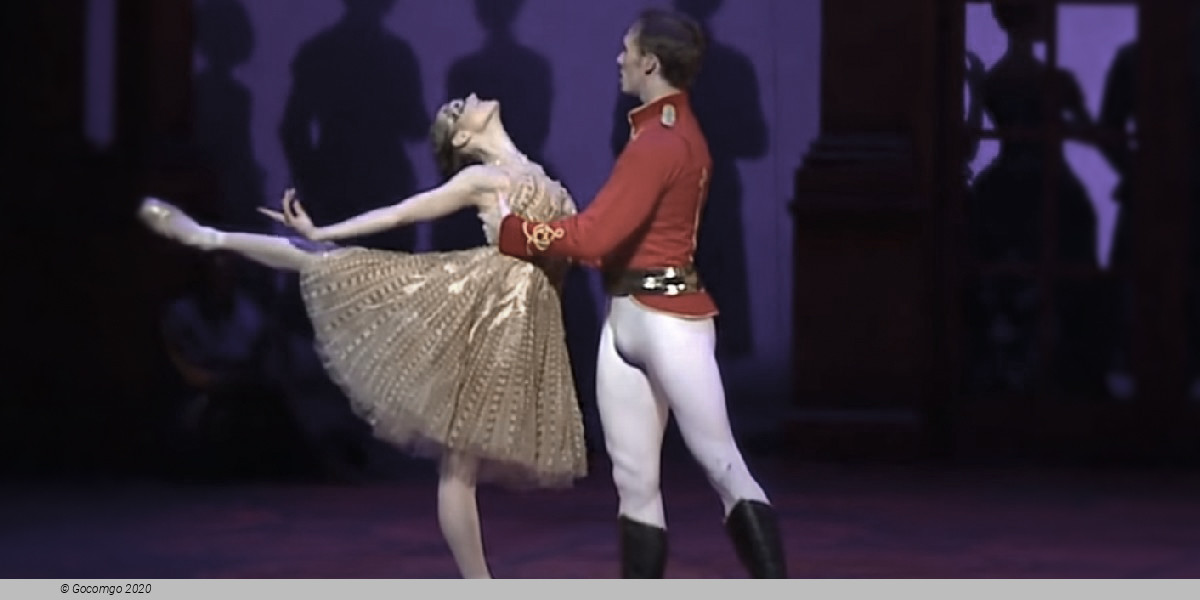
At this point, Cinderella arrives at the palace, transformed beyond recognition into a beautifully dressed princess. The Prince, along with everyone else, is entranced by her beauty and charm, and for the first time, he asks for a dance. As the evening passes, the two become inseparable; Cinderella quickly becomes beloved by the entire court for her graciousness and charm, while the Prince is unusually enthusiastic and cheery in her company. When refreshments are served, he gives her the honour of taking one of three oranges, a delicacy imported to the kingdom from a far-off land. Cinderella offers the other two oranges to her step-sisters, who are so flattered by the attention that they do not recognize the beautiful stranger as their sister. The Prince takes Cinderella out to the royal gardens for an evening walk, where they dance and proclaim the love blossoming between them.

As they return to the ballroom for the next waltz, Cinderella has completely forgotten about the time in her happiness. However, at the first stroke of midnight, the twelve dwarfs spring from the great palace clock and remind Cinderella of her godmother's warning. Terrified of being unmasked as a lowly servant in rags, she flees from the ballroom to the astonishment of the other guests. Though the Prince pursues her, she vanishes into the night moments before the spell breaks, losing one of her glass slippers in her haste and panic. The Prince is heartbroken at the thought of losing his love so soon after discovering her, but upon finding the lost slipper, he vows not to rest until he is once again reunited with her.

Act III

The morning after the ball, the Prince summons every shoemaker in the kingdom, in order to find out who the slipper was made for. However, none of them claim to have crafted the shoe, or sold it to anybody recently, and he concludes that the princess must be from a foreign land. His desperate search brings him first to the Mediterranean, then to the Orient, and lands further beyond. After travelling across the world and meeting various beautiful princesses with no success, the Prince begins to search his own kingdom, trying the slipper on every maiden who attended the ball.

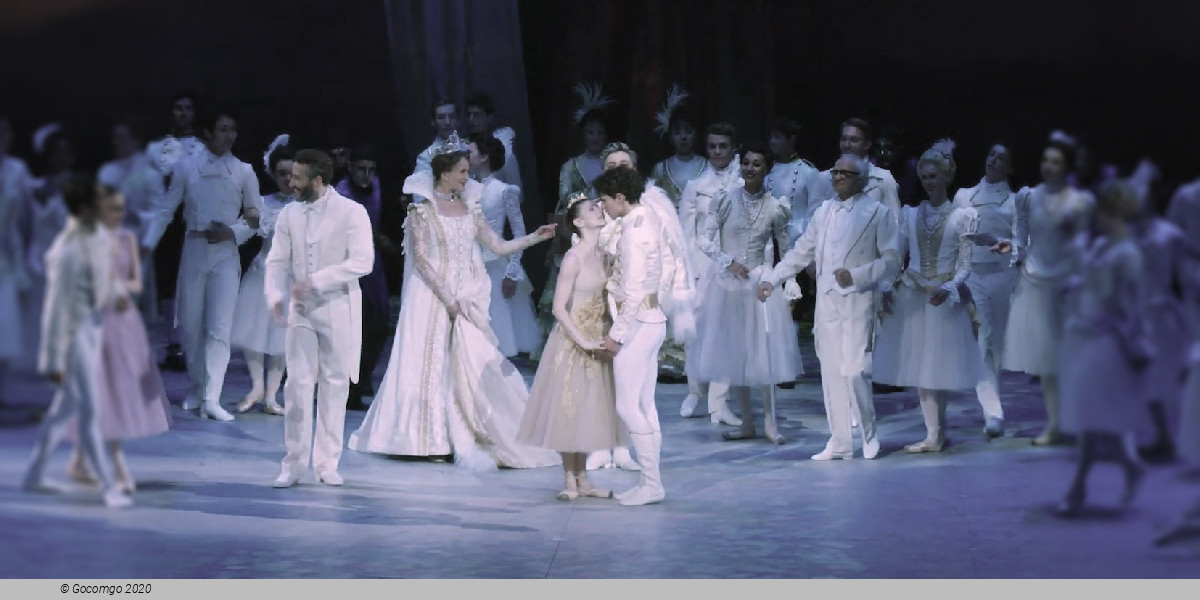
Back at Cinderella's home, love has allowed the Prince to defy the laws of time and space; though she is only awakening the morning after the ball, he has already traveled the world and back again in search of his lost love. Upon waking, Cinderella initially believes that the events of the previous night were only a dream. As she relives some of the dances of the ball, she discovers the remaining glass slipper and realizes that it was all true. At breakfast, the step-sisters reminisce about the ball, and argue about who made the greater impression on the Prince at the ball. Their fighting is interrupted when the father and step-mother hurry in with the news that the Prince is on his way to their house, desperately trying a glass slipper on every girl he encounters. Upon his arrival, he tries the slipper on the two step-sisters, to no avail. The step-mother, however, demands to be given a chance and tries to force her foot into the shoe, ordering Cinderella to help her. As she bends down to assist, the remaining slipper falls from her pocket and the Prince finally recognizes Cinderella for who she is. As Cinderella successfully tries on both glass slippers, her step-family beg for her forgiveness, which she happily bestows upon them. Overjoyed to have rediscovered each other, Cinderella and the Prince are then transported away to a secret garden by the fairy godmother, where they confess their love for one another and are happily married.

Venue Info

Mariinsky Theatre - Saint Petersburg
Location   1 Theatre Square

The Mariinsky Theatre is a historic theatre of opera and ballet in Saint Petersburg, Russia. Opened in 1860, it became the preeminent music theatre of late 19th-century Russia, where many of the stage masterpieces of Tchaikovsky, Mussorgsky, and Rimsky-Korsakov received their premieres. Through most of the Soviet era, it was known as the Kirov Theatre. Today, the Mariinsky Theatre is home to the Mariinsky Ballet, Mariinsky Opera and Mariinsky Orchestra. Since Yuri Temirkanov's retirement in 1988, the conductor Valery Gergiev has served as the theatre's general director.

The theatre is named after Empress Maria Alexandrovna, wife of Tsar Alexander II. There is a bust of the Empress in the main entrance foyer. The theatre's name has changed throughout its history, reflecting the political climate of the time.

The theatre building is commonly called the Mariinsky Theatre. The companies that operate within it have for brand recognition purposes retained the Kirov name, acquired during the Soviet era to commemorate the assassinated Leningrad Communist Party leader Sergey Kirov (1886–1934).

The Imperial drama, opera and ballet troupe in Saint Petersburg was established in 1783, at the behest of Catherine the Great, although an Italian ballet troupe had performed at the Russian court since the early 18th century. Originally, the ballet and opera performances were given in the wooden Karl Knipper Theatre on Tsaritsa Meadow, near the present-day Tripartite Bridge (also known as the Little Theatre or the Maly Theatre). The Hermitage Theatre, next door to the Winter Palace, was used to host performances for an elite audience of aristocratic guests invited by the Empress.

A permanent theatre building for the new company of opera and ballet artists was designed by Antonio Rinaldi and opened in 1783. Known as the Imperial Bolshoi Kamenny Theatre the structure was situated on Carousel Square, which was renamed Theatre Square in honour of the building. Both names – "Kamenny" (Russian word for "stone") and "Bolshoi" (Russian word for "big") – were coined to distinguish it from the wooden Little Theatre. In 1836, the Bolshoi Kamenny Theatre was renovated to a design by Albert Cavos (son of Catterino Cavos, an opera composer), and served as the principal theatre of the Imperial Ballet and opera.

On 29 January 1849, the Equestrian circus (Конный цирк) opened on Theatre Square. This was also the work of the architect Cavos. The building was designed to double as a theatre. It was a wooden structure in the then-fashionable neo-Byzantine style. Ten years later, when this circus burnt down, Albert Cavos rebuilt it as an opera and ballet house with the largest stage in the world. With a seating capacity of 1,625 and a U-shaped Italian-style auditorium, the theatre opened on 2 October 1860, with a performance of A Life for the Tsar. The new theatre was named Mariinsky after its imperial patroness, Empress Maria Alexandrovna.

Under Yuri Temirkanov, Principal Conductor from 1976 to 1988, the Opera Company continued to stage innovative productions of both modern and classic Russian operas. Although functioning separately from the Theatre’s Ballet Company, since 1988 both companies have been under the artistic leadership of Valery Gergiev as Artistic Director of the entire Theatre.

The Opera Company has entered a new era of artistic excellence and creativity. Since 1993, Gergiev’s impact on opera there has been enormous. Firstly, he reorganized the company’s operations and established links with many of the world's great opera houses, including the Royal Opera House, Covent Garden, the Metropolitan Opera, the Opéra Bastille, La Scala, La Fenice, the Israeli Opera, the Washington National Opera and the San Francisco Opera. Today, the Opera Company regularly tours to most of these cities.

Gergiev has also been innovative as far as Russian opera is concerned: in 1989, there was an all-Mussorgsky festival featuring the composer’s entire operatic output. Similarly, many of Prokofiev’s operas were presented from the late 1990s. Operas by non-Russian composers began to be performed in their original languages, which helped the Opera Company to incorporate world trends. The annual international "Stars of the White Nights Festival" in Saint Petersburg, started by Gergiev in 1993, has also put the Mariinsky on the world’s cultural map. That year, as a salute to the imperial origins of the Mariinsky, Verdi's La forza del destino, which received its premiere in Saint Petersburg in 1862, was produced with its original sets, costumes and scenery. Since then, it has become a characteristic of the "White Nights Festival" to present the premieres from the company’s upcoming season during this magical period, when the hours of darkness practically disappear as the summer solstice approaches.

Presently, the Company lists on its roster 22 sopranos (of whom Anna Netrebko may be the best known); 13 mezzo-sopranos (with Olga Borodina familiar to US and European audiences); 23 tenors; eight baritones; and 14 basses. With Gergiev in charge overall, there is a Head of Stage Administration, a Stage Director, Stage Managers and Assistants, along with 14 accompanists.

Important Info
Type: Ballet
City: Saint Petersburg, Russia
Starts at: 19:00
Acts: 3
Intervals: 2
Duration: 2h 50min
Top of page