
Mariinsky Theatre 28 February 2021 - A Christmas Tale | GoComGo.com

A Christmas Tale

Mariinsky Theatre, Mariinsky II, Saint Petersburg, Russia
All photos (5)
Select date and time
2 PM 7 PM
Request for Tickets
Important Info
Type: Opera
City: Saint Petersburg, Russia
Starts at: 14:00
Acts: 2
Intervals: 1
Duration:
Sung in: Russian
Titles in: English,Russian

E-tickets: Print at home or at the box office of the event if so specified. You will find more information in your booking confirmation email.

You can only select the category, and not the exact seats.
If you order 2 or 3 tickets: your seats will be next to each other.
If you order 4 or more tickets: your seats will be next to each other, or, if this is not possible, we will provide a combination of groups of seats (at least in pairs, for example 2+2 or 2+3).

Overview

Cast to be announced

History
Premiere of this production: 26 December 2015, Mariinsky Theatre, St Petersburg
Synopsis

The action unfolds on 31 December.

Part I
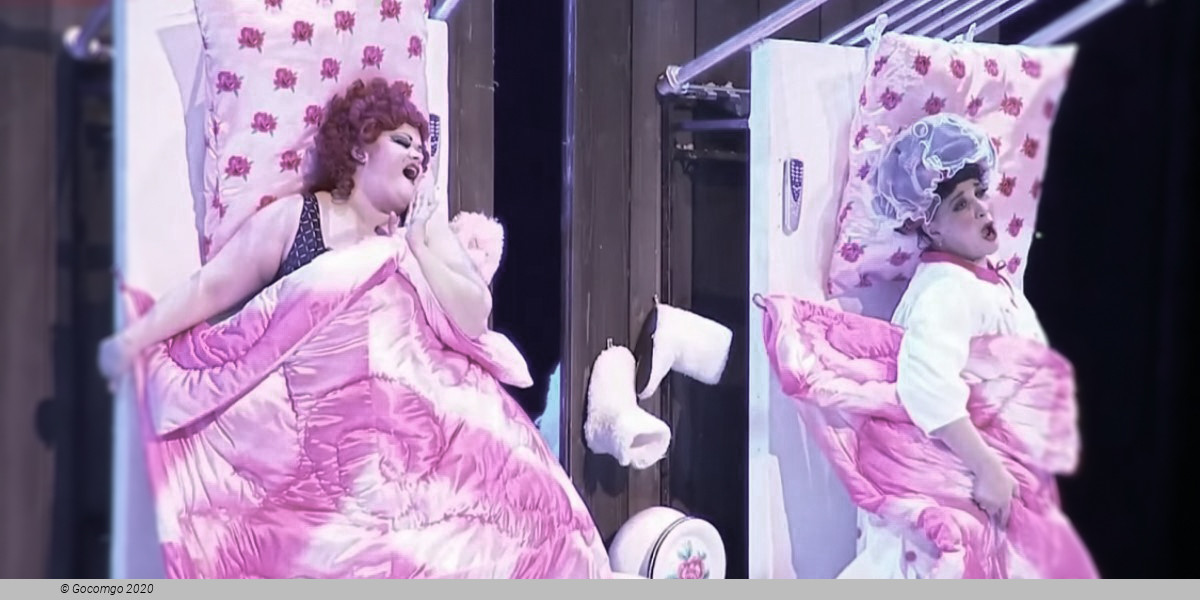
The Stepmother’s hut. The Villain – the Stepmother’s own mother – is relating what she has dreamed of: if one believes in tradition then a dream before New Year will come to fruition in life. The Stepmother recalls another tradition: on 31 December the hut must be well heated. She sends her stepdaughter, the Grubby Child, to collect kindling.
The forest. The Grubby Child meets the imperial woodcutter. He says that today it is best not to go into the forest: here all of the Twelve Months assemble and the light from their fire may make you blind and turn you into stone forever.
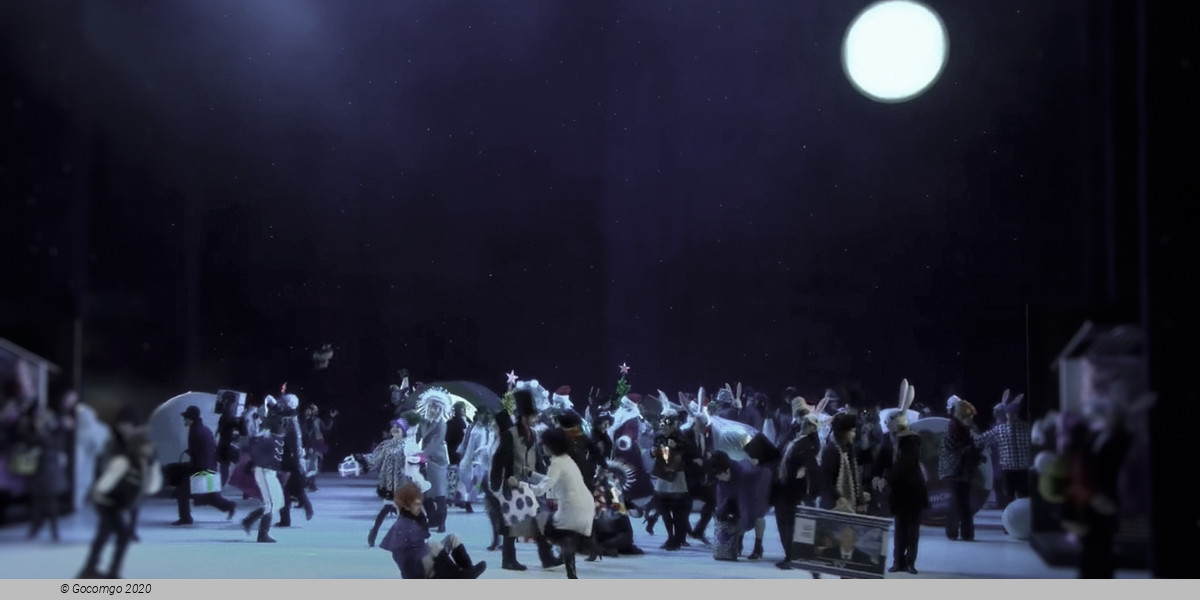
The Brother-Months appear in the glade.
The palace. The Great Chancellor presents the Empress with the order of events for the New Year Ball. The Empress is dissatisfied: at the ball there should be the sweet fragrance of her favourite woodland violets, but in the glasshouses all the flowers have perished from the cold. The Empress issues a decree: whoever delivers fresh violets to the palace will receive a bag of gold.
The Stepmother’s hut. The Villain and the Stepmother are already dreaming of spending the Empress’ gold. They send the Grubby Child out to search for the flowers in the snowy forest.
The forest. The Grubby Child is exhausted and falls asleep. The Months decide to help her: December gives up his seat at the fire to April, spring comes and the glade is filled with violets.

Part II
The Stepmother’s hut. The stepdaughter returns with a basket full of real violets. The Villain and the Stepmother rejoice: now they send the Grubby Child into the forest for fruit while they themselves rush to the palace with the violets.
The Grubby Child feels drowsy. April comes to her and presents her with a magic ring – if it is moved from one little finger to the other then the Months will immediately come to assist.
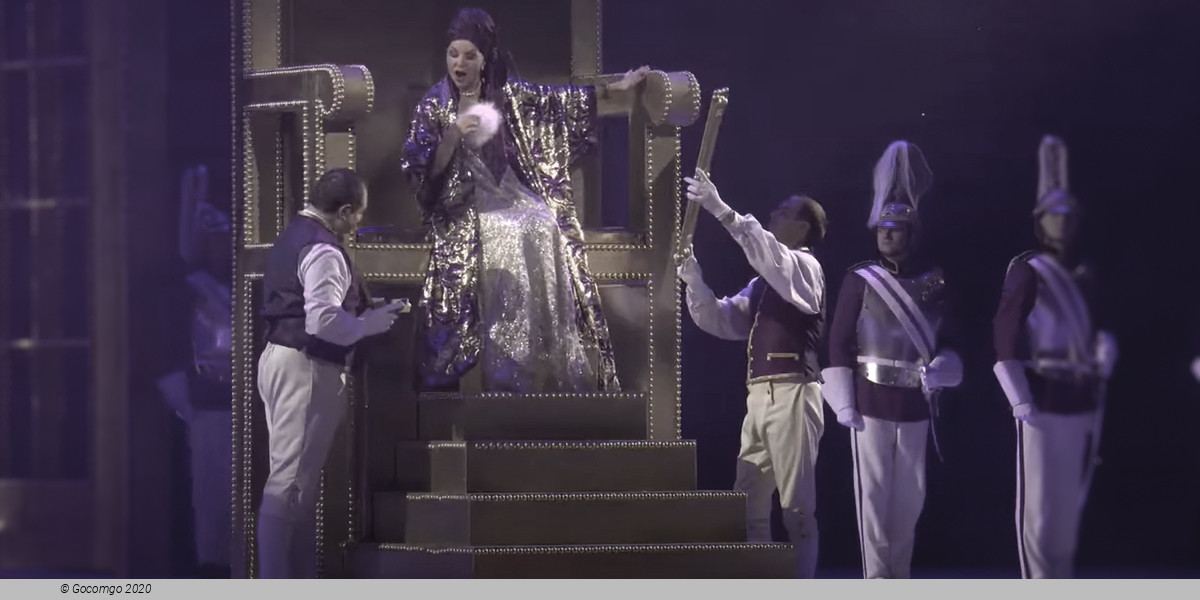
The palace. The courtiers are languishing; in accordance with a decree of the Empress, New Year will not come until there are fresh violets in the palace. The Villain and the Stepmother burst in. The Empress insists that they say where they found the violets in the middle of winter. They are checked by a lie-detector and they admit that the Grubby Child actually brought the flowers.
The Stepmother’s hut. The guards seize the Grubby Child to take her to the Empress.
The palace. The Empress demands that the Grubby Child tell her the truth about the violets. The girl tells her story of the magic of the Twelve Months. The Empress does not believe her. Then the Grubby Child moves the magic ring and the Brother-Months appear in the throne room. They are in a great hurry: it’s time to light the tree and welcome the New Year!

The action unfolds on 31 December.

Part I
The Stepmother’s hut. The Villain – the Stepmother’s own mother – is relating what she has dreamed of: if one believes in tradition then a dream before New Year will come to fruition in life. The Stepmother recalls another tradition: on 31 December the hut must be well heated. She sends her stepdaughter, the Grubby Child, to collect kindling.
The forest. The Grubby Child meets the imperial woodcutter. He says that today it is best not to go into the forest: here all of the Twelve Months assemble and the light from their fire may make you blind and turn you into stone forever.
The Brother-Months appear in the glade.
The palace. The Great Chancellor presents the Empress with the order of events for the New Year Ball. The Empress is dissatisfied: at the ball there should be the sweet fragrance of her favourite woodland violets, but in the glasshouses all the flowers have perished from the cold. The Empress issues a decree: whoever delivers fresh violets to the palace will receive a bag of gold.
The Stepmother’s hut. The Villain and the Stepmother are already dreaming of spending the Empress’ gold. They send the Grubby Child out to search for the flowers in the snowy forest.
The forest. The Grubby Child is exhausted and falls asleep. The Months decide to help her: December gives up his seat at the fire to April, spring comes and the glade is filled with violets.

Part II
The Stepmother’s hut. The stepdaughter returns with a basket full of real violets. The Villain and the Stepmother rejoice: now they send the Grubby Child into the forest for fruit while they themselves rush to the palace with the violets.
The Grubby Child feels drowsy. April comes to her and presents her with a magic ring – if it is moved from one little finger to the other then the Months will immediately come to assist.
The palace. The courtiers are languishing; in accordance with a decree of the Empress, New Year will not come until there are fresh violets in the palace. The Villain and the Stepmother burst in. The Empress insists that they say where they found the violets in the middle of winter. They are checked by a lie-detector and they admit that the Grubby Child actually brought the flowers.
The Stepmother’s hut. The guards seize the Grubby Child to take her to the Empress.
The palace. The Empress demands that the Grubby Child tell her the truth about the violets. The girl tells her story of the magic of the Twelve Months. The Empress does not believe her. Then the Grubby Child moves the magic ring and the Brother-Months appear in the throne room. They are in a great hurry: it’s time to light the tree and welcome the New Year!

Venue Info

Mariinsky Theatre - Saint Petersburg
Location   1 Theatre Square

The Mariinsky Theatre is a historic theatre of opera and ballet in Saint Petersburg, Russia. Opened in 1860, it became the preeminent music theatre of late 19th-century Russia, where many of the stage masterpieces of Tchaikovsky, Mussorgsky, and Rimsky-Korsakov received their premieres. Through most of the Soviet era, it was known as the Kirov Theatre. Today, the Mariinsky Theatre is home to the Mariinsky Ballet, Mariinsky Opera and Mariinsky Orchestra. Since Yuri Temirkanov's retirement in 1988, the conductor Valery Gergiev has served as the theatre's general director.

The theatre is named after Empress Maria Alexandrovna, wife of Tsar Alexander II. There is a bust of the Empress in the main entrance foyer. The theatre's name has changed throughout its history, reflecting the political climate of the time.

The theatre building is commonly called the Mariinsky Theatre. The companies that operate within it have for brand recognition purposes retained the Kirov name, acquired during the Soviet era to commemorate the assassinated Leningrad Communist Party leader Sergey Kirov (1886–1934).

The Imperial drama, opera and ballet troupe in Saint Petersburg was established in 1783, at the behest of Catherine the Great, although an Italian ballet troupe had performed at the Russian court since the early 18th century. Originally, the ballet and opera performances were given in the wooden Karl Knipper Theatre on Tsaritsa Meadow, near the present-day Tripartite Bridge (also known as the Little Theatre or the Maly Theatre). The Hermitage Theatre, next door to the Winter Palace, was used to host performances for an elite audience of aristocratic guests invited by the Empress.

A permanent theatre building for the new company of opera and ballet artists was designed by Antonio Rinaldi and opened in 1783. Known as the Imperial Bolshoi Kamenny Theatre the structure was situated on Carousel Square, which was renamed Theatre Square in honour of the building. Both names – "Kamenny" (Russian word for "stone") and "Bolshoi" (Russian word for "big") – were coined to distinguish it from the wooden Little Theatre. In 1836, the Bolshoi Kamenny Theatre was renovated to a design by Albert Cavos (son of Catterino Cavos, an opera composer), and served as the principal theatre of the Imperial Ballet and opera.

On 29 January 1849, the Equestrian circus (Конный цирк) opened on Theatre Square. This was also the work of the architect Cavos. The building was designed to double as a theatre. It was a wooden structure in the then-fashionable neo-Byzantine style. Ten years later, when this circus burnt down, Albert Cavos rebuilt it as an opera and ballet house with the largest stage in the world. With a seating capacity of 1,625 and a U-shaped Italian-style auditorium, the theatre opened on 2 October 1860, with a performance of A Life for the Tsar. The new theatre was named Mariinsky after its imperial patroness, Empress Maria Alexandrovna.

Under Yuri Temirkanov, Principal Conductor from 1976 to 1988, the Opera Company continued to stage innovative productions of both modern and classic Russian operas. Although functioning separately from the Theatre’s Ballet Company, since 1988 both companies have been under the artistic leadership of Valery Gergiev as Artistic Director of the entire Theatre.

The Opera Company has entered a new era of artistic excellence and creativity. Since 1993, Gergiev’s impact on opera there has been enormous. Firstly, he reorganized the company’s operations and established links with many of the world's great opera houses, including the Royal Opera House, Covent Garden, the Metropolitan Opera, the Opéra Bastille, La Scala, La Fenice, the Israeli Opera, the Washington National Opera and the San Francisco Opera. Today, the Opera Company regularly tours to most of these cities.

Gergiev has also been innovative as far as Russian opera is concerned: in 1989, there was an all-Mussorgsky festival featuring the composer’s entire operatic output. Similarly, many of Prokofiev’s operas were presented from the late 1990s. Operas by non-Russian composers began to be performed in their original languages, which helped the Opera Company to incorporate world trends. The annual international "Stars of the White Nights Festival" in Saint Petersburg, started by Gergiev in 1993, has also put the Mariinsky on the world’s cultural map. That year, as a salute to the imperial origins of the Mariinsky, Verdi's La forza del destino, which received its premiere in Saint Petersburg in 1862, was produced with its original sets, costumes and scenery. Since then, it has become a characteristic of the "White Nights Festival" to present the premieres from the company’s upcoming season during this magical period, when the hours of darkness practically disappear as the summer solstice approaches.

Presently, the Company lists on its roster 22 sopranos (of whom Anna Netrebko may be the best known); 13 mezzo-sopranos (with Olga Borodina familiar to US and European audiences); 23 tenors; eight baritones; and 14 basses. With Gergiev in charge overall, there is a Head of Stage Administration, a Stage Director, Stage Managers and Assistants, along with 14 accompanists.

Important Info
Type: Opera
City: Saint Petersburg, Russia
Starts at: 14:00
Acts: 2
Intervals: 1
Duration:
Sung in: Russian
Titles in: English,Russian
Top of page