Act 1
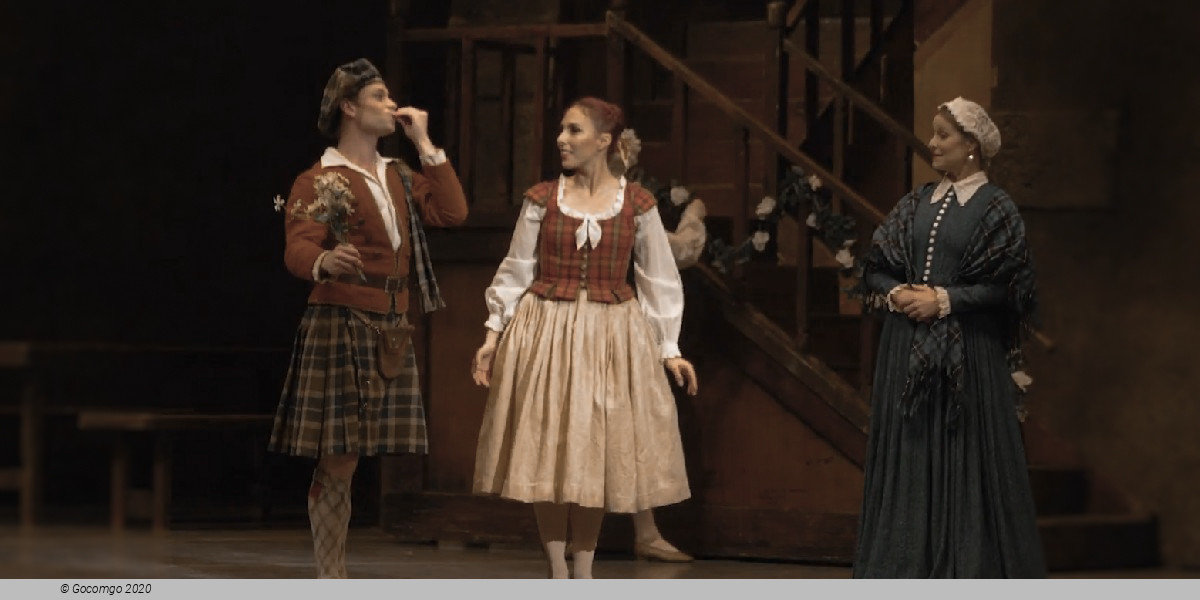
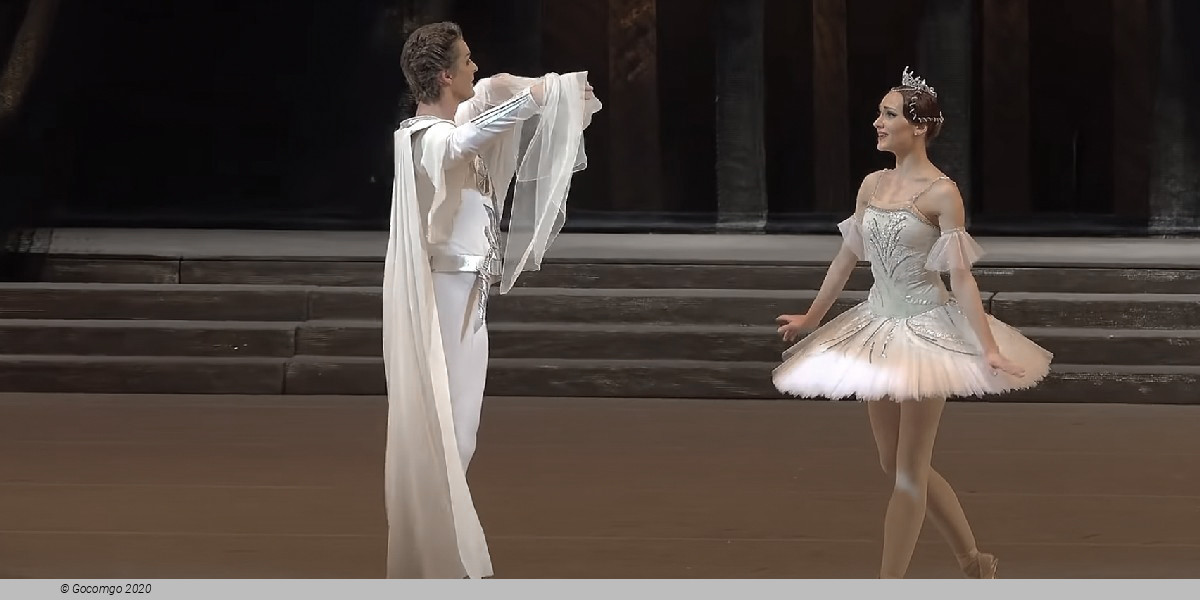
In the hall of a Scottish farmhouse, James Ruben, a young Scotsman, sleeps in a chair by the fireside. A sylph gazes lovingly upon him and dances about his chair. She kisses him and then vanishes when he suddenly wakes. James rouses his friend Gurn from sleep, and questions him about the sylph. Gurn denies having seen such a creature and reminds James that he is shortly to be married. James dismisses the incident and promises to forget it.
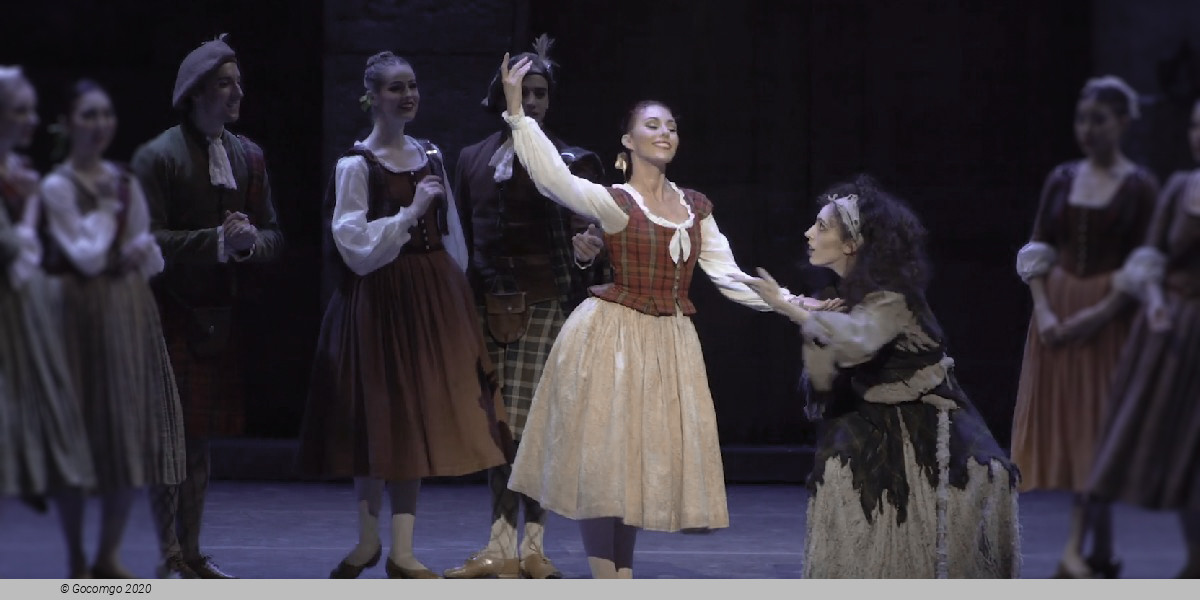
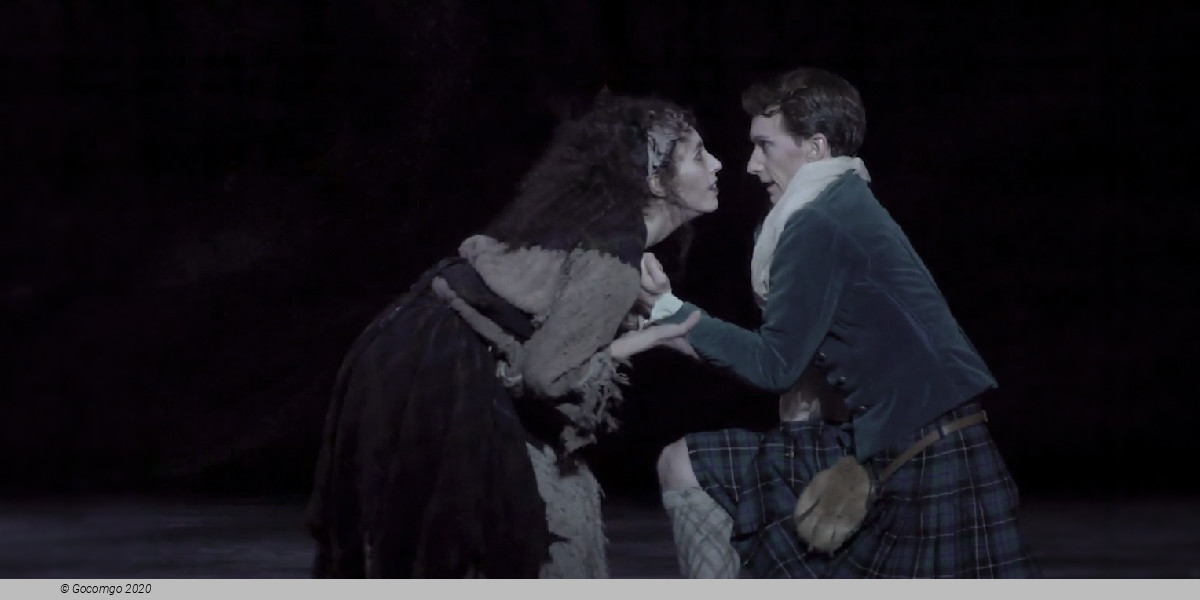
James' bride-to-be, Effie, arrives with her mother and bridesmaids. James dutifully kisses her, but is startled by a shadow in the corner. Thinking his sylph has returned, he rushes over, only to find the witch, Old Madge, kneeling at the hearth to warm herself. James is furious with disappointment.
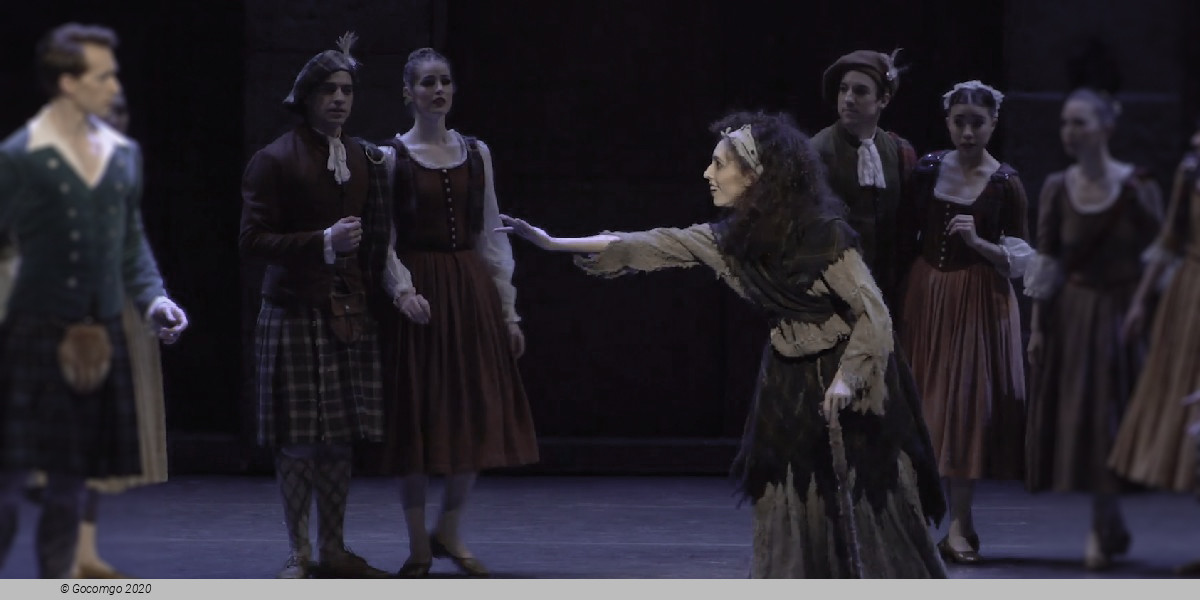
Effie and her friends beg Old Madge to tell their fortunes, and the witch complies. She gleefully informs Effie that James loves someone else and she will be united with Gurn. James is furious. He forces Madge from the hearth and throws her out of the house. Effie is delighted that James would tangle with a witch for her sake.
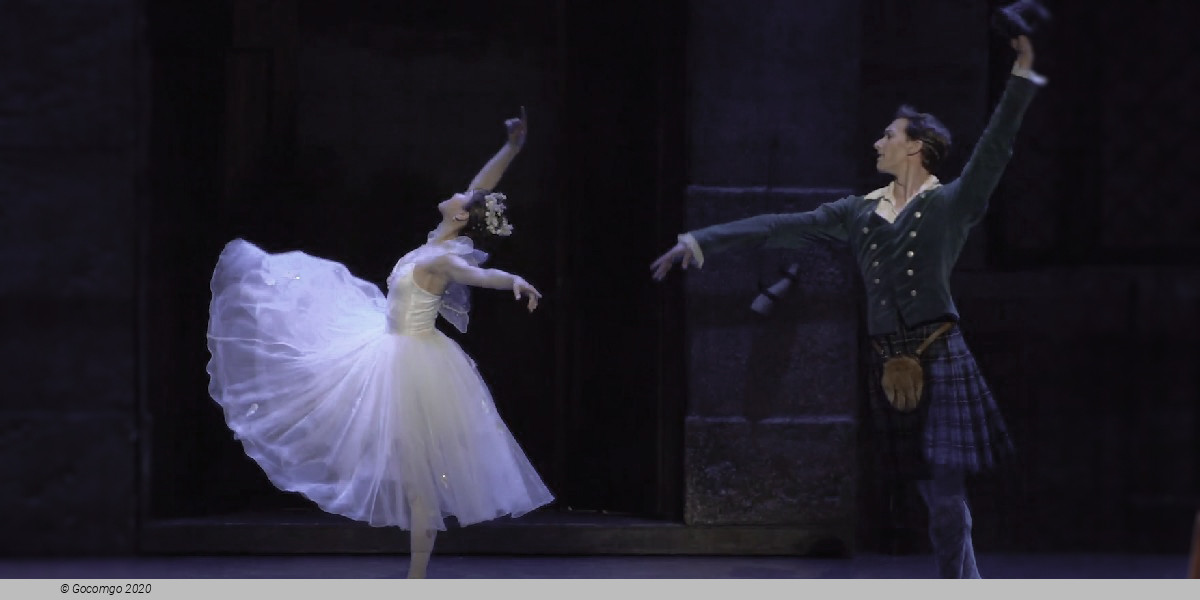
Effie and her bridesmaids hurry upstairs to prepare for the wedding, and James is left alone in the room. As he stares out the window, the sylph materializes before him and confesses her love. She weeps at his apparent indifference. James resists at first, but, captivated by her ethereal beauty, capitulates and kisses her tenderly. Gurn, who spies the moment from the shadows, scampers off to tell Effie what has happened.
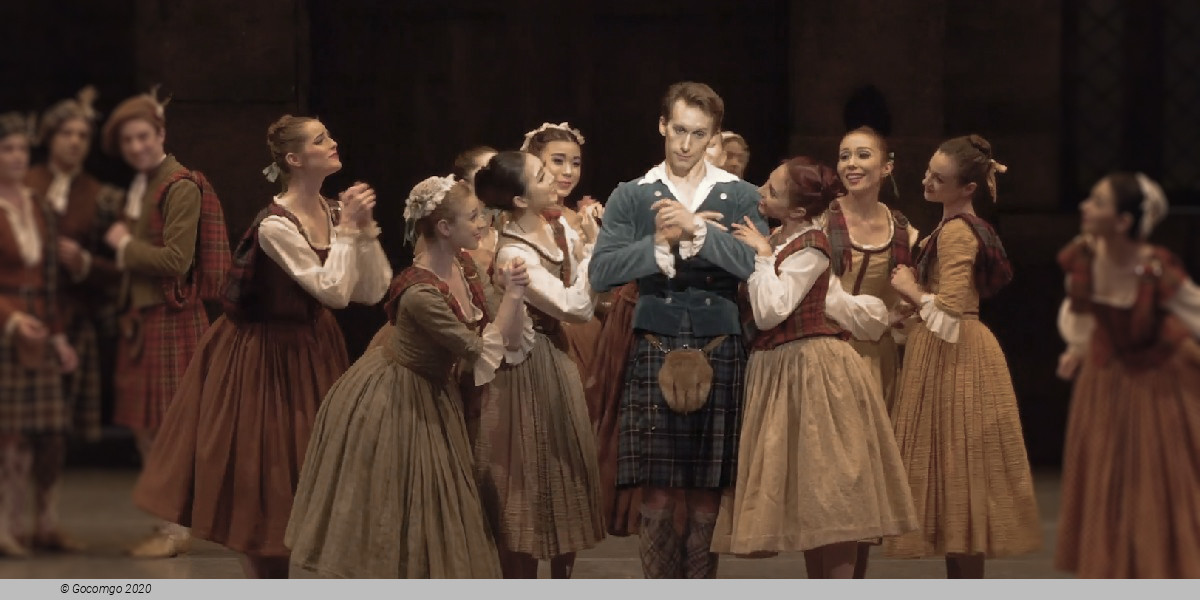
When the distressed Effie and her friends enter after hearing Gurn's report, the sylph disappears. The guests assume Gurn is simply jealous and laugh at him. Everyone dances. The sylph enters during the midst of the revelry and attempts to distract James.
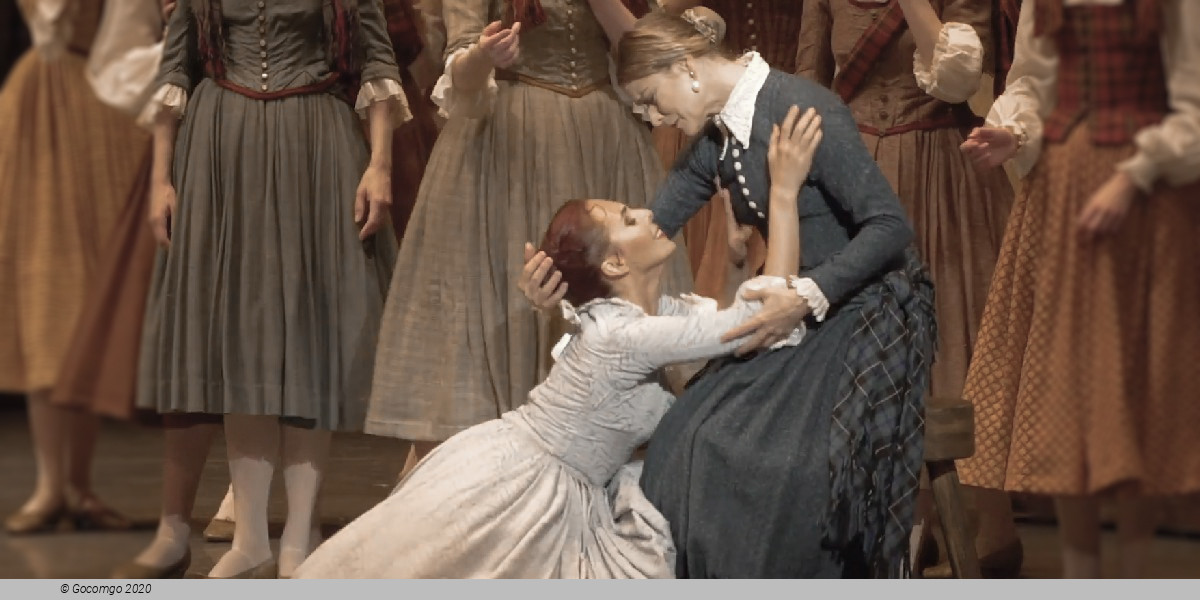
As the bridal procession forms, James stands apart and gazes upon the ring he is to place on Effie's finger. The Sylph snatches the ring, places it on her own finger, and, smiling enticingly, rushes into the forest. James hurries after her in ardent pursuit. The guests are bewildered with James' sudden departure. Effie is heartbroken. She falls into her mother's arms sobbing inconsolably.
Act 2
In a fog-shrouded part of the forest, Madge and her companion witches dance grotesquely about a cauldron. The revellers add all sorts of filthy ingredients to the brew. When the contents glow, Madge reaches into the cauldron and pulls a diaphanous, magic scarf from its depths. The cauldron then sinks, the witches scatter, the fog lifts, and a lovely glade is revealed.
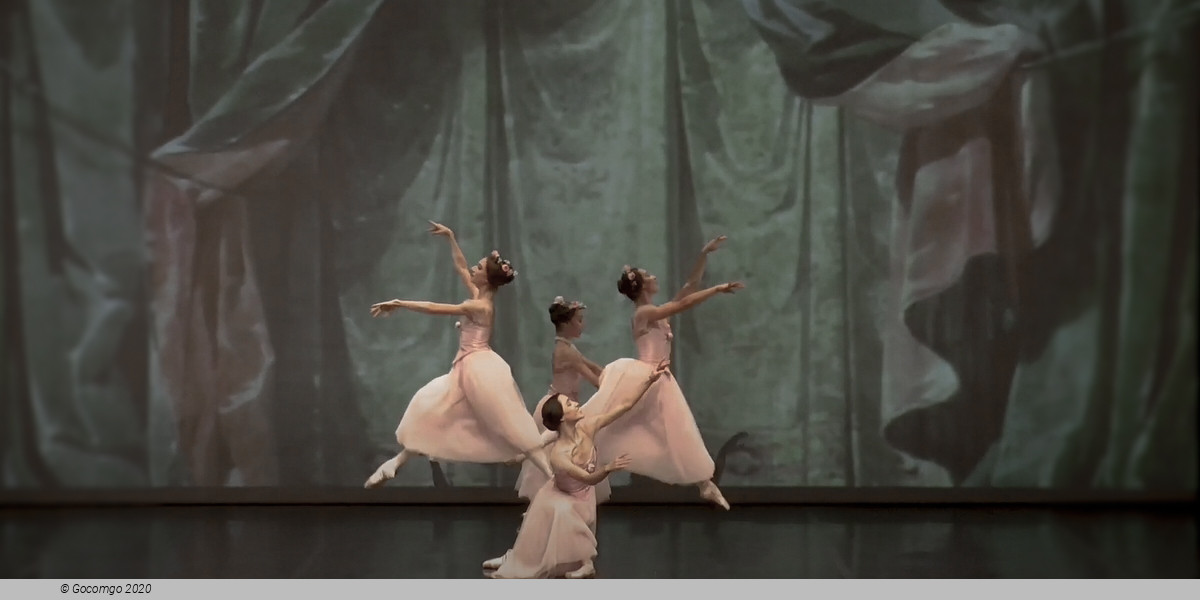
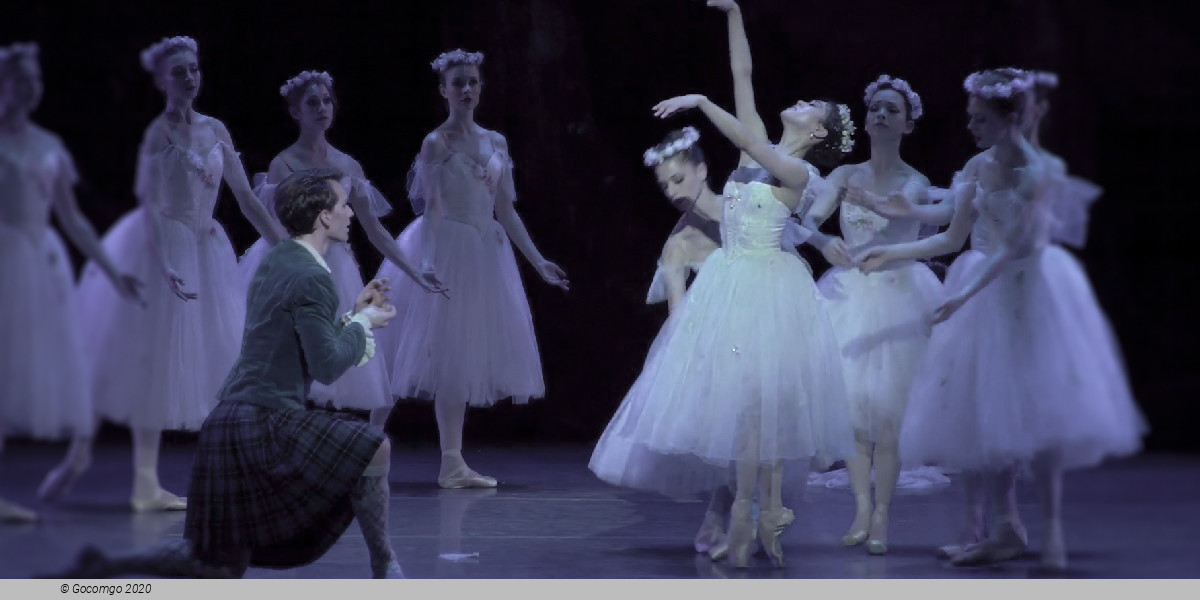
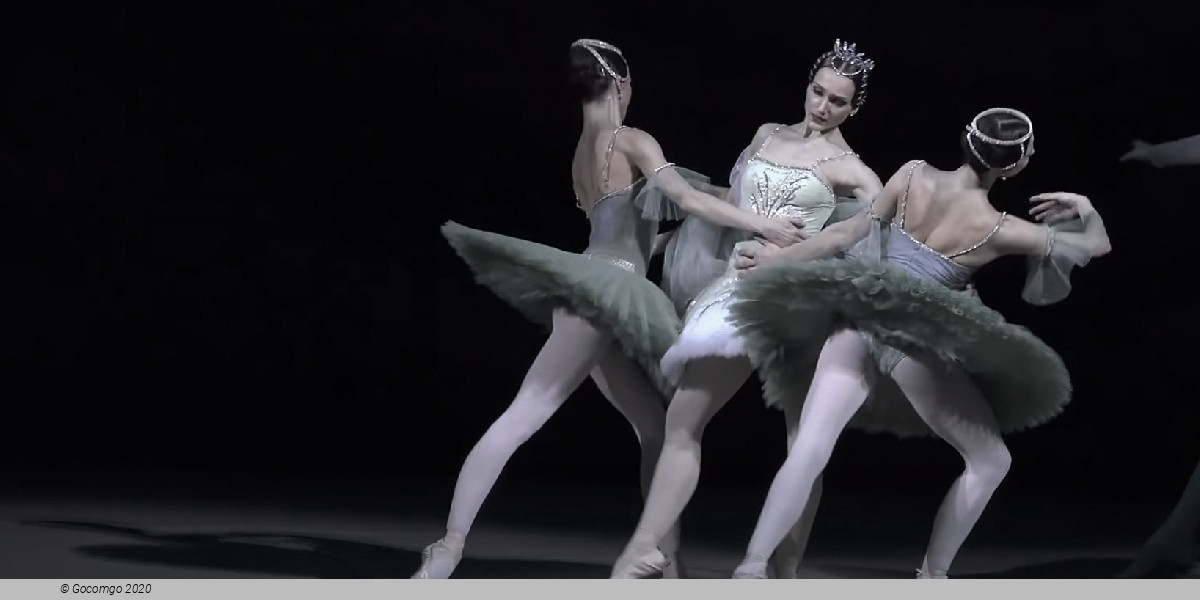
James enters with the sylph who shows him her charming, woodland realm. She brings him berries and water for refreshment but avoids his embrace. To cheer him, she summons her ethereal sisters who shyly enter and perform their airy dances. The young Scotsman is delighted and joins the divertissement before all flee for another part of the forest.
Meanwhile, the wedding guests have been searching the woodland for James. They enter the glade. Gurn finds his hat, but Madge convinces him to say nothing. Effie enters, weary with wandering about the forest. Madge urges Gurn to propose. He does and Effie accepts his proposal.
When they all have left, James enters the glade. Madge meets him, and tosses him the magic scarf. She tells the young farmer the scarf will bind the sylph to him so she cannot fly away. She instructs him to wind the scarf about the sylph's shoulders and arms for full effect. James is ecstatic. When the sylph returns and sees the scarf, she allows James to place it around her trembling form.
As James embraces the sylph passionately, her wings fall off, she shudders, and dies in James' arms. Sorrowfully, her sisters enter and lift her lifeless form. Suddenly, a joyful wedding procession led by Effie and Gurn crosses the glade. James is stunned. James directs his gaze heavenward; he sees the sylph borne aloft by her sisters. James collapses. Madge exults over his lifeless body. Justice has triumphed.
Act I
Scene 1: Raymonda's feast
At the castle of Doris, preparations are under way for the celebrations of the young countess Raymonda’s name day. Countess Sybille, her aunt, chides those who are present, including Raymonda's two friends Henrietta and Clémence, and the two troubadours Béranger and Bernard, for their idleness and their passion for dancing, telling them of the legendary White Lady, the protector of the castle, who warns the Doris household every time one of its members is in danger and casts punishment on those who do not fulfil their duties. The young people laugh at the countess’s superstitions and continue to celebrate. The seneschal of the Doris castle announces the arrival of a messenger, sent by Raymonda's fiancé, the noble crusader knight, Jean de Brienne, bearing a letter for his beloved. Raymonda rejoices when she reads that King Andrew II of Hungary, for whom Jean de Brienne has fought, is returning home in triumph and Jean de Brienne will arrive at the Doris castle the next day for their wedding. Suddenly, the celebrations are interrupted when the seneschal announces the arrival of an uninvited Saracen knight, Abderakhman and his entourage, who have stopped at the castle seeking shelter for the night. Captivated by Raymonda's beauty, Abderakhman falls in love with her at once and resolves to do anything to win her. The party lasts late into the night and, left alone and exhausted by the day, Raymonda lies down on a couch and falls asleep. As she sleeps, she begins to dream that the White Lady appears illuminated by the moonlight and, with an imperious gesture, orders Raymonda to follow her.
Scene 2: The Visions
The White Lady, without making a sound, advances along the terrace. Raymonda follows her in a state of unconsciousness. At a signal from the White Lady, the garden is wrapped in mist. A moment later, the mist vanishes and Jean de Brienne appears. Overjoyed, Raymonda runs into his arms and they are surrounded by glory, knights and celestial maidens. The garden is illuminated by a fantastic light and Raymonda expresses her joy to the White Lady, who interrupts her enthusiasm with a vision of what awaits her. Raymonda wants to return to her fiancé, but instead, she finds Abderakhman, who has taken Jean de Brienne's place. Abderakhman declares his passionate love for her, but Raymonda, though confused and upset, is quick to reject him. Imps and elves appear from everywhere surrounding Raymonda, who begs the White Lady to save her and Abderakhman tries to take Raymonda by force. Raymonda cries out and falls to the ground in a faint. The frightful vision disappears along with the White Lady.
Act II
The Courtyard of the Castle
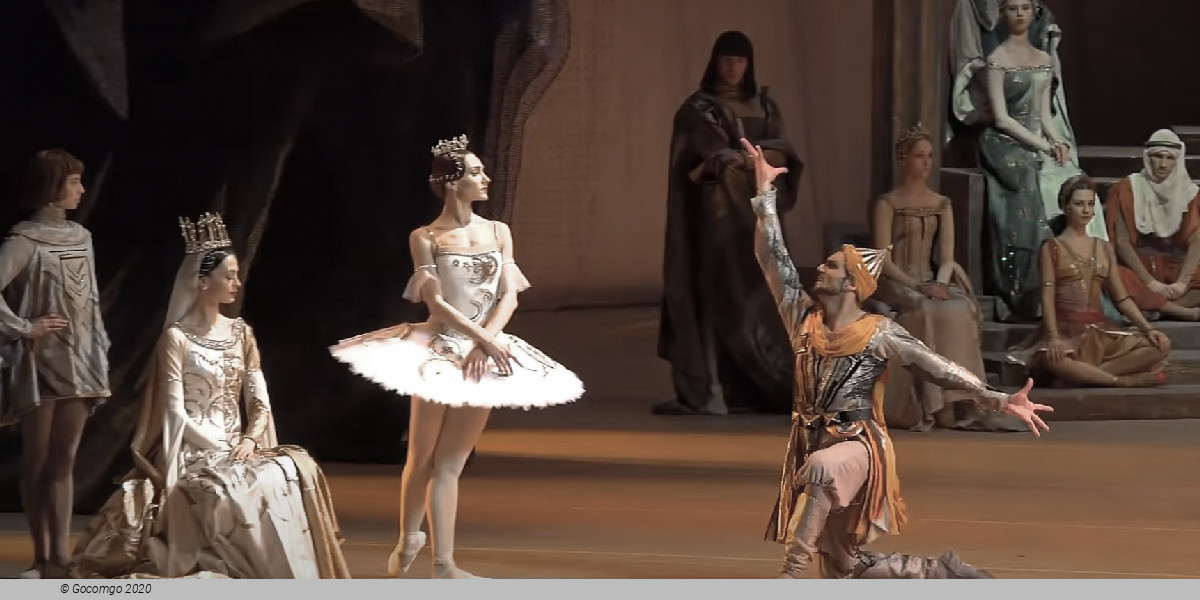
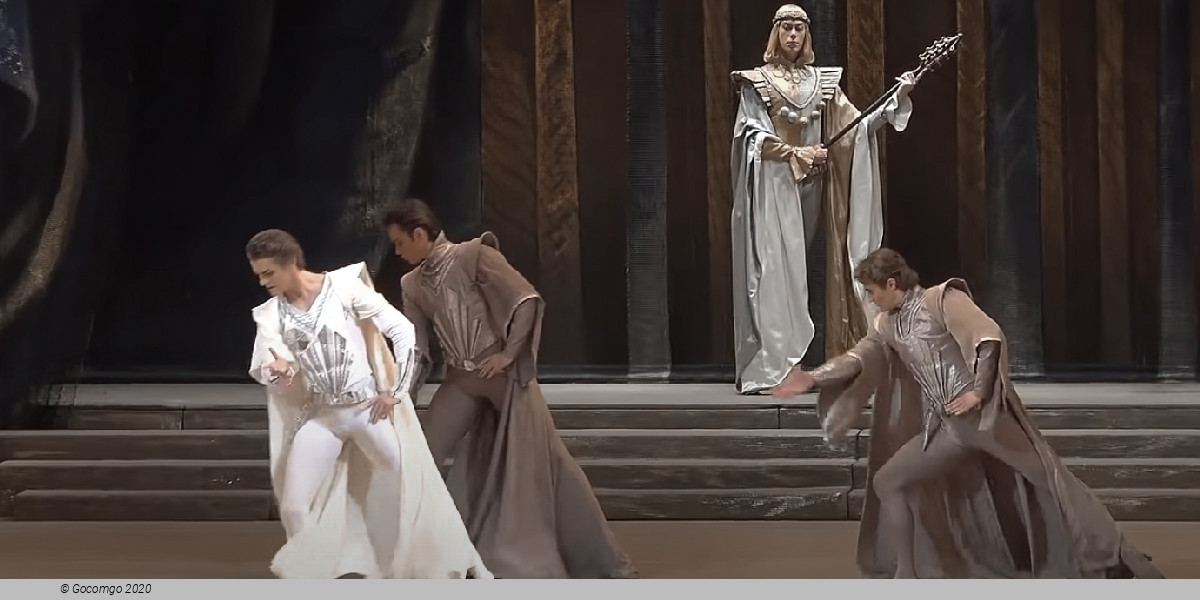
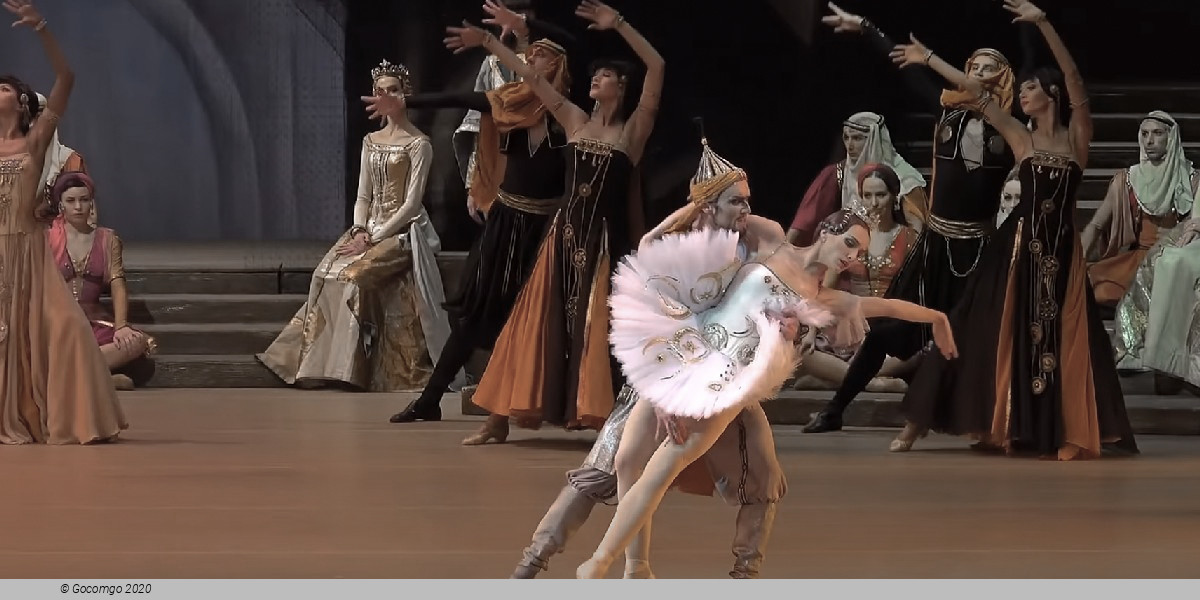
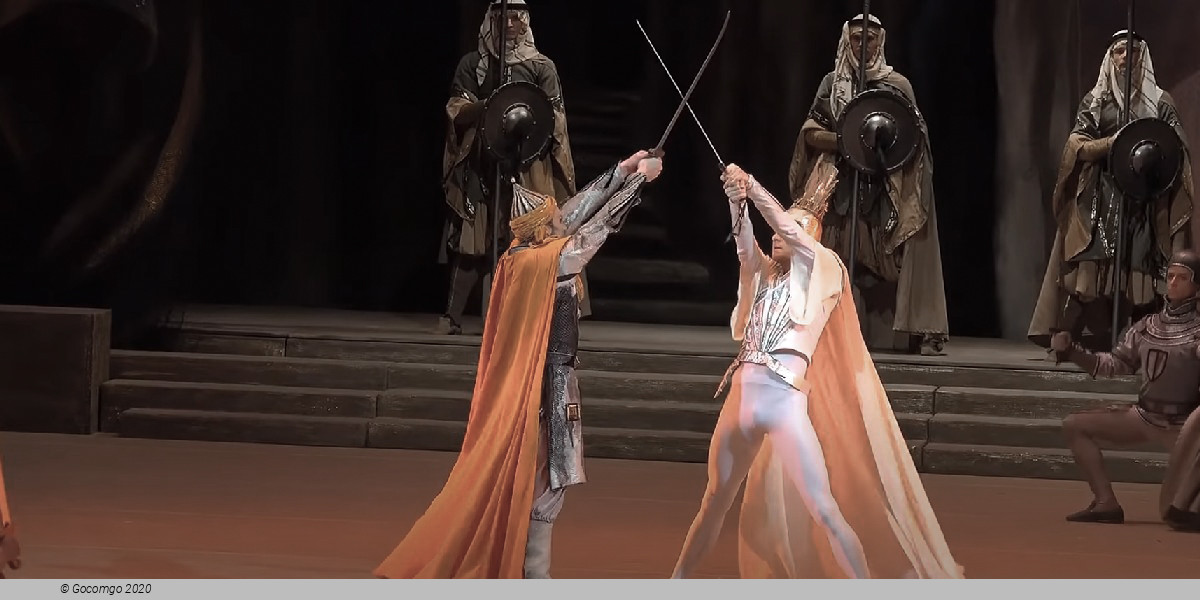
The feast in honour of Jean de Brienne's arrival is taking place. Raymonda welcomes her guests, but cannot hide her uneasiness caused by Jean de Brienne’s delay. Abderakhman approaches her repeatedly and reveals his passion for her, but remembering the warnings of the White Lady, Raymonda rejects him with contempt. Abderakhman becomes even more insistent and realises the only way to possess Raymonda is by force. He calls his slaves to dance for her, after which he summons his cup bearers and they pour a potion into everyone’s cup, causing all the guests to become drunk. Seizing his chance, Abderakhman grabs Raymonda in an attempt to abduct her, but luckily Jean de Brienne arrives just in time, accompanied by King Andrew II and his knights. Jean de Brienne saves Raymonda from the hands of the Saracens and tries to seize Abderakhman. The King commands the two rivals to put an end to the matter in a duel, during which the White Lady appears on the castle tower. Abderakhman is dazed and dies, slain by Jean de Brienne's sword. Raymonda joyfully embraces her fiancé and the two reaffirm their love as the King joins their hands.
Act III
The Wedding
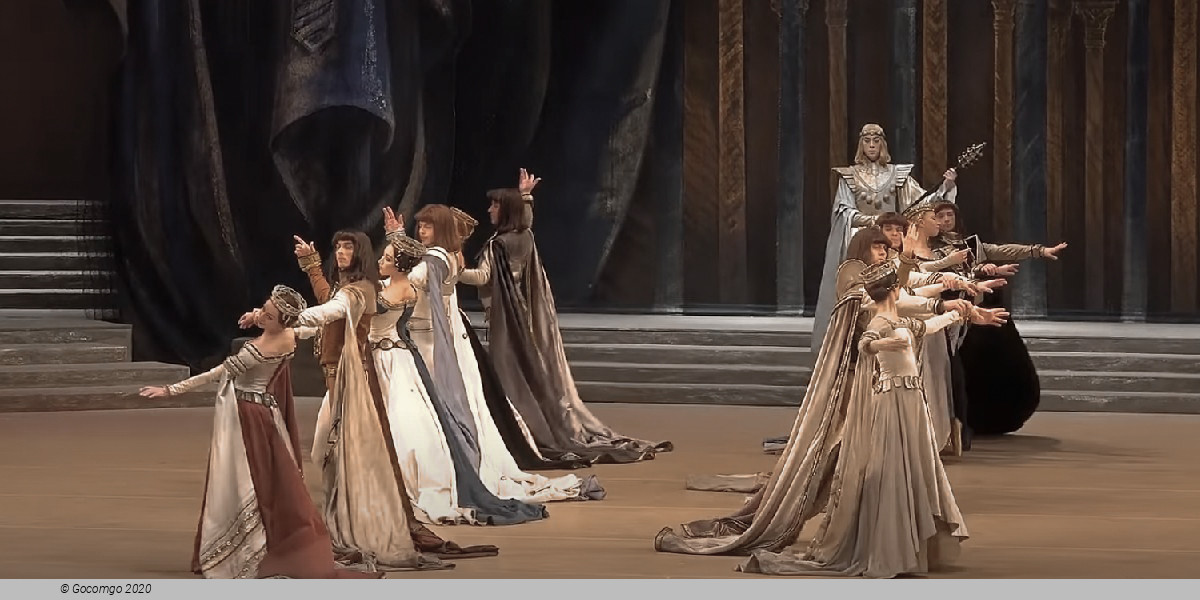
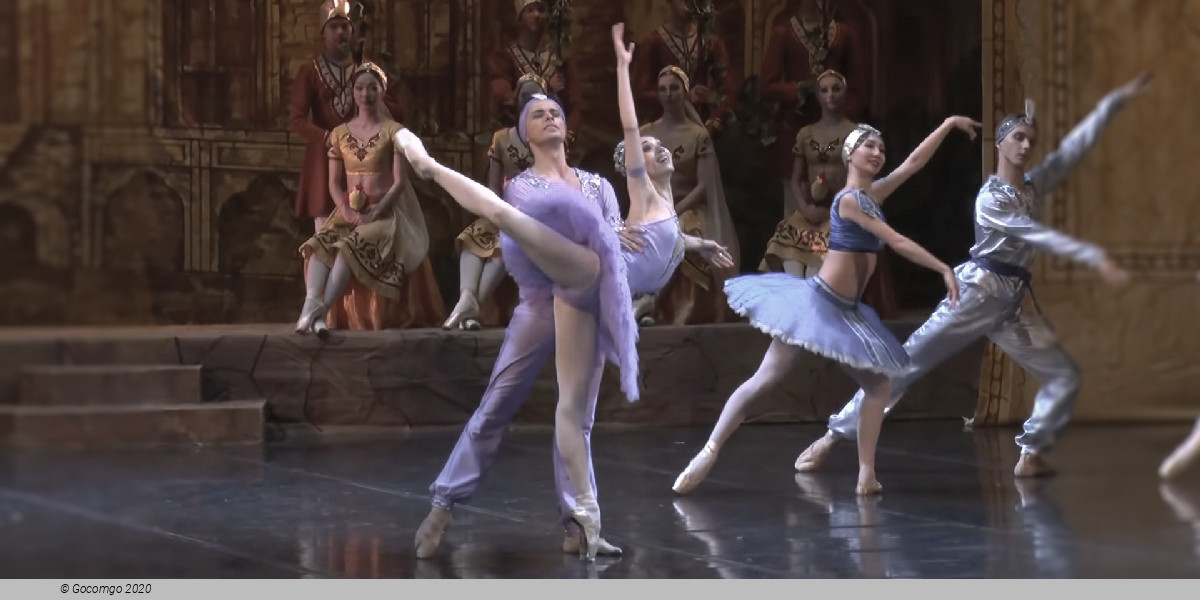
Raymonda and Jean de Brienne are finally married and King Andrew II of Hungary gives the newly wedded couple his blessing. In his honour, everyone at court is dressed in Hungarian fashion and perform a range of Hungarian-style dances, ending in an Apotheosis where everyone comes together in a knightly tournament.
Act I
Scene 1: Raymonda's feast
At the castle of Doris, preparations are under way for the celebrations of the young countess Raymonda’s name day. Countess Sybille, her aunt, chides those who are present, including Raymonda's two friends Henrietta and Clémence, and the two troubadours Béranger and Bernard, for their idleness and their passion for dancing, telling them of the legendary White Lady, the protector of the castle, who warns the Doris household every time one of its members is in danger and casts punishment on those who do not fulfil their duties. The young people laugh at the countess’s superstitions and continue to celebrate. The seneschal of the Doris castle announces the arrival of a messenger, sent by Raymonda's fiancé, the noble crusader knight, Jean de Brienne, bearing a letter for his beloved. Raymonda rejoices when she reads that King Andrew II of Hungary, for whom Jean de Brienne has fought, is returning home in triumph and Jean de Brienne will arrive at the Doris castle the next day for their wedding. Suddenly, the celebrations are interrupted when the seneschal announces the arrival of an uninvited Saracen knight, Abderakhman and his entourage, who have stopped at the castle seeking shelter for the night. Captivated by Raymonda's beauty, Abderakhman falls in love with her at once and resolves to do anything to win her. The party lasts late into the night and, left alone and exhausted by the day, Raymonda lies down on a couch and falls asleep. As she sleeps, she begins to dream that the White Lady appears illuminated by the moonlight and, with an imperious gesture, orders Raymonda to follow her.
Scene 2: The Visions
The White Lady, without making a sound, advances along the terrace. Raymonda follows her in a state of unconsciousness. At a signal from the White Lady, the garden is wrapped in mist. A moment later, the mist vanishes and Jean de Brienne appears. Overjoyed, Raymonda runs into his arms and they are surrounded by glory, knights and celestial maidens. The garden is illuminated by a fantastic light and Raymonda expresses her joy to the White Lady, who interrupts her enthusiasm with a vision of what awaits her. Raymonda wants to return to her fiancé, but instead, she finds Abderakhman, who has taken Jean de Brienne's place. Abderakhman declares his passionate love for her, but Raymonda, though confused and upset, is quick to reject him. Imps and elves appear from everywhere surrounding Raymonda, who begs the White Lady to save her and Abderakhman tries to take Raymonda by force. Raymonda cries out and falls to the ground in a faint. The frightful vision disappears along with the White Lady.
Act II
The Courtyard of the Castle
The feast in honour of Jean de Brienne's arrival is taking place. Raymonda welcomes her guests, but cannot hide her uneasiness caused by Jean de Brienne’s delay. Abderakhman approaches her repeatedly and reveals his passion for her, but remembering the warnings of the White Lady, Raymonda rejects him with contempt. Abderakhman becomes even more insistent and realises the only way to possess Raymonda is by force. He calls his slaves to dance for her, after which he summons his cup bearers and they pour a potion into everyone’s cup, causing all the guests to become drunk. Seizing his chance, Abderakhman grabs Raymonda in an attempt to abduct her, but luckily Jean de Brienne arrives just in time, accompanied by King Andrew II and his knights. Jean de Brienne saves Raymonda from the hands of the Saracens and tries to seize Abderakhman. The King commands the two rivals to put an end to the matter in a duel, during which the White Lady appears on the castle tower. Abderakhman is dazed and dies, slain by Jean de Brienne's sword. Raymonda joyfully embraces her fiancé and the two reaffirm their love as the King joins their hands.
Act III
The Wedding
Raymonda and Jean de Brienne are finally married and King Andrew II of Hungary gives the newly wedded couple his blessing. In his honour, everyone at court is dressed in Hungarian fashion and perform a range of Hungarian-style dances, ending in an Apotheosis where everyone comes together in a knightly tournament.
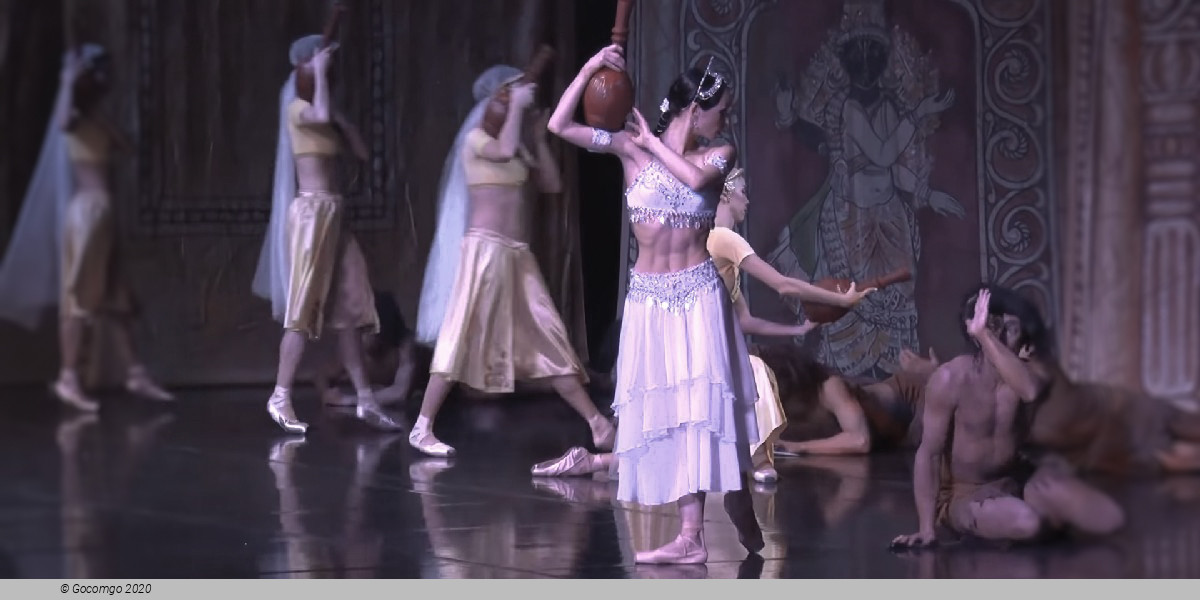
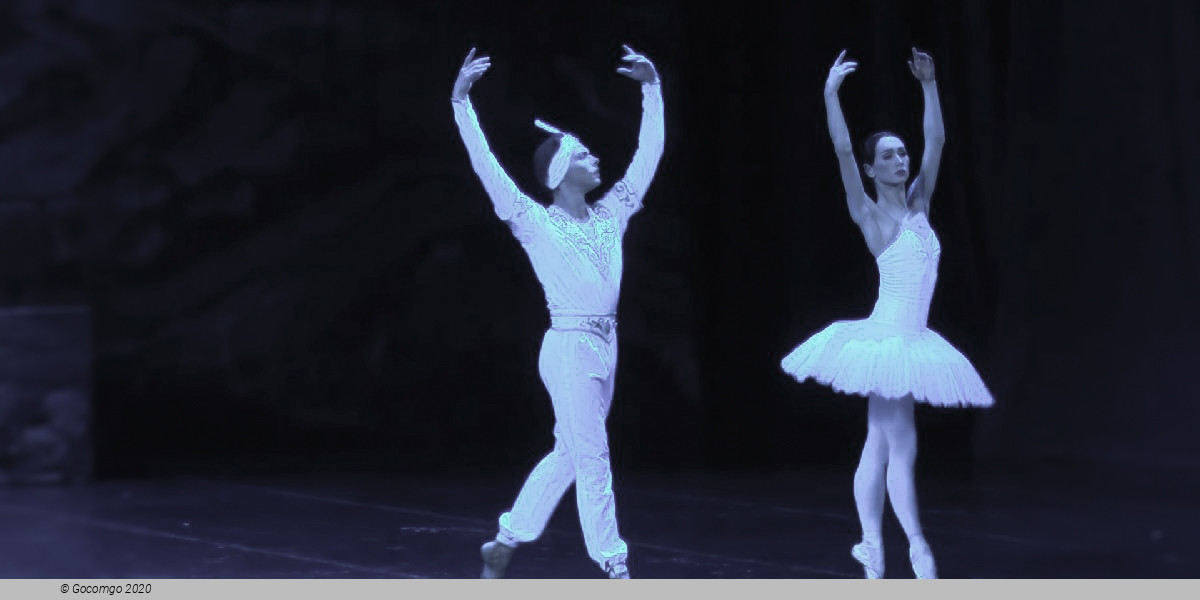
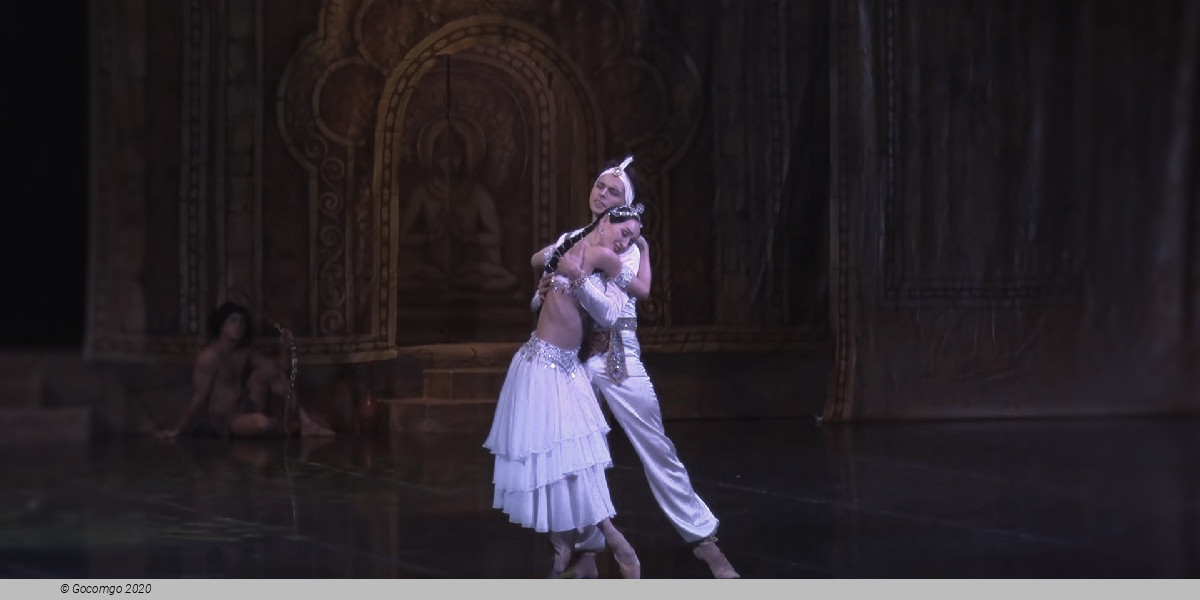
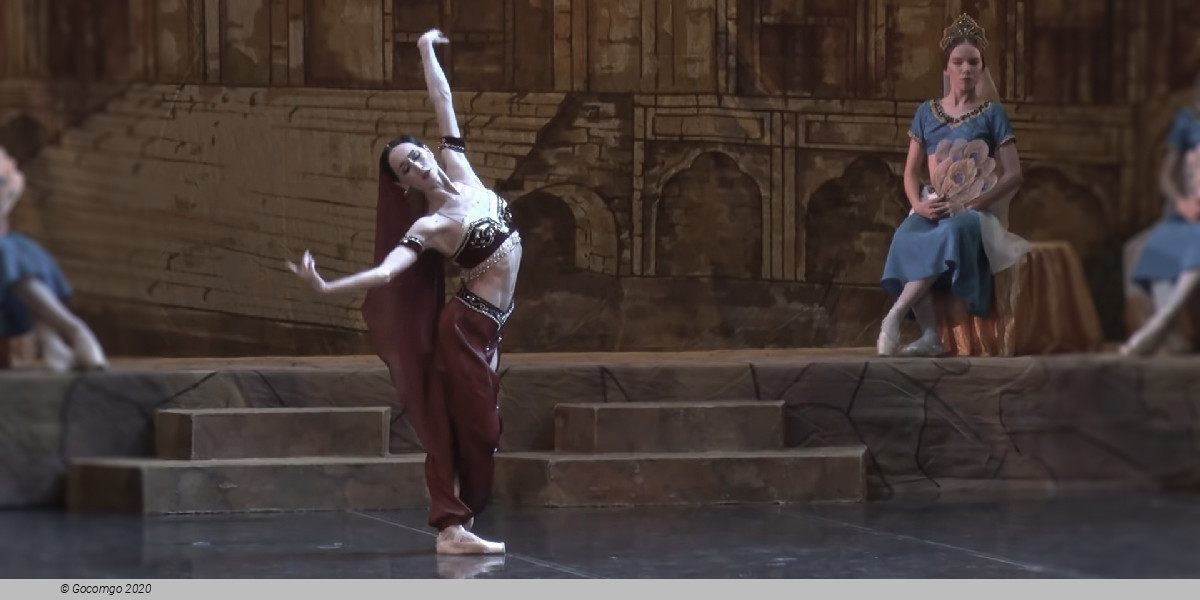
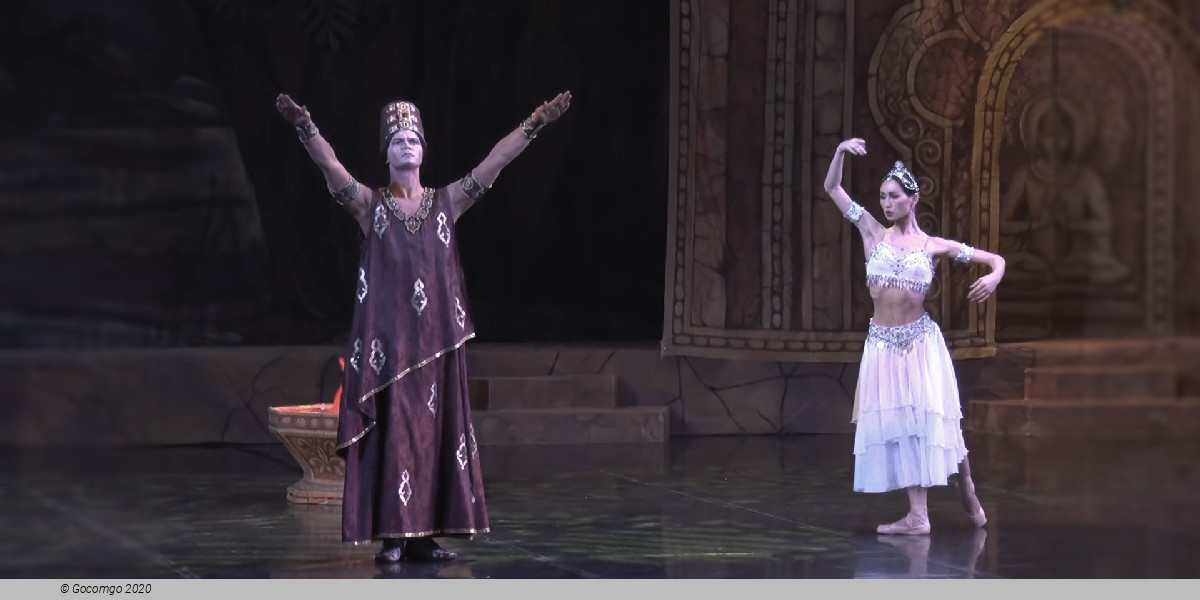
Set in the Royal India of the past, La Bayadère is a story of eternal love, mystery, fate, vengeance, and justice. The ballet relates the drama of a temple dancer (bayadère), Nikiya, who is loved by Solor, a noble warrior. She is also loved by the High Brahmin, but does not love him in return, as she does Solor.
Act I
Scene I, Outside Temple in the Sacred Forest.
The High Brahmin, priests, and temple dancers are celebrating the Indian Ritual of Fire. Nikiya, the most beautiful of the bayadères, has been chosen to be consecrated the lead temple dancer. The High Brahmin declares his love for Nikiya, but is rejected by her. Nikiya meets secretly with Solor later that evening. They dance together and swear eternal love over the Sacred Fire, but are discovered by the jealous High Brahmin, who vows to kill Solor.
Scene II, A Room in the Palace.
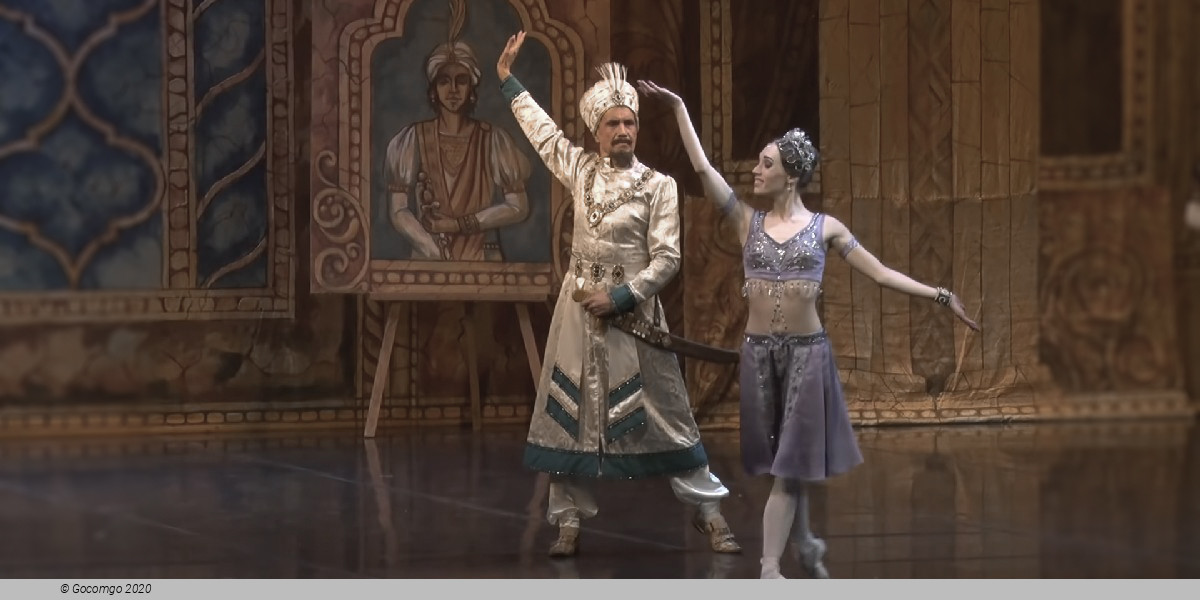
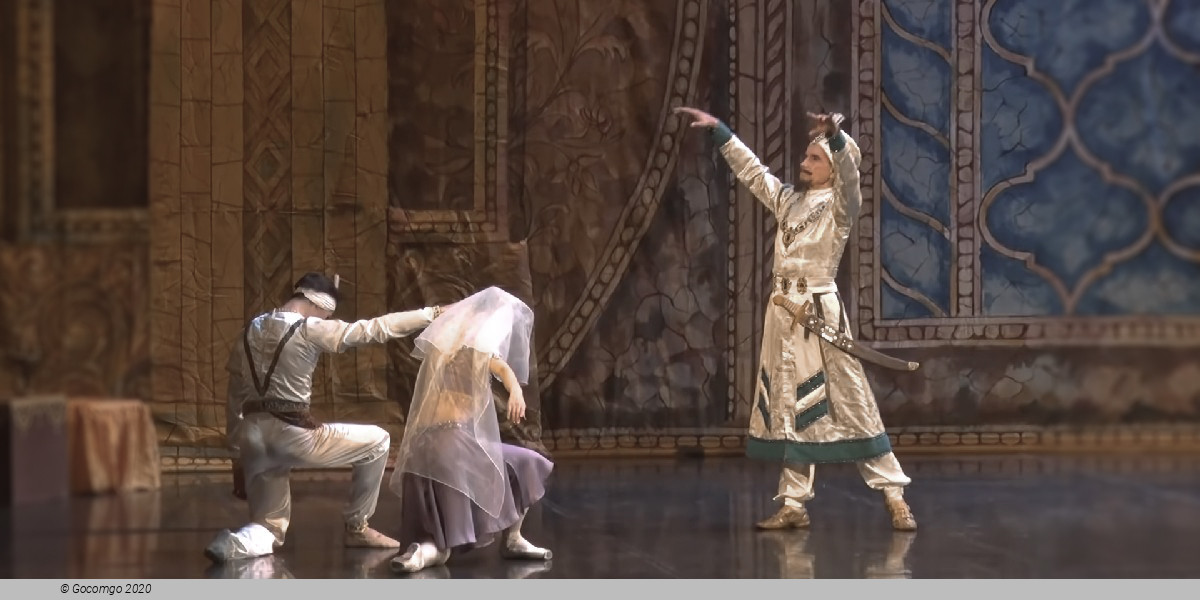
The Rajah has decided to reward Solor’s valor and decrees that the warrior will marry his daughter, Gamzatti. Gamzatti falls in love with Solor’s portrait, and when they meet, he is overwhelmed by her beauty. Even though he has sworn eternal love to Nikiya, he cannot defy the wishes of the Rajah and agrees to marry Gamzatti. The High Brahmin informs the Rajah of Nikiya and Solor’s secret love, hoping that the Rajah will do away with Solor. Instead, the Rajah decides to kill Nikiya.
This conversation is overhead by Gamzatti, who summons Nikiya to her rooms and attempts to bribe Nikiya to give up Solor. Refusing, Nikiya frantically attempts to kill Gamzatti. Nikiya flees and Gamzatti swears to destroy her.
Scene III, The Garden of the Palace.
At the betrothal of Solor and Gamzatti, Nikiya is commanded to dance. Gamzatti presents her with a basket of flowers that Nikiya believes to be from Solor, and which conceals a deadly snake. Nikiya is bitten, and when Solor leaves with Gamzatti, she refuses the proffered antidote and dies.
Act II. The Tent of Solor.
Solor, grief‑stricken and under the influence of opium, dreams of being reunited with Nikiya in the Kingdom of the Shades. Awakening, he realizes that he must prepare to marry Gamzatti.
Act III. The Temple.
The vision of Nikiya remains with Solor as the wedding ceremony begins at the Sacred Temple. As Solor and Gamzatti say their vows and are blessed by the High Brahmin, the vengeance of the gods is unleashed, and the temple and all the celebrants are destroyed. Nikiya and Solor are once again united in eternal love.
Many themes of interethnic love, betrayal and friendship interact in an Armenian setting. The central character is a young woman named Gayane, who works in a kolkhoz in a mountainous district near the national border.
Act I
In the kolkhoz, farmers are busy reaping cotton. Among them are heroine Gayane, her father Ovanes, brother Armen and younger sister Nune. They are all models of hard work with the only exception of Gayane's husband Giko, a lazy drunkard. She admonishes Giko for his misconduct and this escalates into a quarrel. Then arrives Kazakov, commander of the Soviet frontier guard, and a dance of welcome begins. Seeing Gayane present a bouquet to Kazakov, Giko violently snatches the bouquet from her and ignoring everybody's reproach, disappears.
Act II
At Gayane's home, people console Gayane who is deploring her husband's misconduct. The singing voices of carpet weavers are heard. As Giko returns, all go out. Gayane sings her child Ripsime to sleep. Three smugglers come to see Giko. They conspire to share the public money they have embezzled, to set fire to the cotton warehouse and to flee abroad. Overhearing their conspiracy, Gayane admonishes her husband, but he thrusts her into another room and locks her up.
Act III
At a Kurdish settlement in a mountainous area near the kolkhoz are many people, including Gayane's brother Armen, a Kurdish girl Aishe, and a Kurdish young man Izmail who loves her. Giko and the three smugglers arrive, asking Armen their way. Wondering about their intentions and activity, he sends some Kurdish youths to fetch Kazakov. Noticing this, Giko and his gang try to kill Armen, but Kazakov appears just in time and arrests the three smugglers. Giko escapes, however, and sets fire to the cotton warehouse. Trying to flee in the confusion of the moment, Giko is found by Gayane, who has managed to break out of the room in which she was imprisoned. Giko threatens Gayane that he will drop their child Ripsime from a cliff. As Gayane does not yield, Giko stabs her with a dagger. Hearing her shriek, Kazakov rushes in and arrests Giko, who will be brought to justice. Kazakov tends Gayane devotedly, and she recovers. Love grows between the two.
Act IV
A year later, at the kolkhoz, a dedication ceremony of the reconstructed warehouse occurs, as well as three weddings: Gayane and Kazakov, Armen and Aishe, Karen and Nune. Folk dances, rich in local color, are performed one after another. The ballet ends amid blessings by all.
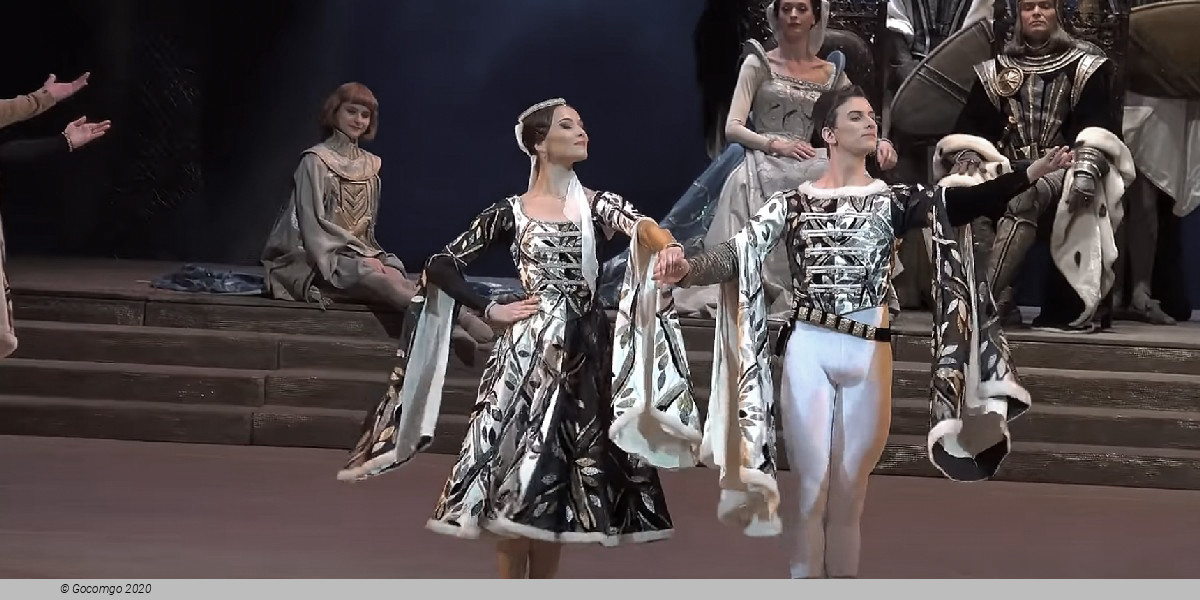
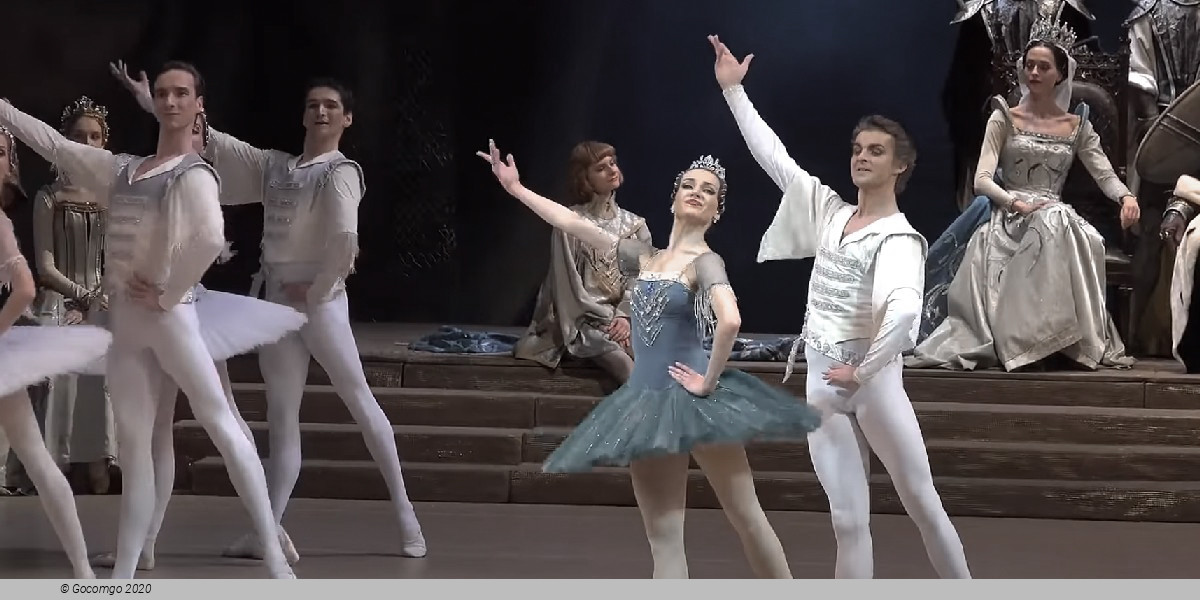
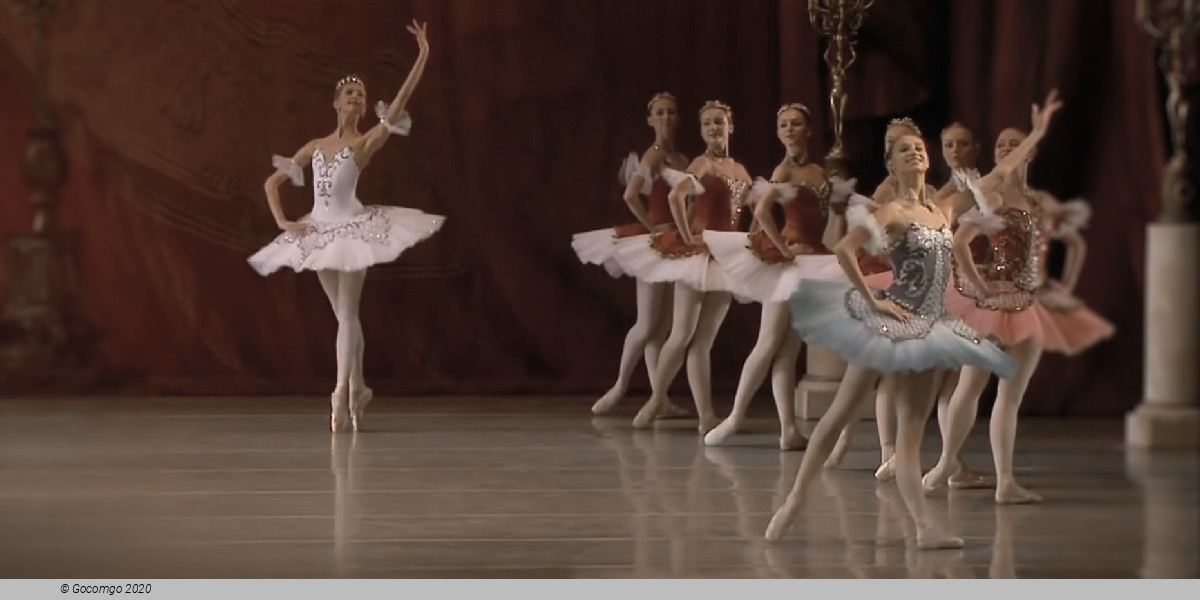
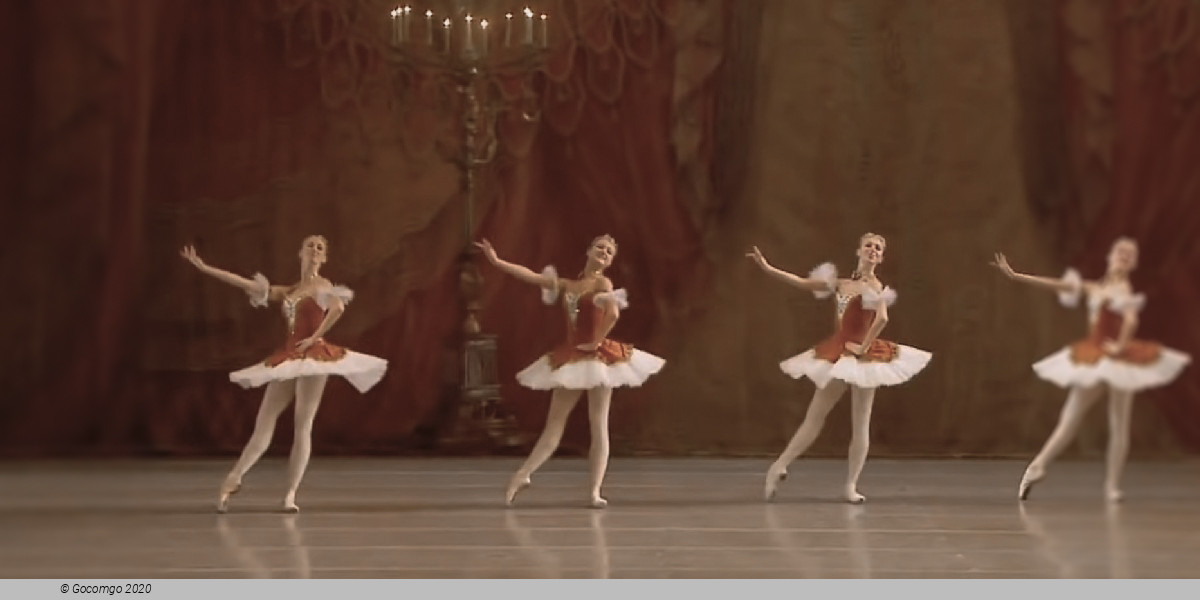
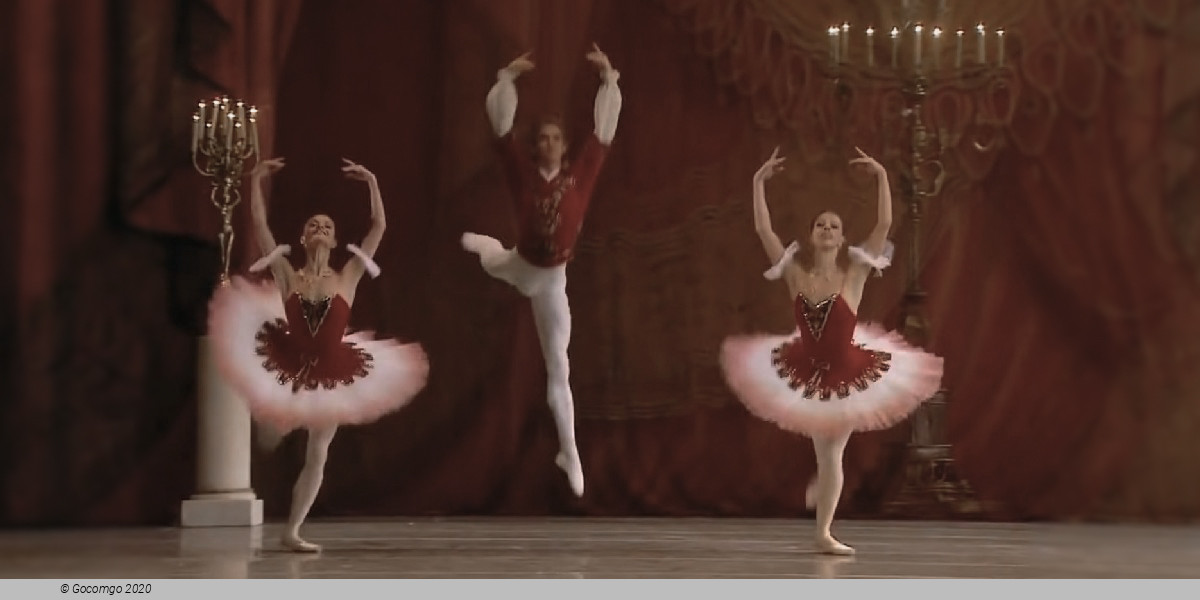
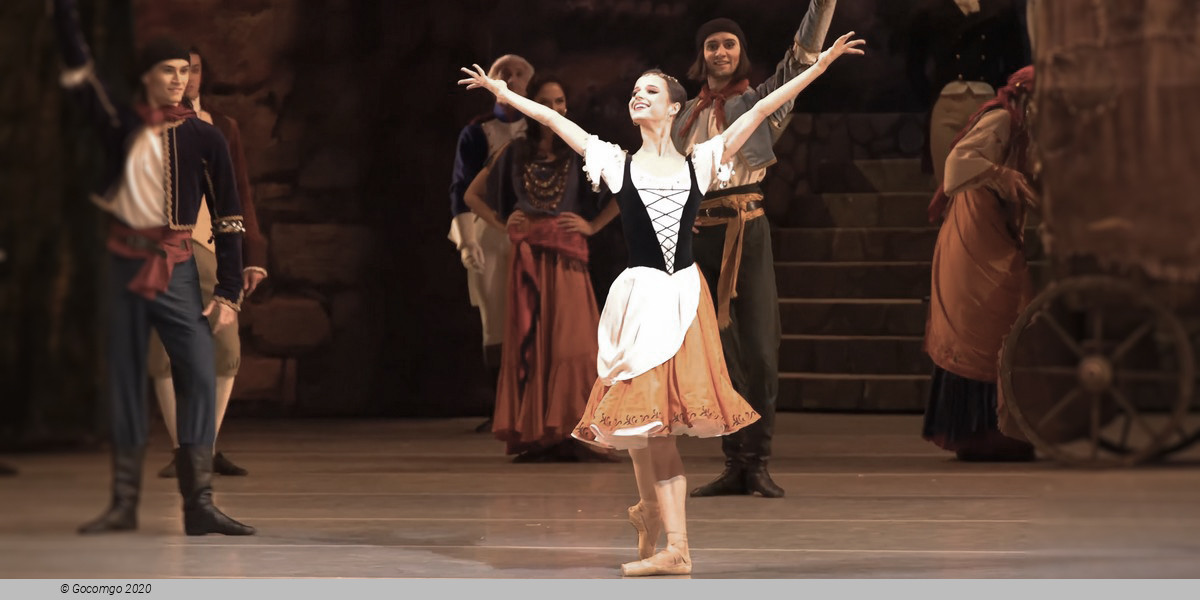
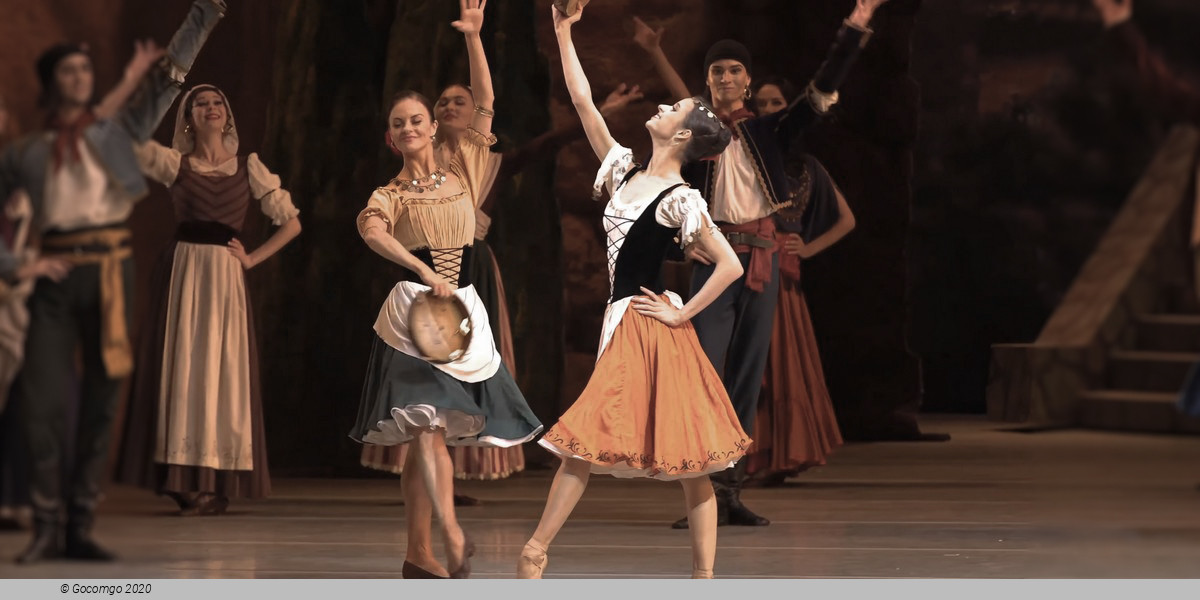
The story takes place in Spain during the presence of Napoleon's army. The heroine is the young gypsy girl, Paquita. Unbeknownst to Paquita, she is really of noble birth, having been abducted by gypsies when she was an infant. She saves the life of a young French officer, Lucien d'Hervilly, who is the target of a Spanish governor who desires to have him killed by Iñigo, a gypsy chief. By way of a medallion she discovers that she is of noble birth, being in fact the cousin of Lucien. As such, she and the Officer are able to get married.












 Blvd. Goce Delchev 4